
Welcome to the lesson on Moped Speed Limits for Category AM riders in Sweden. Understanding and adhering to speed regulations, especially the 45 km/h maximum, is crucial for safe riding and passing your theory exam. This lesson builds on general speed awareness and focuses on the specific rules relevant to mopeds.
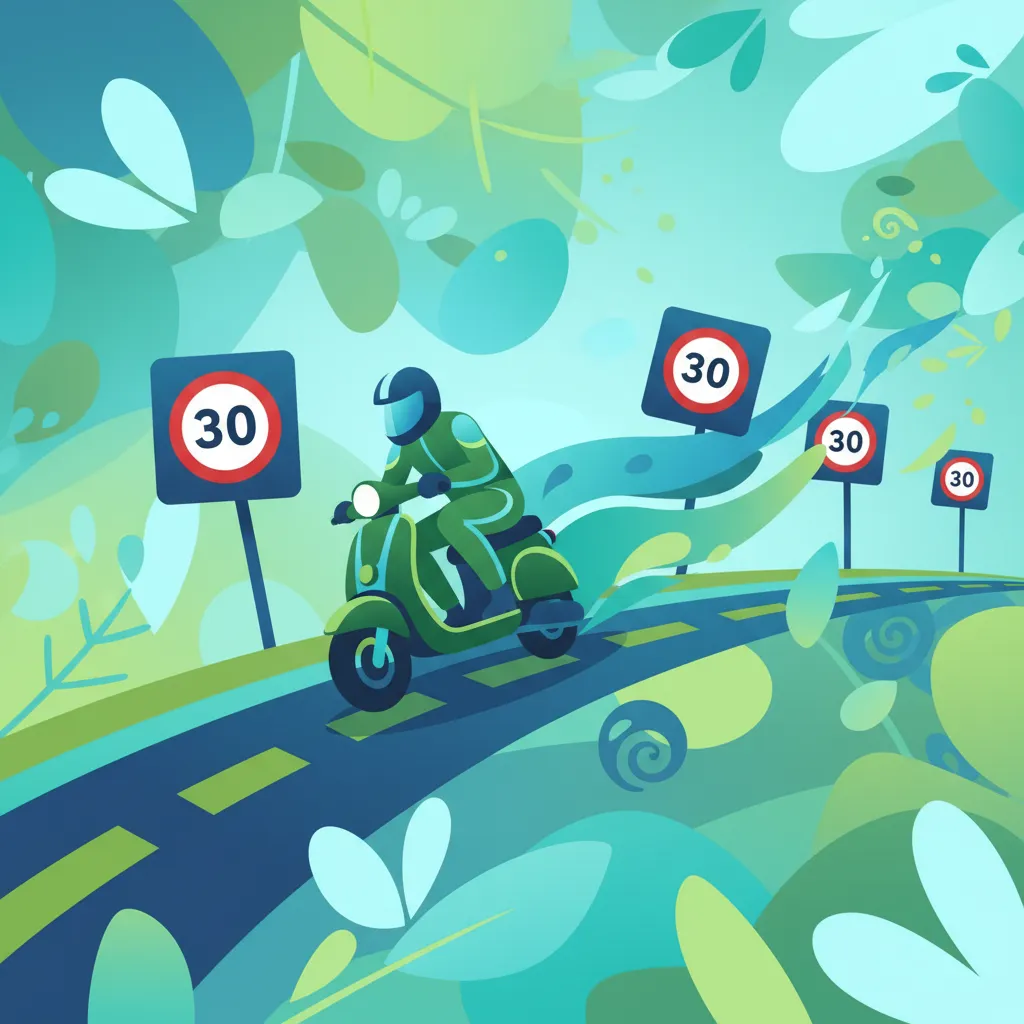
Learning to ride a Category AM moped in Sweden involves more than just mastering vehicle control; it demands a thorough understanding of the specific speed limits that govern these vehicles. Speed is a critical factor influencing safety, stopping distances, and the severity of any potential collision. This lesson provides a detailed overview of all speed-related regulations applicable to Category AM mopeds on Swedish roads, cycle paths, and shared spaces. Adhering to these rules is not only a legal requirement but also paramount for your safety and the safety of other road users.
The most fundamental rule for all Category AM mopeds in Sweden is an unwavering speed ceiling: you must never exceed 45 km/h. This absolute maximum speed is legally enforced regardless of what larger speed limit signs might indicate for other vehicle types on the same road. Even if a road is signposted with 50 km/h, 70 km/h, or higher, a Category AM moped must still maintain a speed of 45 km/h or less. This regulation is crucial for keeping mopeds within a safety envelope that aligns with their design capabilities for braking, stability, and handling.
The 45 km/h limit is not arbitrary; it is rooted in safety physics and the legal intent to classify Category AM mopeds as "low-speed" vehicles. Mopeds possess distinct characteristics compared to motorcycles or cars, including smaller engines, lighter frames, and often more basic braking systems. Allowing them to travel at higher speeds would significantly increase the risks of accidents, extend stopping distances beyond safe limits, and compromise stability, particularly in adverse conditions or during emergency maneuvers. The uniform ceiling helps to mitigate these inherent risks, contributing to overall road safety.
The absolute maximum speed of 45 km/h applies on all public roads where mopeds are permitted, regardless of the posted speed limit for other vehicles.
To ensure consistent compliance with the 45 km/h absolute maximum speed, all new Category AM mopeds sold in Sweden after January 1, 2020, are mandated to be equipped with an Electronic Speed Limiting Device (ELD). This device electronically caps the engine's output, preventing the moped from physically exceeding the legal speed. It is strictly illegal to tamper with, deactivate, or modify this speed limiter. Such modifications not only pose a severe safety risk by enabling the moped to travel at unsafe speeds but also constitute a serious legal offense, potentially leading to significant fines, vehicle confiscation, and revocation of your driving privileges.
While 45 km/h is the maximum a moped can legally travel, many situations and specific road environments require you to drive at even lower speeds. These are known as conditional lower limits, and they are imposed through road signs, specific road markings, or statutory zones. It is critical to always obey the lowest applicable speed limit for the specific road section you are on.
Cycle paths, known in Swedish as cykelbana, are designated lanes primarily for bicycles. However, some cycle paths are explicitly marked to allow Category AM mopeds. When a cycle path is signposted with a blue circular sign containing a bicycle and an "M" symbol, mopeds are permitted. On such paths, the general speed limit for mopeds is 30 km/h, unless a specific sign indicates an even lower limit. This reduced speed is necessary to ensure the safety of cyclists and pedestrians who share these paths, as mopeds have a greater mass and speed potential.
Even on cycle paths where mopeds are permitted, always be prepared to reduce your speed further if there are many cyclists or pedestrians, especially children, to ensure their safety.
Within urban areas and especially residential zones, lower speed limits are commonly imposed to enhance safety for all road users, including pedestrians and children. Many residential streets are marked with a 30 km/h speed limit. As a moped rider, you must strictly adhere to these posted limits. You cannot travel at 45 km/h in a 30 km/h zone, even though 45 km/h is your absolute maximum. Similarly, around schools during designated hours, you may encounter even stricter limits, such as 20 km/h, which must also be observed.
Temporary speed limits are often implemented in specific situations like construction zones, areas with ongoing road work, or during special events. These temporary limits are indicated by portable signs and must be obeyed. For mopeds, these signs will always indicate a speed equal to or lower than 45 km/h. If a construction zone has a temporary sign for 30 km/h, your speed must not exceed 30 km/h, regardless of the permanent limit of the road. Always pay close attention to all signage, as temporary limits supersede permanent ones for their duration.
Understanding speed limits is one thing, but knowing when to reduce your speed below the posted limit is equally, if not more, important. This is known as the Speed Adaptation Principle. It's your legal duty to adjust your speed to be appropriate for the prevailing road, weather, visibility, traffic, and vehicle conditions. A posted speed limit is a maximum, not a target. You should only travel at that maximum if conditions are ideal.
Adverse weather conditions significantly impact your ability to see, steer, and brake. Rain, snow, ice, fog, or heavy winds demand a substantial reduction in speed.
The type and condition of the road surface directly affect your moped's grip and stability.
The density of traffic and the presence of vulnerable road users (pedestrians, cyclists, children) always require a reduced speed.
Your moped's mechanical condition also dictates appropriate speed. Ignoring maintenance issues can significantly compromise safety.
Beyond specific speed limits, there are certain types of roads in Sweden where Category AM mopeds are expressly forbidden, irrespective of the posted speed limit. These restrictions are in place to prevent dangerous speed differentials with faster-moving traffic and to maintain the smooth flow of high-speed routes.
Mopeds are strictly prohibited from entering motorways (motorväg) and certain high-speed dual carriageways (tvåfiliga landsvägar) that have a minimum speed limit typically above 70 km/h. These roads are designed for vehicles capable of sustaining higher speeds and operating safely within fast-moving traffic. The presence of a "motorväg" sign or a clear classification as an expressway means mopeds are not allowed, even if a segment might temporarily have a lower speed limit for other reasons.
You will typically identify these roads by specific signage. A blue sign depicting a motorway symbol (a white bridge over two white roads) explicitly marks the beginning of a motorway. Similarly, roads with a minimum speed requirement that exceeds what a moped can safely achieve (or where the minimum is above 45 km/h) are also off-limits. Always plan your route to avoid these road types. If you accidentally find yourself approaching a motorway entrance, you must take the earliest available exit or choose an alternative local route.
Entering a motorway or a similar high-speed road on a moped is a serious traffic offense and carries significant penalties, including large fines and potential vehicle confiscation.
Adhering to speed limits is a legal obligation with clear consequences for non-compliance. Law enforcement agencies in Sweden, such as the Polismyndigheten, actively monitor vehicle speeds to ensure road safety.
Speed enforcement for mopeds can occur through various methods:
While precise, speed measurement instruments are subject to a small margin of error, known as "tolerance." For vehicles traveling at speeds common for mopeds (under 100 km/h), the typical tolerance applied by Swedish police is ±3 km/h. This means that if a moped is recorded at 48 km/h in a 45 km/h zone, after applying the 3 km/h tolerance, the recorded speed would be adjusted to 45 km/h, which is still a violation if the legal limit is 45 km/h. It's crucial not to interpret this tolerance as an allowance to exceed the speed limit. The legal limit is the absolute maximum, and any measurable speed above it can result in a fine.
The tolerance for speed enforcement is a margin for measurement error, not a buffer allowing you to exceed the posted limit. Always aim to stay below the legal limit.
Exceeding the speed limit on a moped in Sweden can lead to various penalties:
Understanding the rules is best solidified through practical application. Here are several scenarios illustrating correct and incorrect behaviors regarding moped speed limits.
| Scenario | Setting | Rule / Decision Point | Correct Behaviour | Incorrect Behaviour | Explanation |
|---|---|---|---|---|---|
| 1 | Urban residential street; sign shows 30 km/h. Weather: dry, light traffic. | Conditional Lower Limit | Rider travels at 28 km/h, maintaining safe distance. | Rider travels at 45 km/h, citing "45 km/h is the max for mopeds." | The posted 30 km/h limit overrides the absolute ceiling; exceeding it is a violation. |
| 2 | Municipal road with 50 km/h sign; raining heavily, road surface slick. | Speed Adaptation Principle | Rider reduces speed to 30 km/h, ensuring ability to stop safely. | Rider maintains 45 km/h, assuming 45 is always permissible. | Wet surfaces reduce friction; 45 km/h would result in excessively long stopping distances. |
| 3 | Dedicated cycle path marked with a blue "M" symbol, no speed sign. | Conditional Lower Limit (cycle path) | Rider travels at 27 km/h, keeping safe distance from cyclists. | Rider travels at 40 km/h, thinking the 45 km/h ceiling applies. | The "M" symbol indicates mopeds are allowed, but the default limit is 30 km/h to protect cyclists. |
| 4 | Entry ramp to an E-road (motorway) with a sign "70 km/h". | Prohibited Road Types | Rider exits before the ramp, follows alternative local road. | Rider proceeds onto the ramp, assuming 45 km/h is allowed. | Motorways are strictly prohibited for mopeds, regardless of any speed signs for other vehicles. |
| 5 | School zone between 07:30-09:00, sign displays 20 km/h. | Conditional Lower Limit (school zone) | Rider reduces speed to 18 km/h, observes children crossing. | Rider travels at 30 km/h because "30 km/h is usual urban limit." | Time-specific lower limits are mandatory in sensitive areas like school zones. |
| 6 | Rural road with 70 km/h sign, light rain, moped’s brakes are slightly worn. | Vehicle Condition + Speed Adaptation | Rider limits speed to 35 km/h, ensuring adequate braking performance. | Rider travels at 45 km/h, relying solely on the 45 km/h ceiling. | Degraded vehicle components (like brakes) necessitate an additional reduction in speed for safety. |
| 7 | Shared space square with heavy pedestrian flow, no speed signs, daylight. | Speed Adaptation + Vulnerable Users | Rider travels at 20 km/h, ready to stop for pedestrians. | Rider travels at 35 km/h, cutting across pedestrians. | Shared spaces demand very low speeds and heightened awareness to prevent collisions with pedestrians. |
The rationale behind moped speed limits is firmly grounded in the principles of physics and human reaction. Understanding these relationships reinforces the importance of compliance.
These physical realities underline why strict adherence to speed limits and the speed adaptation principle are not just legal requirements, but fundamental components of safe moped riding.
To ensure safe and legal operation of your Category AM moped in Sweden, remember these core principles:
By internalizing these rules and the underlying safety rationale, you will be well-equipped to ride your moped confidently and responsibly within the Swedish traffic system. This knowledge forms a critical foundation for advanced topics in your Swedish Driving License Theory Course – Category AM (Moped), such as calculating safe stopping distances, adjusting speed for various road conditions, and interacting safely with all road users.
Lesson content overview
Explore all units and lessons included in this driving theory course.
Explore search topics learners often look for when studying Speed Limits Specific to Mopeds. These topics reflect common questions about road rules, driving situations, safety guidance, and lesson level theory preparation for learners in Sweden.
Browse additional driving theory lessons that cover connected traffic rules, road signs, and common driving situations related to this topic. Improve your understanding of how different rules interact across everyday traffic scenarios.
This lesson provides an in-depth explanation of all specific speed limits applicable to Category AM mopeds in Sweden. It covers the standard 45 km/h limit, rules for cycle paths, and how conditions affect maximum legal speeds, crucial for Swedish driving theory.
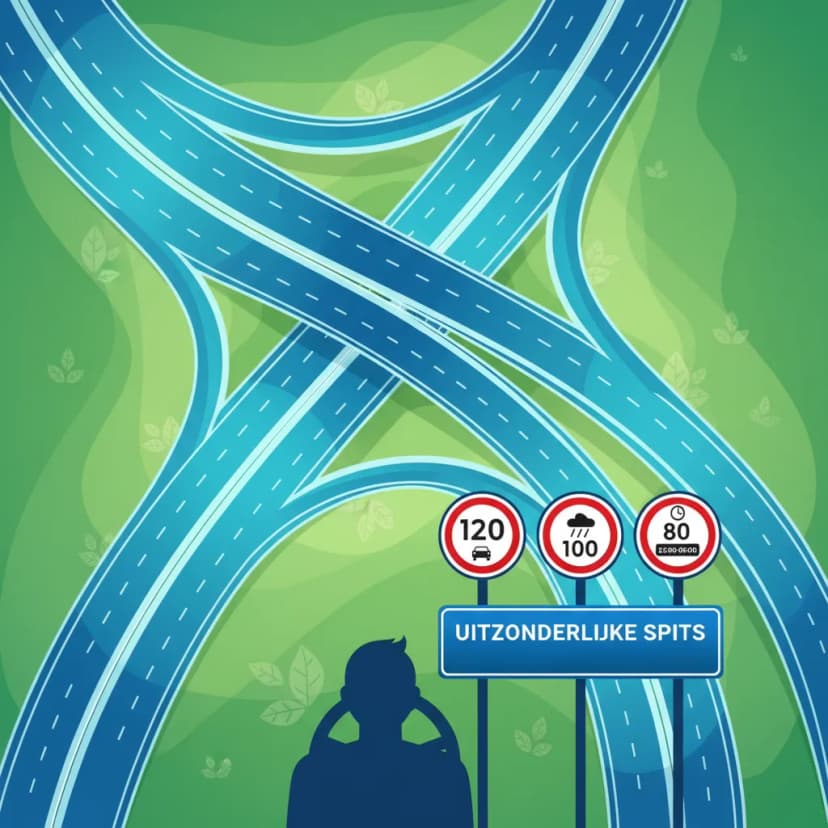
This lesson explains the general speed limit system in Sweden, including the default limits that apply in the absence of specific signs. It covers the standard speeds for built-up areas, roads outside built-up areas, and motorways, clarifying which are relevant to moped riders. Understanding this structure enables riders to determine the correct legal speed even when signs are not immediately visible.

This lesson teaches the crucial skill of adapting speed to prevailing conditions, emphasizing that the posted speed limit is a maximum, not a target. It covers various scenarios such as rain, fog, heavy traffic, and poor road surfaces, explaining why reducing speed is essential for maintaining vehicle control and safety. The goal is to cultivate a proactive mindset where the rider constantly assesses risk and adjusts their speed accordingly.
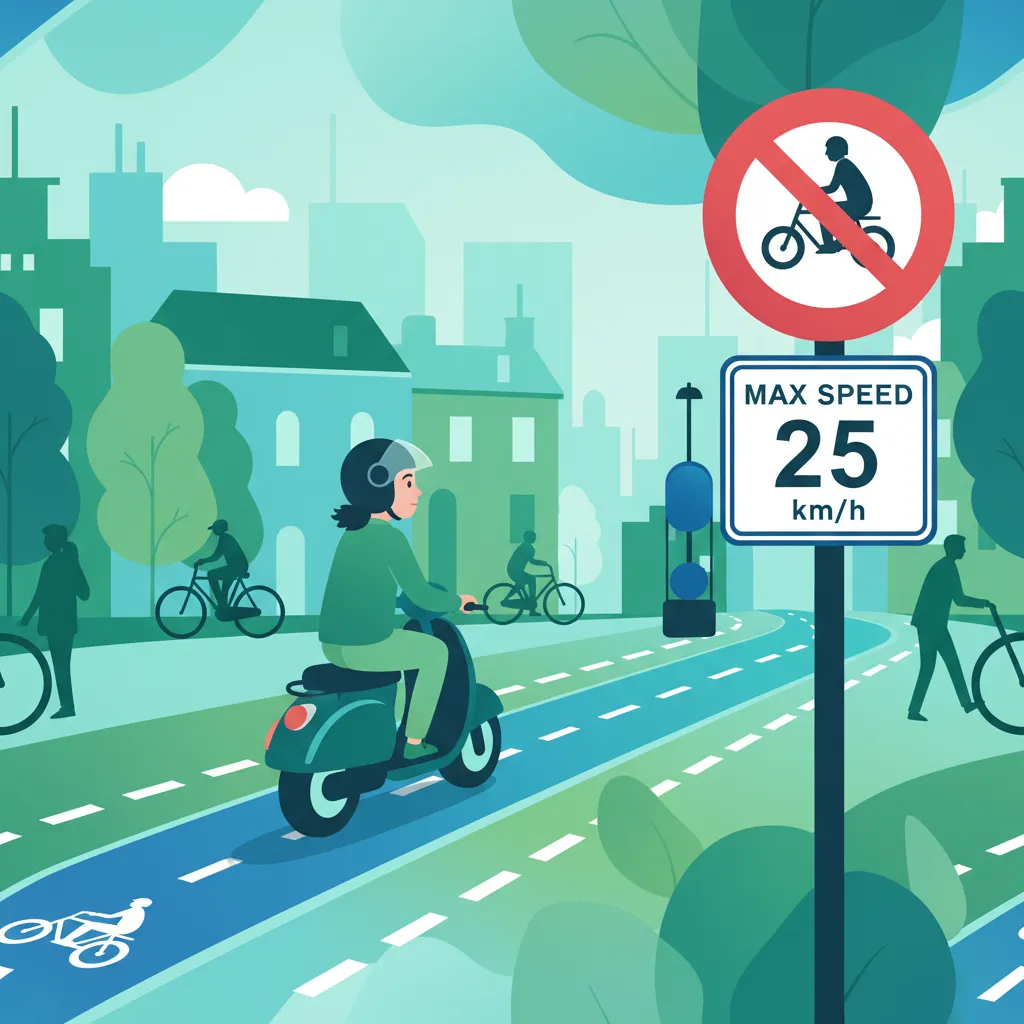
This lesson consolidates the key regulations that apply specifically to moped operation in Sweden. It covers mandatory rules such as speed limits, helmet use, and requirements for vehicle lighting and reflectors. Furthermore, the lesson explains the legal consequences of violations, including the system of fines and potential demerit points, ensuring riders understand their full range of legal responsibilities on the road.

This lesson clarifies the precise technical parameters that define a Category AM vehicle under Swedish law, including the maximum 50cc engine displacement and 45 km/h speed limit. It explains how these specifications determine which roads mopeds can legally access, distinguishing between urban streets and prohibited motorways. Learners will also understand the importance of vehicle identification and registration documents for ensuring legal compliance.
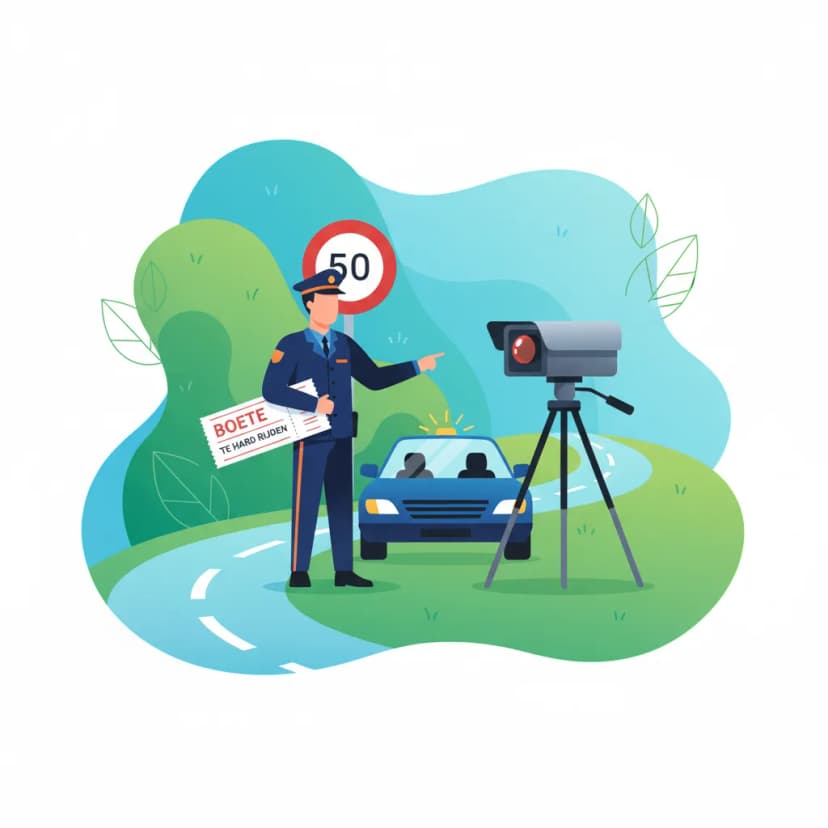
This lesson outlines the enforcement measures and penalties for speeding violations in Sweden. It explains the system of fines, how they escalate based on the severity of the offense, and the potential for receiving demerit points on a license. The content serves as a serious reminder of the legal and financial consequences of speeding, reinforcing the importance of adhering to all speed regulations.
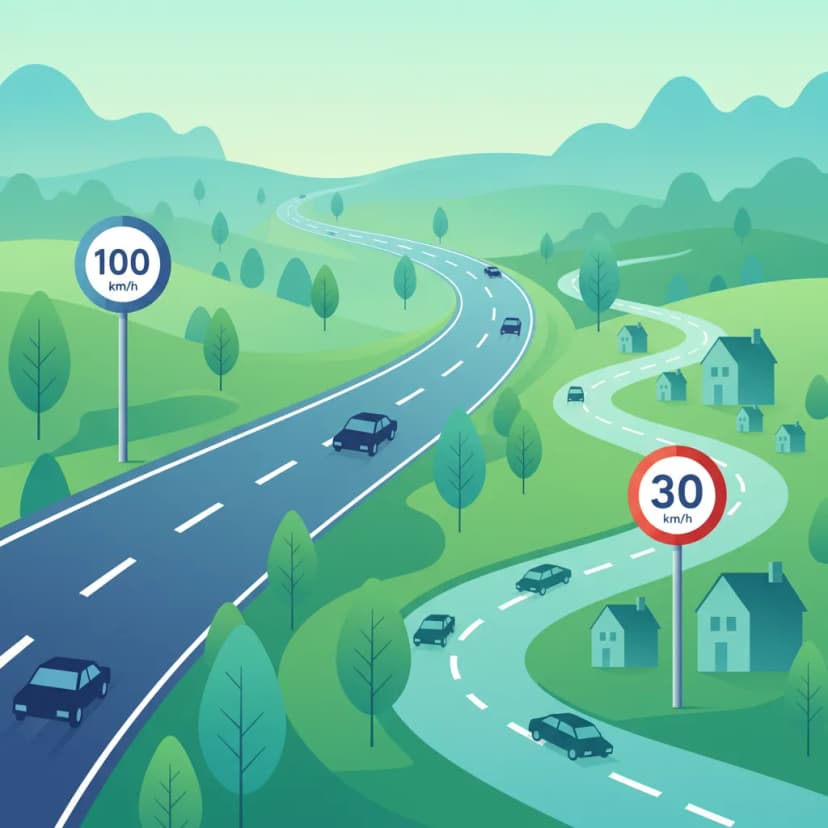
This lesson provides a comprehensive overview of the Swedish national speed limit system. You will learn the default speed limits applicable to different classes of roads, such as 50 km/h in built-up areas and 110 km/h on motorways. It also covers how to identify and comply with special zones, like residential areas (gångfartsområde), school zones, and temporary limits in construction areas, ensuring you always ride at a legal and appropriate speed.

This lesson explains how to identify and interact with various types of mopeds and other low-speed vehicles common on Swedish roads. You will learn the difference between Class I and Class II mopeds and their place on the road, as well as how to recognize A-tractors by their LGF (långsamtgående fordon) sign. The key focus is on managing the large speed differential and making safe judgments when deciding to overtake.

This lesson introduces the foundational legal concept of 'duty of care,' which requires all road users to act in a way that does not endanger others. It explains that this duty often requires driving at a 'reasonable speed' that may be lower than the posted limit, depending on conditions. This principle encourages a proactive and considerate approach to sharing the road.
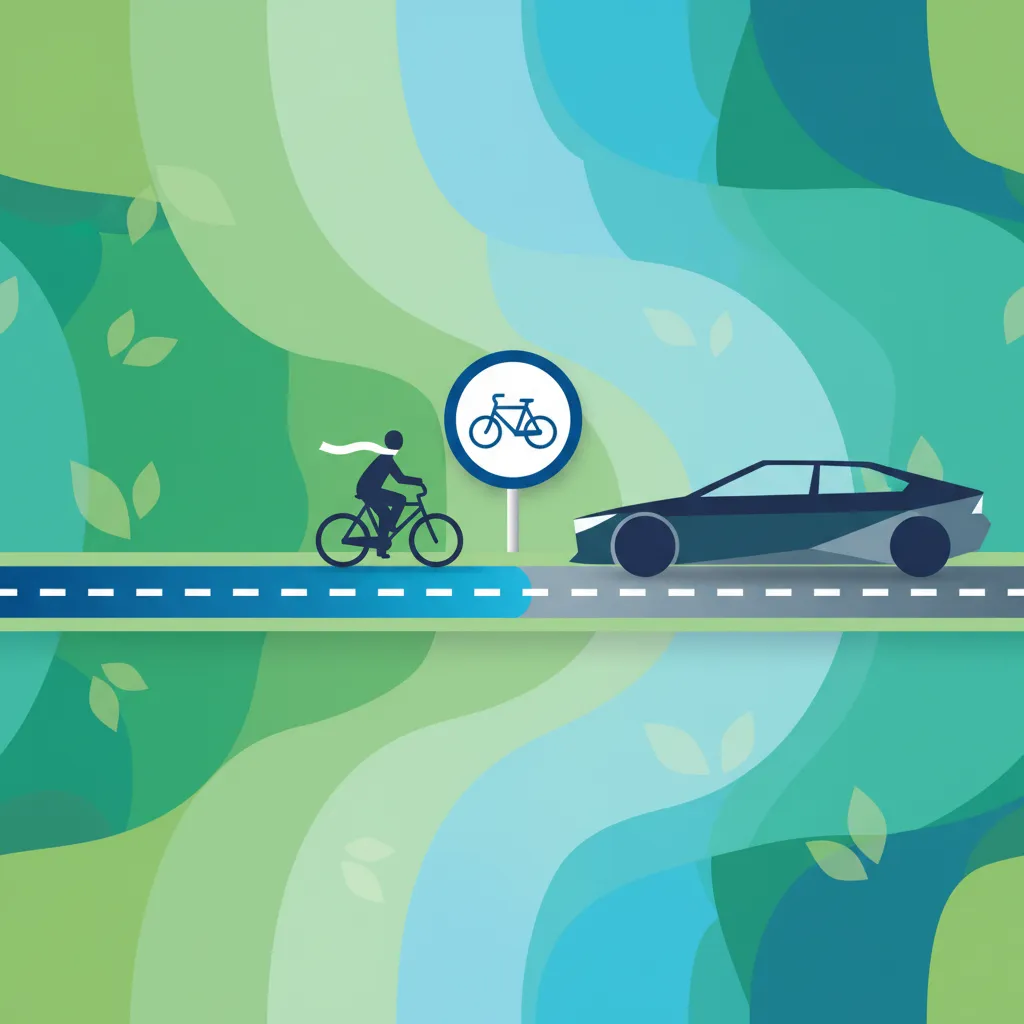
This lesson analyzes the legal definitions that determine where mopeds can operate within the Swedish road network. It covers the rules for using urban streets, rural roads, and designated cycle paths (Cykelbana), while clearly identifying prohibited zones like motorways. The content explains how to interpret signs indicating moped permissions or restrictions, enabling riders to plan legally compliant routes and navigate shared spaces correctly.

This lesson focuses on the unique demands of managing speed in high-speed environments like motorways. You will learn techniques for maintaining a steady, appropriate speed that matches the flow of traffic, how to perform smooth overtakes, and the importance of increasing your following distance. It also covers physical factors such as managing wind blast and maintaining stability when riding near large trucks, ensuring a safe and controlled high-speed riding experience.
Explore how speed limits for mopeds interact with safe riding practices in Sweden. This lesson delves into calculating stopping distances, adjusting speed for weather and road conditions, and maintaining safe following distances as part of Category AM theory.
This lesson teaches the crucial skill of adapting speed to prevailing conditions, emphasizing that the posted speed limit is a maximum, not a target. It covers various scenarios such as rain, fog, heavy traffic, and poor road surfaces, explaining why reducing speed is essential for maintaining vehicle control and safety. The goal is to cultivate a proactive mindset where the rider constantly assesses risk and adjusts their speed accordingly.
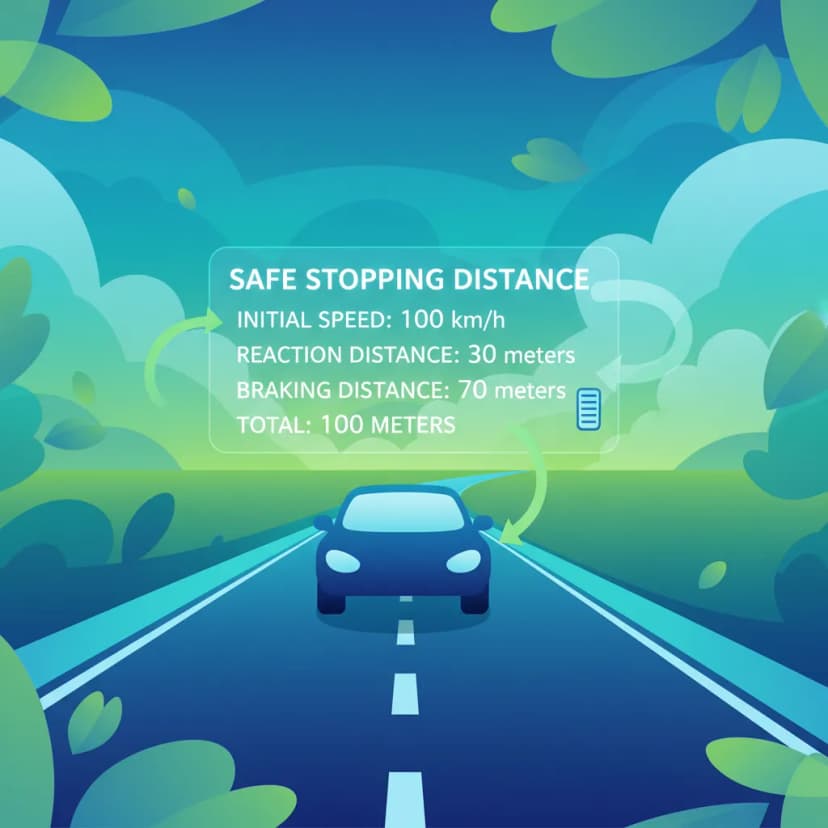
This lesson provides a practical understanding of the physics behind stopping a moped. It breaks down the total stopping distance into two key components: reaction distance (the distance traveled before applying the brakes) and braking distance (the distance covered while braking). Learners will explore how factors like speed, road conditions, and rider alertness dramatically affect these distances.

This lesson focuses on developing the fine control needed for low-speed maneuvering, a common challenge in urban environments. It covers techniques for making tight turns, such as U-turns, by using a combination of clutch, throttle, and rear brake control. The goal is to build the rider's skill and confidence in handling the moped in parking lots, heavy traffic, and other confined areas.
This lesson focuses on the unique demands of managing speed in high-speed environments like motorways. You will learn techniques for maintaining a steady, appropriate speed that matches the flow of traffic, how to perform smooth overtakes, and the importance of increasing your following distance. It also covers physical factors such as managing wind blast and maintaining stability when riding near large trucks, ensuring a safe and controlled high-speed riding experience.
This lesson explains how to identify and interact with various types of mopeds and other low-speed vehicles common on Swedish roads. You will learn the difference between Class I and Class II mopeds and their place on the road, as well as how to recognize A-tractors by their LGF (långsamtgående fordon) sign. The key focus is on managing the large speed differential and making safe judgments when deciding to overtake.

This lesson clarifies the legal distinction between stopping temporarily and parking. It identifies areas where stopping is prohibited, such as near intersections or on pedestrian crossings, to maintain traffic flow and safety. The content also discusses designated waiting areas at traffic lights, often marked for cyclists and mopeds, which can offer a safer position.
This lesson consolidates the key regulations that apply specifically to moped operation in Sweden. It covers mandatory rules such as speed limits, helmet use, and requirements for vehicle lighting and reflectors. Furthermore, the lesson explains the legal consequences of violations, including the system of fines and potential demerit points, ensuring riders understand their full range of legal responsibilities on the road.

This lesson teaches the crucial skill of adapting your speed to the dynamic and often congested conditions of urban riding. You will learn to modulate your speed smoothly in response to traffic flow, pedestrian activity, and complex intersections to maintain safety and control. Techniques covered include using engine braking effectively, anticipating the actions of other road users, and selecting a speed that maximizes your reaction time in a high-density environment.
This lesson introduces the foundational legal concept of 'duty of care,' which requires all road users to act in a way that does not endanger others. It explains that this duty often requires driving at a 'reasonable speed' that may be lower than the posted limit, depending on conditions. This principle encourages a proactive and considerate approach to sharing the road.
This lesson explains the general speed limit system in Sweden, including the default limits that apply in the absence of specific signs. It covers the standard speeds for built-up areas, roads outside built-up areas, and motorways, clarifying which are relevant to moped riders. Understanding this structure enables riders to determine the correct legal speed even when signs are not immediately visible.
Find clear answers to common questions learners have about Speed Limits Specific to Mopeds. Learn how the lesson is structured, which driving theory objectives it supports, and how it fits into the overall learning path of units and curriculum progression in Sweden. These explanations help you understand key concepts, lesson flow, and exam focused study goals.
The absolute maximum legal speed for a Category AM moped in Sweden is 45 km/h. This is a strict limit set by law, and exceeding it will result in penalties. It is vital to always be aware of your speedometer and ensure you do not go faster than this under any circumstances.
No, absolutely not. The 45 km/h is the maximum allowed speed. You must always ride at a speed that is appropriate for the conditions. This means riding slower on wet roads, in fog, during heavy traffic, when approaching intersections, or when riding through residential areas and alongside pedestrians or cyclists.
Yes, when a moped is permitted to ride on a cycle path (cykelbana) or in a shared space, there may be specific, often lower, speed restrictions that apply. It is crucial to observe any posted signs or road markings indicating such limits and to always give way to cyclists and pedestrians, which inherently means riding at a safe, lower speed.
The theory exam for the Category AM licence will include questions specifically testing your knowledge of moped speed limits. You can expect scenarios asking about the maximum speed, when to reduce speed, and how to interpret signs related to speed restrictions for mopeds. Understanding these rules is critical for passing.
Exceeding the speed limit on a moped in Sweden can lead to fines, and depending on how much you exceed the limit, it could also affect your licence application or points on your record. Swedish authorities enforce a 'Nolltolerans' (zero tolerance) policy for many traffic violations, making adherence to speed limits paramount.