This lesson delves into the critical aspects of traffic law enforcement in Sweden, focusing on the responsibilities of authorities and the consequences for riders. Understanding penalties and procedures is vital for ensuring legal and safe motorcycle operation, forming a key part of your Category A theory preparation.
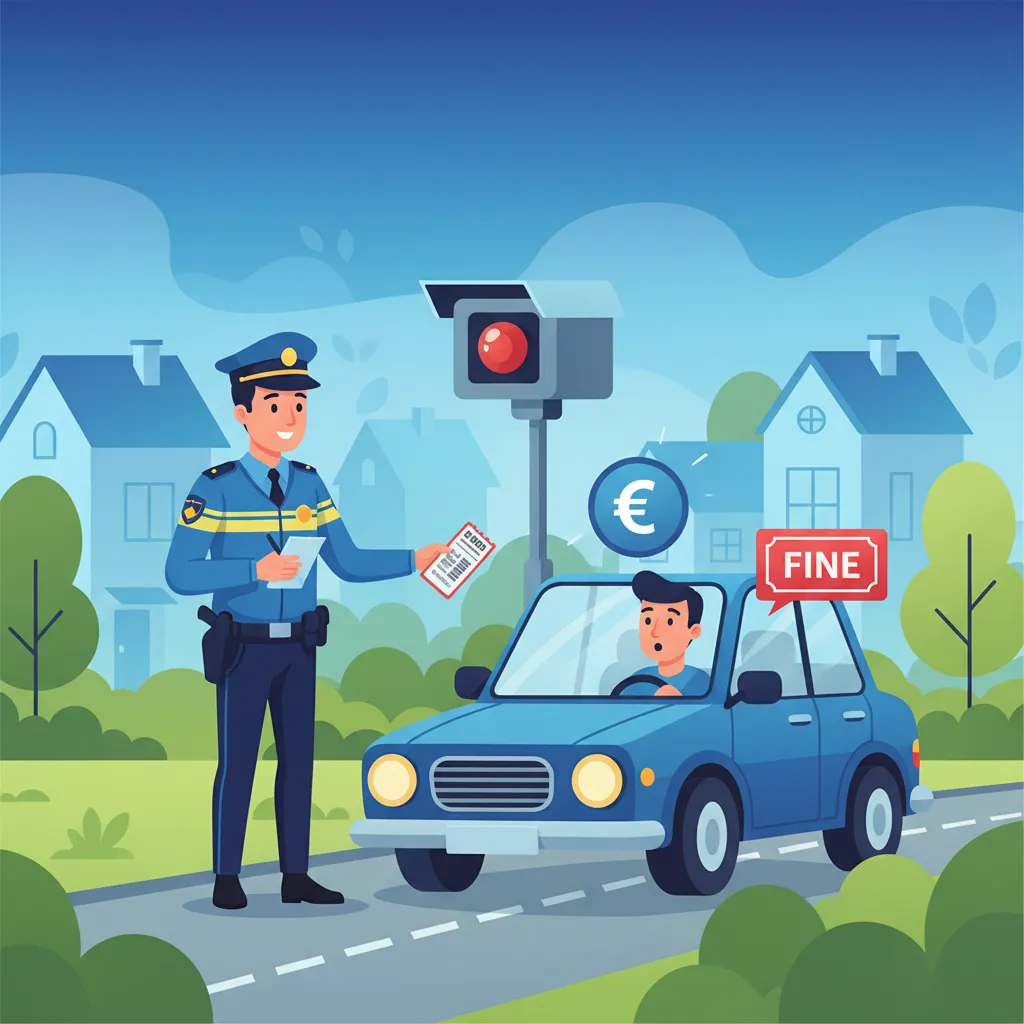
Understanding the legal framework for traffic law enforcement in Sweden is crucial for all motorcyclists. This lesson details the authorities responsible for maintaining road safety, the various penalties for traffic violations, and the steps involved in appealing a decision. By grasping these regulations, riders can ensure compliance, avoid penalties, and contribute to safer roads.
Traffic law enforcement in Sweden is a collaborative effort involving several key authorities. These bodies work together to monitor road usage, detect violations, and apply statutory rules to ensure public safety and orderly traffic flow. This systematic application of rules is fundamental to guaranteeing uniform compliance and deterring dangerous behaviours on the road.
Several government agencies play distinct but interconnected roles in enforcing traffic laws. Riders should be aware of these different entities and their specific powers, as interaction with any of them may lead to enforcement actions.
The Polisen, or Swedish Police, are the primary front-line enforcers of traffic laws. They conduct routine traffic stops, perform speed checks using radar and laser equipment, and administer sobriety tests for alcohol and drug impairment. Police officers have the authority to issue citations on the spot, provisionally seize driving licences for serious offences, and even impound vehicles if necessary. Their powers are primarily defined by the Road Traffic Ordinance (Trafikförordning) and the Police Act (Polislagen).
Transportstyrelsen, the Swedish Transport Agency, is the central administrative body responsible for issuing driving licences, registering vehicles, and overseeing various aspects of transport regulation. Beyond its administrative functions, Transportstyrelsen is also empowered to impose administrative penalties, most notably the suspension or revocation of driving licences. This typically occurs for cumulative offences or severe violations that warrant a withdrawal of driving privileges. Riders will often receive formal notices from Transportstyrelsen regarding licence decisions.
Trafikverket, the Swedish Transport Administration, is primarily responsible for the planning, construction, and maintenance of road infrastructure. While not a primary enforcement agency for individual traffic violations like the police, Trafikverket can impose fines for infractions related to road usage and infrastructure, such as illegal parking on motorways or violations pertaining to roadwork zones. Their role is more about managing the physical environment of traffic rather than direct rider conduct.
Other agencies, such as Customs and Border Control, also have specific enforcement powers related to traffic. They may enforce import and export regulations for motorcycles and related equipment, ensuring that vehicles entering or leaving Sweden comply with national and international standards. This includes checks for vehicle registration, compliance with environmental standards, and the legality of imported vehicle parts.
Swedish traffic law enforcement is designed around a few core principles: safety, deterrence, and proportionality. These principles guide how penalties are issued and contribute to a fair and effective system that aims to protect all road users.
The system of penalties in Sweden is proportional, meaning that the consequences are calibrated to the seriousness of the offence and, importantly, the offender's economic situation. This ensures that a penalty acts as a genuine deterrent, regardless of the individual's income level. The legal intent is to protect public health, maintain orderly traffic flow, and promote responsible riding behaviour. Penalties are also designed to be a deterrent, discouraging unsafe driving practices by imposing clear and meaningful consequences.
Sweden operates a Penalty Point System, known as Prickar, which tracks repeat offenders. Each traffic violation awards a specific number of points, and accumulating a defined threshold of points within a certain period leads to increasingly severe consequences, primarily licence suspension. This cumulative system helps identify and manage riders who habitually engage in risky behaviour, escalating consequences for those who do not learn from initial infractions.
Most monetary penalties for traffic violations in Sweden are handled through the Day-Fine System (Dagböter). Instead of a fixed amount, a fine is expressed as a number of "day-fines," where the monetary value of each day-fine is calculated based on the offender's disposable income. This system ensures that the financial impact of a fine is equitable, making it equally burdensome for individuals across different income brackets, thus enhancing its deterrent effect. The daily rate is updated annually by the Swedish Tax Agency.
For serious or immediately dangerous offences, law enforcement can take Immediate Administrative Actions or impose On-Site Penalties. These are temporary measures taken directly at the scene of the offence, without requiring a prior court judgment. Examples include issuing an on-spot fine (föreläggande) for minor infractions, or the provisional seizure of a driving licence if a rider is suspected of driving under the influence (DUI) or reckless riding. Vehicle impoundment can also occur for serious issues like unregistered vehicles or major safety defects.
A fundamental aspect of the Swedish legal system is the Right to Appeal. Riders are legally entitled to contest any penalty, fine, or licence decision they believe to be erroneous or disproportionate. This right protects against unjust decisions and upholds the rule of law. Appeals are typically filed to the Administrative Court (Förvaltningsrätten) within a set deadline, usually four weeks from the date of receiving the decision. Authorities are required to provide written documentation of all enforcement actions, clearly stating the basis of the decision and how to appeal.
Traffic violations in Sweden carry various consequences, ranging from monetary fines to the suspension or even revocation of a driving licence. The severity of the penalty is directly linked to the risk posed by the violation.
The penalty point system (Prickar) is a critical component for tracking rider behaviour and managing persistent risks. Points accumulate on a rider's record, and reaching a specific threshold triggers administrative action by Transportstyrelsen. Points generally expire after three years if no new offences are recorded, as per the Trafikförordning (§ 10).
Minor offences typically result in fewer points but can still accumulate to significant consequences.
More serious violations carry higher point allocations, reflecting the increased danger they pose to public safety.
The most severe offences can result in a high number of points, often leading directly to licence suspension.
The Day-Fine System (Dagböter) is how most monetary penalties are determined. It aims to make fines proportional to an individual's financial capacity.
A wealthy rider will pay a higher absolute fine than a lower-income rider for the same offence, ensuring the financial penalty has a similar impact regardless of income.
To illustrate, consider a rider with a calculated daily rate of 400 SEK:
Licence Suspension (Tillfällig återkallelse) and Revocation (Återkallelse) are serious administrative actions taken by Transportstyrelsen. Suspension is a temporary withdrawal of riding rights, while revocation is a permanent cancellation, requiring the rider to re-apply after a mandatory waiting period.
Several key traffic rules have specific penalties associated with them, directly impacting motorcyclists. Adhering to these regulations is not just about avoiding fines, but fundamentally about ensuring safety.
Speed limits are set for safety and vary depending on the road type and environment. Exceeding them reduces reaction time, increases stopping distance, and significantly raises the risk and severity of a collision. Enforcement often targets speeding through fixed cameras and mobile police units.
Sweden has a very strict blood-alcohol concentration (BAC) limit of 0.02% (0.2‰) for all drivers, including motorcyclists. This low threshold reflects the significant impairment alcohol causes to judgment, reaction time, and coordination, which is particularly dangerous for motorcyclists who are more vulnerable.
The law mandates that both the rider and any passenger on a motorcycle must wear a helmet that meets the ECE R22-05 standard or newer. This regulation is crucial for reducing head injuries, which are a leading cause of fatality in motorcycle accidents.
Motorcycles in Sweden are subject to regular roadworthiness inspections. Generally, motorcycles must pass an inspection every second year. Ensuring your motorcycle is well-maintained and free from safety defects, such as faulty brakes or worn tires, is not just a legal obligation but a critical safety measure.
Using a mobile phone without a hands-free system while riding is strictly prohibited under Trafikförordning (§ 16). This rule is in place because mobile phone use diverts attention from the road, increasing the risk of accidents.
Every rider has the legal right to challenge a fine, penalty, or licence decision. Understanding the proper appeal procedures is essential to ensure that your rights are protected and that any perceived errors or injustices can be addressed.
The appeal process provides a structured legal avenue for contesting enforcement actions.
Receive Notice: The process begins when you receive a formal written notification from the issuing authority, such as the Police (Polisens Åtgärdsbeslut) or Transportstyrelsen (Återkallelsebeslut). This notice will detail the offence, the penalty, and your right to appeal.
File Appeal: You must submit a written appeal to the Administrative Court (Förvaltningsrätten) within a specific deadline. This deadline is crucial and is usually four weeks from the date you received the decision, though it is always explicitly stated on the notice.
Provide Evidence: Your appeal should clearly state why you believe the decision is incorrect or disproportionate. Include any supporting documents, such as witness statements, photographic evidence, or any mitigating circumstances that you believe are relevant to your case.
Court Decision: The Administrative Court will review your appeal and the original decision. The court may then confirm the original decision, modify the penalty (e.g., reduce a fine or suspension period), or completely overturn the decision. In some cases, the court might order a new hearing.
The Förvaltningsrätten (Administrative Court) is the first instance court for appeals against administrative decisions. When preparing your appeal, be precise and include all relevant details. While appeals do not automatically suspend the enforcement of the original decision, you may apply for a stay (prövningsuppskov), which temporarily halts enforcement until your appeal is decided. This is particularly relevant for licence suspensions.
Strict adherence to deadlines is paramount. Appeals must be filed within four weeks of receiving the enforcement decision, as stipulated by Förvaltningsprocesslagen (§ 23). Missing this deadline will typically result in your appeal being rejected as time-barred, making the original decision legally binding. It is also crucial to retain all official documents, such as citations and notices, for a minimum of three years, as they serve as proof of any enforcement action and may be required for future checks or appeals.
Traffic law enforcement and the severity of penalties can be influenced by various contextual factors, including environmental conditions, road types, and the presence of vulnerable road users. These variations reflect a risk-based approach to road safety.
Compliance with traffic laws is not merely about avoiding penalties; it is fundamentally about ensuring safety for yourself and others. The legal framework of enforcement and penalties underpins a rational approach to road safety.
Every traffic rule, from speed limits to helmet requirements, is designed to mitigate specific risks. Adhering to these rules directly reduces the probability of being involved in a collision and minimizes the severity of injuries if an accident does occur. For example, wearing a certified helmet can reduce the probability of a severe head injury by up to 40% in a crash. Maintaining correct distances and speeds prevents common types of accidents caused by sudden braking or loss of control.
The structured system of fines, points, and licence actions serves as a strong deterrent against unsafe behaviours. Knowing that exceeding the speed limit by a certain margin will result in specific day-fines and penalty points, or that driving under the influence leads to immediate licence seizure, provides a powerful incentive for compliance. Statistical data show that riders with a history of accumulating points have a significantly higher crash risk, making licence suspension an effective mechanism for temporarily removing high-risk individuals from the road.
Beyond compliance, understanding enforcement procedures and your appeal rights is crucial for protecting yourself legally. If you believe a penalty has been issued in error or is disproportionate, the appeals process allows you to present your case and seek a fair resolution. This ensures transparency and accountability in the enforcement system, fostering trust between riders and law enforcement agencies. By being informed, you can effectively navigate interactions with authorities and exercise your rights responsibly.
These scenarios illustrate how traffic laws and penalties are applied in real-world situations for motorcyclists in Sweden.
Setting: A 110 km/h motorway on a dry, clear day. You are riding your motorcycle at 135 km/h. Relevant Rule: Speed limits as per Trafikförordning (§ 3). Outcome: You are caught by a speed camera. You will receive a notice for 30 day-fines and 3 penalty points for exceeding the limit by 25 km/h. This is considered a significant speeding offence on a motorway.
Setting: You are stopped at a police checkpoint on a rural road in the evening. Your blood-alcohol concentration (BAC) is measured at 0.18%. Relevant Rule: Alcohol limit of 0.02% BAC as per Trafikförordning (§ 4). Outcome: Your BAC is significantly above the legal limit. The police will immediately seize your driving licence. You will face a criminal charge, receive around 40 day-fines, and must appear before a court, likely resulting in a lengthy licence suspension or revocation.
Setting: You are riding a 125 cc motorcycle through a city centre without wearing a helmet. Relevant Rule: Mandatory helmet requirement (ECE R22-05 or newer standard) as per Transportstyrelsens föreskrift (TSFS 2001:5 § 6). Outcome: A police officer stops you. You will receive 15 day-fines and 2 penalty points. You have the right to appeal this fine within four weeks if you believe there was an error.
Setting: Over a 12-month period, you receive: 2 points for a minor speeding offence, 3 points for running a red light, and another 3 points for riding without a helmet. Relevant Rule: Licence suspension trigger (accumulation of ≥ 8 penalty points within three years) as per Transportstyrelsens föreskrift (TSFS 2001:5 § 11). Outcome: Your total penalty points reach 8. Transportstyrelsen will issue a licence suspension, typically for a minimum of six months. To reduce the suspension length, you may be required to complete a traffic safety course.
Setting: You receive a citation for illegal parking, incurring 5 day-fines. You intend to appeal, believing the sign was unclear, but you forget to file the appeal until six weeks after receiving the notice. Relevant Rule: Appeal deadline (four weeks from receiving decision) as per Förvaltningsprocesslagen (§ 23). Outcome: Your appeal will be rejected by the Administrative Court as time-barred. The fine will become enforceable, and you will be obligated to pay it, potentially with added interest.
Lesson content overview
Explore all units and lessons included in this driving theory course.
Explore search topics learners often look for when studying Traffic Law Enforcement, Penalties, and Appeal Procedures. These topics reflect common questions about road rules, driving situations, safety guidance, and lesson level theory preparation for learners in Sweden.
Browse additional driving theory lessons that cover connected traffic rules, road signs, and common driving situations related to this topic. Improve your understanding of how different rules interact across everyday traffic scenarios.
Understand the system of traffic law enforcement in Sweden, including fines (böter), license points, and the process of license suspension. Learn about your rights during traffic stops and the consequences of violating road rules.
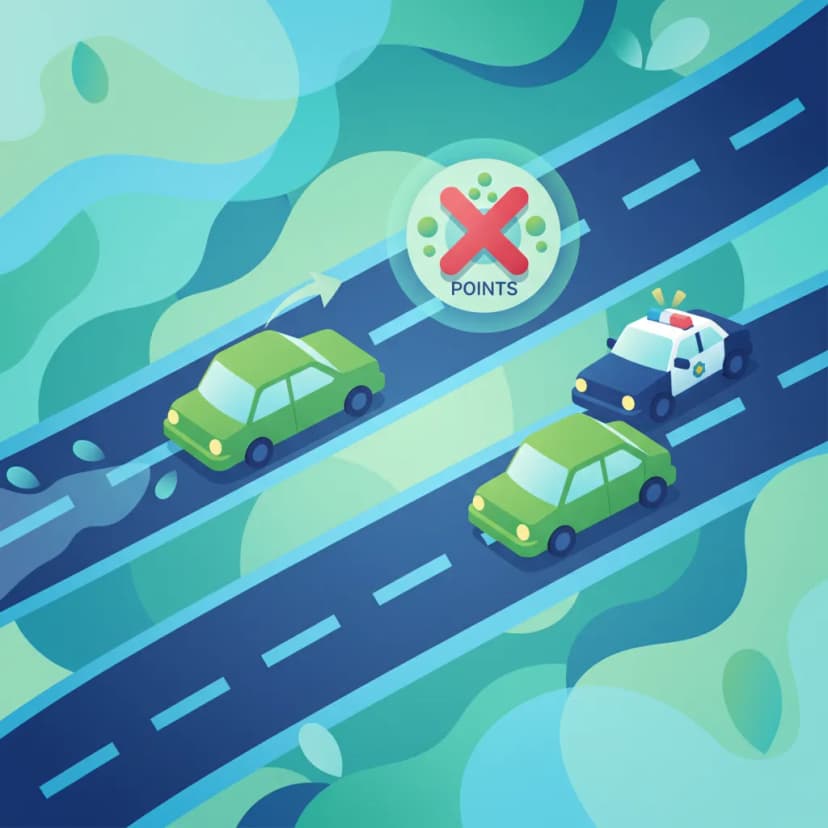
This lesson explains the system of consequences for breaking traffic laws in Sweden. It details common violations and their associated fines and describes the demerit points system that can lead to a license suspension for repeat offenders. Understanding these consequences is a powerful incentive for riders to adhere to the rules of the road.
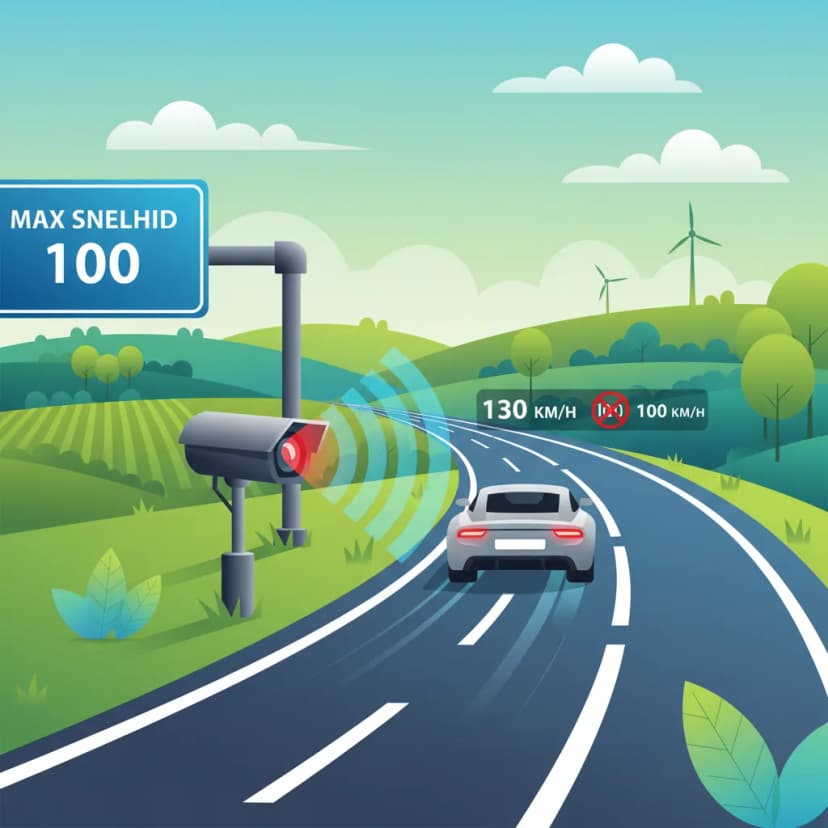
This lesson informs you about the various technologies and methods used for speed enforcement in Sweden, such as fixed and mobile speed cameras and police radar. You will understand the legal framework for speed monitoring and the corresponding penalties for violations, including fines (böter) and the potential for license suspension. This knowledge reinforces the importance of constant speed awareness and adherence to posted limits to ensure both safety and legal compliance.

This lesson clarifies your legal rights and responsibilities during interactions with law enforcement, such as at a traffic stop. You will learn the correct and expected procedures for providing documentation and communicating with officers. It covers your obligations to comply with lawful requests while also explaining your rights under Swedish law, ensuring any such encounter is handled correctly, calmly, and professionally by all parties.
This lesson details the documents you are legally required to carry with you when riding, such as your license and registration certificate. It provides a comprehensive explanation of the mandatory periodic vehicle inspection (besiktning) process in Sweden, outlining what is checked and why it's important for safety. Finally, it reinforces the habit of performing your own pre-ride checks to ensure your motorcycle is always in a safe, roadworthy condition.

This lesson explains the process for obtaining the correct category of motorcycle license (Körkort A) in Sweden and the legal necessity of keeping it current. You will learn about the procedures for registering your motorcycle with Transportstyrelsen and the mandatory insurance coverage you must have to legally ride on public roads. Understanding these administrative requirements is the first step to being a fully compliant and responsible vehicle operator.
This lesson outlines the enforcement measures and penalties for speeding violations in Sweden. It explains the system of fines, how they escalate based on the severity of the offense, and the potential for receiving demerit points on a license. The content serves as a serious reminder of the legal and financial consequences of speeding, reinforcing the importance of adhering to all speed regulations.
This lesson provides detailed guidance on navigating complex traffic points such as signalized intersections, multi-lane roundabouts, and pedestrian crossings. You will learn the correct procedures for entering and exiting roundabouts, the specific rules for yielding to pedestrians and cyclists at designated crossings, and how to interpret complex traffic light signals. These skills are vital for safe urban and suburban riding, where interaction with vulnerable road users is frequent.
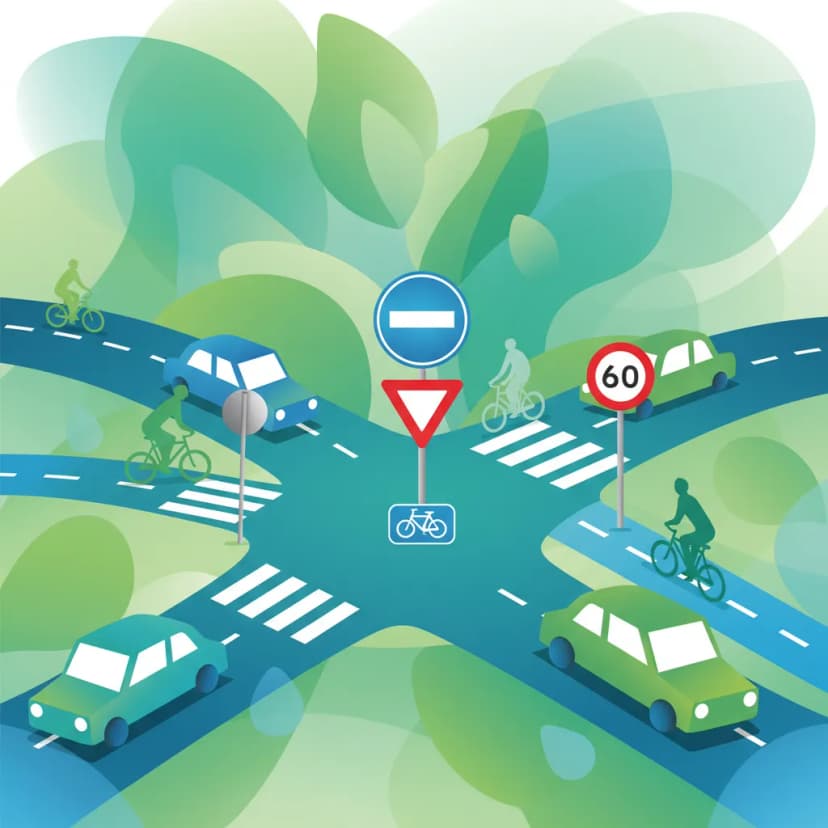
This lesson details the full range of Swedish regulatory signs, which dictate mandatory actions and prohibitions for all road users. You will learn to identify signs that establish speed limits, restrict access, prohibit overtaking, and define parking rules. Understanding these signs is critical for legal compliance and safe interaction with other traffic, as they form the basis of enforceable road law under the Trafikförordning regulations.

This lesson focuses on the variety of road markings used on Swedish roads and their meaning for motorcyclists. You will learn the difference between solid and broken lines regarding overtaking, how to position yourself correctly at intersections based on markings, and how to interpret symbols painted on the road surface. Adhering to these markings is essential for maintaining correct lane discipline and ensuring predictability for other road users.
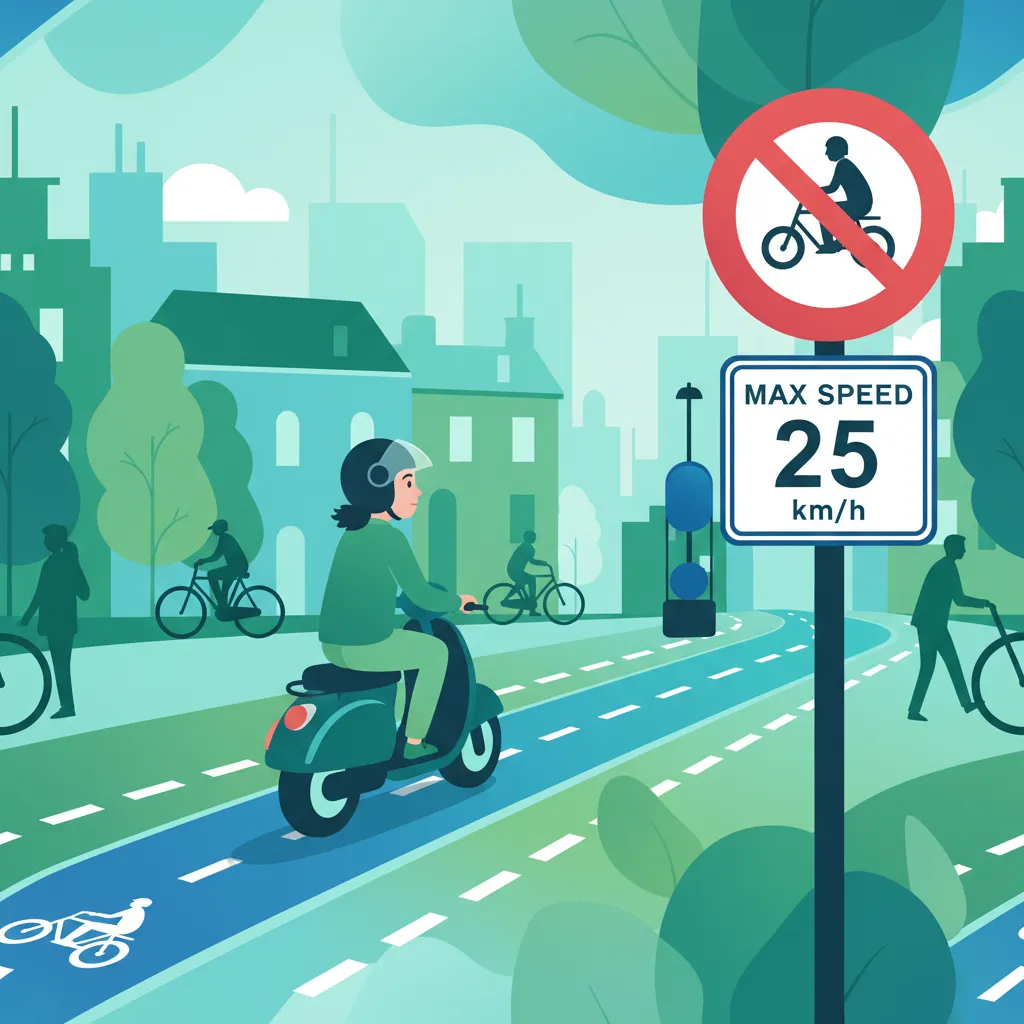
This lesson consolidates the key regulations that apply specifically to moped operation in Sweden. It covers mandatory rules such as speed limits, helmet use, and requirements for vehicle lighting and reflectors. Furthermore, the lesson explains the legal consequences of violations, including the system of fines and potential demerit points, ensuring riders understand their full range of legal responsibilities on the road.
Navigate the process of appealing traffic fines and penalties in Sweden. This lesson covers understanding the grounds for appeal, required documentation, and the procedures involved in challenging enforcement decisions. Essential knowledge for all drivers.
This lesson explains the system of consequences for breaking traffic laws in Sweden. It details common violations and their associated fines and describes the demerit points system that can lead to a license suspension for repeat offenders. Understanding these consequences is a powerful incentive for riders to adhere to the rules of the road.
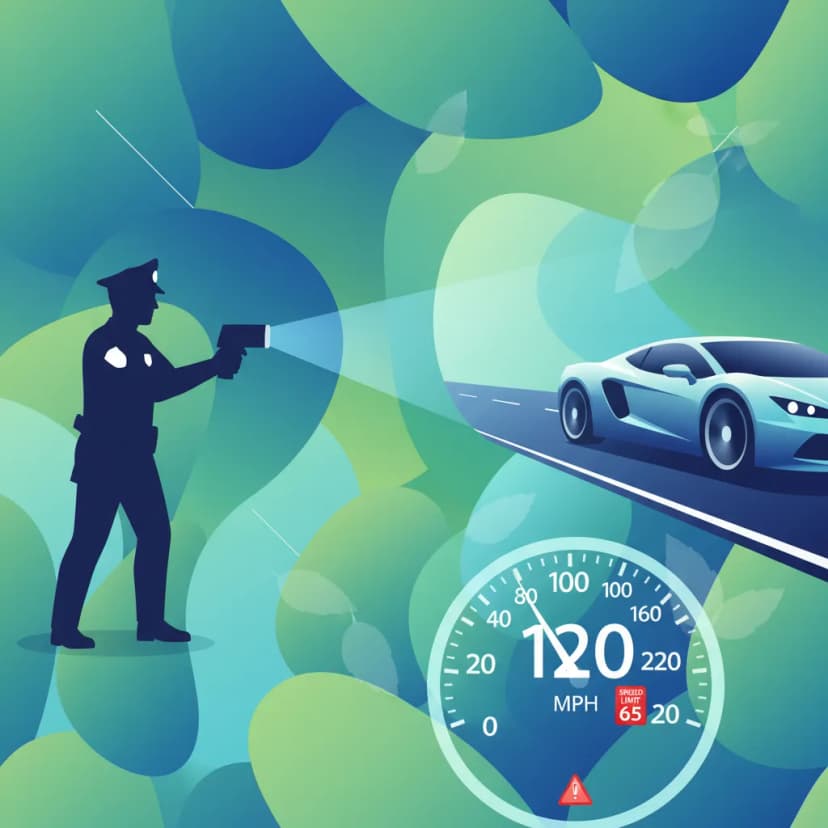
This lesson provides factual information about speed limit enforcement and the penalties for violations in Sweden. You will learn about the different methods used, including automatic traffic safety cameras (ATK), mobile police patrols, and laser measurements. The content details the system of fines (penningböter) and the conditions under which a speeding offense can lead to a warning or the revocation of your driving license.
This lesson outlines the enforcement measures and penalties for speeding violations in Sweden. It explains the system of fines, how they escalate based on the severity of the offense, and the potential for receiving demerit points on a license. The content serves as a serious reminder of the legal and financial consequences of speeding, reinforcing the importance of adhering to all speed regulations.
This lesson informs you about the various technologies and methods used for speed enforcement in Sweden, such as fixed and mobile speed cameras and police radar. You will understand the legal framework for speed monitoring and the corresponding penalties for violations, including fines (böter) and the potential for license suspension. This knowledge reinforces the importance of constant speed awareness and adherence to posted limits to ensure both safety and legal compliance.
Find clear answers to common questions learners have about Traffic Law Enforcement, Penalties, and Appeal Procedures. Learn how the lesson is structured, which driving theory objectives it supports, and how it fits into the overall learning path of units and curriculum progression in Sweden. These explanations help you understand key concepts, lesson flow, and exam focused study goals.
A fine (böter) is a monetary penalty for a traffic violation. A driving license suspension, on the other hand, means your right to drive is temporarily revoked for a specified period, typically for more serious or repeated offenses. Both are legal consequences enforced by Swedish authorities.
Yes, exceeding speed limits significantly or repeatedly can lead to a driving license suspension in Sweden. The severity of the speeding violation and your overall driving record are key factors in this decision.
The primary authority is the Swedish Police (Polisen), who conduct traffic stops and issue tickets. Decisions regarding license suspensions are often made by the Swedish Transport Agency (Transportstyrelsen) based on reports from the police.
If you believe a traffic fine or penalty was issued unfairly, you typically have the right to appeal. The process usually involves formally requesting a review from the authority that issued the penalty, often the police or Transportstyrelsen. Specific instructions are usually provided with the penalty notice.
While many traffic laws and penalties apply equally to all vehicles, certain violations might be perceived differently based on the vehicle type. However, core offenses like speeding, drunk driving, and disregarding priority rules carry serious consequences for all drivers, including motorcyclists, and can lead to fines and license suspension.