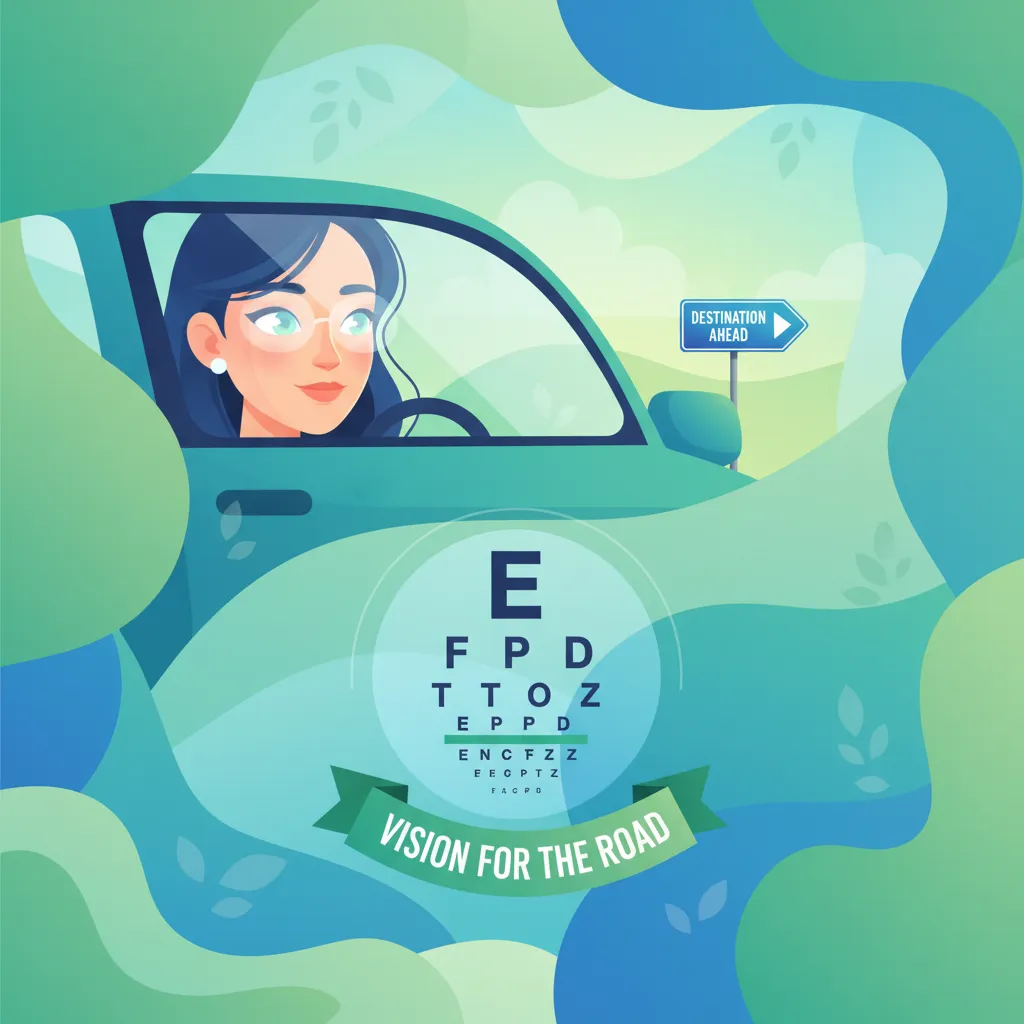
Welcome to the 'Medical Fitness and Vision Standards' lesson, part of Unit 11 on driver fitness. This crucial lesson ensures you understand the legal requirements for maintaining good health and vision to drive safely in Sweden. It builds upon general traffic rules by focusing on your personal responsibility for fitness to drive, preparing you for specific exam questions and safe real-world driving.
Driving a vehicle is a privilege that comes with significant responsibility, especially concerning public safety. In Sweden, as part of the Swedish Driving License Theory Course for Category B Cars, drivers are legally required to meet specific medical and vision standards. These regulations ensure that all individuals operating a motor vehicle possess the fundamental physical and mental capabilities necessary to perceive, interpret, and react safely to various traffic situations.
This lesson will delve into the comprehensive medical requirements for obtaining and retaining a Swedish Category B driving license. We will explore the critical vision standards, including acuity, field of vision, and color perception, along with the mandatory obligation to report certain medical conditions that could impair driving ability. Understanding these standards is not only a legal necessity but a cornerstone of responsible and safe driving, protecting yourself and all other road users.
The ability to drive safely hinges on a driver's physiological and cognitive fitness. Medical conditions or visual impairments can significantly compromise a driver's capacity to operate a vehicle responsibly, leading to delayed reactions, misjudgment of distances, or even sudden incapacitation. The Swedish Transport Agency (Transportstyrelsen) sets these rigorous standards to mitigate such risks and maintain a high level of safety on public roads.
Adequate vision is paramount for detecting road signs, traffic signals, hazards, and other vehicles, especially when maintaining appropriate speeds and safe following distances. Beyond vision, a driver's overall medical health ensures they can remain alert, control the vehicle effectively, and respond appropriately under stress or during emergencies. Failure to comply with these medical and vision requirements endangers everyone and can result in severe legal consequences, including license suspension or revocation.
Vision is arguably the most critical sense for driving. The Swedish regulations specify several visual benchmarks that all Category B license holders must meet. These standards cover not just how clearly you can see, but also your peripheral awareness and ability to distinguish colors and contrasts.
Visual acuity refers to the sharpness of your vision – essentially, how well you can distinguish fine details. It is typically measured using charts like the Snellen or ETDRS chart and expressed as a decimal (e.g., 0.5) or a Snellen fraction (e.g., 6/12).
For a Swedish Category B driving license, you must have a minimum visual acuity of 0.5 (or 6/12) in your better eye. This standard applies whether your vision is unaided or corrected with glasses or contact lenses. If you require corrective lenses to achieve this minimum, you are legally obligated to wear them whenever you drive. The practical implication is that you must be able to read standard road signs at a prescribed distance, typically around 30 meters for a common sign.
It is a common misunderstanding that if your unaided vision is "good enough" for daily life, you don't need corrective lenses for driving, even if your corrected vision is lower. The rule is clear: if corrective lenses help you achieve the required 0.5 acuity, you must wear them. Furthermore, standards usually apply to binocular vision (both eyes working together), though requirements for monocular (one-eye) vision exist and often lead to specific restrictions after a thorough assessment.
Your visual field is the entire area you can see without moving your eyes or head. It encompasses both your central, high-detail vision and your peripheral vision, which is crucial for detecting objects and movement outside your direct line of sight. Visual field width is measured in degrees using a technique called perimetry.
For a Category B license, you must have a minimum binocular visual field of 120 degrees. Individually, each eye should have a field of at least 50 degrees. This broad field of vision is essential for noticing vehicles approaching from the side, pedestrians emerging from blind spots, and hazards at intersections, all without constantly turning your head. A significant loss of peripheral vision, such as a blind spot greater than 30 degrees in any quadrant, may lead to driving restrictions or even license denial. Good central acuity does not compensate for a constricted peripheral field.
Colour vision is your ability to differentiate between various colours, which is vital for interpreting traffic signals, warning signs, and road markings. Standard tests, such as Ishihara plates or Farnsworth–Munsell tests, are used to assess colour discrimination.
The primary concern for drivers is the ability to correctly identify red, amber (yellow), and green traffic lights. While severe colour blindness might lead to restrictions, red-green colour deficiencies are often tolerated in Sweden if you can reliably identify traffic lights based on their shape and position (e.g., red is always at the top, green at the bottom). This compensatory strategy allows many individuals with common colour deficiencies to drive safely. However, if your colour vision significantly impairs your ability to interpret critical road information, your license may be restricted.
Contrast sensitivity refers to your ability to discern objects that have low contrast against their background. This is particularly important in challenging driving conditions like fog, heavy rain, dusk, or night-time. Related to this is your susceptibility to glare, which is the reduction of visibility caused by excessive brightness from sources like oncoming headlights or direct sunlight.
Drivers with clinically significant loss of contrast sensitivity may experience difficulty reading signs in adverse weather or detecting hazards under low-light conditions. Similarly, increased glare sensitivity, often associated with conditions like cataracts, can make night driving or driving against the sun extremely hazardous. In such cases, drivers may be required to use anti-glare lenses or face restrictions, such as being limited to daytime driving. It's important to note that achieving 20/20 (or 1.0) visual acuity does not automatically guarantee adequate contrast sensitivity.
If you need glasses or contact lenses to meet the minimum visual acuity standards, you have a legal obligation to wear them every time you drive. This requirement is so important that your driving license will often carry a specific notation, such as "B (Glasögon)", indicating that corrective lenses are mandatory for you to drive a Category B vehicle.
This rule applies to all types of prescribed visual aids, including standard spectacles, contact lenses, bifocals, progressive lenses, and even special anti-glare coatings if deemed necessary. The purpose is to ensure that you always maintain the required visual thresholds for safe driving. Driving without your required corrective lenses is considered a traffic offence under Trafikförordning (1998:113) 10 kap. 7 § and can lead to fines or other penalties. This includes even short trips or using non-prescribed reading glasses that do not provide the necessary correction for distance vision.
Legal Obligation: If your license has a "spectacles required" notation, driving without them is a serious traffic offence that can result in fines and potential license points or even suspension. Always ensure you have and wear your prescribed corrective lenses while driving.
Beyond vision, drivers have a solemn legal duty to inform the Swedish Transport Agency (Transportstyrelsen) about any diagnosed medical condition that could potentially affect their ability to drive safely. This proactive reporting mechanism allows the agency to assess potential risks and, if necessary, implement restrictions or require medical clearance to ensure public safety.
The obligation generally requires you to report such a condition within two weeks of diagnosis. Failure to do so can have severe legal consequences, including license suspension, fines, or even criminal liability under the Swedish penal code.
Several types of medical conditions are specifically highlighted as requiring mandatory reporting due to their potential impact on driving safety. These include, but are not limited to:
When in Doubt, Report: If you are unsure whether a medical condition needs to be reported, it is always best to contact the Swedish Transport Agency or consult with your doctor. Proactive reporting protects you and others.
Upon reporting, you will likely be asked to submit a medical report from an authorized physician to Transportstyrelsen. This allows medical professionals to assess your fitness to drive and recommend any necessary restrictions or conditions for your license.
To ensure ongoing compliance with medical and vision standards, drivers are required to obtain a medical fitness certificate, known as a Medicinsk Bedömning in Sweden. This official document, issued by an authorized medical practitioner, confirms that you meet all the necessary health and vision standards for your driving license class.
The process generally involves:
Self-Assess & Report: Inform Transportstyrelsen of any new or relevant medical conditions.
Undergo Medical Examination: Schedule and attend a full medical check-up, including vision tests.
Complete Health Questionnaire: Fill out the official questionnaire provided by Transportstyrelsen.
Submit & Receive Certificate: The authorized doctor issues the certificate, confirming your fitness to drive.
Medical fitness certificates are not valid indefinitely. They have specific validity periods, primarily to account for age-related declines in health and vision, as well as the potential for chronic conditions to develop or worsen over time.
These periodic reviews are mandatory. You must arrange appointments with authorized medical providers and complete the necessary examinations before your current certificate expires. Driving with an expired medical fitness certificate is prohibited and can lead to fines under Trafikförordning (1998:113) 10 kap. 2 §, as your medical status for driving is no longer officially confirmed. This ensures that drivers continue to meet the necessary standards throughout their driving careers.
The medical and vision standards for driving in Sweden are not merely recommendations; they are legally binding requirements enshrined in various regulations, primarily the Trafikförordning (1998:113) and specific directives from the Swedish Transport Agency (Transportstyrelsen). Non-compliance carries significant legal consequences, emphasizing the seriousness with which Sweden treats driver fitness.
Here's a summary of key regulations and their implications:
These regulations collectively form a robust framework designed to ensure that only medically fit individuals are permitted to drive, thereby safeguarding everyone on Swedish roads.
Understanding the "why" behind these rules reinforces their importance for everyday driving. Medical fitness and vision standards directly influence a driver's ability to navigate the complex and dynamic traffic environment.
Your visual acuity directly affects how quickly you can recognize and interpret critical road information. For instance, a driver with minimum 0.5 acuity can typically identify a standard 60 km/h speed limit sign from about 30 meters away. At 60 km/h, this provides approximately 2 seconds of reaction time before reaching the sign. If acuity is poorer, this recognition distance shrinks, severely reducing your reaction window and significantly increasing the required stopping distance.
Similarly, adequate visual field width and contrast sensitivity are crucial for hazard perception. Peripheral vision helps detect sudden movements from the side (like a child running into the road or a vehicle merging), while good contrast sensitivity allows you to spot low-visibility objects such as pedestrians in dark clothing or potholes in rain. Drivers with impairments often experience increased psychological load, as more cognitive resources are diverted to basic perception, leaving less capacity for complex decision-making and anticipation.
The impact of visual and medical impairments is often magnified under specific driving conditions:
These factors underscore the holistic nature of driver fitness; it's not just about meeting a single visual threshold but maintaining a comprehensive set of capabilities to safely respond to the full spectrum of driving challenges.
Meeting medical fitness and vision standards is a fundamental requirement for all drivers in the Swedish Driving License Theory Course for Category B Cars. These regulations are meticulously designed to ensure public safety by minimizing the risks associated with impaired driving. By understanding and adhering to the specific standards for visual acuity, field of vision, and color perception, as well as fulfilling the mandatory obligation to report certain medical conditions, drivers contribute directly to safer roads for everyone. Regular medical reviews and the responsible use of corrective lenses are not just legal duties, but essential practices for maintaining your ability to drive safely and confidently throughout your driving life.
Lesson content overview
Explore all units and lessons included in this driving theory course.
Explore search topics learners often look for when studying Medical Fitness and Vision Standards. These topics reflect common questions about road rules, driving situations, safety guidance, and lesson level theory preparation for learners in Sweden.
Browse additional driving theory lessons that cover connected traffic rules, road signs, and common driving situations related to this topic. Improve your understanding of how different rules interact across everyday traffic scenarios.
Understand the legal medical requirements for driving in Sweden, focusing on visual acuity and field of vision standards. Learn about your duty to report medical conditions affecting driving safety to the Transport Agency.
This lesson details the personal eligibility criteria required to obtain a Category AM license in Sweden, starting with the minimum age of 15. It explains the mandatory health assessment, including vision and physical fitness standards, which must be certified by a medical professional. The content also addresses the competency and maturity expectations for young riders, including the role of parental consent in the application process.

This lesson extends the topic of impaired driving to include medications and illegal drugs. You will learn that there is a zero-tolerance policy for illegal narcotics in traffic. The lesson also highlights the importance of being aware of the side effects of prescribed or over-the-counter medications, particularly those marked with a red warning triangle, and stresses the driver's responsibility to consult a doctor or pharmacist about their fitness to drive.

This lesson explains the stringent Swedish laws concerning alcohol and driving. You will learn the legal blood alcohol content (BAC) limit, which is 0.2 per mille, and the higher limit of 1.0 per mille that constitutes the more serious crime of 'grovt rattfylleri'. The content details how alcohol impairs judgment, coordination, and reaction time, and outlines the severe legal penalties, including fines, imprisonment, and license revocation.

This lesson covers strategies for driving safely when visibility is compromised. You will learn the correct use of different lighting systems: when to use low beams, high beams (helljus), and how to avoid dazzling other drivers. The lesson also explains the specific regulations for using front and rear fog lights and provides techniques for navigating safely in dense fog or heavy precipitation by reducing speed and using the road edge as a guide.

This lesson focuses on creating a complete awareness of the traffic situation around your vehicle. You will learn the correct procedure for using your interior and side mirrors in a continuous scanning pattern. Crucially, the lesson explains what the blind spot (döda vinkeln) is, where it is located, and why a physical head check over the shoulder is a non-negotiable safety step before any lateral movement like changing lanes or turning.

This lesson provides a comprehensive guide to the Swedish Category AM theory examination process managed by Transportstyrelsen. It outlines the necessary steps for registration, the specific documentation required such as valid ID and medical certificates, and how to schedule a test at an authorized center. Learners will understand the exam format, scoring system, and the procedures for receiving their license upon successful completion.
Explore the legal duty for Swedish drivers to report medical conditions like epilepsy or severe diabetes that may impact driving. Essential knowledge for safe driving and compliance with Transportstyrelsen regulations.
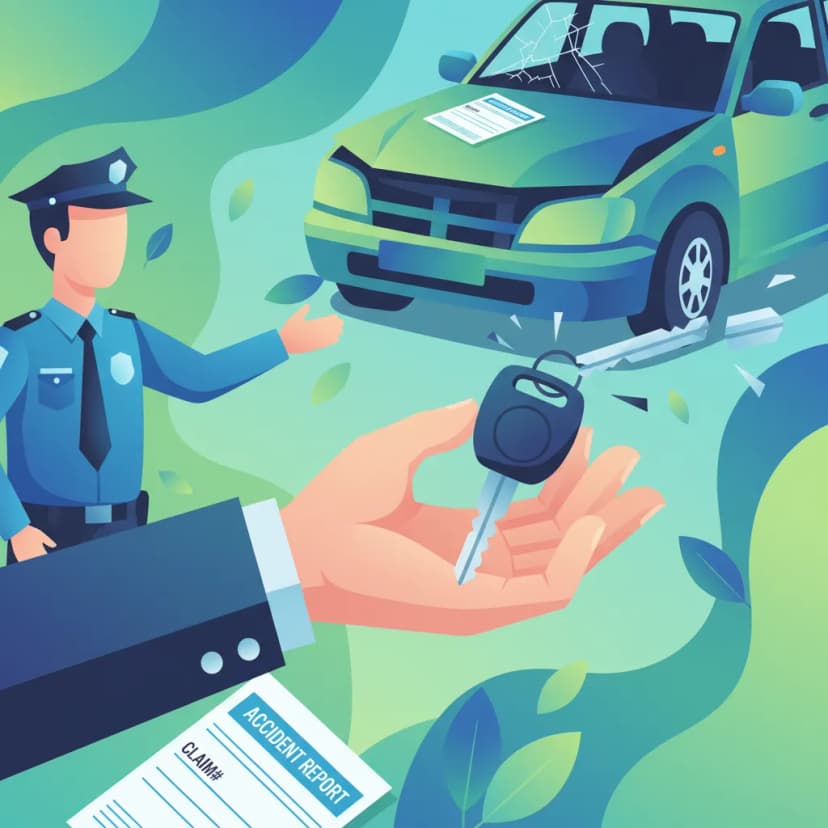
This lesson covers the administrative and legal obligations following a collision. You will learn under which circumstances you are legally required to notify the police, such as when there are injuries or significant property damage. The content details the essential information that must be exchanged between all involved parties—names, contact details, vehicle registration, and insurance information—and the importance of documenting the scene and gathering witness details for insurance claims.
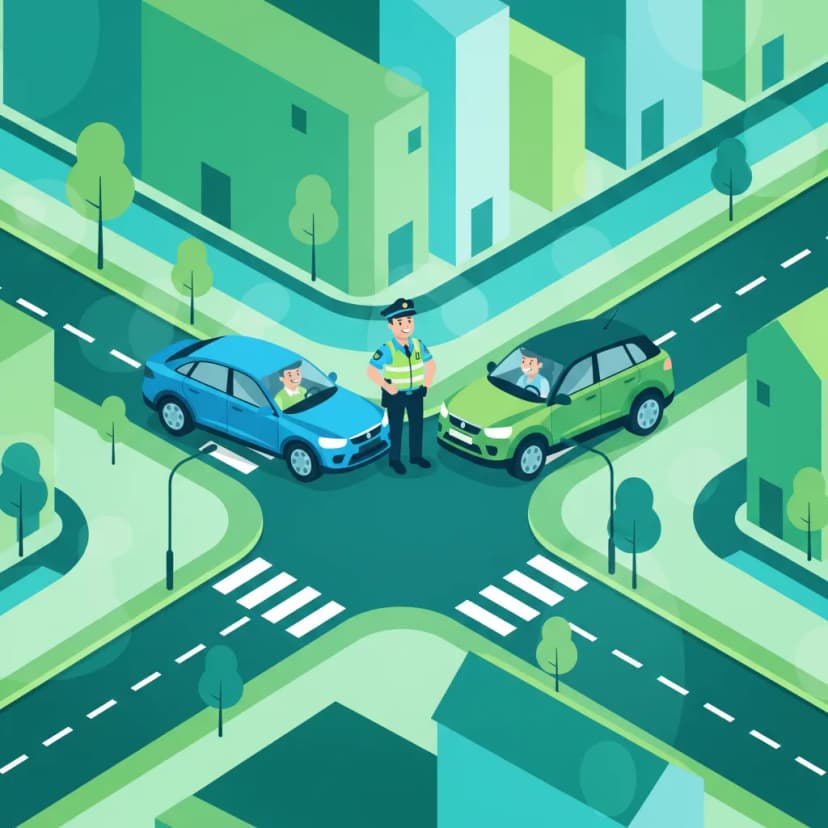
This lesson explains the legal requirements in Sweden for reporting a traffic accident to the police (Polisanmälan). It clarifies in which situations a report is mandatory, such as when there are injuries or significant property damage. The content guides learners on the information they will need to provide for the report and for subsequent insurance claims.
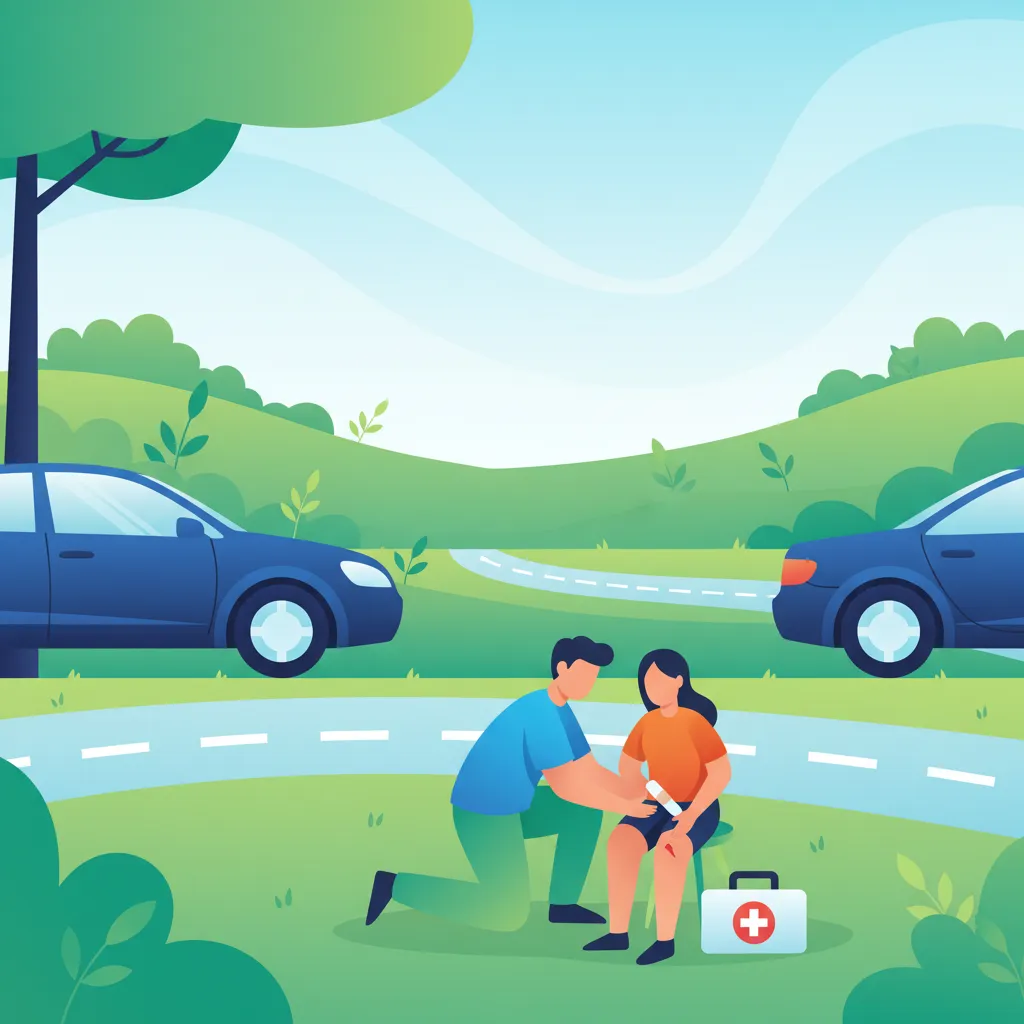
This lesson covers the basics of providing first aid in an emergency, which is a legal duty for anyone arriving at an accident scene. You will be introduced to the L-ABCDE mnemonic (Life-threatening situation, Airway, Breathing, Circulation, Disability, Exposure) as a way to systematically assess and prioritize injuries. The content emphasizes that the most important role is often to ensure the person is breathing and to follow the instructions of the emergency operator until professional help arrives.
This lesson extends the topic of impaired driving to include medications and illegal drugs. You will learn that there is a zero-tolerance policy for illegal narcotics in traffic. The lesson also highlights the importance of being aware of the side effects of prescribed or over-the-counter medications, particularly those marked with a red warning triangle, and stresses the driver's responsibility to consult a doctor or pharmacist about their fitness to drive.

This lesson details the procedural and legal steps for reporting an accident. You will learn when you are legally obligated to report a crash to the police, what information to exchange with other involved parties, and the importance of documenting the scene with photographs and witness details. This information is vital for ensuring any subsequent insurance claims and legal proceedings are handled smoothly and fairly.
This lesson explains the stringent Swedish laws concerning alcohol and driving. You will learn the legal blood alcohol content (BAC) limit, which is 0.2 per mille, and the higher limit of 1.0 per mille that constitutes the more serious crime of 'grovt rattfylleri'. The content details how alcohol impairs judgment, coordination, and reaction time, and outlines the severe legal penalties, including fines, imprisonment, and license revocation.
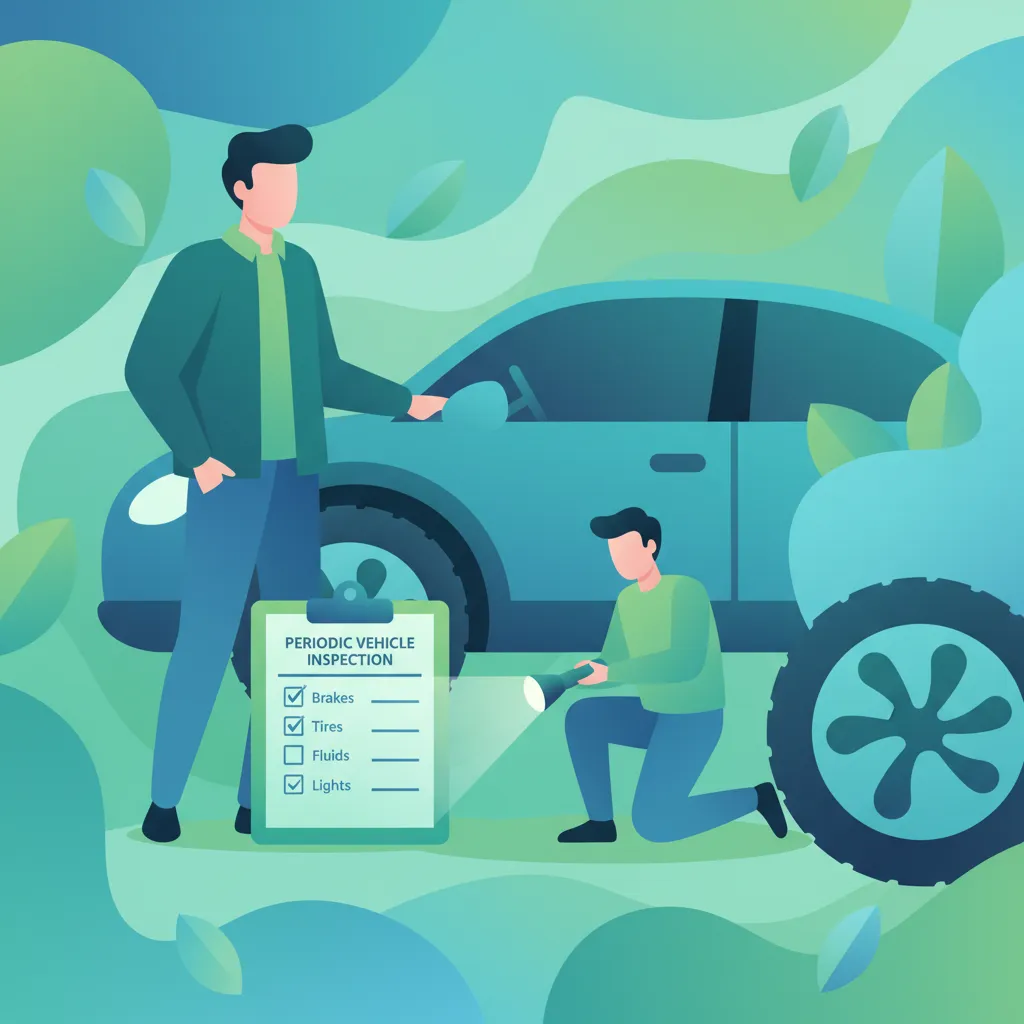
This lesson explains the legal requirement for periodic vehicle inspection in Sweden. You will learn about the role of the 'besiktning' in ensuring that vehicles on the road meet minimum safety and environmental standards. The content covers how to find out when your vehicle is due for inspection, what key components are checked (such as brakes, steering, and emissions), and the possible outcomes, including approval, recommendations for repair, or a driving prohibition (körförbud).

This lesson provides a sobering overview of the multifaceted consequences of being convicted of an impaired driving offense. It details the legal penalties, which can range from heavy fines to imprisonment, and the mandatory revocation of the driving license for a set period. The content also touches on the significant non-legal consequences, such as increased insurance costs, potential civil liability for damages, and the profound personal and social impact of causing an accident.
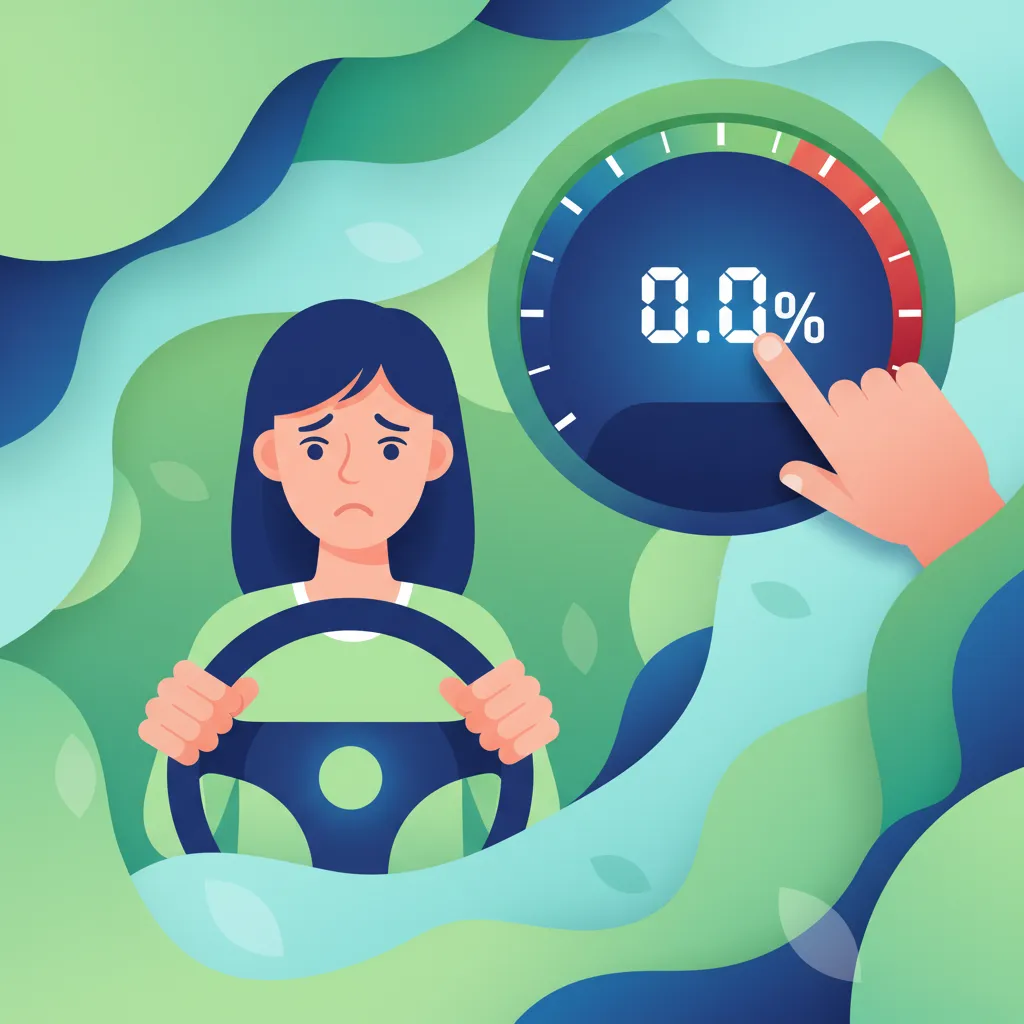
This lesson covers Sweden's stringent 'Nolltolerans' (zero tolerance) laws regarding driving under the influence of alcohol and drugs. It explains the very low legal blood alcohol limits and the severe penalties for violations, which can include heavy fines, license suspension, and even imprisonment. The message is unequivocal: riding and impairment do not mix.
This lesson covers strategies for driving safely when visibility is compromised. You will learn the correct use of different lighting systems: when to use low beams, high beams (helljus), and how to avoid dazzling other drivers. The lesson also explains the specific regulations for using front and rear fog lights and provides techniques for navigating safely in dense fog or heavy precipitation by reducing speed and using the road edge as a guide.
Find clear answers to common questions learners have about Medical Fitness and Vision Standards. Learn how the lesson is structured, which driving theory objectives it supports, and how it fits into the overall learning path of units and curriculum progression in Sweden. These explanations help you understand key concepts, lesson flow, and exam focused study goals.
For a Category B license, drivers must have a visual acuity of at least 0.5 (in the better eye, or both eyes together) and a sufficient field of vision. If your vision is below these standards, you may still be granted a license if you can achieve the required standard with corrective lenses (glasses or contact lenses).
You must report any medical condition that could potentially affect your ability to drive safely. This includes, but is not limited to, epilepsy, diabetes requiring insulin, serious heart conditions, neurological disorders, severe sleep disorders, and conditions affecting your eyesight or motor control. Always consult your doctor if you are unsure.
Yes, you can drive with glasses or contact lenses if they correct your vision to meet the required standards for visual acuity and field of vision. If you are required to wear corrective lenses while driving, this will be noted on your driving license, and you must wear them every time you drive.
The best way is to have a professional eye examination. Opticians and ophthalmologists can test your visual acuity and field of vision according to the official standards. If corrective lenses are needed, they will be prescribed. Your doctor can also advise on whether any medical conditions might impact your driving fitness.
Failure to report a medical condition that impairs your ability to drive safely can have serious consequences. It may lead to prosecution, fines, and revocation of your driving license. It also poses a significant risk to yourself and others on the road.