
This lesson focuses on the serious consequences of speeding in Sweden. We’ll break down the penalty system, including fines and demerit points, and explain how these are applied to AM moped riders. Understanding these rules is crucial for staying safe and passing your theory exam.
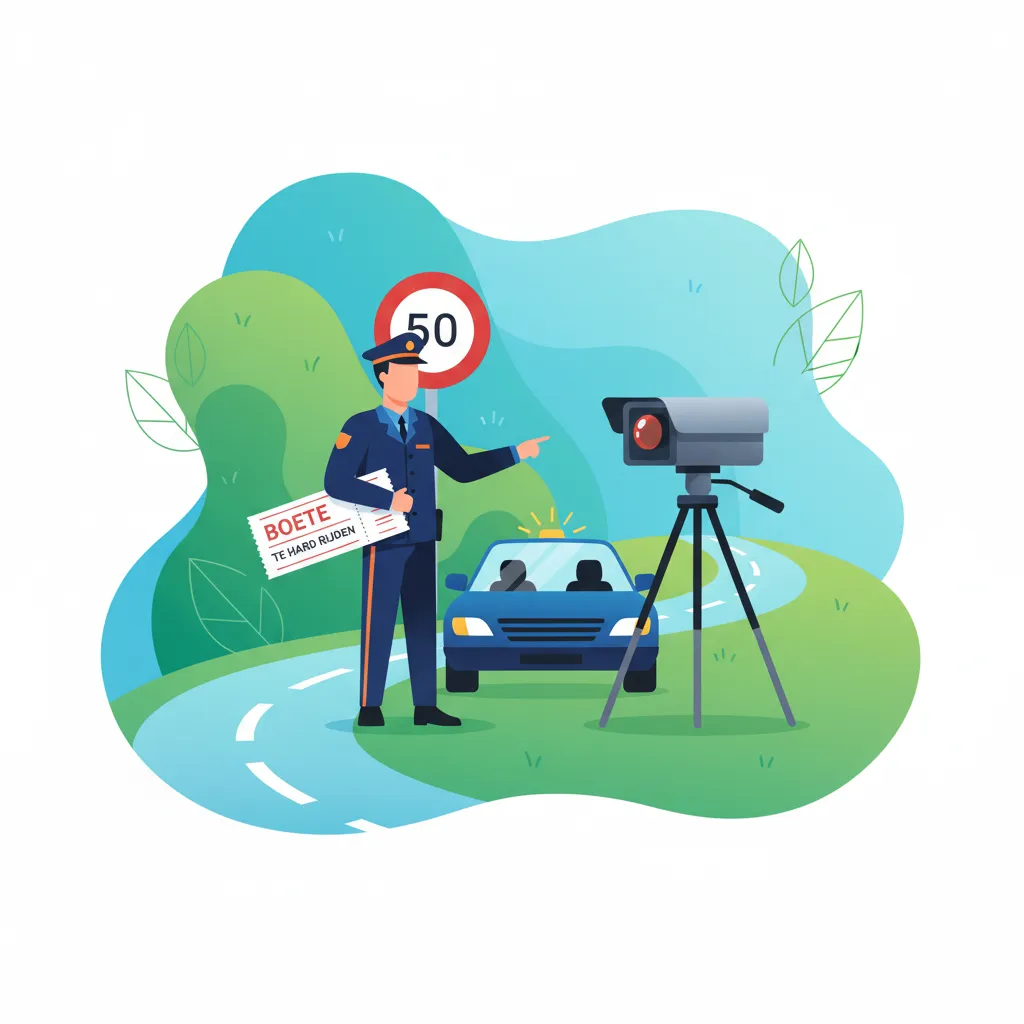
Riding a moped (Category AM) in Sweden comes with significant legal responsibilities, especially concerning speed limits. Exceeding these limits not only endangers yourself and other road users but also carries substantial legal and financial consequences. This lesson provides a comprehensive overview of how speeding violations are detected, processed, and penalised under Swedish traffic law, reinforcing the critical importance of adhering to all speed regulations.
Understanding these enforcement measures and penalties is crucial for every moped rider. It helps you grasp the serious nature of speeding, the direct impact on your finances, and the potential loss of your driving licence. This knowledge is not just about avoiding punishment; it's about fostering safe driving habits and contributing to overall road safety in Sweden.
Before delving into penalties, it's essential to have a clear understanding of the speed limits applicable to Category AM mopeds in Sweden. These limits are legally mandated maximum speeds designed to ensure safety and efficient traffic flow.
Mopeds classified as Category AM are subject to specific speed regulations:
Speed limits are not always static. Temporary signs can override permanent limits, and riders must always be vigilant for these changes.
Remember, exceeding any listed speed limit for your vehicle class is illegal. Ignorance of the applicable limit is not a valid defence.
Swedish authorities employ a range of technologies and methods to monitor vehicle speeds and enforce traffic laws. Riders should understand that speed can be measured at any time, not solely at visible camera locations.
Fixed speed cameras are strategically placed along roads, particularly in areas with higher accident rates or where speeding is prevalent. These cameras use radar or laser technology to measure vehicle speed.
Police and traffic officers frequently operate mobile speed traps.
While less common for primary evidence in major speeding cases, police officers are trained to estimate vehicle speeds.
ANPR systems are used in various contexts, sometimes integrated with speed enforcement.
The most effective way to avoid penalties is to maintain a consistent, legal speed at all times, rather than slowing down only when a camera or police car is visible.
Sweden employs a robust penalty system for speeding, designed to be both deterrent and equitable. It combines financial penalties with a demerit point system to encourage long-term compliance.
The severity of a speeding fine is primarily determined by the "penalty units" assigned, which depend on how much you exceeded the speed limit.
Generally, the scale looks like this (though specific thresholds should always be verified against the latest official guidelines):
The more you exceed the limit, the higher the penalty units, and consequently, the higher your fine and the more licence points you receive. This graduated scale reflects the increased danger posed by higher speeds.
Sweden uses a unique "day-rate" system for calculating monetary fines, ensuring that penalties are proportional to an offender's economic situation.
A monetary penalty calculated by multiplying a base "day rate" (linked to the offender’s declared income) by the number of penalty units assigned to the offence.
Determine Net Monthly Income: Your income after taxes is assessed.
Apply Formula: The base day-rate is calculated using a specific formula, often around 0.6 times your monthly net income, divided by 30 (to get a daily amount).
Round to Nearest SEK: The calculated day-rate is rounded to the nearest whole Swedish Krona (SEK).
Multiply by Penalty Units: The final fine amount is the day-rate multiplied by the number of penalty units assigned to your speeding offence.
This system means that two individuals committing the exact same speeding offence (e.g., 15 km/h over the limit) might pay different absolute amounts in SEK, but they both receive the same number of penalty units. This principle ensures that the fine acts as a deterrent across all socioeconomic groups.
In addition to monetary fines, speeding violations also result in demerit points, known as "prickar" (points or marks) on your driving record. Accumulation of these points can lead to serious consequences, including licence suspension or revocation.
A demerit-point system where each traffic offence adds "points" to a driver's record, with accumulation triggering potential licence suspension or revocation.
Point Allocation for Speeding:
Suspension Thresholds:
Licence points are recorded by the Swedish Transport Agency (Transportstyrelsen) and remain on your record for a fixed period (typically three years from the date of the offence). They are an automatic consequence, separate from the fine.
For grave speeding offences, police have the authority to take immediate administrative action, which can result in the on-the-spot suspension of your driving licence.
The authority granted to police officers to suspend a driving licence on-site for extremely dangerous speed infractions or when the driver is deemed an immediate danger to traffic safety.
If your licence is immediately suspended by the police:
This immediate action highlights the Swedish authorities' commitment to swiftly removing high-risk drivers from the road, underscoring the severe consequences of extreme speeding.
While the core rules apply broadly, certain conditions and contexts can influence how speeding offences are handled, potentially leading to aggravated penalties.
These contextual factors highlight that compliance isn't just about the number on the speed limit sign; it's about driving responsibly for the prevailing conditions and environment.
The foundation of speed enforcement and penalties in Sweden is enshrined in various laws and regulations. Familiarity with these helps underscore the mandatory nature of traffic rules.
This is the primary legal document governing traffic rules in Sweden. It sets out general speed limits, rules for different vehicle types, and outlines prohibited behaviours, including exceeding speed limits. It establishes the legal basis for why speeding is an offence.
Transportstyrelsen is responsible for vehicle registration, driver's licences, and maintains records of traffic offences and licence points. They set the detailed regulations for licence point allocation and manage the licence suspension/revocation process.
Kronofogden is responsible for collecting fines and debts. They manage the day-rate fine system, ensuring that fines are calculated and collected according to an individual's financial capacity.
This act grants police officers the authority to enforce traffic laws, conduct speed measurements, and take immediate administrative action, such as on-site licence suspensions, in cases of severe traffic violations.
Understanding that these rules are backed by a comprehensive legal framework, enforced by dedicated authorities, reinforces the seriousness of traffic law compliance.
The strict enforcement of speed limits in the Swedish Category AM driving licence theory course is not arbitrary; it's rooted in fundamental physics and human factors.
Higher speeds reduce your field of vision and the time you have to perceive and react to hazards, especially unexpected ones like a child stepping into the road or another vehicle making an abrupt turn. Moped riders, being more exposed, are particularly vulnerable in such situations.
Statistics from the Swedish Transport Agency (Trafikverket and Transportstyrelsen) consistently show that speeding is a major contributing factor in road accidents, especially those resulting in severe injury or fatality. For mopeds, exceeding limits by even 20 km/h significantly elevates the risk of severe injury.
These insights underscore that speed limits are not merely arbitrary numbers but critical safety parameters designed to protect lives.
For those studying for their Swedish Category AM (Moped) Driving License Theory Course, understanding speeding penalties is paramount.
Your commitment to adhering to speed limits is a fundamental aspect of safe riding and a legal obligation in Sweden.
Lesson content overview
Explore all units and lessons included in this driving theory course.
Explore search topics learners often look for when studying Enforcement and Penalties for Speed Violations. These topics reflect common questions about road rules, driving situations, safety guidance, and lesson level theory preparation for learners in Sweden.
Browse additional driving theory lessons that cover connected traffic rules, road signs, and common driving situations related to this topic. Improve your understanding of how different rules interact across everyday traffic scenarios.
Explore the national speed limit structure and specific limits for mopeds in Sweden. Learn how to calculate safe stopping distances and adjust your speed according to varying road conditions and weather for safer driving.

This lesson teaches the crucial skill of adapting speed to prevailing conditions, emphasizing that the posted speed limit is a maximum, not a target. It covers various scenarios such as rain, fog, heavy traffic, and poor road surfaces, explaining why reducing speed is essential for maintaining vehicle control and safety. The goal is to cultivate a proactive mindset where the rider constantly assesses risk and adjusts their speed accordingly.

This lesson reinforces the core safety principle of adapting your driving to the prevailing weather conditions. You will learn why you must significantly reduce speed in heavy rain to avoid aquaplaning, how strong crosswinds can affect vehicle stability, and why reduced visibility in fog necessitates slower speeds and greater following distances. The goal is to instill a proactive approach to risk management whenever the weather is less than ideal.
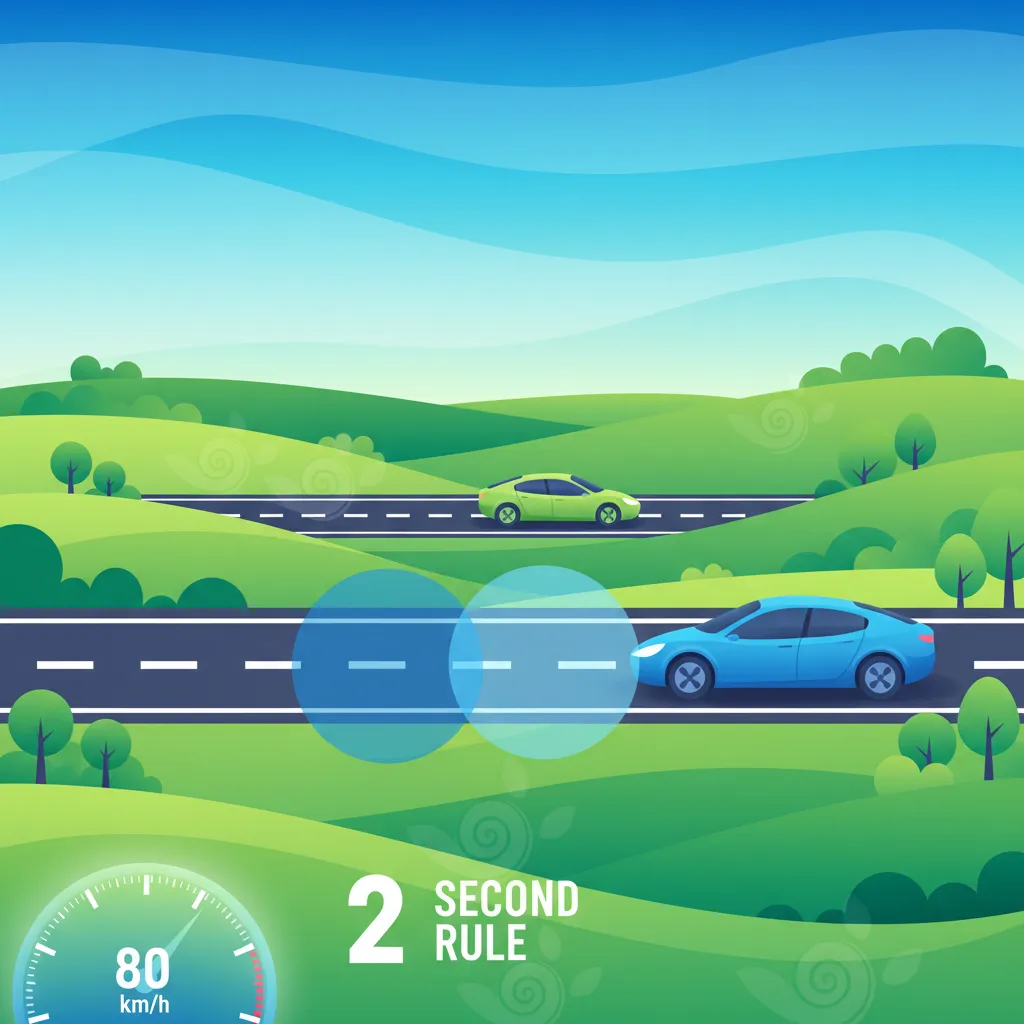
This lesson teaches practical methods for maintaining a safe buffer to the vehicle ahead, with a primary focus on the universally recommended 'three-second rule'. You will learn how to apply this rule by picking a fixed point and counting the seconds until you pass it. The content also explains why this distance must be increased significantly in adverse conditions such as rain, snow, or when following large vehicles that obstruct your view.

This lesson delves into the physics of stopping a motorcycle, explaining the components of total stopping distance: perception time, reaction time, and braking distance. You will learn practical methods like the 'two-second rule' to maintain a safe following distance and how to adjust this buffer for adverse weather and high speeds. Understanding these concepts is fundamental to avoiding rear-end collisions and having enough space to react to any hazard.
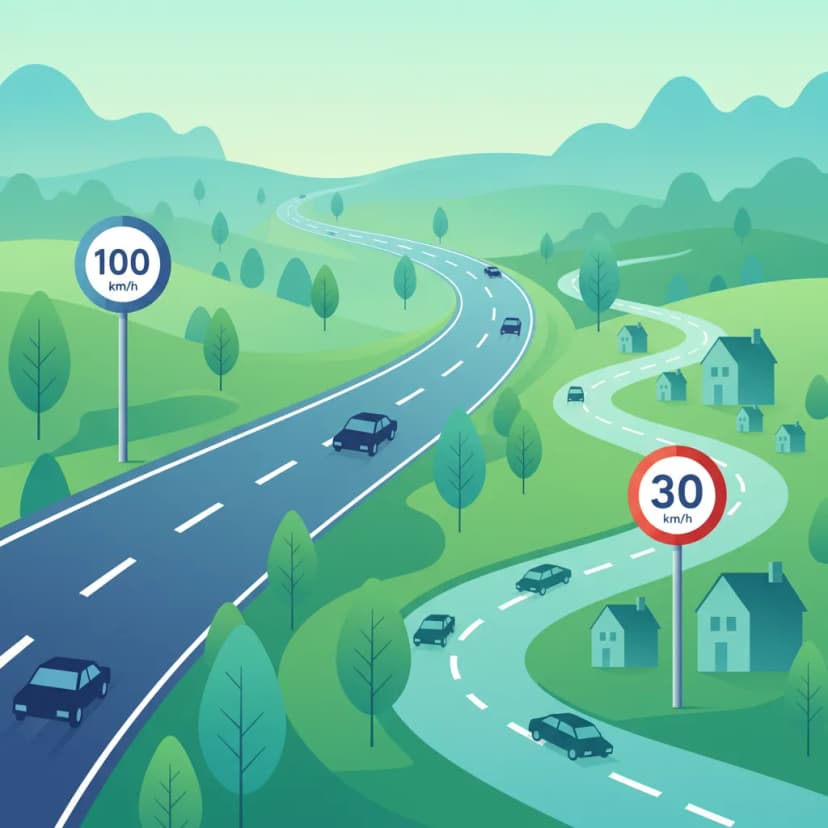
This lesson provides a comprehensive overview of the Swedish national speed limit system. You will learn the default speed limits applicable to different classes of roads, such as 50 km/h in built-up areas and 110 km/h on motorways. It also covers how to identify and comply with special zones, like residential areas (gångfartsområde), school zones, and temporary limits in construction areas, ensuring you always ride at a legal and appropriate speed.

This lesson introduces the foundational legal concept of 'duty of care,' which requires all road users to act in a way that does not endanger others. It explains that this duty often requires driving at a 'reasonable speed' that may be lower than the posted limit, depending on conditions. This principle encourages a proactive and considerate approach to sharing the road.
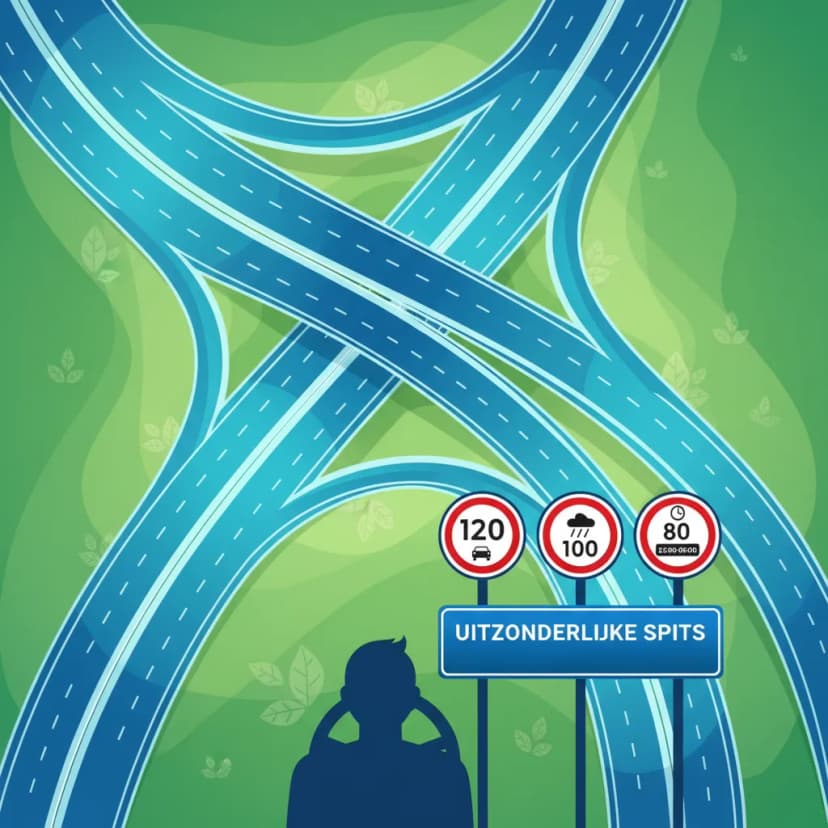
This lesson explains the general speed limit system in Sweden, including the default limits that apply in the absence of specific signs. It covers the standard speeds for built-up areas, roads outside built-up areas, and motorways, clarifying which are relevant to moped riders. Understanding this structure enables riders to determine the correct legal speed even when signs are not immediately visible.
This lesson focuses on the unique demands of managing speed in high-speed environments like motorways. You will learn techniques for maintaining a steady, appropriate speed that matches the flow of traffic, how to perform smooth overtakes, and the importance of increasing your following distance. It also covers physical factors such as managing wind blast and maintaining stability when riding near large trucks, ensuring a safe and controlled high-speed riding experience.
This lesson emphasizes that the posted speed limit is a maximum, not a target. You will learn the principles of situational speed adaptation, which involves adjusting your speed based on factors like visibility, road geometry (curves and hills), traffic density, and potential hazards. The lesson covers specific strategies for managing speed in urban environments with pedestrians, on rural roads with hidden entrances, and on motorways to match the flow of traffic.
This lesson focuses on the specific speed regulations applicable to Category AM mopeds in Sweden. It emphasizes the absolute maximum legal speed of 45 km/h and explains that riders must always adapt their speed to be lower when conditions require. The content also covers any special, lower speed limits that may apply when riding on designated cycle paths or in shared spaces.
Understand the Swedish legal framework for speeding. This lesson details the fines, demerit points, and other penalties associated with exceeding speed limits for AM license holders, reinforcing adherence to road safety regulations.

This lesson explains the system of consequences for breaking traffic laws in Sweden. It details common violations and their associated fines and describes the demerit points system that can lead to a license suspension for repeat offenders. Understanding these consequences is a powerful incentive for riders to adhere to the rules of the road.
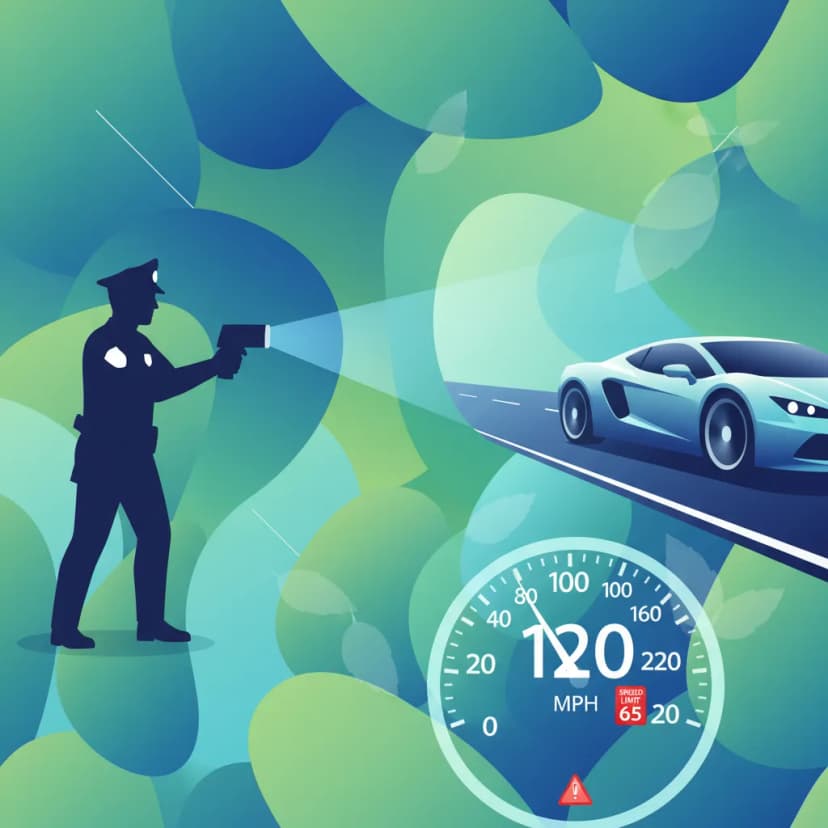
This lesson provides factual information about speed limit enforcement and the penalties for violations in Sweden. You will learn about the different methods used, including automatic traffic safety cameras (ATK), mobile police patrols, and laser measurements. The content details the system of fines (penningböter) and the conditions under which a speeding offense can lead to a warning or the revocation of your driving license.
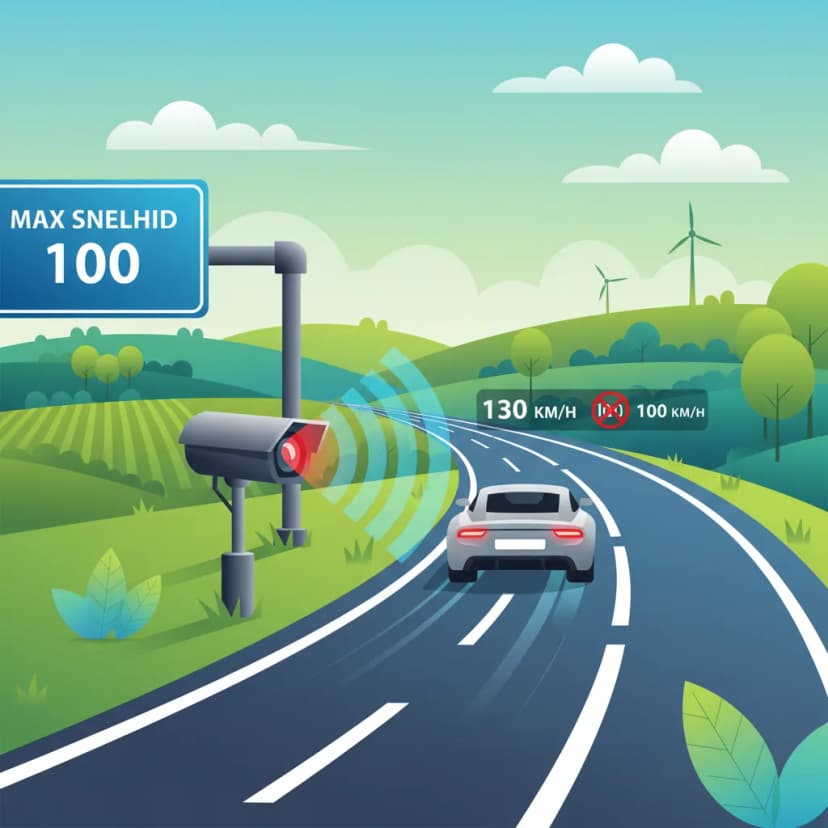
This lesson informs you about the various technologies and methods used for speed enforcement in Sweden, such as fixed and mobile speed cameras and police radar. You will understand the legal framework for speed monitoring and the corresponding penalties for violations, including fines (böter) and the potential for license suspension. This knowledge reinforces the importance of constant speed awareness and adherence to posted limits to ensure both safety and legal compliance.
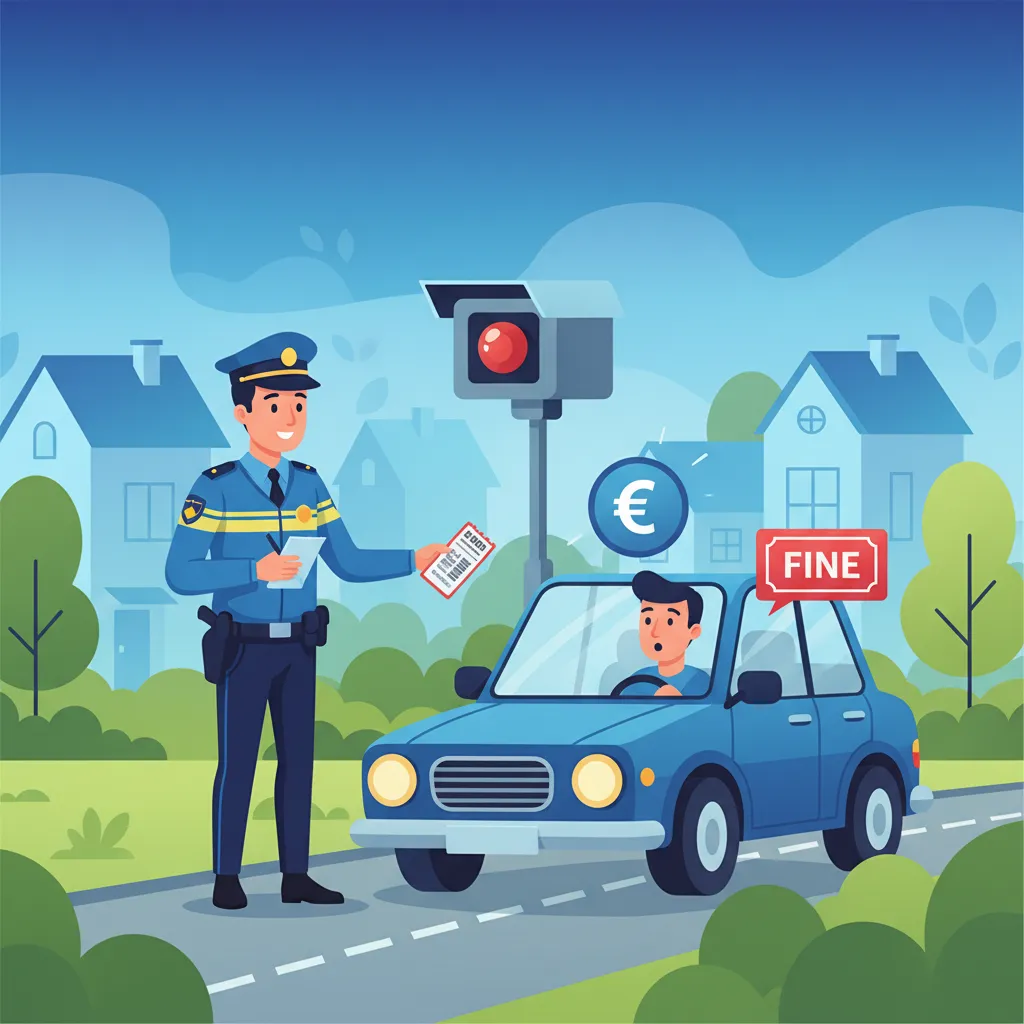
This lesson provides an overview of traffic law enforcement in Sweden, explaining the roles of the police and other authorities. You will learn about the system of penalties for common traffic violations, including the scale of fines (böter) and the conditions under which your license may be suspended. Understanding the legal consequences of unsafe or unlawful riding provides a powerful incentive to always adhere to the rules of the road.

This lesson provides a sobering overview of the multifaceted consequences of being convicted of an impaired driving offense. It details the legal penalties, which can range from heavy fines to imprisonment, and the mandatory revocation of the driving license for a set period. The content also touches on the significant non-legal consequences, such as increased insurance costs, potential civil liability for damages, and the profound personal and social impact of causing an accident.
This lesson explains the general speed limit system in Sweden, including the default limits that apply in the absence of specific signs. It covers the standard speeds for built-up areas, roads outside built-up areas, and motorways, clarifying which are relevant to moped riders. Understanding this structure enables riders to determine the correct legal speed even when signs are not immediately visible.
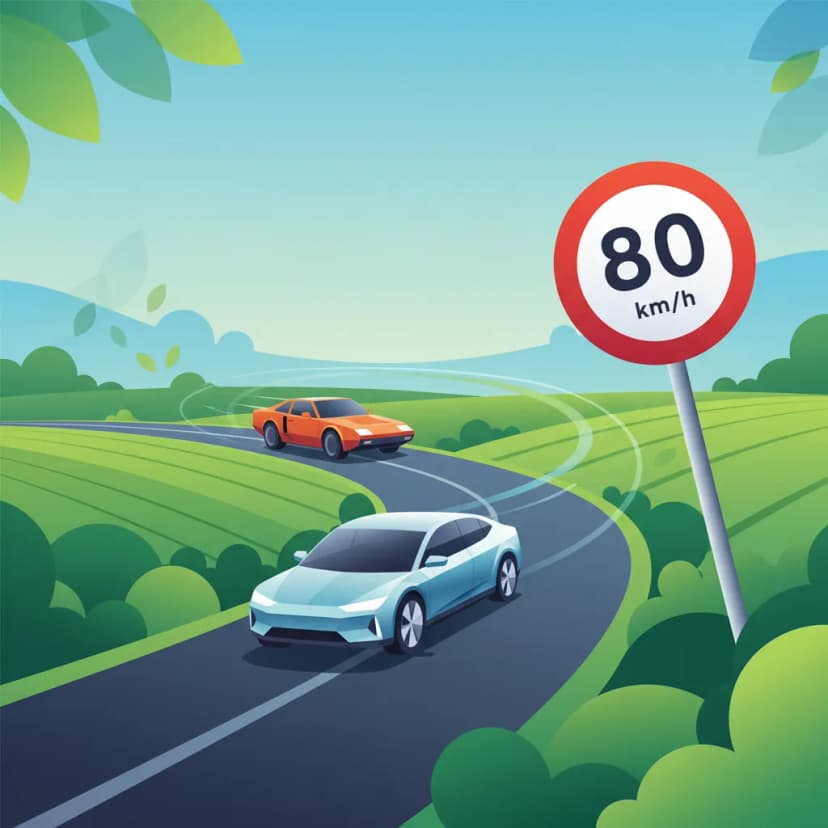
This lesson explains the hierarchical structure of speed limits in Sweden as defined by the Trafikförordning. It covers the default 'base speeds', including 50 km/h in built-up areas and 70 km/h outside them, and how these are modified by specific road signs. You will learn to identify speed limit signs for different road types, such as motorways and residential zones, and understand the legal framework that governs maximum permissible speeds.
This lesson introduces the foundational legal concept of 'duty of care,' which requires all road users to act in a way that does not endanger others. It explains that this duty often requires driving at a 'reasonable speed' that may be lower than the posted limit, depending on conditions. This principle encourages a proactive and considerate approach to sharing the road.
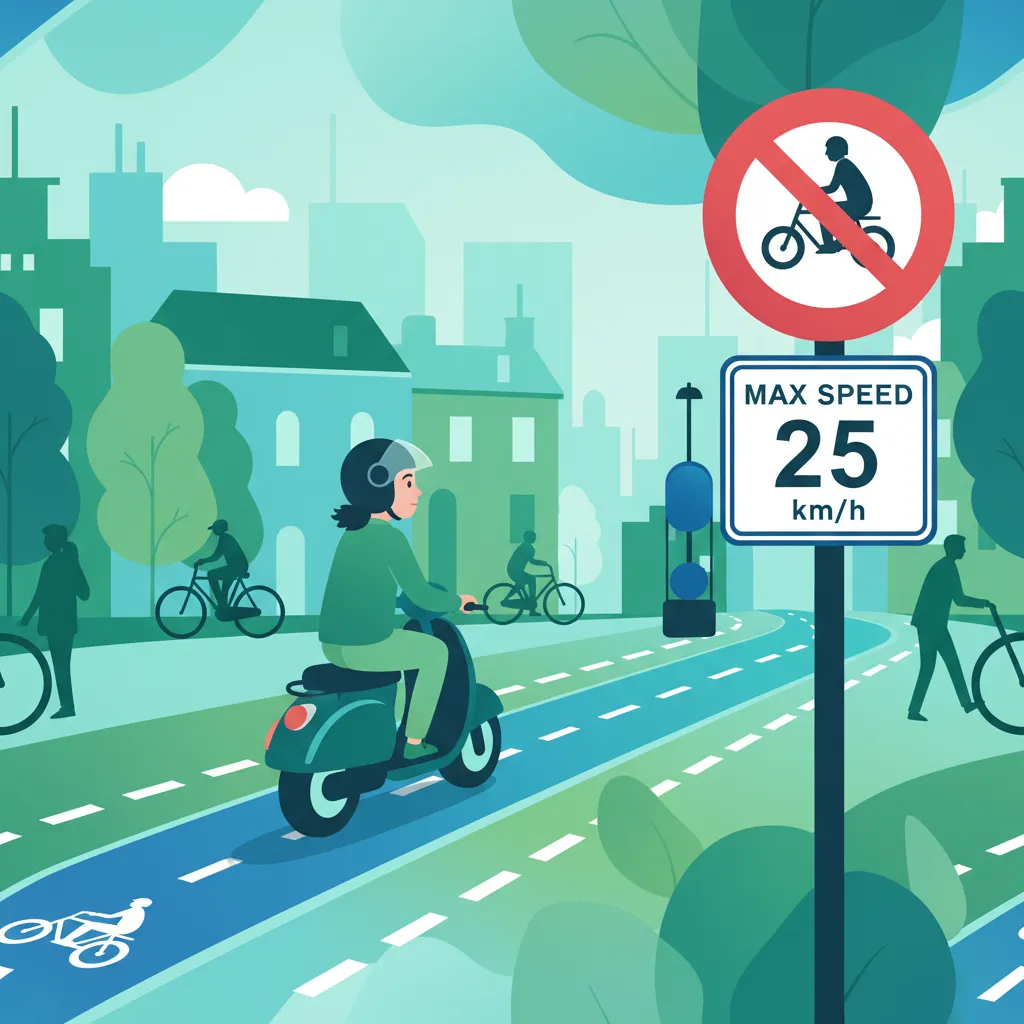
This lesson consolidates the key regulations that apply specifically to moped operation in Sweden. It covers mandatory rules such as speed limits, helmet use, and requirements for vehicle lighting and reflectors. Furthermore, the lesson explains the legal consequences of violations, including the system of fines and potential demerit points, ensuring riders understand their full range of legal responsibilities on the road.
This lesson provides a comprehensive overview of the Swedish national speed limit system. You will learn the default speed limits applicable to different classes of roads, such as 50 km/h in built-up areas and 110 km/h on motorways. It also covers how to identify and comply with special zones, like residential areas (gångfartsområde), school zones, and temporary limits in construction areas, ensuring you always ride at a legal and appropriate speed.
Find clear answers to common questions learners have about Enforcement and Penalties for Speed Violations. Learn how the lesson is structured, which driving theory objectives it supports, and how it fits into the overall learning path of units and curriculum progression in Sweden. These explanations help you understand key concepts, lesson flow, and exam focused study goals.
In Sweden, the 'prickar' system assigns demerit points for traffic violations. For AM mopeds, accumulating too many points within a specific period can lead to a temporary suspension of your driving license. This lesson explains how speeding violations can contribute to your prickar count.
Speeding fines in Sweden are typically based on how far over the speed limit you were driving. The faster you were going, the higher the fine. This lesson details the tiered system of fines applied to AM moped riders to reinforce the importance of compliance.
The 'Nolltolerans' (zero tolerance) policy in Sweden primarily applies to alcohol and drugs. However, the principle of strict adherence to traffic laws, including speed limits, is fundamental. Exceeding speed limits is taken seriously and results in penalties as outlined in this lesson.
Yes, consistently speeding or committing serious speeding violations can lead to accumulating demerit points (prickar). If you accumulate the maximum allowed points within a set timeframe, your AM license can be suspended or revoked. This lesson emphasizes the cumulative impact of speeding offenses.
While this lesson focuses on penalties, it's important to remember that Category AM mopeds have specific speed limits. Exceeding these limits, regardless of the exact moped type within the AM category, will result in penalties. Always adhere to the posted speed limits.