
Welcome to the essential lesson on moped balance, steering, and body positioning! As a Category AM rider in Sweden, understanding how your body interacts with the moped is fundamental for safe riding. This lesson, part of Unit 5, builds upon basic controls and prepares you for more complex maneuvers and real-world riding scenarios.
Welcome to the Swedish Driving License Theory Course – Category AM (Moped). This comprehensive lesson delves into the crucial physical and biomechanical principles that underpin safe and effective moped riding: balance, steering, and body positioning. These skills are not merely theoretical; they are the foundation for every maneuver you will perform on the road, from stopping at a traffic light to navigating a curved road.
Understanding how your body interacts with the moped is paramount. It allows you to maintain equilibrium, execute precise steering inputs, and adopt the optimal posture for safety and complete vehicle control. In fact, loss of balance is a significant factor in many moped incidents, especially at lower speeds. By mastering these fundamentals, you will significantly reduce your risk of falls and collisions, paving the way for more advanced riding techniques such as acceleration, braking, and cornering.
A moped and its rider form a single, dynamic system. The stability and responsiveness of this system are governed by a continuous interplay of physical forces, the moped's design, and the rider's deliberate actions. Effective riding is about harmonizing these elements to maintain control at all times. This section introduces the core concepts of balance and the critical role of the vehicle's and rider's combined centre of gravity.
At its heart, safe moped riding is an application of physics. Forces such as gyroscopic effects from spinning wheels, the geometry of the steering system (like rake and trail), and the crucial tire contact patches all interact with how the rider distributes their weight. When these forces are understood and managed, the rider gains confidence and control, reducing the risk of accidents.
Foundational Skill: Mastering balance and body positioning is essential for all other riding skills. Without a solid understanding here, techniques like effective braking or smooth cornering become significantly more challenging and risky.
Static balance refers to your ability to keep the moped upright when it is stationary or moving at very low speeds, typically below 10 km/h, where the gyroscopic forces from the wheels are negligible. This skill is vital for everyday riding, preventing falls during stops, when loading or unloading cargo, or while maneuvering in confined spaces.
To maintain static balance, you must primarily rely on proper foot placement and a firm, controlled grip on the handlebars. Swedish traffic regulations are clear on this: while the vehicle is in motion, both feet must remain on the footrests, and both hands must be on the handlebars. This ensures you are always ready to react and maintain full control.
When you come to a complete stop, such as at a red light, it is permissible to place one foot on the ground to steady the moped. However, during any forward motion, even a slow crawl through traffic, your feet must be on the footrests. Leaning the moped heavily while stopped or thinking that one foot off the footrest is acceptable while moving are common misunderstandings that can lead to instability and potential falls.
The ability to remain upright on a moped when stationary or moving at very low speeds (e.g., below 10 km/h), primarily using foot placement and handlebar control rather than gyroscopic forces.
As a moped gains speed, the rotating wheels create a gyroscopic effect that significantly contributes to its stability, known as dynamic balance. This effect makes the moped want to stay upright, providing a self-stabilizing influence. For most 50 cc mopeds, this dynamic stability becomes noticeable above approximately 10 km/h.
The faster the wheels spin, the stronger the gyroscopic stability becomes. This means that at higher speeds, a moped is inherently more stable and requires less active effort from the rider to maintain a straight line. However, it's a misconception to think that gyroscopic stability eliminates the need for active steering or rider input. While it makes the moped harder to tip over unintentionally, it also requires more deliberate input to initiate a lean or change direction. Riders still need to make subtle steering corrections and apply proper turning techniques at all speeds.
The self-stabilizing effect on a moped derived from the rotational inertia of its wheels, which provides resistance to changes in tilt and increases with speed.
The Centre of Gravity (CoG) is the imaginary point where the entire mass of the combined rider-moped system is considered to be concentrated. The position of this point is critical because it directly influences the moped's roll stability and how much lean angle is required to negotiate a turn successfully.
The CoG is not fixed; it shifts constantly based on several factors:
Understanding how CoG shifts is vital for predicting how your moped will handle. For instance, a heavy backpack that shifts the CoG rearward can lighten the load on the front tire, potentially reducing steering feedback and making the moped feel less stable during turns. Conversely, a lower and more central CoG generally enhances stability and improves steering response. Swedish regulations state that the total load (rider + cargo) must not exceed the manufacturer’s specified maximum, and cargo must never impair visibility or handling.
Turning a moped involves a precise combination of lean angle and steering input, often initiated by a technique called counter-steering. These are fundamental skills for safe and efficient cornering.
When a moped turns, it must lean into the corner. This lean angle is the tilt of the combined rider-vehicle system relative to the vertical axis. The purpose of leaning is to allow the resultant force (gravity plus centrifugal force) to pass through the tire's contact patch, preventing the tires from slipping outwards. The required lean angle increases with speed and decreases with the radius of the turn.
The angle between the vertical axis and the combined moped-rider system when negotiating a turn, necessary to counteract centrifugal force and prevent tyre slip.
Exceeding the appropriate lean angle for a given speed and road surface can cause the tires to lose grip, leading to a slide-out. Conversely, insufficient lean will cause the moped to drift wide or under-steer. While the physics behind lean angle can be calculated (tan θ = v²/(g·R), where v is speed, g is gravity, and R is turn radius), in practice, riders use a combination of body lean and steering input to achieve the correct angle.
Counter-steering is the most efficient and fundamental technique for initiating a turn on a two-wheeled vehicle at speeds where dynamic balance is significant (above ~10 km/h). It involves a brief, intentional steering input in the direction opposite to the desired turn.
Here's how it works:
Many new riders instinctively try to turn a moped like a bicycle, simply by turning the handlebars in the desired direction. However, at speed, this is much less effective and can make the moped feel unstable. Counter-steering enables a quicker, smoother, and more controlled lean, allowing for precise cornering. This technique must be practiced to become intuitive. Failing to use counter-steering or using insufficient input can lead to under-steering, where the moped resists turning or drifts wide.
Practice Counter-Steering: This technique feels counter-intuitive at first. Practice it at a safe, low speed in an open area before applying it in traffic. A brief, light push is usually all that is needed.
Weight transfer is the phenomenon where the vertical load on a moped's tires shifts between the front and rear, or from side to side, due to acceleration, braking, or cornering forces. Understanding and managing weight transfer is critical because it directly influences the amount of grip each tire has, affecting braking efficiency, steering response, and overall stability.
There are two main types of weight transfer:
Longitudinal Weight Transfer:
Lateral Weight Transfer:
Riders can use their body position to mitigate undesirable weight transfer. For instance, shifting your body slightly forward during acceleration helps keep the front wheel loaded, improving steering. Similarly, during heavy braking, a rider can brace against the handlebars and footrests to help manage the forward weight shift. Ignoring weight transfer or sudden, abrupt inputs (throttle, brakes, steering) can cause tires to lose traction, leading to skids or falls. Swedish regulations advise against abrupt acceleration that might endanger control.
One of the most powerful tools a moped rider possesses for maintaining balance and controlling direction is their vision. Line of sight, or visual targeting, is the practice of consistently looking towards your intended path of travel, rather than fixating on obstacles. This fundamental principle naturally guides your steering inputs and body lean through neuromuscular coordination.
When you look where you want to go, your body instinctively makes the subtle adjustments needed to guide the moped along that path. Conversely, if you fixate on an obstacle (like a pothole or a parked car), your moped tends to drift towards it – a phenomenon sometimes called "target fixation."
Effective visual targeting involves:
Failing to maintain a proper line of sight leads to delayed reactions and increased risk. The "look-and-avoid" lag means you react slower to emerging situations, potentially missing the optimal line through a turn or failing to avoid a hazard in time. The Swedish Road Traffic Ordinance (§12) emphasizes that drivers must maintain a proper field of vision and not focus exclusively on obstacles.
Your rider posture, or body positioning, refers to the three-dimensional alignment of your torso, hips, and legs relative to the moped's frame. Proper posture is not just about comfort; it is a critical component of moped control, directly influencing the Centre of Gravity (CoG), reducing fatigue, and improving your reaction times.
Different situations call for subtle adjustments in posture:
Neutral Riding Posture: This is your standard riding position.
Aggressive (Sport) Posture for Cornering: In tighter turns, you might adopt a slightly more aggressive posture.
Low-Speed / Stop Posture:
Poor posture can raise the CoG, making the moped less stable. It can also reduce the effective contact patch of the tires, impairing steering precision and grip. Slouching or leaning back, for example, raises the CoG and shifts weight rearward, potentially reducing front tire grip. Swedish regulations mandate that the rider must keep both hands on the handlebars and both feet on the footrests while the moped is in motion, reinforcing the importance of proper control.
Maintaining proper balance, steering, and body positioning is not only a matter of safety but also a legal requirement under Swedish traffic law. Several regulations ensure that moped riders maintain full control of their vehicle at all times.
Transportstyrelsen §2 explicitly states two crucial rules for rider positioning:
Legal Requirement: Riding with one foot on the ground or one hand off the handlebars while moving is a violation of Transportstyrelsen regulations and significantly impairs your ability to control the moped, especially in emergencies.
Transportstyrelsen §3 prohibits "abrupt acceleration that endangers control." This rule directly relates to weight transfer; sudden throttle application can dangerously lighten the front wheel, compromising steering stability and potentially leading to a front-wheel lift or loss of traction, especially on slippery surfaces.
Transportstyrelsen §5 mandates that "the total load (rider + cargo) must not exceed the manufacturer’s specified maximum." Overloading a moped, whether with excessive cargo or too heavy a passenger (if permitted), significantly raises the Centre of Gravity (CoG) and impairs the moped's handling, making it unstable and difficult to control. Always consult your moped's manual for its specific load limits.
Road Traffic Ordinance (RVO) §12 states that "The driver shall keep a proper field of vision and may not focus exclusively on obstacles." This regulation reinforces the concept of line of sight (visual targeting), ensuring that riders actively scan their environment and look where they intend to go, rather than fixating on hazards, which can lead to delayed reactions and collisions.
Finally, Transportstyrelsen §1 serves as an overarching safety requirement: "The driver shall at all times have full control of the vehicle." This broad statement encompasses all aspects of balance, steering, and body positioning, making them mandatory elements for safe moped operation under Swedish law.
Even experienced riders can sometimes make mistakes that compromise balance and control. New riders, in particular, should be aware of these common pitfalls:
Moped riding demands constant adaptation. Environmental conditions, road characteristics, and the state of your vehicle all require adjustments to your balance, steering, and body positioning techniques.
Every action you take on a moped has a direct physical effect on its behavior. Recognizing these cause-and-effect relationships is crucial for predictive riding and accident prevention.
These insights are backed by the physics of riding and statistical data. For instance, Swedish traffic data highlights that a significant percentage of moped accidents involve loss of balance, particularly at lower speeds, underscoring the critical importance of mastering these foundational skills.
These scenarios illustrate how the principles discussed in this lesson apply to real-world moped riding situations.
Setting: A busy city street with dry pavement, approaching a red traffic light, and moderate traffic ahead. Challenge: Maintaining stability during frequent stops and slow-speed maneuvers. Correct Behaviour: As the moped slows to a stop, the rider keeps both feet firmly on the footrests until the moped is completely stationary. Both hands remain on the handlebars, with an upright torso and eyes focused straight ahead, anticipating the light change. When the light turns green and before moving off, the rider ensures both feet are back on the footrests. Incorrect Behaviour: The rider releases the left hand from the handlebar to adjust their helmet or places the left foot on the ground before the moped comes to a complete halt, perhaps while still creeping forward at 5 km/h. Explanation: Maintaining full contact with footrests and handlebars ensures the rider has maximum control for immediate reactions and preserves static balance, crucial in unpredictable urban environments.
Setting: A narrow residential road, light rain, a 30 km/h speed limit, approaching a 15-meter radius right-hand bend. Challenge: Executing a safe turn on a low-traction surface. Correct Behaviour: The rider reduces speed significantly, perhaps to around 20 km/h, before entering the turn. They initiate a gentle, brief push on the right handlebar (left counter-steer) to lean the moped smoothly to the right, leaning their body slightly into the turn. Throttle input is smooth and constant, and their eyes are focused towards the exit of the turn. Incorrect Behaviour: The rider enters the turn at 30 km/h, uses a sharp counter-steer, over-leans the moped, and then abruptly increases the throttle mid-turn. Explanation: Excess speed combined with abrupt inputs on a wet surface can easily exceed the tires' reduced grip, leading to a skid or loss of control. Smooth, controlled inputs keep the lean angle within safe traction limits.
Setting: A two-lane rural road, dry conditions, 50 km/h speed limit, preparing to overtake a slower moped. Challenge: Safely changing lanes and accelerating past another vehicle. Correct Behaviour: The rider first checks mirrors and blind spots, then looks ahead to the target lane (line of sight) to confirm it is clear. They adopt a slightly forward-leaning posture to maintain a low and central Centre of Gravity (CoG) and initiate a brief left counter-steer to smoothly transition into the adjacent lane while applying throttle progressively. Both hands remain firmly on the handlebars throughout the maneuver. Incorrect Behaviour: The rider looks only at the slower vehicle, leans back while accelerating, and momentarily releases their right hand from the handlebar while activating the turn signal. Explanation: Proper visual targeting and posture enable stable counter-steering and maintain dynamic balance during acceleration and lane changes. The incorrect approach compromises stability and control, increasing the risk of collision.
Setting: An urban street, dry conditions, 30 km/h speed limit, the rider is carrying a 7 kg backpack worn on both shoulders. Challenge: Managing the effect of additional weight on handling. Correct Behaviour: The rider consciously shifts their torso slightly forward to help keep the combined Centre of Gravity (CoG) more centered. They ensure the backpack is evenly distributed, securely fastened, and does not exceed the moped's specified load limit or obstruct their view. Incorrect Behaviour: The rider lets the heavy backpack sag backward, causing a significant rearward shift in the CoG, and rides upright without adjusting their body posture. Explanation: A rearward shift in CoG reduces the load on the front tire, impairing steering response and making the moped feel less stable, particularly during acceleration or sudden steering inputs. Adjusting posture helps to counteract this shift.
Setting: A semi-urban road at night, dry conditions, the rider's low-beam headlights are active, and an oncoming vehicle approaches with high beams. Challenge: Maintaining balance and control while dealing with temporary glare and reduced visibility. Correct Behaviour: The rider looks slightly off-center to the right, using peripheral vision to maintain awareness of their lane position and the road ahead, rather than staring directly into the blinding glare. They keep their torso upright and eyes focused on the lane center ahead, avoiding direct eye contact with the high beams. Incorrect Behaviour: The rider looks directly into the oncoming high beams, causing temporary blindness, then instinctively over-corrects their steering once their vision returns. Explanation: Maintaining a proper visual target and avoiding direct glare prevents sudden, disorienting steering inputs caused by visual overload, thus preserving balance and control.
Mastering balance, steering, and body positioning is the bedrock of safe and confident moped riding in the Swedish traffic environment.
This lesson provides the essential biomechanical and physical foundations for moped control. The knowledge gained here will be directly applied and built upon in subsequent lessons, especially those covering advanced acceleration, braking, and cornering techniques for your Swedish Category AM driving license theory course.
Lesson content overview
Explore all units and lessons included in this driving theory course.
Explore search topics learners often look for when studying Balance, Steering, and Body Positioning. These topics reflect common questions about road rules, driving situations, safety guidance, and lesson level theory preparation for learners in Sweden.
Browse additional driving theory lessons that cover connected traffic rules, road signs, and common driving situations related to this topic. Improve your understanding of how different rules interact across everyday traffic scenarios.
Understand the mechanics of moped steering, balance, and body positioning. This lesson explains how rider input directly affects stability and handling, crucial for safe operation according to Swedish traffic rules.

This lesson focuses on developing the fine control needed for low-speed maneuvering, a common challenge in urban environments. It covers techniques for making tight turns, such as U-turns, by using a combination of clutch, throttle, and rear brake control. The goal is to build the rider's skill and confidence in handling the moped in parking lots, heavy traffic, and other confined areas.

This lesson delves into the dynamics of cornering on a two-wheeled vehicle, introducing the essential technique of counter-steering to initiate turns efficiently. It explains the importance of choosing a proper line, managing speed before the turn, and looking through the corner to the exit. The content also provides guidance on how to recognize and correct for a loss of traction or a skid.

This lesson provides a detailed guide to using a moped's braking system effectively and safely. It explains the different roles of the front and rear brakes and the concept of balanced braking to maximize stopping power without losing traction. Learners will understand techniques for both normal, controlled stops and emergency braking situations, including how to manage weight transfer.
This lesson breaks down the three pillars of motorcycle control: balance, throttle, and steering. You will learn how the motorcycle maintains stability at speed and how to control it at low speeds, the art of smooth and precise throttle application, and the essential technique of counter-steering to initiate turns. Understanding how these three inputs work together is the first step toward becoming a smooth, confident, and safe rider who is truly in control of their machine.
This lesson teaches the art of smooth throttle control, which is essential for predictable and safe riding. It explains how to apply gradual acceleration to seamlessly merge with traffic and maintain traction, especially on loose or wet surfaces. The goal is to develop a refined feel for the engine's response, allowing for precise speed adjustments in any situation.
This lesson provides practical instructions for safely navigating different types of intersections and roundabouts. It covers procedures for approaching, entering, and exiting roundabouts, emphasizing the rule to yield to traffic already circulating. The content also addresses how to handle signal-controlled and uncontrolled intersections, ensuring riders select the correct lane and manage their speed appropriately.

This lesson details the specific hazards associated with riding on wet roads, including significantly increased stopping distances and the risk of aquaplaning. It explains how to recognize conditions where aquaplaning is likely and the importance of reducing speed. Riders will learn to use smoother throttle, braking, and steering inputs to maintain traction and control.
This lesson addresses the severe dangers of riding a moped in snow and icy conditions. It explains how to identify potential hazards like black ice and emphasizes that avoiding riding in such conditions is the safest strategy. For situations where it cannot be avoided, it provides advice on extremely gentle control inputs and vehicle preparation.
This lesson focuses on the three fundamental inputs for controlling a car: steering, acceleration, and braking. You will learn the correct hand positioning on the steering wheel for maximum control and techniques for smooth, progressive application of the gas and brake pedals. The content explains how these inputs affect the vehicle's balance and stability, forming the basis for all advanced driving and maneuvering techniques.

This lesson clarifies the regulations for operating a moped on cycle paths (Cykelbana) and other shared spaces in Sweden. It explains which types of mopeds are permitted on these paths and the specific rules that apply, such as lower speed limits and the duty to yield to cyclists. The content focuses on safe interaction and communication to ensure peaceful coexistence with other users in these environments.
Learn how proper rider posture and weight distribution are essential for maintaining balance and control on a moped. This theory covers the impact of body positioning on vehicle stability in various driving situations.
This lesson addresses the challenge of riding in windy conditions, which can seriously affect the stability of a lightweight moped. It explains how to anticipate gusts, especially when passing large vehicles or riding in exposed areas. Techniques such as adjusting body position and applying gentle counter-steering pressure to maintain a steady line are covered.
This lesson addresses the often-overlooked danger of rider fatigue, which can impair judgment and reaction time as much as alcohol. It provides strategies for managing fatigue, including maintaining a comfortable and ergonomic riding posture, staying hydrated, and taking frequent breaks on longer journeys. The goal is to ensure the rider remains physically and mentally alert at all times.
This lesson provides a deeper understanding of the factors that affect a motorcycle's stability and grip. You will learn how acceleration and braking cause load transfer between the front and rear wheels, affecting the size of the tire contact patch and available traction. This knowledge is crucial for managing grip on various surfaces, especially in wet or loose conditions, and for understanding how carrying a passenger or luggage impacts the bike's handling.
This lesson details the specific hazards associated with riding on wet roads, including significantly increased stopping distances and the risk of aquaplaning. It explains how to recognize conditions where aquaplaning is likely and the importance of reducing speed. Riders will learn to use smoother throttle, braking, and steering inputs to maintain traction and control.
This lesson provides a detailed guide to using a moped's braking system effectively and safely. It explains the different roles of the front and rear brakes and the concept of balanced braking to maximize stopping power without losing traction. Learners will understand techniques for both normal, controlled stops and emergency braking situations, including how to manage weight transfer.
This lesson delves into the dynamics of cornering on a two-wheeled vehicle, introducing the essential technique of counter-steering to initiate turns efficiently. It explains the importance of choosing a proper line, managing speed before the turn, and looking through the corner to the exit. The content also provides guidance on how to recognize and correct for a loss of traction or a skid.
This lesson focuses on developing the fine control needed for low-speed maneuvering, a common challenge in urban environments. It covers techniques for making tight turns, such as U-turns, by using a combination of clutch, throttle, and rear brake control. The goal is to build the rider's skill and confidence in handling the moped in parking lots, heavy traffic, and other confined areas.
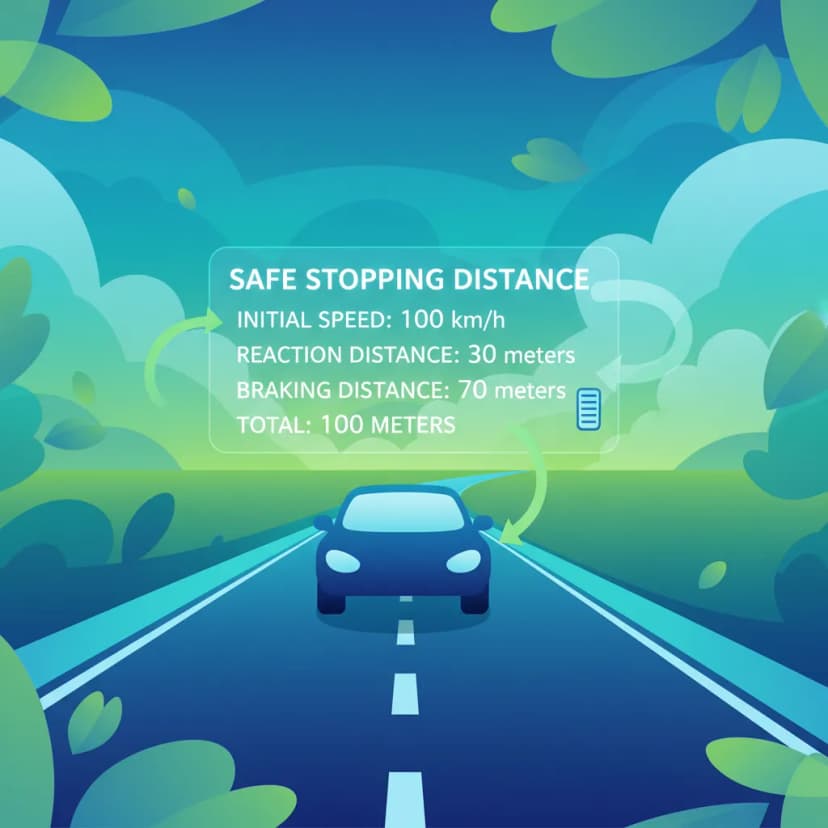
This lesson provides a practical understanding of the physics behind stopping a moped. It breaks down the total stopping distance into two key components: reaction distance (the distance traveled before applying the brakes) and braking distance (the distance covered while braking). Learners will explore how factors like speed, road conditions, and rider alertness dramatically affect these distances.
This lesson addresses the severe dangers of riding a moped in snow and icy conditions. It explains how to identify potential hazards like black ice and emphasizes that avoiding riding in such conditions is the safest strategy. For situations where it cannot be avoided, it provides advice on extremely gentle control inputs and vehicle preparation.
This lesson breaks down the three pillars of motorcycle control: balance, throttle, and steering. You will learn how the motorcycle maintains stability at speed and how to control it at low speeds, the art of smooth and precise throttle application, and the essential technique of counter-steering to initiate turns. Understanding how these three inputs work together is the first step toward becoming a smooth, confident, and safe rider who is truly in control of their machine.
Find clear answers to common questions learners have about Balance, Steering, and Body Positioning. Learn how the lesson is structured, which driving theory objectives it supports, and how it fits into the overall learning path of units and curriculum progression in Sweden. These explanations help you understand key concepts, lesson flow, and exam focused study goals.
Your body weight is a primary tool for steering a moped, especially at speed. Shifting your weight slightly can initiate a lean into a turn. For instance, leaning slightly to the left helps the moped turn left. This is more pronounced than on a bicycle and requires conscious control during theory exam questions.
The ideal posture is relaxed yet alert, with a straight back, relaxed shoulders, and knees slightly bent. Your arms should be relaxed on the handlebars, allowing for easy steering. Avoid hunching over or stiffening up, as this hinders your ability to react and control the moped effectively, a common point in theory tests.
The Swedish theory exam for Category AM includes questions on safe riding techniques. Understanding how to maintain balance and control your moped through proper body positioning is key to preventing accidents, and therefore frequently tested in scenario-based questions.
Subtle shifts in your body weight are used in conjunction with handlebar input. To turn, you'll typically initiate a slight counter-push on the handlebar opposite the desired turn, followed by a lean. Your weight distribution then guides the moped through the corner. This technique is vital for smooth, controlled maneuvers.
Braking too hard, especially with the front brake, while leaning into a turn can cause the front wheel to lose traction and potentially lock up, leading to a skid or fall. It's crucial to maintain a steady speed or brake gently in turns, and to use both brakes proportionally based on the situation, a common exam scenario.