
This lesson covers the crucial topic of speed limits and zone-specific rules in Sweden, directly relevant to your Category A motorcycle theory test. Understanding and adhering to these regulations is vital for safe riding and exam success, building upon basic road understanding from earlier units.
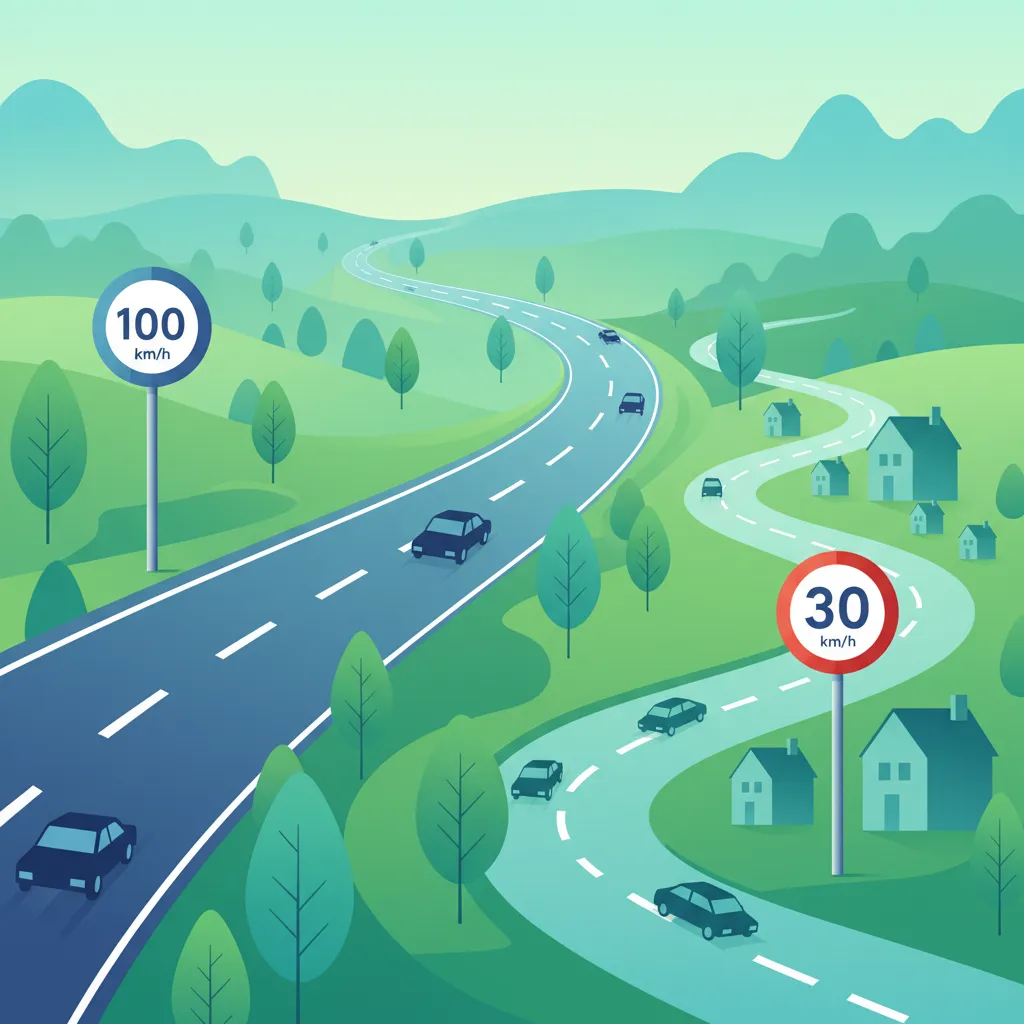
Motorcycle riding in Sweden demands a thorough understanding of speed limits, which are fundamental to road safety and compliance. This lesson provides a comprehensive overview of the Swedish national speed limit (NSL) system, detailing default limits for various road classifications and the specific rules that apply in designated zones. Mastering these regulations is crucial not only for passing the Swedish Category A motorcycle theory exam but also for ensuring safe and lawful riding practices.
Sweden's speed limit system is a hierarchical framework designed to enhance safety, improve traffic flow, and consider environmental factors. It integrates default limits, which are implicit based on the type and location of a road, with explicit limits communicated through road signs. Understanding this system is paramount for every motorcyclist.
Speed is a critical factor influencing the severity of traffic accidents and the distance required to stop a vehicle. For motorcyclists, the consequences of speed-related incidents can be particularly severe due to their greater vulnerability. Higher speeds lead to significantly increased kinetic energy, translating into more forceful impacts and a higher risk of serious injury or fatality in a collision. Furthermore, increased speed directly extends a motorcycle's stopping distance, reducing the rider's ability to react safely to unexpected hazards.
The legal foundation for speed limits in Sweden is primarily found in the Traffic Ordinance (Trafikförordningen, SFS 1998:208). This ordinance empowers authorities to set national speed limits and to impose zone-specific restrictions through clear signage. The underlying logic for these regulations is multifaceted:
The National Speed Limit (NSL) system in Sweden defines four main baseline speed categories, which apply by default unless overridden by explicit signage. Riders must be aware of these fundamental limits that dictate the maximum permissible speed on different types of roads.
Within a tätort (built-up area), the default speed limit is 50 km/h. This limit applies to all public roads located within the officially defined boundaries of a town or city, unless a different speed limit sign is clearly posted. The 50 km/h limit is designed to protect pedestrians, cyclists, and other vulnerable road users in environments with mixed traffic and frequent intersections.
On landsbygdsvägar (rural roads) outside built-up areas and not designated as motorways or motortrafikvägar, the default speed limit is 70 km/h. This limit applies when no other speed limit sign is displayed. Rural roads often have varying conditions, including sharper bends, poorer sight lines, and interactions with agricultural vehicles or wildlife, which necessitates a more moderate default speed compared to motorways.
For motorvägar (motorways) and motortrafikvägar (expressways), the default speed limit is 110 km/h. These roads are specifically engineered for high-speed travel, featuring controlled access, multiple lanes, and usually no intersections at grade level. The design of these roads allows for higher speeds while maintaining a relatively high level of safety, provided riders adhere to the limits and adapt their speed to prevailing conditions. It is important to remember that slow-moving vehicles, pedestrians, and cyclists are generally not permitted on these types of roads.
A Gångfartsområde (walk zone) is a special type of zone designed to prioritize pedestrians and cyclists. In these areas, the maximum speed limit for vehicles, including motorcycles, is 30 km/h. Beyond the speed restriction, a fundamental rule in a gångfartsområde is that pedestrians have absolute priority. This means vehicles must always yield to pedestrians, even if they are not using a designated crossing, and may only pass them if it can be done safely and without hindrance.
In a Gångfartsområde, pedestrians are permitted to walk on the road, and you must give them priority. Overtaking pedestrians or riding aggressively through these zones is strictly prohibited.
Beyond the national default limits, Sweden utilizes zone-specific speed limits to address particular safety concerns in areas with higher concentrations of vulnerable road users or unique environmental challenges. These limits always override the national default for the road they apply to.
School zones, indicated by a "Skola" (School) sign, typically impose a speed limit of 30 km/h during school activity hours. These hours are often specified on an auxiliary sign accompanying the main "Skola" sign, commonly from 08:00 to 15:00 on weekdays. The purpose of these zones is to protect children, who may behave unpredictably near roads, by significantly reducing the risk and severity of potential collisions. Riders must be extra vigilant and prepared to stop quickly when passing through school zones, even if children are not immediately visible.
Many residential streets and neighborhoods are designated as Bostadsområde (residential areas), often accompanied by a 30 km/h speed limit sign. These limits aim to create safer, quieter environments for residents, where children may be playing and vehicles might be reversing from driveways. Even if a specific "Bostadsområde" sign is not present, local areas within a tätort might still have 30 km/h limits posted, and riders should always obey specific signage.
Construction and work zones are areas where road work is being performed. These zones typically feature temporary speed limits, often indicated by bright orange signs or electronic displays, commonly set at 40-60 km/h. These temporary limits are crucial for the safety of road workers and to manage traffic around equipment and potential hazards on the roadway. They take precedence over any permanent or default speed limits. Riders must pay close attention to these signs, as conditions within construction zones can change rapidly, and workers may be close to moving traffic.
Certain infrastructure elements may also have specific speed limits:
Temporary and variable speed limits are dynamic restrictions that change based on prevailing conditions, traffic flow, or specific events. These limits hold the highest priority in the legal hierarchy and must be strictly obeyed.
Variable Speed Limits (VSL) are displayed on electronic signs, often found on motorways and busy arterial roads. These systems monitor traffic flow, weather conditions, and incidents in real time, automatically adjusting the speed limit to optimize safety and throughput. A digital sign showing "90 km/h" due to congestion or poor weather, for example, immediately supersedes the default 110 km/h for that motorway. Riders must treat these displayed limits as mandatory, regardless of how clear the road may appear.
Adverse weather conditions such as heavy rain, snow, ice, or fog frequently trigger temporary speed reductions. These are often displayed on VSL signs or through temporary physical signage. For instance, a motorway might have its limit reduced from 110 km/h to 80 km/h during heavy fog. Even in the absence of a signed reduction, the speed adaptation principle (discussed below) mandates that riders reduce their speed below the legal maximum when weather compromises safety.
For special events like marathons, parades, or large public gatherings, temporary speed limits (e.g., 30-40 km/h) may be imposed over extended stretches of road. These are typically communicated via temporary physical signs. Similarly, emergency situations such as accidents or ongoing police operations can lead to immediate, temporary speed restrictions. Riders should always be alert for such signage and adapt their speed accordingly.
When multiple speed limits could potentially apply to a specific stretch of road, a clear legal hierarchy determines which limit takes precedence. Understanding this order is crucial to avoid confusion and ensure compliance.
The hierarchy of speed limits in Sweden, from highest to lowest priority, is as follows:
Gångfartsområde, school zones, or residential zones. They take precedence over permanent speed limit signs and national default limits within their designated boundaries.C31-70). They override the national default limit for the section of road they govern.Always prioritize the most restrictive and dynamic sign you encounter. If you see a temporary sign showing 60 km/h in a 110 km/h zone, the 60 km/h is the legal maximum.
While speed limits define the maximum legal speed, they do not always represent the safe speed. The speed adaptation principle is a fundamental legal requirement in Sweden, stating that all drivers must adjust their speed to below the legal maximum when conditions warrant it. This principle places a duty of care on the rider to constantly assess their environment.
Several factors necessitate reducing speed, even if it means riding below the posted limit:
Motorcyclists have unique considerations when adapting speed:
Exceeding the speed limit in Sweden carries significant legal consequences, ranging from fines and penalty points to licence suspension and even criminal charges for severe violations.
The severity of the penalty is directly linked to how much the speed limit is exceeded.
Accumulating penalty points or committing severe speed violations can result in your driving licence being suspended for a period. For extreme speeding (e.g., more than 50% over the limit or over 40 km/h in a 30 zone), authorities may classify the offense as "reckless driving" (vårdslöshet i trafik), which is a criminal offense leading to more severe penalties, including potential imprisonment in extreme cases.
Swedish law enforcement utilizes various technologies to monitor and enforce speed limits:
Many motorcyclists incur penalties or risk accidents due to common misunderstandings or intentional violations of speed limit rules.
A frequent mistake is assuming a higher speed is permissible on wider city streets, despite no explicit signage. The default 50 km/h limit in a tätort applies rigorously unless a different speed limit sign is present. Riding at 60 km/h on an unmarked city street, even if it feels safe, is a violation.
Temporary orange construction signs or electronic VSLs are often disregarded, with riders assuming they can maintain the permanent speed limit. This is a high-risk violation, as these signs carry the highest legal priority and are in place to protect workers or manage hazardous conditions. Similarly, ignoring Gångfartsområde or school zone limits puts vulnerable road users at extreme risk.
Riders might maintain the posted speed limit even when adverse conditions like heavy rain, fog, or icy patches make that speed unsafe. This violates the speed adaptation principle and significantly increases the risk of losing control. The legal limit is the maximum, not a target to be reached regardless of conditions.
Understanding speed limits is not an isolated topic; it is deeply interwoven with several other critical areas of motorcycle theory. Proficiency in this lesson builds a foundation for advanced riding skills and legal compliance.
The principles learned in "Right-of-Way and Priority Rules" are essential for correctly navigating zone-specific limits. For instance, knowing that pedestrians have absolute priority in a Gångfartsområde directly dictates a motorcyclist's speed and conduct in such zones. Understanding yield rules at intersections also influences appropriate entry speeds.
This lesson's emphasis on how speed affects stopping distance is directly applicable to "Safe Following Distances and Stopping Sight Distance." Riders must use their knowledge of speed limits and adaptation principles to calculate and maintain appropriate gaps to the vehicle ahead, ensuring they can stop safely in an emergency.
The "Motorcycle Dynamics & Control" lesson explains how speed influences a motorcycle's handling, stability, and braking capabilities. Applying speed limits and adaptation correctly helps riders stay within their motorcycle's and their own limits, especially during cornering, braking, and sudden maneuvers.
Lesson content overview
Explore all units and lessons included in this driving theory course.
Explore search topics learners often look for when studying National Speed Limits and Zone-Specific Rules. These topics reflect common questions about road rules, driving situations, safety guidance, and lesson level theory preparation for learners in Sweden.
Browse additional driving theory lessons that cover connected traffic rules, road signs, and common driving situations related to this topic. Improve your understanding of how different rules interact across everyday traffic scenarios.
Deepen your understanding of Swedish speed limits beyond national defaults. Explore specific rules for urban areas, residential zones (gångfartsområde), school zones, and construction areas. Essential theory for safe and legal motorcycle riding in Sweden.
This lesson provides a step-by-step guide to motorway riding. You will learn the correct technique for accelerating on an on-ramp and merging smoothly into high-speed traffic. The content also covers maintaining proper lane discipline, executing safe overtakes, keeping a safe following distance at speed, and planning for your exit well in advance to ensure a smooth and stress-free experience on Sweden's fastest roads.

This lesson focuses on the variety of road markings used on Swedish roads and their meaning for motorcyclists. You will learn the difference between solid and broken lines regarding overtaking, how to position yourself correctly at intersections based on markings, and how to interpret symbols painted on the road surface. Adhering to these markings is essential for maintaining correct lane discipline and ensuring predictability for other road users.

This lesson focuses on the unique demands of managing speed in high-speed environments like motorways. You will learn techniques for maintaining a steady, appropriate speed that matches the flow of traffic, how to perform smooth overtakes, and the importance of increasing your following distance. It also covers physical factors such as managing wind blast and maintaining stability when riding near large trucks, ensuring a safe and controlled high-speed riding experience.
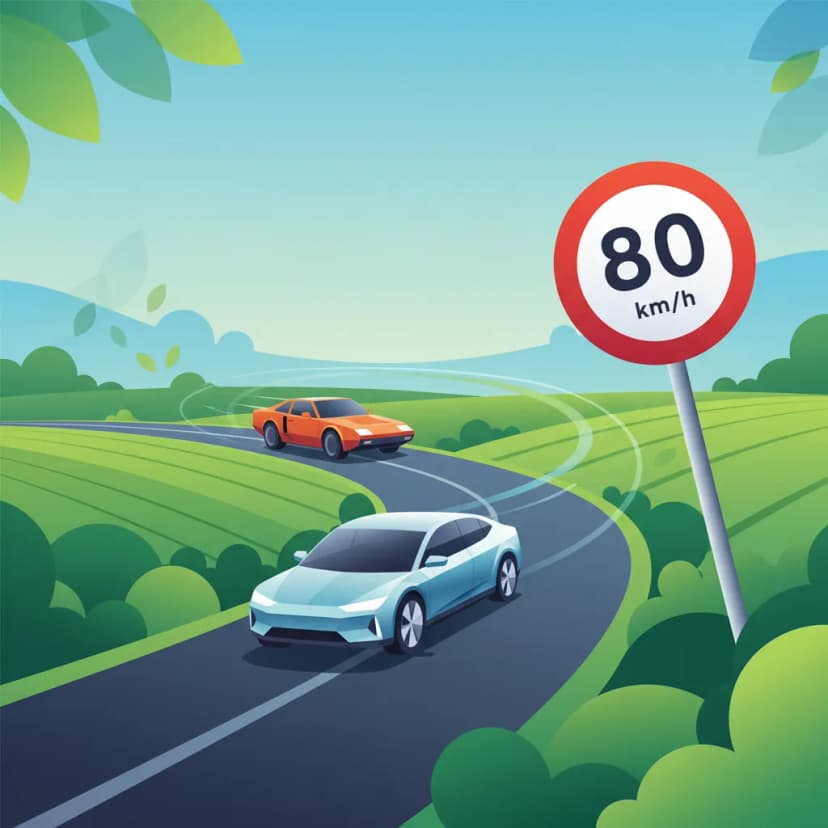
This lesson explains the hierarchical structure of speed limits in Sweden as defined by the Trafikförordning. It covers the default 'base speeds', including 50 km/h in built-up areas and 70 km/h outside them, and how these are modified by specific road signs. You will learn to identify speed limit signs for different road types, such as motorways and residential zones, and understand the legal framework that governs maximum permissible speeds.
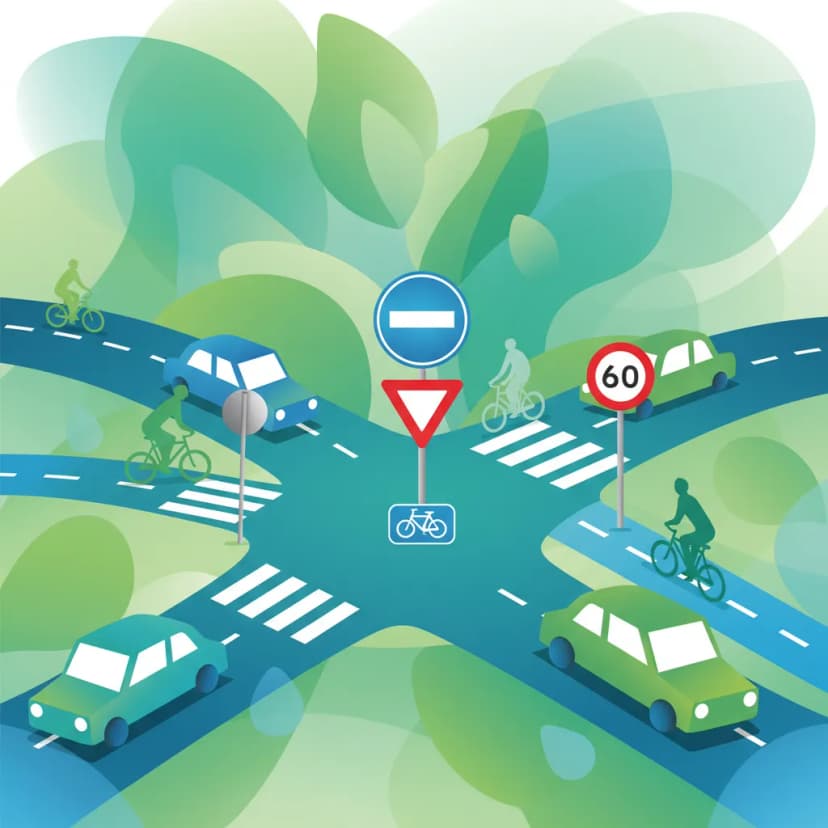
This lesson details the full range of Swedish regulatory signs, which dictate mandatory actions and prohibitions for all road users. You will learn to identify signs that establish speed limits, restrict access, prohibit overtaking, and define parking rules. Understanding these signs is critical for legal compliance and safe interaction with other traffic, as they form the basis of enforceable road law under the Trafikförordning regulations.
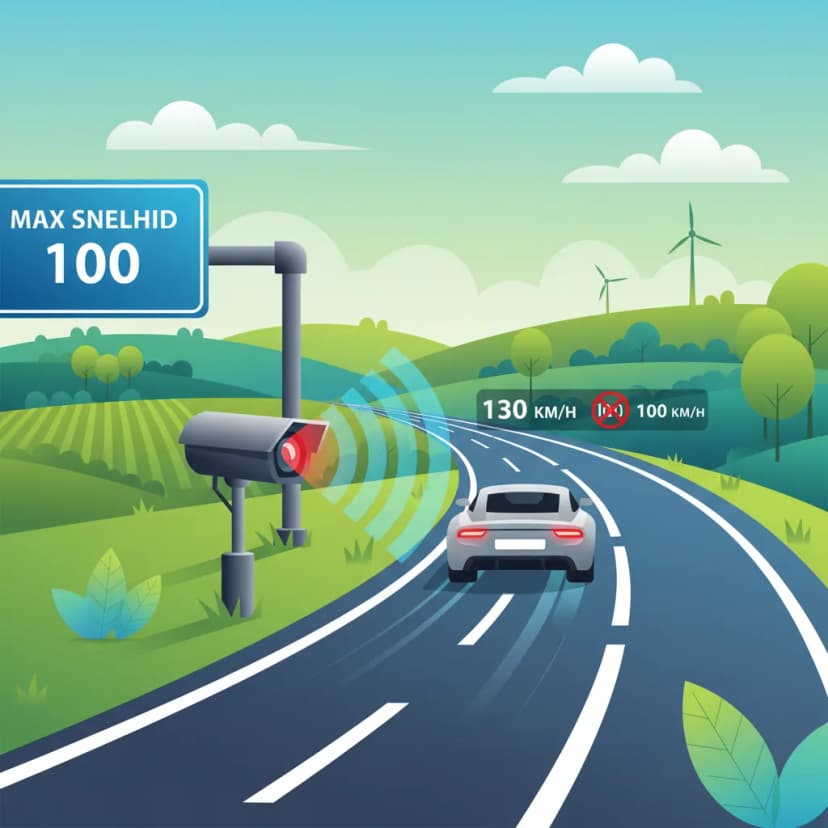
This lesson informs you about the various technologies and methods used for speed enforcement in Sweden, such as fixed and mobile speed cameras and police radar. You will understand the legal framework for speed monitoring and the corresponding penalties for violations, including fines (böter) and the potential for license suspension. This knowledge reinforces the importance of constant speed awareness and adherence to posted limits to ensure both safety and legal compliance.
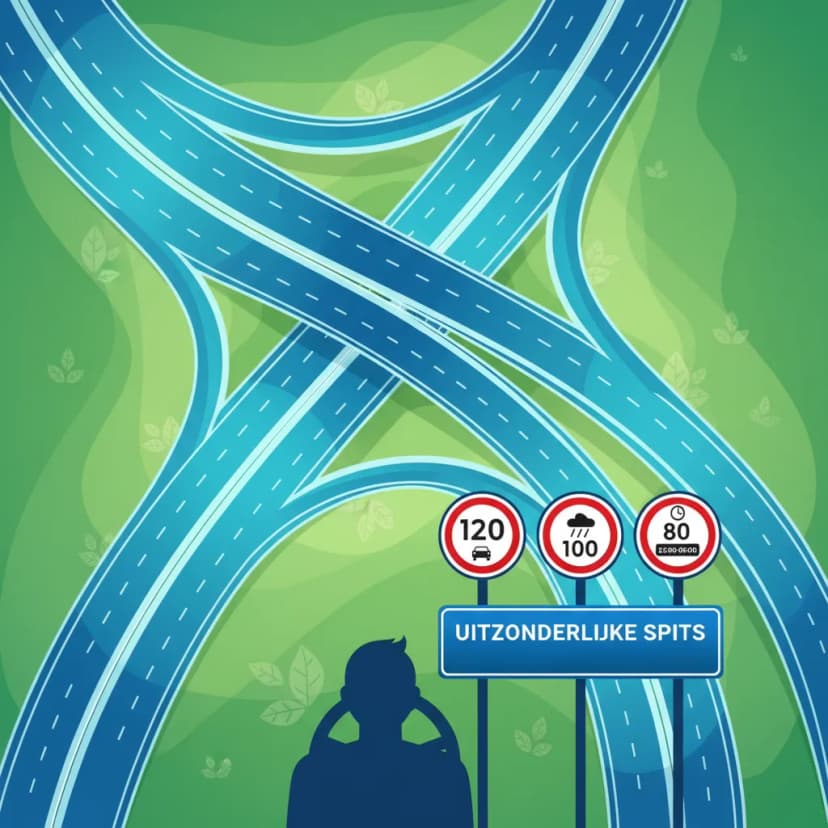
This lesson explains the general speed limit system in Sweden, including the default limits that apply in the absence of specific signs. It covers the standard speeds for built-up areas, roads outside built-up areas, and motorways, clarifying which are relevant to moped riders. Understanding this structure enables riders to determine the correct legal speed even when signs are not immediately visible.
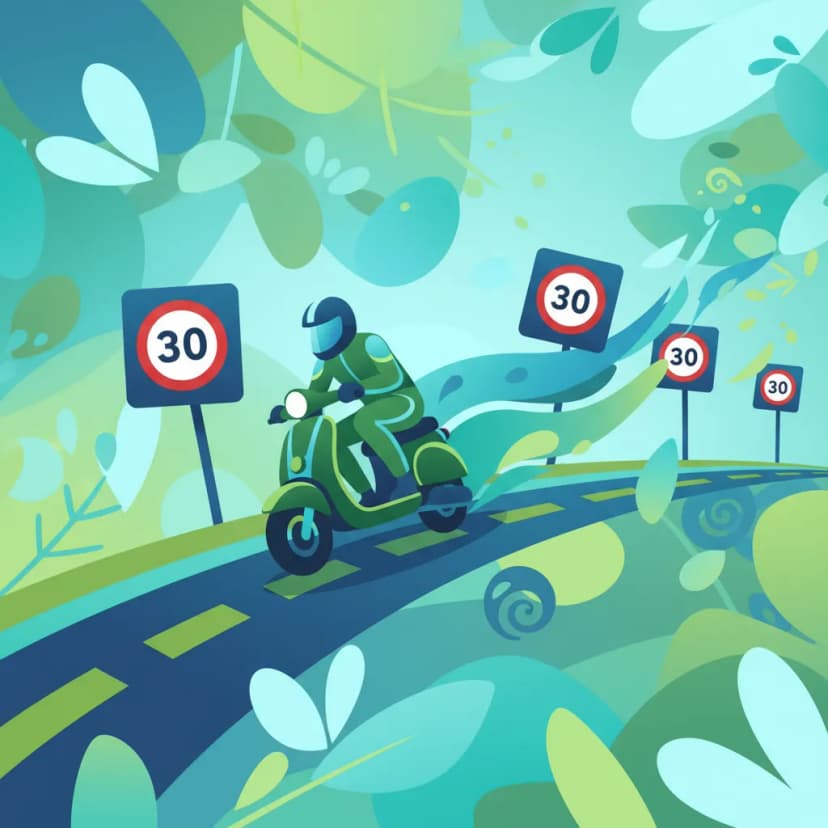
This lesson focuses on the specific speed regulations applicable to Category AM mopeds in Sweden. It emphasizes the absolute maximum legal speed of 45 km/h and explains that riders must always adapt their speed to be lower when conditions require. The content also covers any special, lower speed limits that may apply when riding on designated cycle paths or in shared spaces.

This lesson provides detailed guidance on navigating complex traffic points such as signalized intersections, multi-lane roundabouts, and pedestrian crossings. You will learn the correct procedures for entering and exiting roundabouts, the specific rules for yielding to pedestrians and cyclists at designated crossings, and how to interpret complex traffic light signals. These skills are vital for safe urban and suburban riding, where interaction with vulnerable road users is frequent.
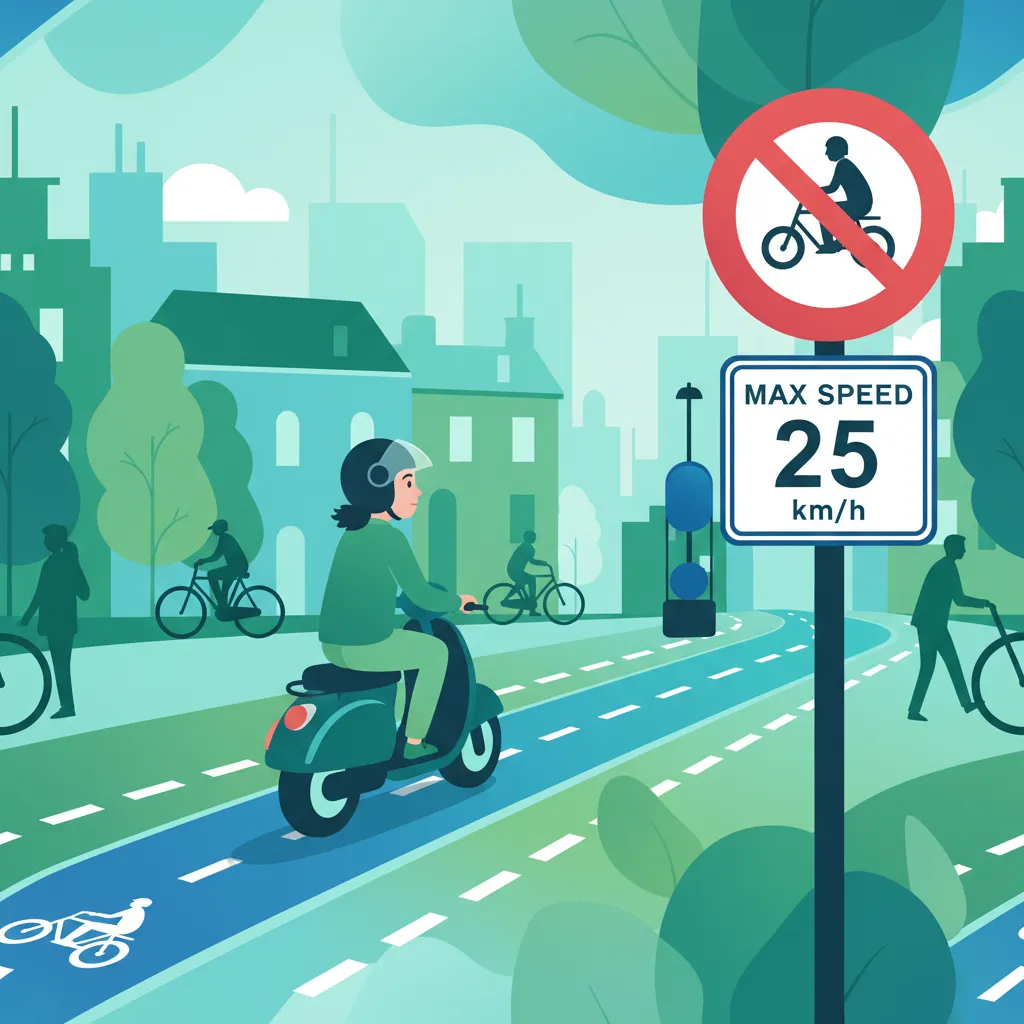
This lesson consolidates the key regulations that apply specifically to moped operation in Sweden. It covers mandatory rules such as speed limits, helmet use, and requirements for vehicle lighting and reflectors. Furthermore, the lesson explains the legal consequences of violations, including the system of fines and potential demerit points, ensuring riders understand their full range of legal responsibilities on the road.
Learn how to adjust your speed effectively based on road type, traffic density, and visibility in Sweden. This lesson covers principles for urban, rural, and motorway riding, complementing national speed limits with practical safety considerations.

This lesson teaches the crucial skill of adapting your speed to the dynamic and often congested conditions of urban riding. You will learn to modulate your speed smoothly in response to traffic flow, pedestrian activity, and complex intersections to maintain safety and control. Techniques covered include using engine braking effectively, anticipating the actions of other road users, and selecting a speed that maximizes your reaction time in a high-density environment.
This lesson focuses on the unique demands of managing speed in high-speed environments like motorways. You will learn techniques for maintaining a steady, appropriate speed that matches the flow of traffic, how to perform smooth overtakes, and the importance of increasing your following distance. It also covers physical factors such as managing wind blast and maintaining stability when riding near large trucks, ensuring a safe and controlled high-speed riding experience.

This lesson teaches the crucial skill of adapting speed to prevailing conditions, emphasizing that the posted speed limit is a maximum, not a target. It covers various scenarios such as rain, fog, heavy traffic, and poor road surfaces, explaining why reducing speed is essential for maintaining vehicle control and safety. The goal is to cultivate a proactive mindset where the rider constantly assesses risk and adjusts their speed accordingly.

This lesson emphasizes that the posted speed limit is a maximum, not a target. You will learn the principles of situational speed adaptation, which involves adjusting your speed based on factors like visibility, road geometry (curves and hills), traffic density, and potential hazards. The lesson covers specific strategies for managing speed in urban environments with pedestrians, on rural roads with hidden entrances, and on motorways to match the flow of traffic.

This lesson prepares you for the specific challenges of riding on rural roads in Sweden. You will learn how to read the road ahead for changes in surface quality, approach blind corners safely, and adjust your speed for narrow lanes with no shoulder. The content also covers how to anticipate and safely interact with slow-moving agricultural vehicles and the potential for wild animals on the road, ensuring you are prepared for the unpredictable nature of country riding.
This lesson provides a step-by-step guide to motorway riding. You will learn the correct technique for accelerating on an on-ramp and merging smoothly into high-speed traffic. The content also covers maintaining proper lane discipline, executing safe overtakes, keeping a safe following distance at speed, and planning for your exit well in advance to ensure a smooth and stress-free experience on Sweden's fastest roads.

This lesson focuses on the specific techniques required for riding in busy city and town environments. You will learn how to maintain correct lane positioning amidst dense traffic, navigate complex intersections with multiple signals, and manage the motorcycle at low speeds in stop-and-go conditions. Emphasis is placed on heightened awareness of pedestrians, cyclists, and vehicles making sudden maneuvers, which are common hazards in urban settings.

This lesson reinforces the core safety principle of adapting your driving to the prevailing weather conditions. You will learn why you must significantly reduce speed in heavy rain to avoid aquaplaning, how strong crosswinds can affect vehicle stability, and why reduced visibility in fog necessitates slower speeds and greater following distances. The goal is to instill a proactive approach to risk management whenever the weather is less than ideal.
This lesson informs you about the various technologies and methods used for speed enforcement in Sweden, such as fixed and mobile speed cameras and police radar. You will understand the legal framework for speed monitoring and the corresponding penalties for violations, including fines (böter) and the potential for license suspension. This knowledge reinforces the importance of constant speed awareness and adherence to posted limits to ensure both safety and legal compliance.
This lesson focuses on the variety of road markings used on Swedish roads and their meaning for motorcyclists. You will learn the difference between solid and broken lines regarding overtaking, how to position yourself correctly at intersections based on markings, and how to interpret symbols painted on the road surface. Adhering to these markings is essential for maintaining correct lane discipline and ensuring predictability for other road users.
Find clear answers to common questions learners have about National Speed Limits and Zone-Specific Rules. Learn how the lesson is structured, which driving theory objectives it supports, and how it fits into the overall learning path of units and curriculum progression in Sweden. These explanations help you understand key concepts, lesson flow, and exam focused study goals.
In Swedish built-up areas (tätort), the general default speed limit for all vehicles, including motorcycles, is 50 km/h unless otherwise indicated by signs. Always look for specific signs that may lower or raise this limit.
In a 'gångfartsområde', vehicles must not exceed a walking pace, which is typically around 5-7 km/h. Motorcycles must ride very slowly and cautiously, prioritizing pedestrians. This is a common area for theory test questions.
Generally, the national speed limits on motorways apply to motorcycles as well. The common limit is 110 km/h, but can be higher (120 km/h) on certain sections if signed. Always check the signs for specific limits.
Temporary speed limits, often indicated by orange or yellow signs, must be strictly followed. These are put in place for safety due to specific conditions, like construction or road work. Failing to adhere to them can result in significant penalties.
New speed limit zones are usually indicated by signs. A sign with a black number on a white background crossed by a red diagonal bar signifies the end of a restricted zone or the cancellation of a previous limit. A sign showing a new speed limit number (e.g., 70 km/h) indicates the start of that new limit. Always be observant of your surroundings.