
This lesson delves into the crucial topic of speed limit enforcement and penalties in Sweden, as part of the 'Speed Limits and Distance Management' unit for your Category B driving license. Understanding how speed limits are enforced and the consequences of exceeding them is vital for both passing your theory test and ensuring road safety.
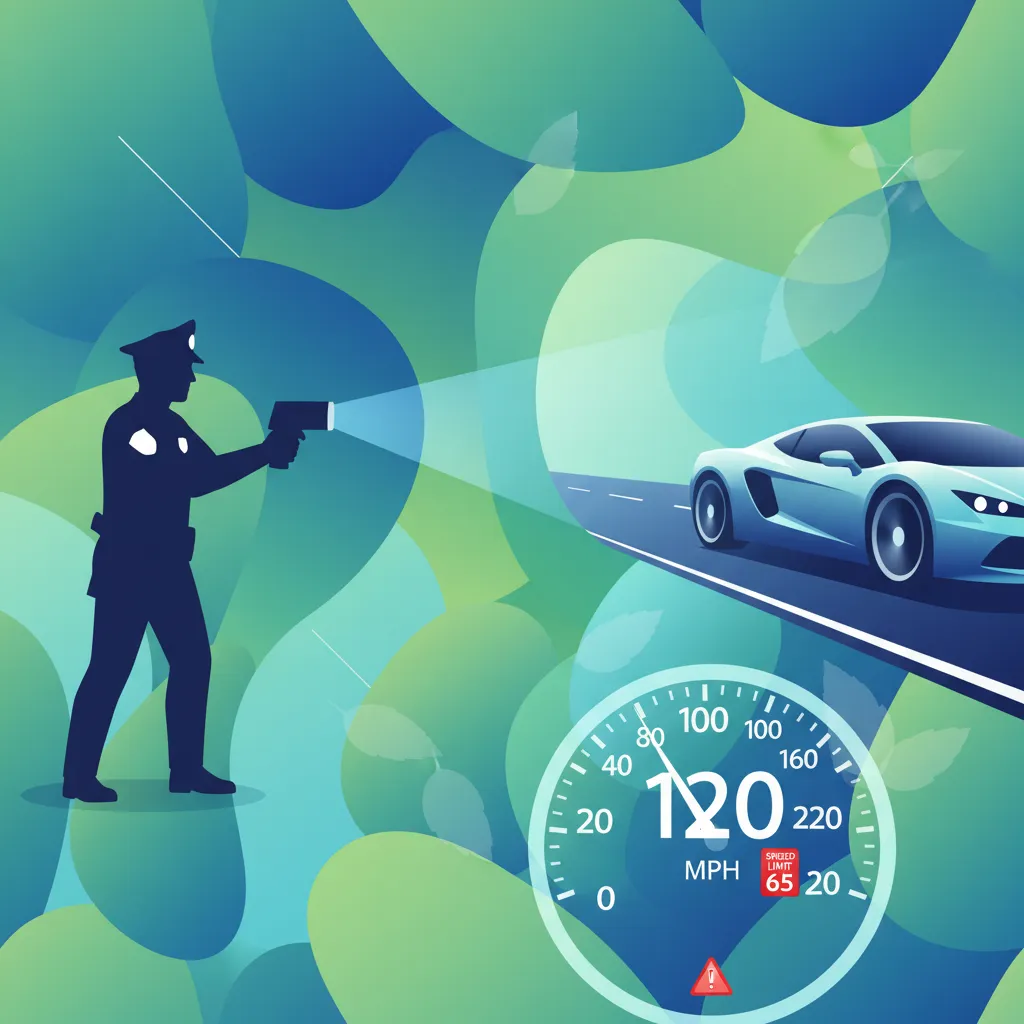
Driving in Sweden requires a thorough understanding of not only speed limits but also how these limits are enforced and the consequences of violating them. This lesson, part of your Swedish Driving License Theory Course for Category B Cars, provides a comprehensive overview of speed limit enforcement (known as Fartkontroll in Swedish) and the penalties for speeding offenses. Knowing these rules is crucial for safe driving, risk management, and ensuring compliance with Swedish traffic law.
Speed limits are not arbitrary numbers; they are meticulously set to ensure road safety, minimize the severity of accidents, and maintain orderly traffic flow. Adhering to these limits is a cornerstone of responsible driving in Sweden.
The relationship between speed and accident severity is governed by fundamental physics. Kinetic energy, which determines the destructive potential in a collision, increases with the square of velocity (E = ½ mv²). This means that even a small increase in speed can lead to a disproportionately larger increase in crash energy. For instance, a 20 km/h increase in speed (e.g., from 100 km/h to 120 km/h) can increase the kinetic energy by approximately 44%, drastically elevating the risk of severe injuries or fatalities in the event of a collision.
Higher speeds also reduce the time available for a driver to react to hazards and increase the braking distance required to stop a vehicle safely. On average, a driver's visual reaction time is about 1.5 seconds. At 100 km/h, a vehicle travels roughly 42 meters during this reaction time alone. This significantly reduces the available distance for effective braking, especially in unexpected situations. Understanding these physical principles underscores the critical importance of respecting posted speed limits.
The core legal document governing road traffic rules in Sweden is the Trafikförordning (Traffic Ordinance). This ordinance, along with other supplementary regulations like the Vägtrafiklagen (Road Traffic Act), establishes the legal basis for speed limits, enforcement methods, and the associated penalties. The overarching goal of this legal framework is to uphold public safety by deterring dangerous driving behaviors, ensuring fair and objective enforcement, and promoting equal treatment of all road users. Enforcement mechanisms are designed to create a predictable system of consequences, discouraging deliberate speeding and encouraging drivers to maintain safe speeds.
Swedish authorities employ a variety of technological and procedural tools to monitor and enforce speed limits across the road network. These methods aim to ensure compliance, gather evidence for legal action, and ultimately reduce the incidence of speeding-related accidents.
Automatic Traffic Safety Cameras (ATK), commonly known as speed cameras, are fixed installations strategically placed on public roads. These systems typically use radar or laser technology to measure vehicle speed and, if a violation is detected, capture photographic evidence of the vehicle and its registration plate. ATK cameras operate 24 hours a day, seven days a week, regardless of lighting conditions, though image quality may vary in low light.
According to the Vägtrafikförordning, ATK cameras must be signposted, ensuring drivers are aware of their presence. These cameras play a significant role in objective, continuous monitoring, and statistical evidence shows their effectiveness in reducing fatal accidents on covered road sections. A common misunderstanding is that ATK only operates at night; this is false, as they are active continuously.
Police officers in Sweden conduct mobile patrols equipped with various speed measurement devices. These can include handheld radar guns or LIDAR (Light Detection and Ranging) units, as well as vehicle-mounted systems.
These mobile enforcement methods allow police to monitor speed limits on any type of road, including city streets, rural roads, and temporary construction zones, providing flexible and immediate enforcement.
While ATK and handheld devices are the most common, other methods may be used. Speed-trap vehicles or systems like VASCAR (Visual Average Speed Computer and Recorder) can calculate a vehicle's average speed over a measured distance. These computer-based averaging systems are less common for routine enforcement but can be used in specific scenarios. Regardless of the technology used, all devices must be calibrated according to the Swedish Transport Agency (Transportstyrelsen) standards to ensure accuracy and legal validity.
To ensure fairness and account for the inherent precision limits of measurement devices, a measurement tolerance is applied to all speed readings. This legal margin of error means that a speed must exceed the limit plus the tolerance before a penalty can be issued.
For example, if the speed limit is 70 km/h, a measured speed up to 73 km/h would be considered legal due to the tolerance. However, a speed of 74 km/h would exceed this tolerance and could lead to a penalty. Similarly, on a 100 km/h motorway, speeds up to 103 km/h are within tolerance, but 104 km/h or higher would be considered a violation.
All speed-measurement devices, whether fixed ATK cameras, police radar, or laser units, must undergo regular calibration. Devices are typically inspected annually by the Swedish Transport Agency or authorized bodies. A valid calibration certificate is essential for the legal admissibility of any speed measurement as evidence.
Violating speed limits in Sweden can lead to a range of penalties, from warnings and fines to the suspension or even revocation of your driving license. The penalty system is designed to be proportionate to the severity of the offense.
Sweden utilizes a penalty point system (Bötespoäng) to track speeding offenses. Points are assigned based on how much a driver exceeds the speed limit, after accounting for measurement tolerance. These points accumulate on a driver's record.
The typical point scale for Category B car drivers is as follows:
Points remain on a driver's record for three years from the date of the infraction. Accumulating 12 or more points within a three-year period will typically lead to the revocation of your driving license.
Monetary fines, known as penningböter, are calculated using the assigned penalty points and a base amount (Bötesbelopp). The base amount is a monetary value set annually by the Swedish Transport Agency. The fine is simply the number of points multiplied by the current base amount.
For example, if the current base amount is 1,000 SEK:
A common misunderstanding is that higher-income drivers pay more. In Sweden, the base amount is uniform; only the point multiplier (determined by the severity of the speeding) changes, affecting the total fine amount.
For minor or first-time offenses, a warning (Varning) may be issued. This is a non-penal, formal notice that is recorded in the driver’s file but does not result in a fine or penalty points. A warning can be issued verbally on the spot by a police officer or sent by post, typically for speed excesses of 5 km/h or less.
The warning system aims to encourage correction without immediate financial burden. While it doesn't count towards the 12-point total for license revocation, the incident is logged and remains on the driver's record for two years. Repeated warnings or subsequent offenses after a warning may lead to stricter enforcement, including fines and points. It's important to note that a warning does not clear the record completely; it serves as an official reminder of the infraction.
For more serious violations, a driver faces the temporary or permanent removal of their driving privileges.
License Suspension: This is a temporary removal of the right to drive. An immediate suspension is typically mandatory for exceeding the speed limit by more than 30 km/h (after tolerance is applied). The minimum suspension period is usually three months, but it can be extended up to two years for repeat or extremely dangerous conduct. The Swedish Transport Agency (Transportstyrelsen) issues the order for suspension, and the driver typically has 14 days to appeal the decision. Driving while your license is suspended is a criminal offense and can lead to severe penalties, including further fines and even imprisonment.
License Revocation: This represents a permanent loss of driving privileges. It is typically triggered by accumulating 12 or more penalty points within a three-year period or for particularly grave offenses. If your license is revoked, you must undergo a re-qualification process, which may include new theory and practical driving tests, before you can regain your driving rights.
It's a misconception that only court convictions lead to license revocation; administrative decisions by Transportstyrelsen also apply. Surrendering your physical license does not end the suspension; the legal restriction on driving remains in effect regardless of physical possession.
Professional drivers, such as those operating buses, trucks, or taxis, are subject to specific rules and often face higher penalties due to their greater responsibility for public safety and the increased potential impact of their vehicles.
base amount used to calculate fines is typically higher, often 1.5 times the standard base amount. For example, if the standard base amount is 1,000 SEK, a professional driver's base amount might be 1,500 SEK. This means that for the same number of penalty points, a professional driver will incur a significantly higher monetary fine.It's important to understand that while professional drivers face higher monetary penalties, the allocation of penalty points for a given speed excess generally remains the same as for private drivers. They can also still receive warnings for minor offenses, but the financial consequences of fines are notably elevated.
Speed enforcement is not a static process; it adapts to varying road conditions, environments, and specific regulations. Drivers must be aware of how these contextual variations can influence enforcement and their responsibilities.
In adverse weather conditions such as rain, snow, or fog, drivers are legally required to adapt their speed to conditions, often driving below the posted speed limit. The enforcement system does not excuse excess speed based on weather; in fact, police may issue citations for dangerous driving if a driver maintains the posted limit when conditions make it unsafe. Reducing speed in poor weather is crucial for safety and control, regardless of the limit.
Different road types and zones often have varying speed limits and corresponding enforcement approaches:
zero-tolerance zones like school areas, is typically very strict. Even small excesses can lead to fines, as the risk to vulnerable road users (pedestrians, cyclists) is high.currently displayed limit.While the posted speed limit does not change based on your vehicle's load or if you are towing a trailer, these factors significantly increase the vehicle's stopping distance and decrease its maneuverability. Police may exercise stricter judgment when issuing warnings or fines if a driver of a heavily loaded vehicle or one towing a trailer exceeds the limit, recognizing the increased risk. Vehicle maintenance problems, such as brake failure, do not excuse speeding; rather, they can lead to additional charges for endangering traffic.
In areas with vulnerable road users, such as pedestrian crossings or cycle lanes, speed limits are often reduced. Any speed excess in these zones may be treated as an aggravated offense, reflecting the severe consequences a collision can have for pedestrians or cyclists. Specific regulations may also impose additional fines for exceeding limits while passing a school bus with children boarding or alighting.
Some areas may have time-based restrictions, where speed limits are lower during certain hours (e.g., nighttime reductions after 22:00). Drivers must adhere to these specific limits. Similarly, holiday or event-specific temporary limits are legally binding and are enforced with standard penalties. It is essential to remain vigilant for all types of signage that indicate changes in speed limits.
Ultimately, preventing speeding violations and their associated penalties is the driver's responsibility. This involves:
By adhering to these principles, you contribute to a safer road environment for everyone and avoid the significant financial and administrative consequences of speeding.
Automatic Traffic Safety Cameras (ATK), mobile police patrols equipped with radar and LIDAR, and other technologies. All devices must be calibrated and operate within specified measurement tolerance levels.penalty points (Bötespoäng) which determine the fine (penningböter) based on a yearly base amount. Accumulating 12 points within three years results in license revocation.warning (Varning). Exceeding the limit by more than 30 km/h can result in immediate license suspension.Professional drivers face a higher base amount multiplier for their fines, reflecting their increased responsibility.zero-tolerance zones), and temporary limits. These factors can influence enforcement discretion.Trafikförordning and Transportstyrelsen regulations form the legal foundation for speed enforcement and penalties in Sweden.Understanding and respecting these enforcement mechanisms and penalty structures is not just about avoiding fines; it's about making informed decisions that prioritize safety for yourself and all road users in Sweden.
Lesson content overview
Explore all units and lessons included in this driving theory course.
Explore search topics learners often look for when studying Enforcement and Penalties (Fartkontroll). These topics reflect common questions about road rules, driving situations, safety guidance, and lesson level theory preparation for learners in Sweden.
Browse additional driving theory lessons that cover connected traffic rules, road signs, and common driving situations related to this topic. Improve your understanding of how different rules interact across everyday traffic scenarios.
Understand how speed limits are enforced in Sweden. This lesson covers speed cameras (ATK), police checks, the structure of fines (penningböter), and the conditions leading to license suspension, vital for your Swedish driving theory knowledge.
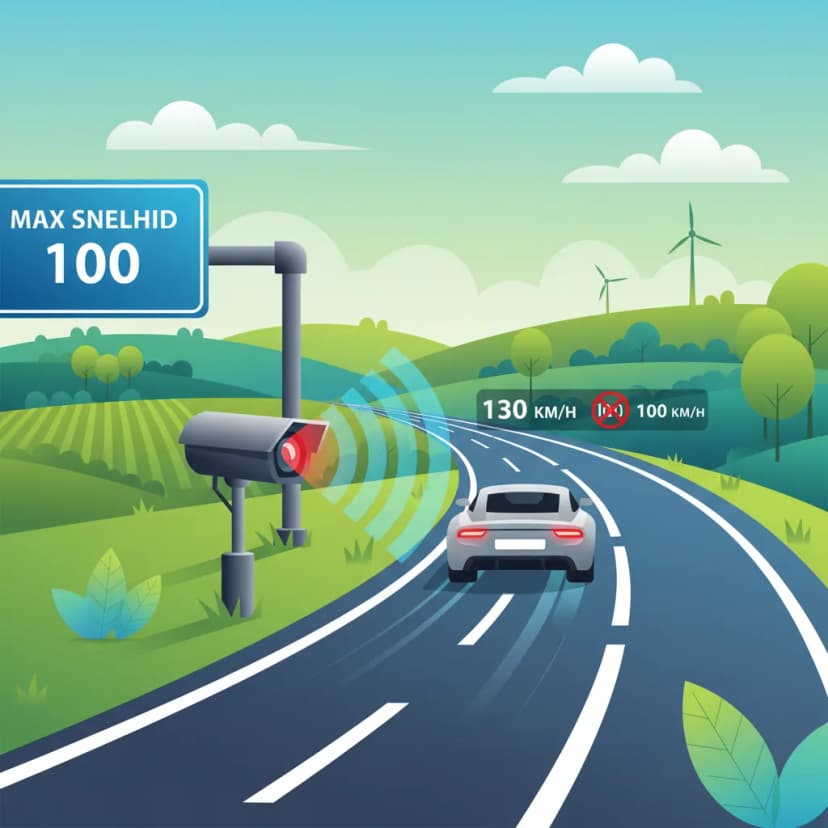
This lesson informs you about the various technologies and methods used for speed enforcement in Sweden, such as fixed and mobile speed cameras and police radar. You will understand the legal framework for speed monitoring and the corresponding penalties for violations, including fines (böter) and the potential for license suspension. This knowledge reinforces the importance of constant speed awareness and adherence to posted limits to ensure both safety and legal compliance.
This lesson outlines the enforcement measures and penalties for speeding violations in Sweden. It explains the system of fines, how they escalate based on the severity of the offense, and the potential for receiving demerit points on a license. The content serves as a serious reminder of the legal and financial consequences of speeding, reinforcing the importance of adhering to all speed regulations.
This lesson provides an overview of traffic law enforcement in Sweden, explaining the roles of the police and other authorities. You will learn about the system of penalties for common traffic violations, including the scale of fines (böter) and the conditions under which your license may be suspended. Understanding the legal consequences of unsafe or unlawful riding provides a powerful incentive to always adhere to the rules of the road.
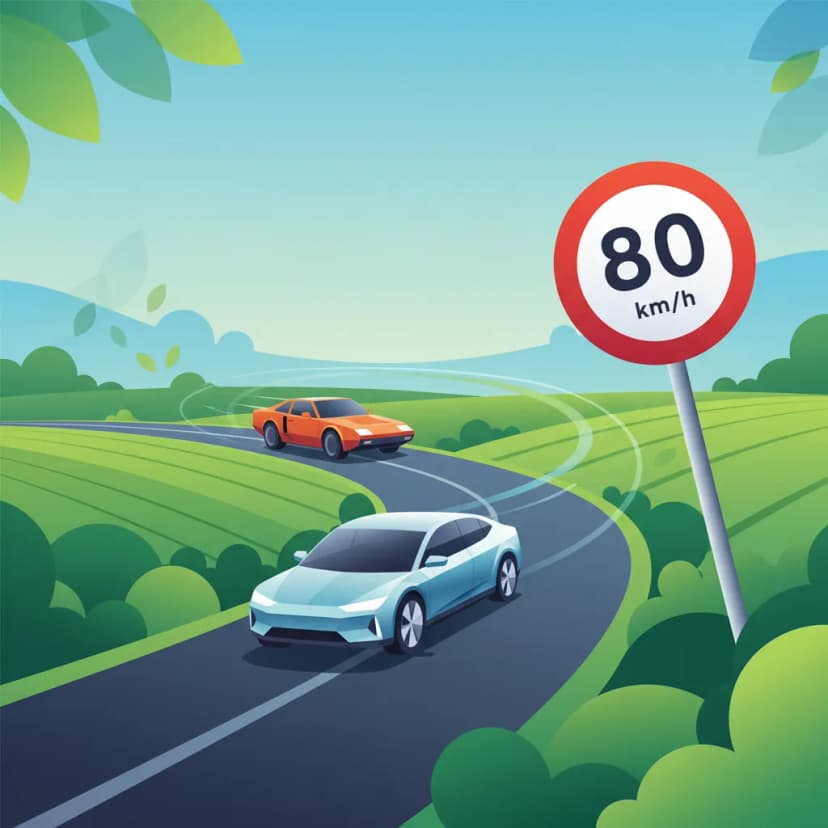
This lesson explains the hierarchical structure of speed limits in Sweden as defined by the Trafikförordning. It covers the default 'base speeds', including 50 km/h in built-up areas and 70 km/h outside them, and how these are modified by specific road signs. You will learn to identify speed limit signs for different road types, such as motorways and residential zones, and understand the legal framework that governs maximum permissible speeds.
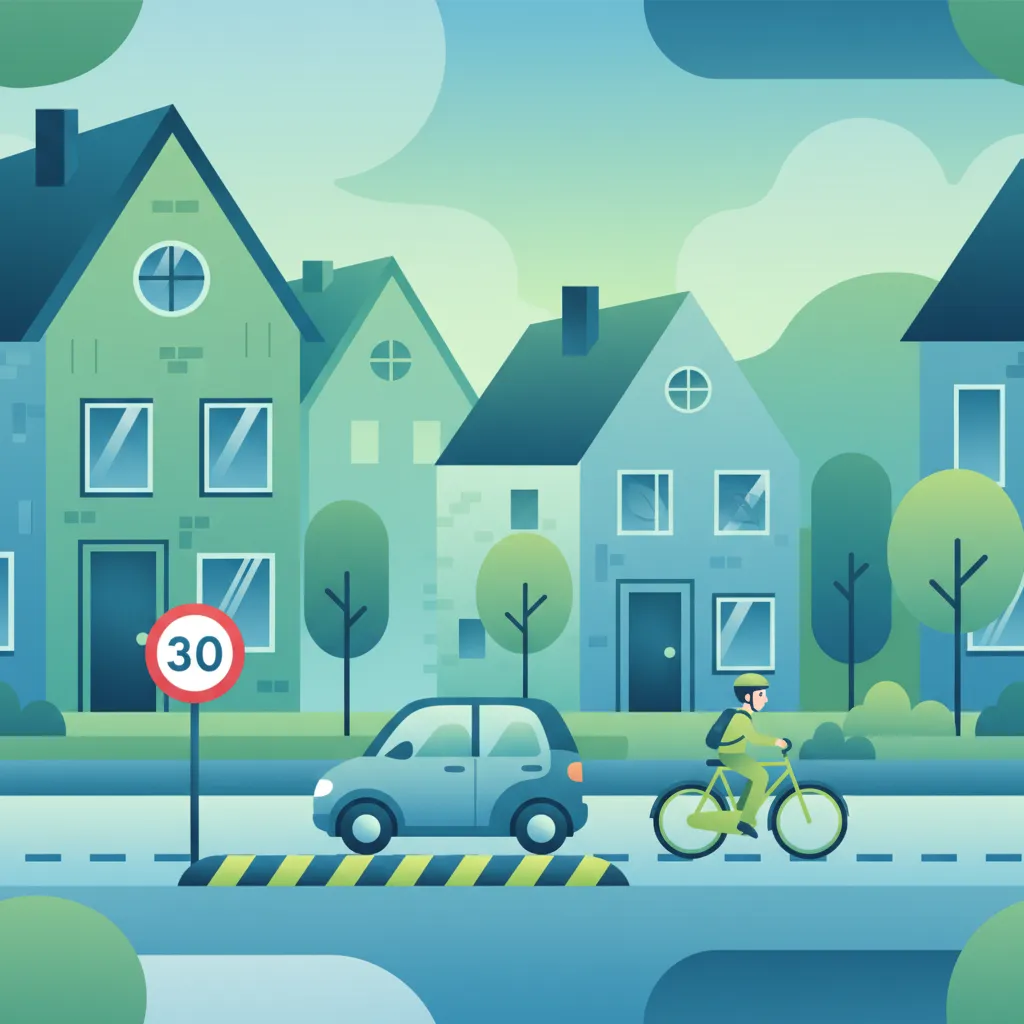
This lesson focuses on the high level of caution required when driving in residential areas. You will learn about the rules for special zones like 'gångfartsområde' (walking speed area) and the need to navigate around speed calming measures like speed bumps. The central theme is anticipating unpredictable behavior from residents, especially children, and managing the risks posed by parked cars that severely limit visibility.

This lesson explains the system of consequences for breaking traffic laws in Sweden. It details common violations and their associated fines and describes the demerit points system that can lead to a license suspension for repeat offenders. Understanding these consequences is a powerful incentive for riders to adhere to the rules of the road.
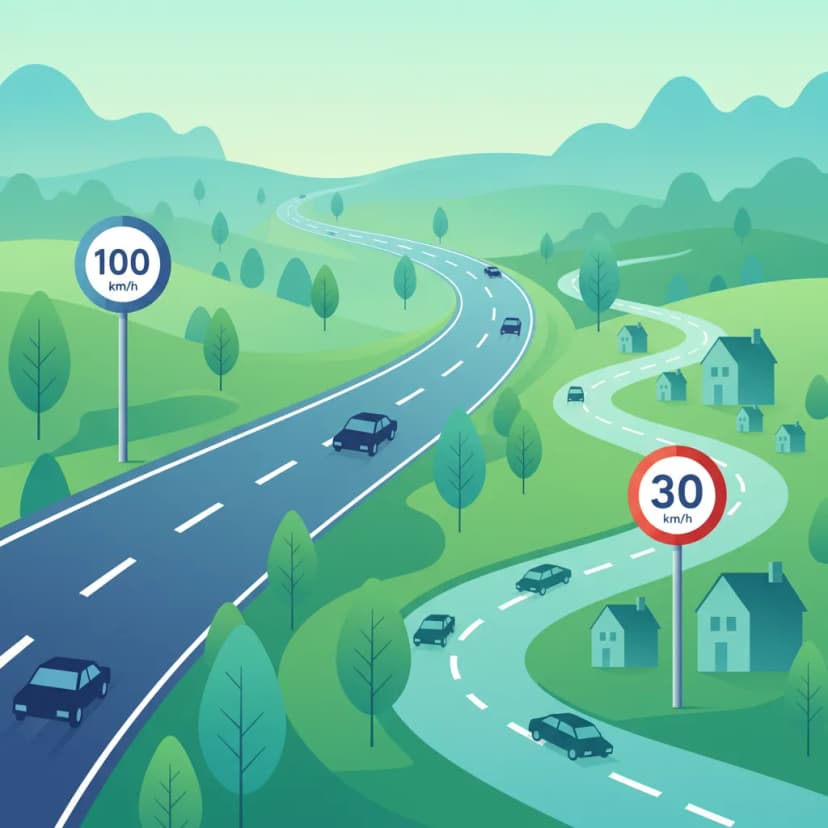
This lesson provides a comprehensive overview of the Swedish national speed limit system. You will learn the default speed limits applicable to different classes of roads, such as 50 km/h in built-up areas and 110 km/h on motorways. It also covers how to identify and comply with special zones, like residential areas (gångfartsområde), school zones, and temporary limits in construction areas, ensuring you always ride at a legal and appropriate speed.
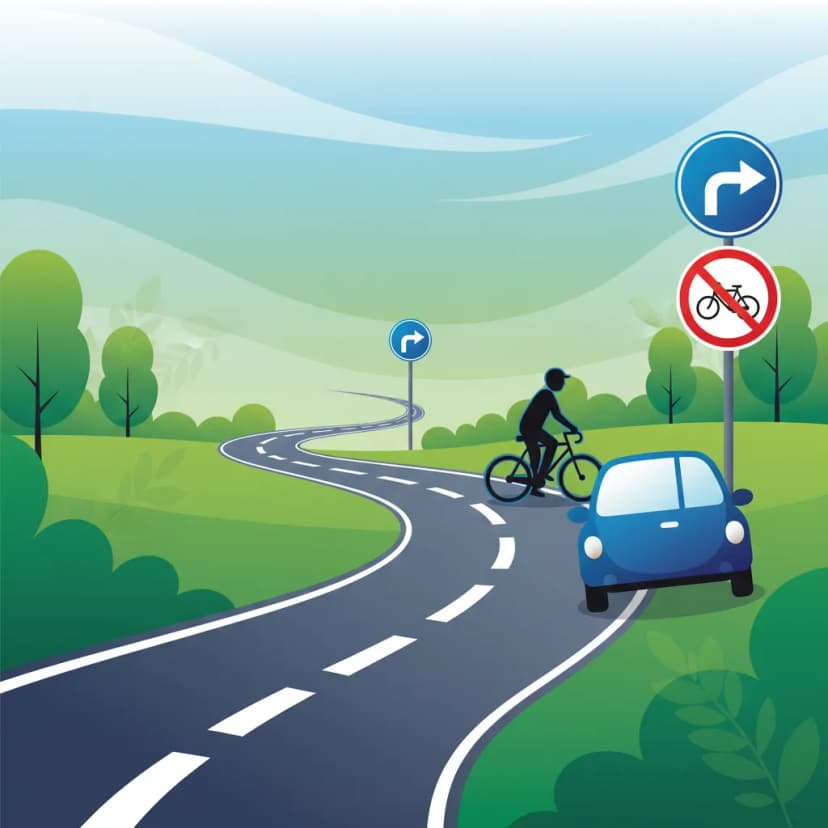
This lesson details the full range of Swedish regulatory signs, which establish legally enforceable rules for all road users. You will learn to interpret prohibitory signs (förbudsmärken) such as speed limits and no-entry signs, as well as mandatory signs (påbudsmärken) that dictate direction or lane usage. Understanding these signs is crucial as they directly regulate traffic flow, ensure safety at critical points, and carry legal consequences if ignored.

This lesson reinforces the core safety principle of adapting your driving to the prevailing weather conditions. You will learn why you must significantly reduce speed in heavy rain to avoid aquaplaning, how strong crosswinds can affect vehicle stability, and why reduced visibility in fog necessitates slower speeds and greater following distances. The goal is to instill a proactive approach to risk management whenever the weather is less than ideal.
This lesson emphasizes that the posted speed limit is a maximum, not a target. You will learn the principles of situational speed adaptation, which involves adjusting your speed based on factors like visibility, road geometry (curves and hills), traffic density, and potential hazards. The lesson covers specific strategies for managing speed in urban environments with pedestrians, on rural roads with hidden entrances, and on motorways to match the flow of traffic.
Learn how to adjust your speed appropriately for various Swedish traffic environments, including urban areas, rural roads, and motorways. This covers understanding speed limit structures and adapting driving behaviour for safety and compliance in different zones.
This lesson emphasizes that the posted speed limit is a maximum, not a target. You will learn the principles of situational speed adaptation, which involves adjusting your speed based on factors like visibility, road geometry (curves and hills), traffic density, and potential hazards. The lesson covers specific strategies for managing speed in urban environments with pedestrians, on rural roads with hidden entrances, and on motorways to match the flow of traffic.
This lesson reinforces the core safety principle of adapting your driving to the prevailing weather conditions. You will learn why you must significantly reduce speed in heavy rain to avoid aquaplaning, how strong crosswinds can affect vehicle stability, and why reduced visibility in fog necessitates slower speeds and greater following distances. The goal is to instill a proactive approach to risk management whenever the weather is less than ideal.
This lesson focuses on the high level of caution required when driving in residential areas. You will learn about the rules for special zones like 'gångfartsområde' (walking speed area) and the need to navigate around speed calming measures like speed bumps. The central theme is anticipating unpredictable behavior from residents, especially children, and managing the risks posed by parked cars that severely limit visibility.
This lesson provides a comprehensive overview of the Swedish national speed limit system. You will learn the default speed limits applicable to different classes of roads, such as 50 km/h in built-up areas and 110 km/h on motorways. It also covers how to identify and comply with special zones, like residential areas (gångfartsområde), school zones, and temporary limits in construction areas, ensuring you always ride at a legal and appropriate speed.
This lesson explains the hierarchical structure of speed limits in Sweden as defined by the Trafikförordning. It covers the default 'base speeds', including 50 km/h in built-up areas and 70 km/h outside them, and how these are modified by specific road signs. You will learn to identify speed limit signs for different road types, such as motorways and residential zones, and understand the legal framework that governs maximum permissible speeds.
This lesson focuses on the unique challenges of driving in urban environments. You will learn techniques for anticipating the actions of vulnerable road users like pedestrians and cyclists, especially near crossings and bus stops. The content covers how to navigate narrow streets, one-way systems, and areas with heavy traffic, emphasizing the need for lower speeds, heightened awareness, and a defensive mindset.
This lesson teaches the crucial skill of adapting speed to prevailing conditions, emphasizing that the posted speed limit is a maximum, not a target. It covers various scenarios such as rain, fog, heavy traffic, and poor road surfaces, explaining why reducing speed is essential for maintaining vehicle control and safety. The goal is to cultivate a proactive mindset where the rider constantly assesses risk and adjusts their speed accordingly.

This lesson teaches the crucial skill of adapting your speed to the dynamic and often congested conditions of urban riding. You will learn to modulate your speed smoothly in response to traffic flow, pedestrian activity, and complex intersections to maintain safety and control. Techniques covered include using engine braking effectively, anticipating the actions of other road users, and selecting a speed that maximizes your reaction time in a high-density environment.
This lesson covers the critical maneuvers of merging and changing lanes. You will learn the correct technique for using an acceleration lane to match the speed of motorway traffic before merging smoothly and safely. The lesson emphasizes the importance of checking mirrors and the blind spot, signaling in good time, and applying the 'zipper principle' (dragkedjeprincipen) where lanes merge to ensure efficient and courteous traffic flow.
This lesson focuses on the unique demands of managing speed in high-speed environments like motorways. You will learn techniques for maintaining a steady, appropriate speed that matches the flow of traffic, how to perform smooth overtakes, and the importance of increasing your following distance. It also covers physical factors such as managing wind blast and maintaining stability when riding near large trucks, ensuring a safe and controlled high-speed riding experience.
Find clear answers to common questions learners have about Enforcement and Penalties (Fartkontroll). Learn how the lesson is structured, which driving theory objectives it supports, and how it fits into the overall learning path of units and curriculum progression in Sweden. These explanations help you understand key concepts, lesson flow, and exam focused study goals.
Sweden uses several methods, including fixed Automatic Traffic Safety Cameras (ATK) at known speeding locations, mobile speed traps operated by the police, and laser measurements. These systems are designed to detect and record vehicles exceeding the posted speed limits.
'Penningböter' is the Swedish term for a fine. For speeding violations, you will typically receive a fine, the amount of which depends on how much you were exceeding the speed limit. These fines are issued either on the spot by police or sent by mail if detected by a camera.
Excessive speeding, or repeated speeding offenses within a certain period, can lead to a 'återkallelse av körkort' (revocation of driving license). The Swedish Transport Agency (Transportstyrelsen) makes these decisions based on the severity of the offense and the driver's history.
ATK cameras automatically measure a vehicle's speed. If a vehicle is detected exceeding the speed limit by a predetermined margin, the camera captures images of the vehicle and its license plate. This data is then processed to identify the owner and issue a fine.
While there isn't a formal 'grace period', enforcement thresholds are set. However, it's crucial to adhere strictly to the posted speed limits. Even minor infringements can result in fines, and a pattern of even small violations can contribute to a decision to revoke a license.