
Understanding Sweden's speed limit system is fundamental for safe moped riding and passing your theory exam. This lesson clarifies the national structure (Hastighetsbegränsning), including default speed limits that apply even without specific signs. It’s crucial for Category AM riders to know these general rules to navigate Sweden's roads legally and safely.
Welcome to the Swedish Driving License Theory Course for Category AM. This lesson provides a comprehensive guide to Sweden's national speed limit structure, an essential foundation for all road users, especially moped riders. Understanding these general rules is crucial for safely and legally navigating the road network, even when specific speed limit signs are not immediately visible. We will explore how different road types have default speed limits and, critically, how the specific rules for mopeds interact with and sometimes override these general limits.
Sweden's national speed limit framework (Hastighetsbegränsning) is designed to create a consistent and predictable driving environment across the country. This system ensures that all road users have a clear baseline for permissible speeds, promoting safety, predictability, and efficiency. The underlying logic is rooted in physics and public safety objectives.
Lower speeds, particularly in densely populated areas or zones with mixed traffic, significantly reduce the severity of potential crashes. The kinetic energy of a moving vehicle increases quadratically with speed; this means that even a small increase in speed can lead to a much greater amount of energy that must be dissipated in an accident, leading to more severe injuries. The national framework establishes a legal baseline, and explicit speed limit signs can then adjust these defaults based on local conditions, such as school zones, construction sites, or winding roads. This layered approach ensures flexibility while maintaining a strong safety foundation.
The Swedish traffic regulations define default speed limits that apply automatically when no specific speed limit sign is posted. These defaults vary depending on the type of road and whether it's located within or outside a built-up area. For Category AM moped riders, it's vital to know these defaults and remember that the absolute maximum speed for your moped is 45 km/h, which often supersedes higher default limits meant for cars.
A "built-up area" (tätbebyggt område) is an area where the distance between houses is typically 30 meters or less. These areas are officially designated by the Swedish Transport Administration (Trafikverket) and are generally identified by an entry sign displaying "50 km/h". This sign signifies the beginning of the built-up area and its associated default speed limit.
For cars and other vehicles, the default speed limit within a built-up area is 50 km/h. However, for moped riders, a specific rule applies: you must never exceed 45 km/h. Therefore, even if the general default for the area is 50 km/h, your moped is legally limited to 45 km/h. Should you encounter a lower speed limit sign within the built-up area, such as a 30 km/h zone, that sign takes precedence, and you must adhere to the lower limit. Ignoring the presence of this entry sign or misunderstanding the moped-specific cap can lead to traffic violations and increased risk.
Any road section that is not designated as a built-up area falls under the "outside built-up area" category (övriga vägar). This includes a wide range of roads, from rural country lanes and local county roads (länsvägar) to larger dual-carriageway roads that do not have motorway status. These roads generally have lower traffic density and fewer vulnerable road users compared to urban environments.
The default speed limit for cars on roads outside built-up areas is 70 km/h. For moped riders, the absolute maximum speed limit of 45 km/h remains in effect. This means that even on a road where cars may legally travel at 70 km/h, a moped rider must not exceed 45 km/h, unless a specific speed sign indicates a lower limit, which must then be obeyed. Always be vigilant for signs that might reduce the speed limit, such as those indicating sharp curves, intersections, or temporary hazards.
Motorways (motorväg) are high-capacity, controlled-access roads designed for uninterrupted, high-speed traffic flow. They typically feature at least two lanes per direction, separated by a central barrier, and have no at-grade intersections. The default speed limit for cars on most Swedish motorways is 110 km/h, though some sections may have a higher limit of 120 km/h.
Divided highways (motortrafikled) are similar but may have lower design speeds or allow certain at-grade intersections, often with a default speed limit of 90 km/h for cars. For Category AM moped riders, access to motorways and divided highways is generally prohibited. Mopeds are only permitted on these roads if there is an explicit "Moped allowed" sign. This is a blue-background sign typically featuring a moped symbol. Even if such a sign is present, moped riders must adhere to their 45 km/h maximum speed limit and usually stay in the rightmost lane. Attempting to ride a moped on a motorway or divided highway without explicit permission is a serious traffic violation.
A cornerstone of moped riding in Sweden is the absolute maximum speed cap of 45 km/h for Category AM vehicles. This is not merely a recommended speed but a strict legal limit that applies across the entire road network, regardless of the default speed limit or any higher posted signs. The design and performance characteristics of mopeds, including their braking capabilities and engine power, are factored into this regulation to ensure rider safety and minimize collision severity.
This means that if you are riding your moped on a road where the default speed limit for cars is 70 km/h, you must still not exceed 45 km/h. Similarly, if you pass a sign indicating a 60 km/h limit, you must continue to ride at 45 km/h or less. It is a common misunderstanding among new riders to think that higher speed signs automatically grant permission for the moped to travel faster. Always remember the 45 km/h cap for your Category AM moped.
While default speed limits provide a general framework, specific speed limit signs play a crucial role in adapting these limits to local conditions. The "sign override principle" dictates that any explicit speed limit sign legally supersedes the default limit for the road segment it governs. This principle is fundamental for traffic management and safety.
Permanent speed limit signs are typically circular with a red border and a black number, indicating the maximum speed allowed. These signs can either lower the default limit (e.g., a 30 km/h sign in a residential area) or, in some specific cases, raise it (e.g., an 80 km/h sign on a road whose default would otherwise be 70 km/h). As a moped rider, you must always obey these signs, with the critical caveat of your 45 km/h absolute maximum speed.
For example, if you are in a built-up area (default 50 km/h for cars, 45 km/h for mopeds) and encounter a sign for 30 km/h, you must reduce your speed to 30 km/h. If you are on a rural road (default 70 km/h for cars, 45 km/h for mopeds) and see a 60 km/h sign, you must still not exceed 45 km/h because your vehicle's cap is lower than the posted limit.
Temporary speed limit signs are often used to manage traffic flow and safety during specific conditions, such as road construction, maintenance, or special events. These signs are typically distinguishable by their orange background or flashing lights and carry the same legal authority as permanent signs while they are in effect. They override any permanent or default speed limits.
Always be highly vigilant for temporary speed limit signs in roadwork zones. These areas present increased hazards due to workers, machinery, and changed road surfaces. Reduced speeds are critical for safety.
Once a temporary speed limit zone ends, usually indicated by an "End of construction" or "End of temporary speed limit" sign, the previous permanent speed limit or the default speed limit for that road type resumes. It is crucial not to continue driving at the temporarily reduced speed after passing the end sign, as this can unnecessarily impede traffic flow.
Beyond the general national structure, certain areas and conditions require specific speed considerations. Understanding these ensures you ride safely and legally in all circumstances.
Areas around schools are frequently designated as school zones (skolzoner), characterized by a "30 km/h" speed limit sign. These zones are put in place to protect vulnerable children, who may behave unpredictably near roads. This 30 km/h limit applies to all vehicles, including mopeds, and overrides any higher default or posted speed limits. Moped riders must strictly adhere to the 30 km/h limit within these zones, often during specific hours (e.g., 8 am – 3 pm on weekdays), even though their vehicle's general cap is 45 km/h.
Similarly, many residential areas are designated as 30 km/h zones to enhance safety for pedestrians, cyclists, and playing children. These signs must be respected by moped riders. The principle is always to obey the most restrictive applicable limit.
While speed limits define the maximum legal speed, they do not always represent the safest speed. Swedish traffic law includes a general duty of care (§ 3 of the Traffic Ordinance), which requires all drivers to adapt their speed to prevailing conditions. This means that in adverse weather conditions like heavy rain, snow, ice, or dense fog, or when visibility is poor (e.g., at night), you must reduce your speed significantly below the posted or default limit.
Factors to consider when adjusting your speed:
Always prioritize safety over the speed limit. If conditions make it unsafe to travel at the maximum legal speed, you are legally obligated to reduce your speed further.
Failing to adhere to speed limits is a serious offense with potentially severe consequences, both legal and safety-related. For moped riders, specific violations are particularly common due to the absolute speed cap.
Here are some typical violations:
Consequences can include fines, penalty points on your driving record (which can lead to license suspension if accumulated), and, in severe cases, charges for dangerous driving. Beyond legal penalties, speeding significantly increases the risk of accidents and the severity of injuries.
The rules surrounding speed limits are not arbitrary; they are deeply rooted in scientific principles that directly impact road safety. For moped riders, understanding these principles reinforces the importance of compliance.
To solidify your understanding, let's consider some practical scenarios you might encounter as a moped rider in Sweden.
You are riding your moped on a rural road with no speed limit sign, so the default speed for your moped is 45 km/h. You then see a sign indicating the start of a built-up area with a "50 km/h" speed limit.
You are riding your moped on a road outside a built-up area where the general default speed for cars is 70 km/h, but a specific sign indicates a 60 km/h limit (perhaps due to a sharp curve or a cluster of houses).
You are on a main road with a permanent 70 km/h speed limit. You enter a construction zone marked by a temporary orange "50 km/h" sign, which is then followed by an "End of construction" sign.
You are riding your moped at night on a rural road (default 70 km/h for cars, 45 km/h for mopeds). Heavy fog suddenly reduces visibility to only 30 meters.
Lesson content overview
Explore all units and lessons included in this driving theory course.
Explore search topics learners often look for when studying National Speed Limit Structure (Hastighetsbegränsning). These topics reflect common questions about road rules, driving situations, safety guidance, and lesson level theory preparation for learners in Sweden.
Browse additional driving theory lessons that cover connected traffic rules, road signs, and common driving situations related to this topic. Improve your understanding of how different rules interact across everyday traffic scenarios.
Learn to identify and interpret specific speed limit signs on Swedish roads. This lesson covers how posted limits override national defaults, focusing on regulations relevant for Category AM moped riders. Understand how to determine correct speeds in various driving environments.
This lesson focuses on regulatory signs (Regulationsskyltar), which issue mandatory instructions and prohibitions that all road users must follow. It details common signs such as speed limits, stop and give way signs, and mandatory direction arrows. Special attention is given to signs directly affecting mopeds, like 'no moped' signs and those indicating designated moped lanes, ensuring riders can navigate legally and safely.
This lesson focuses on the specific speed regulations applicable to Category AM mopeds in Sweden. It emphasizes the absolute maximum legal speed of 45 km/h and explains that riders must always adapt their speed to be lower when conditions require. The content also covers any special, lower speed limits that may apply when riding on designated cycle paths or in shared spaces.
This lesson consolidates the key regulations that apply specifically to moped operation in Sweden. It covers mandatory rules such as speed limits, helmet use, and requirements for vehicle lighting and reflectors. Furthermore, the lesson explains the legal consequences of violations, including the system of fines and potential demerit points, ensuring riders understand their full range of legal responsibilities on the road.
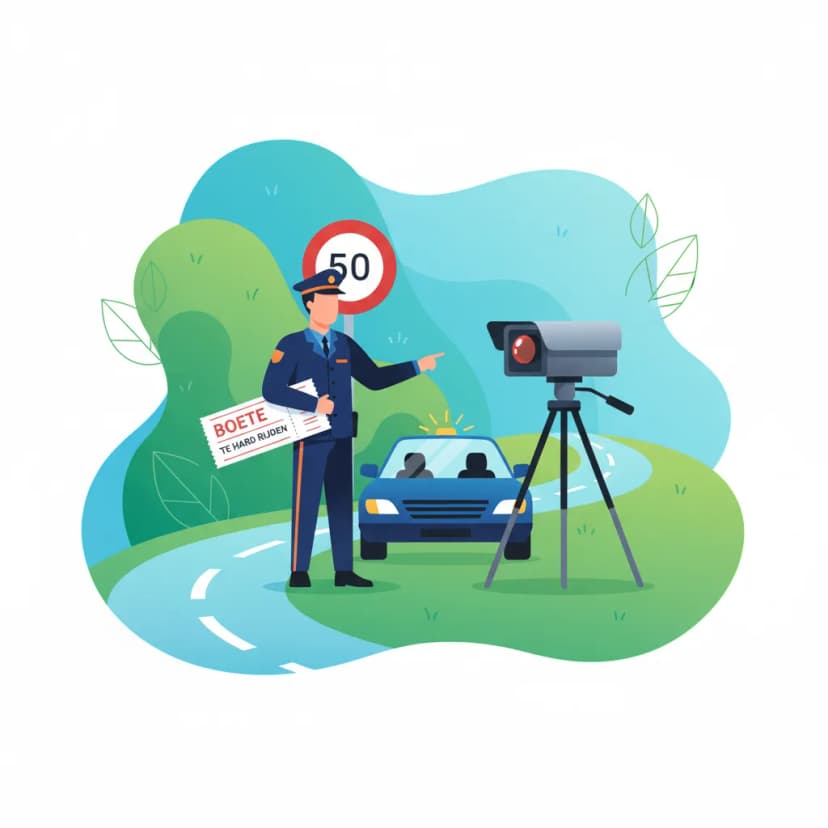
This lesson outlines the enforcement measures and penalties for speeding violations in Sweden. It explains the system of fines, how they escalate based on the severity of the offense, and the potential for receiving demerit points on a license. The content serves as a serious reminder of the legal and financial consequences of speeding, reinforcing the importance of adhering to all speed regulations.
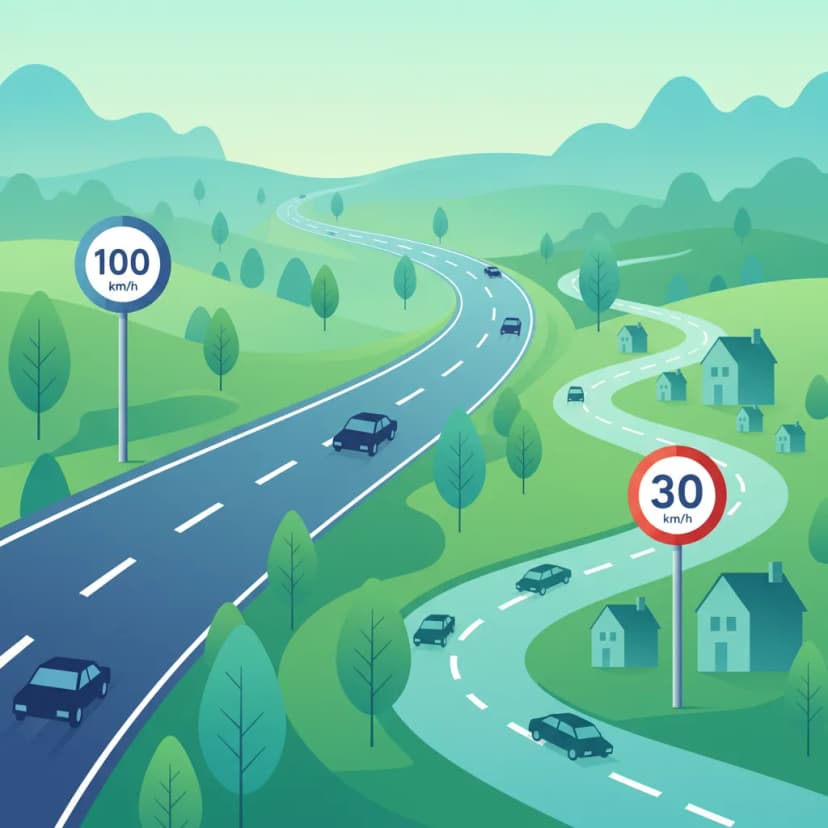
This lesson provides a comprehensive overview of the Swedish national speed limit system. You will learn the default speed limits applicable to different classes of roads, such as 50 km/h in built-up areas and 110 km/h on motorways. It also covers how to identify and comply with special zones, like residential areas (gångfartsområde), school zones, and temporary limits in construction areas, ensuring you always ride at a legal and appropriate speed.
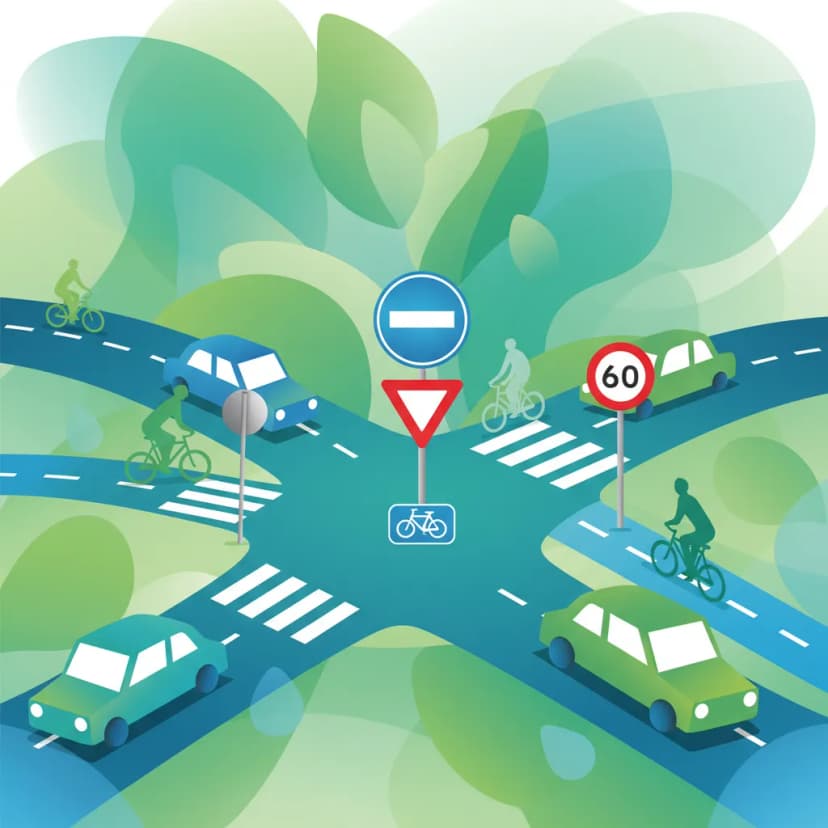
This lesson details the full range of Swedish regulatory signs, which dictate mandatory actions and prohibitions for all road users. You will learn to identify signs that establish speed limits, restrict access, prohibit overtaking, and define parking rules. Understanding these signs is critical for legal compliance and safe interaction with other traffic, as they form the basis of enforceable road law under the Trafikförordning regulations.
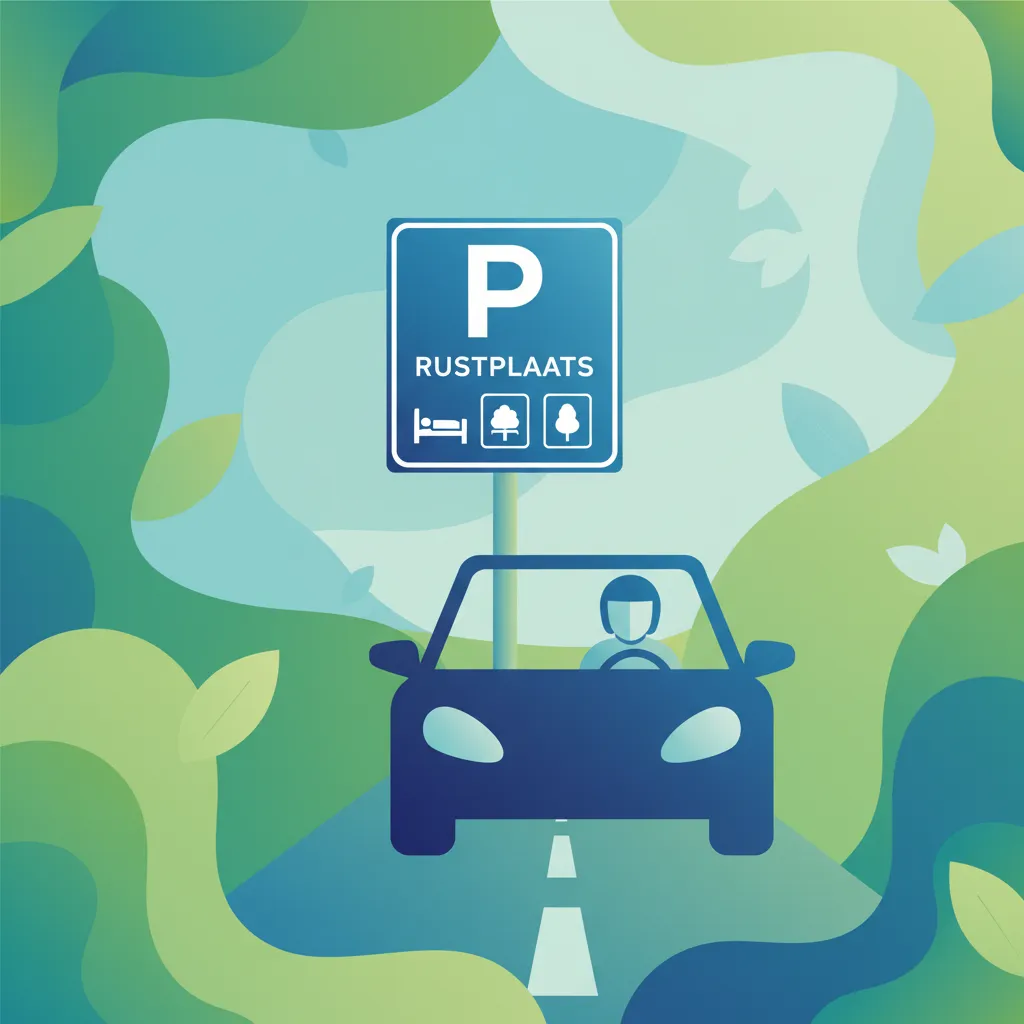
This lesson explains the function of informational signs (Informationsskyltar), which provide guidance for navigation and access to services. It covers signs indicating distances to destinations, route numbers, and locations of fuel stations or parking areas. For moped riders, this includes identifying signs for designated moped or cycle lanes, helping them to plan and follow routes efficiently and legally.
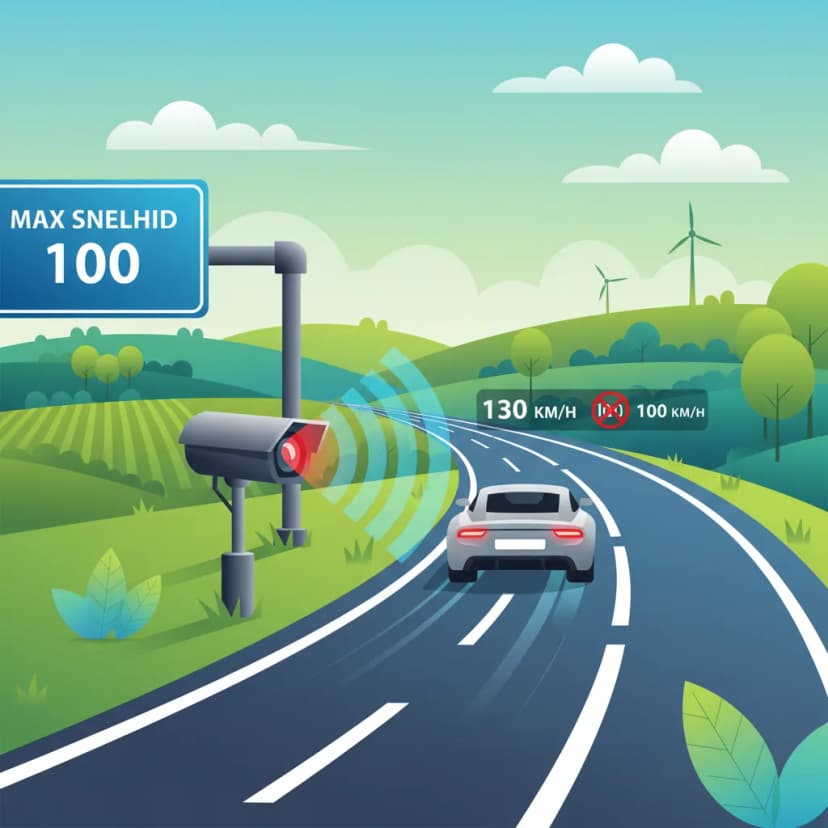
This lesson informs you about the various technologies and methods used for speed enforcement in Sweden, such as fixed and mobile speed cameras and police radar. You will understand the legal framework for speed monitoring and the corresponding penalties for violations, including fines (böter) and the potential for license suspension. This knowledge reinforces the importance of constant speed awareness and adherence to posted limits to ensure both safety and legal compliance.
This lesson explains how to identify and interact with various types of mopeds and other low-speed vehicles common on Swedish roads. You will learn the difference between Class I and Class II mopeds and their place on the road, as well as how to recognize A-tractors by their LGF (långsamtgående fordon) sign. The key focus is on managing the large speed differential and making safe judgments when deciding to overtake.
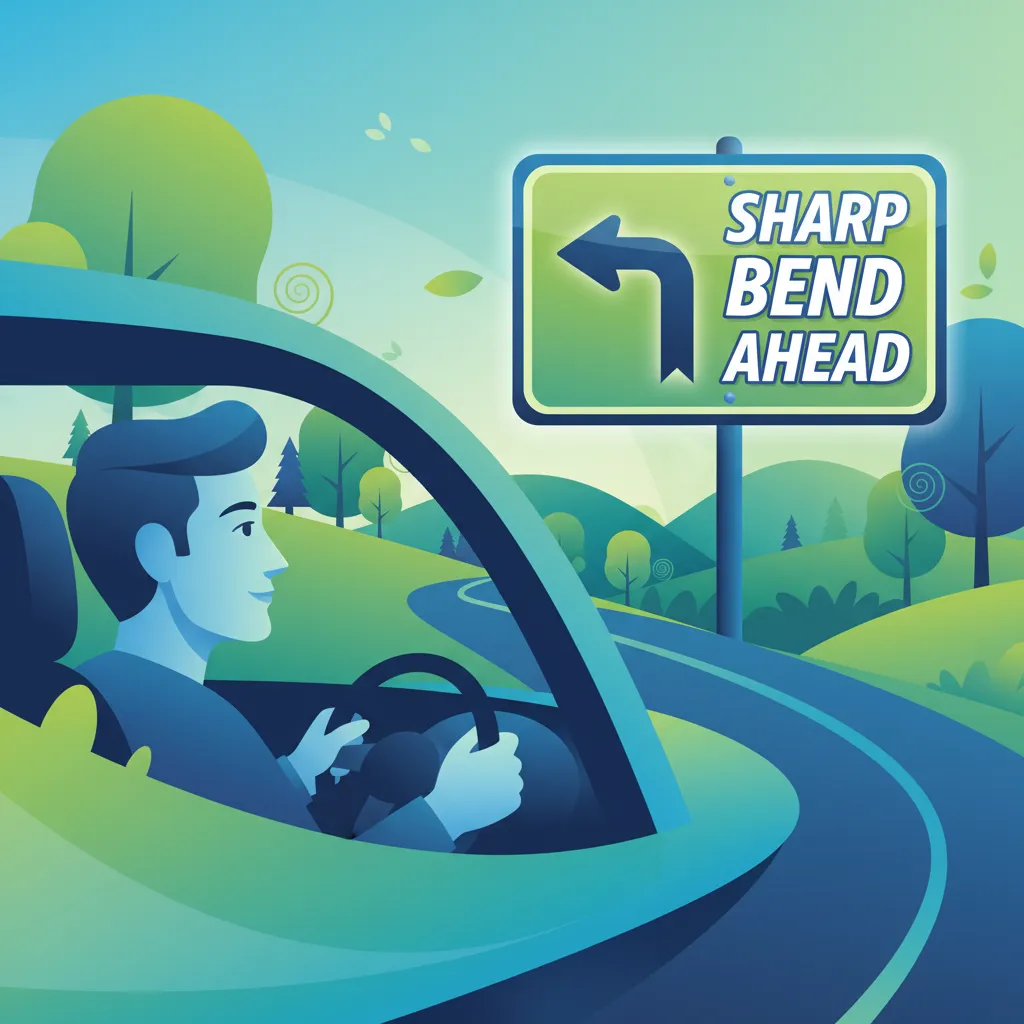
This lesson teaches riders to interpret warning signs (Varningsskyltar), which alert them to potential dangers on the road ahead. It covers a wide range of signs, including those for sharp curves, slippery surfaces, wildlife crossings, and upcoming roadworks. Understanding these triangular signs allows riders to anticipate hazards, adjust their speed and position proactively, and enhance their overall safety.
Explore how to adjust your speed based on weather, road surface, and traffic density. This lesson explains safe speed calculations and how to maintain appropriate distances, crucial for moped riders in varying Swedish conditions beyond just following posted limits.
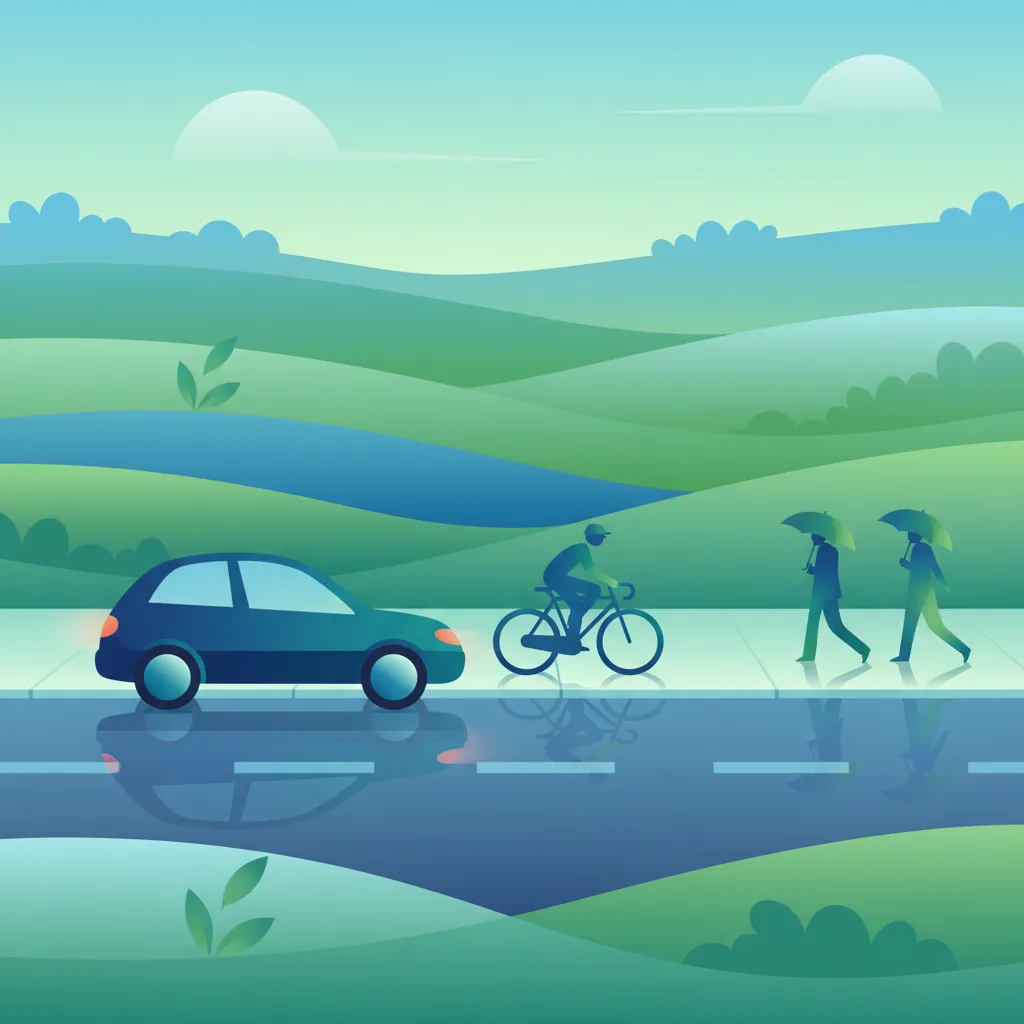
This lesson teaches the crucial skill of adapting speed to prevailing conditions, emphasizing that the posted speed limit is a maximum, not a target. It covers various scenarios such as rain, fog, heavy traffic, and poor road surfaces, explaining why reducing speed is essential for maintaining vehicle control and safety. The goal is to cultivate a proactive mindset where the rider constantly assesses risk and adjusts their speed accordingly.

This lesson reinforces the core safety principle of adapting your driving to the prevailing weather conditions. You will learn why you must significantly reduce speed in heavy rain to avoid aquaplaning, how strong crosswinds can affect vehicle stability, and why reduced visibility in fog necessitates slower speeds and greater following distances. The goal is to instill a proactive approach to risk management whenever the weather is less than ideal.

This lesson encourages a mindset of adapting riding style to the specific challenges of each season. It covers seasonal hazards such as wet leaves in the fall, loose gravel after winter, and sun glare in the summer. By being aware of these predictable changes, riders can proactively adjust their technique and maintain safety throughout the year.

This lesson emphasizes that the posted speed limit is a maximum, not a target. You will learn the principles of situational speed adaptation, which involves adjusting your speed based on factors like visibility, road geometry (curves and hills), traffic density, and potential hazards. The lesson covers specific strategies for managing speed in urban environments with pedestrians, on rural roads with hidden entrances, and on motorways to match the flow of traffic.

This lesson teaches the crucial skill of adapting your speed to the dynamic and often congested conditions of urban riding. You will learn to modulate your speed smoothly in response to traffic flow, pedestrian activity, and complex intersections to maintain safety and control. Techniques covered include using engine braking effectively, anticipating the actions of other road users, and selecting a speed that maximizes your reaction time in a high-density environment.

This lesson details the specific hazards associated with riding on wet roads, including significantly increased stopping distances and the risk of aquaplaning. It explains how to recognize conditions where aquaplaning is likely and the importance of reducing speed. Riders will learn to use smoother throttle, braking, and steering inputs to maintain traction and control.
This lesson focuses on the specific speed regulations applicable to Category AM mopeds in Sweden. It emphasizes the absolute maximum legal speed of 45 km/h and explains that riders must always adapt their speed to be lower when conditions require. The content also covers any special, lower speed limits that may apply when riding on designated cycle paths or in shared spaces.

This lesson focuses on the unique demands of managing speed in high-speed environments like motorways. You will learn techniques for maintaining a steady, appropriate speed that matches the flow of traffic, how to perform smooth overtakes, and the importance of increasing your following distance. It also covers physical factors such as managing wind blast and maintaining stability when riding near large trucks, ensuring a safe and controlled high-speed riding experience.
This lesson addresses the severe dangers of riding a moped in snow and icy conditions. It explains how to identify potential hazards like black ice and emphasizes that avoiding riding in such conditions is the safest strategy. For situations where it cannot be avoided, it provides advice on extremely gentle control inputs and vehicle preparation.

This lesson introduces the foundational legal concept of 'duty of care,' which requires all road users to act in a way that does not endanger others. It explains that this duty often requires driving at a 'reasonable speed' that may be lower than the posted limit, depending on conditions. This principle encourages a proactive and considerate approach to sharing the road.
Find clear answers to common questions learners have about National Speed Limit Structure (Hastighetsbegränsning). Learn how the lesson is structured, which driving theory objectives it supports, and how it fits into the overall learning path of units and curriculum progression in Sweden. These explanations help you understand key concepts, lesson flow, and exam focused study goals.
In Sweden, the default speed limits are: 50 km/h in built-up areas (tätbebyggt område), 70 km/h outside built-up areas (utanför tätbebyggt område) on non-urban roads, and 110 km/h on motorways (motorväg). Category AM mopeds must adhere to these limits unless a lower speed is indicated by signs. However, specific regulations or vehicle types might have even lower limits, so always be aware of your specific vehicle's capabilities and any posted signs.
Yes, Sweden distinguishes between different classes of mopeds. Class I mopeds (EU-mopeder) have a maximum design speed of 45 km/h and are subject to speed limits like other vehicles, typically adhering to the general speed limits or lower if posted. Class II mopeds are limited to 25 km/h and may have different usage restrictions, though their maximum speed dictates their practical limit.
A built-up area is generally indicated by a sign showing a town or city name, or by built-up area signs (tätbebyggt område). If you are unsure, assume the lower speed limit (50 km/h) applies as soon as there are buildings and houses close to the road, or when road lighting is present, especially if there are clear signs of residential or commercial activity.
Exceeding the national speed limit for mopeds, even by a small margin, can result in fines and potentially demerit points on your driving license. Speeding significantly can lead to more severe penalties. It's crucial to always respect the posted speed limits and the national default limits to ensure your safety and avoid legal consequences.
While the national speed limits (Hastighetsbegränsning) remain the same, driving conditions in winter (snow, ice, wet roads) drastically reduce traction and visibility. You must always adjust your speed to the prevailing conditions, which often means driving significantly slower than the posted or national limit to maintain control and safety. This is a critical aspect of safe driving, especially for mopeds.