
Understanding that the posted speed limit is a maximum, not a target, is crucial for safe moped riding. This lesson focuses on adapting your speed to changing road and weather conditions, a key skill for Category AM riders in Sweden. Building on basic speed concepts, we’ll explore how factors like rain, fog, and heavy traffic necessitate reduced speeds to maintain control and prevent accidents, preparing you for real-world scenarios and theory exam questions.
Navigating the roads safely as a Category AM moped rider in Sweden requires more than simply obeying the posted speed limits. It demands a proactive approach to speed management, where you constantly assess prevailing conditions and adjust your speed accordingly. The maximum speed limit indicated on road signs or by law is precisely that: a maximum, permissible only under ideal circumstances. Your primary responsibility is to maintain a safe speed that allows you to control your moped, react to hazards, and stop effectively, regardless of the posted limit. This lesson explores the critical factors influencing safe speed and how to integrate them into your daily riding decisions.
A fundamental concept for all road users, especially vulnerable moped riders, is the distinction between a maximum speed limit and a safe speed.
The maximum speed limit is the highest speed legally allowed on a particular road segment under optimal conditions. These limits are communicated through road signs, such as circular signs with a red border and a number, or defined by general regulations for certain areas (e.g., urban, rural). For mopeds, specific limits often apply, such as 25 km/h for Class II mopeds or 45 km/h for Class I mopeds, which may be lower than the general vehicle speed limits on the same road.
It is crucial to understand that exceeding this limit is always illegal, regardless of how safe you feel the conditions are. However, the posted limit assumes ideal conditions – dry, clear roads, good visibility, and light traffic. It does not guarantee safety if conditions deteriorate.
Safe speed, also known as contextual speed, is the speed at which you can maintain full control of your moped, react to any unexpected events, and stop safely within the visible distance ahead, considering all current conditions. This speed is often lower than the posted maximum speed limit.
As a moped rider, you must continuously evaluate:
Choosing a safe speed demonstrates due care and responsibility, which is a legal requirement under Swedish traffic law. Failure to adjust to a safe speed is a common cause of moped accidents and can lead to severe penalties.
Selecting a safe speed is directly linked to your ability to stop the moped. The stopping distance is the total distance your moped travels from the moment you perceive a hazard until you come to a complete stop. It consists of two main components:
This is the distance your moped travels while you perceive a hazard, process the information, and react by moving your foot or hand to apply the brakes. For an average rider, perception-reaction time is approximately 1.0 to 1.5 seconds under ideal conditions. This time can increase significantly due to fatigue, distractions, poor visibility, or adverse weather.
This is the distance your moped travels from the moment you apply the brakes until it comes to a complete stop. Braking distance is heavily influenced by speed, the efficiency of your brakes, the condition of your tires, and most importantly, the surface grip coefficient (µ) between your tires and the road.
Therefore, when riding, you must constantly ask yourself: "Can I stop safely within the distance I can clearly see ahead, accounting for both my reaction time and my moped's braking capability under these specific conditions?"
The surface grip coefficient (µ) is a dimensionless factor that quantifies the friction between your moped's tires and the road surface. A higher µ value means better grip and shorter braking distances, while a lower µ means reduced grip and longer braking distances, increasing the risk of skidding. Understanding how µ changes with road conditions is vital for moped riders.
Typical µ values for different surfaces:
When riding on surfaces with a low µ, you must drastically reduce your speed. For example, braking distance on wet asphalt can be 50-75% longer than on dry asphalt. On ice, it can be 5 to 7 times longer. A moped's lighter weight and two wheels make it particularly susceptible to loss of traction.
When encountering puddles or standing water, be aware of hydroplaning. This occurs when a layer of water builds up between your tires and the road surface, causing a complete loss of traction. It can happen at relatively low speeds (e.g., above 30 km/h) if there's sufficient water. Reduce speed significantly and avoid sudden steering or braking.
Your ability to see and be seen directly dictates your safe speed. When visibility is reduced, your perception-reaction time increases, and the distance within which you can identify hazards shrinks dramatically.
These conditions severely limit your line of sight.
Even on clear nights with proper headlights, your depth perception is reduced, and the range of your headlights is finite (typically 100-150 meters with low beams). You must reduce your speed to ensure you can stop within the illuminated area. When riding at night, always use appropriate lighting (low beams in built-up areas or when meeting/following traffic, high beams when alone on unlit roads, if permitted).
Never "outdrive your headlights" – meaning, do not drive at a speed where your stopping distance is greater than the distance illuminated by your headlights. This is a common cause of night-time collisions.
Traffic conditions play a crucial role in determining your safe speed. Even if the road surface is dry and visibility is good, heavy traffic or a sudden reduction in traffic flow demands an immediate speed adjustment.
In dense traffic, you must reduce your speed to match the overall flow and maintain a safe following distance. The two-second rule (allowing two seconds between you and the vehicle ahead) should be increased to three or four seconds in heavy traffic or adverse conditions. This provides a buffer for sudden stops and allows you more time to react. Attempting to maintain the maximum speed limit in stop-and-go traffic is dangerous and can lead to rear-end collisions.
Be observant of traffic ahead. Look several vehicles ahead, not just the one directly in front of you. If you see brake lights far ahead, or if traffic starts to slow, anticipate a need to reduce your speed and gently apply brakes well in advance. Moped riders must be particularly cautious as they are less visible and more vulnerable in congested environments.
The state of your moped and any additional load it carries directly affect its handling, acceleration, and most critically, its braking performance.
Category AM mopeds (Class I) are often designed for one rider but may sometimes carry a passenger or light cargo.
Your moped's mechanical condition is paramount for safe speed adjustment.
Regular vehicle checks, including tire tread, pressure, and brake functionality, are part of your legal responsibility as a driver and are crucial before every ride, especially when adverse conditions are expected.
Swedish traffic law explicitly mandates that drivers adapt their speed to prevailing conditions, emphasizing responsibility and due care.
The Trafikförordningen (Traffic Ordinance) § 3 § 1 is a foundational principle: drivers must "behave with due care and respect for other road users" and specifically adapt their speed to road, weather, traffic, and visibility conditions. This makes speed adaptation not merely a safety recommendation but a legal obligation.
While adapting speed downwards is crucial, Trafikförordningen § 44 reinforces that the posted speed limit may never be exceeded under any circumstances. This means your chosen safe speed must always be at or below the maximum legal limit.
Another critical regulation, Trafikförordningen § 46, states that drivers must be able to stop their vehicle within the distance that is visible ahead. This rule is especially pertinent in conditions of reduced visibility such as fog, heavy rain, or darkness.
Some road markings, such as "slippery when wet" symbols, provide explicit warnings about reduced traction. Trafikförordningen § 56 implies that drivers must respond to such warnings by adjusting their speed. Failure to do so can be considered negligent.
The Körkortslagen (Driving Licence Act) and its associated regulations for Category AM mopeds reinforce the need for safe driving practices, including appropriate speed selection, given the moped's inherent vulnerability. Moped riders are expected to demonstrate a heightened awareness of road conditions and their vehicle's capabilities.
Ignoring the principles of speed adaptation can lead to serious consequences. Here are common violations and associated risks for moped riders:
Effective speed management is a continuous decision-making process. Here’s a step-by-step approach:
Identify the Maximum Legal Speed: Note the posted speed limit sign or general legal limit for your moped type in the area. This is your absolute upper bound.
Assess Current Road Conditions: Evaluate the road surface (dry, wet, icy, gravel, potholes), and its general quality.
Evaluate Weather Conditions: Note rain, snow, fog, strong winds, or glaring sunlight.
Check Visibility: How far can you clearly see ahead? Is it daylight, twilight, or night? Are there any obstructions (hills, curves, buildings)?
Observe Traffic Density and Flow: Is traffic heavy, light, fast, or slow? Are there many vulnerable road users (pedestrians, cyclists)?
Consider Your Moped's Condition and Load: Are your tires good, brakes functional, and lights working? Are you carrying a passenger or heavy cargo?
Estimate Required Stopping Distance: Mentally combine your perception-reaction time with your estimated braking distance under the current conditions.
Select a Safe Speed: Choose a speed that is:
Continuously Re-evaluate: Conditions can change rapidly. Always be ready to adjust your speed downwards (or occasionally upwards, if conditions improve safely).
According to Transportstyrelsen, a significant percentage of moped collisions involve inappropriate speed for conditions. Proactive speed adjustment is one of the most effective ways to cut your risk by nearly half.
By internalizing these principles and consistently applying a thoughtful approach to speed, you will enhance your safety, maintain control of your moped, comply with Swedish traffic regulations, and ultimately become a more skilled and responsible rider.
Lesson content overview
Explore all units and lessons included in this driving theory course.
Explore search topics learners often look for when studying Adjusting Speed for Road Conditions. These topics reflect common questions about road rules, driving situations, safety guidance, and lesson level theory preparation for learners in Sweden.
Browse additional driving theory lessons that cover connected traffic rules, road signs, and common driving situations related to this topic. Improve your understanding of how different rules interact across everyday traffic scenarios.
Understand how to dynamically adjust your speed for various Swedish road conditions, including rain, fog, and heavy traffic. This lesson focuses on prioritizing safety over posted limits to enhance hazard perception for Category AM licence holders.

This lesson reinforces the core safety principle of adapting your driving to the prevailing weather conditions. You will learn why you must significantly reduce speed in heavy rain to avoid aquaplaning, how strong crosswinds can affect vehicle stability, and why reduced visibility in fog necessitates slower speeds and greater following distances. The goal is to instill a proactive approach to risk management whenever the weather is less than ideal.

This lesson encourages a mindset of adapting riding style to the specific challenges of each season. It covers seasonal hazards such as wet leaves in the fall, loose gravel after winter, and sun glare in the summer. By being aware of these predictable changes, riders can proactively adjust their technique and maintain safety throughout the year.
This lesson teaches the crucial skill of adapting your speed to the dynamic and often congested conditions of urban riding. You will learn to modulate your speed smoothly in response to traffic flow, pedestrian activity, and complex intersections to maintain safety and control. Techniques covered include using engine braking effectively, anticipating the actions of other road users, and selecting a speed that maximizes your reaction time in a high-density environment.
This lesson emphasizes that the posted speed limit is a maximum, not a target. You will learn the principles of situational speed adaptation, which involves adjusting your speed based on factors like visibility, road geometry (curves and hills), traffic density, and potential hazards. The lesson covers specific strategies for managing speed in urban environments with pedestrians, on rural roads with hidden entrances, and on motorways to match the flow of traffic.

This lesson details the specific hazards associated with riding on wet roads, including significantly increased stopping distances and the risk of aquaplaning. It explains how to recognize conditions where aquaplaning is likely and the importance of reducing speed. Riders will learn to use smoother throttle, braking, and steering inputs to maintain traction and control.

This lesson focuses on developing the fine control needed for low-speed maneuvering, a common challenge in urban environments. It covers techniques for making tight turns, such as U-turns, by using a combination of clutch, throttle, and rear brake control. The goal is to build the rider's skill and confidence in handling the moped in parking lots, heavy traffic, and other confined areas.
This lesson addresses the severe dangers of riding a moped in snow and icy conditions. It explains how to identify potential hazards like black ice and emphasizes that avoiding riding in such conditions is the safest strategy. For situations where it cannot be avoided, it provides advice on extremely gentle control inputs and vehicle preparation.
This lesson introduces the foundational legal concept of 'duty of care,' which requires all road users to act in a way that does not endanger others. It explains that this duty often requires driving at a 'reasonable speed' that may be lower than the posted limit, depending on conditions. This principle encourages a proactive and considerate approach to sharing the road.
This lesson explains how to identify and interact with various types of mopeds and other low-speed vehicles common on Swedish roads. You will learn the difference between Class I and Class II mopeds and their place on the road, as well as how to recognize A-tractors by their LGF (långsamtgående fordon) sign. The key focus is on managing the large speed differential and making safe judgments when deciding to overtake.
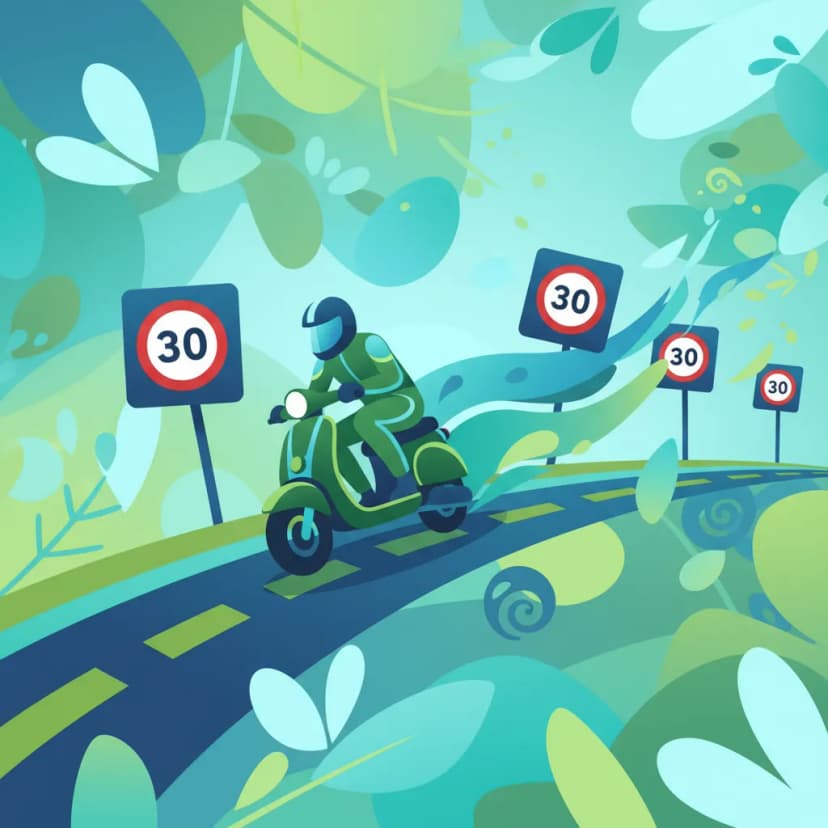
This lesson focuses on the specific speed regulations applicable to Category AM mopeds in Sweden. It emphasizes the absolute maximum legal speed of 45 km/h and explains that riders must always adapt their speed to be lower when conditions require. The content also covers any special, lower speed limits that may apply when riding on designated cycle paths or in shared spaces.
Explore the nuances of Swedish speed limits, including when the posted maximum is unsafe. Learn about calculating safe stopping distances and how speed affects vehicle control, a critical aspect for Category AM licence holders.
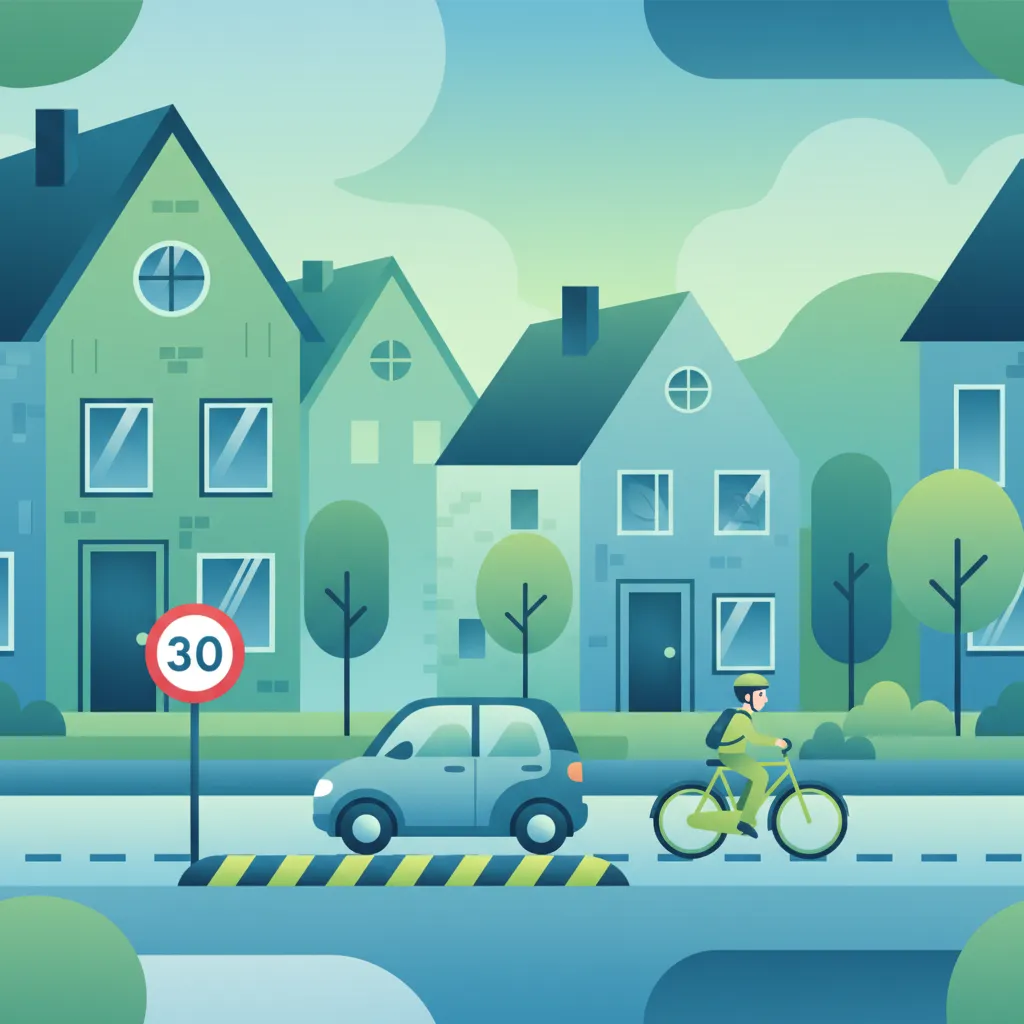
This lesson focuses on the high level of caution required when driving in residential areas. You will learn about the rules for special zones like 'gångfartsområde' (walking speed area) and the need to navigate around speed calming measures like speed bumps. The central theme is anticipating unpredictable behavior from residents, especially children, and managing the risks posed by parked cars that severely limit visibility.
This lesson emphasizes that the posted speed limit is a maximum, not a target. You will learn the principles of situational speed adaptation, which involves adjusting your speed based on factors like visibility, road geometry (curves and hills), traffic density, and potential hazards. The lesson covers specific strategies for managing speed in urban environments with pedestrians, on rural roads with hidden entrances, and on motorways to match the flow of traffic.
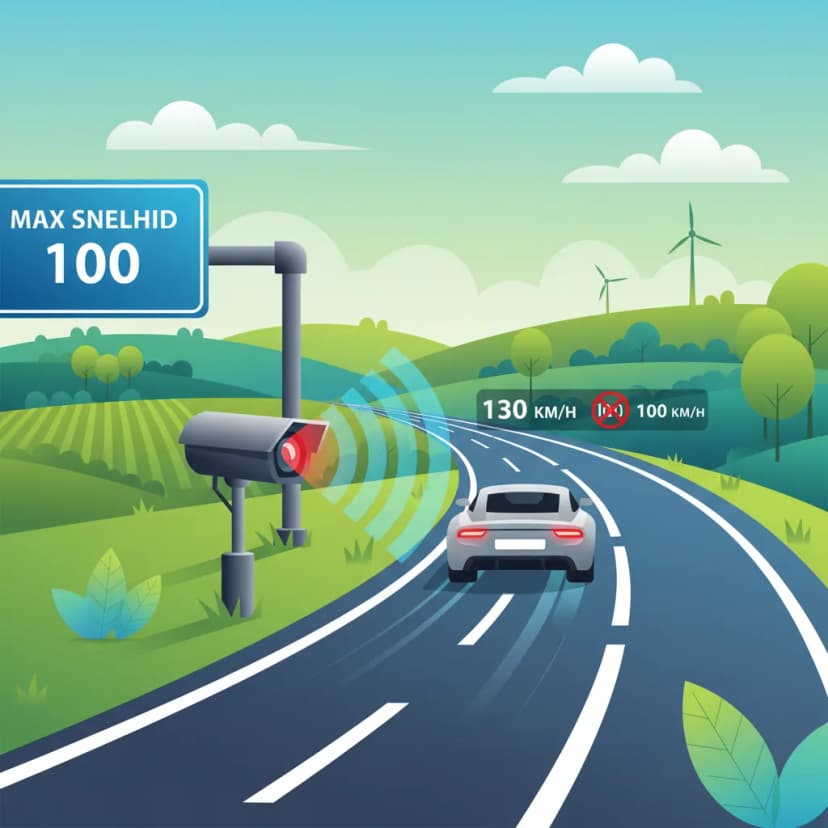
This lesson informs you about the various technologies and methods used for speed enforcement in Sweden, such as fixed and mobile speed cameras and police radar. You will understand the legal framework for speed monitoring and the corresponding penalties for violations, including fines (böter) and the potential for license suspension. This knowledge reinforces the importance of constant speed awareness and adherence to posted limits to ensure both safety and legal compliance.
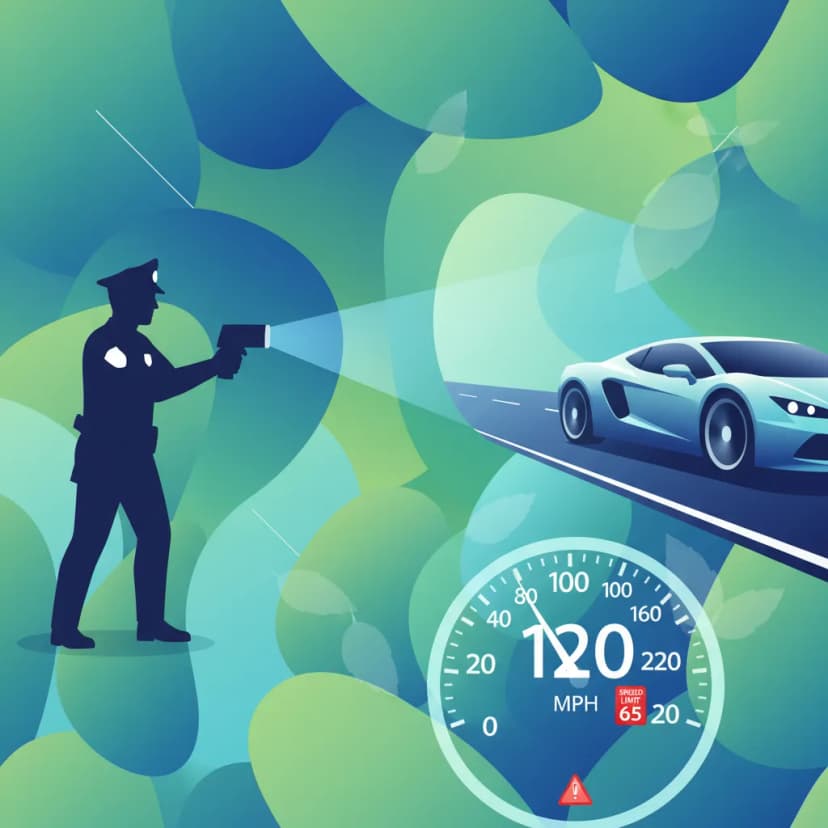
This lesson provides factual information about speed limit enforcement and the penalties for violations in Sweden. You will learn about the different methods used, including automatic traffic safety cameras (ATK), mobile police patrols, and laser measurements. The content details the system of fines (penningböter) and the conditions under which a speeding offense can lead to a warning or the revocation of your driving license.
This lesson reinforces the core safety principle of adapting your driving to the prevailing weather conditions. You will learn why you must significantly reduce speed in heavy rain to avoid aquaplaning, how strong crosswinds can affect vehicle stability, and why reduced visibility in fog necessitates slower speeds and greater following distances. The goal is to instill a proactive approach to risk management whenever the weather is less than ideal.
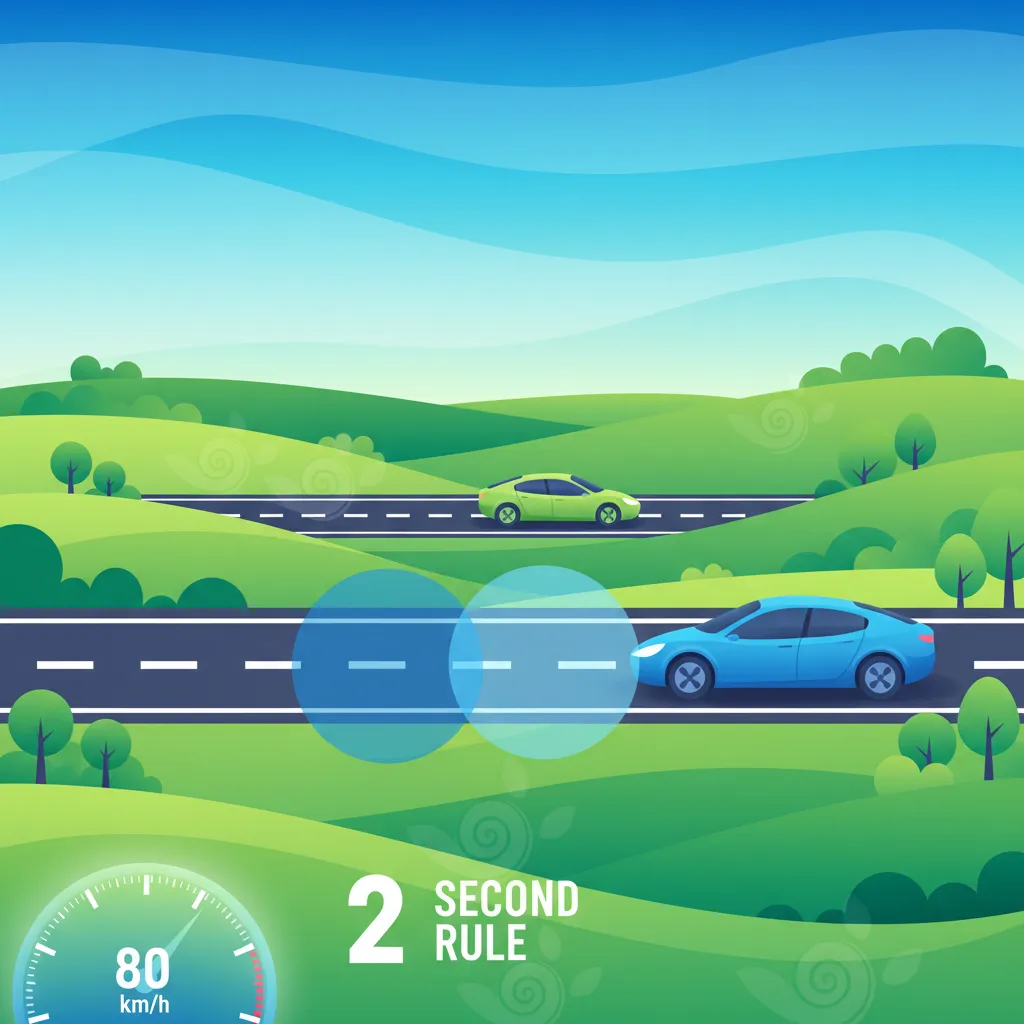
This lesson teaches practical methods for maintaining a safe buffer to the vehicle ahead, with a primary focus on the universally recommended 'three-second rule'. You will learn how to apply this rule by picking a fixed point and counting the seconds until you pass it. The content also explains why this distance must be increased significantly in adverse conditions such as rain, snow, or when following large vehicles that obstruct your view.
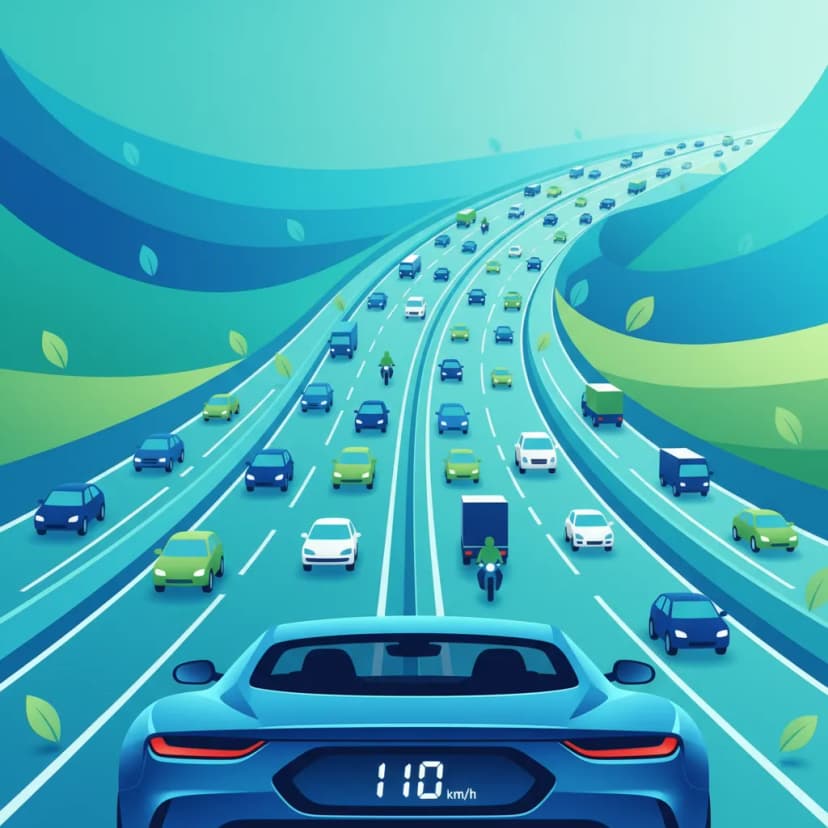
This lesson focuses on the unique demands of managing speed in high-speed environments like motorways. You will learn techniques for maintaining a steady, appropriate speed that matches the flow of traffic, how to perform smooth overtakes, and the importance of increasing your following distance. It also covers physical factors such as managing wind blast and maintaining stability when riding near large trucks, ensuring a safe and controlled high-speed riding experience.
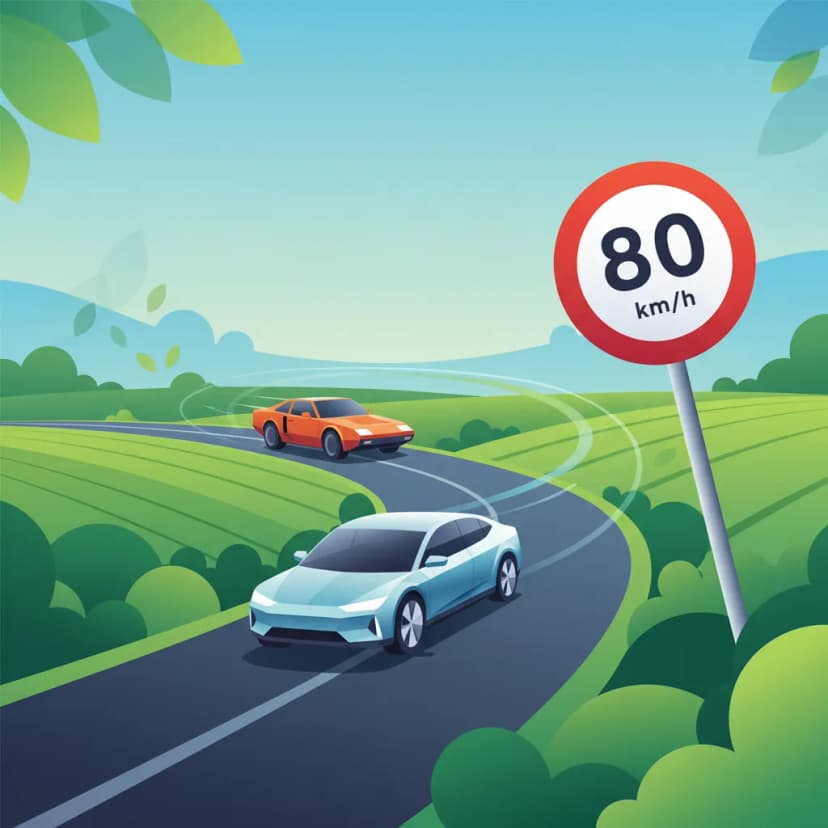
This lesson explains the hierarchical structure of speed limits in Sweden as defined by the Trafikförordning. It covers the default 'base speeds', including 50 km/h in built-up areas and 70 km/h outside them, and how these are modified by specific road signs. You will learn to identify speed limit signs for different road types, such as motorways and residential zones, and understand the legal framework that governs maximum permissible speeds.
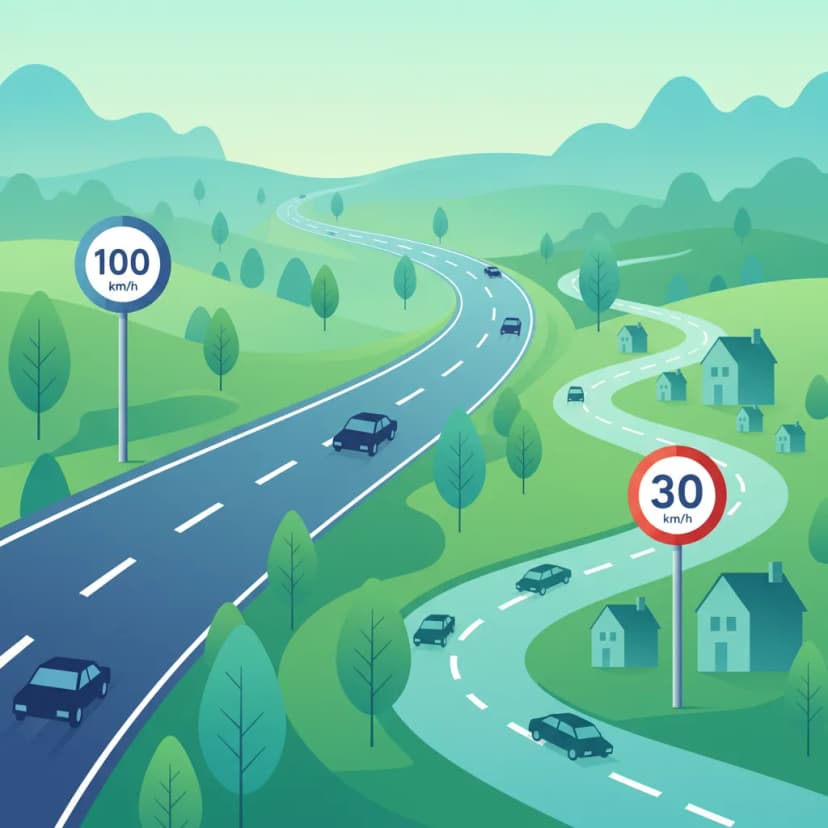
This lesson provides a comprehensive overview of the Swedish national speed limit system. You will learn the default speed limits applicable to different classes of roads, such as 50 km/h in built-up areas and 110 km/h on motorways. It also covers how to identify and comply with special zones, like residential areas (gångfartsområde), school zones, and temporary limits in construction areas, ensuring you always ride at a legal and appropriate speed.
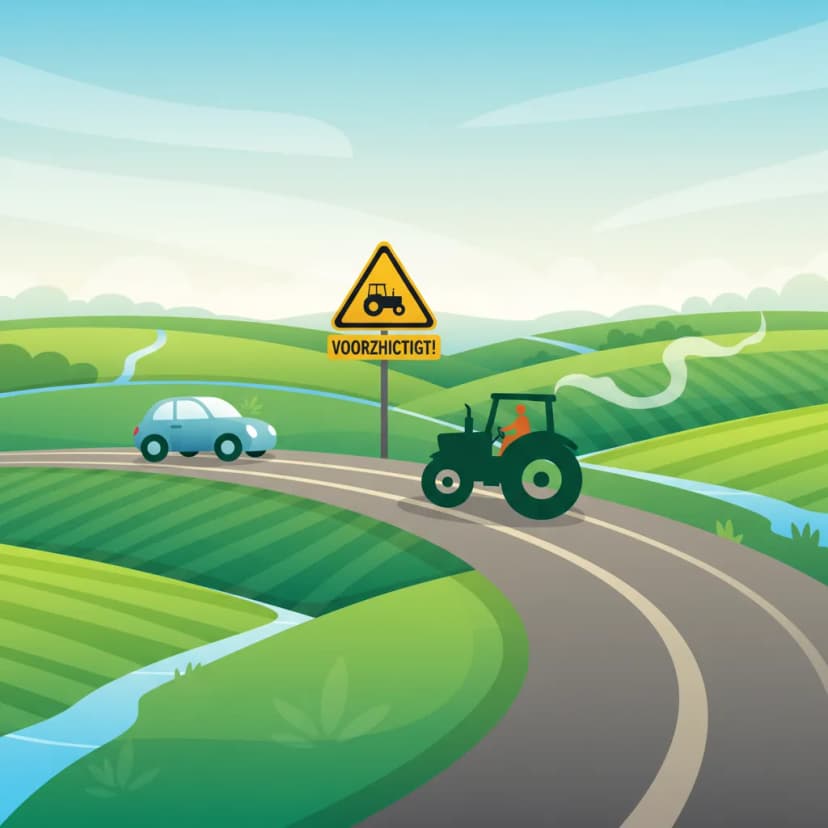
This lesson addresses the specific risks associated with driving on rural roads (landsvägar). You will learn how to manage higher speeds on narrow, winding roads with limited visibility due to curves and hills. The lesson covers procedures for safely overtaking slow-moving agricultural vehicles, managing encounters with oncoming traffic on narrow sections, and being constantly vigilant for wildlife, especially at dawn and dusk.
Find clear answers to common questions learners have about Adjusting Speed for Road Conditions. Learn how the lesson is structured, which driving theory objectives it supports, and how it fits into the overall learning path of units and curriculum progression in Sweden. These explanations help you understand key concepts, lesson flow, and exam focused study goals.
No, the posted speed limit is the maximum legal speed. You must always adjust your speed to suit the road, traffic, and weather conditions. Riding at the maximum limit in rain, fog, or heavy traffic can be dangerous and lead to accidents.
There's no fixed rule, but a common guideline is to reduce your speed by at least half in heavy rain or fog. Always ensure you can stop safely within the distance you can see clearly. Prioritise visibility and control over speed.
Not adjusting your speed in heavy traffic increases the risk of rear-end collisions, as you may not have enough stopping distance if the vehicle in front brakes suddenly. It also makes it harder to navigate safely between other vehicles.
Potholes, gravel, or uneven surfaces reduce tyre grip and can cause loss of control. You must significantly reduce your speed to maintain stability and avoid swerving or losing balance, especially on a moped.
Yes, the Swedish AM theory test includes questions on hazard perception and safe riding practices, which often involve assessing when and why to adjust your speed based on various conditions presented in scenarios.