
Welcome to the Category AM theory course! This lesson delves into the crucial legal definitions that dictate where mopeds can be ridden in Sweden. Understanding these rules is vital for safe navigation and passing your theory exam.
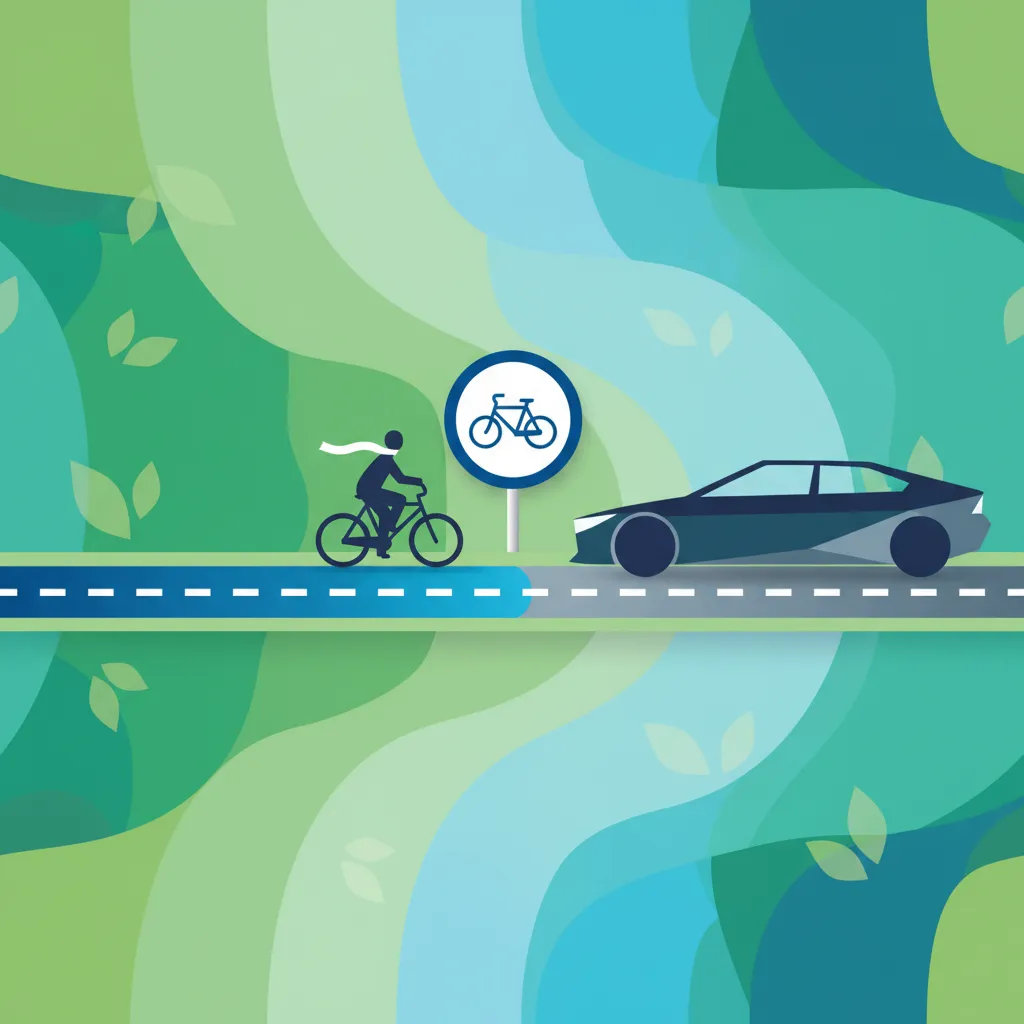
Successfully navigating the Swedish road network with a Category AM moped requires a thorough understanding of legal definitions and permitted road types. This lesson analyzes the specific regulations that determine where mopeds can operate, covering urban streets, rural roads, and designated cycle paths, while clearly identifying prohibited zones like motorways. Interpreting traffic signs that indicate moped permissions or restrictions is crucial for planning legally compliant routes and ensuring safety for all road users.
This knowledge is essential for legal compliance, road safety, and for passing the Swedish Driving License Theory Course – Category AM (Moped) exam. It builds upon foundational knowledge of traffic sign shapes and colors, a general understanding of the Swedish road hierarchy, and the basic definition of a Category AM vehicle, as discussed in Lesson 1.1 – Scope of the AM Licence and Vehicle Classification. This lesson also provides the legal context for Lesson 3 – Priority and Right-of-Way Rules and Lesson 4 – Speed Limits, and connects directly with Lesson 2 – Swedish Road Sign System for Mopeds for sign recognition.
The operation of mopeds within the Swedish traffic system is strictly governed by legal definitions and classifications. These regulations are designed to enhance safety, ensure infrastructure compatibility, and balance the mobility benefits of mopeds with the need to protect all road users. Mopeds, being lower-speed vehicles, are particularly vulnerable, making their permitted areas of operation a critical aspect of road safety.
In Sweden, a moped classified under Category AM is defined as a motorized vehicle designed for a maximum speed of 45 km/h. For internal combustion engines (ICE), the engine capacity must not exceed 50 cm³. For electric motors, the maximum power output is limited to 4 kW. This precise technical boundary differentiates mopeds from motorcycles, which fall under Category A and are subject to entirely different rules and licensing requirements.
Category AM mopeds are further divided into two main subcategories:
Understanding these specifications is vital. Operating any vehicle that exceeds these limits (e.g., a scooter capable of 60 km/h) without the appropriate Category A license would constitute a serious legal violation. Riders must ensure their vehicle is correctly classified and adheres to all associated rules, including registration and insurance requirements, before using public roads.
The Swedish Traffic Ordinance (Vägtrafikförordningen) legally categorizes public roads, each with its own set of rules regarding speed limits, design, and permitted user groups. This classification is fundamental for moped riders, as it directly dictates where they may legally travel and where they are expressly prohibited. The underlying logic prioritizes safety by preventing low-speed mopeds from mixing with high-speed traffic in unsuitable environments.
The road type influences the default permissibility for mopeds. For instance, urban streets are generally accessible, while motorways are absolutely forbidden. This system ensures that mopeds are typically found on roads where speed differentials are limited, thereby reducing the risk of serious collisions. Riders must become proficient in recognizing these road types, often indicated by specific signage and road characteristics, to plan safe and legal routes.
The Swedish road network is diverse, encompassing everything from bustling city streets to remote rural roads and high-speed motorways. For Category AM moped riders, knowing the specific regulations for each type of road is paramount.
Gata (Urban Street): Urban streets, or gata, are found within built-up areas and typically have speed limits of 50 km/h or less. They are designed for mixed traffic, often including pedestrians, cyclists, and various motorized vehicles. Mopeds are generally permitted on urban streets by default, unless a specific traffic sign explicitly prohibits their use for a particular stretch. This default permission aligns with the moped's maximum speed, allowing them to integrate safely with other traffic in slower urban environments.
Väg (General Road): The term väg refers to a general road, which can include rural roads outside urban areas. Speed limits on these roads can range from 50 km/h to 80 km/h or sometimes higher. Mopeds are also permitted on väg by default, provided there isn't a prohibitive sign. However, a crucial distinction arises on väg segments where the speed limit exceeds 50 km/h. While a moped is mechanically limited to 45 km/h, the default permission for higher-speed väg segments typically requires a specific blue moped sign to be present, explicitly granting access. Without such a sign, mopeds should generally avoid roads with speed limits above 50 km/h, even if they are not explicitly prohibited, due to safety concerns regarding speed differentials.
Motorväg (Motorway): Motorways, or motorväg, are high-speed roads with strict access control, designed for rapid transit of motorized vehicles. They are characterized by minimum speed limits (usually 70 km/h), multiple lanes, absence of intersections, and separate carriageways for opposing traffic. Mopeds are strictly prohibited on motorways under any circumstances, as mandated by the Swedish Traffic Ordinance. No traffic sign can override this absolute prohibition. The significant speed differential between mopeds and other motorway traffic creates an extremely dangerous environment for moped riders.
Motortrafikled (Expressway): An motortrafikled, or expressway, is a road designed for faster traffic, often with limited access and higher speed limits (e.g., 70-90 km/h). While similar to motorways in some aspects, they are not motorväg and thus do not carry the same absolute prohibition for mopeds. Mopeds may be allowed on specific sections of motortrafikled only if a blue circular moped sign is explicitly installed, granting permission. Without this specific signage, mopeds should not use motortrafikled, primarily due to the higher speed limits and associated safety risks.
Cykelbana (Dedicated Cycle Path): A cykelbana is a path exclusively designated for bicycles, often separated from motorized traffic by a physical barrier or marking. By default, mopeds are not permitted on cykelbana. However, mopeds may use a cycle path if the cykelbana sign (green with a white bicycle symbol) is accompanied by a supplementary white moped symbol. This combined sign explicitly grants permission for mopeds to use that specific cycle path. When permitted, moped riders must exercise extreme caution, reduce their speed, and yield to pedestrians and cyclists, as these paths are primarily designed for vulnerable users.
Gång- och cykelbana (Shared Pedestrian and Bicycle Path): This type of path is intended for both pedestrians and cyclists. Mopeds are generally prohibited on these shared paths. Similar to dedicated cykelbana, mopeds are only permitted to use a gång- och cykelbana if there is clear signage (e.g., a green sign depicting both a pedestrian and a bicycle, with a supplementary white moped symbol). In such shared spaces, maintaining very low speeds and giving absolute priority to pedestrians is crucial.
Traffic signs play a vital role in regulating moped access, often overriding default permissions or prohibitions based on local conditions. Moped riders must develop a keen awareness of these specific signs to ensure legal compliance and safety.
The blue circular sign with a white moped symbol is a key indicator of where mopeds are permitted to ride.
This sign indicates that mopeds (Category AM) are permitted to use the road segment it applies to. This is particularly significant on general roads (väg) or expressways (motortrafikled) where the speed limit might exceed 50 km/h. While a general road with a speed limit of 70 km/h might otherwise be unsuitable or prohibited for mopeds, the presence of this blue moped sign explicitly grants permission. Riders must remember that even with this permission, they cannot exceed their vehicle's maximum design speed of 45 km/h. It is also critical to understand that this blue moped sign can never override the absolute prohibition for mopeds on motorways (motorväg).
Conversely, a red circular sign with a white moped symbol crossed by a diagonal red line explicitly prohibits moped use.
This sign overrides any default permission that might otherwise apply to a street (gata) or general road (väg). Such signs are typically placed in areas where moped traffic would pose a specific risk, such as near schools, pedestrian-heavy zones, or sensitive environmental areas. Riders must immediately cease using the road segment marked with this sign and seek an alternative route. Ignoring this sign is a serious traffic violation and can lead to significant penalties.
Dedicated cycle paths (cykelbana) and shared pedestrian and cycle paths (gång- och cykelbana) have specific rules for moped access, which are communicated through supplementary symbols.
The standard green Cykelbana sign, depicting a white bicycle, means the path is for bicycles only. Mopeds are not permitted. However, if this green sign is accompanied by a small white moped symbol (sometimes depicted as a "M" for moped or a moped graphic), it indicates that mopeds are also allowed on that specific path. This supplementary symbol is crucial for distinguishing between cycle paths where mopeds are allowed and those where they are not. When allowed, mopeds must respect the primary purpose of these paths and prioritize vulnerable users (pedestrians and cyclists) by maintaining low speeds and being ready to stop.
Traffic conditions are not always static. Road works, special events, or emergencies can lead to temporary changes in road permissions. Local authorities can issue temporary traffic orders that override permanent rules. These orders are communicated through temporary signs, which are often yellow or orange, or through temporary versions of standard blue or red signs.
For instance, a section of an urban street normally open to mopeds might display a temporary "No Moped" sign due to construction. Conversely, in rare circumstances, a motorway might be temporarily designated as a detour route for mopeds (e.g., during a major road closure), indicated by specific temporary signage like a temporary blue moped sign combined with a "Motorway for all traffic" sign. Riders must always be vigilant for these temporary signs and obey them, as they are legally binding and designed to ensure safety during altered road conditions. Failure to comply with a temporary traffic order is a violation.
To summarize the intricate rules governing moped usage, here are the core regulations Category AM riders must adhere to in Sweden. These rules are derived from the Swedish Traffic Ordinance (Vägtrafikförordningen) and related legislation.
Mopeds (Category AM) may not be ridden on motorways (motorväg) under any circumstances. This rule applies to all motorways, whether permanent or temporary. The primary reason is safety, as mopeds cannot safely integrate with high-speed motorway traffic, which typically travels at 70 km/h or faster. This prohibition is absolute and cannot be overridden by any local sign. Attempting to ride a moped on a motorway is a serious offense.
Mopeds may be ridden on any gata (urban street) or väg (non-motorway general road) unless a red crossed moped sign is present. This is the default access rule, assuming no specific prohibitions. This permission allows mopeds to operate in environments where their maximum speed of 45 km/h is compatible with the prevailing traffic flow and speed limits (typically 50 km/h or less). However, on väg with speed limits exceeding 50 km/h, additional signage is often required for permission.
A blue circular sign with a white moped grants permission to ride a moped on the road segment it applies to, even if the posted speed limit exceeds 50 km/h. This rule is particularly relevant for certain väg or motortrafikled where local authorities have deemed it safe for mopeds to operate despite higher general speed limits. This sign provides a legal mechanism to extend moped access where safety analyses permit, but remember, the moped's mechanical limit of 45 km/h still applies.
A red circular sign with a white moped, crossed specifically prohibits moped use on the indicated road segment. This sign always overrides any default permission that might otherwise exist. For example, if a gata (urban street) normally allows mopeds, but a red crossed moped sign is installed, mopeds are forbidden on that stretch. These signs are often used to ensure safety in specific locations, such as school zones or pedestrian-heavy areas.
A green "Cykelbana" sign alone does not permit mopeds. Mopeds are only allowed on a cycle path if the cykelbana sign is accompanied by a supplementary white moped symbol. This rule is in place to protect pedestrians and cyclists, who are more vulnerable users of these paths. When permitted, moped riders must operate with extreme caution, maintain low speeds, and give way to pedestrians and cyclists.
R-6: Temporary traffic orders, such as those for road works, may temporarily prohibit mopeds even on roads where they are normally allowed. These temporary restrictions are communicated through specific signs (often yellow or orange) and are legally binding. It is mandatory for riders to follow these temporary instructions to ensure safety during altered road conditions.
R-7: In very rare cases, a motorway may be temporarily designated as a detour route for mopeds during large-scale road closures. This requires a temporary blue moped sign together with a temporary "Motorway for all traffic" sign. In such exceptional circumstances, rule R-1 (absolute motorway prohibition) is temporarily suspended, but only for the duration and specific segment officially published in the temporary traffic order. Riders must verify these orders and the presence of all required temporary signs.
Even with clear rules, misunderstandings or negligence can lead to common violations. Being aware of these helps riders anticipate risks and act correctly.
motorväg prohibition (R-1) is absolute. Always confirm road type by looking for the green "Motorväg" sign and observing road characteristics like absence of intersections. This violation carries heavy fines and penalty points, with severe accident risk.cykelbana or gång- och cykelbana without the specific supplementary white moped symbol (R-5) is illegal. Assume cycle paths are off-limits unless explicitly permitted by signage. This helps protect pedestrians and cyclists.väg or motortrafikled, but it never permits entry onto a motorväg (R-1). Motorways remain prohibited regardless of any other sign.väg with a higher speed limit, a blue moped sign (R-3) must be present. Without it, you are in violation and pose a significant safety risk due to speed differentials.The rules governing moped usage are not always applied in a vacuum. Various contextual factors can influence how a rider must interpret and follow road permissions.
cykelbana or gång- och cykelbana where mopeds are allowed, riders have a heightened responsibility towards pedestrians and cyclists. Mopeds must maintain a very low speed, anticipate sudden movements from vulnerable users, and be prepared to stop. Yielding to pedestrians is paramount.gårdsgata (courtyard street), all road users, including mopeds, are expected to co-exist with caution. Mopeds are treated as "other traffic" and must adhere to general right-of-way rules, prioritizing pedestrians, and maintaining a speed no faster than walking pace.The strict legal definitions and road usage rules for Category AM mopeds are not arbitrary; they are meticulously designed to ensure safety for moped riders and other road users.
Understanding the "why" behind these rules reinforces their importance. Compliance isn't just about avoiding fines; it's about protecting lives, including your own, by operating within a safely designed and regulated traffic system.
To successfully and safely ride a Category AM moped in Sweden, remember these core principles:
gata): Generally permitted by default.väg): Permitted up to 50 km/h by default; above 50 km/h, a blue moped sign is usually required.motorväg): Always prohibited; no sign can override this.motortrafikled): May be allowed with a blue moped sign.cykelbana): Only allowed if the cykelbana sign includes a supplementary white moped symbol.cykelbana signs.By diligently applying these principles, Category AM moped riders can navigate the Swedish road network legally, confidently, and safely.
Lesson content overview
Explore all units and lessons included in this driving theory course.
Explore search topics learners often look for when studying Legal Definitions and Permitted Road Types. These topics reflect common questions about road rules, driving situations, safety guidance, and lesson level theory preparation for learners in Sweden.
Browse additional driving theory lessons that cover connected traffic rules, road signs, and common driving situations related to this topic. Improve your understanding of how different rules interact across everyday traffic scenarios.
Understand the legal definitions and specific road categories where mopeds are allowed to travel in Sweden. This lesson clarifies rules for urban streets, rural roads, and cycle paths, including prohibited zones.
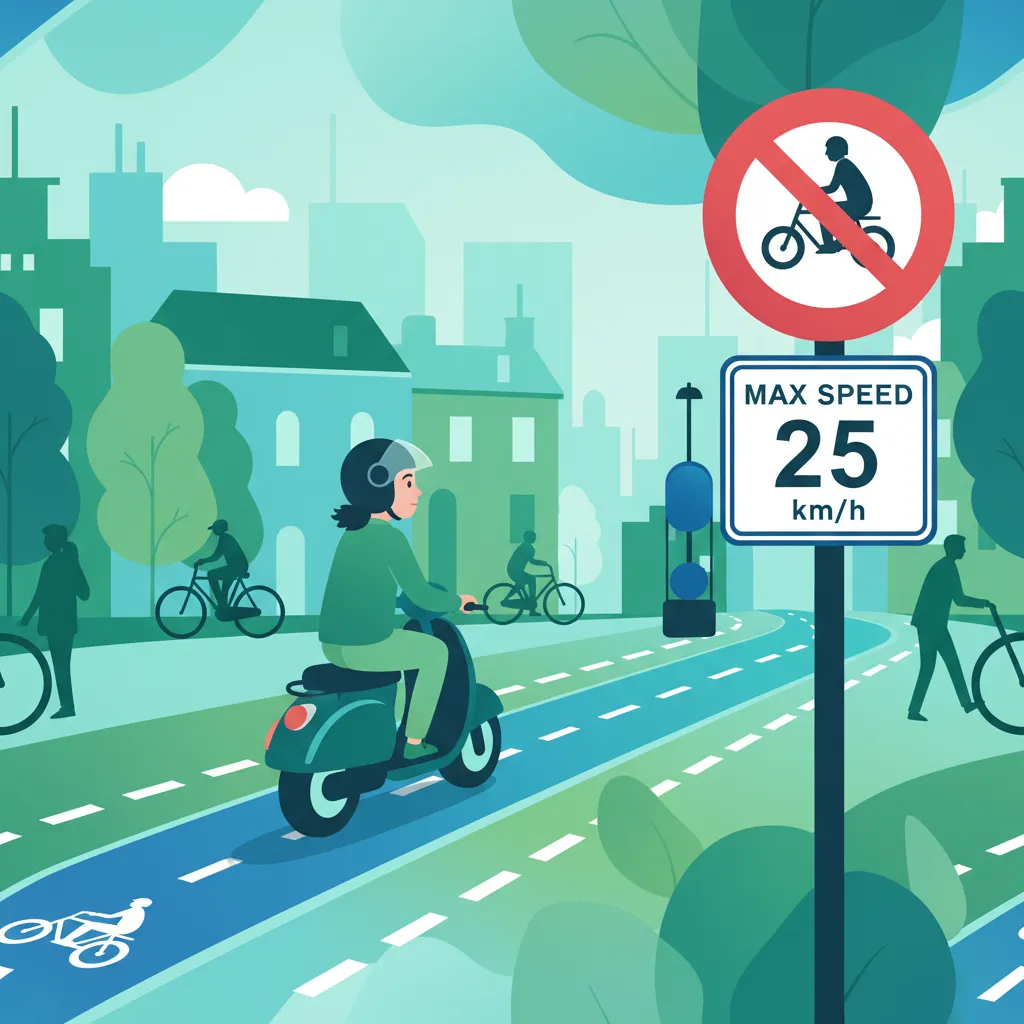
This lesson consolidates the key regulations that apply specifically to moped operation in Sweden. It covers mandatory rules such as speed limits, helmet use, and requirements for vehicle lighting and reflectors. Furthermore, the lesson explains the legal consequences of violations, including the system of fines and potential demerit points, ensuring riders understand their full range of legal responsibilities on the road.

This lesson clarifies the precise technical parameters that define a Category AM vehicle under Swedish law, including the maximum 50cc engine displacement and 45 km/h speed limit. It explains how these specifications determine which roads mopeds can legally access, distinguishing between urban streets and prohibited motorways. Learners will also understand the importance of vehicle identification and registration documents for ensuring legal compliance.
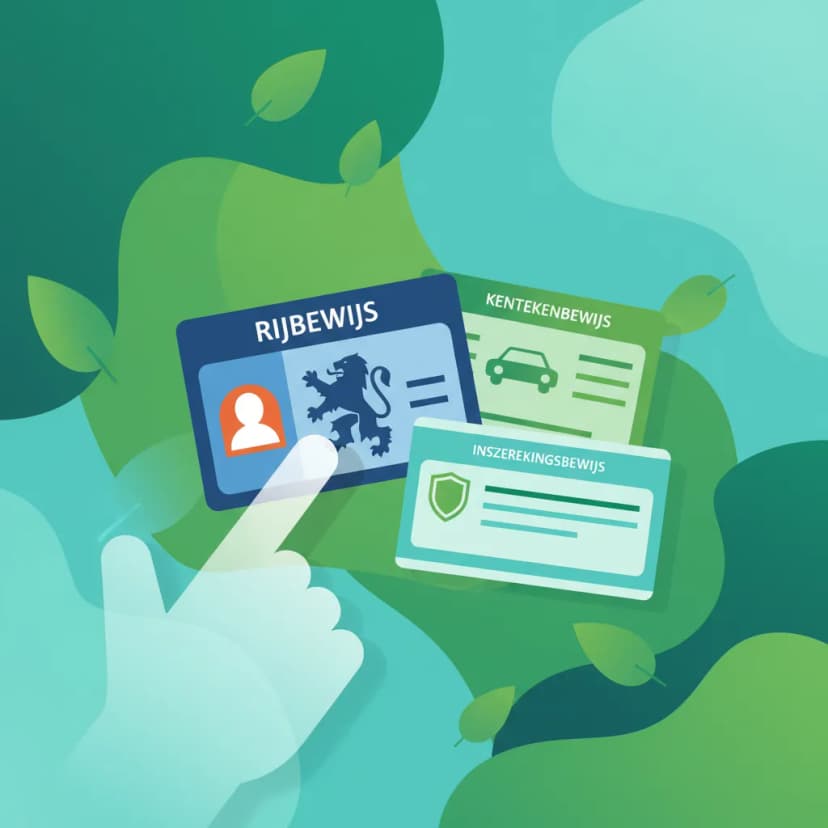
This lesson outlines the essential administrative responsibilities of a moped owner and rider. It covers the legal requirement to have valid third-party liability insurance and to ensure the vehicle is properly registered. The content also reminds riders of the documents they must carry with them at all times, such as their driving license and registration certificate.

This lesson clarifies the regulations for operating a moped on cycle paths (Cykelbana) and other shared spaces in Sweden. It explains which types of mopeds are permitted on these paths and the specific rules that apply, such as lower speed limits and the duty to yield to cyclists. The content focuses on safe interaction and communication to ensure peaceful coexistence with other users in these environments.
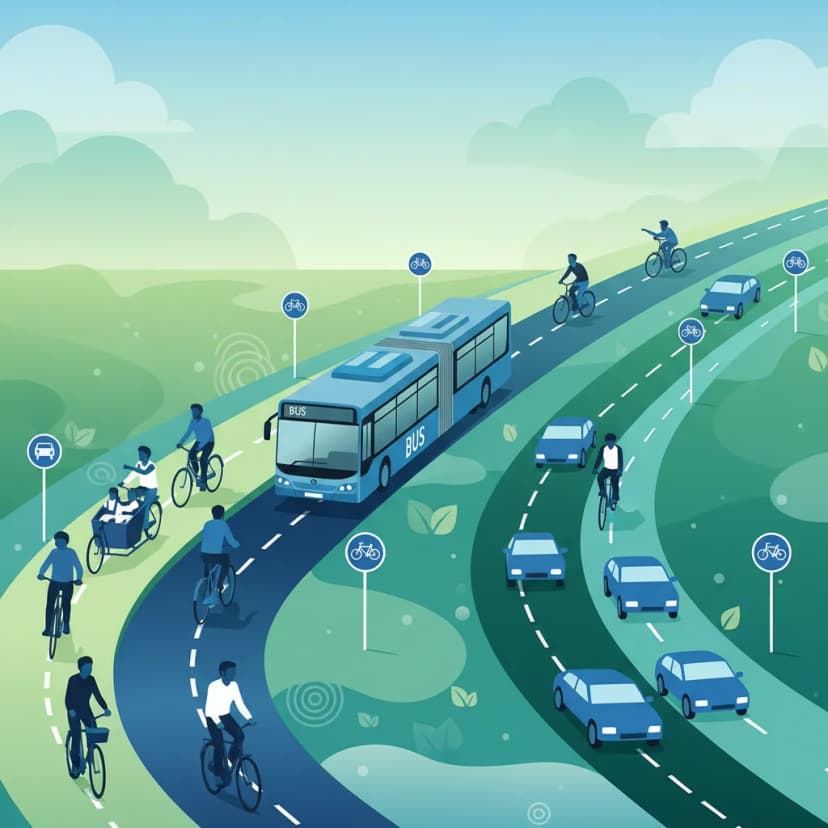
This lesson explains the specific regulations for lanes designated for particular users, such as buses or cyclists. It clarifies under what circumstances a moped is permitted to enter these lanes and the rules that must be followed while in them. Understanding these regulations is key to navigating complex urban environments legally and safely.

This lesson clarifies the legal distinction between stopping temporarily and parking. It identifies areas where stopping is prohibited, such as near intersections or on pedestrian crossings, to maintain traffic flow and safety. The content also discusses designated waiting areas at traffic lights, often marked for cyclists and mopeds, which can offer a safer position.
This lesson focuses on the often-confusing topic of moped parking. It covers how to interpret parking signs, including those indicating prohibitions (Parkeringsförbud), and where to find designated parking spots for two-wheelers. The content provides practical advice on where it is legal to park and how to do so without causing an obstruction, thereby avoiding fines.

This lesson serves as a summary of the legal requirements for safety equipment in Sweden. It reiterates the mandatory helmet law for both the rider and any passenger. It also touches on the rider's responsibility to ensure the moped itself is legally equipped with functioning lights, brakes, and other essential safety features, linking personal gear with vehicle roadworthiness.
This lesson focuses on regulatory signs (Regulationsskyltar), which issue mandatory instructions and prohibitions that all road users must follow. It details common signs such as speed limits, stop and give way signs, and mandatory direction arrows. Special attention is given to signs directly affecting mopeds, like 'no moped' signs and those indicating designated moped lanes, ensuring riders can navigate legally and safely.
This lesson focuses on the importance of road markings (Vägmarkering) for guiding traffic flow and ensuring safety. It explains the meaning of different line types, such as solid and broken lines, and the function of stop lines and pedestrian crosswalks. The content highlights markings specific to cycle and moped lanes, teaching riders how to correctly position themselves on the road based on these visual cues.
Learn how to interpret signs and understand rules for mopeds in shared road spaces like cycle paths in Sweden. This lesson details prohibited zones and ensures legal compliant route planning.
This lesson clarifies the regulations for operating a moped on cycle paths (Cykelbana) and other shared spaces in Sweden. It explains which types of mopeds are permitted on these paths and the specific rules that apply, such as lower speed limits and the duty to yield to cyclists. The content focuses on safe interaction and communication to ensure peaceful coexistence with other users in these environments.
This lesson details the best practices for sharing the road with cyclists, who are even more vulnerable than moped riders. It explains the legal requirements and safe etiquette for overtaking cyclists, emphasizing the need to provide ample space. The content also reviews the rules of interaction on designated cycle paths (Cykelbana) where both may be present.
This lesson explains the specific regulations for lanes designated for particular users, such as buses or cyclists. It clarifies under what circumstances a moped is permitted to enter these lanes and the rules that must be followed while in them. Understanding these regulations is key to navigating complex urban environments legally and safely.
This lesson focuses on the often-confusing topic of moped parking. It covers how to interpret parking signs, including those indicating prohibitions (Parkeringsförbud), and where to find designated parking spots for two-wheelers. The content provides practical advice on where it is legal to park and how to do so without causing an obstruction, thereby avoiding fines.
This lesson provides practical instructions for safely navigating different types of intersections and roundabouts. It covers procedures for approaching, entering, and exiting roundabouts, emphasizing the rule to yield to traffic already circulating. The content also addresses how to handle signal-controlled and uncontrolled intersections, ensuring riders select the correct lane and manage their speed appropriately.
This lesson consolidates the key regulations that apply specifically to moped operation in Sweden. It covers mandatory rules such as speed limits, helmet use, and requirements for vehicle lighting and reflectors. Furthermore, the lesson explains the legal consequences of violations, including the system of fines and potential demerit points, ensuring riders understand their full range of legal responsibilities on the road.
This lesson clarifies the legal distinction between stopping temporarily and parking. It identifies areas where stopping is prohibited, such as near intersections or on pedestrian crossings, to maintain traffic flow and safety. The content also discusses designated waiting areas at traffic lights, often marked for cyclists and mopeds, which can offer a safer position.
This lesson explains the function of informational signs (Informationsskyltar), which provide guidance for navigation and access to services. It covers signs indicating distances to destinations, route numbers, and locations of fuel stations or parking areas. For moped riders, this includes identifying signs for designated moped or cycle lanes, helping them to plan and follow routes efficiently and legally.
This lesson explains how to identify and interact with various types of mopeds and other low-speed vehicles common on Swedish roads. You will learn the difference between Class I and Class II mopeds and their place on the road, as well as how to recognize A-tractors by their LGF (långsamtgående fordon) sign. The key focus is on managing the large speed differential and making safe judgments when deciding to overtake.
This lesson focuses on the importance of road markings (Vägmarkering) for guiding traffic flow and ensuring safety. It explains the meaning of different line types, such as solid and broken lines, and the function of stop lines and pedestrian crosswalks. The content highlights markings specific to cycle and moped lanes, teaching riders how to correctly position themselves on the road based on these visual cues.
Find clear answers to common questions learners have about Legal Definitions and Permitted Road Types. Learn how the lesson is structured, which driving theory objectives it supports, and how it fits into the overall learning path of units and curriculum progression in Sweden. These explanations help you understand key concepts, lesson flow, and exam focused study goals.
In Sweden, mopeds are generally permitted to use cycle paths (Cykelbana) if they are specifically designated for shared use or if signs indicate that mopeds are allowed. However, always check for specific signage, as general rules can have exceptions. It's crucial to ride considerately and at a speed appropriate for the path.
Yes, mopeds are strictly forbidden from using motorways (motorväg) and similar high-speed roads where the general speed limit is significantly higher than what a moped can achieve. These restrictions are usually indicated by clear signage. Always look for signs that prohibit moped access.
You should always rely on official road signs. Look for signs that explicitly permit mopeds or signs that indicate restrictions. In general, if a road is not explicitly prohibited for mopeds (like motorways), and it's a standard urban street, rural road, or a cycle path designated for shared use, it is likely permitted. When in doubt, consult official Swedish traffic regulations.
In Sweden, both light mopeds (klass 1, max 45 km/h) and heavy mopeds (klass 2, max 25 km/h) generally follow similar rules for road access based on road type and signage. However, it's always essential to check specific local regulations and signs, as very minor differences might exist in certain contexts, although most road access rules apply equally.
These legal definitions and road type distinctions are very important for the AM theory test. You can expect questions that test your understanding of where mopeds are allowed and prohibited, often using scenarios involving different types of roads and signage. Accurate knowledge ensures you answer correctly and ride safely.