
This crucial final unit prepares you for unexpected events on the road. Learn the step-by-step procedures for responding to traffic accidents, securing the scene, and contacting emergency services. It also covers how to manage vehicle breakdowns, tire issues, and fires, ensuring you're equipped to handle any stressful situation safely and effectively according to Swedish traffic rules.
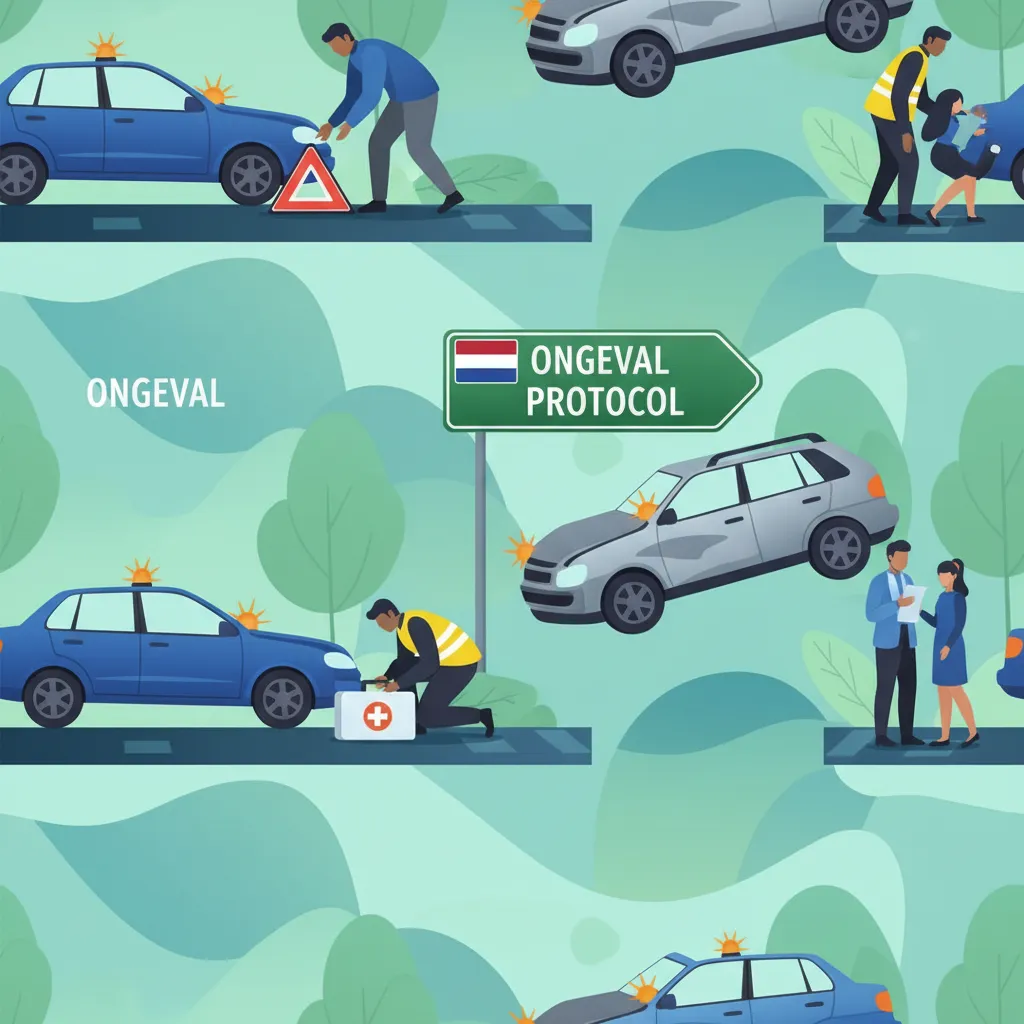
Browse all lessons that make up Emergency Situations and Accident Procedures. Each lesson focuses on specific topics, learning objectives, and core concepts, helping you build essential knowledge and follow a clear, structured progression toward your study goals in Sweden.
This lesson outlines the immediate, high-priority actions required at an accident scene. You will learn the 'stop, survey, secure' sequence: first, stopping and assessing the situation; second, warning other traffic by using hazard lights and placing a warning triangle; and third, taking steps to prevent further danger, such as switching off ignitions. These initial actions are crucial for the safety of everyone involved and for those approaching the scene.
This lesson covers the administrative and legal obligations following a collision. You will learn under which circumstances you are legally required to notify the police, such as when there are injuries or significant property damage. The content details the essential information that must be exchanged between all involved parties—names, contact details, vehicle registration, and insurance information—and the importance of documenting the scene and gathering witness details for insurance claims.
This lesson focuses on the correct use of warning devices to protect an accident or breakdown scene. You will learn to immediately activate your hazard lights (varningsblinkers). The main focus is on the proper placement of the warning triangle, explaining how the distance from the vehicle must be adapted based on the road's speed limit and visibility to give oncoming drivers adequate time to react.
This lesson provides a safety protocol for dealing with a vehicle breakdown. You will learn the importance of trying to move the vehicle as far off the road as possible, preferably onto the shoulder or into an emergency lay-by. The lesson stresses that on high-traffic roads, the occupants' personal safety is the top priority; this involves wearing a reflective vest and waiting for assistance in a safe location away from the vehicle and the flow of traffic.
This lesson covers the basics of providing first aid in an emergency, which is a legal duty for anyone arriving at an accident scene. You will be introduced to the L-ABCDE mnemonic (Life-threatening situation, Airway, Breathing, Circulation, Disability, Exposure) as a way to systematically assess and prioritize injuries. The content emphasizes that the most important role is often to ensure the person is breathing and to follow the instructions of the emergency operator until professional help arrives.
Explore high-intent keywords and long-tail search topics learners use when researching Emergency Situations and Accident Procedures. These terms reflect how people search for reliable study materials, structured explanations, and unit-level theory preparation support in Sweden.
Find clear answers to the most common questions learners ask about Emergency Situations and Accident Procedures. Understand how the unit is organized, what learning goals it supports, and how it contributes to your study progression with structured explanations and practical guidance tailored for learners in Sweden.
Your immediate priorities are to ensure safety and assess the situation. First, check for injuries among those involved. If there are injuries or significant damage, you must secure the scene by turning on hazard lights and, if safe, placing the emergency triangle at an appropriate distance. Then, call emergency services (112) if necessary. For minor incidents without injuries, exchange details with the other driver(s).
You must call 112 if anyone is injured, if a vehicle is blocking traffic and cannot be moved, or if there's a suspicion of a crime (like drunk driving). For minor accidents with only property damage and no injuries, you typically do not need to involve the police immediately, but reporting to your insurance company is still crucial.
The warning triangle must be placed at a distance that gives oncoming traffic sufficient warning of the hazard. This distance varies depending on the road type and visibility – typically 50-100 meters on rural roads and highways, and a shorter distance in urban areas or on bends where visibility is limited. Ensure it's visible and stable.
Activate your hazard warning lights immediately. If possible, move the vehicle to the safest possible location, ideally the hard shoulder or off the road entirely. Turn off the engine, put on your high-visibility vest, and exit the vehicle on the side away from traffic if safe to do so. Then, call for roadside assistance. Never attempt repairs in a dangerous location.
While the theory exam doesn't delve into advanced medical procedures, it does expect you to know the fundamental steps of responding to injuries at an accident scene, such as checking for consciousness, breathing, and controlling severe bleeding. This unit covers these essential driver responsibilities.
You should exchange names, contact details (phone number, address), vehicle registration numbers, insurance company names, and policy numbers. It’s also helpful to note the date, time, and location of the incident, and briefly describe any damage. Taking photos of the scene and vehicle damage can also be very useful.
All included lessons
Lessons in Emergency Situations and Accident Procedures
See who benefits most from studying Emergency Situations and Accident Procedures. This overview explains how the unit supports different learning needs, what level of knowledge is helpful before starting, and how it fits into the overall study path in Sweden.
This unit is essential for all learner drivers preparing for the Swedish Category B theory test, especially those who want to feel fully prepared for unpredictable events. It’s also highly recommended for drivers who feel unsure about accident protocols or roadside emergencies, reinforcing confidence and safe practices.

See how Swedish Driving Theory B is structured, with key topics, learning objectives, and a step-by-step path for theory preparation in Sweden.
Explore all units and lessons included in this driving theory course.