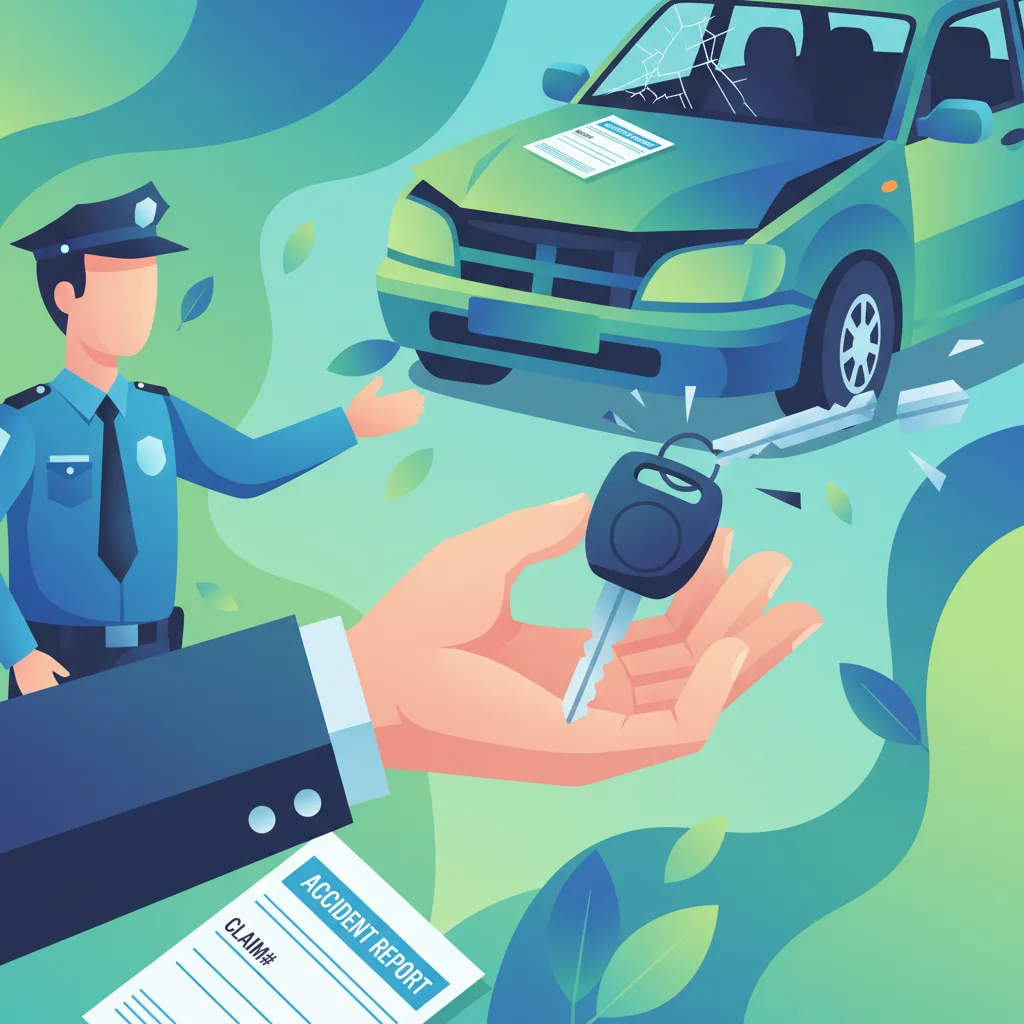
In the event of a collision, knowing your obligations is crucial. This lesson, part of the 'Emergency Situations and Accident Procedures' unit, details when you must contact the police and how to correctly exchange information with other parties involved. Understanding these procedures is vital for compliance and for processing insurance claims smoothly after an incident on Swedish roads for your Category B license.
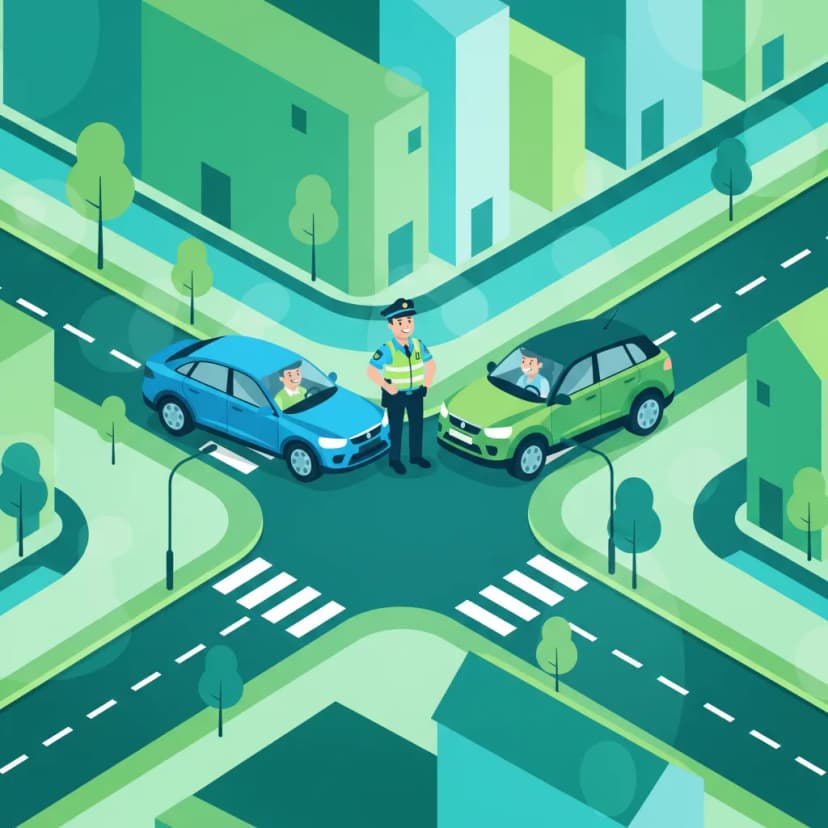
Navigating the aftermath of a road collision can be a stressful experience for any driver. Beyond the immediate actions of ensuring safety and rendering assistance, there are crucial legal and administrative steps that must be taken, particularly when dealing with authorities like the police and your insurance company. This lesson, part of the Swedish Driving License Theory Course for Category B Cars, provides a comprehensive guide to these obligations, ensuring you are prepared to act responsibly and legally on Swedish roads.
In Sweden, following a road traffic collision, drivers are bound by specific duties designed to ensure the safety of all involved parties, facilitate accurate accident reconstruction, and enable fair compensation processes. These duties are not merely suggestions; they are legally mandated requirements that, if neglected, can lead to severe consequences, including fines, license suspension, or even criminal charges.
The very first legal obligation after any collision that causes damage, injury, or death is the duty to stop (stoppskyldighet). This means bringing your vehicle to a safe halt and remaining at the scene until all necessary obligations have been fulfilled. Immediately after stopping, you must prioritize the safety of the scene and anyone involved. This includes assessing for injuries and, if necessary, providing reasonable assistance to injured persons (plikt att lämna hjälp) by applying first aid and calling emergency services (112). These initial steps are covered in detail in the "Immediate Actions After a Collision" lesson (12.1) and "First-Aid Basics for Drivers" lesson (12.5).
Proper reporting of an accident serves several critical purposes. Firstly, it ensures safety by triggering rapid emergency response when injuries are present and preventing secondary accidents through proper scene management. Secondly, it establishes legal certainty by creating an official record (police report, insurance claim) that helps to determine fault, assess damages, and assign liability, thereby minimizing disputes between parties. Finally, accurate risk management through detailed documentation helps insurers process claims efficiently and fairly, preventing fraudulent claims and contributing to overall traffic safety data. Fulfilling these duties protects the rights of everyone involved and upholds the integrity of the Swedish legal and insurance systems.
Not every minor fender-bender requires police presence in Sweden, but specific circumstances legally mandate police notification. Understanding these triggers is essential for compliance. The Trafikförordning (Swedish Traffic Ordinance) outlines these requirements clearly.
The most critical trigger for police involvement is when any person is injured (personskada) or killed as a result of the collision. This rule is absolute, regardless of the extent of property damage. Even a seemingly minor injury, such as a bump or bruise, requires police notification. This ensures that emergency medical services are dispatched promptly and that an official record of the incident, including any injuries, is created for legal and insurance purposes.
Never assume an injury is too minor to report to the police. If any person reports or appears to have sustained any physical harm, however slight, you are legally obligated to call 112.
Beyond injuries, police notification is also mandatory if the property damage is estimated to be at or above a specific monetary threshold. In Sweden, if the estimated damage to any vehicle or property (e.g., road infrastructure, private property) resulting from the collision is SEK 2,000 or more, the police must be notified.
The monetary limit (currently SEK 2,000) above which a collision in Sweden must be reported to the police, even if no injuries occurred.
This threshold applies per incident, not per vehicle. Drivers must make a quick, reasonable estimate of the damage at the scene. If you are uncertain whether the damage meets or exceeds this threshold, it is always safer and advisable to contact the police.
Several other scenarios also necessitate police involvement, even if no injuries occur and the damage is below the SEK 2,000 threshold:
flykt), you must contact the police immediately.If any of the above criteria are met, you must call the emergency number 112 to report the accident. Be prepared to provide:
Assess the scene for injuries and safety.
If police notification is required, call 112 immediately from the scene.
Provide accurate information regarding location, incident details, and any injuries.
Do not leave the scene until a police officer has arrived and explicitly authorised you to do so, or if you are advised by the police dispatcher that your presence is no longer required.
Obtain a police incident number (Diarienummer) for your insurance claim.
Calling the police while still at the scene is crucial. Leaving and calling later can raise suspicions and potentially lead to charges of failing to report promptly.
After addressing immediate safety and police notification, the next critical step is to exchange specific information with all other parties involved in the collision. This exchange of information (uppgiftsutbyte) is a mandatory legal requirement under Trafikförordning 3 kap. 6 §.
You must exchange the following details with every other driver or property owner involved:
personnummer): This is essential for verifying identity and for insurance purposes.registreringsnummer): For identifying the specific vehicle.It is good practice to note down the details yourself and also take photos of their driving license, vehicle registration, and insurance card (if available) to ensure accuracy. If any party is unwilling to cooperate with this exchange, you must inform the police immediately.
Collecting information from witnesses (vittnen) can significantly strengthen your case with both the police and your insurance company. Independent accounts can clarify disputes over fault and provide crucial details that might otherwise be overlooked.
If there are any bystanders who observed the collision, politely ask if they would be willing to provide their:
Do not pressure witnesses or try to influence their statement. Simply gather their information and their account of the events.
Thorough accident documentation is invaluable for both police investigations and insurance claims. The more precise and comprehensive your records, the smoother the process will be and the lower the risk of disputes.
Use your mobile phone to take a wide range of photographs immediately after the collision, before vehicles are moved (unless moving them is essential for safety).
Supplement your photos with a simple sketch (a skiss or diagram) of the accident scene. This visual representation can clarify vehicle movements and points of impact that photos alone might not convey.
After dealing with the immediate aftermath and collecting information, your next step is to inform your own insurance provider. This is known as filing an insurance claim (försäkringsanmälan).
It is a contractual obligation with your insurer to report an accident promptly, usually within a specific timeframe (often 24 to 48 hours). Delaying this notification could potentially lead to your claim being denied or compensation being reduced. Most insurance companies have an emergency line or online portal for reporting claims.
When contacting your insurer, you will typically need to provide:
diarienummer) if a police report was filed.You will usually be asked to fill out a claim form, which can often be done electronically via their website. Be honest and factual in your description of events.
When police are notified and attend the scene of a collision, they will compile an official police report (polisrapport). This document is a critical piece of evidence that can be used by courts, insurance companies, and the Swedish Transport Agency (Transportstyrelsen).
A police report is a formal written record that typically includes:
The police report provides an objective, legally recognized record of the event. It is used by insurance companies to process claims, and by the Transport Agency for assessing driver fitness or potential license implications. While the police will compile the report, it is your responsibility to provide accurate and complete information to them at the scene.
Failing to adhere to the legal requirements after a collision in Sweden can result in significant legal and financial penalties.
Leaving the scene (flykt) without fulfilling your legal duties (stopping, rendering assistance, exchanging information, and notifying police when required) is a serious criminal offense, often referred to as a hit-and-run. This can lead to:
Similarly, failing to report an accident to the police when legally required (e.g., due to injury or damage above SEK 2,000) can result in fines and potential difficulties with insurance claims.
Providing incomplete or false information to the police or your insurance company can be considered fraud or perjury. This can lead to:
Always be truthful and factual in your statements and documentation.
The standard rules for reporting may need slight adjustments based on specific environmental or situational factors.
motorväg) or high-speed roads (≥ 90 km/h): The emergency triangle (varningstriangel) must be placed at a greater distance, at least 50 metres (instead of the usual 30 metres) behind the stationary vehicle. Drivers should prioritize moving to the hard shoulder if it is safe to do so.polisstation) if the situation allows for it safely and all immediate duties at the scene have been fulfilled.varningsblinkers) must be activated immediately. Placing the triangle slightly closer than the standard distance (e.g., 20 metres) might be considered if it enhances visibility for approaching traffic in extremely poor conditions, but the general rule is to maintain the minimum distance.By understanding and adhering to these regulations, you ensure compliance with Swedish law, protect your rights, and contribute to safer roads for everyone. Mastering these procedures is a vital part of becoming a responsible driver in Sweden.
Lesson content overview
Explore all units and lessons included in this driving theory course.
Explore search topics learners often look for when studying Reporting to Police and Insurance. These topics reflect common questions about road rules, driving situations, safety guidance, and lesson level theory preparation for learners in Sweden.
Browse additional driving theory lessons that cover connected traffic rules, road signs, and common driving situations related to this topic. Improve your understanding of how different rules interact across everyday traffic scenarios.
Understand your mandatory legal responsibilities following a car accident in Sweden. Learn precisely when to contact the police and what critical information must be exchanged between drivers for insurance purposes.
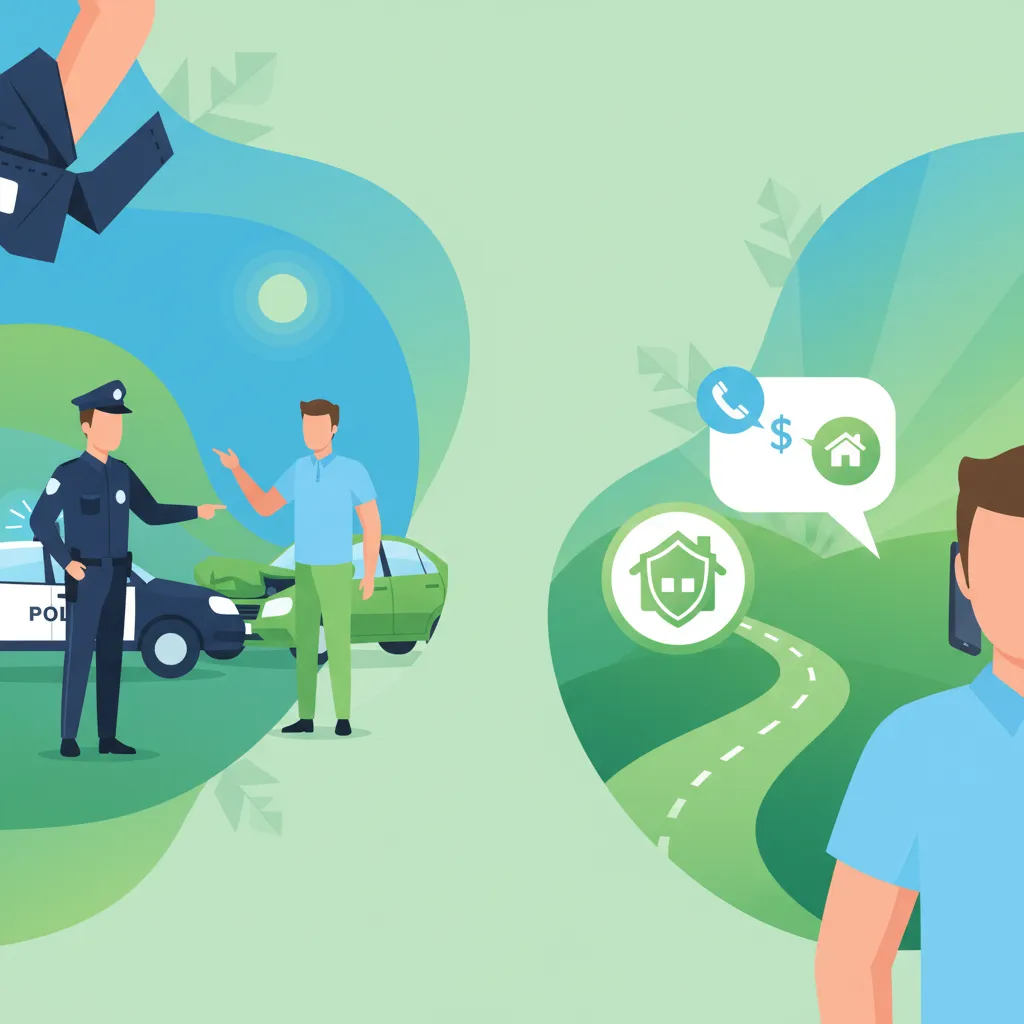
This lesson explains the legal requirements in Sweden for reporting a traffic accident to the police (Polisanmälan). It clarifies in which situations a report is mandatory, such as when there are injuries or significant property damage. The content guides learners on the information they will need to provide for the report and for subsequent insurance claims.
This lesson details the procedural and legal steps for reporting an accident. You will learn when you are legally obligated to report a crash to the police, what information to exchange with other involved parties, and the importance of documenting the scene with photographs and witness details. This information is vital for ensuring any subsequent insurance claims and legal proceedings are handled smoothly and fairly.
This lesson outlines the immediate, high-priority actions required at an accident scene. You will learn the 'stop, survey, secure' sequence: first, stopping and assessing the situation; second, warning other traffic by using hazard lights and placing a warning triangle; and third, taking steps to prevent further danger, such as switching off ignitions. These initial actions are crucial for the safety of everyone involved and for those approaching the scene.
This lesson provides a clear, step-by-step guide for what to do in the immediate aftermath of a collision. It prioritizes safety by explaining how to secure the scene to prevent further incidents. The content covers the importance of checking for injuries, calling for emergency help if needed, and remaining calm while fulfilling initial legal obligations.
This lesson provides an overview of traffic law enforcement in Sweden, explaining the roles of the police and other authorities. You will learn about the system of penalties for common traffic violations, including the scale of fines (böter) and the conditions under which your license may be suspended. Understanding the legal consequences of unsafe or unlawful riding provides a powerful incentive to always adhere to the rules of the road.

This lesson clarifies your legal rights and responsibilities during interactions with law enforcement, such as at a traffic stop. You will learn the correct and expected procedures for providing documentation and communicating with officers. It covers your obligations to comply with lawful requests while also explaining your rights under Swedish law, ensuring any such encounter is handled correctly, calmly, and professionally by all parties.
This lesson covers the basics of providing first aid in an emergency, which is a legal duty for anyone arriving at an accident scene. You will be introduced to the L-ABCDE mnemonic (Life-threatening situation, Airway, Breathing, Circulation, Disability, Exposure) as a way to systematically assess and prioritize injuries. The content emphasizes that the most important role is often to ensure the person is breathing and to follow the instructions of the emergency operator until professional help arrives.
Learn the essential steps for documenting a traffic accident scene effectively. This includes gathering witness details, vehicle information, and important evidence to support your insurance claim and fulfil legal requirements.
This lesson details the procedural and legal steps for reporting an accident. You will learn when you are legally obligated to report a crash to the police, what information to exchange with other involved parties, and the importance of documenting the scene with photographs and witness details. This information is vital for ensuring any subsequent insurance claims and legal proceedings are handled smoothly and fairly.
This lesson outlines the immediate, high-priority actions required at an accident scene. You will learn the 'stop, survey, secure' sequence: first, stopping and assessing the situation; second, warning other traffic by using hazard lights and placing a warning triangle; and third, taking steps to prevent further danger, such as switching off ignitions. These initial actions are crucial for the safety of everyone involved and for those approaching the scene.
This lesson teaches you how to make an accident scene as safe as possible for yourself, any other involved parties, and approaching traffic. You will learn the correct use of hazard lights, the placement of warning triangles, and the importance of wearing a high-visibility vest. The content also covers how to identify and manage immediate post-crash hazards, such as spilled fuel or unstable vehicles, to prevent the situation from worsening.
This lesson provides a clear, step-by-step guide for what to do in the immediate aftermath of a collision. It prioritizes safety by explaining how to secure the scene to prevent further incidents. The content covers the importance of checking for injuries, calling for emergency help if needed, and remaining calm while fulfilling initial legal obligations.
This lesson explains the legal requirements in Sweden for reporting a traffic accident to the police (Polisanmälan). It clarifies in which situations a report is mandatory, such as when there are injuries or significant property damage. The content guides learners on the information they will need to provide for the report and for subsequent insurance claims.
This lesson focuses on the correct use of warning devices to protect an accident or breakdown scene. You will learn to immediately activate your hazard lights (varningsblinkers). The main focus is on the proper placement of the warning triangle, explaining how the distance from the vehicle must be adapted based on the road's speed limit and visibility to give oncoming drivers adequate time to react.
This lesson outlines the absolute first priorities after a crash, with the primary rule being to ensure your own safety and avoid further harm. You will learn how to conduct a quick self-assessment for injuries, the importance of moving out of the line of traffic if possible, and how to begin assessing the scene for immediate dangers like fuel leaks or oncoming vehicles. These initial actions are vital for managing the immediate aftermath of an incident.
This final lesson addresses the longer-term aftermath of an accident. You will learn about the importance of having your motorcycle professionally inspected for hidden damage before riding it again. The content also touches on the psychological aspects of recovery, offering advice on how to regain confidence, and covers the final steps in the legal and insurance processes, ensuring you have a clear understanding of the entire post-accident journey.
This lesson provides a safety protocol for dealing with a vehicle breakdown. You will learn the importance of trying to move the vehicle as far off the road as possible, preferably onto the shoulder or into an emergency lay-by. The lesson stresses that on high-traffic roads, the occupants' personal safety is the top priority; this involves wearing a reflective vest and waiting for assistance in a safe location away from the vehicle and the flow of traffic.
This lesson covers the basics of providing first aid in an emergency, which is a legal duty for anyone arriving at an accident scene. You will be introduced to the L-ABCDE mnemonic (Life-threatening situation, Airway, Breathing, Circulation, Disability, Exposure) as a way to systematically assess and prioritize injuries. The content emphasizes that the most important role is often to ensure the person is breathing and to follow the instructions of the emergency operator until professional help arrives.
Find clear answers to common questions learners have about Reporting to Police and Insurance. Learn how the lesson is structured, which driving theory objectives it supports, and how it fits into the overall learning path of units and curriculum progression in Sweden. These explanations help you understand key concepts, lesson flow, and exam focused study goals.
You must report a collision to the police in Sweden if there are any injuries, if a vehicle is driven by someone under the influence of alcohol or drugs, or if the damage appears substantial and the other party is unknown or refuses to provide information. For minor fender-benders with no injuries and cooperative parties, reporting may not be mandatory but is often advisable for insurance purposes.
You should exchange names, addresses, phone numbers, vehicle registration numbers, and insurance company details (including policy number if possible). It's also wise to note the date, time, and location of the accident, and identify any witnesses.
If the other driver is uncooperative or refuses to exchange details, and if there are injuries or significant damage, you should contact the police. Document as much as you can about the other vehicle and driver, including registration number and any identifying features.
While not always legally required to report minor damage to the police, it is generally recommended to inform your insurance company promptly. They can advise on the claims process and assess whether repairs are covered. Failing to report might affect your coverage.
Take clear photos of the damage to all vehicles involved, the overall accident scene showing vehicle positions, any relevant road signs or markings, and skid marks if present. Note down the sequence of events as you recall them and obtain contact details for any witnesses.
Yes, the Swedish theory test for Category B includes questions on how to act after a collision. These questions assess your knowledge of reporting obligations to the police, the correct procedure for exchanging information, and general safety measures at the accident scene.