
This lesson focuses on the critical final steps of an emergency: bringing your motorcycle to a safe stop and recovering from a stressful situation. Building upon previous lessons in hazard perception and emergency manoeuvres, this module provides practical guidance on securing the scene and ensuring your well-being before continuing your ride. It's essential for handling unexpected events safely and confidently, preparing you for your Category A licence exam.

The ability to perform an emergency stop, execute a safe pull-over, and recover effectively after an unexpected event is a critical skill for every motorcyclist. This lesson, part of the Swedish Motorcycle Theory Course: A Licence Exam Preparation, will equip you with the knowledge to handle immediate threats, transition to a controlled stop, secure your vehicle safely off the road, and assess yourself and your motorcycle before continuing your journey. Mastery of these actions not only enhances your personal safety and reduces the severity of potential incidents but also ensures compliance with Swedish traffic law, as stipulated by Transportstyrelsen and Trafikförordningen.
After an immediate threat has been successfully avoided through an emergency maneuver, the next crucial steps involve bringing the motorcycle to a complete, controlled stop and moving it to a safe, designated location off the main carriageway. This multi-phase process is essential for preserving rider and vehicle integrity, preventing secondary collisions, and creating a safe environment for both the motorcyclist and surrounding traffic. It builds upon foundational knowledge of basic motorcycle control, hazard perception, and prior emergency maneuver training, including advanced braking and swerving techniques.
The underlying logic for these procedures is rooted in safety, physics, and legal obligations. A controlled stop minimizes kinetic energy, reducing potential harm. The physics of braking, including tire-road friction, weight transfer, and rider posture, directly influence stopping distance and balance. Legally, Swedish traffic law mandates that drivers stop their vehicle safely when required for traffic safety (Trafikförordningen 3 kap. 9 §) and use appropriate signals to alert other road users (Trafikförordningen 3 kap. 2 §). This lesson connects directly to previous units on controlled braking (Lesson 8.2) and prepares you for understanding accident response protocols (Lesson 10) and legal responsibilities (Lesson 9).
Executing a safe emergency stop and recovery involves several interconnected core principles. Each plays a vital role in ensuring a positive outcome after a critical incident.
Controlled deceleration is the progressive reduction of speed using both the front and rear brakes while meticulously maintaining tire-road traction. This technique is paramount for limiting wheel lock-up, preserving steering control, and achieving the shortest possible stopping distance. Riders must learn to modulate brake pressure, interpreting feedback from anti-lock braking systems (ABS) if equipped, and maintain a centered body weight to ensure stability.
There are several subcategories of controlled deceleration:
The rider’s objective is to perceive the need to stop, select a precise braking point, apply both brakes with increasing pressure, and manage the bike’s stability, reducing speed to a manageable level (e.g., ≤20 km/h) before the final stop. Swedish traffic regulations, specifically Trafikförordningen 3 kap. 9 §, mandate that drivers must stop their vehicle if continuing would endanger traffic safety. Vehicle technical regulations also require brakes to be fully functional and compliant. A common misunderstanding is to apply only the front brake for rapid stops, which can lead to a front-wheel lock-up if traction is insufficient, or to release brakes completely before the final stop, increasing stopping distance and potentially causing a loss of control.
Optimal pull-over location selection is the process of identifying a spot where the motorcycle can be stopped safely and securely without impeding the flow of traffic or creating a new hazard. This decision requires a quick assessment of your surroundings. The chosen location should maximize visibility for other road users, minimize obstruction, and provide a stable, level surface for the motorcycle.
Types of pull-over locations include:
The rider must scan ahead for a clear, flat surface, check for approaching traffic, and select the nearest suitable location while respecting existing road markings. Trafikförordningen 3 kap. 6 § states that stopping or parking must not obstruct the normal flow of traffic. Solid road lines typically indicate no-stopping zones, while broken lines may permit a temporary stop if space and safety allow. A common error is assuming any soft shoulder is safe; these can be uneven, leading to instability or even causing the motorcycle to tip over.
Signalling intent involves communicating the rider’s plan to stop and pull over to other road users through visual cues such as lighting, hand signals, and strategic positioning. This proactive communication enables other drivers to anticipate your actions, significantly reducing surprise, confusion, and the risk of conflict or secondary collisions.
Key signalling methods include:
The rider should activate hazard lights immediately after pulling over and stopping in a hazardous position. If moving to a left shoulder, a left-hand signal can be used in addition to the indicator if appropriate. Ensure all lights are visible and functional to oncoming and following traffic. A frequent misunderstanding is believing hazard lights are permitted while riding at speed, which is illegal and can confuse other drivers who might assume you are stationary or have an urgent problem.
Vehicle stabilisation and securing refers to the series of actions taken immediately after stopping to prevent the motorcycle from moving unintentionally. This is vital for protecting the motorcycle from damage or theft and ensuring rider safety while off the bike.
The steps typically include:
On a slope, it is critical to use the rear brake to hold position while shifting to neutral and deploying the kickstand, only releasing the brake once the bike is securely supported. Trafikförordningen 4 kap. 8 § clearly states that a vehicle must not move unintentionally while stopped or parked. A common mistake is deploying the kickstand on too steep a slope or uneven ground, which can cause the bike to roll or tip over. Leaving the bike in gear with the engine off is not a guarantee against rolling, especially on inclines, as gravity can still overcome engine compression.
Rider recovery and post-stop assessment is a systematic process of checking your own health and the condition of your motorcycle before resuming travel. This crucial step reduces the risk of secondary incidents caused by unnoticed injuries, fatigue, or mechanical failures.
This process generally involves:
Trafikförordningen 5 kap. 1 § states that a driver must not continue traveling if they are unfit to do so. Ignoring a visual inspection because you "feel fine" can be dangerous, as hidden damage might lead to catastrophic failure later. A quick glance is insufficient; a systematic inspection is necessary to mitigate risks.
Adhering to specific Swedish traffic regulations (Trafikförordningen) is not only a legal obligation but also a fundamental aspect of safe motorcycling. These laws provide a framework for predictable and safe road use, especially during emergency situations.
Trafikförordningen 3 kap. 9 § (Stopping for Safety): This regulation mandates that "The driver shall stop the vehicle if continuing would endanger traffic safety." This is broadly applicable to all road users whenever an immediate danger arises, such as an unexpected obstacle, a sudden loss of control, or a medical emergency. The purpose is to prevent collisions and protect all road users. For example, if you detect a large pothole that cannot be safely avoided, you must initiate an emergency stop and pull over safely. Attempting to swerve at high speed around such an obstacle could lead to loss of control, an incorrect action.
Trafikförordningen 3 kap. 6 § (No Obstruction to Traffic): This rule states that "Stopping or parking must not obstruct the normal flow of traffic." This applies to any stationary vehicle on public roads. Its rationale is to ensure road capacity, maintain visibility, and prevent congestion. A rider must stop on a hard shoulder, in a designated lay-by, or in a parking area, clear of traffic lanes. Stopping in the middle of a traffic lane, forcing other vehicles to swerve, is illegal and highly hazardous.
Trafikförordningen 3 kap. 2 § (Signalling Intent): This regulation requires that "Signals must be shown to indicate the driver’s intended manoeuvre." This applies whenever a driver intends to change direction, speed, or stop. The purpose is to provide other road users with predictable information, reducing surprise and conflict. After an emergency stop, activating hazard lights and using hand signals if necessary informs following traffic of your stopped status. Stopping without any signals leaves following traffic unaware, greatly increasing the risk of a rear-end collision.
Trafikförordningen 5 kap. 4 § (Hazard Lights Usage): This specific rule governs hazard lights (varningsblinkers): "Hazard lights may be used when the vehicle is stopped and creates a danger to other traffic." This is a conditional mandatory use. Hazard lights are intended to increase the visibility of a stationary vehicle that poses a hazard. Activating them after pulling over on a narrow shoulder is correct. However, using hazard lights while riding at 30 km/h on a main road is incorrect and illegal in Sweden, as it can confuse other drivers into thinking your vehicle is stopped or experiencing an immediate breakdown.
Trafikförordningen 4 kap. 8 § (Preventing Unintended Movement): This regulation states that "A vehicle shall not move unintentionally while stopped." This applies to all parked or temporarily stopped vehicles. It prevents roll-away accidents. A rider must place the bike in neutral, deploy the kickstand on flat ground, and ensure it is stable. Leaving the bike in gear on a slight incline without the kickstand, which might allow it to roll away, is a violation.
Fordonssäkerhets föreskrifter (Road Vehicle Safety Regulations) 2 kap. 5 §§ (Braking System): These regulations specify that "Braking system must be in good condition, front and rear brakes functional, and ABS operational where fitted." This ensures effective deceleration for all road-going motorcycles. Regular maintenance, such as brake service, and ensuring the ABS light is off, are essential. Riding with low brake fluid in the rear brake, which reduces braking efficiency, is a safety hazard and a violation.
Road Traffic Accident Reporting (Transportstyrelsen) 1 § (Reporting Incidents): This regulation mandates that "If a crash or near-miss results in vehicle damage or personal injury, the driver must report to police within 24 h." This ensures authorities can investigate incidents and collect accurate statistics. For instance, contacting the police after a minor collision that caused front-fork damage is required, even if you feel fine. Failing to report a crash, however minor, is incorrect.
Understanding common mistakes helps prevent them and fosters safer riding habits. Being aware of these pitfalls is crucial for the Swedish A licence exam and for real-world safety.
The procedure for an emergency stop and pull-over is not static; it must be adapted to various environmental and traffic conditions to remain effective and safe.
On wet or icy roads, the tire-road friction coefficient (μ) drops significantly, potentially quadrupling your braking distance.
In low visibility conditions like night or fog, being seen by other road users is paramount.
The type of road dictates the available options and required caution.
A heavily loaded motorcycle or one towing a trailer behaves differently under braking.
When pulling over near pedestrians, cyclists, or other vulnerable road users, exercise extreme caution.
Loose surfaces dramatically reduce tire grip.
Gravity significantly impacts stability and braking on inclines.
If an emergency vehicle (utryckningsfordon) with flashing lights and/or sirens approaches, you have a legal requirement to yield.
The presence of an Anti-Lock Braking System (ABS) fundamentally alters emergency braking strategy.
Understanding the theory is crucial, but applying it to real-world scenarios solidifies your learning. Here are examples of correct versus incorrect behaviour in common emergency situations.
The principles discussed in this lesson are fundamentally rooted in physics, human psychology, and accident statistics. Understanding these underpinnings reinforces the importance of correct procedures.
Braking distance ∝ (speed²) / (2 * μ * g)To ensure you are fully prepared for both the Swedish A licence exam and real-world riding, internalize this comprehensive checklist for emergency stops and rider recovery:
Identify the Threat: Quickly recognize immediate dangers and decide on the need for an emergency stop.
Execute Controlled Deceleration: Apply both front and rear brakes progressively. Utilize ABS if equipped, or practice threshold braking if not, to maximize stopping power without locking wheels.
Select an Optimal Pull-Over Location: Scan ahead for a hard shoulder, lay-by, or safe road side that is stable, level, and maximizes visibility while respecting road markings and avoiding obstruction.
Signal Your Intentions: Activate hazard lights (varningsblinkers) immediately after stopping in a hazardous position. Use turn indicators when moving laterally and appropriate hand signals to communicate with other road users.
Stabilize the Vehicle: Once stopped, shift to neutral if stationary for more than a few seconds. Deploy the kickstand (sidestöd) on a firm surface, ensuring the motorcycle is stable, especially on inclines (potentially leaving it in gear with brakes engaged on steep gradients).
Perform Rider Recovery and Assessment: Conduct a systematic self-check for injuries (pain, dizziness, numbness) and assess your mental state. Thoroughly inspect your motorcycle for any damage, fluid leaks, or issues with brakes and tires. Take a moment to calm down before proceeding.
Adhere to Regulations: Ensure compliance with the Swedish Traffic Ordinance (Trafikförordningen), including articles 3 kap. 9 § (stopping for safety), 3 kap. 6 § (no obstruction), 3 kap. 2 § (signalling), 5 kap. 4 § (hazard lights), and 4 kap. 8 § (preventing unintended movement).
Adjust for Conditions: Modify your procedure based on adverse weather (wet/icy roads), low visibility (night/fog), different road types (motorway/residential), vehicle load, presence of vulnerable road users, surface conditions (gravel/sand), and road gradients.
Understand Cause-and-Effect: Recognize that correct actions prevent secondary collisions, legal violations, and injuries, while improper actions dramatically increase risk.
Document Incidents: If any crash or near-miss results in vehicle damage or personal injury, remember to report it to the police as per Transportstyrelsen requirements within 24 hours.
Lesson content overview
Explore all units and lessons included in this driving theory course.
Explore search topics learners often look for when studying Emergency Stop, Safe Pull-Over, and Rider Recovery. These topics reflect common questions about road rules, driving situations, safety guidance, and lesson level theory preparation for learners in Sweden.
Browse additional driving theory lessons that cover connected traffic rules, road signs, and common driving situations related to this topic. Improve your understanding of how different rules interact across everyday traffic scenarios.
Understand the crucial steps for assessing rider well-being and vehicle condition after an emergency stop or roadside incident. This lesson covers essential post-maneuver checks to ensure safety before continuing your journey on Swedish roads, crucial for Category A licence holders.

This lesson provides an introduction to basic first-aid principles that can be applied at the scene of an accident. It covers critical actions such as assessing a casualty's consciousness, checking for breathing, and controlling severe bleeding. The content also addresses the important question of when and how to safely remove a helmet from an injured rider.
This lesson outlines the immediate, high-priority actions required at an accident scene. You will learn the 'stop, survey, secure' sequence: first, stopping and assessing the situation; second, warning other traffic by using hazard lights and placing a warning triangle; and third, taking steps to prevent further danger, such as switching off ignitions. These initial actions are crucial for the safety of everyone involved and for those approaching the scene.
This lesson teaches you how to make an accident scene as safe as possible for yourself, any other involved parties, and approaching traffic. You will learn the correct use of hazard lights, the placement of warning triangles, and the importance of wearing a high-visibility vest. The content also covers how to identify and manage immediate post-crash hazards, such as spilled fuel or unstable vehicles, to prevent the situation from worsening.

This lesson focuses on the correct use of warning devices to protect an accident or breakdown scene. You will learn to immediately activate your hazard lights (varningsblinkers). The main focus is on the proper placement of the warning triangle, explaining how the distance from the vehicle must be adapted based on the road's speed limit and visibility to give oncoming drivers adequate time to react.

This lesson provides a safety protocol for dealing with a vehicle breakdown. You will learn the importance of trying to move the vehicle as far off the road as possible, preferably onto the shoulder or into an emergency lay-by. The lesson stresses that on high-traffic roads, the occupants' personal safety is the top priority; this involves wearing a reflective vest and waiting for assistance in a safe location away from the vehicle and the flow of traffic.

This lesson provides a clear, step-by-step guide for what to do in the immediate aftermath of a collision. It prioritizes safety by explaining how to secure the scene to prevent further incidents. The content covers the importance of checking for injuries, calling for emergency help if needed, and remaining calm while fulfilling initial legal obligations.
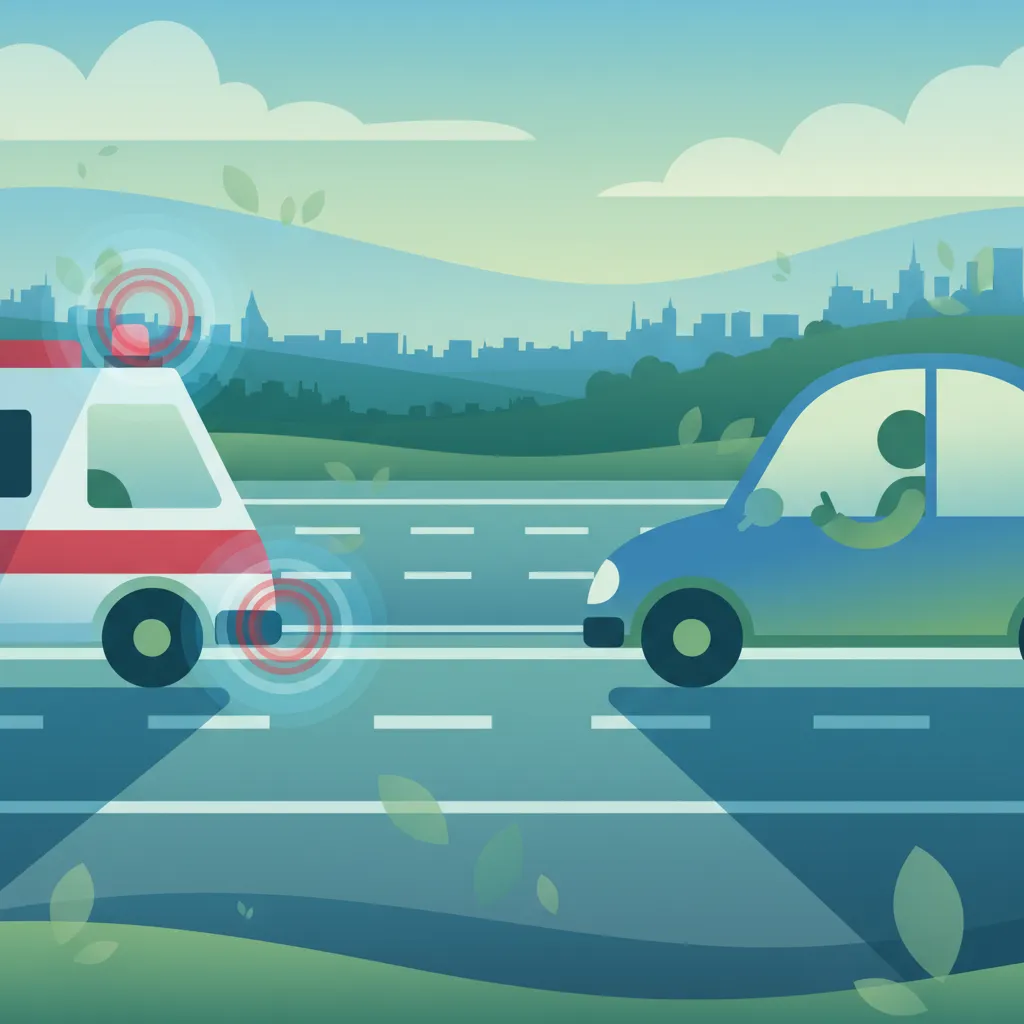
This lesson teaches the correct and legal response when encountering an emergency vehicle with active sirens or lights. It outlines the immediate obligation to give way by safely moving to the side of the road and stopping. The content provides practical advice on how to perform this maneuver calmly and predictably, ensuring a clear path for the emergency responders while maintaining the rider's own safety.
This lesson outlines the absolute first priorities after a crash, with the primary rule being to ensure your own safety and avoid further harm. You will learn how to conduct a quick self-assessment for injuries, the importance of moving out of the line of traffic if possible, and how to begin assessing the scene for immediate dangers like fuel leaks or oncoming vehicles. These initial actions are vital for managing the immediate aftermath of an incident.

This lesson provides clear instructions on the correct response to an approaching emergency vehicle with its sirens and lights active. You will learn your absolute duty to give way and the best methods for doing so, which typically involve pulling over to the right and stopping. The lesson stresses the importance of acting calmly and predictably, avoiding sudden braking or swerving that could endanger the emergency vehicle or other traffic.

This lesson details the procedural and legal steps for reporting an accident. You will learn when you are legally obligated to report a crash to the police, what information to exchange with other involved parties, and the importance of documenting the scene with photographs and witness details. This information is vital for ensuring any subsequent insurance claims and legal proceedings are handled smoothly and fairly.
Explore essential emergency maneuvers and obstacle avoidance techniques vital for motorcycle safety in Sweden. This lesson covers rapid decision-making, evasive actions, and controlled braking to handle unexpected hazards and ensure rider survival in critical situations.
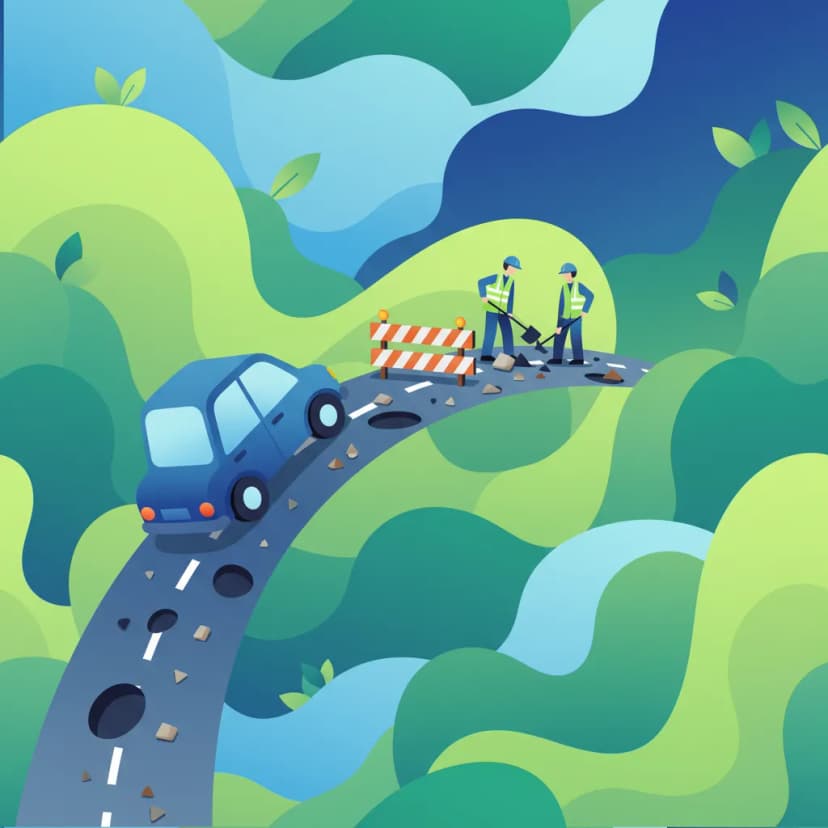
This lesson provides practical techniques for dealing with unavoidable road surface hazards. You will learn how to approach and cross obstacles like potholes, manhole covers, and patches of debris with minimal disruption to the motorcycle's stability. The content covers adjusting your speed, choosing the best line, and using your body to absorb impacts, helping you navigate the imperfections of real-world roads safely.

This lesson details the technique for performing a quick, decisive swerve to avoid an obstacle in your path. You will learn the correct positive counter-steering inputs required to make the motorcycle change direction rapidly while remaining stable. The lesson also addresses the dangerous phenomenon of 'target fixation' and teaches you to look where you want to go, a critical mental skill for successful evasive maneuvers.

This lesson introduces the core concepts of defensive riding, which involves anticipating potential dangers and actively managing the space around your motorcycle. You will learn the technique of continuously identifying and maintaining an 'escape path'—an open space to move into if a threat suddenly appears. This proactive, forward-thinking approach dramatically reduces the chances of being trapped in a dangerous situation and is a key skill of advanced, safe riders.

This lesson prepares you for the specific challenges of riding on rural roads in Sweden. You will learn how to read the road ahead for changes in surface quality, approach blind corners safely, and adjust your speed for narrow lanes with no shoulder. The content also covers how to anticipate and safely interact with slow-moving agricultural vehicles and the potential for wild animals on the road, ensuring you are prepared for the unpredictable nature of country riding.

This lesson teaches the physical skill of applying maximum braking force while maintaining control of the motorcycle. You will learn the technique of progressive braking to avoid locking the wheels and how to react if a skid does occur. Understanding how to manage both front and rear wheel skids and how an ABS system assists in these situations gives you the best possible chance of stopping safely and quickly in an emergency.

This lesson teaches the crucial skill of adapting your speed to the dynamic and often congested conditions of urban riding. You will learn to modulate your speed smoothly in response to traffic flow, pedestrian activity, and complex intersections to maintain safety and control. Techniques covered include using engine braking effectively, anticipating the actions of other road users, and selecting a speed that maximizes your reaction time in a high-density environment.
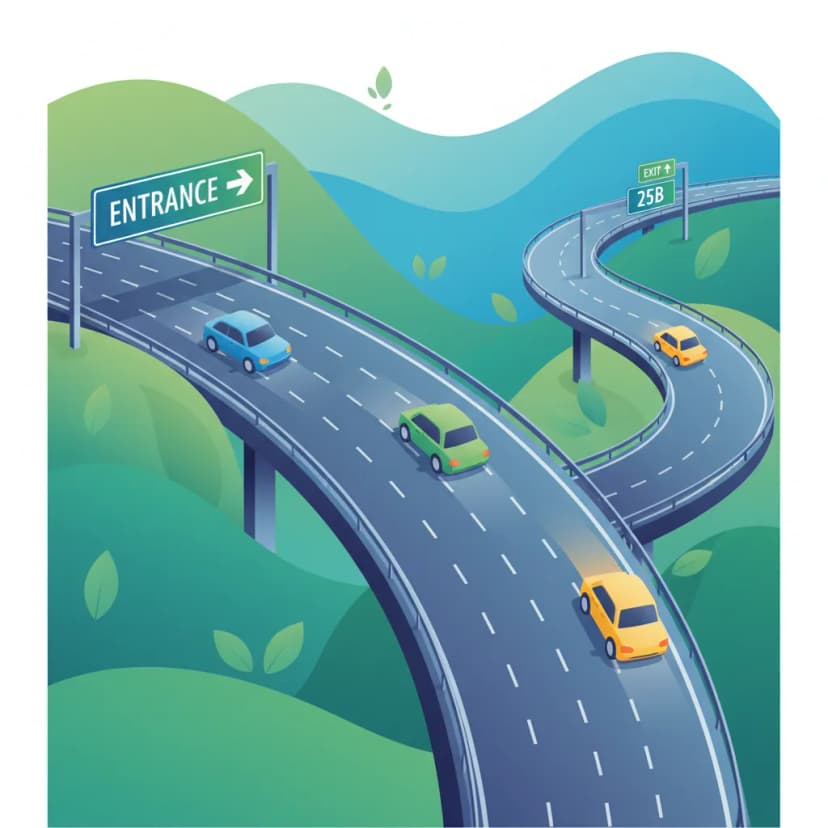
This lesson provides a step-by-step guide to motorway riding. You will learn the correct technique for accelerating on an on-ramp and merging smoothly into high-speed traffic. The content also covers maintaining proper lane discipline, executing safe overtakes, keeping a safe following distance at speed, and planning for your exit well in advance to ensure a smooth and stress-free experience on Sweden's fastest roads.

This lesson provides essential information for any motorcyclist considering riding in cold Swedish weather. You will learn how cold temperatures affect tire performance and the extreme caution required on surfaces with potential ice or snow. The content focuses on recognizing hazardous spots like black ice, the need for exceptionally smooth and gentle control inputs, and why in many cases, the safest decision is not to ride at all in such conditions.

This lesson focuses on the cognitive side of handling emergencies: seeing the threat early and making the right decision instantly. You will learn to analyze a developing hazard and quickly determine the best course of action, whether it's maximum braking, an evasive swerve, or a combination of both. This mental training is just as important as the physical skill, as the correct initial decision is the key to a successful outcome.
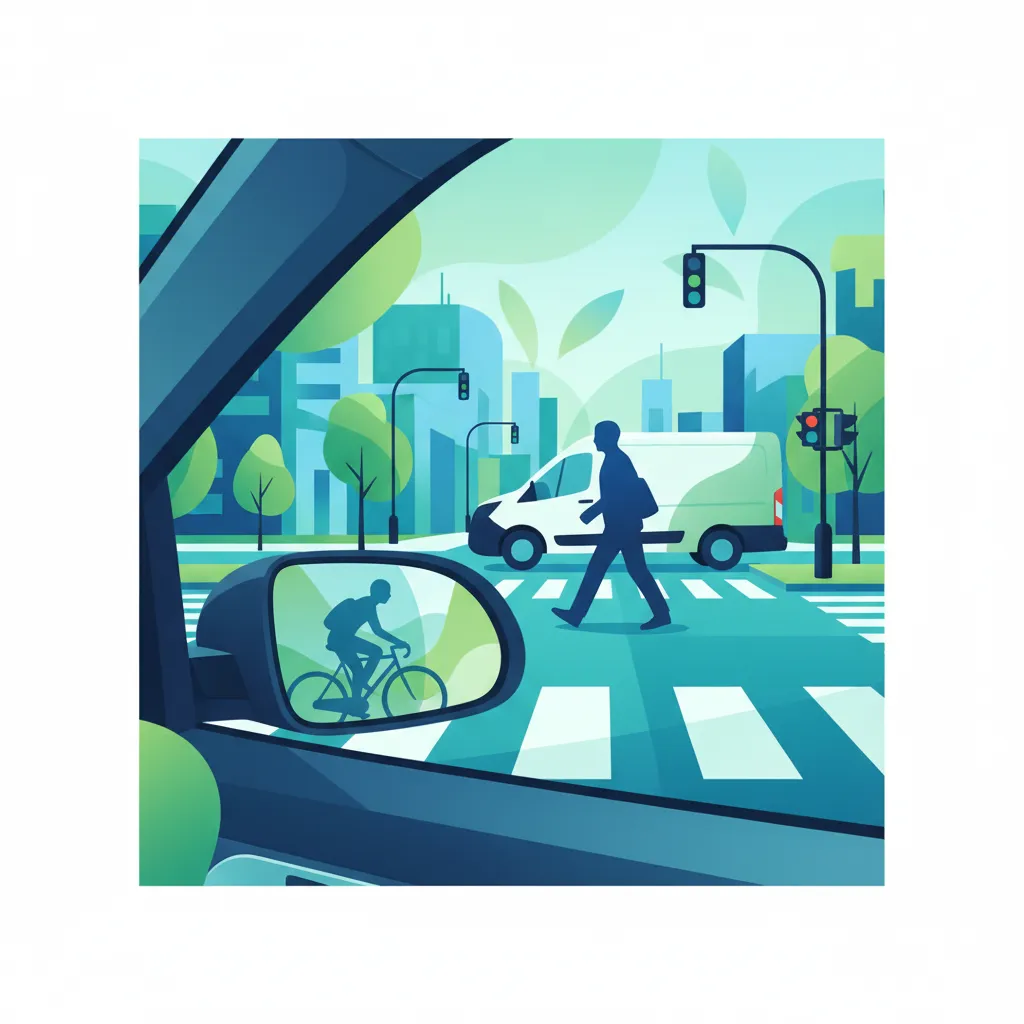
This lesson provides critical strategies for dealing with one of the biggest dangers in traffic: blind spots. You will learn the importance of the shoulder check and how to position yourself on the road to be more visible to other drivers. The lesson also trains you to scan the road surface ahead for hidden hazards like potholes, gravel, or oil spills that can pose a significant threat to a motorcycle's stability, teaching you to see and avoid them in time.
Find clear answers to common questions learners have about Emergency Stop, Safe Pull-Over, and Rider Recovery. Learn how the lesson is structured, which driving theory objectives it supports, and how it fits into the overall learning path of units and curriculum progression in Sweden. These explanations help you understand key concepts, lesson flow, and exam focused study goals.
The very first step is to ensure your immediate safety and regain control. Once the motorcycle is stable and you've stopped, quickly assess your surroundings for any ongoing hazards. Then, focus on finding a safe place to pull over completely off the travelled portion of the road if possible.
Look for a stable, level surface well clear of traffic. This could be a designated lay-by, a wide shoulder, or even a side road if safe to reach. Avoid stopping on blind bends, crests, or in areas where visibility is poor for yourself and other drivers.
Perform a quick self-check to ensure you are not injured. Then, visually inspect your motorcycle for any obvious damage or fluid leaks that might have occurred during the emergency manoeuvre. Check that all lights are functioning correctly before you attempt to rejoin traffic.
Once you are ready to move off, signal your intention clearly and check your mirrors and blind spots thoroughly. Accelerate smoothly to match the speed of the traffic flow before merging back into your lane, ensuring you have ample space.
It's completely normal to feel shaken. Take a few extra moments to compose yourself. If possible, find a very safe spot to sit for a minute, take a few deep breaths, and then proceed cautiously. Do not feel pressured to ride on if you don't feel fully ready.