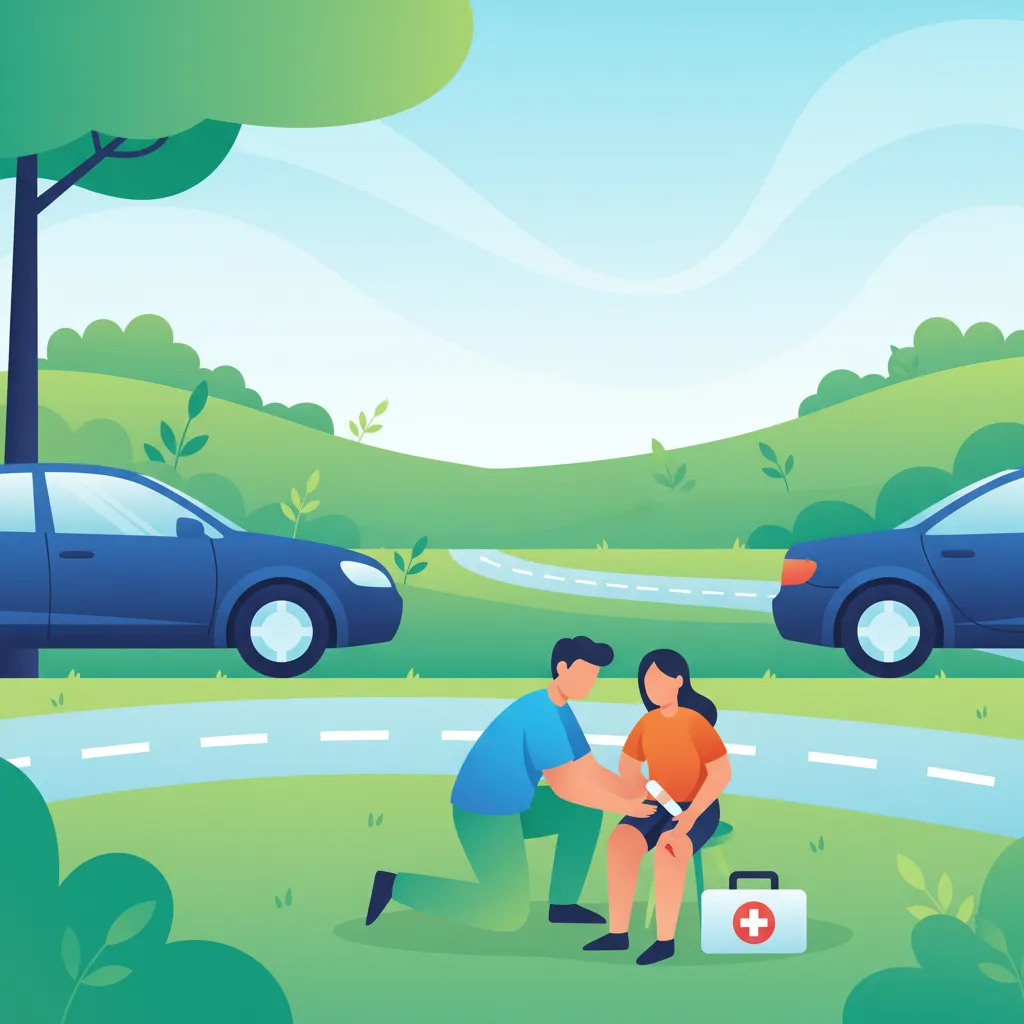
As a driver, you have a legal duty to provide assistance at an accident scene. This lesson covers the fundamental first-aid principles crucial for any driver, preparing you for emergency situations and the relevant sections of the Swedish theory exam. We’ll guide you through systematic assessment techniques to ensure you can act calmly and effectively until professional help arrives.
Driving a vehicle comes with significant responsibilities, not only to adhere to traffic laws and drive safely but also to act decisively in emergency situations. This lesson delves into the critical role drivers play in providing immediate assistance at the scene of a traffic accident, a legal and moral obligation in Sweden. Understanding basic first-aid principles can be the difference between life and death for a casualty before professional help arrives.
You will learn about the L-ABCDE mnemonic, a systematic approach to assessing injuries and prioritizing actions, which helps to manage stress and ensure the most life-threatening conditions are addressed first. We will cover the specific legal duties under the Swedish Trafikförordning (Traffic Ordinance) and practical steps for securing an accident scene, communicating with emergency services, and performing essential first-aid interventions.
In Sweden, the law places a clear and undeniable responsibility on every driver to provide assistance at the scene of a traffic accident. This isn't just a moral imperative; it's a statutory duty, meaning failure to comply can have significant legal consequences. Your immediate actions can dramatically influence the outcome for those involved, making this knowledge vital for all road users.
The Trafikförordning (Traffic Ordinance) in Sweden outlines specific duties for drivers involved in or witnessing a traffic accident. These duties are designed to ensure scene safety, facilitate communication with emergency services, and provide timely care to injured persons.
The Swedish Traffic Ordinance, a key piece of legislation governing road traffic in Sweden. It dictates rules for drivers, vehicles, and conduct on public roads.
Trafikförordning 5§ 3 states that if you are involved in or witness a traffic accident, you must stop immediately and remain at the scene. This "passive duty" prevents hit-and-run incidents and ensures that potential victims are not left unattended. Your presence is required to assist, exchange information, and await the arrival of authorities if necessary.
Beyond simply stopping, Trafikförordning 5§ 4 imposes an "active duty" to render assistance to any injured persons. This means you are expected to provide first aid within your competence, as long as it does not jeopardize your own safety or that of others. This is a crucial provision that emphasizes proactive intervention rather than merely calling for help.
The legal duty to render assistance is a cornerstone of Swedish traffic law. It underscores the collective responsibility of road users to act compassionately and effectively in times of crisis.
The moments immediately following a severe injury are often referred to as the "golden hour" or "platinum ten minutes." During this critical window, immediate and appropriate first aid can significantly reduce the severity of injuries and increase survival rates. In many accident scenarios, professional medical help may be several minutes away, and basic interventions performed by a bystander can stabilize a victim, prevent further deterioration, and even save a life.
Common preventable causes of death at accident scenes include airway obstruction, severe bleeding, and respiratory or cardiac arrest. A driver equipped with basic first-aid knowledge can address these critical issues before paramedics arrive. For instance, simply opening an obstructed airway can restore breathing, and applying direct pressure can stop life-threatening hemorrhage. Your role as a first responder is invaluable.
Before approaching any casualty, your absolute first priority must always be scene safety. An unsafe scene risks creating additional victims, including yourself. Taking immediate, systematic steps to secure the accident site protects everyone involved and ensures that rescuers can work without further danger.
The moment your vehicle stops at an accident scene, whether you are involved or merely witnessing it, you must activate your hazard warning lights (varningsblinkers).
A set of flashing lights on a vehicle that warn other road users of a hazard or a stationary vehicle.
Trafikförordning 24§ mandates the use of hazard lights when your vehicle is stopped on a road due to an accident or breakdown. These lights signal to approaching traffic that there is an obstruction or an unusual situation ahead, giving them time to react and reduce speed. This simple act is crucial for preventing secondary collisions, especially in low visibility conditions or on high-speed roads.
After activating hazard lights, the next essential step is to place an emergency triangle (varningstriangel) behind your vehicle. This reflective device provides an early warning to other drivers, giving them more time to notice the hazard than hazard lights alone.
A portable, reflective, red warning device placed on the road to signal a stationary hazard, such as an accident or breakdown.
Trafikförordning 31§ outlines the requirement for placing an emergency triangle. The distance at which you place it is crucial and depends on the road conditions:
Always place the triangle in a way that is visible to approaching traffic, often on the same side of the road as your vehicle. When placing the triangle, ensure your own safety by wearing a reflective vest and walking cautiously, facing oncoming traffic.
Never place the emergency triangle directly in front of your vehicle or too close to it, as this defeats its purpose of providing early warning.
Your personal safety is paramount. When exiting your vehicle at an accident scene, especially on a busy road or in poor visibility, you become a vulnerable road user. Therefore, wearing Personal Protective Equipment (PPE) is highly recommended.
The most important item is a reflective vest (varningsväst). This high-visibility garment makes you much more visible to other drivers, significantly reducing your risk of being struck. Always keep one readily accessible in your vehicle.
Additionally, carrying a basic first-aid kit with disposable gloves is crucial. These protect you from contact with blood and other bodily fluids, minimizing the risk of infection. While not legally mandatory for laypersons, using gloves is a responsible and recommended practice.
Once the scene is safe, the next critical step is to assess the casualties. Under stressful conditions, it can be hard to remember what to do first. The L-ABCDE mnemonic provides a structured, step-by-step protocol to rapidly identify and manage life-threatening conditions, ensuring that the most critical issues are addressed in the correct order.
A systematic mnemonic used for rapid assessment and prioritization of injuries in emergency situations: Life-threatening situation, Airway, Breathing, Circulation, Disability, Exposure.
L – Life-threatening situation: Identify and neutralize immediate dangers.
A – Airway: Ensure the victim's airway is open and clear.
B – Breathing: Check if the victim is breathing and if it's adequate.
C – Circulation: Control severe bleeding and check for signs of shock.
D – Disability: Assess the victim's level of consciousness and neurological status.
E – Exposure: Fully inspect for hidden injuries and manage body temperature.
The "L" in L-ABCDE stands for Life-threatening situation. This is the absolute first step and, crucially, comes before you even touch the casualty. Before you consider the victim's specific injuries, you must ensure that the immediate environment is safe.
This involves looking for hazards such as:
If an immediate life-threatening hazard exists, you must address it first, even if it means moving the casualty out of immediate danger (only if absolutely necessary and safe to do so). For instance, if a vehicle is on fire, the priority is to evacuate victims to a safe distance.
Once the immediate environment is secure, the next step is to assess the victim's Airway. An obstructed airway is one of the most common and rapidly fatal complications in an unconscious casualty. The tongue can fall back and block the throat, or vomit, blood, or debris can impede breathing.
To assess the airway, gently open the victim's mouth and look for any obstructions. If you see anything, carefully remove it. To ensure the airway remains open, you will need to use specific techniques, which depend on whether a spinal injury is suspected. We will discuss these in detail later in the lesson.
After ensuring a clear airway, the "B" stands for Breathing. You need to quickly determine if the victim is breathing normally. Look for chest rise and fall, listen for breath sounds, and feel for air movement from the mouth or nose.
If the victim is not breathing or is breathing ineffectively (gasping), immediate intervention is required. This may involve providing rescue breaths. The goal is to restore oxygen flow to prevent hypoxia, which can cause rapid brain damage.
The "C" in L-ABCDE refers to Circulation. This step focuses on identifying and controlling severe external bleeding and assessing for signs of shock. Massive bleeding can lead to rapid blood loss and death.
The "D" stands for Disability, which involves a rapid assessment of the victim's neurological status and level of consciousness. This helps determine the severity of any head or brain injury. A simple way to do this is using the AVPU scale:
Also, quickly observe their pupils for size and reactivity to light. Unequal pupils or pupils that do not react to light can indicate a serious head injury. Communicate your findings to the emergency operator.
The final step, "E" for Exposure, means thoroughly examining the casualty for any hidden injuries that might have been missed in the initial rapid assessment. This may involve gently and carefully removing or cutting clothing if necessary, especially if there are concerns about spinal injuries or internal bleeding.
During exposure, also prioritize temperature management. Victims, especially those with injuries or in shock, can quickly become hypothermic, which worsens their condition. Once you've inspected an area, cover the casualty with blankets, coats, or anything available to keep them warm. Maintain their dignity as much as possible, covering exposed areas after inspection.
Once you've ensured scene safety and begun your L-ABCDE assessment, contacting emergency services is paramount. In Sweden, the single emergency number for police, fire, and ambulance is 112. Calling promptly and providing clear, concise information allows dispatchers to send appropriate resources and guide your continued actions.
When you call 112, remain calm and speak clearly. The operator will ask specific questions to gather essential information. Be prepared to provide:
Stay on the line with the 112 operator. They are trained to guide you through further first-aid steps until professional help arrives. Do not hang up until they tell you to do so.
The 112 operator will provide instructions and advice, which you must follow carefully. They can guide you through specific first-aid techniques, help you monitor the casualty, and advise on whether it's safe to move someone. Their guidance is crucial because they have real-time information from dispatch and can provide expert advice. Your cooperation ensures the most effective response.
While professional medical training offers advanced techniques, several basic first-aid actions are well within the capability of any driver and can be life-saving. These practical skills align with the L-ABCDE framework.
Ensuring an open airway is fundamental. The method you use depends on whether you suspect a cervical (neck) spine injury:
Always assume a potential spinal injury in severe traffic accidents. If in doubt, use the jaw-thrust maneuver or minimize neck movement.
If a casualty is unconscious and not breathing normally after their airway is clear, you may need to provide rescue breaths. Always follow the advice of the 112 operator for the most up-to-date guidance.
If a casualty has no pulse in addition to not breathing, Cardiopulmonary Resuscitation (CPR) (chest compressions combined with rescue breaths) may be necessary. The 112 operator will guide you if this is the case.
Rapid control of severe external bleeding is crucial. Uncontrolled bleeding can lead to shock and death very quickly.
Shock is a life-threatening condition where the body's organs do not receive enough blood flow. It can result from severe bleeding, trauma, or other medical emergencies. Early recognition and basic management are crucial.
Signs of Shock:
First-Aid for Shock:
Accident scenes are rarely textbook scenarios. Environmental factors, the type of road, and the number of casualties all demand adaptations to your first-aid response.
In an accident involving multiple casualties, you may need to perform a basic form of triage to prioritize who needs immediate attention. The L-ABCDE approach is still your guide, focusing on the most life-threatening conditions first.
Even if you cannot help everyone simultaneously, securing the scene and making the emergency call for all victims is a vital first step.
You may not always have a fully stocked first-aid kit. Knowing how to improvise is valuable:
Throughout any emergency response, remember that your personal safety is paramount. If you become injured, you can no longer help others. Take calculated risks, but never put yourself in unnecessary danger.
Failure to fulfill your legal duties under the Trafikförordning can lead to severe consequences:
By understanding and applying the principles in this lesson, you not only prepare yourself to potentially save lives but also ensure you comply with Swedish law, becoming a more responsible and prepared driver.
Being prepared to provide first aid at an accident scene is a fundamental aspect of responsible driving in Sweden. From understanding your legal duty under the Trafikförordning to mastering the systematic L-ABCDE assessment, the knowledge gained in this lesson empowers you to act decisively and effectively in a crisis.
Remember, the initial actions taken by bystanders are often the most critical for a casualty's survival. By prioritizing scene safety, communicating clearly with emergency services via 112, and applying basic first-aid techniques for airway, breathing, circulation, disability, and exposure, you can make an invaluable difference until professional help arrives. Your role as a driver extends beyond safe navigation—it includes being a potential life-saver on the road.
Lesson content overview
Explore all units and lessons included in this driving theory course.
Explore search topics learners often look for when studying First-Aid Basics for Drivers. These topics reflect common questions about road rules, driving situations, safety guidance, and lesson level theory preparation for learners in Sweden.
Browse additional driving theory lessons that cover connected traffic rules, road signs, and common driving situations related to this topic. Improve your understanding of how different rules interact across everyday traffic scenarios.
Learn the systematic L-ABCDE approach to assess life-threatening situations after a traffic accident. Understand critical steps for airway, breathing, and circulation until professional help arrives. Essential theory for safe driver responsibility in emergencies.
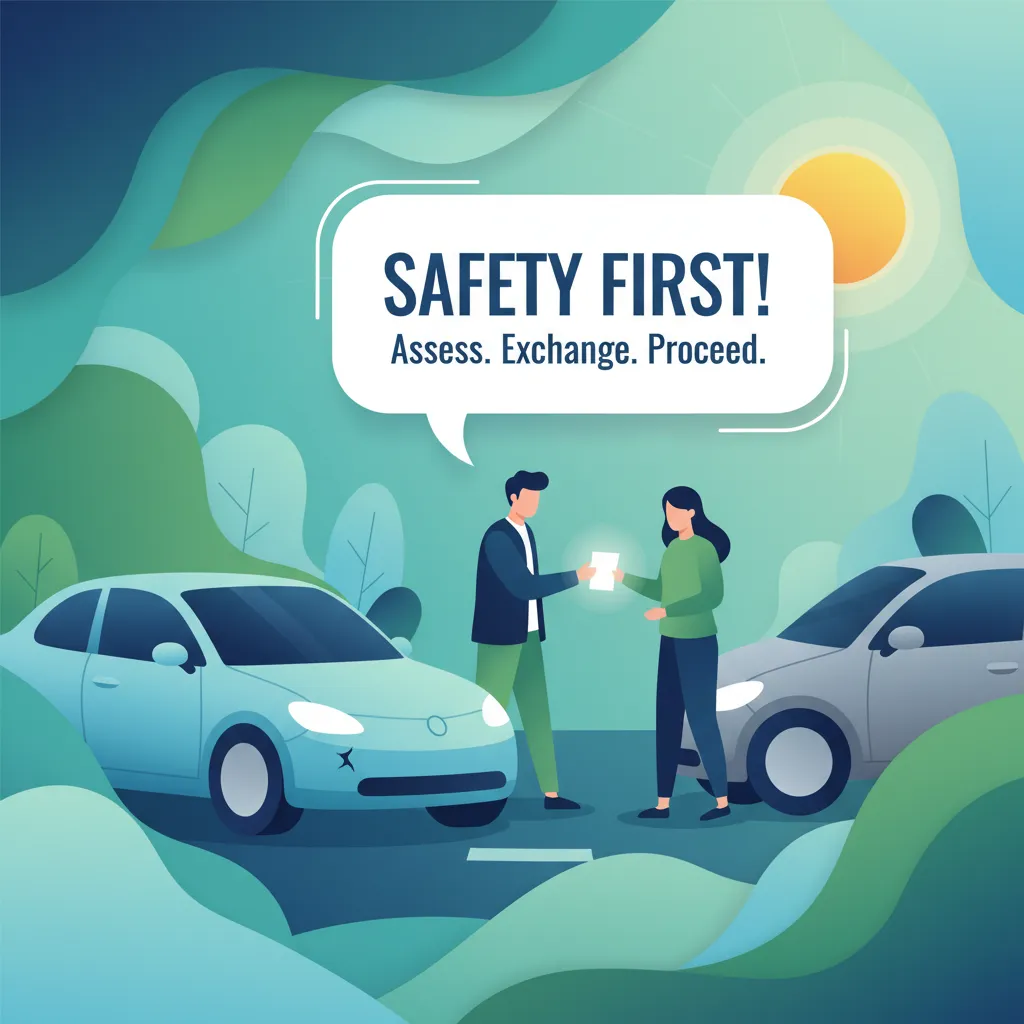
This lesson outlines the immediate, high-priority actions required at an accident scene. You will learn the 'stop, survey, secure' sequence: first, stopping and assessing the situation; second, warning other traffic by using hazard lights and placing a warning triangle; and third, taking steps to prevent further danger, such as switching off ignitions. These initial actions are crucial for the safety of everyone involved and for those approaching the scene.

This lesson teaches you how to make an accident scene as safe as possible for yourself, any other involved parties, and approaching traffic. You will learn the correct use of hazard lights, the placement of warning triangles, and the importance of wearing a high-visibility vest. The content also covers how to identify and manage immediate post-crash hazards, such as spilled fuel or unstable vehicles, to prevent the situation from worsening.

This lesson provides a clear, step-by-step guide for what to do in the immediate aftermath of a collision. It prioritizes safety by explaining how to secure the scene to prevent further incidents. The content covers the importance of checking for injuries, calling for emergency help if needed, and remaining calm while fulfilling initial legal obligations.
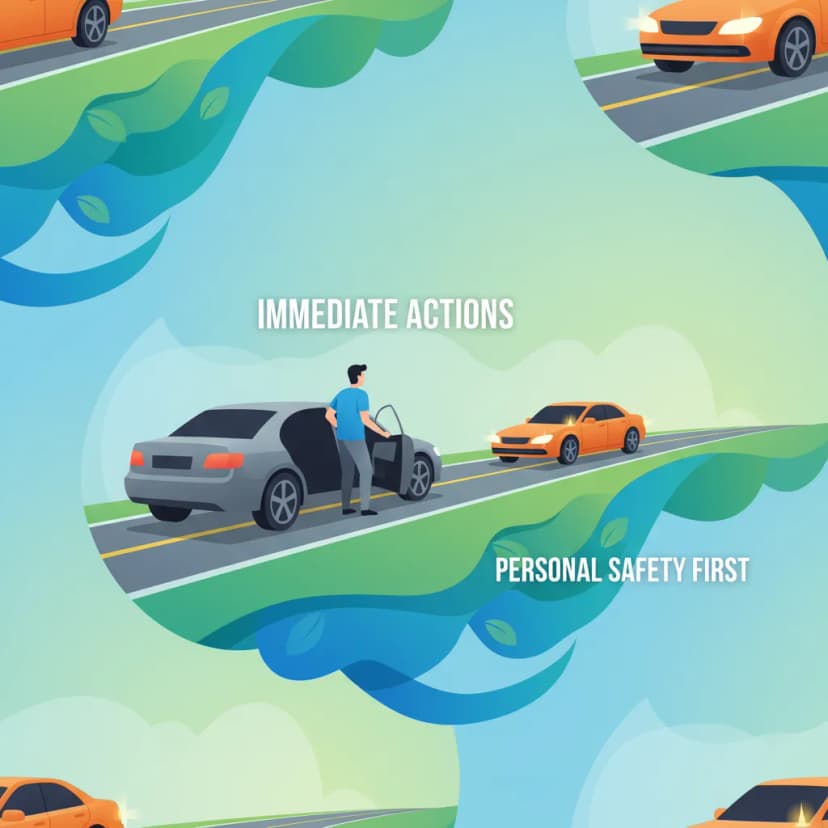
This lesson outlines the absolute first priorities after a crash, with the primary rule being to ensure your own safety and avoid further harm. You will learn how to conduct a quick self-assessment for injuries, the importance of moving out of the line of traffic if possible, and how to begin assessing the scene for immediate dangers like fuel leaks or oncoming vehicles. These initial actions are vital for managing the immediate aftermath of an incident.
This lesson provides clear instructions on the correct response to an approaching emergency vehicle with its sirens and lights active. You will learn your absolute duty to give way and the best methods for doing so, which typically involve pulling over to the right and stopping. The lesson stresses the importance of acting calmly and predictably, avoiding sudden braking or swerving that could endanger the emergency vehicle or other traffic.

This lesson focuses on the correct use of warning devices to protect an accident or breakdown scene. You will learn to immediately activate your hazard lights (varningsblinkers). The main focus is on the proper placement of the warning triangle, explaining how the distance from the vehicle must be adapted based on the road's speed limit and visibility to give oncoming drivers adequate time to react.
This lesson teaches the correct and legal response when encountering an emergency vehicle with active sirens or lights. It outlines the immediate obligation to give way by safely moving to the side of the road and stopping. The content provides practical advice on how to perform this maneuver calmly and predictably, ensuring a clear path for the emergency responders while maintaining the rider's own safety.

This lesson covers the final phase of an emergency maneuver: coming to a safe, controlled stop and moving off the road. You will learn the procedure for finding a safe spot, signaling your intentions, and securing the motorcycle. It also addresses the important steps to take after the immediate danger has passed, including checking yourself and your vehicle for damage and taking a moment to regain your composure before continuing your journey.
This lesson focuses on the cognitive side of handling emergencies: seeing the threat early and making the right decision instantly. You will learn to analyze a developing hazard and quickly determine the best course of action, whether it's maximum braking, an evasive swerve, or a combination of both. This mental training is just as important as the physical skill, as the correct initial decision is the key to a successful outcome.

This lesson explains a motorcyclist's legal duty when encountering emergency vehicles with active sirens and lights. You will learn the correct procedure for yielding the right-of-way by safely pulling over and stopping. Additionally, the lesson covers the rules and best practices for sharing the road with public transport like buses and trams, including navigating around bus stops and respecting dedicated lanes, to ensure safety for all road users.
Find clear answers to common questions learners have about First-Aid Basics for Drivers. Learn how the lesson is structured, which driving theory objectives it supports, and how it fits into the overall learning path of units and curriculum progression in Sweden. These explanations help you understand key concepts, lesson flow, and exam focused study goals.
In Sweden, drivers have a legal duty to assist at an accident scene. This means stopping, assessing the situation, ensuring safety, calling for professional help if needed, and providing basic first aid to the injured until emergency services arrive.
L-ABCDE is a mnemonic used for systematic assessment. It stands for Life-threatening situation, Airway, Breathing, Circulation, Disability (neurological status), and Exposure (checking for further injuries or environmental factors). It helps you prioritize care.
The most critical step for an unconscious person is to ensure their Airway is clear and they are Breathing. If they are not breathing or breathing abnormally, you may need to start CPR, but always check for safety and call emergency services first.
While professional medical training is ideal, you are expected to provide assistance. Follow the instructions given by the emergency operator (e.g., 112 in Sweden). They can guide you through performing chest compressions (CPR) if necessary. Your role is to do what you can safely.
In Sweden, dial 112 for all emergencies. When you call, clearly state where the incident is, what has happened, how many people are injured, and their condition. Listen carefully to the operator's instructions and do not hang up until they tell you to.
Common mistakes include putting oneself in danger, failing to call for help promptly, moving an injured person unnecessarily, and not securing the scene. Always prioritize your own safety and follow a systematic approach.