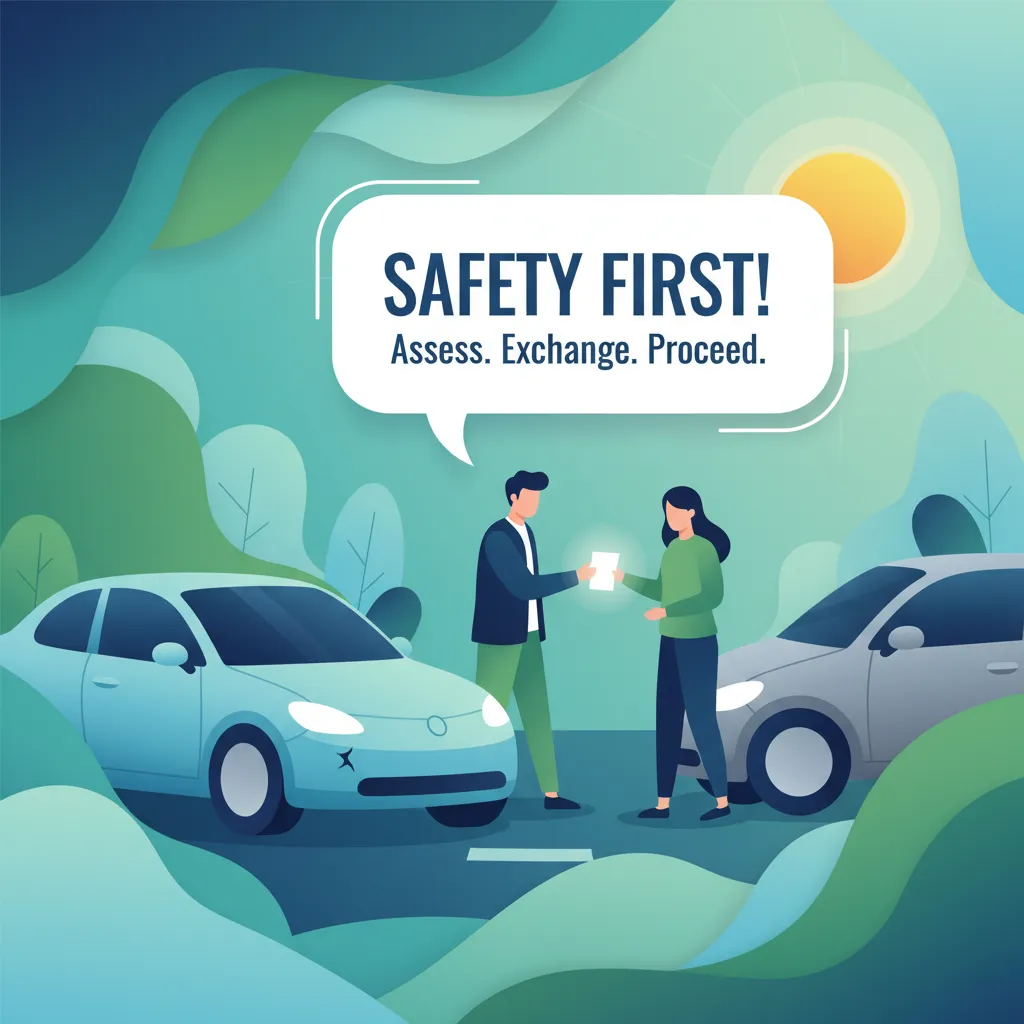
In Unit 12, 'Emergency Situations and Accident Procedures,' this lesson focuses on the vital first actions to take immediately following a traffic collision. Understanding these steps is critical for ensuring safety at the scene and for preparing you for potential exam questions on accident response.
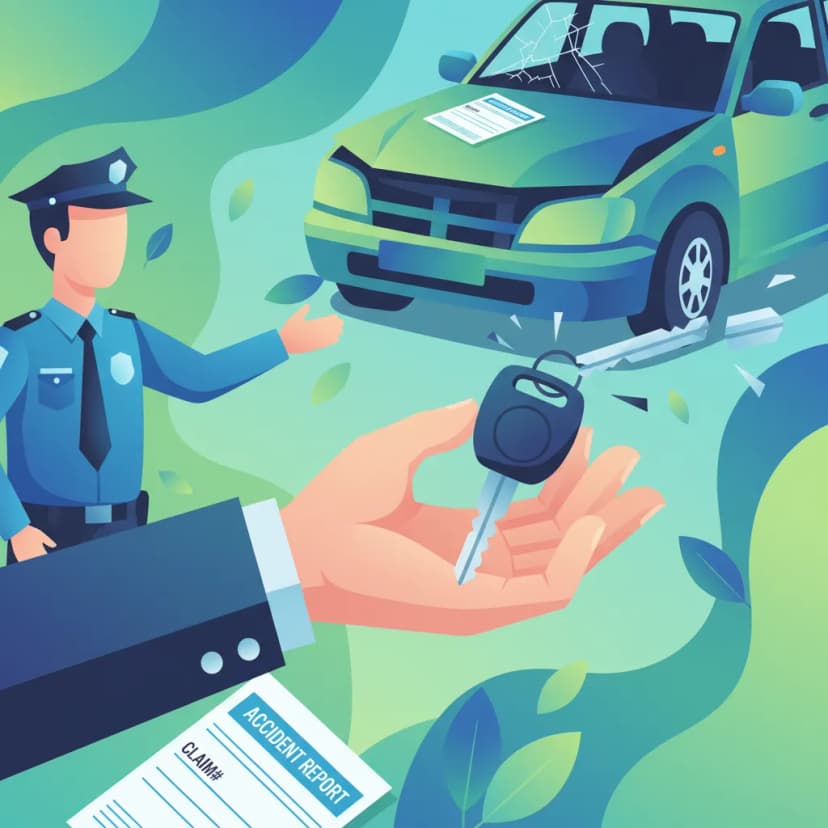
Being involved in a traffic collision can be a frightening and disorienting experience. However, knowing the correct immediate actions to take can significantly reduce risks, prevent further accidents, and ensure legal compliance. This lesson, part of the Swedish Driving License Theory Course for Category B Cars, outlines the mandatory, high-priority steps every driver must follow directly after an accident on Swedish roads. Understanding and internalizing this "Stop, Survey, Secure" protocol is crucial for the safety of everyone involved and for protecting yourself legally and financially.
The swift and correct application of these procedures is not only a legal obligation under Swedish traffic law but also a moral duty. It ensures that lives are protected, potential secondary collisions are averted, and vital evidence is preserved for later investigations and insurance claims.
The immediate post-collision response is structured around a three-step protocol: Stop, Survey, and Secure. This sequence is designed to reduce cognitive overload during a stressful event, guiding drivers through essential actions that prioritize safety and legal obligations.
Stop: The very first action is to bring your vehicle to a complete and safe halt. This prevents further uncontrolled movement and reduces the risk of escalating the incident. Survey: Once stopped, rapidly assess the scene. This involves checking for injuries, fire, hazardous spills, and the overall traffic situation. This quick evaluation determines the urgency and nature of subsequent steps. Secure: The final step involves making the accident scene safe for all road users. This includes warning approaching traffic and taking measures to prevent additional dangers, such as vehicle fires.
This systematic approach minimizes confusion and ensures that critical tasks are addressed promptly and effectively.
Following a collision, a structured approach is vital. Each step below builds upon the previous one, aiming to mitigate danger and fulfill legal requirements.
After a collision, your primary duty is to stop your vehicle as soon as safely possible. This is a mandatory requirement under Swedish traffic law, specifically Trafikförordning (1998:1276) § 38. Failure to stop can lead to serious legal consequences.
Practical Meaning: Bring your vehicle to a complete stop using your brakes and hand-brake. If possible and safe, move your vehicle to the side of the road, hard shoulder, or emergency lane to avoid obstructing traffic. However, if moving the vehicle poses further danger (e.g., potential for additional collision, suspected serious injuries, or if it might destroy critical evidence), it might be better to leave it in place, provided you can adequately warn other traffic.
Associated Rules:
Always prioritize safety. While moving the vehicle off the main carriageway is often ideal, never do so if it compromises the safety of occupants or other road users, or if it might worsen injuries.
Once your vehicle is stationary, immediately activate your hazard warning lights (often called "blinkers" or "warning lights"). These are the flashing amber lights that illuminate simultaneously on all corners of your vehicle, signaling to other road users that your vehicle is stopped and poses a potential danger.
Practical Meaning: Hazard lights significantly improve the visibility of your stopped vehicle, especially in low-light conditions, adverse weather, or on high-speed roads. They alert approaching drivers to an unusual situation ahead, giving them more time to react and adjust their speed or lane position.
Associated Rules:
Some modern vehicles have automatic hazard light activation systems that engage after an impact. Always verify that your hazard lights are indeed flashing after a collision, even if your vehicle has this feature.
Following the activation of hazard lights, the next critical step to secure the scene is to place a warning triangle on the road. This reflective, portable safety device provides an additional, highly visible warning to approaching traffic.
Required Distances (per Swedish Regulations): The distance at which you place the warning triangle behind your vehicle depends on the road type and speed limit:
Practical Meaning: The warning triangle acts as a crucial early warning sign, allowing oncoming drivers to perceive the obstruction well in advance. Proper placement ensures that drivers have enough time and space to react safely, preventing secondary collisions. Always ensure the triangle is clearly visible to approaching traffic from both directions if the road is two-way.
Associated Rules:
Never place the warning triangle directly behind your vehicle, especially on high-speed roads. This reduces the reaction distance for following traffic and defeats its primary purpose.
A collision can cause damage that leads to fuel leaks or electrical shorts, significantly increasing the risk of fire. Therefore, it is crucial to shut off your vehicle's ignition and engine immediately after ensuring the scene is secure and assessing for injuries.
Practical Meaning: Turning the engine off and removing the key (or pressing the start-stop button) serves several critical purposes:
Associated Rules: While there isn't one explicit law solely for "ignition shut-off" post-collision, this action falls under the general duty to prevent further danger as outlined in Trafikförordning § 38.
If there's a strong smell of fuel or smoke, evacuate occupants immediately and move to a safe distance before calling emergency services. Do not re-enter the vehicle.
After securing the scene, your immediate priority shifts to the well-being of people. Rapidly assess all occupants of your vehicle, other vehicles involved, and any vulnerable road users (pedestrians, cyclists) for injuries.
Practical Meaning:
Associated Rules:
Unless there is an immediate and life-threatening danger (e.g., vehicle fire, imminent explosion), do not move an injured person, especially if you suspect spinal or neck injuries. Wait for trained medical personnel.
If there are any injuries, significant damage to vehicles, or if the accident scene poses a substantial hazard, you must contact Sweden's universal emergency number, 112, without delay.
Information Required When Calling 112: Be prepared to provide precise information to the emergency operator:
Practical Meaning: A prompt and accurate emergency call ensures that police, fire brigade, and ambulance services are dispatched quickly to the scene, providing vital support and preventing further escalation of the incident.
Associated Rules:
After ensuring immediate safety and contacting emergency services, you are legally obliged to exchange specific information with all other drivers and parties involved in the collision. This data is essential for insurance claims and police reports.
Mandatory Information to Exchange (per Swedish law):
Practical Meaning: Collect this same information from all other parties involved. It's advisable to carry a card with your own details ready. If anyone refuses to provide their details, note their vehicle registration number and report it to the police.
Associated Rules:
While not always explicitly mandatory, documenting the accident scene is highly recommended. It provides crucial evidence for police investigations and insurance claims.
Types of Documentation:
Practical Meaning: Comprehensive documentation can significantly expedite insurance claims and help determine fault, protecting you from potential disputes. Only document when it is safe to do so, after immediate safety concerns are addressed.
Associated Rules:
Do not move vehicles if there are serious injuries or fatalities, or if police are needed for investigation, unless moving them is essential for safety. Wait for police instructions.
Adhering to Swedish traffic laws after a collision is non-negotiable. Non-compliance can lead to severe penalties, including fines, licence points, and even criminal liability.
Key Regulations and Laws:
| Regulation | Rule Statement | Applicability | Legal Status | Rationale |
|---|---|---|---|---|
| Trafikförordning (1998:1276) § 38 | A driver involved in a traffic accident must immediately stop their vehicle. | Any collision involving any vehicle. | Mandatory | Prevents uncontrolled movement and secondary collisions. |
| Trafikförordning (1998:1276) § 38c | A driver must render assistance to injured persons and, if necessary, immediately call emergency services (112). | When personal injury is evident or likely. | Mandatory | Protects human life and fulfills the general duty of care. |
| Vägtrafikförordning (1998:1276) § 23 | Hazard warning lights may be activated when a vehicle is stopped and poses a danger to other traffic. | Any stationary vehicle obstructing traffic. | Mandatory (allowed use, crucial post-collision) | Improves visibility of a stopped vehicle. |
| Vägtrafikförordning (1998:1276) § 24 | A warning triangle must be placed at a minimum distance behind a stopped vehicle: ≥30 m on motorways/high-speed roads, ≥10 m (sometimes up to 20m depending on conditions) on other roads. | After any collision where the vehicle impedes traffic. | Mandatory | Provides advance warning for sufficient reaction time. |
| Vägtrafikförordning (1998:1276) § 39 | Drivers involved in an accident shall exchange name, address, personal identity number, vehicle registration number, driver's licence number, and insurance details. | All collisions involving another road user. | Mandatory | Enables identification for police/insurance processing. |
| Vägtrafikförordning (1998:1276) § 41 | Drivers should document the accident scene (photos, notes) if it can be done safely and without obstructing traffic. | Non-emergency situations where time permits. | Recommended (best practice) | Preserves evidence for later proceedings. |
| Road Traffic Act (2004:405) Chapter 6, § 6 | Leaving the scene of an accident without lawful excuse, and without fulfilling obligations such as stopping, assisting, and identifying oneself, is an offense. This is often referred to as "smitning" (hit and run). | Any accident where the driver departs before obligations are met. | Criminal offense | Guarantees accountability and victim support. |
The immediate actions taken after a collision may need to be adapted based on specific environmental and contextual factors.
Failing to follow the correct procedures after a collision can have serious repercussions:
The "Stop, Survey, Secure" protocol is founded on scientific principles and extensive safety research:
Familiarize yourself with your vehicle's controls for hazard lights and ignition shut-off. Practice locating them so you can activate them instinctively under stress.
To recap the most critical immediate actions after a collision on Swedish roads, consider this checklist:
This comprehensive guide aims to equip you with the essential knowledge for responding effectively and responsibly to a traffic collision, ensuring safety and legal adherence on Swedish roads.
Lesson content overview
Explore all units and lessons included in this driving theory course.
Explore search topics learners often look for when studying Immediate Actions After a Collision. These topics reflect common questions about road rules, driving situations, safety guidance, and lesson level theory preparation for learners in Sweden.
Browse additional driving theory lessons that cover connected traffic rules, road signs, and common driving situations related to this topic. Improve your understanding of how different rules interact across everyday traffic scenarios.
Understand the official procedures for reporting traffic accidents in Sweden, including necessary documentation and steps after ensuring immediate safety. Learn about insurance implications and legal requirements relevant to the Category B driving theory.
This lesson covers the administrative and legal obligations following a collision. You will learn under which circumstances you are legally required to notify the police, such as when there are injuries or significant property damage. The content details the essential information that must be exchanged between all involved parties—names, contact details, vehicle registration, and insurance information—and the importance of documenting the scene and gathering witness details for insurance claims.
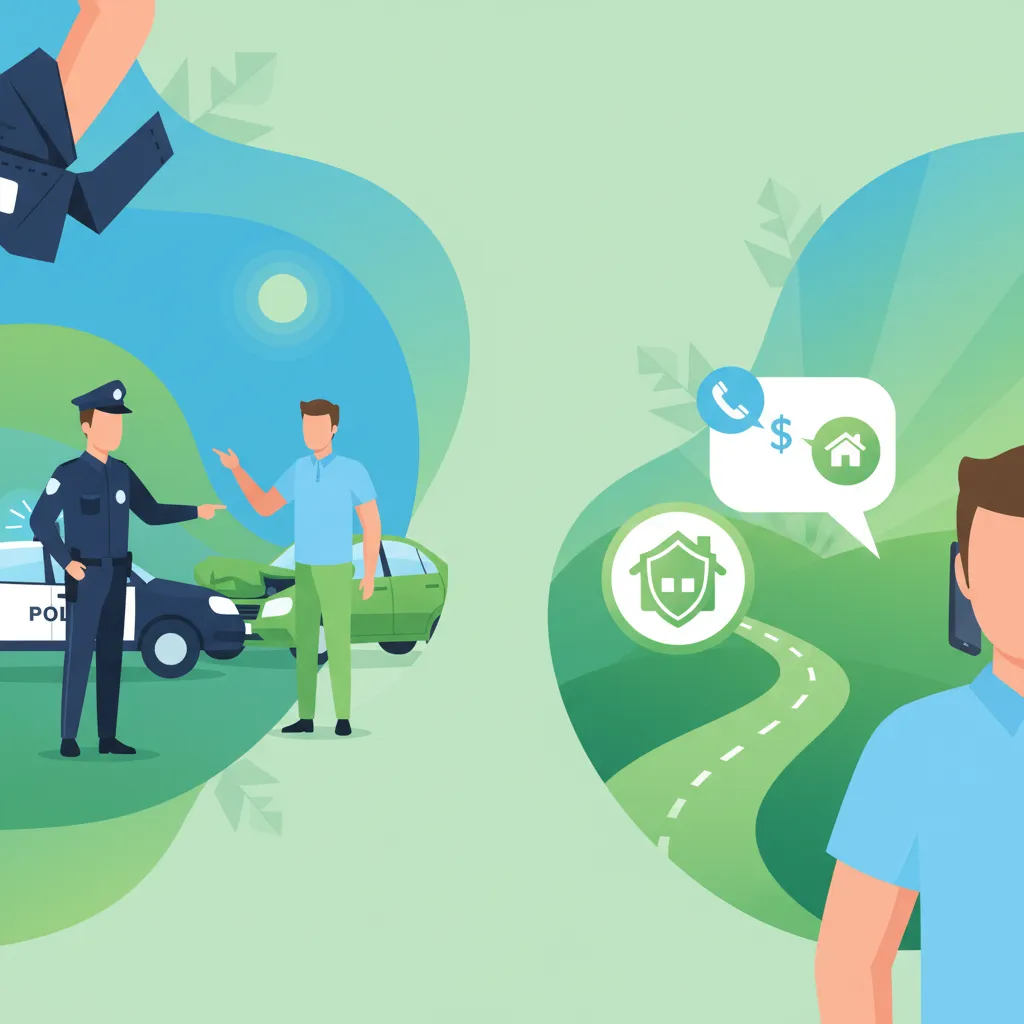
This lesson details the procedural and legal steps for reporting an accident. You will learn when you are legally obligated to report a crash to the police, what information to exchange with other involved parties, and the importance of documenting the scene with photographs and witness details. This information is vital for ensuring any subsequent insurance claims and legal proceedings are handled smoothly and fairly.
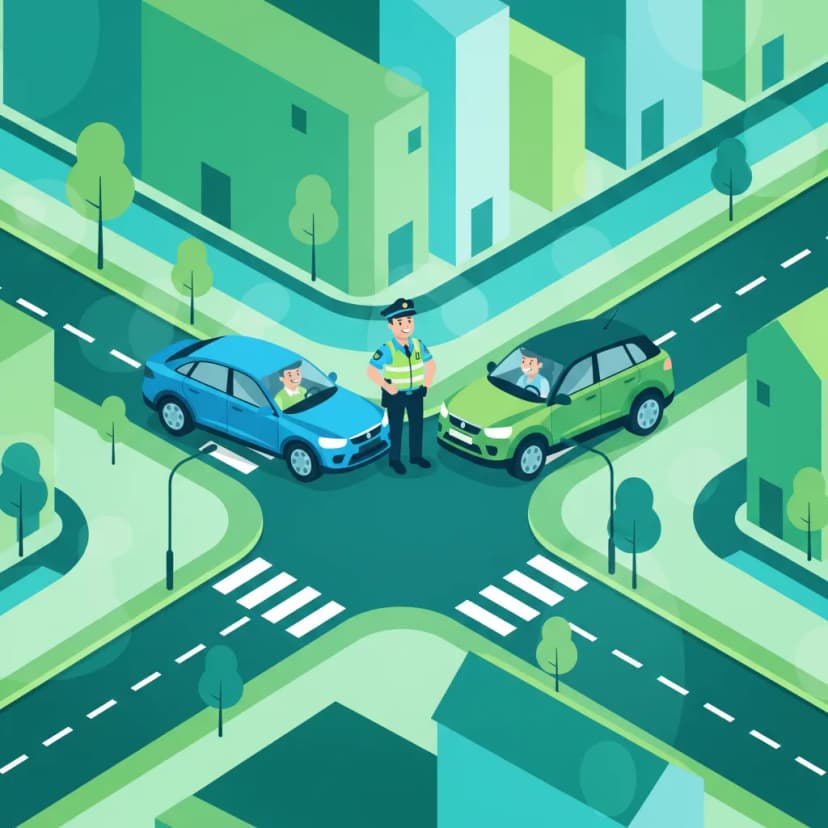
This lesson explains the legal requirements in Sweden for reporting a traffic accident to the police (Polisanmälan). It clarifies in which situations a report is mandatory, such as when there are injuries or significant property damage. The content guides learners on the information they will need to provide for the report and for subsequent insurance claims.
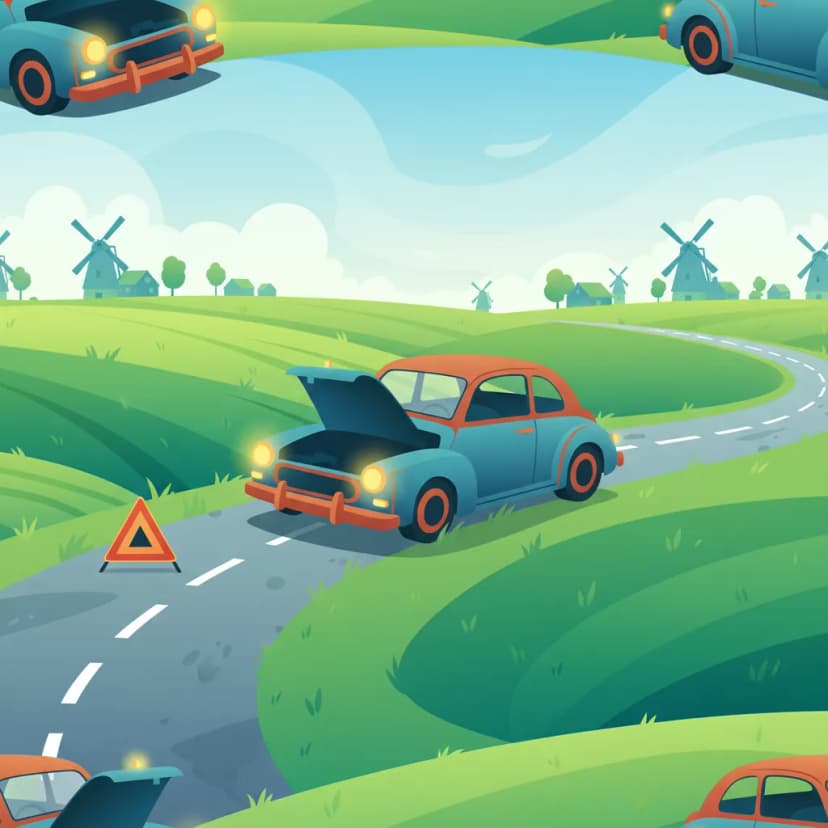
This lesson focuses on the correct use of warning devices to protect an accident or breakdown scene. You will learn to immediately activate your hazard lights (varningsblinkers). The main focus is on the proper placement of the warning triangle, explaining how the distance from the vehicle must be adapted based on the road's speed limit and visibility to give oncoming drivers adequate time to react.
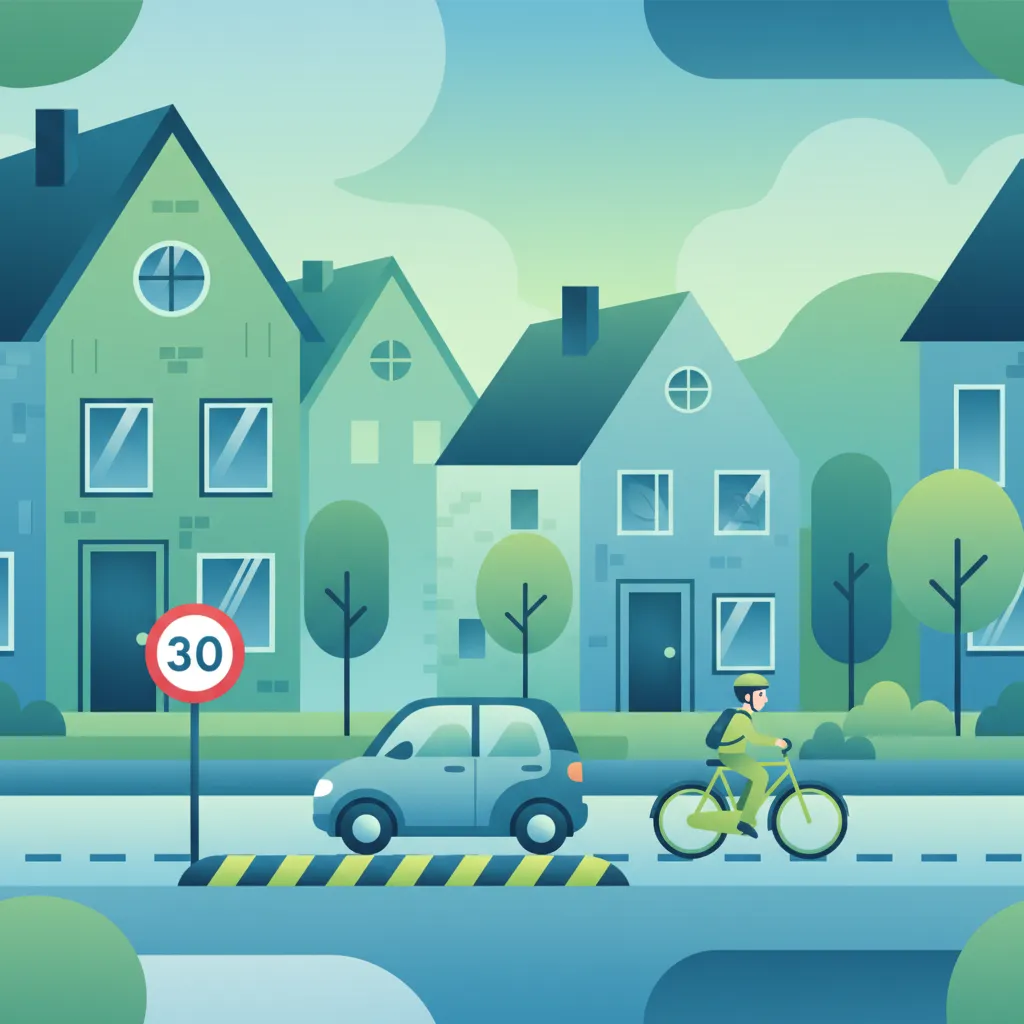
This lesson focuses on the high level of caution required when driving in residential areas. You will learn about the rules for special zones like 'gångfartsområde' (walking speed area) and the need to navigate around speed calming measures like speed bumps. The central theme is anticipating unpredictable behavior from residents, especially children, and managing the risks posed by parked cars that severely limit visibility.
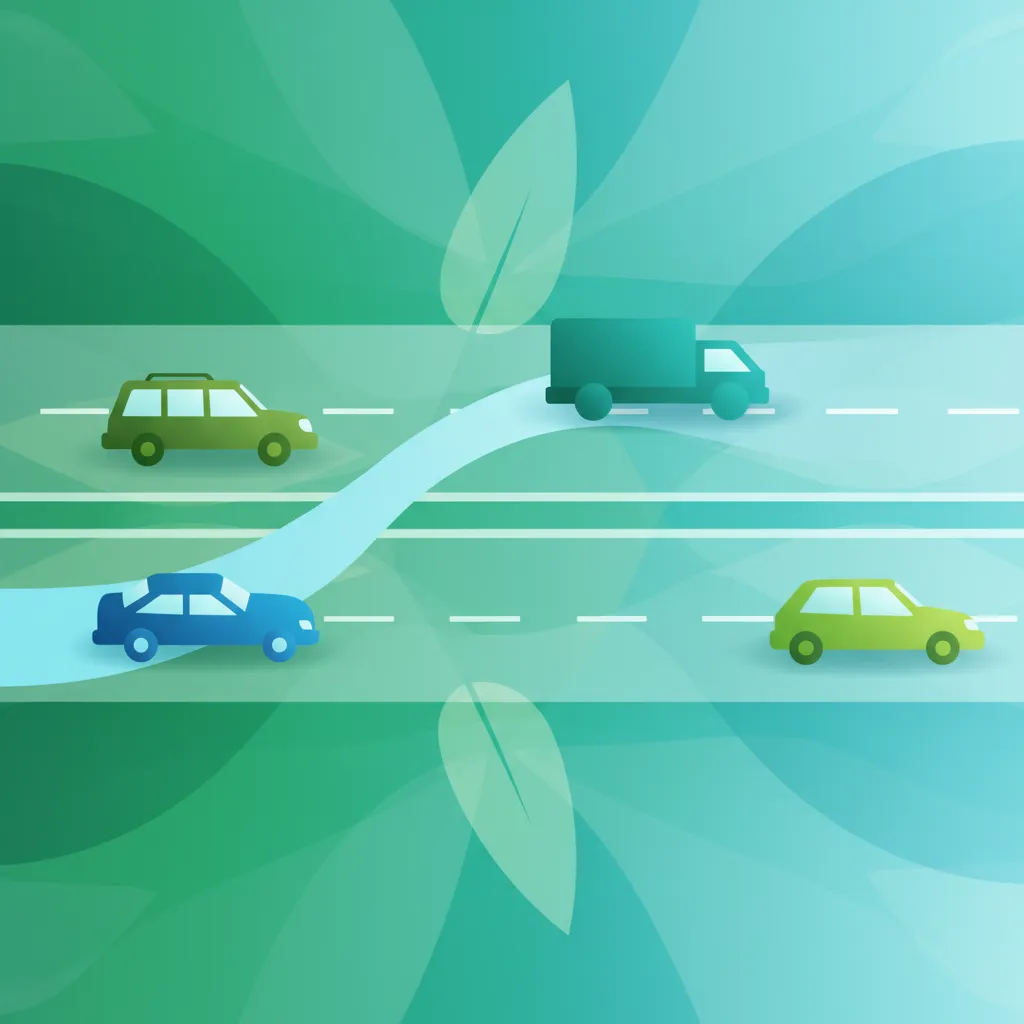
This lesson covers the critical maneuvers of merging and changing lanes. You will learn the correct technique for using an acceleration lane to match the speed of motorway traffic before merging smoothly and safely. The lesson emphasizes the importance of checking mirrors and the blind spot, signaling in good time, and applying the 'zipper principle' (dragkedjeprincipen) where lanes merge to ensure efficient and courteous traffic flow.
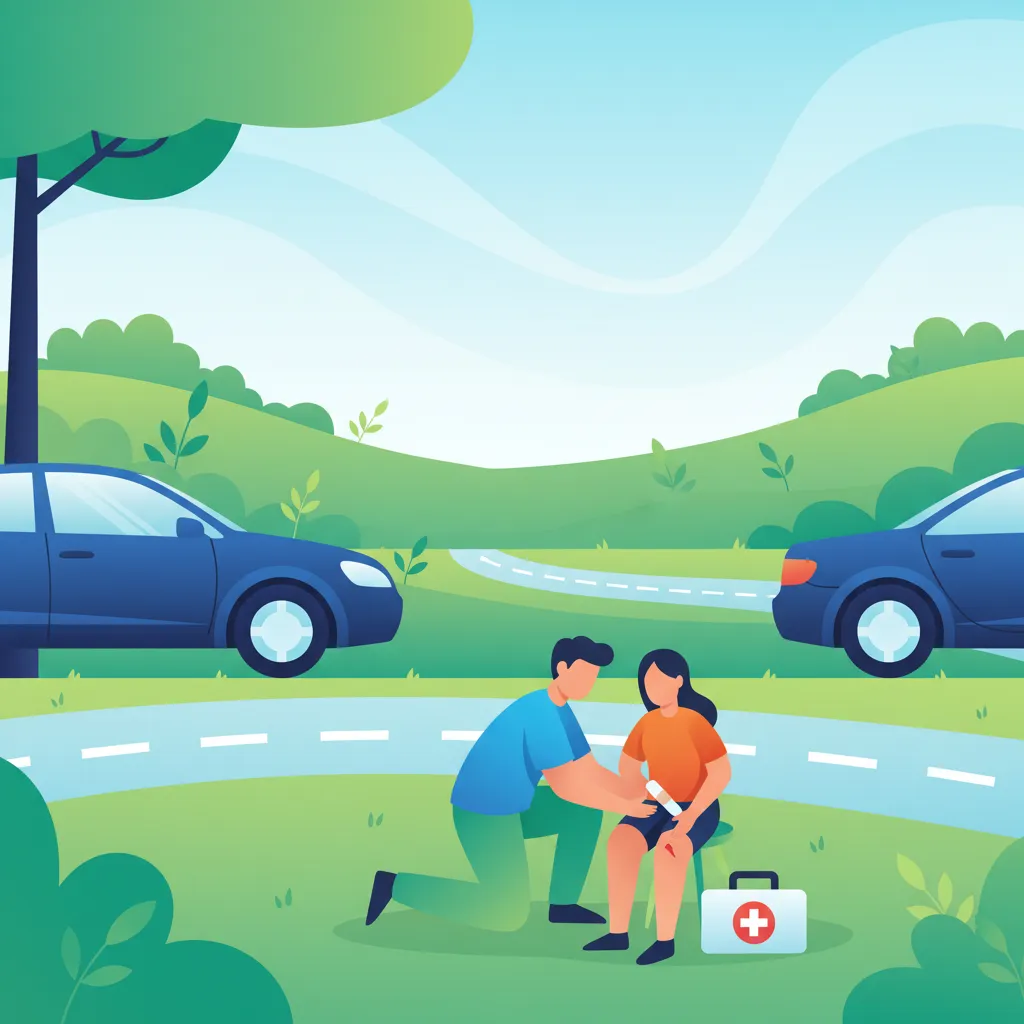
This lesson covers the basics of providing first aid in an emergency, which is a legal duty for anyone arriving at an accident scene. You will be introduced to the L-ABCDE mnemonic (Life-threatening situation, Airway, Breathing, Circulation, Disability, Exposure) as a way to systematically assess and prioritize injuries. The content emphasizes that the most important role is often to ensure the person is breathing and to follow the instructions of the emergency operator until professional help arrives.
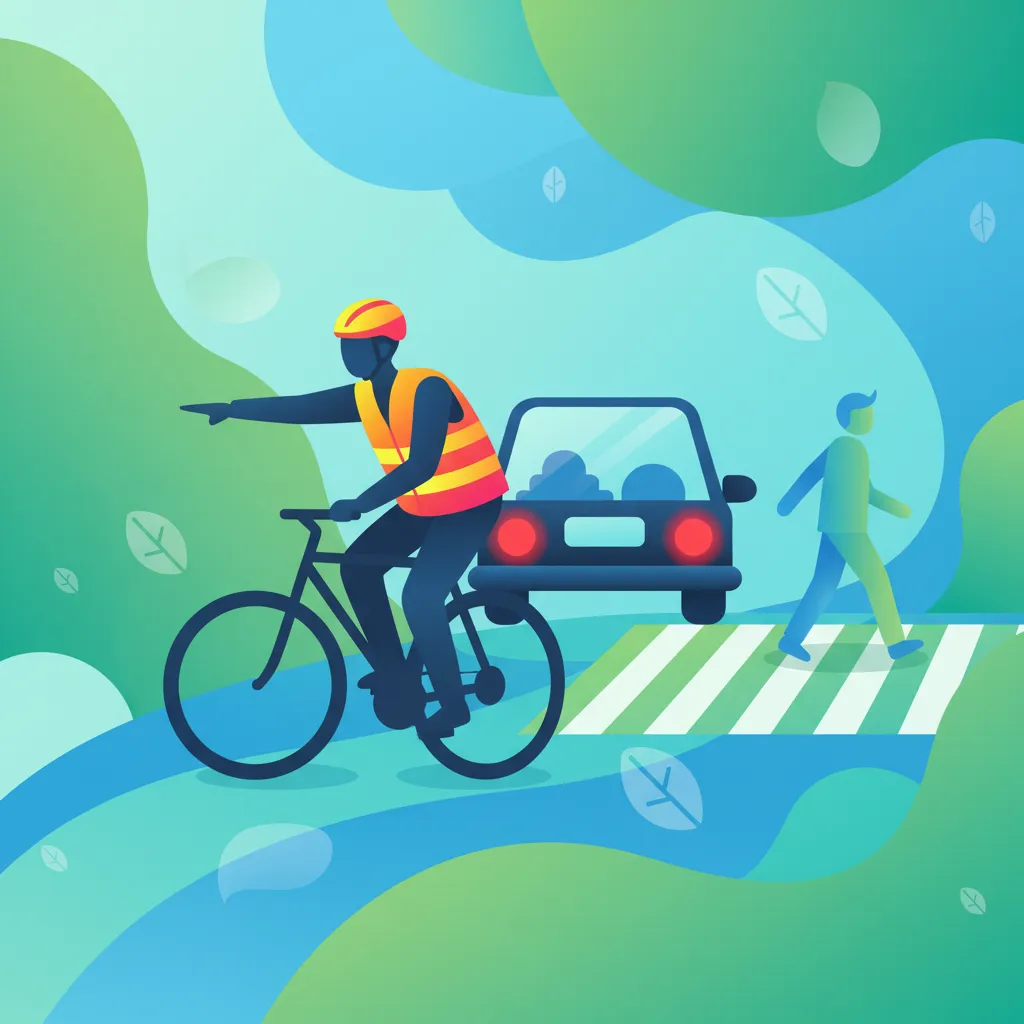
This lesson teaches you how to make an accident scene as safe as possible for yourself, any other involved parties, and approaching traffic. You will learn the correct use of hazard lights, the placement of warning triangles, and the importance of wearing a high-visibility vest. The content also covers how to identify and manage immediate post-crash hazards, such as spilled fuel or unstable vehicles, to prevent the situation from worsening.
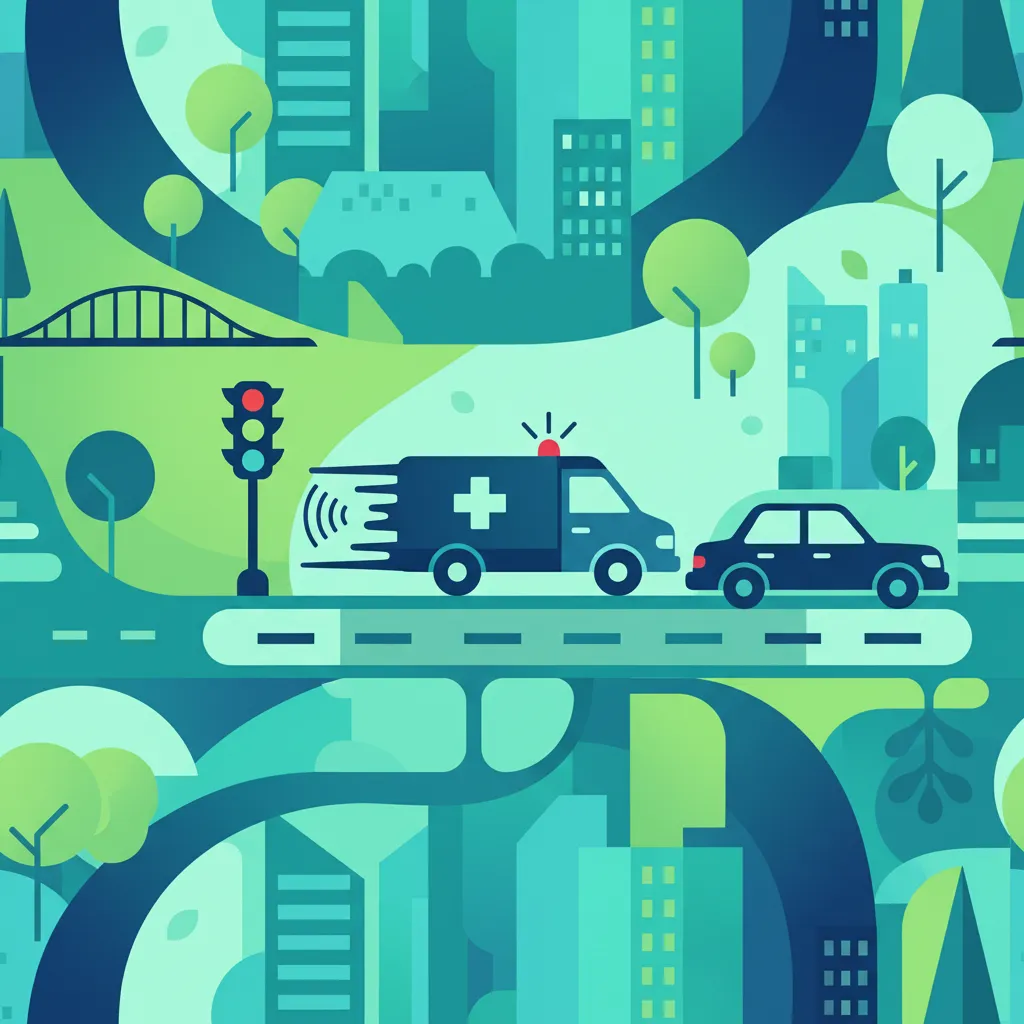
This lesson provides clear instructions on the correct response to an approaching emergency vehicle with its sirens and lights active. You will learn your absolute duty to give way and the best methods for doing so, which typically involve pulling over to the right and stopping. The lesson stresses the importance of acting calmly and predictably, avoiding sudden braking or swerving that could endanger the emergency vehicle or other traffic.

This lesson covers the essential topic of communication in traffic using the vehicle's built-in signaling devices. You will learn the rules for using your turn indicators (körriktningsvisare) in good time before turning or changing lanes. The content also explains the proper use of hazard lights (varningsblinkers) in emergency situations and the very limited, specific circumstances in which using the horn (ljudsignal) is permitted to avert immediate danger.
Learn the critical theory behind securing an accident scene to prevent further hazards. This includes using hazard lights effectively, deploying warning triangles correctly, and taking other preventative safety measures as required by Swedish traffic law.
This lesson teaches you how to make an accident scene as safe as possible for yourself, any other involved parties, and approaching traffic. You will learn the correct use of hazard lights, the placement of warning triangles, and the importance of wearing a high-visibility vest. The content also covers how to identify and manage immediate post-crash hazards, such as spilled fuel or unstable vehicles, to prevent the situation from worsening.
This lesson focuses on the correct use of warning devices to protect an accident or breakdown scene. You will learn to immediately activate your hazard lights (varningsblinkers). The main focus is on the proper placement of the warning triangle, explaining how the distance from the vehicle must be adapted based on the road's speed limit and visibility to give oncoming drivers adequate time to react.
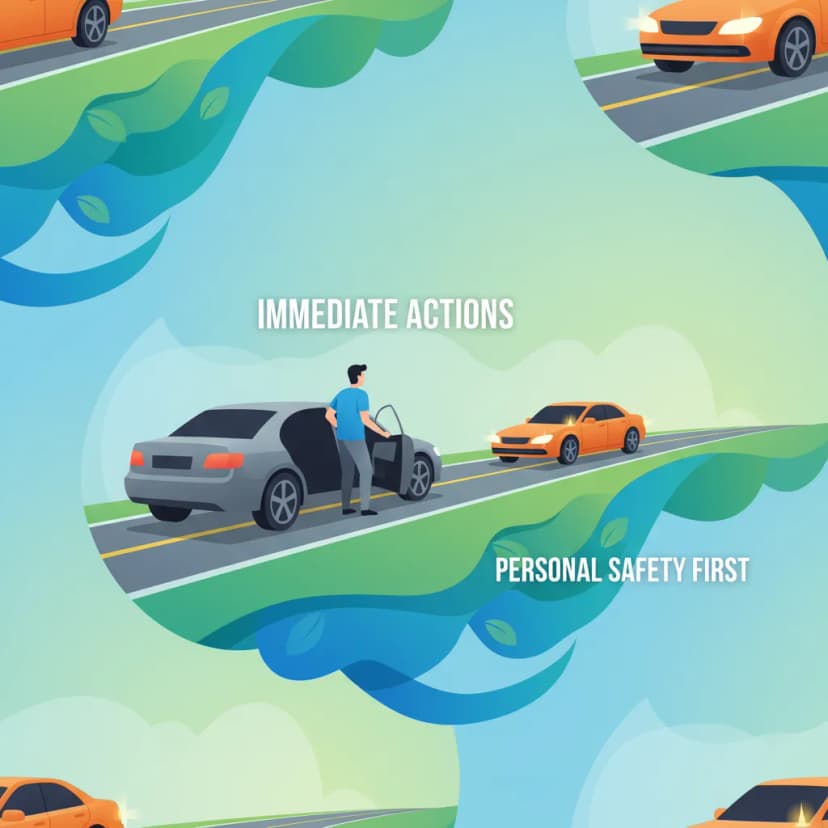
This lesson outlines the absolute first priorities after a crash, with the primary rule being to ensure your own safety and avoid further harm. You will learn how to conduct a quick self-assessment for injuries, the importance of moving out of the line of traffic if possible, and how to begin assessing the scene for immediate dangers like fuel leaks or oncoming vehicles. These initial actions are vital for managing the immediate aftermath of an incident.

This lesson provides a clear, step-by-step guide for what to do in the immediate aftermath of a collision. It prioritizes safety by explaining how to secure the scene to prevent further incidents. The content covers the importance of checking for injuries, calling for emergency help if needed, and remaining calm while fulfilling initial legal obligations.
This lesson covers the basics of providing first aid in an emergency, which is a legal duty for anyone arriving at an accident scene. You will be introduced to the L-ABCDE mnemonic (Life-threatening situation, Airway, Breathing, Circulation, Disability, Exposure) as a way to systematically assess and prioritize injuries. The content emphasizes that the most important role is often to ensure the person is breathing and to follow the instructions of the emergency operator until professional help arrives.
This lesson covers the administrative and legal obligations following a collision. You will learn under which circumstances you are legally required to notify the police, such as when there are injuries or significant property damage. The content details the essential information that must be exchanged between all involved parties—names, contact details, vehicle registration, and insurance information—and the importance of documenting the scene and gathering witness details for insurance claims.
This lesson provides a safety protocol for dealing with a vehicle breakdown. You will learn the importance of trying to move the vehicle as far off the road as possible, preferably onto the shoulder or into an emergency lay-by. The lesson stresses that on high-traffic roads, the occupants' personal safety is the top priority; this involves wearing a reflective vest and waiting for assistance in a safe location away from the vehicle and the flow of traffic.
This lesson details the procedural and legal steps for reporting an accident. You will learn when you are legally obligated to report a crash to the police, what information to exchange with other involved parties, and the importance of documenting the scene with photographs and witness details. This information is vital for ensuring any subsequent insurance claims and legal proceedings are handled smoothly and fairly.
This lesson focuses on the high level of caution required when driving in residential areas. You will learn about the rules for special zones like 'gångfartsområde' (walking speed area) and the need to navigate around speed calming measures like speed bumps. The central theme is anticipating unpredictable behavior from residents, especially children, and managing the risks posed by parked cars that severely limit visibility.
This lesson provides clear instructions on the correct response to an approaching emergency vehicle with its sirens and lights active. You will learn your absolute duty to give way and the best methods for doing so, which typically involve pulling over to the right and stopping. The lesson stresses the importance of acting calmly and predictably, avoiding sudden braking or swerving that could endanger the emergency vehicle or other traffic.
Find clear answers to common questions learners have about Immediate Actions After a Collision. Learn how the lesson is structured, which driving theory objectives it supports, and how it fits into the overall learning path of units and curriculum progression in Sweden. These explanations help you understand key concepts, lesson flow, and exam focused study goals.
The absolute first priority is to stop your vehicle safely. Do not leave the scene. Once stopped, assess if anyone is injured and if there is any immediate danger, such as fire. Only then proceed to secure the scene and alert others.
You should switch on your hazard warning lights immediately after stopping at an accident scene to alert other road users to the danger ahead. This applies whether you are involved in the collision or are the first to arrive.
In Sweden, the warning triangle should be placed at a sufficient distance to warn approaching traffic in good time. On rural roads and motorways, this typically means at least 100 meters behind the accident. In urban areas, a shorter distance may suffice, but always ensure it's visible from far enough away.
Yes, it is a crucial safety step to switch off the engine of all involved vehicles, especially if there is a risk of fire or fuel leakage. This helps to prevent ignition and further hazards at the accident scene.
If you are the first on the scene of an accident and no one else is taking charge, you have a responsibility to act. Follow the 'stop, survey, secure' procedure: stop safely, survey for injuries and dangers, and secure the scene by warning other traffic and taking basic safety precautions.
Yes, the theory test often includes scenarios testing your knowledge of the correct order of actions after a collision. The sequence of stopping, surveying the situation and checking for injuries, and then securing the scene with hazard lights and a warning triangle is key.