
Following a motorcycle accident, immediate actions are critical to ensure everyone's safety and prevent further incidents. This lesson, part of the 'Accident Response & Roadside Safety' unit in the Swedish Motorcycle Theory Course, teaches you vital skills for securing the scene, signaling approaching traffic, and managing immediate hazards. Mastering these steps is essential for both your theory exam and real-world response.
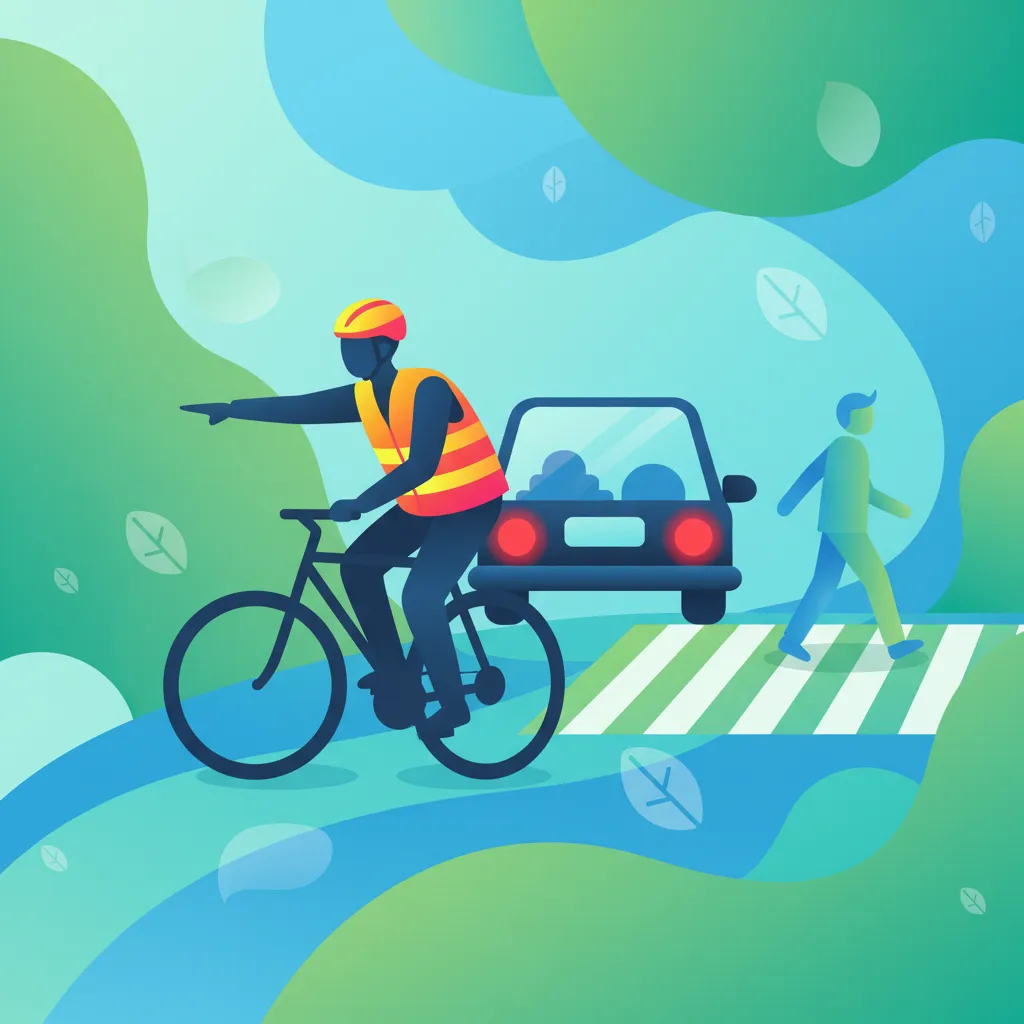
Navigating the roads safely is paramount, but understanding how to react when an accident occurs is equally vital. This lesson, part of your Swedish Motorcycle Theory Course, provides crucial knowledge on securing an accident scene, signaling approaching traffic, and managing immediate hazards. Taking appropriate actions after a collision can prevent further incidents, protect those involved, and facilitate the arrival of emergency services. Swedish traffic law, particularly the Trafikförordningen (Road Traffic Ordinance), places explicit obligations on drivers to ensure scene safety.
After any traffic incident, your immediate priority, once personal safety and injuries are assessed (as covered in Lesson 10.1, "Immediate Post-Collision Actions and Personal Safety"), shifts to securing the scene. This systematic process reduces the risk of secondary collisions, which are often more severe than the initial crash. By making the incident visible, physically protecting the crash site, and neutralizing potential dangers, you safeguard yourself, other involved parties, and approaching road users.
The underlying logic for scene security is rooted in safety physics and risk management. Enhanced visibility, achieved through lights, reflective materials, and bright colors, significantly extends the detection range for other road users. This increased visibility provides crucial extra reaction time, aligning with the perception-reaction time model. Furthermore, promptly identifying and addressing hazards like fuel spills or unstable vehicles prevents the situation from escalating into fires or additional crashes. Legally, adherence to these procedures is mandated to minimize traffic disruption and protect public safety, making compliance a legal necessity in Sweden. This lesson builds directly on your knowledge of protective equipment from Lesson 9 and reinforces hazard perception skills learned in Unit 5.
Effective accident scene management hinges on several core principles designed to minimize harm and ensure efficiency. Understanding these principles will guide your actions and decisions in a high-stress environment.
The use of flashing hazard lights, warning triangles, and high-visibility clothing to make a stopped vehicle and its occupants conspicuous to other road users. This principle aims to extend the detection distance, giving approaching drivers more time to react and avoid the scene.
Visibility Maximisation is your primary tool for preventing secondary accidents. By making the crash site and anyone operating within it as visible as possible, you provide crucial advanced warning to approaching traffic. This directly translates into extended detection distances and greater reaction time for other drivers. Failure to maximize visibility significantly narrows this reaction window, drastically increasing the risk of further collisions.
The process of identifying and controlling secondary dangers at a crash site, such as fuel spills, fire risks, unstable vehicles, or road debris. The goal is to prevent the escalation of the incident and protect both involved parties and emergency responders.
Hazard Containment involves a quick and thorough assessment of immediate post-crash dangers. This includes checking for spilled fuel or oil, which can lead to fires or slippery road surfaces, and ensuring that damaged vehicles are stable and won't roll or shift unpredictably. Effective containment prevents the situation from worsening and creates a safer environment for rescue and recovery efforts.
Creating a safety perimeter around the crash site and actively signaling to approaching traffic to guide them safely around the obstruction. This helps maintain orderly traffic flow, reduces the speed of oncoming vehicles, and clearly communicates avoidance routes.
Traffic Flow Management is critical for both safety and minimizing disruption. By establishing a clear buffer zone around the incident and using appropriate signals, you can direct traffic away from the danger zone. This action reduces the likelihood of vehicles entering the hazardous area, protecting both the crash participants and other road users.
Adherence to specific Swedish traffic regulations, such as those found in Trafikförordningen, concerning post-collision duties. This ensures a standardized response across all road users and carries legal consequences for non-compliance.
Legal Compliance ensures that all drivers understand and follow a common set of actions, creating predictable behavior in unpredictable situations. Swedish law explicitly obliges drivers to undertake specific scene-securing actions, and non-compliance can lead to fines and legal liability.
The immediate assessment of personal safety, occupant injuries, and passenger conditions before undertaking scene-securing actions. This fundamental principle ensures that injured persons receive timely care, with scene security actions secondary to addressing severe injuries and calling emergency services.
Prioritization of Human Life is the overarching principle. Before any scene-securing actions are taken, you must first ensure your own safety and assess the condition of anyone involved. If severe injuries are present, calling for emergency medical services (EMS) and administering first aid takes precedence. A safe scene is one where aid can be rendered effectively.
Every driver in Sweden, including motorcyclists, is required to carry specific safety equipment designed for post-collision scenarios. Knowing how and when to use these items is non-negotiable for scene security.
Hazard warning lights, or varningsblinkers, are flashing amber lights on your vehicle designed to indicate that it is stopped and poses a danger to other road users. These lights are a critical first step in making an accident scene visible.
Activate your hazard warning lights immediately after stopping, regardless of whether your engine is running. Swedish law (Trafikförordningen § 24) obliges drivers to use these lights whenever a vehicle is stopped on the road and endangers traffic.
For motorcyclists, many modern bikes are equipped with standard hazard lamps activated via a dashboard switch. Some also feature additional rear flashing LED units, often referred to as "emergency flashers," which significantly enhance rear visibility. Do not assume these lights are only necessary on highways; they are required on any public road where your stopped vehicle creates a hazard. Timely activation is key: delaying this action, even by a few seconds, can significantly reduce the reaction window for approaching drivers.
A varningstriangel is a reflective orange-red triangular sign that must be placed on the road to warn other drivers of a stationary vehicle or obstruction. This physical warning provides a crucial visual cue at a distance.
While cars are typically required to carry a standard 80 cm side-length triangle, motorcyclists are allowed to carry a more compact 60 cm version. The effectiveness of the warning triangle hinges on its correct placement distance from the incident, which is determined by the road's speed limit.
Urban roads (≤ 50 km/h): Place the triangle a minimum of 30 metres behind the vehicle.
Rural roads (50–70 km/h): Place the triangle a minimum of 50 metres behind the vehicle.
Motorways & high-speed roads (≤ 90 km/h): Place the triangle a minimum of 100 metres behind the vehicle.
Motorways & very high-speed roads (> 90 km/h): Place the triangle a minimum of 150 metres behind the vehicle.
It is a common misunderstanding to place the triangle too close to the vehicle or, incorrectly, in front of it. Both errors drastically reduce its effectiveness. If the incident occurs on a curve, place the triangle on the outside of the curve where it becomes visible earliest to oncoming traffic, rather than on the inside where it would be obscured. In adverse weather conditions like heavy rain or fog, it is prudent to increase these minimum distances by at least 50% to compensate for reduced visibility.
A reflekterande väst is a fluorescent orange or yellow vest with reflective tape, designed to be worn over clothing to significantly increase the wearer's visibility. This piece of equipment is paramount for your personal safety when you exit a vehicle on a public road.
Trafikförordningen § 33 mandates that any person leaving a stopped vehicle on a public road must wear a high-visibility reflective vest, unless the vehicle is in a safe, well-lit location. This applies to both drivers and passengers. For motorcyclists, the Swedish Transport Agency (Transportstyrelsen) specifically requires carrying and using a vest when stopped after a crash, regardless of speed.
The vest dramatically improves your conspicuity, especially in low-light conditions, at night, or in adverse weather such as fog or heavy rain. Even on seemingly well-lit urban roads, the vest adds an extra layer of protection by clearly delineating your silhouette against the background. Never assume the vest is optional just because your vehicle's hazard lights are on; the law makes it mandatory for personal safety regardless of vehicle lighting. Using a damaged or non-reflective vest provides inadequate protection and is considered non-compliant.
Beyond signaling your presence, a critical aspect of scene security is the rapid identification and mitigation of any immediate dangers that could worsen the situation. These immediate post-crash hazards include a range of risks from fire to unstable vehicles.
Fuel leaks pose a significant threat due to the risk of fire or explosion and by creating slippery surfaces that could cause further accidents. Fuel spill management involves quick actions to contain the spill and eliminate ignition sources.
Categories of Hazards:
Turn off the engine: Immediately switch off your vehicle's engine to prevent sparks and reduce heat.
Remove ignition sources: Do not smoke or allow anyone else to smoke near the spill. Avoid using mobile phones directly adjacent to a significant leak, as they can sometimes generate a small spark.
Contain the spill: If available, use absorbent material like sand, earth, or commercial absorbent pads to soak up the fuel. Create small containment barriers with sandbags or even a spare tire to prevent the spread of the liquid.
DO NOT use water on fuel fires: Water can spread fuel, making the fire worse. If a small fire starts, try to smother it with sand, earth, or a fire-extinguishing blanket if safe to do so.
Your implied duty of care under Swedish traffic law requires taking reasonable steps to prevent further danger. Ignoring a significant fuel leak could be deemed negligent.
An unstable vehicle position refers to situations where a stopped vehicle, due to damage, gradient, or load shift, is at risk of unintended movement. This can include a vehicle on a steep slope, one with a broken suspension, or even a heavily loaded truck where the load has shifted.
Risk Factors for Vehicle Instability:
If your vehicle is unstable, you must take immediate action. Engage the handbrake securely. If on a gradient, place wheel chocks (devices placed against a wheel to prevent movement) under the wheels. If it can be done safely and without endangering occupants, repositioning the vehicle to a level area might be necessary before proceeding with other scene-securing actions. Always prioritize safety over strict adherence to leaving the vehicle exactly as it landed; if moving it reduces immediate danger, it is permissible.
Beyond fuel and unstable vehicles, other forms of obstructive debris can pose significant hazards. Broken glass, vehicle parts, or spilled cargo can damage tires of approaching vehicles, cause motorcyclists to lose control, or injure pedestrians. Electrical hazards from exposed wiring or leaking battery acid also present risks.
After ensuring your safety, briefly assess the immediate vicinity of the crash for such debris. If it can be safely moved without risking personal injury or further damage, clear smaller items from the main traffic lanes. For larger or hazardous debris, it's best to contain it or wait for emergency services to handle it, but always warn approaching traffic of its presence.
Once initial hazards are managed and warnings are deployed, active traffic flow management becomes crucial. This involves establishing a clear safety zone around the incident and actively signaling to guide traffic safely.
A safety perimeter is a designated buffer zone around the crash site where traffic is restricted or re-routed. Its purpose is to create a secure area for crash victims, first responders, and individuals securing the scene, while also guiding approaching vehicles away from the immediate danger.
Key Elements of a Safety Perimeter:
The person establishing this perimeter, ideally wearing a high-visibility vest, should position themselves in a clearly visible spot, ensuring they are safe from traffic but can still effectively signal.
Direct communication with approaching drivers, primarily through standardized hand signals, is a highly effective way to manage traffic flow around an accident scene.
Standard Swedish Hand Signals:
These signals must be performed clearly and consistently. For motorcyclists, the use of emergency flashers (additional flashing rear LED units) in conjunction with standard hazard lights further enhances visibility, especially from the rear. Remember that any person managing traffic must be wearing a reflective vest to maximize their own visibility and safety.
Swedish law places a clear responsibility on drivers to act appropriately after an accident. Compliance with these regulations is not only about avoiding penalties but primarily about ensuring public safety.
The Trafikförordningen is the primary legal text governing road traffic in Sweden. Several sections directly pertain to accident response and scene security:
Beyond these explicit rules, a General Duty of Care, implied in other sections of the Trafikförordningen (e.g., §§ 3-6), obliges drivers to take all reasonable steps to prevent further danger. This includes actions like containing fuel spills or preventing a vehicle from rolling, even if not explicitly detailed in a specific clause.
Motorcyclists, as vulnerable road users, have additional considerations. The Körkortsboken, Chapter 9 (Protective Equipment), published by Transportstyrelsen (the Swedish Transport Agency), specifically states that motorcyclists must carry a reflective vest and use it when stopped after a crash, regardless of the speed or location. This emphasizes the heightened risk motorcyclists face and the critical importance of maximum visibility for them. Their smaller profile means a reflective vest and effective hazard lighting (including any additional rear LED units) are even more vital for preventing a secondary collision.
The general rules for scene security must be adapted to varying conditions and circumstances. What might be sufficient on a clear day in an urban area may be entirely inadequate on a foggy night on a motorway.
| Condition | Variation in Principle / Rule | Reasoning |
|---|---|---|
| Nighttime / Low Visibility | Mandatory use of both hazard lights and high-visibility vest, even if the vehicle is on a seemingly well-lit road. Furthermore, consider increasing warning triangle distances. | Human visual acuity drops dramatically at night; reflective surfaces and flashing lights are essential to extend detection distances. |
| Heavy Rain / Fog | Increase minimum warning triangle distance by at least 50% (e.g., 45m instead of 30m on urban roads). Hand signals should be more pronounced. | Water droplets and fog scatter light, significantly reducing visibility. A larger buffer gives approaching drivers more time to perceive and react to the hazard. |
| Motorway vs. Urban Road | Warning triangle distances are significantly longer on motorways (100m or 150m). Safety perimeters for motorized traffic should be at least 20m, often more. | Higher approach speeds on motorways demand earlier warnings and much larger buffer zones to allow for adequate stopping distances. |
| Steep Gradient | Engage the handbrake and place wheel chocks under wheels immediately. If safe, try to reposition the vehicle to level ground before placing the triangle. | Prevents the vehicle from rolling unintentionally into traffic or further down the slope, which could cause additional accidents. |
| Motorcycle Accident | Utilize any specific motorcycle emergency flashers (rear LED units) in addition to standard hazard lights. A compact 60cm warning triangle is allowed. The rider must put on a vest as soon as they dismount the bike. | Motorcycles are less visible than cars; their small profile makes the vest and enhanced flashing lights critical for rider safety and scene visibility. |
| Presence of Vulnerable Road Users (Pedestrians, Cyclists) | Minimum safety perimeter increased to 15m for areas with pedestrians/cyclists. Hand signals must be very clear and visible from multiple angles, as vulnerable users may have slower reaction times and different traffic expectations. | Vulnerable users are at higher risk in accident zones due to lack of protection and potentially less awareness of fast-moving traffic. |
| Vehicle with Automatic Emergency Lighting | The driver must still verify that the automatic system has activated correctly. If it has not, manually engage the hazard lights without delay. | Automatic systems can fail or not activate in all types of collisions. Manual verification ensures compliance and safety. |
| Emergency Services Already On Scene | If police, fire, or ambulance services are present, follow their instructions regarding triangle placement and traffic management. They may adjust standard procedures to prioritize emergency access or specific hazard mitigation. | Emergency responders are trained for complex scene management and may have specialized equipment or tactics that override standard procedures. |
| Load Shift / Trailer Detachment | If towing a trailer, check its stability. If detached, secure the trailer with wheel chocks and place an additional warning triangle for the trailer itself, if it remains a separate obstruction. | Detached or unstable trailers pose unique and significant hazards, potentially moving into traffic or tipping over. |
| Cold Weather (Icing/Snow) | Ensure the warning triangle and wheel chocks are placed on stable ground, possibly clearing snow or using sand/grit to prevent slipping. Verify the reflective material of your vest is not obscured by snow or outer layers. | Ice reduces friction, making objects unstable. Snow significantly compromises visibility, and reflective materials need to be exposed to be effective. |
Understanding the rules is one thing; applying them in a dynamic, stressful situation is another. These scenarios illustrate how to implement scene security protocols effectively.
Setting: You are riding your motorcycle and collide at a traffic light in an urban area. Both vehicles are stopped on a wet intersection, and visibility is low due to heavy rain.
Correct Behavior:
Incorrect Behavior: You leave your hazard lights off, thinking the streetlights are enough. You don't put on your vest. You place your triangle only 5 meters behind your bike, obscured by the rain. A car approaching from behind fails to see your stopped motorcycle in time and rear-ends it, causing a secondary collision and further injuries.
Setting: You are driving a car on a two-lane rural road with a 70 km/h speed limit. You are involved in a crash, and a strong smell of fuel indicates a leak from your vehicle, which has come to rest on a slight 5% gradient.
Correct Behavior:
Incorrect Behavior: You don't secure the wheels, assuming the handbrake is enough, but the vehicle starts to roll slowly into the lane. You remove the fuel cap to inspect the leak more closely, accidentally causing a spark that ignites the spilled fuel. You don't place a triangle, leaving approaching drivers unaware of the immediate danger until they are very close.
Setting: You are driving your motorcycle on the hard shoulder of a motorway (speed limit 110 km/h) after a mechanical failure. It is dark.
Correct Behavior:
Incorrect Behavior: You place the warning triangle too close to your motorcycle (e.g., 50 meters), or even worse, directly in the emergency lane, blocking potential access for emergency vehicles. You decide not to wear your vest because you're "only" on the shoulder, making you nearly invisible to high-speed traffic in the dark.
Effective scene security is a sequence of vital actions designed to mitigate risk and protect lives. As a motorcyclist in Sweden, you are legally and morally obligated to understand and apply these principles.
By meticulously following these steps, you maximize detection distance, significantly reduce the probability of secondary collisions, prevent fires or explosions, and create a safer environment for emergency responders to provide assistance. Your preparedness can make a critical difference in the outcome of an accident.
Lesson content overview
Explore all units and lessons included in this driving theory course.
Explore search topics learners often look for when studying Securing the Scene, Signaling, and Hazard Management. These topics reflect common questions about road rules, driving situations, safety guidance, and lesson level theory preparation for learners in Sweden.
Browse additional driving theory lessons that cover connected traffic rules, road signs, and common driving situations related to this topic. Improve your understanding of how different rules interact across everyday traffic scenarios.
Learn advanced techniques for identifying and managing specific hazards at accident scenes, including fuel spills, unstable vehicles, and ensuring rider visibility. This lesson focuses on proactive risk mitigation to prevent secondary incidents.
This lesson outlines the absolute first priorities after a crash, with the primary rule being to ensure your own safety and avoid further harm. You will learn how to conduct a quick self-assessment for injuries, the importance of moving out of the line of traffic if possible, and how to begin assessing the scene for immediate dangers like fuel leaks or oncoming vehicles. These initial actions are vital for managing the immediate aftermath of an incident.
This lesson provides crucial, basic first aid knowledge tailored to the types of injuries common in motorcycle accidents. You will learn the L-ABC (Läge, Andning, Blödning, Chock) protocol for assessing a casualty. The content covers how to control severe bleeding, how to treat for shock, and the critical rule of when and why you should not remove a rider's helmet unless absolutely necessary to maintain an airway, enabling you to provide effective help until professionals arrive.
This lesson provides practical techniques for dealing with unavoidable road surface hazards. You will learn how to approach and cross obstacles like potholes, manhole covers, and patches of debris with minimal disruption to the motorcycle's stability. The content covers adjusting your speed, choosing the best line, and using your body to absorb impacts, helping you navigate the imperfections of real-world roads safely.

This lesson provides an introduction to basic first-aid principles that can be applied at the scene of an accident. It covers critical actions such as assessing a casualty's consciousness, checking for breathing, and controlling severe bleeding. The content also addresses the important question of when and how to safely remove a helmet from an injured rider.
This final lesson addresses the longer-term aftermath of an accident. You will learn about the importance of having your motorcycle professionally inspected for hidden damage before riding it again. The content also touches on the psychological aspects of recovery, offering advice on how to regain confidence, and covers the final steps in the legal and insurance processes, ensuring you have a clear understanding of the entire post-accident journey.

This lesson details the procedural and legal steps for reporting an accident. You will learn when you are legally obligated to report a crash to the police, what information to exchange with other involved parties, and the importance of documenting the scene with photographs and witness details. This information is vital for ensuring any subsequent insurance claims and legal proceedings are handled smoothly and fairly.
This lesson provides critical strategies for dealing with one of the biggest dangers in traffic: blind spots. You will learn the importance of the shoulder check and how to position yourself on the road to be more visible to other drivers. The lesson also trains you to scan the road surface ahead for hidden hazards like potholes, gravel, or oil spills that can pose a significant threat to a motorcycle's stability, teaching you to see and avoid them in time.

This lesson provides a clear, step-by-step guide for what to do in the immediate aftermath of a collision. It prioritizes safety by explaining how to secure the scene to prevent further incidents. The content covers the importance of checking for injuries, calling for emergency help if needed, and remaining calm while fulfilling initial legal obligations.

This lesson teaches you how to analyze and assess risk when sharing the road with a variety of users, from large trucks to cyclists and pedestrians. You will learn to recognize common patterns of behavior and potential conflict points, allowing you to anticipate the actions of others before they create a dangerous situation. Developing this predictive mindset is a cornerstone of defensive riding and is key to staying safe in busy, complex traffic environments.
This lesson focuses on Swedish warning signs designed to alert drivers to potential dangers. You will study signs indicating sharp bends, slippery surfaces, animal crossings, and temporary hazards like road construction. Correctly interpreting these signs allows a motorcyclist to proactively adjust speed, lane position, and readiness to react, which is essential for maintaining control and safety, especially in adverse weather or on unfamiliar roads.
Understand the crucial first steps to take immediately after a motorcycle accident. This lesson covers personal safety, securing the scene, and basic hazard management to prevent further danger and ensure a safe environment for all involved.
This lesson outlines the absolute first priorities after a crash, with the primary rule being to ensure your own safety and avoid further harm. You will learn how to conduct a quick self-assessment for injuries, the importance of moving out of the line of traffic if possible, and how to begin assessing the scene for immediate dangers like fuel leaks or oncoming vehicles. These initial actions are vital for managing the immediate aftermath of an incident.
This lesson provides a clear, step-by-step guide for what to do in the immediate aftermath of a collision. It prioritizes safety by explaining how to secure the scene to prevent further incidents. The content covers the importance of checking for injuries, calling for emergency help if needed, and remaining calm while fulfilling initial legal obligations.
This lesson outlines the immediate, high-priority actions required at an accident scene. You will learn the 'stop, survey, secure' sequence: first, stopping and assessing the situation; second, warning other traffic by using hazard lights and placing a warning triangle; and third, taking steps to prevent further danger, such as switching off ignitions. These initial actions are crucial for the safety of everyone involved and for those approaching the scene.
This lesson provides an introduction to basic first-aid principles that can be applied at the scene of an accident. It covers critical actions such as assessing a casualty's consciousness, checking for breathing, and controlling severe bleeding. The content also addresses the important question of when and how to safely remove a helmet from an injured rider.
This lesson provides crucial, basic first aid knowledge tailored to the types of injuries common in motorcycle accidents. You will learn the L-ABC (Läge, Andning, Blödning, Chock) protocol for assessing a casualty. The content covers how to control severe bleeding, how to treat for shock, and the critical rule of when and why you should not remove a rider's helmet unless absolutely necessary to maintain an airway, enabling you to provide effective help until professionals arrive.
This final lesson addresses the longer-term aftermath of an accident. You will learn about the importance of having your motorcycle professionally inspected for hidden damage before riding it again. The content also touches on the psychological aspects of recovery, offering advice on how to regain confidence, and covers the final steps in the legal and insurance processes, ensuring you have a clear understanding of the entire post-accident journey.
This lesson details the procedural and legal steps for reporting an accident. You will learn when you are legally obligated to report a crash to the police, what information to exchange with other involved parties, and the importance of documenting the scene with photographs and witness details. This information is vital for ensuring any subsequent insurance claims and legal proceedings are handled smoothly and fairly.

This lesson covers the final phase of an emergency maneuver: coming to a safe, controlled stop and moving off the road. You will learn the procedure for finding a safe spot, signaling your intentions, and securing the motorcycle. It also addresses the important steps to take after the immediate danger has passed, including checking yourself and your vehicle for damage and taking a moment to regain your composure before continuing your journey.
This lesson covers the administrative and legal obligations following a collision. You will learn under which circumstances you are legally required to notify the police, such as when there are injuries or significant property damage. The content details the essential information that must be exchanged between all involved parties—names, contact details, vehicle registration, and insurance information—and the importance of documenting the scene and gathering witness details for insurance claims.
This lesson focuses on the cognitive side of handling emergencies: seeing the threat early and making the right decision instantly. You will learn to analyze a developing hazard and quickly determine the best course of action, whether it's maximum braking, an evasive swerve, or a combination of both. This mental training is just as important as the physical skill, as the correct initial decision is the key to a successful outcome.
Find clear answers to common questions learners have about Securing the Scene, Signaling, and Hazard Management. Learn how the lesson is structured, which driving theory objectives it supports, and how it fits into the overall learning path of units and curriculum progression in Sweden. These explanations help you understand key concepts, lesson flow, and exam focused study goals.
While not always mandatory to carry on the motorcycle itself, you are required to make the accident scene safe. If you have a warning triangle from a car or can safely retrieve one, it should be placed at an appropriate distance to warn oncoming traffic according to Swedish regulations for accident sites.
In Sweden, hazard lights (varningsblinkers) on a motorcycle should be used to warn other road users of a hazard or an unexpected situation. This includes when you are stopped due to an accident, breakdown, or when managing the scene of an incident, especially in conditions of reduced visibility.
Common hazards include spilled fuel which can ignite, leaking oil making the road surface slippery, damaged vehicles that could shift or collapse, debris on the road, and the risk of being hit by oncoming traffic due to poor visibility or signalling.
Swedish guidelines suggest placing a warning triangle far enough back to give approaching drivers ample warning. For a stationary vehicle or accident scene, this distance can vary significantly based on road type and visibility, but typically ranges from 50-100 meters on rural roads and up to 200 meters on motorways. The primary goal is to provide adequate reaction time.
Your personal safety is paramount. If you are able, take immediate steps to secure the scene. If you are too injured to do so, alert others (bystanders or other involved parties) to the immediate dangers and prioritize calling for emergency services. Do not overexert yourself.