
Navigate the complexities of parking regulations with this lesson on time-limited zones and enforcement in Sweden. Building upon basic parking knowledge, this section specifically clarifies how to interpret and adhere to time restrictions, pay for parking, and understand the consequences of non-compliance. Mastering these rules is essential for both your Category B driving theory exam and everyday driving.
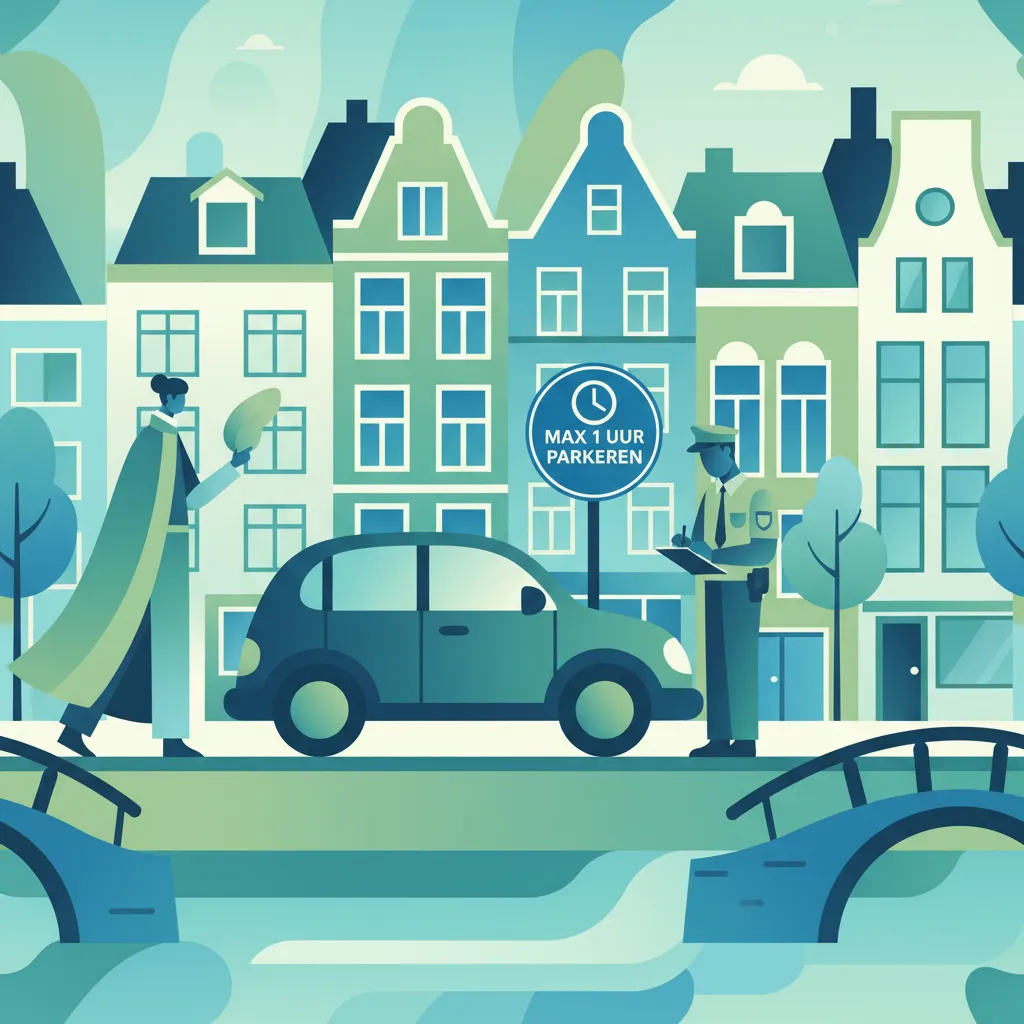
Understanding time-limited parking zones and their enforcement is crucial for any driver in Sweden. This lesson will guide you through the various systems designed to regulate parking duration and payment, ensuring smooth traffic flow and fair access to parking spaces. You will learn how to correctly use a parking disc (P-skiva), operate parking meters and mobile payment applications, and interpret specific rules like 'date parking' (datumparkering). Moreover, we will clarify the distinction between a public parking fine (parkeringsanmärkning) and a private control fee (kontrollavgift). Mastery of these concepts is essential for passing the Swedish Category B theory test and for responsible urban driving.
Time-limited parking zones are designated areas where vehicles may park only for a specified maximum period. These restrictions are put in place by municipal authorities to prevent vehicles from occupying scarce curb space for extended durations. This system promotes vehicle turnover, making it easier for more drivers to access parking throughout the day, which in turn supports local businesses and reduces traffic congestion caused by drivers searching for available spots.
These zones are typically marked by distinct traffic signs. You will often see a white "P" symbol, accompanied by a clock icon and a numerical limit, such as "2h" or "1h". This indicates that you may park for a maximum of two or one hour, respectively. It is your responsibility as a driver to accurately monitor the elapsed time and ensure your vehicle is moved before the limit expires. Failing to adhere to these time restrictions can result in a parking fine.
While a standard time limit applies uniformly to most vehicles, some zones may have specific rules:
It is a common misunderstanding to assume the time limit begins when you stop moving your vehicle. Instead, it starts from the moment you first park. In zones requiring a parking disc, the disc must be set to reflect this exact arrival time.
The parking disc, or P-skiva, is an indispensable tool for parking in many time-limited zones in Sweden. It is a physical or electronic device used to record your exact arrival time, providing verifiable proof for enforcement officers.
The most common type is a simple, circular plastic disc with a rotating center. It features 5-minute increments, allowing you to clearly indicate your arrival time.
Park Your Vehicle: Find a legal parking space within a time-limited zone.
Identify Arrival Time: Note the exact minute you stopped and parked.
Set the Disc: Rotate the disc to the precise minute of your arrival. The disc must be set to the minute of arrival or the next full 5-minute increment (e.g., if you arrive at 14:07, you can set it to 14:07 or 14:10). However, it must never be set to a time later than your actual arrival. For specific zones with very short limits (e.g., 30 minutes), some municipalities require setting it to the exact minute with no grace period.
Display Clearly: Place the disc on your dashboard, usually behind the windshield, where it is clearly visible to a parking enforcement officer from outside the vehicle.
The parking disc is solely for indicating your arrival time; it is not a payment method. If a zone requires payment (e.g., via a meter), the disc does not replace that requirement. Attempting to "cheat" the system by setting the disc to a future time will result in an immediate fine for false time indication.
Some modern vehicles come equipped with integrated digital or electronic parking discs. These often automatically detect when the vehicle has been parked and display the correct arrival time. While convenient, it's still the driver's responsibility to ensure it is functioning correctly and is clearly visible.
Beyond time limits set by parking discs, many urban areas in Sweden require payment for parking. This helps manage demand for prime locations and funds municipal services.
Traditional physical parking meters, known as P-klockor, are common in many cities. These machines dispense a ticket that serves as proof of payment and indicates the duration you have paid for.
Park Your Vehicle: Secure a spot in a designated pay-and-display zone.
Locate the Meter: Find the nearest parking meter. Signs typically indicate its presence.
Select Duration and Pay: Insert coins or use a credit/debit card to select your desired parking duration. Be mindful of any maximum parking limits displayed on the zone's signage.
Retrieve and Display Ticket: The meter will print a ticket showing your start time and the paid expiry time. Place this ticket on your dashboard, inside the windshield, where it is easily visible to a parking enforcement officer.
It is crucial that the ticket is clearly displayed. A ticket hidden under a seat or obscured by other items will not be accepted as valid proof of payment, potentially leading to a fine. You cannot reuse a ticket from a previous visit, nor does the printed time automatically update if you leave earlier than planned. If a meter is out of order, you must follow any alternative payment instructions (e.g., using a mobile app) or find alternative parking.
Many Swedish municipalities have embraced technology, allowing drivers to pay for parking conveniently using smartphone applications. Popular apps like EasyPark, Parkering360, and P-park enable remote payment and management of your parking session.
Download and Register: Install an authorized parking app and set up your account, including vehicle details and payment method.
Select Parking Zone: Upon parking, open the app and select the correct parking zone. This can often be done via a map or by manually entering a zone number found on nearby parking signs. Ensure the zone number matches the physical signage to avoid incorrect payments.
Start and Manage Session: Start your parking session in the app. The app typically records your start time automatically. You can often extend your parking session remotely from the app before it expires.
Digital Receipt: The app generates a digital receipt as proof of payment. While not always required to be physically displayed, you must be able to present it on your phone if requested by an enforcement officer.
Common misunderstandings include forgetting to actively start the session (as the app may default to inactive mode) or assuming the zone is automatically selected. In case of app technical failure, you should either pay at a physical meter (if available) or find alternative parking, as an unpaid session is not permissible.
Date parking, or datumparkering, is a specific and vital parking regulation in some Swedish municipalities, particularly in urban residential areas. It involves the temporary prohibition of parking on certain calendar dates and during specific time windows.
The primary purpose of date parking is to facilitate municipal services such as street cleaning, snow removal, and waste collection. By clearing streets during specified times, city services can operate efficiently without obstruction.
The sign for date parking typically shows a calendar date (e.g., "15 Jun") and a time window (e.g., "08:00–10:00"). This means that on the 15th of June, parking is prohibited between 8:00 AM and 10:00 AM. In some cases, the sign may indicate a recurring schedule (e.g., "Every 1st Monday of the month").
The most important aspect of date parking is that it overrides all other parking rules during the specified period. Even if you have a valid parking disc set, a paid parking ticket, or a disabled permit, parking is strictly illegal during the datumparkering window. You must move your vehicle before the prohibition period begins. Failure to do so will result in a parking fine and potentially towing of your vehicle.
It is a common mistake to assume that the date restriction applies only to the specific day shown, rather than a recurring schedule, or to confuse datumparkering with general time-limited zones. Always pay close attention to the dates and times specified on the sign.
Navigating parking regulations in Sweden also means understanding the difference between various types of penalties and who enforces them.
A parkeringsanmärkning is an administrative penalty issued by municipal traffic officers (often referred to as Trafikpoliser or Parkeringsvakter) for violations of public parking regulations on public roads. These violations include:
When a parkeringsanmärkning is issued, you will typically find a yellow ticket attached to your vehicle. The fine amount is set by the municipality, usually within a range determined by national law, and must be paid within a statutory period (commonly 21 days). Non-payment can lead to collection procedures and may result in points on your driver's record. You have the right to appeal a parkeringsanmärkning if you believe it was issued incorrectly.
A kontrollavgift is a fee levied by a private property owner or their designated parking enforcement company for unauthorized parking on private land. This applies to areas such as:
These areas are typically marked with signs indicating "Privat parkering" (Private parking) or "P-zon priv." (Private P-zone). Violations on private land are not covered by the Trafikförordning (Swedish Traffic Regulations) but are instead governed by contract law and the terms set by the private entity.
If you receive a kontrollavgift, it will usually be a notice or sticker from the private company. Payment is made directly to that company, not through municipal channels. Failure to pay a kontrollavgift can lead to debt collection by the private entity, and violations may also result in your vehicle being towed at your expense. It is crucial not to confuse a kontrollavgift with a public parkeringsanmärkning, as the legal frameworks and appeal processes differ significantly.
Correctly interpreting all relevant signs and road markings is fundamental to avoiding parking violations. Parking regulations are conveyed through a combination of signs and, sometimes, supplementary text.
Always read the entire sign, including any smaller text plates beneath the main symbol. These supplementary plates often contain crucial information about specific hours of operation, payment requirements, or exemptions. Misreading or overlooking these details is a common cause of fines. For instance, a sign might show "P 2h" but also include a plate stating "08-18 (Mon-Fri)", meaning the time limit only applies during those hours on weekdays.
Parking rules are not always static; they can vary significantly based on specific conditions and contexts. Awareness of these variations is essential for safe and lawful parking.
Parking rules also play a vital role in ensuring the safety of vulnerable road users like pedestrians and cyclists. Parking your vehicle, even within an allowed time limit, must never obstruct visibility at crosswalks, pedestrian crossings, or cycle paths. If your parked vehicle creates a hazard or impedes sightlines, you must move it, irrespective of whether your time limit has expired. This prioritizes safety over parking convenience.
Understanding frequent mistakes can help you prevent costly fines and ensure compliance with Swedish parking laws.
The complex system of time-limited zones and enforcement in Sweden is not arbitrary; it serves vital functions related to safety, efficiency, and urban planning.
Understanding the "why" behind these rules fosters greater compliance and contributes to a safer, more efficient, and more pleasant urban environment for everyone.
Lesson content overview
Explore all units and lessons included in this driving theory course.
Explore search topics learners often look for when studying Time-Limited Zones and Enforcement. These topics reflect common questions about road rules, driving situations, safety guidance, and lesson level theory preparation for learners in Sweden.
Browse additional driving theory lessons that cover connected traffic rules, road signs, and common driving situations related to this topic. Improve your understanding of how different rules interact across everyday traffic scenarios.
Understand the difference between a public parking fine (parkeringsanmärkning) and a private control fee (kontrollavgift) in Sweden. This lesson clarifies the enforcement procedures and the consequences of violating parking regulations, helping you avoid costly mistakes.
This lesson covers the general, nationwide rules that govern where you may and may not park or stop, even without specific signs. You will learn about the prohibitions on stopping near intersections, on pedestrian crossings, and at bus stops. The content clarifies the legal definitions and provides clear guidelines on maintaining safe distances and ensuring that your parked vehicle does not obstruct traffic or create a hazard.
This lesson covers parking areas that are reserved for specific purposes or permit holders. The primary focus is on spaces designated for people with disabilities, explaining the requirement of a valid permit. It also addresses other restricted areas such as residential parking zones (boendeparkering), loading zones, and areas that must be kept clear for emergency vehicles, highlighting the legal and ethical reasons for respecting these designations.
This lesson revisits the practical skills of positioning a vehicle within a designated space. It describes the characteristics of the three main parking styles: parallel (fickparkering), angled, and perpendicular. The content focuses on the conceptual steps for each maneuver, such as approach, turning points, and final positioning, reinforcing the importance of slow, controlled movements and constant observation of the surroundings.
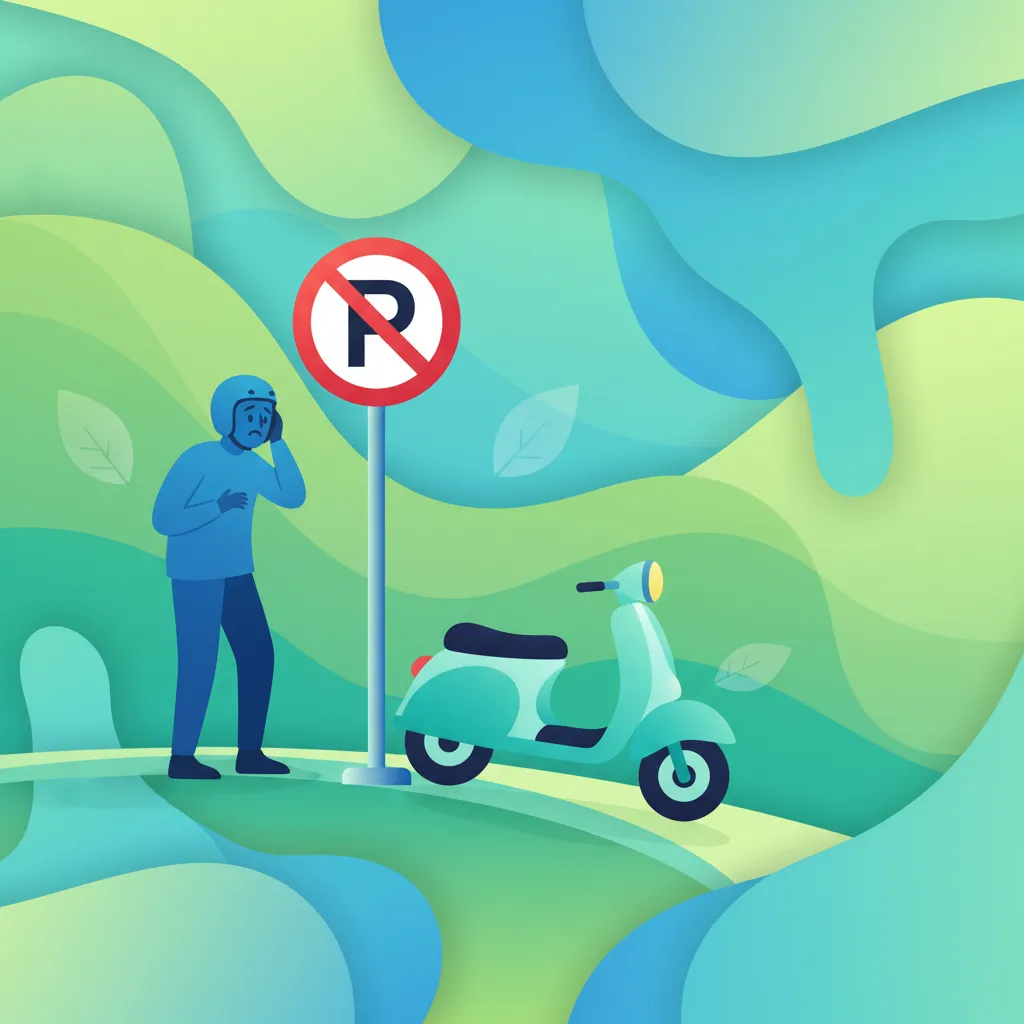
This lesson focuses on the often-confusing topic of moped parking. It covers how to interpret parking signs, including those indicating prohibitions (Parkeringsförbud), and where to find designated parking spots for two-wheelers. The content provides practical advice on where it is legal to park and how to do so without causing an obstruction, thereby avoiding fines.

This lesson provides factual information about speed limit enforcement and the penalties for violations in Sweden. You will learn about the different methods used, including automatic traffic safety cameras (ATK), mobile police patrols, and laser measurements. The content details the system of fines (penningböter) and the conditions under which a speeding offense can lead to a warning or the revocation of your driving license.
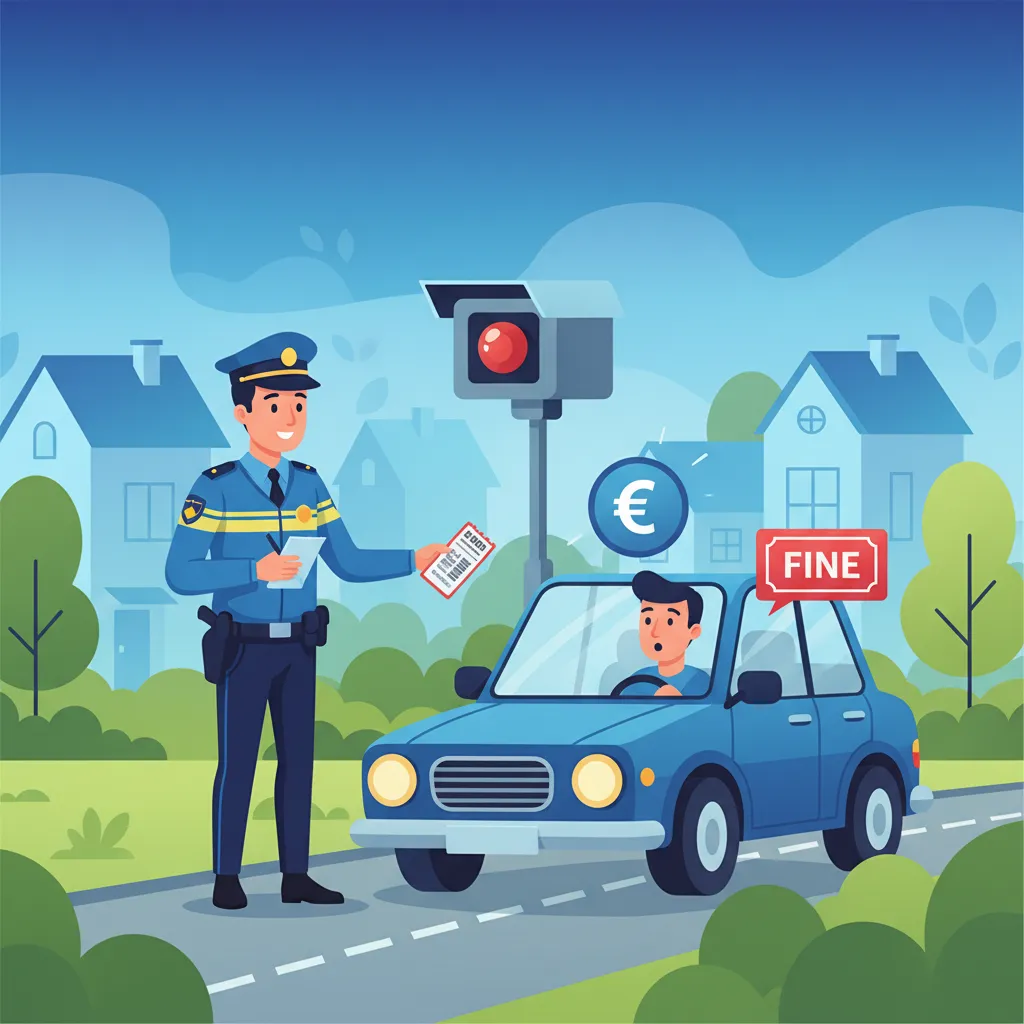
This lesson provides an overview of traffic law enforcement in Sweden, explaining the roles of the police and other authorities. You will learn about the system of penalties for common traffic violations, including the scale of fines (böter) and the conditions under which your license may be suspended. Understanding the legal consequences of unsafe or unlawful riding provides a powerful incentive to always adhere to the rules of the road.

This lesson explains the system of consequences for breaking traffic laws in Sweden. It details common violations and their associated fines and describes the demerit points system that can lead to a license suspension for repeat offenders. Understanding these consequences is a powerful incentive for riders to adhere to the rules of the road.
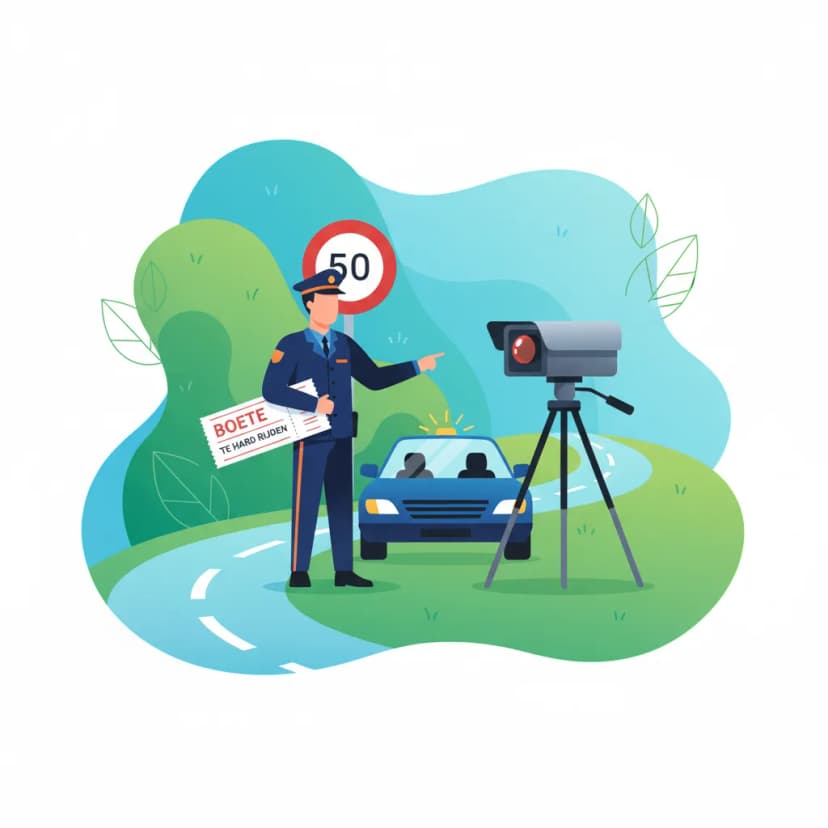
This lesson outlines the enforcement measures and penalties for speeding violations in Sweden. It explains the system of fines, how they escalate based on the severity of the offense, and the potential for receiving demerit points on a license. The content serves as a serious reminder of the legal and financial consequences of speeding, reinforcing the importance of adhering to all speed regulations.

This lesson focuses on the specific activity of stopping for the purpose of passenger embarkation/disembarkation or loading/unloading goods. You will learn that this is often permissible in areas marked with a 'no parking' sign, as long as the stop is brief and continuous. The lesson distinguishes this from a 'no stopping' zone, where any voluntary stop is prohibited, ensuring you understand the nuanced difference.
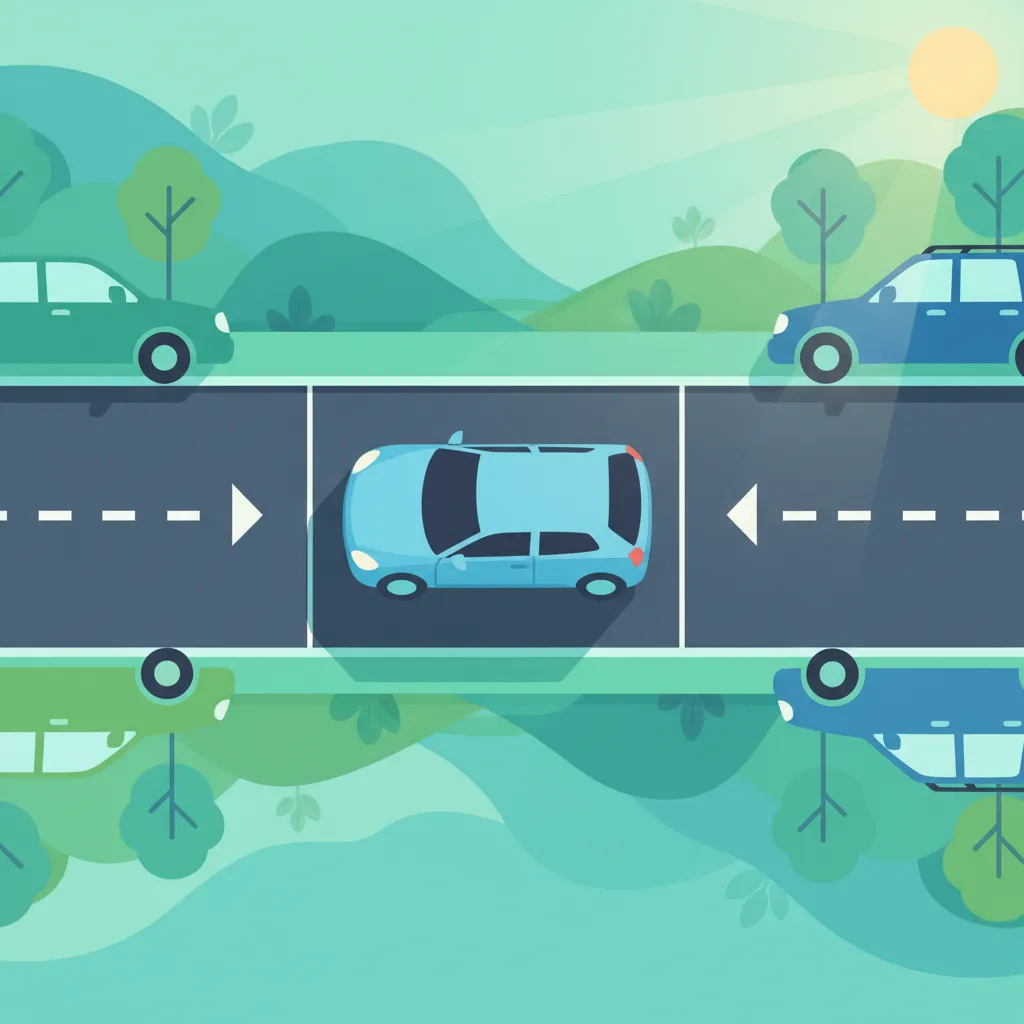
This lesson provides step-by-step instructions for performing common low-speed maneuvers, including reversing in a straight line, backing around a corner, and various types of parking. You will learn how to use reference points on your vehicle and the surroundings to position the car accurately. The paramount importance of slow speed, continuous 360-degree observation, and being prepared to stop for pedestrians or other vehicles is emphasized throughout.
Delve deeper into Swedish parking regulations beyond the basic parking disc. Learn the intricacies of 'date parking' (datumparkering) and other advanced rules that govern parking duration and payment in various Swedish urban and residential areas, ensuring compliance.
This lesson covers parking areas that are reserved for specific purposes or permit holders. The primary focus is on spaces designated for people with disabilities, explaining the requirement of a valid permit. It also addresses other restricted areas such as residential parking zones (boendeparkering), loading zones, and areas that must be kept clear for emergency vehicles, highlighting the legal and ethical reasons for respecting these designations.
This lesson covers the general, nationwide rules that govern where you may and may not park or stop, even without specific signs. You will learn about the prohibitions on stopping near intersections, on pedestrian crossings, and at bus stops. The content clarifies the legal definitions and provides clear guidelines on maintaining safe distances and ensuring that your parked vehicle does not obstruct traffic or create a hazard.
This lesson revisits the practical skills of positioning a vehicle within a designated space. It describes the characteristics of the three main parking styles: parallel (fickparkering), angled, and perpendicular. The content focuses on the conceptual steps for each maneuver, such as approach, turning points, and final positioning, reinforcing the importance of slow, controlled movements and constant observation of the surroundings.
This lesson focuses on the often-confusing topic of moped parking. It covers how to interpret parking signs, including those indicating prohibitions (Parkeringsförbud), and where to find designated parking spots for two-wheelers. The content provides practical advice on where it is legal to park and how to do so without causing an obstruction, thereby avoiding fines.
This lesson provides step-by-step instructions for performing common low-speed maneuvers, including reversing in a straight line, backing around a corner, and various types of parking. You will learn how to use reference points on your vehicle and the surroundings to position the car accurately. The paramount importance of slow speed, continuous 360-degree observation, and being prepared to stop for pedestrians or other vehicles is emphasized throughout.

This lesson clarifies the legal distinction between stopping temporarily and parking. It identifies areas where stopping is prohibited, such as near intersections or on pedestrian crossings, to maintain traffic flow and safety. The content also discusses designated waiting areas at traffic lights, often marked for cyclists and mopeds, which can offer a safer position.
This lesson focuses on the specific activity of stopping for the purpose of passenger embarkation/disembarkation or loading/unloading goods. You will learn that this is often permissible in areas marked with a 'no parking' sign, as long as the stop is brief and continuous. The lesson distinguishes this from a 'no stopping' zone, where any voluntary stop is prohibited, ensuring you understand the nuanced difference.

This lesson details a driver's responsibility towards pedestrians. You will learn the strict rule of yielding to pedestrians who are on or about to enter a marked, uncontrolled crosswalk. The content also covers the specific, highly restrictive rules for driving in designated pedestrian zones (gågata) and 'walking speed' areas (gångfartsområde), where pedestrians have complete priority and vehicle traffic is severely limited.
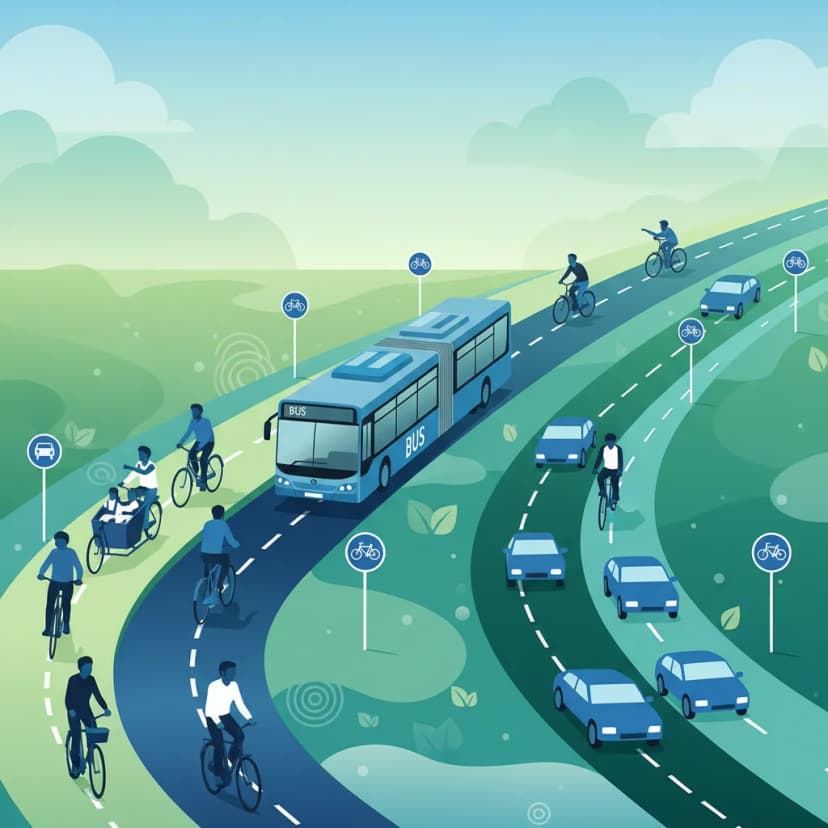
This lesson explains the specific regulations for lanes designated for particular users, such as buses or cyclists. It clarifies under what circumstances a moped is permitted to enter these lanes and the rules that must be followed while in them. Understanding these regulations is key to navigating complex urban environments legally and safely.
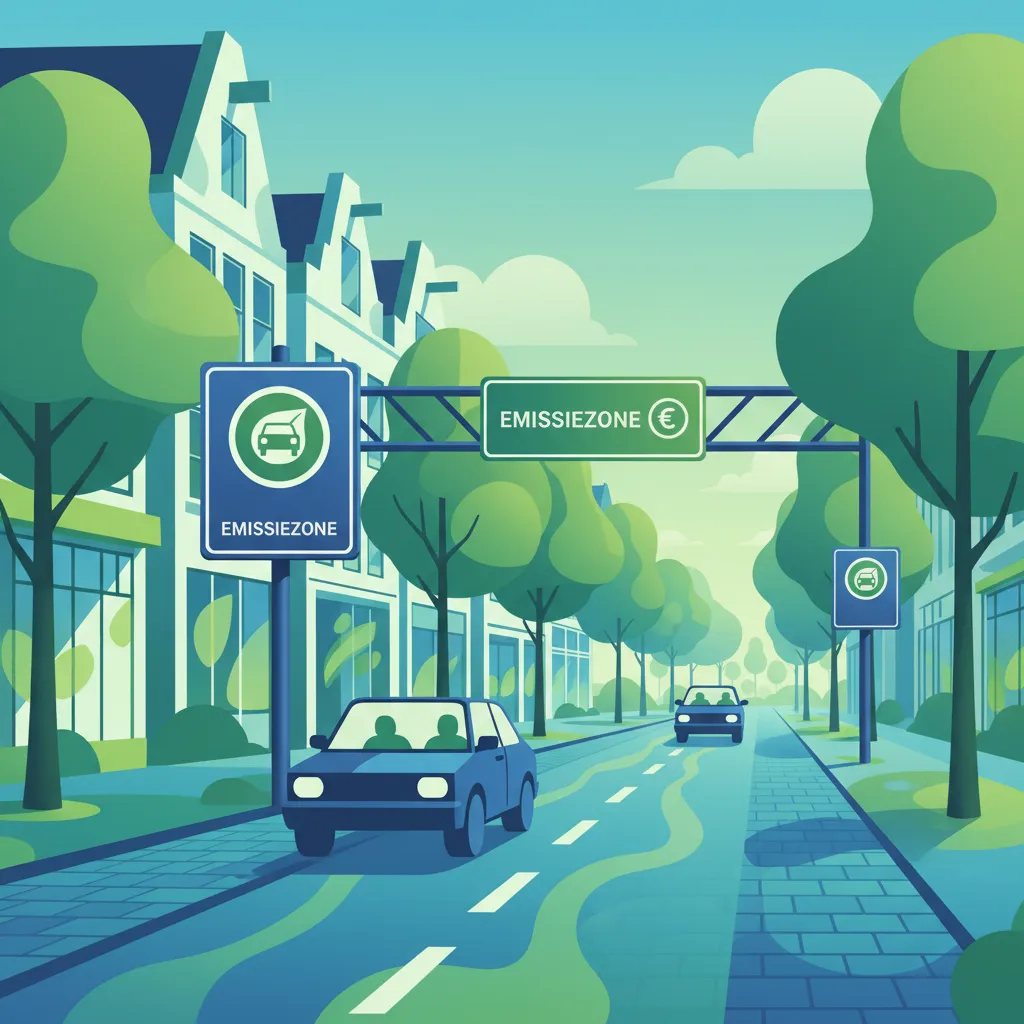
This lesson covers the specific regulations for environmental zones (miljözoner), which are established in some Swedish cities to improve air quality. You will learn how to identify the signs for these zones and understand the rules that restrict access for older, more polluting vehicles based on their emission classification (Euro class). The lesson provides clarity on which vehicles are affected and the purpose behind these environmental regulations.
Find clear answers to common questions learners have about Time-Limited Zones and Enforcement. Learn how the lesson is structured, which driving theory objectives it supports, and how it fits into the overall learning path of units and curriculum progression in Sweden. These explanations help you understand key concepts, lesson flow, and exam focused study goals.
A P-skiva, or parking disc, is used in time-limited parking zones to indicate your arrival time. You must set the disc to show the time you parked, rounding up to the next half hour. Place it visibly on your dashboard or passenger seat. Ensure it's always visible and correctly set to avoid a fine.
'Parkeringsanmärkning' is an official parking fine issued by the police or municipal enforcement, often resulting in points on your license. 'Kontrollavgift' is a private control fee, typically issued by parking companies for violating parking company rules, and does not affect your driving license directly but must still be paid.
'Datumparkering' (date parking) is a rule used in some areas, especially in cities, to facilitate street cleaning or snow removal. Typically, it means you cannot park on a side of the street corresponding to the date if street cleaning is scheduled. You must check local signage carefully for days and times when this rule is active.
Many Swedish parking areas now use mobile payment apps. You'll usually find instructions on signs indicating which app to use and the zone number. Alternatively, some areas may still have traditional parking meters. Always check the signage for payment instructions.
If you overstay the time limit in a restricted zone, you are likely to receive a 'parkeringsanmärkning' or 'kontrollavgift'. The amount can vary depending on the municipality and the severity of the violation. The vehicle may also be immobilised with a wheel clamp (låsbult) if left for an extended period or parked illegally.