Identifying Blind Spots and Hidden Hazards for Motorcycle Safety
Riding a motorcycle offers a unique sense of freedom and agility, but it also comes with inherent risks. Among the most significant dangers are blind spots—areas around vehicles that drivers cannot see directly—and hidden road surface hazards like potholes, gravel, or oil spills. For safe motorcycling in Sweden, mastering the identification and mitigation of these risks is not just a recommendation; it is a critical skill for accident prevention and a mandatory component of the Swedish Category A motorcycle theory examination.
This lesson delves into essential strategies for enhancing your visual awareness, ensuring you are seen by other road users, and training your eyes to detect dangers on the road surface well in advance. By understanding how blind spots work and developing proactive scanning techniques, you can significantly reduce the likelihood of serious accidents, improve your reaction time, and become a more confident and safer rider within the Swedish traffic system.
Understanding Motorcycle Blind Spots: Rider's Perspective and Other Drivers' Views
Blind spots are invisible zones that pose a constant threat on the road. For motorcyclists, these can originate from two main sources: your own motorcycle (limiting your view) and other vehicles around you (limiting their view of you). Recognizing and actively managing both types of blind spots is fundamental to safe riding.
Your Motorcycle's Blind Spots: Overcoming Visual Limitations
As a motorcycle rider, your forward line of sight is generally unobstructed, providing a broad view of the road ahead. However, areas immediately to your sides and slightly to your rear are often obscured by your own body, the motorcycle's structure, and the limitations of your mirrors. These are your rider's own blind spots.
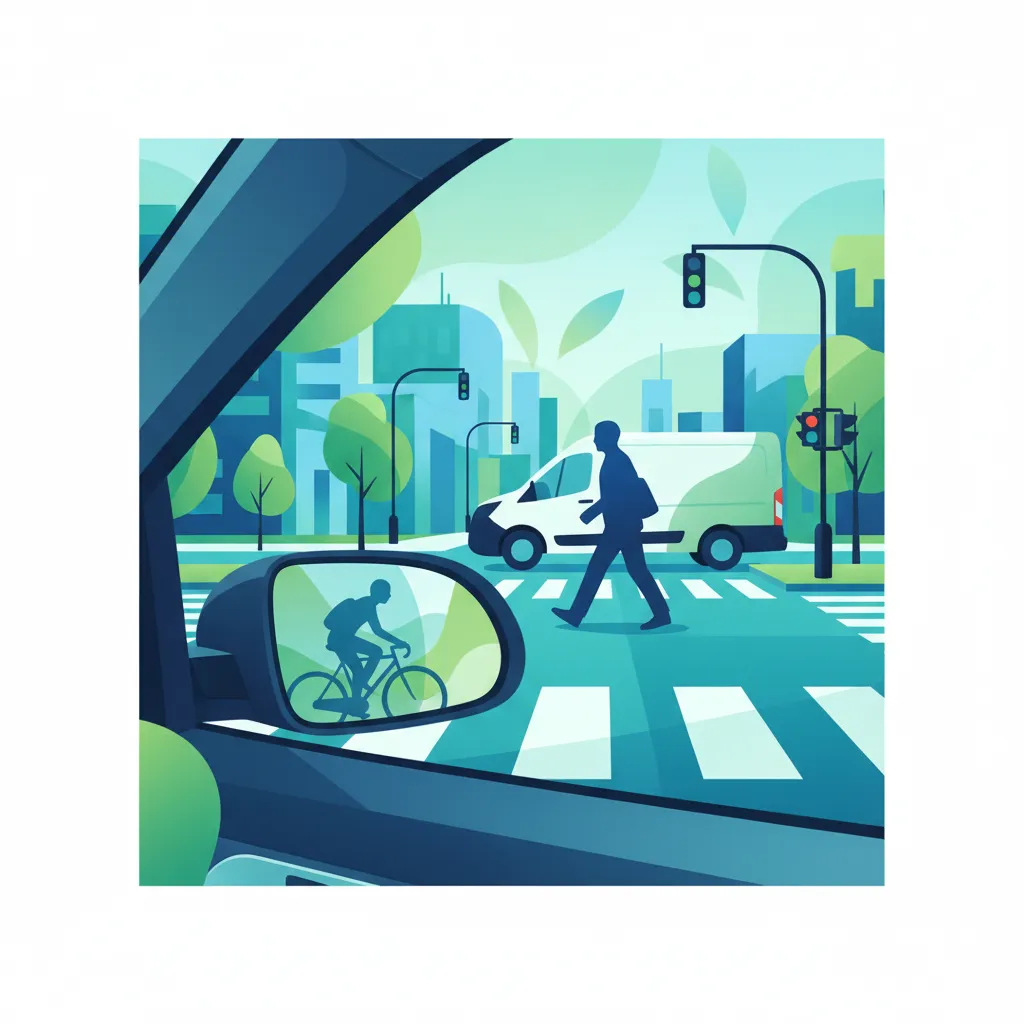
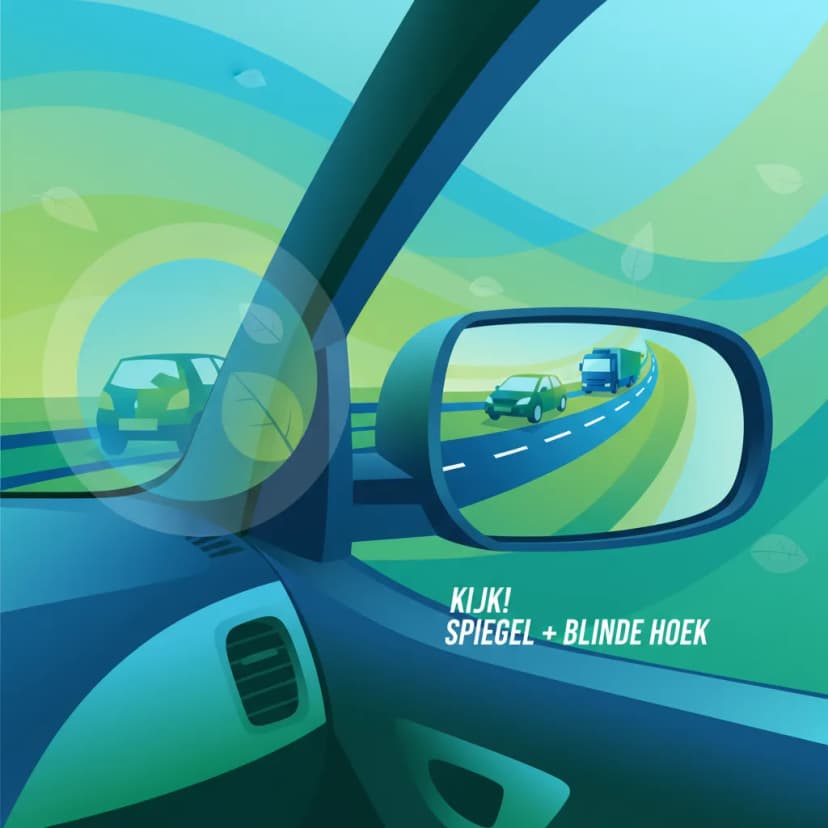
Your mirrors, while crucial for monitoring traffic behind you, offer a restricted field of view. They typically do not capture vehicles that are directly alongside you or just behind your shoulder. This invisible zone extends from the front of your shoulder to the rear of the motorcycle on each side. A common misunderstanding is assuming that if you can't see a vehicle in your mirror, it simply isn't there; in reality, it could be perfectly positioned within this unseen area.
To compensate for these inherent visual limitations, active visual management is required. This involves constantly extending your field of view beyond what mirrors alone can provide. Failing to do so can lead to dangerous situations, particularly when changing lanes or preparing to overtake, where an unseen vehicle could suddenly cross your path.
Other Road Users' Blind Spots: Maximizing Your Visibility to Cars and Trucks
While you must manage your own blind spots, it is equally vital to understand and avoid lingering in the blind spots of other vehicles, especially larger ones like cars, vans, trucks, and buses. These zones are areas around a vehicle where its driver cannot see you, regardless of how well their mirrors are adjusted.
For vehicles driven in countries with right-hand traffic like Sweden (where the driver sits on the left side of the vehicle), common blind spots exist to the rear-left and rear-right of the vehicle. The right-hand blind spot of a car or truck, for instance, is often larger due to the driver's seating position and the vehicle's design. If you are riding parallel to a car or truck and positioned within these blind spots, the other driver may be completely unaware of your presence. This dramatically increases the risk of a collision if they decide to change lanes, turn, or merge.
It is crucial not to assume that other drivers can see you, even if you feel you are visible. Many accidents involving motorcycles occur because the other driver simply "didn't see" the motorcycle. This often happens because the motorcyclist was unknowingly riding within a larger vehicle's blind spot. Always position your motorcycle defensively to remain within other drivers' peripheral vision or direct line of sight whenever possible.
Mastering the Shoulder Check Technique: Your Essential Safety Glance
The shoulder check, also known as a head-turn, is a fundamental and non-negotiable safety maneuver for every motorcyclist. It is a brief, purposeful rotation of your head and eyes to quickly glance over your shoulder, specifically covering the blind spot on the side of your intended maneuver. This provides direct visual confirmation of whether that space is clear of traffic before you initiate any steering input.
Why the Shoulder Check is Indispensable
Mirrors provide a good general overview of traffic behind you, but they have inherent limitations. The shoulder check is the only way to obtain direct visual confirmation of what is truly in your blind spot. It helps to:
- Prevent collisions: By ensuring no vehicle is hidden alongside you before a lane change or turn.
- Confirm clear escape paths: Identifying if a safe route is available if an emergency arises.
- Meet legal obligations: Swedish traffic regulations (Trafikförordningen, TF) implicitly require drivers to ensure their intended path is clear before maneuvers, which necessitates checking blind spots.
The shoulder check must be performed correctly and at the right time to be effective.
Performing an Effective Shoulder Check
Timing is crucial: Perform the shoulder check before you initiate any steering input for a lane change, turn, or overtake. It should be part of your observation sequence: mirrors, signal, shoulder check, then maneuver.
Brief, but thorough: The head-turn should be quick but sufficient to cover the entire blind spot. Aim for approximately 1 second in duration, just enough time to confirm the area is clear without losing focus on the road ahead.
Look through the space: Don't just glance at the vehicle's side. Scan through the potential blind spot area, looking for any signs of traffic, even if it's just a sliver of a vehicle.
Maintain control: While turning your head, ensure your upper body remains stable, and your hands maintain a firm but relaxed grip on the handlebars. Avoid any sudden jerks that could affect your balance or steering.
Single or double check: For simple lane changes to one side, a single shoulder check on that side is sufficient. For more complex maneuvers, or if you're uncertain, a double-shoulder check (checking both sides) may be warranted.
Practice makes perfect. Integrate the shoulder check into your routine so it becomes a natural, instinctive part of your riding habits. On quiet roads, practice turning your head while maintaining a straight line to build confidence.
Associated Swedish Traffic Rule:
While there isn't a specific regulation explicitly stating "perform a shoulder check," TF § 13 (2) mandates that "The driver must keep a sufficient distance to the vehicle ahead and shall, before overtaking, ensure that the overtaking lane is clear." This implies the necessity of a comprehensive check, including blind spots, before any lane-altering maneuver.
Optimal Rider Positioning for Enhanced Visibility and Safety
Your lateral placement within a traffic lane, or rider positioning, is a powerful tool for managing both your own blind spots and those of other drivers. It's about deliberately selecting your position to maximize your ability to see and be seen, while also creating a safety buffer around your motorcycle.
A common misconception among new riders is that riding as far to the right as possible always increases safety. However, riding too close to the curb or the edge of the lane can actually make you less visible to drivers entering the roadway from side streets or driveways, and can place you directly into the blind spot of larger vehicles. It also reduces your available escape route if a hazard suddenly appears on your right.
Strategic Lane Positioning for Different Scenarios
The "best" lane position is dynamic and depends on the specific traffic environment, road conditions, and your immediate intentions.
- General Riding: Often, riding slightly offset from the exact center of the lane (e.g., about 0.5 metres from the centre line) provides a good balance. This position places you clearly within the field of vision for drivers both ahead and behind, and gives you space to maneuver around hazards or react to sudden changes in traffic.
- Approaching Intersections: When approaching an intersection, position yourself to be easily seen by drivers who might be turning across your path. This might mean moving slightly towards the lane line that aligns with your direction of travel through the intersection.
- Overtaking or Being Overtaken: When another vehicle is overtaking you, maintain a position that gives them ample room while keeping you visible in their mirrors. Conversely, when you are overtaking, ensure you occupy a position that clearly indicates your presence and intention.
- Dealing with Large Vehicles: When riding near large trucks or buses, actively avoid their known blind spot zones. Position yourself so you can clearly see the driver's face in their side mirror; if you can't see them, they likely can't see you. This often means riding slightly further back or forward, and potentially in a different lane line.
Associated Swedish Traffic Rule:
TF § 4 (1) states that "Vehicles shall keep a safe distance from the curb and other road users." This rule underpins the importance of not riding excessively close to the edge of the road, which could compromise your safety and visibility.
Scanning for Hidden Road Hazards: Potholes, Gravel, and Spills
Beyond traffic and other vehicles, the road surface itself can present significant dangers to motorcyclists. Hidden hazards like potholes, loose gravel, oil spills, and debris can cause a sudden loss of traction, leading to a skid, slide, or even a crash. Developing a systematic surface-hazard scanning technique is crucial for early detection and avoidance.
Common Types of Road Surface Hazards for Motorcyclists
Motorcycles rely on a small contact patch between tyres and the road for stability and control. Any disruption to this contact can have serious consequences.
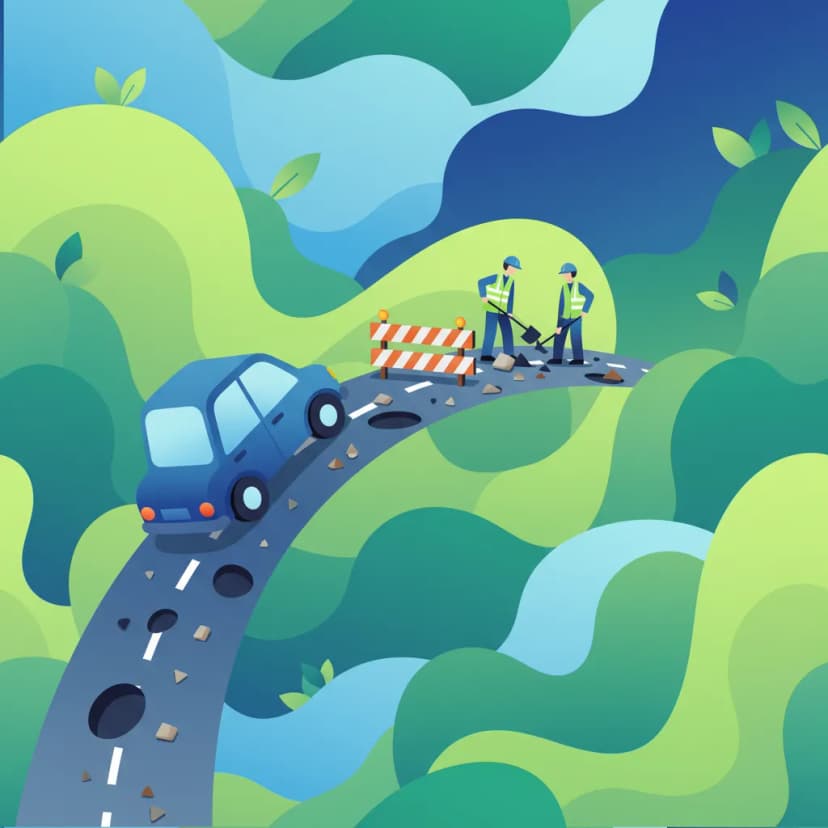
- Potholes and Cracks: Depressions or breaks in the road surface can cause sudden suspension compression, throw off your balance, damage your wheels, or lead to a loss of control, especially if hit at speed or while cornering.
- Loose Gravel, Sand, or Dirt: These materials significantly reduce tyre-road friction, particularly when cornering or braking. Encountering a patch unexpectedly can cause the front or rear wheel to slide out.
- Oil, Fuel, or Spilled Fluids: These create an extremely low-friction surface, making it nearly impossible to maintain grip. They are often difficult to spot, especially in wet conditions or at night, but can appear as iridescent patches.
- Debris: Objects such as branches, broken glass, metal fragments, or even discarded rubbish can puncture tyres, jam mechanisms, or cause an abrupt swerve if hit.
- Wet Road Markings or Metal Plates: Painted lines (especially older, thicker ones) and metal covers for utility access can become very slippery when wet, acting like ice.
- Tram Tracks or Railway Crossings: These present grooves that can trap a motorcycle wheel, causing a fall if crossed at an incorrect angle.
Effective Scanning Techniques and Safe Distances
To effectively manage surface hazards, you need to continuously scan the road ahead and adjust your speed and trajectory as needed.
- Target Fixation vs. Wide Scanning: Avoid target fixation, where your eyes lock onto a single hazard. Instead, employ a wider, fluid scan of the road surface, allowing your eyes to constantly move and process information.
- Scanning Distance: The distance you need to scan ahead is directly proportional to your speed.
- At lower urban speeds (e.g., 30-50 km/h), scan at least 15-30 metres ahead.
- At higher speeds (e.g., 80-120 km/h on rural roads or motorways), you need to scan significantly farther—at least 80-120 metres ahead. This allows you enough time to detect a hazard, process the information, decide on a course of action, and execute it safely. A good rule of thumb is to scan at least 2 seconds ahead of your current position.
- Identify Texture and Reflectivity: Train your eyes to distinguish between different road textures and how they reflect light. Oil spills often have an iridescent sheen, wet gravel looks darker and less uniform, and potholes cast shadows.
- Anticipate Hidden Hazards: Pay attention to clues. Construction zones, heavily treed areas (falling branches), or industrial areas (oil spills) are common places for specific hazards. Look for vehicles slowing down or swerving ahead, which may indicate a hazard you haven't yet seen.
Associated Swedish Traffic Rule:
TF § 7 (3) explicitly states that "Drivers shall adapt speed to the road conditions and shall not endanger traffic by driving at a speed which is unsafe for the prevailing conditions." This regulation directly supports the need to reduce speed when surface hazards are present or anticipated, to maintain control and safety.
Hitting a surface hazard, especially while leaning into a turn, can instantly reduce the effective grip of your tyres and cause a slip angle to increase rapidly, leading to a loss of control. Always prioritize reducing speed and maintaining an upright position when encountering unexpected hazards.
The Dynamic Process of Hazard Perception and Risk Assessment
Safe motorcycling is an active, continuous mental process. It involves more than just physical control; it demands constant vigilance, keen observation, and dynamic decision-making. This is encapsulated in the hazard perception process and dynamic risk assessment.
Hazard Perception Process: The Cycle of Safe Riding
Hazard perception is the cognitive sequence by which a rider identifies, evaluates, and reacts to potential dangers in the traffic environment and on the road surface. This process can be broken down into distinct, continuous stages:
- Detection: The initial visual acquisition of a stimulus. This could be a car beginning to drift into your lane, a patch of gravel on the road, or a pedestrian stepping towards the curb.
- Recognition: Categorizing the detected stimulus as a potential hazard. This involves understanding what the stimulus is and why it might be dangerous (e.g., "That car is drifting; it's a collision risk," or "That patch is gravel; it's a slip risk").
- Assessment: Estimating the likely outcome if no action is taken, and determining the urgency and severity of the required response. This involves judging speed, distance, and potential consequences.
- Decision: Selecting the most appropriate avoidance or mitigation action. This might involve braking, steering, accelerating, or a combination of these.
- Action: Executing the chosen maneuver smoothly and precisely.
- Reassessment: Immediately after taking action, the process restarts. Is the situation resolved? Have new hazards emerged? The perception loop is continuous, adapting to every change in the environment.
Dynamic Risk Assessment: Adapting to Changing Conditions
Dynamic risk assessment is the ongoing quantitative and qualitative appraisal of the probability and severity of a potential collision or loss of control. This isn't a one-time calculation but a continuous mental adjustment based on an array of constantly changing factors:
- Traffic Density and Speed: Higher density and faster traffic generally equate to higher risk, demanding wider safety margins.
- Road Surface Condition: Wet, icy, or debris-strewn roads significantly increase risk, requiring reduced speed and increased following distances.
- Visibility: Night, fog, or heavy rain reduce visibility for both you and other drivers, raising the risk factor.
- Vehicle State: Worn tyres, poor suspension, or a heavy load on your motorcycle can compromise its handling and stability, increasing risk.
- Rider State: Your own level of fatigue, concentration, and emotional state directly impacts your reaction time and judgment, influencing your personal risk profile.
By continuously assessing these factors, you can make informed decisions about your speed, lane positioning, following distance, and overall riding style, ensuring you always maintain a safety margin appropriate for the prevailing conditions. Failing to engage in continuous risk assessment can lead to delayed reactions and increased vulnerability to unexpected events.
Swedish Traffic Regulations and Blind Spot Awareness
Swedish traffic law places a strong emphasis on responsibility and foresight for all road users. Several key regulations, while not explicitly detailing "blind spot checks," implicitly mandate the practices described in this lesson. Understanding these rules is essential for legal compliance and safe riding.
Definition
Trafikförordningen (TF)
The Swedish Traffic Ordinance is the primary legal text governing traffic rules and regulations in Sweden.
Key Swedish Regulations for Preventing Blind Spot and Hazard Collisions
| Rule | Applicability | Legal Status | Rationale |
|---|
| TF § 13 (1): Lane Change / Overtaking Visibility – "A driver may change lane or overtake only when the intended lane is clear of vehicles." | All lane changes and overtaking manoeuvres on public roads. | Mandatory | Directly prevents collisions by requiring drivers to ensure the path is clear, which includes checking blind spots. |
| TF § 4 (1): Safe Distance to Curbs & Obstacles – "Vehicles must keep a safe distance from the edge of the carriageway and any obstacles." | Riding near curbs, parking bays, or roadside objects. | Mandatory | Ensures riders maintain a safe buffer from roadside hazards and stay visible, rather than being hidden by the curb. |
| TF § 7 (3): Adjust Speed to Road Conditions – "Drivers shall adapt speed to road conditions and shall not endanger traffic by driving at a speed which is unsafe for the prevailing conditions." | All riding situations, especially when surface hazards are present. | Mandatory | Requires riders to reduce speed when encountering hazards like potholes or gravel, to maintain control and prevent accidents. |
| TF § 3 (1): Duty of Care – Reasonable Care – "All road users shall exercise reasonable care, skill, and judgment in the operation of their vehicle." | General driving behaviour, underpinning blind-spot checks and hazard scanning. | Mandatory | This overarching principle requires riders to proactively identify and mitigate risks, including those related to blind spots and road hazards. |
| Transportstyrelsen Guidelines: Overtaking Motorcycles – Recommended practice: "Maintain a minimum of 1 m lateral clearance when passing a motorcycle." | Other vehicles overtaking a motorcycle. | Recommended (non-binding, but used in fault assessments) | While not a rule for motorcyclists, it highlights the importance of creating space, and riders should position themselves to encourage this safe gap. |
Adhering to these regulations means actively performing shoulder checks, choosing appropriate lane positions, and scanning the road for hazards. Failure to do so not only endangers yourself and others but can also lead to legal consequences in the event of an accident.
Common Errors and Misconceptions in Blind Spot Management
Even experienced riders can sometimes fall into habits that compromise safety. Being aware of common mistakes related to blind spots and hidden hazards can help you refine your riding technique and minimize risk.
Pitfalls to Avoid
- Skipping the Shoulder Check: This is perhaps the most dangerous and frequent error. Relying solely on mirrors means you are actively choosing to ignore a known blind area.
- Insufficient Shoulder Check Duration: A fleeting glance that lasts less than a second is often not enough to fully process the information in your blind spot, especially at higher speeds or in low light.
- Relying Solely on Peripheral Vision: While peripheral vision detects movement, it lacks the clarity to identify specific vehicles or gauge their speed and distance in the blind spot.
- Riding Too Far Right/Left: Positioning your motorcycle too close to the lane edge can hide you from other drivers, placing you in their blind spot or limiting your escape routes. For instance, riding at the far right of a lane can make you invisible to a truck driver who is also turning right.
- Assuming All Trucks Have Blind Spot Mirrors: While many modern trucks are equipped with advanced mirror systems, some older vehicles may not have them, and even the best mirrors have limitations. Always assume a large vehicle has blind spots.
- Failing to Scan Beyond the Immediate Foreground: Especially at higher speeds, focusing only a few metres ahead leaves insufficient time to react to surface hazards.
- Ignoring Road Surface Clues in Adverse Weather: Wet roads, for example, can make oil spills harder to spot and painted lines much more slippery. Failing to adapt your scanning and speed exacerbates these risks.
- Misinterpreting Surface Hazards: Confusing a patch of loose gravel for a shadow or a painted line can lead to inappropriate braking or steering.
- Static Risk Assessment: Treating risk assessment as a one-time process rather than a continuous loop can leave you unprepared for sudden changes in traffic flow or road conditions.
- Target Fixation on a Hazard: Instead of looking through a hazard to your escape path, fixating on a pothole can ironically lead you directly into it.
By actively working to correct these common errors, you can significantly elevate your riding safety and become a more skilled and defensive motorcyclist.
Adapting to Conditions: Weather, Road Types, and Traffic
Safe riding is not a fixed set of rules; it's a dynamic process that requires constant adaptation to the surrounding environment. Weather, road type, and the presence of other road users all influence how you should approach blind spots and surface hazards.
Weather and Visibility Considerations
- Clear Day / Daylight: Under ideal conditions, shoulder checks can be relatively brief (around 1 second), and surface-hazard scanning distances might be slightly reduced, though still critical.
- Night / Low Light: Reduced visibility significantly increases the challenge of detecting both blind-spot traffic and surface hazards. Increase the duration of your shoulder checks (e.g., to 1.5 seconds) to compensate for poorer peripheral vision. Extend your surface-hazard scanning distance, as dangers are much harder to spot. Use your high beam responsibly when there's no oncoming traffic to maximize your forward view.
- Rain / Wet Roads: Rain reduces tyre grip and optical visibility. Significantly reduce your speed (e.g., 10% for every 10 mm of rainfall) to increase reaction time. Water can obscure potholes, and oil on the road becomes extremely slick. Scan for standing water (aquaplaning risk) and treat all road markings as potentially very slippery.
- Snow / Ice: These conditions make the entire road surface low-grip. Blind spot checks become even more critical due to the increased risk of skidding if another vehicle cuts you off. Avoid lane changes unless absolutely necessary, and reduce speed drastically.
Road Type and Environmental Variations
| Road Type | Blind Spot Strategy | Surface Hazard Strategy |
|---|
| Urban Residential | Ride slightly offset from the lane center to be visible to parked cars and those entering/exiting driveways. Perform shoulder checks before entering intersections. | Expect frequent potholes, uneven surfaces, and occasional debris. Scan 15-20 m ahead at speeds ≤30 km/h. |
| Urban Primary / Arterial | Use lane-edge positioning cautiously (e.g., to bypass stationary traffic) but prioritize staying visible to larger vehicles. Avoid lingering in large vehicle blind spots. | Watch for uneven surfaces, tram tracks, and manhole covers. Extend scanning to 30 m at 50 km/h. |
| Motorway / Dual Carriageway | Maintain a consistent offset (e.g., 0.3-0.5 m from lane center) to ensure visibility to fast-moving traffic. Perform thorough shoulder checks before any lane change, focusing on high-speed traffic. | Scan 80-120 m ahead at 100-120 km/h. High-speed hazards (e.g., oil spills, large debris) require very early detection to allow for safe reaction. |
| Roundabouts | Position clearly in the correct lane for your exit. Stay to the right of the travel lane, but avoid the very curb to remain visible. Perform a shoulder check before exiting to confirm the path is clear. | Watch for older concrete sections, joint seams, and potential debris or fluid spills. Scan both on approach and exit. |
| Rural Two-Lane Roads | Ride near the center of your lane to maximize visibility to oncoming traffic around curves. Be especially aware of blind spots for slow-moving agricultural vehicles or tractors entering/exiting fields. | Expect varied surfaces: gravel patches, potholes, animal crossings, and fallen branches. Scan 40-60 m ahead. |
Vehicle State and Vulnerable Road Users
- Heavy Load / Trailer: If your motorcycle is heavily loaded or towing a small trailer, your braking distance will increase, and handling may be affected. This necessitates earlier shoulder checks and significantly larger safety gaps.
- Worn Tyres / Poor Suspension: These conditions reduce your motorcycle's grip and stability, making it more susceptible to surface hazards. You must compensate by lowering your speed and widening your scanning range.
- Incorrect Mirror Adjustment: Poorly adjusted mirrors exacerbate blind spots. Always ensure your mirrors are correctly set before riding, but never rely on them exclusively.
- Pedestrians and Cyclists: These vulnerable road users have small profiles and can be easily hidden behind vehicles or street furniture. Always perform blind-spot checks before turning across crosswalks, and anticipate sudden movements. When passing cyclists, maintain a generous lateral offset (e.g., ≥1 m).
By consciously adjusting your riding strategies based on these conditional variations, you transform from a reactive rider into a proactive, defensive one, significantly enhancing your safety on Swedish roads.
Final Concept Summary: Mastering Blind Spot and Hazard Management
Mastering the identification and mitigation of blind spots and hidden hazards is a cornerstone of safe motorcycling. This lesson has provided a comprehensive framework, combining practical techniques with an understanding of Swedish traffic regulations.
Here are the key takeaways to integrate into your riding practice:
- Blind Spot Awareness: Always know where your own blind spots are and, crucially, the blind spot zones of other vehicles, especially larger ones.
- Shoulder Check Mastery: Perform a brief, purposeful head-turn before any lane change, turn, or overtaking maneuver to visually confirm the blind spot is clear.
- Strategic Rider Positioning: Deliberately choose your lateral lane position to maximize your visibility to other drivers while minimizing your exposure to their blind spots and maintaining a safety buffer.
- Continuous Surface-Hazard Scanning: Actively sweep the road surface ahead, extending your scanning distance proportionally to your speed, to detect potholes, gravel, oil, debris, and other dangers.
- Dynamic Hazard Perception & Risk Assessment: Engage in a continuous cycle of detecting, recognizing, assessing, deciding, and acting on potential dangers. Continuously appraise the probability and severity of risks based on current conditions.
- Adherence to Swedish Regulations: Understand how Trafikförordningen (TF) sections 3, 4, 7, and 13, along with Transportstyrelsen's guidelines, legally underpin the need for these safety practices.
- Adaptation is Key: Adjust your strategies for blind spot checks, positioning, and hazard scanning based on changing weather, visibility, road types, vehicle state, and the presence of vulnerable road users.
By consistently applying these principles, you will not only be well-prepared for your Swedish Category A motorcycle theory exam but, more importantly, you will cultivate the proactive mindset and practical skills necessary for a lifetime of safer riding.
Blind Spot (Rider)
Area adjacent to the motorcycle not visible through mirrors or forward view, requiring shoulder checks.
Blind Spot (Other Road Users)
Area around a larger vehicle where the motorcycle is not visible to the driver.
Shoulder Check
A rapid, controlled head-turn to look over the shoulder, covering the blind spot on the side of an intended maneuver.
Rider Positioning
Deliberate selection of lateral placement within a lane to maximize visibility and minimize exposure to other users’ blind spots.
Surface-Hazard Scanning
A forward visual sweep of the road surface to detect potholes, debris, oil, or loose material.
Hazard Perception
The cognitive process of detecting, recognizing, assessing, deciding, and acting upon potential dangers.
Dynamic Risk Assessment
Ongoing appraisal of the probability and severity of potential hazards based on current traffic, road, weather, and rider state.
Overtaking Clearance
The minimum safe space required to pass another vehicle, including lateral distance.
Reaction Time
The time needed for a rider to perceive a hazard and initiate a response.
Slip Angle
The angle between the direction a tyre is pointing and its actual direction of travel; indicates loss of grip.
Trafikförordningen (TF)
The Swedish Traffic Ordinance, the primary legal text governing traffic rules in Sweden.
Transportstyrelsen
The Swedish Transport Agency, responsible for traffic regulations and guidelines.
Learn more with these articles
Check out these practice sets