
Navigate Sweden's diverse roads with confidence. This unit focuses on adapting your driving skills to the specific challenges of urban areas, rural routes, and high-speed motorways, ensuring you're prepared for any traffic situation and the theory exam.
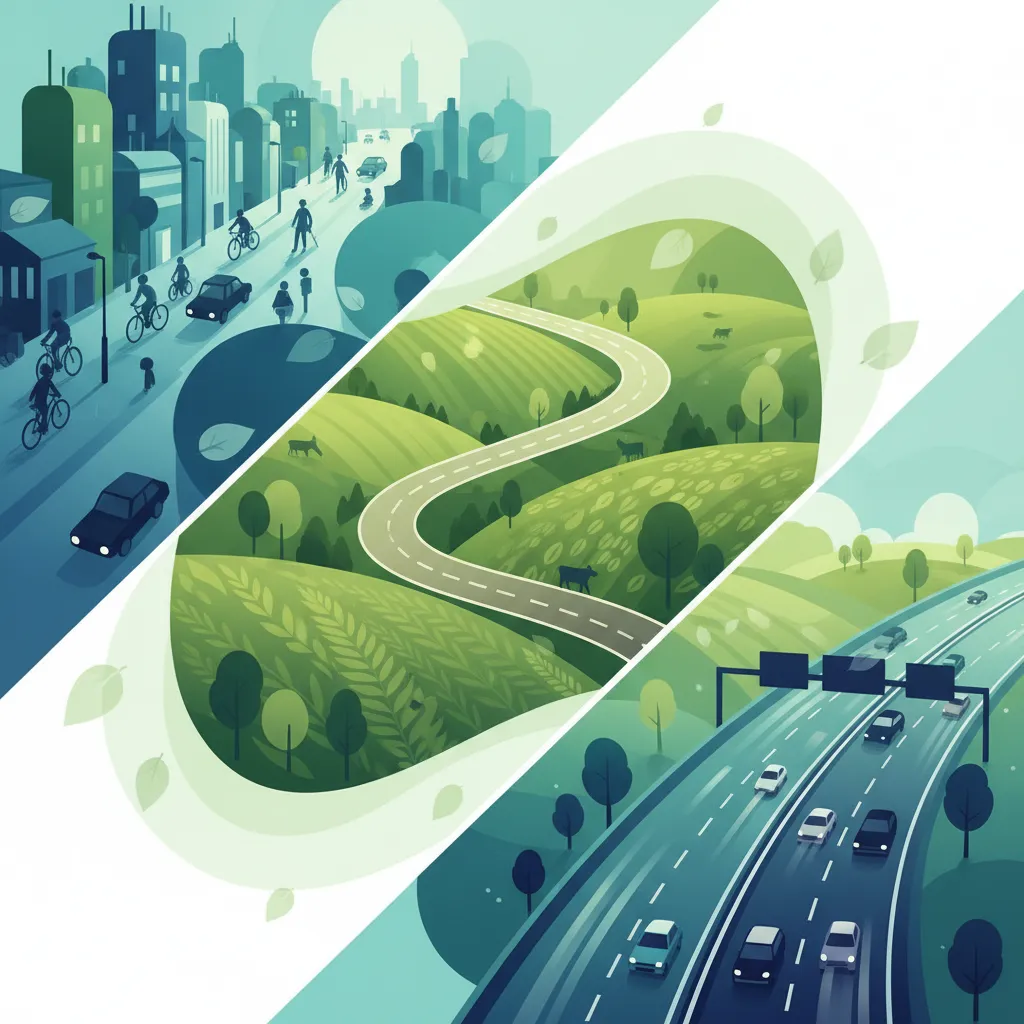
Browse all lessons that make up Driving in Different Environments. Each lesson focuses on specific topics, learning objectives, and core concepts, helping you build essential knowledge and follow a clear, structured progression toward your study goals in Sweden.
This lesson focuses on the unique challenges of driving in urban environments. You will learn techniques for anticipating the actions of vulnerable road users like pedestrians and cyclists, especially near crossings and bus stops. The content covers how to navigate narrow streets, one-way systems, and areas with heavy traffic, emphasizing the need for lower speeds, heightened awareness, and a defensive mindset.
This lesson addresses the specific risks associated with driving on rural roads (landsvägar). You will learn how to manage higher speeds on narrow, winding roads with limited visibility due to curves and hills. The lesson covers procedures for safely overtaking slow-moving agricultural vehicles, managing encounters with oncoming traffic on narrow sections, and being constantly vigilant for wildlife, especially at dawn and dusk.
This lesson provides a complete guide to motorway driving in Sweden. You will learn the correct procedures for merging from an on-ramp, maintaining proper lane discipline by keeping right unless overtaking, and exiting safely via off-ramps. The content emphasizes the importance of maintaining large safety margins at high speeds, checking blind spots thoroughly before any lane change, and knowing the correct safety procedures in case of a breakdown.
This lesson focuses on the high level of caution required when driving in residential areas. You will learn about the rules for special zones like 'gångfartsområde' (walking speed area) and the need to navigate around speed calming measures like speed bumps. The central theme is anticipating unpredictable behavior from residents, especially children, and managing the risks posed by parked cars that severely limit visibility.
This lesson explains the specific traffic rules related to public transport vehicles. You will learn about your duty to yield to buses signaling to leave a stop (on roads with a speed limit of 50 km/h or less) and the fact that trams generally have priority. The lesson covers how to safely pass stopped buses and trams, being mindful of disembarking passengers who may cross the road unexpectedly.
Explore high-intent keywords and long-tail search topics learners use when researching Driving in Different Environments. These terms reflect how people search for reliable study materials, structured explanations, and unit-level theory preparation support in Sweden.
Find clear answers to the most common questions learners ask about Driving in Different Environments. Understand how the unit is organized, what learning goals it supports, and how it contributes to your study progression with structured explanations and practical guidance tailored for learners in Sweden.
City driving in Sweden involves more complex interactions with pedestrians, cyclists, trams, and varied traffic signals, often at lower speeds. Rural roads, however, present challenges like limited visibility, potential wildlife crossings, farm vehicles, and higher speeds, requiring constant vigilance and adaptation. Understanding these distinctions is key for exam success and safe driving.
Motorways in Sweden require higher speeds and consistent focus on overtaking and lane discipline. You must maintain appropriate distances, use indicator signals early, and be aware of faster-moving vehicles. Always adhere to the posted speed limits and adjust your speed based on traffic flow and weather conditions to ensure safety.
Yes, residential areas in Sweden, often marked with signs indicating 'Gågata' (pedestrian street) or 'Bostadsområde' (residential area), typically have very low speed limits, usually 30 km/h. The focus here is on protecting vulnerable road users like children and residents, so extra caution and reduced speed are paramount.
On rural roads, especially in forests or open country, you might encounter wildlife such as deer (hjort, rådjur), elk (älg), or wild boar (vildsvin). They can suddenly enter the road. Always be extra cautious during dawn and dusk, reduce speed in areas with wildlife warning signs, and be prepared to brake suddenly if an animal appears.
It is very important. The Swedish theory test often includes questions about specific scenarios and rules applicable to different environments like cities, rural roads, and motorways. Demonstrating your ability to drive safely and appropriately in these diverse conditions is a core part of becoming a qualified driver.
It means your actual driving speed should always be safe for the current situation, not just the posted limit. For example, on a rainy city street, you'd drive slower than the 50 km/h limit. On a dry, clear motorway, you might drive closer to the 110 or 120 km/h limit, but always considering traffic and road conditions.
All included lessons
Lessons in Driving in Different Environments
See who benefits most from studying Driving in Different Environments. This overview explains how the unit supports different learning needs, what level of knowledge is helpful before starting, and how it fits into the overall study path in Sweden.
This unit is essential for all Swedish Category B driving license applicants, especially those who feel less confident about adapting their driving style to diverse environments such as bustling city centres, open country roads, or fast-paced motorways. It's also beneficial for learners who want to improve their situational awareness and hazard perception.

See how Swedish Driving Theory B is structured, with key topics, learning objectives, and a step-by-step path for theory preparation in Sweden.
Explore all units and lessons included in this driving theory course.