
This lesson covers essential Swedish road markings (Vägmarkering) vital for all moped riders. You'll learn to interpret lines, symbols, and designated areas on the road, building on basic road sign knowledge. Mastering these cues is key to navigating safely and correctly answering questions on the AM license theory exam.
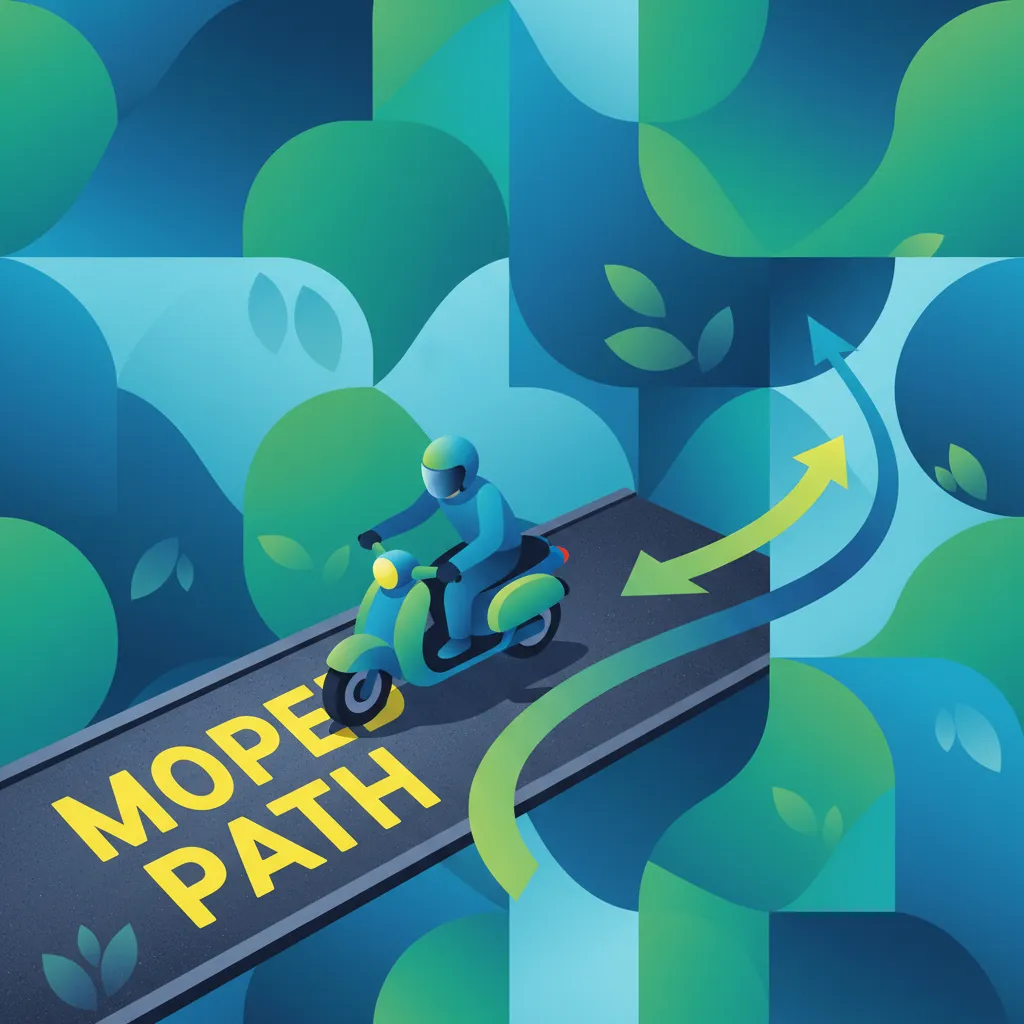
Road markings, known as vägmarkering in Swedish, are essential visual cues that guide traffic, allocate road space, and communicate legal requirements to all road users. For Category AM (moped) riders, understanding and correctly interpreting these markings is crucial for safety, efficient traffic flow, and compliance with Swedish traffic regulations. This lesson will provide a comprehensive overview of the road markings relevant to mopeds, ensuring you have the knowledge to navigate Swedish roads confidently and safely.
Road markings serve as silent instructors on the road, complementing traffic signs and signals. They continuously provide location-specific guidance, indicating where mopeds may ride, stop, overtake, or yield. Mastering these visual cues is fundamental for passing your Swedish Category AM driving license theory exam and for safe riding in practice.
Road markings play a pivotal role in preventing collisions by clearly delineating travel paths, identifying hazardous areas, and assigning priority. For moped riders, who are often more vulnerable than occupants of larger vehicles, precise adherence to these markings significantly reduces risk. They enhance predictability, ensuring that all road users share a common understanding of traffic rules and expected behavior.
The Swedish Traffic Regulations (Trafikförordningen, TFS) assign specific legal obligations based on the type of marking encountered. Incorrect interpretation or disregard for these markings can lead to dangerous situations, legal penalties, and increased liability in the event of an accident.
Road markings in Sweden are categorized based on their continuity, color, geometry, and surface treatment. These core principles dictate their meaning and the actions required from a moped rider.
Longitudinal lines are fundamental for guiding traffic flow, indicating lane boundaries, and regulating overtaking. Moped riders must pay close attention to these markings as they directly impact their positioning and interaction with other vehicles.
A solid white line running parallel to the direction of traffic flow signifies a strict prohibition against crossing it. This applies whether the line separates traffic traveling in the same direction or opposite directions.
For moped riders, a solid white line on the left of their lane means they must remain within their designated lane. This line prevents unsafe lane changes, especially in areas with limited visibility or high traffic density. You may not cross a solid white line to overtake a parked car or to move into an adjacent lane unless explicitly directed by a police officer or a specific traffic sign. Disregarding a solid white line can lead to dangerous maneuvers and is a violation of TFS 3 kap. 13 §.
In contrast to solid lines, a broken white line indicates that crossing is permitted, provided it is safe to do so. These lines are commonly found on roads where overtaking is generally allowed or where lane changes are expected.
When encountering a broken white line, moped riders may cross it to overtake slower vehicles, such as bicycles, or to change lanes. However, this permission is always conditional on safety. You must ensure the road ahead is clear, there is no oncoming traffic, and the maneuver can be completed without endangering other road users. This flexibility is regulated by TFS 3 kap. 13 §.
Always check your mirrors and signal your intentions well in advance before crossing a broken white line. Your safety and the safety of others depend on predictable actions.
Sometimes, you will encounter a combination of solid and broken white lines. These lines typically consist of a solid line parallel to a broken line. The rule for these markings depends on which line is closer to your lane.
This marking system is designed to allow flexible overtaking for traffic in one direction while strictly prohibiting it for traffic in the opposite direction, often found on roads with varying visibility or specific hazards. Moped riders must understand this nuanced rule to avoid illegal and dangerous maneuvers.
Yellow longitudinal lines are distinct and of paramount importance for moped riders. These lines always indicate a lane or path reserved specifically for bicycles and mopeds (cykel- och mopedbana).
TFS 4 kap. 24 § and increases your exposure to faster traffic.TFS 4 kap. 24 § regulates this specific usage.Always prioritize using dedicated moped lanes. They are designed to separate vulnerable road users from faster motor traffic, significantly improving safety.
Transversal markings are lines or symbols that cross the direction of travel. They are predominantly found at intersections, pedestrian crossings, and points where lanes end, providing critical instructions for yielding, stopping, and merging.
A stop line is a thick, solid white line drawn across the carriagageway at intersections, level crossings, or before pedestrian crossings. Its presence indicates a mandatory stopping point.
Failure to stop before a stop line when required is a serious traffic offense under TFS 2 kap. 18 § and can lead to collisions, particularly with pedestrians or cross-traffic.
A give-way marking, also known as a yield line, typically consists of a series of white triangles or a combination of a solid line followed by a broken line. It signifies that you must yield priority to traffic on the intersecting road before proceeding.
At a give-way marking, moped riders must slow down and be prepared to stop. You must ensure that the main road is clear of traffic from both directions before entering or crossing it. Unlike a stop line, you are not always required to come to a complete halt if the way is clear, but you must be able to do so if necessary. This rule is defined in TFS 2 kap. 22 §.
Pedestrian crossings are clearly marked with broad white stripes, often referred to as "zebra stripes" (zebra-mönster). These markings designate an area where pedestrians have legal priority.
TFS 4 kap. 26 §.TFS 4 kap. 27 §.Never assume a pedestrian or cyclist sees you. Always be prepared to stop and give way at marked crossings. Their safety is your responsibility.
Lane end markings are dashed white lines, often accompanied by directional arrows painted on the road surface, that indicate a lane is terminating or narrowing.
When a moped lane or a general traffic lane you are in begins to end, you must observe these markings and merge safely into the adjacent lane before the lane end. This requires signaling your intention, checking your mirrors, and finding a safe gap in traffic. TFS 3 kap. 14 § obliges road users to merge smoothly and maintain a safe distance. Failing to merge in time can lead to abrupt and dangerous lane changes, creating a risk of collision.
Beyond lines, the road surface can feature various symbols and text-based markings that provide additional instructions or reinforce existing rules.
These supplementary markings are vital for clarifying the purpose of a lane or instructing specific actions.
TFS 4 kap. 24–27 §§.Certain road surfaces or lanes may be marked with specific symbols or lines that prohibit access for mopeds. An example is a road marked with red double lines or a "No Cycling" symbol, which legally restricts access for mopeds, as mopeds are considered cycles under certain parts of the law. These markings are typically found on motorways or other high-speed roads where mopeds are not permitted. TFS 4 kap. 25 § specifically addresses the prohibition of cycling and mopeds on certain road surfaces.
Understanding the direct legal implications of road markings is paramount. Here is a summary of the core rules you must follow as a moped rider in Sweden:
Familiarize yourself with these rules. They are directly linked to your safety and legal responsibilities.
The Swedish Traffic Regulations (TFS) is the primary legal document that defines the rules and obligations for all road users in Sweden, including specific provisions for road markings.
| # | Rule Statement | Applicability | Legal Status | Rationale |
|---|---|---|---|---|
| 1 | Do not cross a solid white line except when directed by a sign or police officer. | All public roads; any crossing of a solid white line. | Mandatory (TFS 3 kap. 13 §). | Prevents unsafe lane changes and head-on collisions. |
| 2 | May cross a broken white line when it is safe to do so. | Roads with broken white lines separating lanes. | Mandatory (TFS 3 kap. 13 §). | Allows overtaking while maintaining safety. |
| 3 | Ride within a solid yellow lane (cycle/moped lane) when it exists and is unobstructed. | Urban streets and bike lanes marked with solid yellow. | Mandatory (TFS 4 kap. 24 §). | Keeps mopeds separate from motor traffic, reducing conflict. |
| 4 | May briefly leave a broken yellow lane to overtake or avoid obstacles, returning promptly. | Roads with broken yellow lines. | Mandatory with condition (TFS 4 kap. 24 §). | Provides flexibility while preserving lane purpose. |
| 5 | Stop before the stop line at a red traffic signal or when pedestrians are crossing. | All signalized intersections and marked pedestrian crossings. | Mandatory (TFS 2 kap. 18 §). | Guarantees pedestrian safety and respects signal control. |
| 6 | Yield at give-way markings to traffic on the main road before proceeding. | Intersections with give-way markings and uncontrolled crossroads. | Mandatory (TFS 2 kap. 22 §). | Prevents collisions at merging points. |
| 7 | Yield to pedestrians at all marked pedestrian crossings (white zebra stripes). | Any marked pedestrian crossing. | Mandatory (TFS 4 kap. 26 §). | Protects the most vulnerable road users. |
| 8 | Yield to cyclists and mopeds at crossings marked with a bicycle symbol. | Crossings bearing the bicycle/moped symbol. | Mandatory (TFS 4 kap. 27 §). | Extends pedestrian priority to vulnerable cyclists and mopeds. |
| 9 | When a lane ends, merge into the adjacent lane before the lane-end marking. | Any lane termination zone. | Mandatory (TFS 3 kap. 14 §). | Provides a smooth transition and reduces sudden lane changes. |
| 10 | Do not ride on a road surface marked "No Cycling" (red double lines) unless directed by sign or police. | Roads with red double lines or "No Cycling" markings. | Mandatory (TFS 4 kap. 25 §). | Keeps mopeds out of high-speed vehicle lanes. |
Understanding common mistakes related to road markings can help you avoid dangerous situations and legal penalties.
Many traffic incidents involving mopeds stem from incorrect interpretation or disregard for road markings.
Constant Scanning: Develop a habit of continuously scanning the road surface ahead for markings. Look far ahead to anticipate changes.
Adjust Speed for Visibility: In poor weather (rain, fog, snow) or low light, markings may be hard to see. Reduce your speed to allow more time to react.
Signal Clearly: Always use your indicators to signal lane changes or turns, even if markings seem to permit a maneuver.
Anticipate Others: Understand that not all road users will perfectly follow markings. Be prepared for unexpected actions from pedestrians, cyclists, and drivers.
Know Your Legal Position: Understand the specific TFS regulations related to each marking. This knowledge empowers you to ride correctly and safely.
Road markings are not always static in their interpretation. External conditions and specific road designs can alter how you should respond to them.
Environmental factors significantly affect the visibility of road markings, requiring moped riders to adapt their behavior.
Road works often introduce temporary markings that supersede permanent ones. These are typically indicated by orange cones, temporary barriers, or temporary yellow lines.
In some urban residential areas, traffic engineers implement "shared space" designs. These areas deliberately reduce or remove conventional lane markings, signs, and traffic signals.
Let's look at a few common scenarios to illustrate the application of road marking rules for moped riders.
Setting: City centre, dry weather, speed limit 30 km/h, solid yellow lane running the full length of the road, pedestrians on sidewalks.
Correct Behaviour: The moped rider stays centered in the yellow lane, uses mirrors to monitor traffic, and stops before the stop line at the traffic light even if it's green, because pedestrians are actively crossing.
Explanation: The solid yellow lane is legally reserved, and crossing it (e.g., to avoid a pothole by entering the main carriageway) would violate TFS 4 kap. 24 §. Pedestrian priority at crossings (TFS 2 kap. 18 §) overrides the green signal.
Setting: Suburban road, mixed traffic, a marked crossing with white zebra stripes and a bicycle symbol, light rain.
Correct Behaviour: The rider reduces speed significantly, stops before the crossing when the pedestrian steps onto it, and then also waits for the approaching cyclist to cross safely.
Explanation: The bicycle symbol extends priority to cyclists as well as pedestrians (TFS 4 kap. 27 §). Failing to yield to either would be a serious violation.
Setting: Country road, clear weather, speed limit 50 km/h, a moped lane ends after a curve, marked by a dashed white line.
Correct Behaviour: The rider observes the dashed line and the lane ending, signals their intention to merge right, checks mirrors and blind spot, and smoothly merges into the adjacent traffic lane well before the lane end.
Explanation: Timely merging before the lane-end marking (TFS 3 kap. 14 §) is crucial for smooth traffic flow and preventing sudden, dangerous maneuvers.
Setting: Urban street, night, unlit, heavy rain, worn-out broken white line. Correct Behaviour: The rider reduces speed considerably, activates all lights, and assumes the lane cannot be safely crossed due to the indistinguishable nature of the line. They stay strictly within their current lane, exercising extreme caution. Explanation: Reduced visibility necessitates a conservative approach. If markings are not discernible, it is safest to treat a broken line as solid to avoid unintentional lane crossings and potential collisions.
Setting: City centre, roadworks block half of a solid yellow lane, orange cones and a temporary yellow line are painted.
Correct Behaviour: The moped rider follows the temporary yellow line, which guides them briefly outside the permanent solid yellow lane to avoid the obstruction. They then re-enter the moped lane as soon as the temporary markings allow and it is safe.
Explanation: Temporary markings override permanent ones (TFS 4 kap. 24 § allows deviation for obstacles). Compliance ensures safety for both the rider and road workers.
Lesson content overview
Explore all units and lessons included in this driving theory course.
Explore search topics learners often look for when studying Road Markings Relevant to Mopeds. These topics reflect common questions about road rules, driving situations, safety guidance, and lesson level theory preparation for learners in Sweden.
Browse additional driving theory lessons that cover connected traffic rules, road signs, and common driving situations related to this topic. Improve your understanding of how different rules interact across everyday traffic scenarios.
Understand the meaning of various Swedish road markings (Vägmarkering), including lane dividers, stop lines, and pedestrian crossings. Learn how to use these visual cues for correct lane positioning and safe navigation on the road, essential for your AM licence theory.

This lesson offers a detailed guide to interpreting the various lines and symbols painted on the road surface. It clarifies the rules associated with solid versus broken lines regarding lane changes and overtaking. The content also explains the function of arrows, stop lines, and other markings that provide crucial positioning and priority information to the rider.

This lesson focuses on the variety of road markings used on Swedish roads and their meaning for motorcyclists. You will learn the difference between solid and broken lines regarding overtaking, how to position yourself correctly at intersections based on markings, and how to interpret symbols painted on the road surface. Adhering to these markings is essential for maintaining correct lane discipline and ensuring predictability for other road users.

This lesson explains the function and legal significance of various road markings (vägmarkeringar) in Sweden. You will learn the difference between broken lines that permit overtaking and solid lines that forbid it, as well as the meaning of stop lines, pedestrian crossings, and lane direction arrows. These markings work in conjunction with signs to organize traffic flow, separate lanes, and provide critical information directly on the road surface.
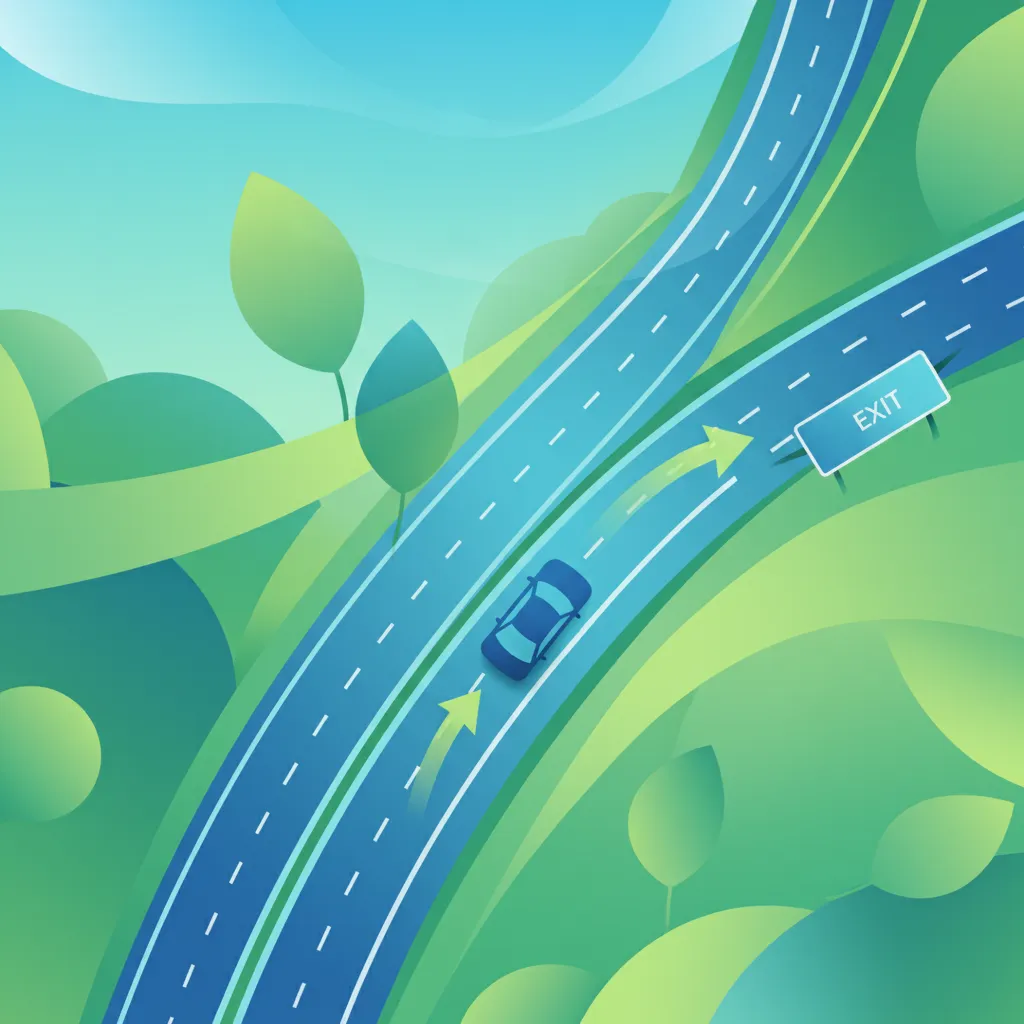
This lesson provides clear guidance on selecting the appropriate lane on multi-lane roads to match your intended direction of travel. It covers the rules and best practices for moving into turning lanes, positioning for overtakes, and maintaining a steady course. The focus is on making early, predictable decisions to ensure smooth integration with surrounding traffic.
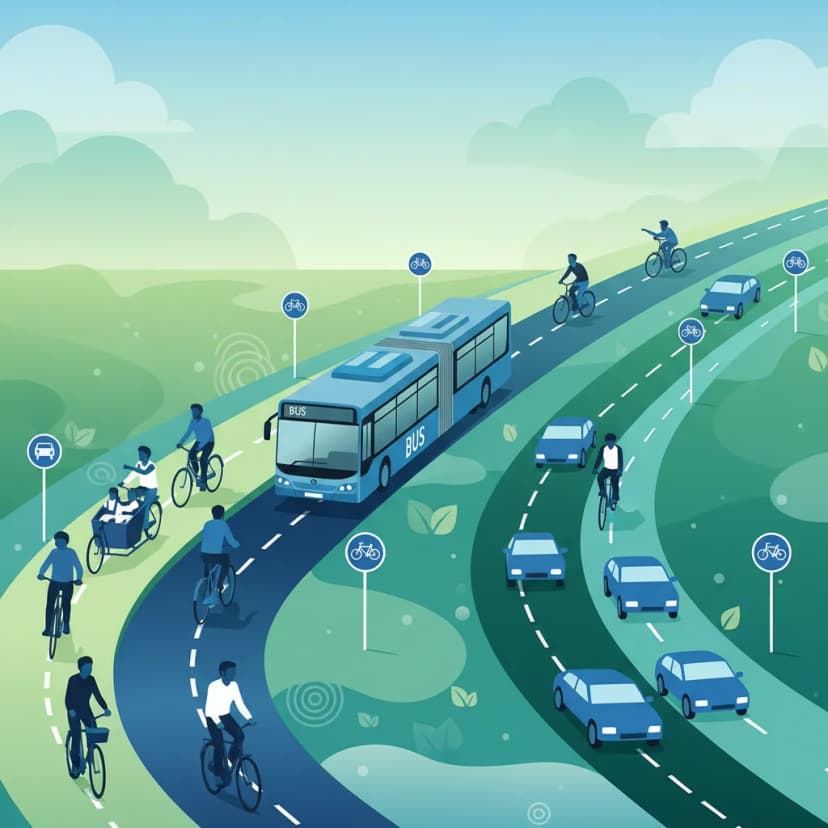
This lesson explains the specific regulations for lanes designated for particular users, such as buses or cyclists. It clarifies under what circumstances a moped is permitted to enter these lanes and the rules that must be followed while in them. Understanding these regulations is key to navigating complex urban environments legally and safely.

This lesson clarifies the precise technical parameters that define a Category AM vehicle under Swedish law, including the maximum 50cc engine displacement and 45 km/h speed limit. It explains how these specifications determine which roads mopeds can legally access, distinguishing between urban streets and prohibited motorways. Learners will also understand the importance of vehicle identification and registration documents for ensuring legal compliance.

This lesson provides a comprehensive guide to the Swedish Category AM theory examination process managed by Transportstyrelsen. It outlines the necessary steps for registration, the specific documentation required such as valid ID and medical certificates, and how to schedule a test at an authorized center. Learners will understand the exam format, scoring system, and the procedures for receiving their license upon successful completion.
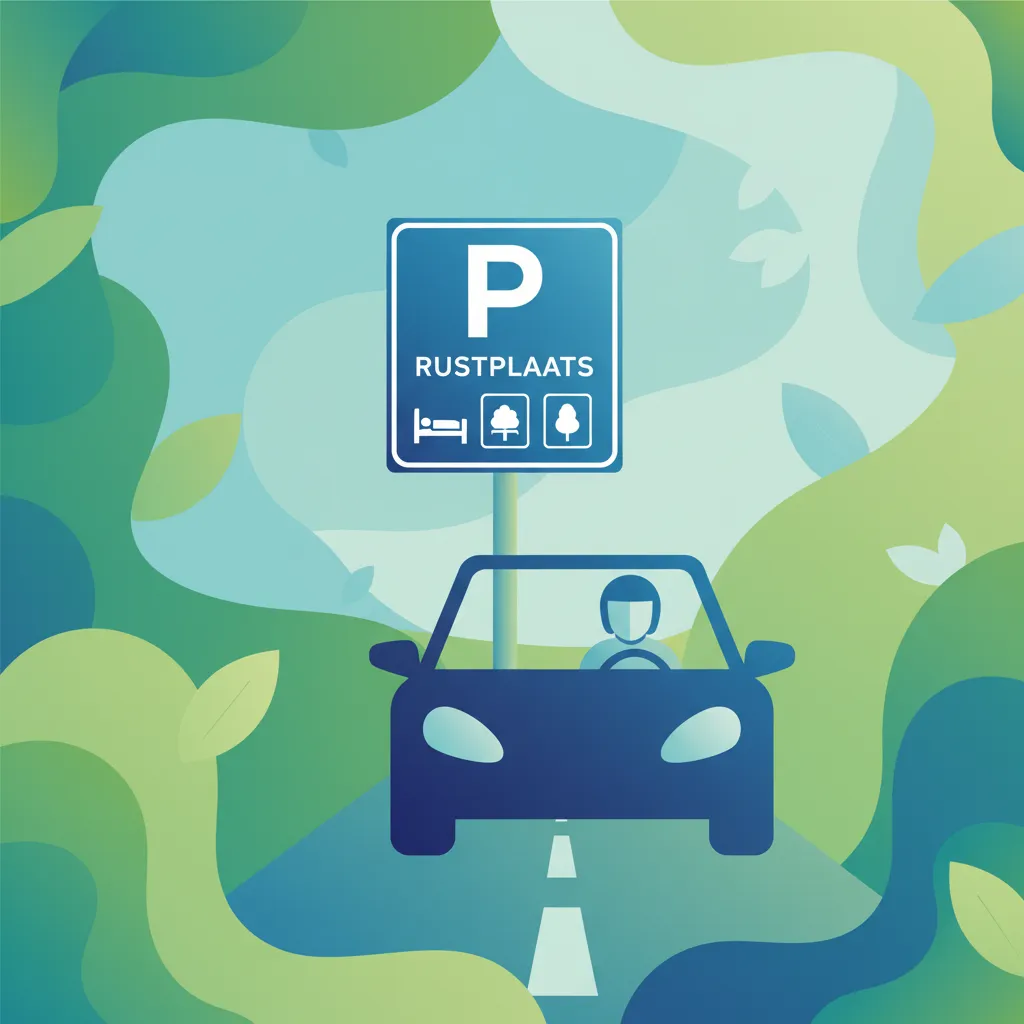
This lesson explains the function of informational signs (Informationsskyltar), which provide guidance for navigation and access to services. It covers signs indicating distances to destinations, route numbers, and locations of fuel stations or parking areas. For moped riders, this includes identifying signs for designated moped or cycle lanes, helping them to plan and follow routes efficiently and legally.

This lesson introduces the core principles of right-of-way in Sweden, including the general duty to give way (Väjningsplikt) and the stricter stop duty (Stopplikt). It explains the concept of a priority road and how to apply the right-hand rule at uncontrolled intersections. By understanding this legal framework, riders can determine who has priority in any given situation and act predictably and safely.

This lesson covers the critical maneuvers of merging and changing lanes. You will learn the correct technique for using an acceleration lane to match the speed of motorway traffic before merging smoothly and safely. The lesson emphasizes the importance of checking mirrors and the blind spot, signaling in good time, and applying the 'zipper principle' (dragkedjeprincipen) where lanes merge to ensure efficient and courteous traffic flow.
Explore how road markings like pedestrian crossings, cycle paths, and shared spaces influence interactions with pedestrians, cyclists, and other vehicles. This lesson focuses on safe navigation and communication based on Swedish road marking conventions for AM licence holders.
This lesson focuses on the variety of road markings used on Swedish roads and their meaning for motorcyclists. You will learn the difference between solid and broken lines regarding overtaking, how to position yourself correctly at intersections based on markings, and how to interpret symbols painted on the road surface. Adhering to these markings is essential for maintaining correct lane discipline and ensuring predictability for other road users.
This lesson offers a detailed guide to interpreting the various lines and symbols painted on the road surface. It clarifies the rules associated with solid versus broken lines regarding lane changes and overtaking. The content also explains the function of arrows, stop lines, and other markings that provide crucial positioning and priority information to the rider.
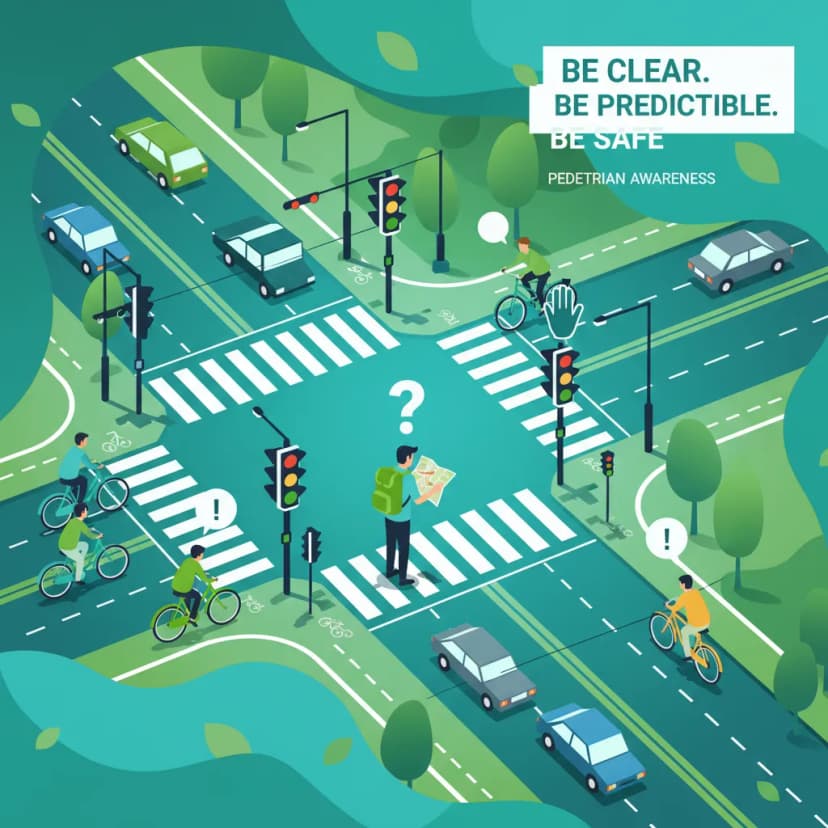
This lesson is dedicated to pedestrian safety, teaching riders to be constantly aware of people on foot, especially in busy urban environments. It reinforces the absolute duty to yield at marked crossings and encourages a cautious approach in areas like schools and shopping districts. The content stresses anticipating unpredictable actions, particularly from children or distracted pedestrians.
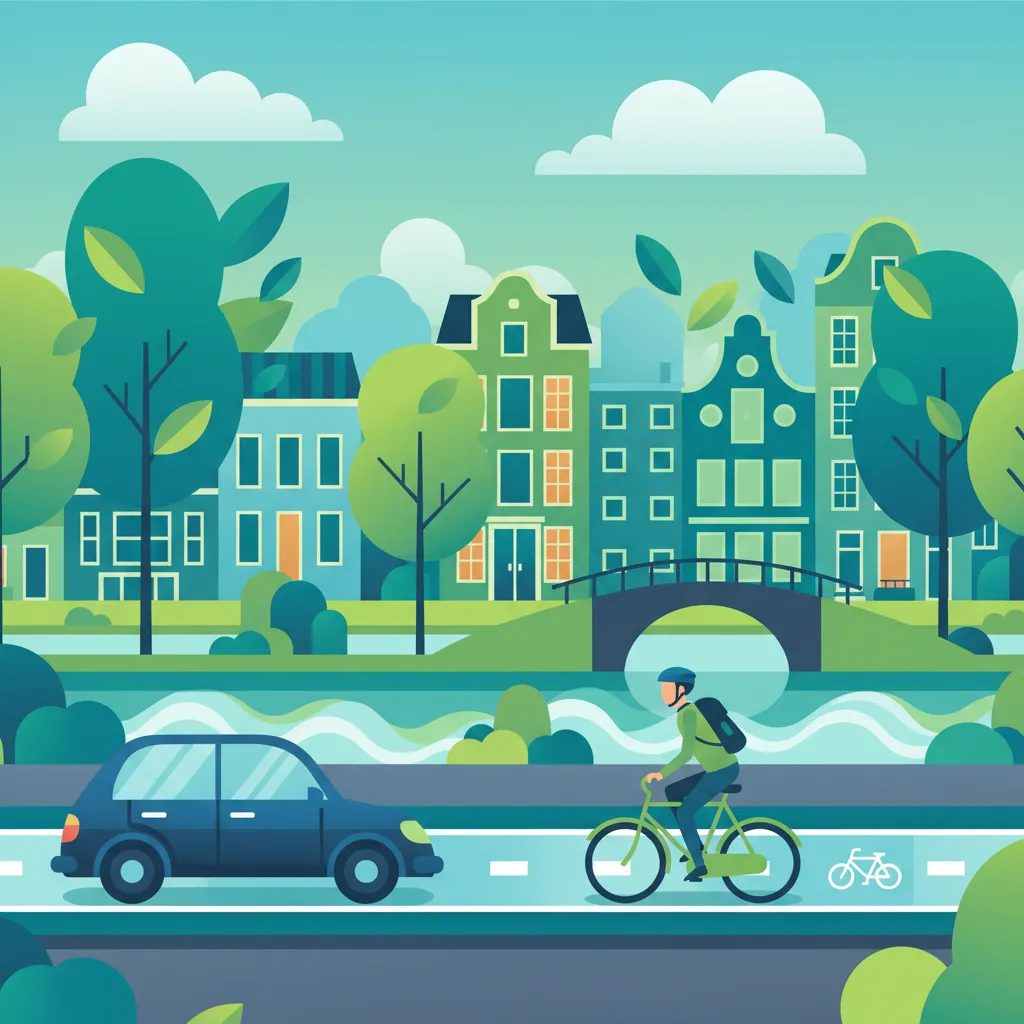
This lesson details the best practices for sharing the road with cyclists, who are even more vulnerable than moped riders. It explains the legal requirements and safe etiquette for overtaking cyclists, emphasizing the need to provide ample space. The content also reviews the rules of interaction on designated cycle paths (Cykelbana) where both may be present.

This lesson goes beyond mechanical signals to cover the subtle art of non-verbal communication in traffic. It highlights the importance of making eye contact with drivers to ensure you have been seen before making a move. The content also reviews standard hand signals as a backup to electronic signals and discusses how clear, confident body language can make a rider's intentions more predictable.
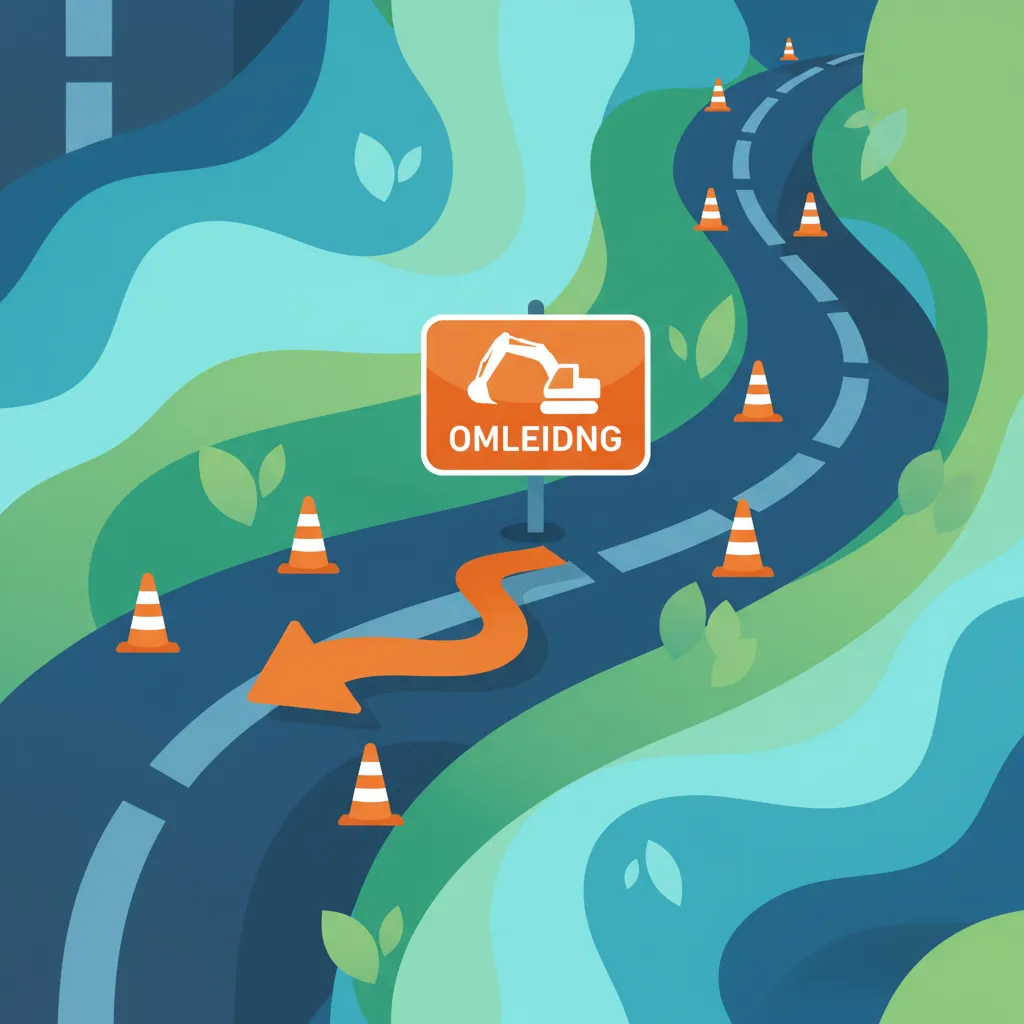
This lesson prepares riders for encountering roadworks, which can introduce temporary and often confusing changes to the road layout. It explains how to interpret the specific orange-colored signs used in these zones, including new speed limits, lane diversions, and warnings about surface hazards. The key takeaway is to reduce speed and increase vigilance when navigating through construction areas.

This lesson provides practical instructions for safely navigating different types of intersections and roundabouts. It covers procedures for approaching, entering, and exiting roundabouts, emphasizing the rule to yield to traffic already circulating. The content also addresses how to handle signal-controlled and uncontrolled intersections, ensuring riders select the correct lane and manage their speed appropriately.
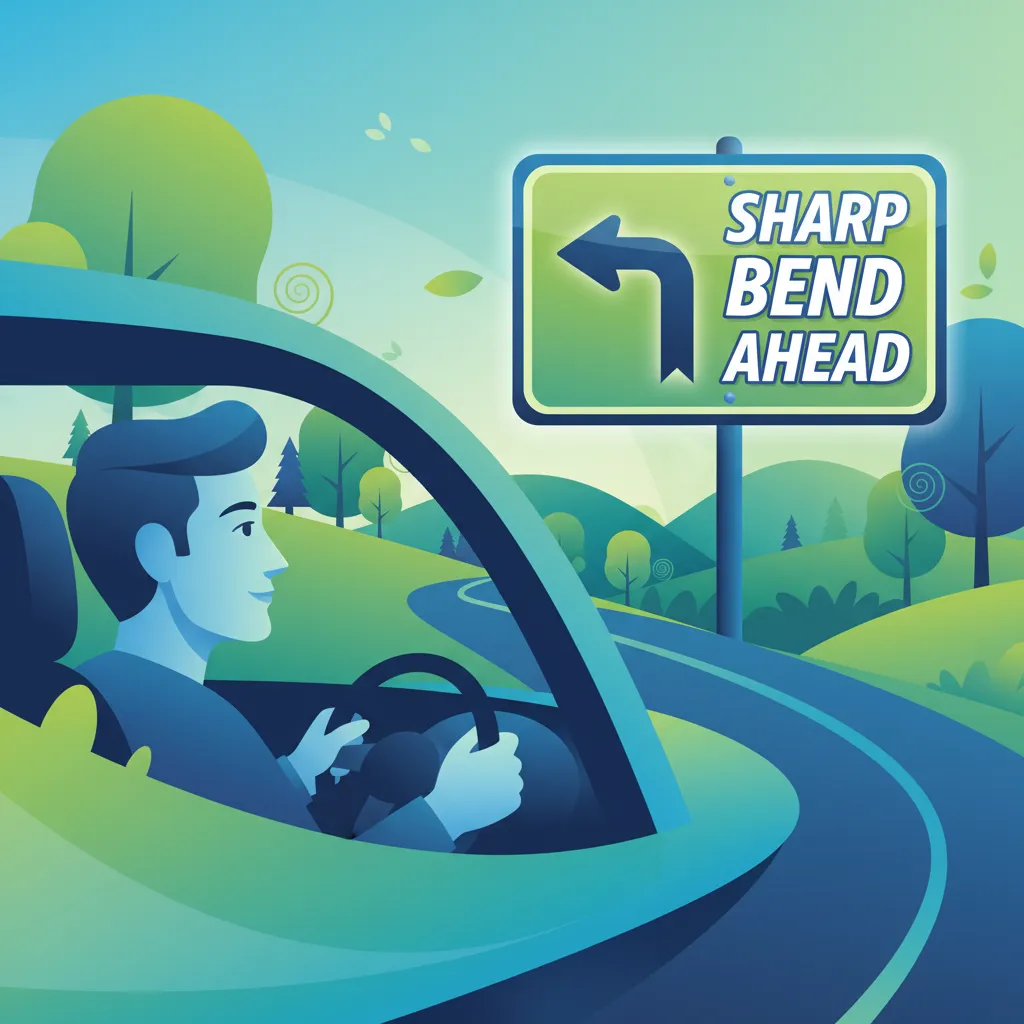
This lesson teaches riders to interpret warning signs (Varningsskyltar), which alert them to potential dangers on the road ahead. It covers a wide range of signs, including those for sharp curves, slippery surfaces, wildlife crossings, and upcoming roadworks. Understanding these triangular signs allows riders to anticipate hazards, adjust their speed and position proactively, and enhance their overall safety.
This lesson explains the specific regulations for lanes designated for particular users, such as buses or cyclists. It clarifies under what circumstances a moped is permitted to enter these lanes and the rules that must be followed while in them. Understanding these regulations is key to navigating complex urban environments legally and safely.

This lesson clarifies the regulations for operating a moped on cycle paths (Cykelbana) and other shared spaces in Sweden. It explains which types of mopeds are permitted on these paths and the specific rules that apply, such as lower speed limits and the duty to yield to cyclists. The content focuses on safe interaction and communication to ensure peaceful coexistence with other users in these environments.
Find clear answers to common questions learners have about Road Markings Relevant to Mopeds. Learn how the lesson is structured, which driving theory objectives it supports, and how it fits into the overall learning path of units and curriculum progression in Sweden. These explanations help you understand key concepts, lesson flow, and exam focused study goals.
In Sweden, a solid white line generally means you must not cross it to overtake or change lanes, indicating a boundary or hazard. A broken white line usually permits crossing for overtaking or lane changes when safe. For mopeds, these rules are crucial for safe lane discipline and avoiding collisions, especially on busy roads.
Road markings often reinforce or clarify priority rules. For example, a stop line (Stopplinje) before an intersection indicates you must stop and yield. Markings for pedestrian crossings (Övergångsställe) also signify that pedestrians have priority. Understanding these markings helps you anticipate who has the right-of-way in various situations.
While there aren't many markings exclusively for mopeds, you will encounter specific markings related to cycle paths (Cykelbana) and often shared lanes. Mopeds might share lanes with cyclists or be directed onto specific parts of the road. It's important to recognise these markings and follow the associated rules for safe co-existence.
When you see markings for a pedestrian crossing (Övergångsställe), you must be prepared to stop if a pedestrian intends to cross. Always look ahead for these markings and be ready to yield the right-of-way. This is a common area for theory test questions, so understanding your duty is vital for safety and passing the exam.
Generally, mopeds are not permitted to use bus lanes unless specific signage or road markings indicate otherwise, such as a shared lane marking. Most bus lanes (Busskörfält) are reserved for public transport. Always pay close attention to all signs and markings to ensure you are using the correct part of the road.