
Logo
Swedish Driving Theory Courses

Lesson 5 of the Riding in Adverse Weather and Light Conditions unit

Swedish Moped Theory AM: Adjusting Riding Style for Seasonal Variations

As a moped rider in Sweden, your safety depends on adapting your riding style to the changing seasons. This lesson, part of the 'Riding in Adverse Weather and Light Conditions' unit, will equip you with the knowledge to anticipate and manage seasonal hazards, ensuring you can navigate Swedish roads confidently year-round. Understanding these adjustments is crucial for both your practical safety and for passing the Category AM theory exam.
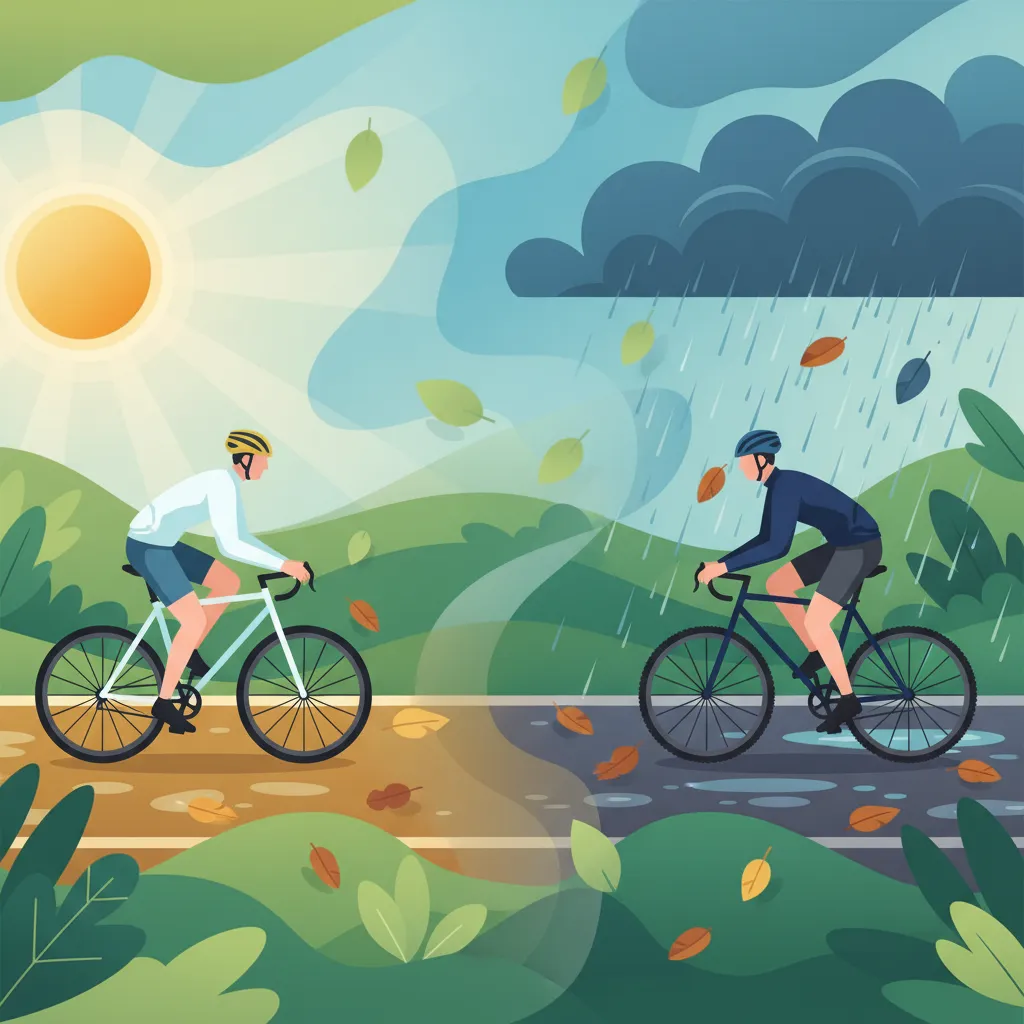
seasonal ridingadverse weathermoped safetySweden AM licencehazard perception
Swedish Moped Theory AM: Adjusting Riding Style for Seasonal Variations
Swedish Moped Theory AM

Adjusting Moped Riding for Swedish Seasonal Weather Changes

Riding a moped in Sweden offers freedom and efficiency, but it also demands a continuous adaptation to the country's distinct seasonal changes. The Swedish climate, with its diverse transitions from bright summers to snowy winters, significantly impacts road conditions, visibility, and vehicle performance. For Category AM (moped) riders, understanding and proactively adjusting riding style is not just about comfort; it is a fundamental aspect of safety and legal compliance.

This lesson delves into how the predictable variations across spring, summer, autumn, and winter create unique challenges for moped riders. By fostering a mindset of constant evaluation and adjustment, you can mitigate risks such as loss of traction, reduced visibility, and misjudgement of speed or distance, ensuring a safer and more confident riding experience throughout the year.

Understanding Seasonal Hazards for Moped Riders in Sweden

Seasonal changes are a primary factor in influencing road safety for mopeds. The shift in temperature, precipitation, and daylight profoundly alters the environment, presenting hazards that require specific attention and riding modifications. Ignoring these predictable changes is a common cause of accidents involving loss of control or reduced perception.

The Importance of Adapting Your Moped Riding Style

Adapting your moped riding style for seasonal variations is crucial for several reasons. Firstly, it directly reduces the risk of crashes by accounting for reduced tyre grip on surfaces like wet leaves, ice, or loose gravel. Secondly, it helps preserve the integrity of your moped by preventing damage from harsh conditions or improper handling. Finally, it ensures you fulfil your legal obligations under Swedish traffic law (Trafikförordningen and Transportstyrelsen regulations), which mandate that drivers adapt their speed and behaviour to prevailing road conditions. This proactive approach to seasonal adjustments transforms environmental challenges into manageable aspects of your daily ride.

How Seasonal Changes Affect Road Conditions and Safety

Seasonal changes introduce a range of physical and human factors that impact moped safety:

  • Safety Physics: The coefficient of friction (µ) between tyres and the road surface changes dramatically. It falls significantly with wet leaves, snow, ice, or loose gravel, meaning your stopping distance increases inversely with this coefficient. For example, a surface with half the friction will require twice the stopping distance at the same speed.
  • Human Factors: Low sun angles, glare from reflective surfaces (like snow or wet roads), and reduced daylight hours increase visual reaction time, making it harder to spot hazards. Cold weather can also reduce rider dexterity and affect tyre pressure, further impacting control.
  • Legal Intent: Swedish traffic legislation is designed to ensure safety. It mandates appropriate lighting, tyre conditions, and a reasonable speed and behaviour adapted to current road conditions. Failing to meet these requirements can lead to fines and, more importantly, put you and others at risk.

This lesson directly builds on the fundamental concepts of riding in adverse weather and light conditions (Lesson 7) and provides essential context for understanding protective equipment (Lesson 8) and interacting safely with other road users (Lesson 9).

Key Principles for Safe Seasonal Moped Riding

A systematic approach to seasonal adjustments involves continuously evaluating the environmental state (temperature, precipitation, daylight, foliage) and your vehicle's state (tyre condition, lighting, load). Based on this assessment, you should modify your speed, braking technique, positioning on the road, and visibility tactics.

Assessing Road Surface Conditions Throughout the Year

The road surface is your moped's primary contact point with the environment, and its characteristics change dramatically with the seasons. A systematic visual and tactile assessment of the road surface helps you identify the dominant seasonal hazard and choose the appropriate riding technique.

Definition

Seasonal Surface Assessment

Systematic visual and tactile inspection of the road surface to identify the dominant seasonal hazard (e.g., wet leaves, gravel, snow/ice, water puddles, glare). This assessment dictates your speed, braking style, lane choice, and distance to other users.

Here's how different seasonal conditions affect the road:

  • Wet Leaf Cover (Autumn): A thin layer of moisture-soaked foliage acts like a low-friction film, drastically reducing tyre grip. This can be as slippery as ice and requires significant speed reduction and smooth inputs.
  • Loose Gravel / Thaw-Slush (Early Spring): After winter, melting snow and ice, combined with winter road sanding, can leave non-cohesive aggregate on the road. This loose gravel reduces tyre bite, making braking and turning more precarious. Thaw-slush, a mixture of water and melting snow, creates unpredictable grip.
  • Snow & Packed Ice (Winter): These surfaces have very low coefficients of friction (µ), ranging from around 0.2 for fresh powder to 0.4 for packed ice. Even a thin layer of black ice, often invisible, poses an extreme hazard.
  • Water Puddles & Standing Water (Any Season): Large amounts of standing water can lead to hydroplaning if your speed exceeds approximately 30 km/h on a moped. This occurs when the tyres lose contact with the road surface and ride on a layer of water.
  • Heat-Softened Asphalt (Summer): During hot summer days, asphalt can soften, leading to reduced hardness. While it generally increases the contact patch and doesn't reduce grip as dramatically as other hazards, it can affect handling and increase tyre wear over prolonged periods.

Understanding these conditions allows you to anticipate hazards. For instance, riding through a park lane after autumn rain with uncleared fallen oak leaves means friction is severely reduced, potentially to ≈0.3. Similarly, crossing an urban bridge at dawn in winter may involve a thin ice layer, necessitating a speed reduction below 25 km/h.

Effective Visibility Management in Changing Light

Maintaining optimal visual perception of your environment is paramount, and seasonal light changes require specific actions. This involves adjusting your headlamp usage, choosing appropriate eyewear, and modifying your riding position to counter glare or darkness.

Definition

Visibility Management

The set of actions a rider takes to ensure sufficient visual perception of the environment, accounting for seasonal changes in daylight, sun angle, and surface reflectivity. This includes appropriate headlamp use and glare mitigation techniques.

Key aspects of visibility management include:

  • Headlamp Modes: Understand when to use dipped (low) beam versus high (main) beam. Dipped beams are mandatory in low visibility conditions and during darkness, ensuring you are seen by others. High beams provide a longer light pattern for unlit roads but must be switched off when other traffic is present to avoid blinding them.
  • Glare Mitigation: Low sun angles in autumn and winter, or intense summer glare reflecting off wet roads or snow, can significantly impair vision. Using a tinted visor, polarized sunglasses, or timing your travel to avoid peak glare periods are effective strategies.
  • Reflectivity of the Road Surface: Snow-covered roads increase the overall reflected light, which can be both helpful for visibility and a source of glare. Wet surfaces, conversely, can create mirror-like reflections that hide potholes or road markings.
  • Artificial Lighting: In urban areas, street lamps provide some illumination, but moped riders should not rely solely on them. Ensuring your own lights are clean and functioning is always critical.

Under Swedish law, you must turn on dipped beams from half an hour before sunset until half an hour after sunrise, and whenever visibility is reduced to less than 100 metres (Trafikförordningen § 6). You must never assume bright daylight eliminates the need for headlamps; being seen is as important as seeing. For example, when riding southbound on a country road at 16:30 in late October, with the sun low behind you, using a tinted visor and keeping your low beam on is appropriate.

Optimising Moped Tyre Performance for Temperature

Ambient temperature directly affects your moped's tyre pressure, rubber elasticity, and consequently, its grip on the road surface. Proper tyre management is essential for safety and optimal performance.

Definition

Temperature-Influenced Tyre Performance

The effect of ambient temperature on tyre pressure, rubber elasticity, and consequently the tyre's grip on the road surface. This requires checking and adjusting pressure and selecting appropriate seasonal tyres.

Consider these factors:

  • Cold Contraction (≤ 5 °C): Tyre pressure drops by approximately 0.1 bar (1 psi) for every 10 °C fall in temperature. This means tyres lose pressure in colder months, reducing the contact patch and increasing the risk of slipping.
  • Heat Expansion (≥ 20 °C): Conversely, higher temperatures can cause tyre pressure to increase. While this is less critical than under-inflation, over-inflation can reduce grip and comfort.
  • Winter Tyre (M+S) Use: Although not always mandatory for mopeds in the same way as cars, tyres with an approved M+S (Mud and Snow) tread pattern are highly recommended and often necessary for winter conditions. They offer superior grip on snow and ice.
  • Studded Tyre: In Sweden, studded tyres are allowed from October 1st to April 15th, with vehicle-specific restrictions. They provide excellent grip on ice but can reduce grip on dry asphalt and should be used only when conditions warrant.

You should check your tyre pressure regularly, especially with significant temperature shifts. In cold months, add air to maintain optimal pressure. A common misunderstanding is assuming the manufacturer's "cold-inflation" pressure is automatically optimal for warm summer riding; it's a baseline that needs adjustment.

Tip

When "winter conditions" (snow, slush, ice, or frost) exist, winter tyres (M+S) or studded tyres are required for mopeds, regardless of the date (Transportstyrelsen Regulation, § 4 (16)).

Dynamic Speed Regulation for Varying Grip and Conditions

Your speed must always be adjusted dynamically to match current road conditions. This principle is fundamental to safe riding, especially when conditions change seasonally.

Definition

Dynamic Speed Regulation

The process of continuously adapting vehicle speed to the calculated safe speed given current friction, visibility, and traffic density. This ensures sufficient reaction time and prevents loss of traction.

Key considerations for dynamic speed regulation:

  • Friction-Based Speed Limit: When the coefficient of friction (µ) is low, your safe speed decreases significantly. A simplified view shows that stopping distance increases proportionally to the square of your speed and inversely to friction ( (d = v^2 / (2 \mu g)) ). This means even a small reduction in speed can lead to a much safer stopping distance.
  • Visibility-Based Speed Limit: You must always be able to stop within the distance you can clearly see ahead. If visibility is reduced (e.g., by fog, heavy rain, or glare), your speed must be low enough to react to any hazard that appears within your sight distance.
  • Legal Speed Caps: While you must adapt your speed downwards for safety, you must never exceed the legal speed limits for mopeds (typically 45 km/h in Sweden), even if conditions appear to allow a higher speed.

Warning

Do not assume that the posted speed limit already accounts for all seasonal hazards. Trafikförordningen § 14 explicitly states: "The driver shall adapt speed to the conditions of the road, the vehicle and the driver's abilities." This places the responsibility squarely on the rider to assess and adjust.

For instance, if you encounter a thick layer of wet leaves in late autumn, even if the posted limit is 45 km/h, you should reduce your speed to around 20-25 km/h, recognising that µ might be as low as 0.3.

Considering Load and Balance on Your Moped Seasonally

The weight you carry and how it's distributed affects your moped's centre of gravity, tyre loading, and overall stability. This becomes even more critical when traction is reduced due to seasonal conditions.

Definition

Load & Balance Consideration

Evaluation of how cargo, passenger weight, and fuel load affect the centre of gravity and tyre loading, particularly critical when traction is reduced. This ensures the moped remains stable in low-traction conditions.

Points to consider:

  • Cargo Placement: Always place cargo as low and as centrally as possible. High or rear-biased loading can raise the centre of gravity, making the moped less stable, especially during cornering or braking on slippery surfaces. Ensure all cargo is securely fastened.
  • Passenger Effect: Carrying a passenger changes the moped's weight distribution. Both rider and passenger must cooperate, especially during turns, to maintain balance. The added weight also increases braking distance.
  • Cold-Induced Tyre Pressure Loss: This interacts with load; if your tyres are under-inflated due to cold weather and you add significant load, the contact patch can be compromised further, increasing slip risk.

Always avoid overloading your moped. Consult your moped's technical data sheet for its maximum permissible load, as outlined in Transportstyrelsen § 7 (3). Riding with an overloaded moped, particularly with cargo that shifts during braking, can lead to dangerous situations, especially on low-friction surfaces.

Seasonal Adaptation of Protective Gear for Moped Riders

Your personal protective equipment (PPE) must be appropriate for the season, ensuring comfort, maintaining dexterity, and enhancing your visibility to other road users.

Definition

Protective Gear Seasonalization

Selection and adjustment of personal protective equipment (PPE) according to seasonal climate, with emphasis on visibility and rider comfort. This includes waterproof outerwear, insulated gloves, and appropriate eye protection.

Essential gear considerations:

  • Waterproof Outerwear: Prevents wet clothing, which can lead to rapid cooling and reduce your grip on handlebars and controls. Breathable, waterproof jackets and trousers are invaluable.
  • Insulated Gloves: Cold hands quickly lose dexterity and tactile feedback, making it harder to operate controls safely. Insulated gloves are crucial in colder months.
  • High-Visibility Clothing: Reflective vests or jackets are especially important during low-light winter evenings, long twilight periods, or heavy rain, significantly improving your conspicuity to others.
  • Eye Protection: Your helmet's visor must be clean and free from scratches. Clear lenses are best for winter to prevent fogging, while tinted visors or polarized sunglasses are essential for managing bright summer glare. Riding without a suitable visor in bright sun can impair vision and is considered unsafe (Trafikförordningen § 5 (2)).

Always equip proper gear before departure. For example, wear a reflective jacket in December and carry sunglasses for bright June days.

Interpreting Road Markings and Signs in Seasonal Conditions

Seasonal factors can significantly affect the legibility and visibility of road markings (e.g., lane lines, arrows) and traffic signs. As a moped rider, you must be prepared for these challenges.

Definition

Seasonal Road Markings & Signage Perception

How seasonal factors affect the legibility of road markings (e.g., yellow lane lines, white arrows) and traffic signs. This requires extra caution and reliance on situational awareness when markings are obscured.

  • Snow-Covered Markings: In winter, snow can partially or completely cover lane lines, pedestrian crossings, and turning arrows. You must exercise extra caution and rely more on the visible edges of the road, the centre line if visible, and your general situational awareness.
  • Faded Paint After Summer Heat: Intense summer heat and wear can cause road markings to fade, making them blurry or less distinct.
  • Glare on Reflective Signs: The sun's angle can cause glare on reflective traffic signs, temporarily making them unreadable.

Warning

When road markings are obscured, you must proceed with caution and maintain your lane position as best as possible. Trafikförordningen § 3 states that road markings must be observed, but drivers may adjust if visibility is impaired.

For example, if a lane line is partially covered by snow in February, you should stay central to your perceived lane and use the edge of the road as a guide, rather than drifting.

Swedish Traffic Laws and Moped Regulations for Seasonal Riding

Swedish traffic legislation places clear responsibilities on drivers to adapt to varying conditions, including seasonal ones. Understanding these rules is crucial for safe and legal moped riding.

Lighting Rules for Mopeds in Sweden (Trafikförordningen § 6)

Proper lighting ensures you can see and, critically, be seen by others.

  • Dipped Beams (Low Beams): These must be illuminated from half an hour before sunset until half an hour after sunrise. They are also mandatory whenever visibility is reduced to less than 100 metres, such as during heavy rain, fog, or snow (Trafikförordningen § 6 (1)). Failing to use dipped beams in these conditions is a violation.
  • High Beams (Main Beams): These provide a longer, more concentrated light. They may only be used when no other road users (including pedestrians or cyclists) are within 200 metres in front of you and 100 metres to your sides, and the road is not already illuminated. Using high beams when others are present can cause dangerous glare (Trafikförordningen § 6 (3)).

Warning

Riding with lights off during required periods, or misusing high beams, are common violations that significantly increase accident risk and can result in fines.

Adapting Speed to Conditions (Trafikförordningen § 14)

This regulation is paramount for seasonal riding: "The driver shall always adjust speed to road, traffic, vehicle, and driver conditions." This includes accounting for all seasonal hazards.

  • Lowering Speed: On low-friction surfaces like wet leaves, gravel, snow, or ice, you must reduce your speed significantly, often well below the posted speed limit.
  • Increased Following Distance: With reduced grip, your stopping distance increases. Maintain a greater following distance – ideally 3 to 4 seconds – to give yourself more time to react.

Maintaining the posted speed limit on a wet, leaf-covered lane is a direct violation of this regulation, as it fails to adapt speed to hazardous road conditions.

Swedish Winter Tyre Requirements for Mopeds (Transportstyrelsen)

While general winter tyre periods exist (Oct 1st - Apr 15th for studded tyres), the specific rule for "winter conditions" is most critical.

Note

When "winter conditions" (snow, slush, ice, or frost) exist on the road, winter tyres (M+S) or studded tyres are legally required for mopeds (Category AM) in Sweden, irrespective of the calendar date (Transportstyrelsen Regulation, § 4 (16)).

This means if you encounter a frosty morning with ice on the road in September or April, you must have appropriate winter tyres fitted. Using summer tyres in such conditions is a violation and highly dangerous.

Moped Load Limits and Helmet Regulations

Two other key regulations impact seasonal riding safety:

  • Maximum Permissible Load: You must never exceed your moped's maximum permissible laden weight, as defined in its technical data sheet (Transportstyrelsen § 7 (3)). Overloading a moped, especially with shifting cargo, can severely compromise stability and braking, particularly on slippery seasonal surfaces.
  • Approved Helmets: All moped riders and passengers must wear an approved helmet (Trafikförordningen § 5 (2)). Crucially, the helmet must also have a visor that can be adjusted for glare or moisture. Riding without a visor, or with one that is cracked or scratched, impairs vision and safety.

Responding to Obscured Road Markings

When road markings are obscured by snow, water, or fading paint, you must still adhere to the principle of maintaining your lane and driving with caution (Trafikförordningen § 3). You cannot use obscured markings as an excuse for drifting out of your lane or ignoring traffic flow.

Common Mistakes and Safe Riding Practices by Season

Understanding common pitfalls specific to each season can help you avoid dangerous situations.

Autumn Riding: Wet Leaves and Decreasing Daylight

  • Mistake: Driving at the posted speed on wet, leaf-covered roads.
    • Why wrong: The coefficient of friction (µ) drops dramatically, potentially doubling your stopping distance.
    • Correct practice: Reduce speed by 30-50% (e.g., to 20-25 km/h), increase following distance to 3-4 seconds, and avoid sudden braking or steering.
  • Mistake: Neglecting to turn on dipped beams until it's completely dark.
    • Why wrong: Decreasing daylight and long twilight periods reduce your visibility to others.
    • Correct practice: Switch on dipped beams earlier, from half an hour before sunset, and wear high-visibility clothing.

Winter Riding: Ice, Snow, and Extreme Cold

  • Mistake: Using summer tyres during icy or frosty conditions.
    • Why wrong: Summer tyres lack the tread depth and rubber composition for grip on ice (µ ≈ 0.1), leading to almost no traction.
    • Correct practice: Install winter or studded tyres as soon as winter conditions appear.
  • Mistake: Neglecting tyre pressure after a significant night-time temperature drop.
    • Why wrong: Low pressure reduces the tyre's contact patch and overall grip, increasing slip risk.
    • Correct practice: Check and adjust tyre pressure before riding in cold weather; add approximately 0.2 bar (2 psi) for every 10 °C drop in temperature.
  • Mistake: Using high beams when oncoming traffic is within 150 metres.
    • Why wrong: Glare blinds other road users, significantly increasing accident risk in already challenging low-light conditions.
    • Correct practice: Switch to dipped beam as soon as another vehicle is within 200 metres (Trafikförordningen § 6 (3)).
  • Mistake: Ignoring partially snow-covered lane markings.
    • Why wrong: You may unintentionally drift into oncoming traffic or shoulder, creating conflict.
    • Correct practice: Follow the visible edge of the lane or the centre line of the road, and maintain extra caution.

Spring Riding: Thaw, Gravel, and Hidden Hazards

  • Mistake: Sudden heavy braking on loose gravel after the winter thaw.
    • Why wrong: Loose gravel provides very low traction. Abrupt braking, especially with the front brake, can cause the wheel to lock and slide.
    • Correct practice: Apply progressive braking, gently using both front and rear brakes, anticipating reduced grip. Reduce speed significantly when encountering gravel patches.
  • Mistake: Assuming the road is clear of ice after daytime temperatures rise.
    • Why wrong: Shaded areas, bridges, and underpasses can retain black ice even when other surfaces are clear. Thaw-slush also presents unpredictable grip.
    • Correct practice: Be vigilant for hidden ice patches, especially in the mornings and evenings, and maintain a moderate speed, avoiding abrupt steering.

Summer Riding: Sun Glare and Hot Asphalt

  • Mistake: Riding without a visor or appropriate eye protection during bright summer glare.
    • Why wrong: Sun in your eyes reduces reaction time and can cause temporary blindness, making it harder to spot hazards.
    • Correct practice: Always use your helmet's visor, or wear polarized sunglasses with appropriate UV protection. Keep your visor clean.
  • Mistake: Failing to adjust route timing to avoid peak low-sun glare.
    • Why wrong: Planning can help you avoid travelling directly into a low, glaring sun.
    • Correct practice: If possible, plan rides to avoid travelling eastbound in the early morning or westbound in the late afternoon when the sun is lowest.
  • Mistake: Assuming "dry road speed" applies universally to hot, softened asphalt.
    • Why wrong: While grip is generally good, extreme heat can slightly soften asphalt, affecting tyre wear and making sudden manoeuvres less predictable.
    • Correct practice: Maintain normal vigilance and be aware of how very hot asphalt might affect your tyres over long distances. Ensure tyre pressure is within the manufacturer's hot-weather range.

Practical Scenarios: Applying Seasonal Adjustments on Your Moped

Here are specific scenarios illustrating how to apply seasonal riding principles.

Scenario 1: Navigating Wet Autumn Leaves

  • Setting: Suburban road, 15 °C, after a light rain, with a thick layer of wet oak leaves on the asphalt. Daylight is ending in 30 minutes.
  • Rule/Decision point: Dynamic speed regulation, friction reduction (µ), headlamp use, following distance.
  • Correct behavior: The rider reduces speed significantly to about 20 km/h (well below the 45 km/h posted limit), switches on dipped beams 15 minutes before sunset, maintains a 3-second following distance from the vehicle ahead, and uses gentle throttle and braking inputs, avoiding sudden steering.
  • Incorrect behavior: The rider maintains 45 km/h (the posted limit), does not turn on lights until after sunset, and brakes sharply at an intersection, causing the front wheel to lock and skid.
  • Why correct: The lower speed matches the severely reduced friction from wet leaves. Activating lights early increases visibility to other road users as dusk approaches. Smooth inputs prevent loss of traction on the slippery surface.

Scenario 2: Encountering Black Ice in Winter

  • Setting: Rural two-lane road, -2 °C, early morning. A 10-metre stretch of black ice is present after a recent frost, difficult to see. The rider is equipped with studded tyres.
  • Rule/Decision point: Tyre selection (already correct), speed adaptation, braking technique, body position.
  • Correct behavior: The rider anticipates possible ice on shaded or bridge sections, slows proactively to 15-20 km/h before the suspected patch, applies only gentle rear braking (or no braking at all) and minimal front braking, keeps the body centred over the moped (avoiding leaning), and gently glides over the patch.
  • Incorrect behavior: The rider travels at 45 km/h. When the tyre slips on the black ice, they instinctively brake heavily, leading to a loss of control, a skid, and a fall.
  • Why correct: Proactive speed reduction and extremely gentle inputs are vital on black ice, even with studded tyres. Proper body position maintains balance during low-traction moments.

Scenario 3: Managing Summer Sun Glare

  • Setting: Urban road, 28 °C, clear sky. The sun is low and directly ahead (westbound travel at late afternoon summer), causing intense glare reflecting off parked cars and shop windows.
  • Rule/Decision point: Glare mitigation, eye protection, speed adjustment, headlamp use (for being seen).
  • Correct behavior: The rider wears polarized sunglasses, ensures their helmet visor is clean and free of scratches, keeps dipped beams on (even in bright sun, for conspicuity), and slightly reduces speed to 30 km/h to allow for longer reaction time due to reduced visual acuity.
  • Incorrect behavior: The rider removes their sunglasses because they fogged up, squints into the sun, maintains 45 km/h, and does not adjust speed despite severely impaired vision.
  • Why correct: Polarized sunglasses significantly reduce glare, preserving visual clarity. Reducing speed compensates for the inherent limits of human perception in glaring conditions. Keeping lights on ensures others can see the moped despite the glare.

Scenario 4: Riding Through Spring Thaw-Slush on City Street

  • Setting: City street, 8 °C, after a recent temperature rise causing melted snow mixed with slush, with occasional water puddles. It's mid-afternoon.
  • Rule/Decision point: Tyre pressure adjustment, speed regulation, braking technique, awareness of standing water.
  • Correct behavior: The rider checks tyre pressure before starting (adding 0.1-0.2 bar due to the temperature change from colder days), reduces speed to 25-30 km/h when encountering slush or puddles, and uses both brakes gently and progressively when stopping at a traffic light. They avoid riding through deep puddles if possible.
  • Incorrect behavior: The rider rides with cold-inflated tyres (now slightly under-inflated for the warmer conditions), maintains 45 km/h through the slush, and brakes abruptly at a traffic light, causing a tyre lock and slide.
  • Why correct: Proper tyre pressure restores optimal contact patch for the conditions. Lower speed matches the reduced friction of slush and minimizes hydroplaning risk in puddles. Gentle braking maintains traction.

Scenario 5: Low-Visibility Night Riding with Obscured Markings

  • Setting: Rural road at 19:00 (winter twilight), light snow is falling, partially covering lane markings. Visibility is reduced to approximately 70 metres. The rider is using dipped beams.
  • Rule/Decision point: Headlamp usage, reflective gear, lane positioning, following distance, hazard perception.
  • Correct behavior: The rider keeps dipped beams on, wears a high-visibility reflective vest, follows the centre of their lane by using the visible road edge as a guide, increases following distance to 4 seconds, and is extra vigilant for road signs and other traffic.
  • Incorrect behavior: The rider turns off lights, assuming sufficient ambient light, drifts towards the unmarked side of the road, follows the vehicle ahead at only 2 seconds, and struggles to see approaching vehicles.
  • Why correct: Lights and reflective gear improve the moped's conspicuity to others in reduced visibility. Increasing following distance and using visible cues (road edge) compensate for obscured lane markings.

The Science of Seasonal Moped Safety: Physics and Human Factors

Understanding the underlying principles reinforces the importance of seasonal adjustments.

  • Physical Principles: The coefficient of friction (µ) is the critical factor for grip. It can drop from approximately 0.6-0.8 on dry asphalt to less than 0.2 on ice or wet leaves. Since stopping distance is proportional to the square of your speed and inversely proportional to µ, a modest speed reduction (e.g., 20%) can yield a significant safety margin (e.g., 44% shorter stopping distance).
  • Human Factors: The average human visual reaction time is around 0.75 seconds. If your visibility distance is, for example, only 50 metres (typical in winter dusk or fog), you can only safely travel approximately 20 km/h before the distance you need to stop exceeds your sight distance. This necessitates very low speeds in poor visibility.
  • Psychology of Glare: Bright sunlight or reflections can cause "disability glare," reducing your contrast sensitivity by up to 50%. This makes it difficult to distinguish objects, judge distances, and perceive hazards. Appropriate eyewear or a visor can mitigate this.
  • Risk Compensation: Riders may subconsciously over-estimate their grip, especially on new tyres or after a dry spell. Education on the specific effects of temperature and contamination on tyre performance helps counter this natural human bias. Statistical data (e.g., Swedish Transport Agency analysis showing a 30% higher crash rate on leaf-covered roads) underscores the real-world impact of these factors.

Essential Vocabulary for Seasonal Moped Riding in Sweden

Coefficient of friction (µ)
Ratio between the frictional force and the normal force; determines grip between tyre and road surface. Varies significantly with road surface condition.
Dipped beam / Low beam
Headlamp setting for normal night driving, providing a short, wide light pattern. Mandatory in low visibility.
High beam / Main beam
Headlamp setting for long, concentrated light, used only on empty, unlit roads.
Winter tyre (M+S)
Tyre with tread pattern optimized for mud and snow, required under Swedish winter conditions.
Studded tyre
Tyre equipped with metal studs to increase grip on ice, allowed in Sweden from Oct 1 to Apr 15.
Hydroplaning
Loss of traction caused by a layer of water separating the tyre from the road, more likely at speeds over 30 km/h.
Glare
Intense light that reduces visual acuity, often caused by low sun or reflective surfaces.
Visibility distance
Maximum distance at which a driver can reliably see and recognise objects on the road under current conditions.
Following distance
Gap between your moped and the vehicle ahead, measured in time (seconds) or metres.
Load limit
Maximum permissible total weight (vehicle + rider + cargo) as defined by the manufacturer.
Reflective vests
High-visibility clothing with reflective strips that enhance visibility in low-light conditions.
Tread depth
Measured depth of the tyre’s groove; legally required minimum in Sweden is 1.6 mm.
Cold inflation pressure
Tyre pressure measured when the tyre is at ambient temperature (≤ 5 °C), serving as a baseline.
Dynamic speed regulation
Ongoing adjustment of speed based on real-time assessment of road, weather, load, and visibility.

This lesson builds significantly on prior knowledge and prepares you for future, more specific driving scenarios.

Learn more with these articles

Check out these practice sets


Search topics related to Adjusting Riding Style for Seasonal Variations

Explore search topics learners often look for when studying Adjusting Riding Style for Seasonal Variations. These topics reflect common questions about road rules, driving situations, safety guidance, and lesson level theory preparation for learners in Sweden.

adjust moped riding for seasons Swedenseasonal moped hazards Sweden AM licenceriding moped on wet leaves theory testwinter moped riding safety Swedensummer sun glare moped driving tipsSwedish traffic rules seasonal changeshow to ride moped in snow AM examadapting speed for weather moped theory

Related driving theory lessons for Adjusting Riding Style for Seasonal Variations

Browse additional driving theory lessons that cover connected traffic rules, road signs, and common driving situations related to this topic. Improve your understanding of how different rules interact across everyday traffic scenarios.

Seasonal Hazards and Riding Adjustments for Mopeds in Sweden

Understand the specific hazards associated with different seasons in Sweden, such as wet leaves, loose gravel, and sun glare. Learn how to proactively adjust your moped riding style to maintain safety throughout the year, based on official traffic rules.
seasonal ridingroad conditionshazard perceptionSweden AM licencetheory exam prep
Wet Roads, Aquaplaning, and Reduced Grip lesson image

Wet Roads, Aquaplaning, and Reduced Grip

This lesson details the specific hazards associated with riding on wet roads, including significantly increased stopping distances and the risk of aquaplaning. It explains how to recognize conditions where aquaplaning is likely and the importance of reducing speed. Riders will learn to use smoother throttle, braking, and steering inputs to maintain traction and control.
Swedish Moped Theory AMRiding in Adverse Weather and Light Conditions
View lesson
Snow, Ice, and Frost Management lesson image

Snow, Ice, and Frost Management

This lesson addresses the severe dangers of riding a moped in snow and icy conditions. It explains how to identify potential hazards like black ice and emphasizes that avoiding riding in such conditions is the safest strategy. For situations where it cannot be avoided, it provides advice on extremely gentle control inputs and vehicle preparation.
Swedish Moped Theory AMRiding in Adverse Weather and Light Conditions
View lesson
Adjusting Speed for Road Conditions lesson image

Adjusting Speed for Road Conditions

This lesson teaches the crucial skill of adapting speed to prevailing conditions, emphasizing that the posted speed limit is a maximum, not a target. It covers various scenarios such as rain, fog, heavy traffic, and poor road surfaces, explaining why reducing speed is essential for maintaining vehicle control and safety. The goal is to cultivate a proactive mindset where the rider constantly assesses risk and adjusts their speed accordingly.
Swedish Moped Theory AMSpeed Limits and Safe Following Distances
View lesson
Seasonal Equipment, Clothing, and Rider Visibility Adjustments lesson image

Seasonal Equipment, Clothing, and Rider Visibility Adjustments

This lesson provides practical advice on selecting the appropriate riding gear for the diverse Swedish seasons. You will learn about the importance of layering for warmth in the cold, ventilated gear for summer heat, and effective waterproofs for rain. The content emphasizes how the right equipment not only keeps you comfortable and focused but also provides crucial protection and enhances your visibility to other road users, making it a critical component of overall motorcycle safety.
Swedish Motorcycle Theory AAdverse Weather & Low-Grip Conditions
View lesson
Riding in Darkness and Dusk (Headlamp Use) lesson image

Riding in Darkness and Dusk (Headlamp Use)

This lesson provides essential strategies for riding safely at night and during twilight hours. It covers the correct use of headlights to maximize visibility without dazzling other drivers and emphasizes the need to reduce speed to compensate for shorter sight distances. The content also highlights the importance of wearing reflective gear to be seen by others.
Swedish Moped Theory AMRiding in Adverse Weather and Light Conditions
View lesson
Cold Weather, Ice, and Snow: Low-Grip Surface Handling lesson image

Cold Weather, Ice, and Snow: Low-Grip Surface Handling

This lesson provides essential information for any motorcyclist considering riding in cold Swedish weather. You will learn how cold temperatures affect tire performance and the extreme caution required on surfaces with potential ice or snow. The content focuses on recognizing hazardous spots like black ice, the need for exceptionally smooth and gentle control inputs, and why in many cases, the safest decision is not to ride at all in such conditions.
Swedish Motorcycle Theory AAdverse Weather & Low-Grip Conditions
View lesson
Night-time Visibility and Lighting Requirements (Ljusskyltar) lesson image

Night-time Visibility and Lighting Requirements (Ljusskyltar)

This lesson details the legal requirements for moped lighting in Sweden and provides best practices for riding at night or in low-light conditions. It explains the correct use of high and low beam headlights, the importance of a functioning tail light, and the role of reflectors in being seen. The goal is to ensure the rider is as visible as possible to others and can adequately illuminate the road ahead.
Swedish Moped Theory AMPositioning, Lane Usage, and Visibility
View lesson
Rural Roads, Country Paths, and Agricultural Zones lesson image

Rural Roads, Country Paths, and Agricultural Zones

This lesson prepares you for the specific challenges of riding on rural roads in Sweden. You will learn how to read the road ahead for changes in surface quality, approach blind corners safely, and adjust your speed for narrow lanes with no shoulder. The content also covers how to anticipate and safely interact with slow-moving agricultural vehicles and the potential for wild animals on the road, ensuring you are prepared for the unpredictable nature of country riding.

Swedish Motorcycle Theory ARiding in Various Traffic Environments
View lesson
Riding in Rain: Hydroplaning and Surface Water Management lesson image

Riding in Rain: Hydroplaning and Surface Water Management

This lesson provides a complete guide to riding in wet conditions. You will learn how rain affects traction and braking distances, and the techniques needed to ride smoothly and safely, including gentle throttle and brake application. The content explains the phenomenon of hydroplaning, how to recognize conditions where it might occur, and what to do to avoid it, as well as tips on rain gear and maintaining clear vision.
Swedish Motorcycle Theory AAdverse Weather & Low-Grip Conditions
View lesson
Warning Signs (Varningsskyltar) lesson image

Warning Signs (Varningsskyltar)

This lesson teaches riders to interpret warning signs (Varningsskyltar), which alert them to potential dangers on the road ahead. It covers a wide range of signs, including those for sharp curves, slippery surfaces, wildlife crossings, and upcoming roadworks. Understanding these triangular signs allows riders to anticipate hazards, adjust their speed and position proactively, and enhance their overall safety.

Swedish Moped Theory AMSwedish Road Sign System for Mopeds
View lesson

Adapting Moped Riding for Sweden's Weather and Light Conditions

Learn how to adapt your moped riding for Sweden's varying weather and light conditions. This includes understanding challenges like wet roads, wind, darkness, and adjusting your speed and visibility strategies for safe driving.

adverse weathernight drivingvisibilitysafe drivingmoped safety
Adjusting Speed for Road Conditions lesson image

Adjusting Speed for Road Conditions

This lesson teaches the crucial skill of adapting speed to prevailing conditions, emphasizing that the posted speed limit is a maximum, not a target. It covers various scenarios such as rain, fog, heavy traffic, and poor road surfaces, explaining why reducing speed is essential for maintaining vehicle control and safety. The goal is to cultivate a proactive mindset where the rider constantly assesses risk and adjusts their speed accordingly.

Swedish Moped Theory AMSpeed Limits and Safe Following Distances
View lesson
Wet Roads, Aquaplaning, and Reduced Grip lesson image

Wet Roads, Aquaplaning, and Reduced Grip

This lesson details the specific hazards associated with riding on wet roads, including significantly increased stopping distances and the risk of aquaplaning. It explains how to recognize conditions where aquaplaning is likely and the importance of reducing speed. Riders will learn to use smoother throttle, braking, and steering inputs to maintain traction and control.

Swedish Moped Theory AMRiding in Adverse Weather and Light Conditions
View lesson
Snow, Ice, and Frost Management lesson image

Snow, Ice, and Frost Management

This lesson addresses the severe dangers of riding a moped in snow and icy conditions. It explains how to identify potential hazards like black ice and emphasizes that avoiding riding in such conditions is the safest strategy. For situations where it cannot be avoided, it provides advice on extremely gentle control inputs and vehicle preparation.

Swedish Moped Theory AMRiding in Adverse Weather and Light Conditions
View lesson
Riding in Darkness and Dusk (Headlamp Use) lesson image

Riding in Darkness and Dusk (Headlamp Use)

This lesson provides essential strategies for riding safely at night and during twilight hours. It covers the correct use of headlights to maximize visibility without dazzling other drivers and emphasizes the need to reduce speed to compensate for shorter sight distances. The content also highlights the importance of wearing reflective gear to be seen by others.

Swedish Moped Theory AMRiding in Adverse Weather and Light Conditions
View lesson
Cold Weather, Ice, and Snow: Low-Grip Surface Handling lesson image

Cold Weather, Ice, and Snow: Low-Grip Surface Handling

This lesson provides essential information for any motorcyclist considering riding in cold Swedish weather. You will learn how cold temperatures affect tire performance and the extreme caution required on surfaces with potential ice or snow. The content focuses on recognizing hazardous spots like black ice, the need for exceptionally smooth and gentle control inputs, and why in many cases, the safest decision is not to ride at all in such conditions.
Swedish Motorcycle Theory AAdverse Weather & Low-Grip Conditions
View lesson
Visibility Strategies in Traffic (High-Visibility Clothing) lesson image

Visibility Strategies in Traffic (High-Visibility Clothing)

This lesson focuses on proactive strategies to increase a moped rider's visibility to other drivers. It strongly advocates for the use of high-visibility and reflective clothing, helmets, and accessories to stand out in traffic. Additionally, it revisits the concept of lane positioning as a tool to avoid being in other drivers' blind spots and to create a more prominent presence on the road.

Swedish Moped Theory AMPositioning, Lane Usage, and Visibility
View lesson
Seasonal Equipment, Clothing, and Rider Visibility Adjustments lesson image

Seasonal Equipment, Clothing, and Rider Visibility Adjustments

This lesson provides practical advice on selecting the appropriate riding gear for the diverse Swedish seasons. You will learn about the importance of layering for warmth in the cold, ventilated gear for summer heat, and effective waterproofs for rain. The content emphasizes how the right equipment not only keeps you comfortable and focused but also provides crucial protection and enhances your visibility to other road users, making it a critical component of overall motorcycle safety.
Swedish Motorcycle Theory AAdverse Weather & Low-Grip Conditions
View lesson
Night Riding, Dark Conditions, and Reduced Visibility lesson image

Night Riding, Dark Conditions, and Reduced Visibility

This lesson addresses the specific challenges of riding at night or in low-light conditions. You will learn how to use your headlights most effectively, how to cope with the glare from oncoming traffic, and how darkness affects your depth perception and ability to judge distances. Strategies for spotting nocturnal animals and the increased importance of wearing reflective gear to be seen by others are also key components of this essential safety lesson.

Swedish Motorcycle Theory AAdverse Weather & Low-Grip Conditions
View lesson
Riding in Rain: Hydroplaning and Surface Water Management lesson image

Riding in Rain: Hydroplaning and Surface Water Management

This lesson provides a complete guide to riding in wet conditions. You will learn how rain affects traction and braking distances, and the techniques needed to ride smoothly and safely, including gentle throttle and brake application. The content explains the phenomenon of hydroplaning, how to recognize conditions where it might occur, and what to do to avoid it, as well as tips on rain gear and maintaining clear vision.
Swedish Motorcycle Theory AAdverse Weather & Low-Grip Conditions
View lesson
Weather-Related Speed Adjustment lesson image

Weather-Related Speed Adjustment

This lesson reinforces the core safety principle of adapting your driving to the prevailing weather conditions. You will learn why you must significantly reduce speed in heavy rain to avoid aquaplaning, how strong crosswinds can affect vehicle stability, and why reduced visibility in fog necessitates slower speeds and greater following distances. The goal is to instill a proactive approach to risk management whenever the weather is less than ideal.

Swedish Driving Theory BWinter and Adverse Weather Driving
View lesson

Frequently asked questions about Adjusting Riding Style for Seasonal Variations

Find clear answers to common questions learners have about Adjusting Riding Style for Seasonal Variations. Learn how the lesson is structured, which driving theory objectives it supports, and how it fits into the overall learning path of units and curriculum progression in Sweden. These explanations help you understand key concepts, lesson flow, and exam focused study goals.

What are the main seasonal hazards for mopeds in Sweden?

The main seasonal hazards include wet leaves and slippery road surfaces in autumn, ice, snow, and grit in winter, strong winds year-round but especially in exposed areas, and sun glare during summer, particularly in the early morning and late afternoon. Each requires specific adjustments to your riding style.

How should I adjust my speed and braking for wet leaves or ice?

When riding on wet leaves or ice, significantly reduce your speed. Braking should be gradual and smooth, using both brakes gently to avoid locking the wheels. A good rule of thumb is to double or triple your normal following distance and to brake much earlier than you normally would.

What is the safest way to deal with sun glare when riding a moped in Sweden?

Sun glare can severely impair your vision. If possible, wear sunglasses that meet safety standards. Try to time your rides to avoid the worst glare, and be extra cautious when approaching intersections or anticipating other road users, as they may also be affected by the glare.

How does wind affect moped stability, and what should I do?

Strong winds, especially crosswinds, can push your moped off course, affecting stability. Be prepared for gusts by leaning slightly into the wind if necessary. Be extra vigilant when passing large vehicles, as they can create unpredictable wind turbulence.

Does the AM theory exam include questions about seasonal riding?

Yes, the Swedish AM theory exam often includes questions related to hazard perception and safe riding in various conditions. Understanding how to adapt your riding style for different seasons is crucial for answering these questions correctly and ensuring you are prepared for real-world riding.

Continue your Swedish driving theory learning journey

Swedish road signsSwedish article topicsSearch Swedish road signsSwedish driving theory homeSwedish road sign categoriesSwedish Moped Theory AM courseSearch Swedish theory articlesSwedish driving theory coursesSwedish Driving Theory B courseSwedish driving theory articlesSwedish driving theory practiceSwedish practice set categoriesSwedish Motorcycle Theory A courseSearch Swedish driving theory practiceRoad Signs and Signals unit in Swedish Driving Theory BVehicle Control and Maneuvering unit in Swedish Driving Theory BPriority Rules and Intersections unit in Swedish Driving Theory BSpeed Limits and Distance Management unit in Swedish Driving Theory BAccident Response & Roadside Safety unit in Swedish Motorcycle Theory AAdverse Weather & Low-Grip Conditions unit in Swedish Motorcycle Theory ASpeed Limits and Safe Following Distances unit in Swedish Moped Theory AMEmergency Maneuvers & Obstacle Avoidance unit in Swedish Motorcycle Theory AEmergency Situations and Accident Procedures unit in Swedish Driving Theory BSnow, Ice, and Frost Management lesson in Riding in Adverse Weather and Light ConditionsWind Effects on Two-Wheel Stability lesson in Riding in Adverse Weather and Light ConditionsLegal Responsibilities, Documentation & Protective Equipment unit in Swedish Motorcycle Theory AWet Roads, Aquaplaning, and Reduced Grip lesson in Riding in Adverse Weather and Light ConditionsRiding in Darkness and Dusk (Headlamp Use) lesson in Riding in Adverse Weather and Light ConditionsAdjusting Riding Style for Seasonal Variations lesson in Riding in Adverse Weather and Light Conditions