As an AM moped rider in Sweden, you share the road with many users, including vulnerable cyclists. This lesson, part of Unit 9: Interaction with Other Road Users, focuses on how to safely share space with cyclists, both on general roads and dedicated cycle paths. Mastering these rules is crucial for your exam and for preventing accidents.
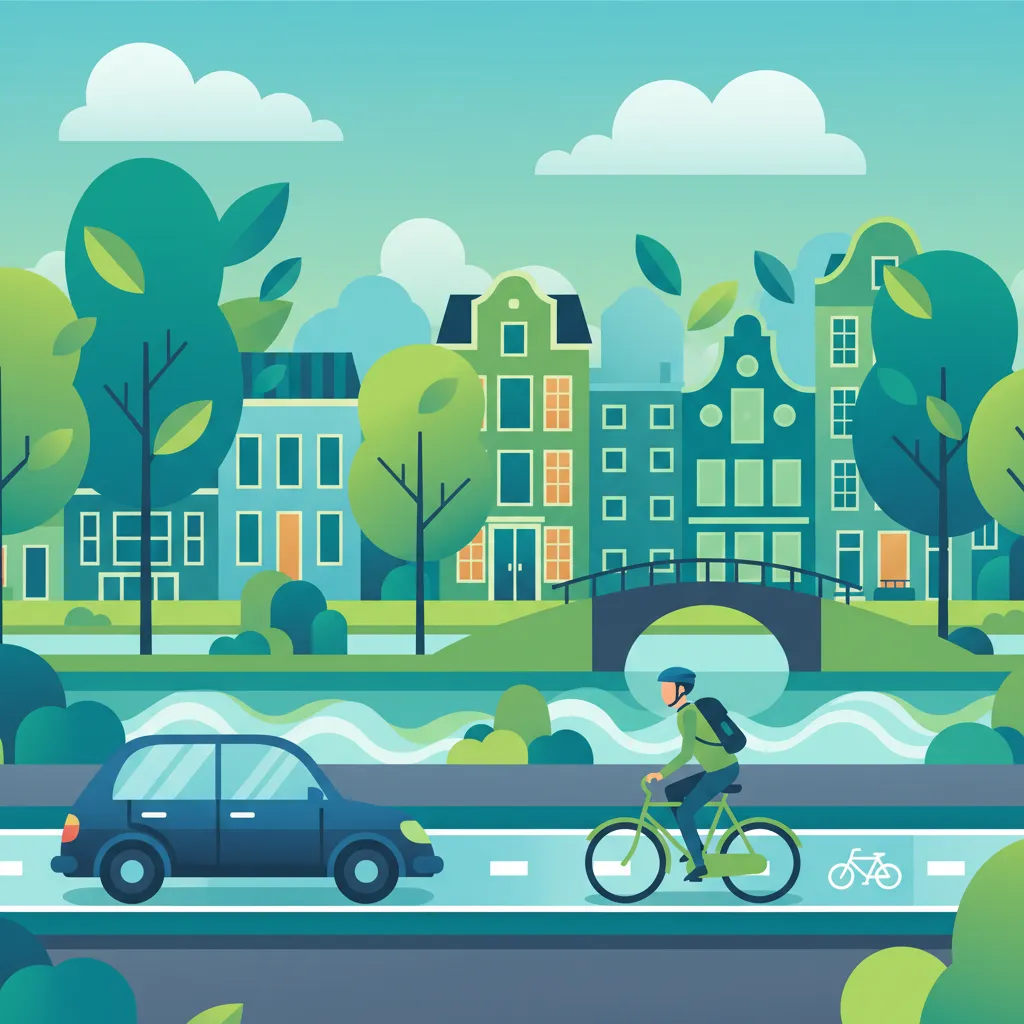
Sharing the road safely with cyclists is a fundamental aspect of responsible moped riding in Sweden. As a Category AM (moped) driver, you must understand that cyclists are among the most vulnerable road users, even more so than moped riders themselves. Their lack of protective enclosure, lower visibility, and susceptibility to environmental factors make them particularly susceptible to serious injury in a collision.
This lesson provides comprehensive guidance on the legal requirements, safe etiquette, and practical tactics for interacting with cyclists. Mastering these rules is not only crucial for passing your Swedish driving license theory exam but, more importantly, for ensuring real-world safety on the roads.
The interaction between mopeds and cyclists is governed by a combination of safety-oriented physics, legal intent, and road design considerations. Cyclists often operate in varying conditions, from dedicated cycle paths (Cykelbana) to shared urban streets, and their presence requires heightened awareness and specific defensive driving techniques from moped riders.
The core principles discussed in this lesson—such as maintaining safety distances, respecting right-of-way, and using signals—are designed to prevent collisions and foster predictable behavior, thereby reducing the risk of severe injuries for everyone on the road.
Effective and safe interaction with cyclists hinges on several core principles. These principles are designed to account for the physical differences between mopeds and bicycles, the varied infrastructure they use, and the need for clear communication to prevent accidents.
The Minimum Passing Distance (MPD) is the smallest lateral gap a driver must maintain when overtaking a cyclist. This distance is a legal requirement in Sweden and is critical for safety. It prevents side-collisions, accounts for potential cyclist sway, and mitigates the aerodynamic "draft" effect created by passing vehicles, which can destabilize a cyclist. If the MPD cannot be met safely, overtaking is strictly prohibited.
Practically, you must judge this distance carefully. If you are unsure whether you can achieve the required clearance, it is safer to abort the overtaking maneuver or wait for a more suitable opportunity.
Understanding when cyclists have legal Right-of-Way (Prioritet) over motorised traffic is essential for preventing collisions, particularly at intersections and roundabouts. These rules are enshrined in Swedish traffic law to ensure predictable traffic flow and protect vulnerable road users.
Moped drivers must yield, stop, or adjust their speed accordingly in these situations, even if the cyclist appears to be moving slower. Neglecting these priority rules is a common cause of accidents.
The horn serves as an audible warning to alert other road users of your presence or intent. When overtaking a cyclist, using a short horn blast can significantly enhance safety, especially when the Minimum Passing Distance cannot be visually confirmed with absolute certainty due to road conditions, lighting, or traffic.
The horn should only be used for safety-related warnings, not as an aggressive signal or a "go-ahead" after you've already passed.
Cycle paths (Cykelbana) are designated lanes or roadways primarily for bicycles. Understanding the specific rules regarding when a motorised vehicle, including a moped, may occupy a cycle path and how to interact with cyclists there is crucial.
Always check signage and markings carefully. Entering an exclusive cycle path is a violation, while on shared paths, you must still prioritize cyclist safety and adhere to specific rules.
Maintaining mutual visibility and demonstrating predictable positioning are paramount for safe interaction with cyclists. This means driving in a way that maximizes the cyclist’s ability to see your moped and anticipate your actions well in advance of any maneuver.
By being predictable, you reduce the likelihood of surprising a cyclist, allowing both road users more time to react safely.
Swedish traffic law, primarily the Trafikförordning (Traffic Ordinance) and the Vägtrafiklag (Road Traffic Act), establishes explicit rules for how motor vehicles, including Category AM mopeds, must interact with cyclists. Adherence to these regulations is legally binding and essential for road safety.
This regulation defines the precise lateral clearance required when overtaking a cyclist.
When a moped driver overtakes a cyclist, a minimum lateral distance of 1.5 metres must be maintained on a road with a separate motor vehicle lane. If the moped is on a cycle lane without an adjacent motor lane, the minimum distance is 1.0 metre.
This rule is mandatory for all Category AM vehicles on public roads where cyclists are present. Its purpose is to guarantee safe clearance, accounting for potential cyclist sway and the aerodynamic turbulence created by your vehicle. Failing to meet this distance can result in fines and increased collision risk.
This ordinance dictates when an audible warning must be given to a cyclist.
Before overtaking a cyclist, the moped driver must sound a brief horn if the minimum passing distance cannot be judged visually and safely.
This rule is mandatory in situations like urban areas, narrow streets, or low-visibility conditions to provide an auditory cue, unless specific "no horn" signs are present. The horn provides a crucial alert, reducing the element of surprise for the cyclist.
This regulation specifies situations where cyclists have legal priority.
Cyclists have priority at intersections where a marked bicycle lane crosses a road, especially when indicated by a green bicycle sign. In many roundabouts, cyclists entering also have priority over vehicles already circulating.
This rule ensures predictable crossing flow and prevents side-collisions. Moped drivers must always stop or give way to cyclists in these scenarios.
This ordinance governs moped usage on cycle paths that are designated for shared use.
On a shared cycle path (indicated by a yellow hyphen marking or combined symbol), motorised traffic, including mopeds, may travel at a maximum speed of 30 km/h and must maintain the appropriate Minimum Passing Distance (1.0 metre) when overtaking cyclists.
This rule limits speed differentials and reduces the potential impact force in case of a collision. It is mandatory on all such paths.
This foundational law underpins all specific traffic rules concerning vulnerable road users.
Motorised traffic must not endanger vulnerable road users, including cyclists, through reckless or careless driving.
This broad safety provision applies to all traffic situations and emphasizes the overarching responsibility of moped drivers to protect those more exposed. It means adopting a defensive driving style that anticipates potential hazards and avoids any action that could put a cyclist at risk.
Specific areas may have restrictions on horn use.
In residential areas marked with a “no horn” sign, the horn may not be used for overtaking warnings.
This rule is designed to prevent noise pollution while still requiring safe overtaking. In such zones, drivers must compensate for the inability to use the horn by ensuring visual confirmation of a safe MPD before proceeding.
Even with a clear understanding of the rules, certain situations frequently lead to violations or dangerous interactions with cyclists. Being aware of these common pitfalls can help moped riders anticipate and prevent them.
A frequent error is underestimating the required lateral clearance, especially on narrower roads or when feeling impatient. Passing with less than 1.5 metres (or 1.0 metre on shared paths) is a direct violation and significantly increases the risk of a side-swipe collision or causing the cyclist to lose balance.
Many moped drivers mistakenly assume that cyclists must always yield to motor traffic, particularly at intersections or roundabouts where cyclists may actually have the right-of-way. This oversight can lead to severe T-bone collisions.
Errors related to horn usage include either not using it when required (e.g., when visual confirmation of MPD is difficult) or using it aggressively, excessively, or in prohibited zones. Both scenarios can be dangerous or result in fines.
Shared cycle paths (marked with a yellow hyphen or combined symbol) have a strict speed limit of 30 km/h for mopeds. Exceeding this limit dramatically reduces reaction time and increases the severity of any potential collision.
Failing to adjust driving behavior for adverse weather (rain, fog, snow) or low light conditions (nighttime) is a dangerous mistake. These conditions reduce visibility and traction, making standard passing distances insufficient.
Safe interaction with cyclists requires flexibility and an ability to adapt your driving based on prevailing conditions. The environment, weather, and characteristics of the cyclist all influence how you should apply the core principles.
Adverse weather and low visibility significantly increase the risks for both moped riders and cyclists.
Different types of roads present unique challenges and requirements.
Not all cyclists behave or react in the same way. Adapting your approach to different types of cyclists enhances safety.
The detailed rules and guidelines for sharing the road with cyclists are not arbitrary; they are rooted in fundamental principles of safety and human behavior. Understanding the "why" behind the rules helps in better application and retention.
By understanding these underlying reasons, moped riders can develop a deeper appreciation for the regulations and apply them more effectively in real-world driving situations, fostering a culture of mutual respect and safety on Swedish roads.
Always assume cyclists might not see you. Take proactive steps to make yourself visible and predictable, such as using your lights, wearing bright clothing, and signaling early.
Applying the theoretical rules to real-world driving situations is key to becoming a safe and confident moped rider. These scenarios illustrate correct and incorrect behaviors.
Navigating the roads safely with cyclists requires constant vigilance, adherence to specific regulations, and a proactive, defensive mindset. As a Category AM moped rider in Sweden, your understanding and application of these principles are critical for your safety and the safety of vulnerable road users.
Here's a concise overview of the key takeaways from this lesson:
By internalizing and practicing these guidelines, you contribute to a safer, more harmonious road environment for everyone in Sweden.
Lesson content overview
Explore all units and lessons included in this driving theory course.
Explore search topics learners often look for when studying Sharing Roads with Cyclists (Cykelhjälp). These topics reflect common questions about road rules, driving situations, safety guidance, and lesson level theory preparation for learners in Sweden.
Browse additional driving theory lessons that cover connected traffic rules, road signs, and common driving situations related to this topic. Improve your understanding of how different rules interact across everyday traffic scenarios.
Understand the specific Swedish traffic laws and best practices for safely interacting with cyclists. This lesson covers essential rules for overtaking, providing adequate space, and navigating shared paths to ensure safety for all road users.

This lesson clarifies the regulations for operating a moped on cycle paths (Cykelbana) and other shared spaces in Sweden. It explains which types of mopeds are permitted on these paths and the specific rules that apply, such as lower speed limits and the duty to yield to cyclists. The content focuses on safe interaction and communication to ensure peaceful coexistence with other users in these environments.
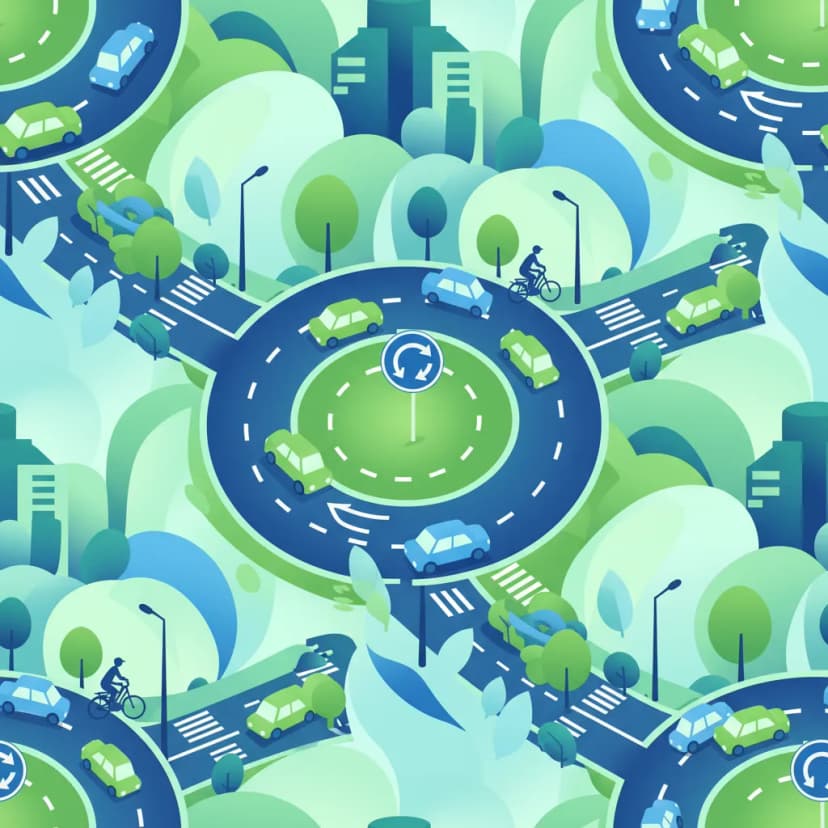
This lesson provides practical instructions for safely navigating different types of intersections and roundabouts. It covers procedures for approaching, entering, and exiting roundabouts, emphasizing the rule to yield to traffic already circulating. The content also addresses how to handle signal-controlled and uncontrolled intersections, ensuring riders select the correct lane and manage their speed appropriately.
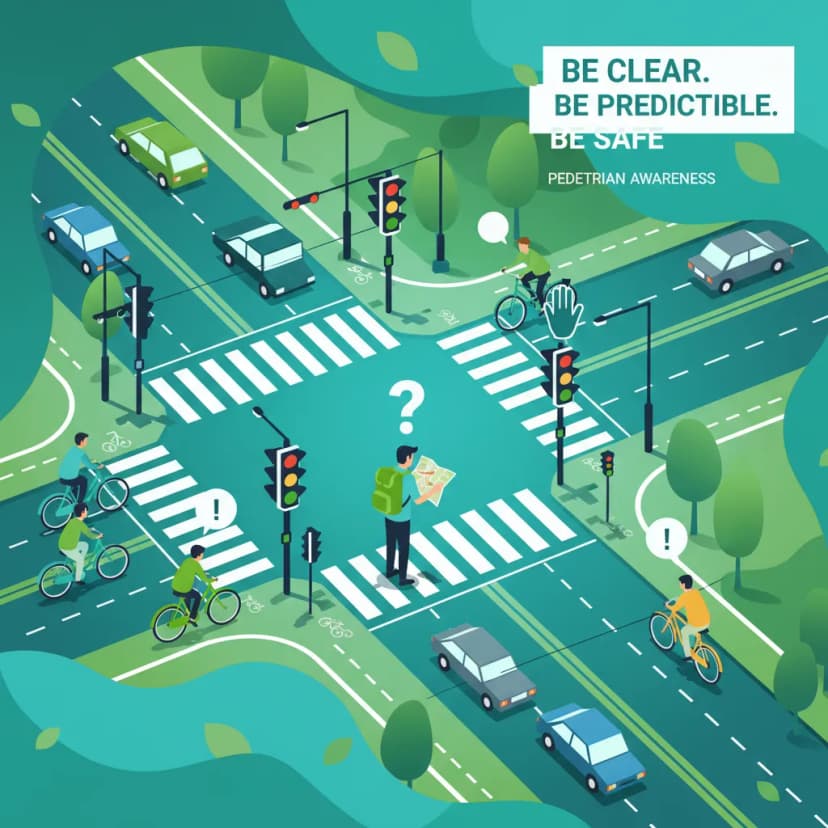
This lesson is dedicated to pedestrian safety, teaching riders to be constantly aware of people on foot, especially in busy urban environments. It reinforces the absolute duty to yield at marked crossings and encourages a cautious approach in areas like schools and shopping districts. The content stresses anticipating unpredictable actions, particularly from children or distracted pedestrians.
This lesson explains how to identify and interact with various types of mopeds and other low-speed vehicles common on Swedish roads. You will learn the difference between Class I and Class II mopeds and their place on the road, as well as how to recognize A-tractors by their LGF (långsamtgående fordon) sign. The key focus is on managing the large speed differential and making safe judgments when deciding to overtake.
This lesson moves beyond legal requirements to discuss the importance of ethical and courteous riding. It encourages riders to be patient, considerate of others, and aware of their impact on the community, for example, by minimizing noise. This fosters a positive public image of moped riders and contributes to a safer and more pleasant environment for everyone.
This lesson consolidates the key regulations that apply specifically to moped operation in Sweden. It covers mandatory rules such as speed limits, helmet use, and requirements for vehicle lighting and reflectors. Furthermore, the lesson explains the legal consequences of violations, including the system of fines and potential demerit points, ensuring riders understand their full range of legal responsibilities on the road.

This lesson serves as a summary of the legal requirements for safety equipment in Sweden. It reiterates the mandatory helmet law for both the rider and any passenger. It also touches on the rider's responsibility to ensure the moped itself is legally equipped with functioning lights, brakes, and other essential safety features, linking personal gear with vehicle roadworthiness.

This lesson focuses on developing the fine control needed for low-speed maneuvering, a common challenge in urban environments. It covers techniques for making tight turns, such as U-turns, by using a combination of clutch, throttle, and rear brake control. The goal is to build the rider's skill and confidence in handling the moped in parking lots, heavy traffic, and other confined areas.
This lesson provides in-depth analysis of how to safely interact with the full spectrum of road users. You will learn about the specific characteristics of each, such as the large blind spots of trucks, the potential for sudden movements from cyclists, and the unpredictability of pedestrians. The content teaches strategies for communication, anticipation, and defensive positioning to ensure safe and respectful coexistence on the road for everyone.
This lesson addresses the severe dangers of riding a moped in snow and icy conditions. It explains how to identify potential hazards like black ice and emphasizes that avoiding riding in such conditions is the safest strategy. For situations where it cannot be avoided, it provides advice on extremely gentle control inputs and vehicle preparation.
Learn about the specific risks and considerations when interacting with vulnerable road users, including cyclists. This theory content focuses on developing situational awareness and safe behaviour to prevent accidents and ensure smooth coexistence on Swedish roads.
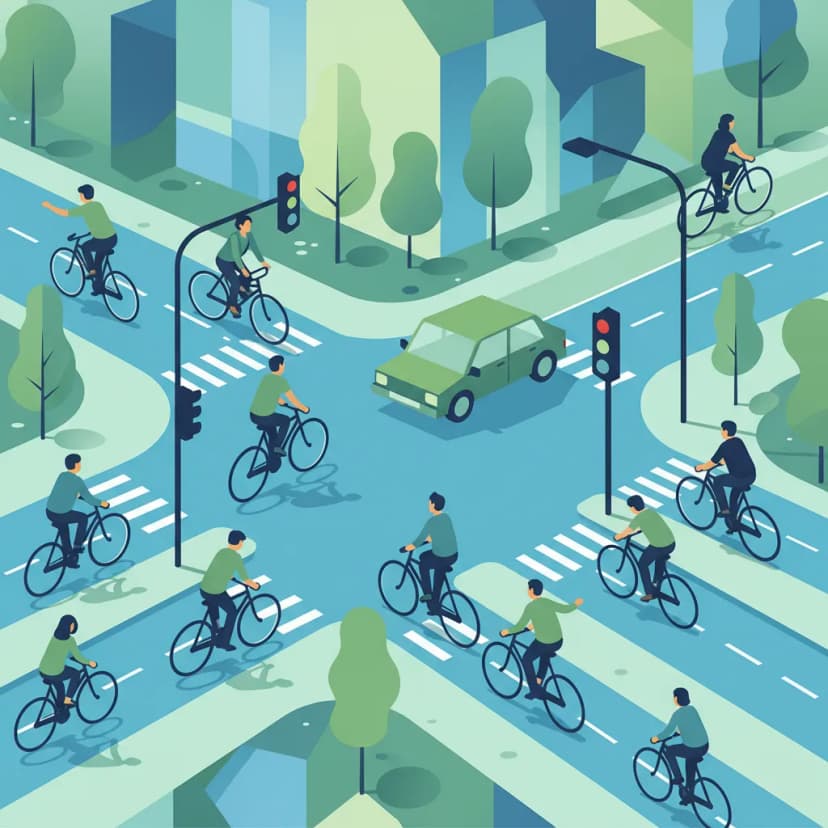
This lesson focuses on safe interaction with cyclists. You will learn to differentiate between a 'bicycle crossing' (cykelöverfart), where you have a duty to yield, and a 'bicycle passage' (cykelpassage), where specific priority rules apply. The content stresses the importance of leaving adequate space when overtaking cyclists and the critical danger of the 'right-hook' accident, emphasizing the need to check mirrors and blind spots carefully before turning right.
This lesson focuses on the unique challenges of driving in urban environments. You will learn techniques for anticipating the actions of vulnerable road users like pedestrians and cyclists, especially near crossings and bus stops. The content covers how to navigate narrow streets, one-way systems, and areas with heavy traffic, emphasizing the need for lower speeds, heightened awareness, and a defensive mindset.
This lesson provides in-depth analysis of how to safely interact with the full spectrum of road users. You will learn about the specific characteristics of each, such as the large blind spots of trucks, the potential for sudden movements from cyclists, and the unpredictability of pedestrians. The content teaches strategies for communication, anticipation, and defensive positioning to ensure safe and respectful coexistence on the road for everyone.
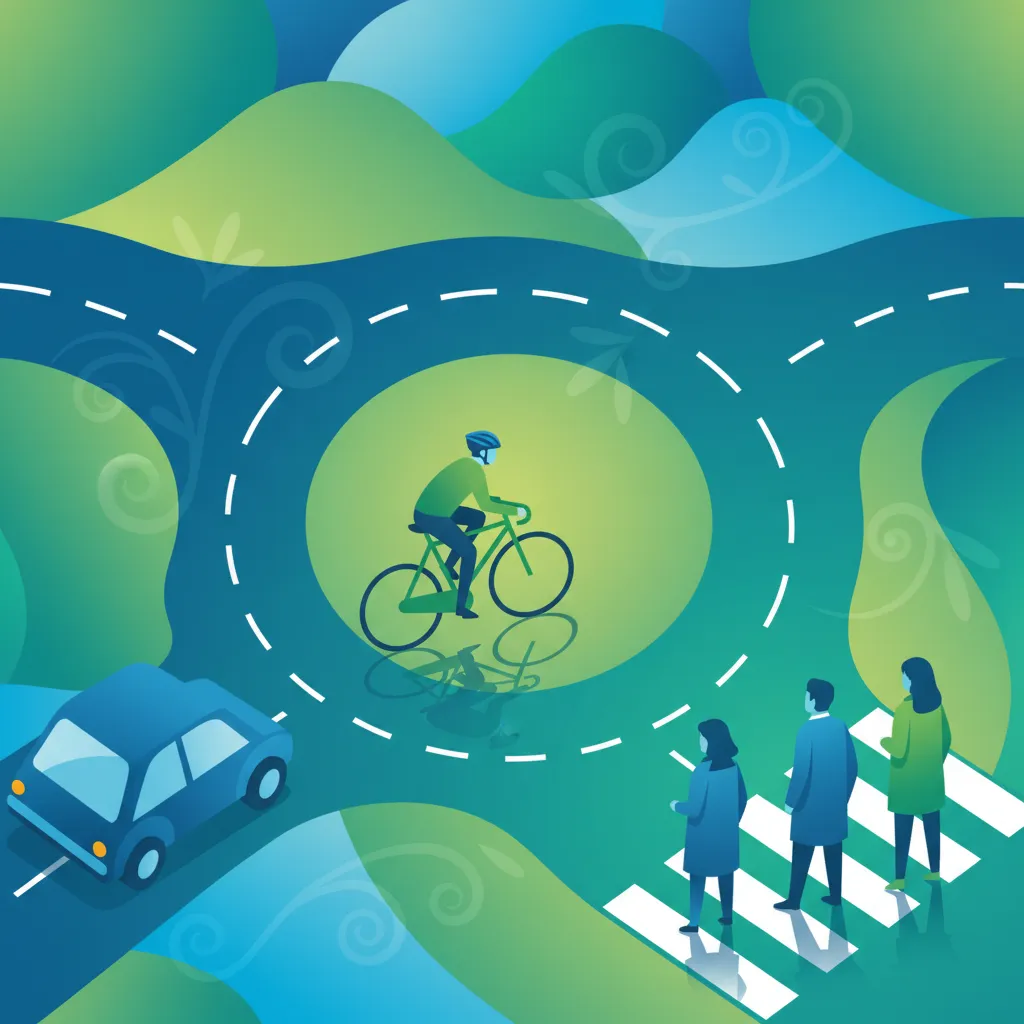
This lesson provides detailed guidance on navigating complex traffic points such as signalized intersections, multi-lane roundabouts, and pedestrian crossings. You will learn the correct procedures for entering and exiting roundabouts, the specific rules for yielding to pedestrians and cyclists at designated crossings, and how to interpret complex traffic light signals. These skills are vital for safe urban and suburban riding, where interaction with vulnerable road users is frequent.

This lesson details a driver's responsibility towards pedestrians. You will learn the strict rule of yielding to pedestrians who are on or about to enter a marked, uncontrolled crosswalk. The content also covers the specific, highly restrictive rules for driving in designated pedestrian zones (gågata) and 'walking speed' areas (gångfartsområde), where pedestrians have complete priority and vehicle traffic is severely limited.
This lesson teaches you how to analyze and assess risk when sharing the road with a variety of users, from large trucks to cyclists and pedestrians. You will learn to recognize common patterns of behavior and potential conflict points, allowing you to anticipate the actions of others before they create a dangerous situation. Developing this predictive mindset is a cornerstone of defensive riding and is key to staying safe in busy, complex traffic environments.
This lesson is dedicated to pedestrian safety, teaching riders to be constantly aware of people on foot, especially in busy urban environments. It reinforces the absolute duty to yield at marked crossings and encourages a cautious approach in areas like schools and shopping districts. The content stresses anticipating unpredictable actions, particularly from children or distracted pedestrians.
This lesson provides practical instructions for safely navigating different types of intersections and roundabouts. It covers procedures for approaching, entering, and exiting roundabouts, emphasizing the rule to yield to traffic already circulating. The content also addresses how to handle signal-controlled and uncontrolled intersections, ensuring riders select the correct lane and manage their speed appropriately.

This lesson focuses on the variety of road markings used on Swedish roads and their meaning for motorcyclists. You will learn the difference between solid and broken lines regarding overtaking, how to position yourself correctly at intersections based on markings, and how to interpret symbols painted on the road surface. Adhering to these markings is essential for maintaining correct lane discipline and ensuring predictability for other road users.

This lesson prepares you for the specific challenges of riding on rural roads in Sweden. You will learn how to read the road ahead for changes in surface quality, approach blind corners safely, and adjust your speed for narrow lanes with no shoulder. The content also covers how to anticipate and safely interact with slow-moving agricultural vehicles and the potential for wild animals on the road, ensuring you are prepared for the unpredictable nature of country riding.
Find clear answers to common questions learners have about Sharing Roads with Cyclists (Cykelhjälp). Learn how the lesson is structured, which driving theory objectives it supports, and how it fits into the overall learning path of units and curriculum progression in Sweden. These explanations help you understand key concepts, lesson flow, and exam focused study goals.
In Sweden, when overtaking a cyclist on your moped or other vehicle, you must maintain a safe distance. For mopeds and motorcycles, this is generally considered to be at least 1 meter, while for cars and larger vehicles, it's 1.5 meters. Always aim for ample space, especially if the cyclist is unsteady or if there's oncoming traffic or a cycle path.
Generally, mopeds (Category AM) are not allowed to use dedicated cycle paths (Cykelbana) unless specifically indicated by a sign allowing them. These paths are intended for bicycles and sometimes lighter electric scooters. If a moped is permitted, you must ride at a speed suitable for the path and be mindful of cyclists and pedestrians.
If a cyclist is ahead of you, maintain a safe following distance and be prepared to slow down or stop. Avoid honking aggressively. Look for opportunities to overtake only when it is safe, clear, and legal, ensuring you provide adequate space. Be patient and do not rush the cyclist.
Cyclists may use the main road, and you should treat them as any other vehicle regarding their right to be there. You must follow the same rules for overtaking them as you would on any other road. If they are in a designated lane, such as a cycle lane integrated into the main road, be extra aware of their presence and potential movements.
Using your moped's lights, especially during daylight hours, makes you more visible. Wear bright or reflective clothing, and always be aware of where cyclists are positioned relative to you. Avoid positioning your moped in their blind spots.