
This lesson focuses on the unique demands of riding on Swedish rural roads and country paths, a key area for the Category A motorcycle theory test. You will learn to anticipate specific hazards like agricultural machinery and wild animals, and how to safely navigate less predictable road conditions. Mastering these principles is essential for safe and confident motorcycle operation outside of urban environments.
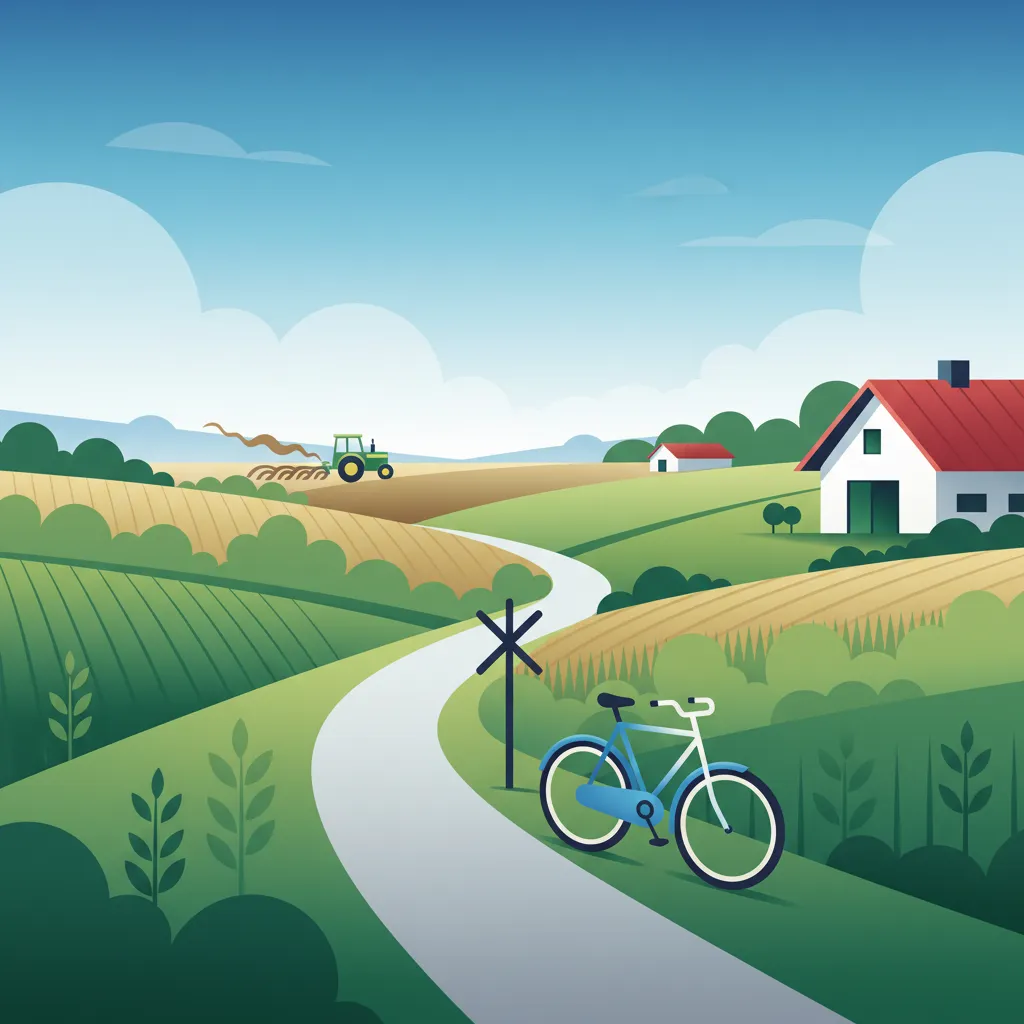
Riding a motorcycle on Sweden's rural roads, country paths, and through agricultural zones offers a unique experience, often characterized by scenic beauty and reduced traffic. However, these environments also present distinct challenges and hazards that demand specialized knowledge and skills from motorcyclists. Unlike urban settings, rural routes frequently feature variable road quality, limited visibility around corners, and mixed traffic including slow-moving farm machinery and unpredictable wildlife.
This lesson is designed to equip you with the essential understanding and techniques required to navigate these conditions safely and in compliance with Swedish traffic law. By mastering the concepts presented here, you will enhance your hazard perception, improve your control over the motorcycle in challenging situations, and contribute to overall road safety. This knowledge is crucial not only for passing the Swedish Category A motorcycle theory test but also for ensuring a lifetime of secure riding on all types of roads.
Rural environments, known as Landsväg in Sweden, encompass a vast network of roads connecting towns, villages, and farmlands. These roads can range from well-maintained paved surfaces to narrow, unpaved gravel paths. The inherent unpredictability of these routes is a primary concern for motorcyclists, requiring constant vigilance and adaptive riding strategies.
The specific risks in rural areas stem from several factors. Roads may lack paved shoulders, leaving little room for error or emergency maneuvers. Visibility can be severely restricted by dense forests, hills, or sharp bends, making it difficult to detect hazards in advance. Additionally, these areas are often shared with vehicles and users not typically found in urban traffic, such as tractors, combine harvesters, and grazing animals.
Mastering rural riding involves more than just adhering to posted speed limits. It requires a nuanced understanding of how road geometry, surface conditions, and surrounding land use impact your motorcycle's physics and your ability to react. Swedish traffic legislation, particularly Trafikförordningen (Traffic Ordinance) and Vägtrafiklag (Road Traffic Act), emphasizes the driver's responsibility to adjust speed and conduct to the actual road and traffic situation, rather than simply following statutory limits. This principle is particularly relevant on country roads where conditions can change rapidly.
This lesson builds upon foundational knowledge from earlier modules, including Speed Management and Distance Keeping, Motorcycle Dynamics & Control, and Hazard Perception & Risk Management. It provides a crucial link within the Riding in Various Traffic Environments unit, preparing you for the unique demands of low-traffic, often unstructured rural routes.
The type and condition of the road surface are paramount to a motorcyclist's safety, directly influencing the available grip coefficient (μ). This coefficient determines how much traction your tires have for braking, accelerating, and cornering. Rural roads often present frequent and abrupt changes in surface type, demanding continuous assessment and adaptation.
Most primary rural roads in Sweden are paved, typically with asphalt. These surfaces generally offer high and consistent grip (μ ≈ 0.7–0.9) in dry conditions, allowing for predictable handling and braking. However, even paved roads can become less forgiving when wet, covered in fallen leaves, or contaminated with mud or gravel tracked from adjacent fields. Always be observant for changes in the surface texture or color that could indicate reduced traction.
Many country paths and secondary rural roads are unpaved, consisting of loose gravel. These surfaces dramatically reduce grip (μ ≈ 0.3–0.5) compared to asphalt, and grip becomes highly variable. On gravel, sudden braking or aggressive steering can easily lead to a skid or loss of control. The motorcycle feels less stable, and stopping distances are significantly longer.
When encountering gravel, it is essential to:
In agricultural areas or after heavy rain, country paths can turn into muddy or soft soil tracks. These conditions offer extremely low friction (μ ≈ 0.1–0.2), making them highly challenging for motorcycles. Traction can be minimal, leading to significant wheel spin and difficulty maintaining balance. If possible, avoid such paths. If unavoidable, proceed at a walking pace, keeping your feet ready to dab for balance. Lean the motorcycle slightly less than usual and use minimal throttle and brake inputs.
During colder months, rural roads are highly susceptible to snow, ice, and frost, which drastically reduce grip (ice can be as low as μ ≈ 0.1). Black ice, which is nearly invisible, poses a particular danger. Vägtrafiklag 3 kap. 5 § explicitly mandates that drivers adapt their speed to winter conditions, even if the posted limit is higher.
On winter-affected roads, your riding speed should be significantly reduced, and all inputs (braking, acceleration, steering) must be exceptionally smooth and gentle. Increase your following distance to at least four seconds, and be prepared for extended stopping distances. Consider if riding is advisable at all, especially on two wheels, given the extreme risks.
Rural roads are frequently characterized by winding paths and tight curves, many of which are blind corners – sections where you cannot see oncoming traffic or potential obstacles beyond the apex. These require a conservative approach to ensure safety.
A blind curve is any bend that obscures your line of sight, preventing you from seeing the road ahead as far as your stopping distance. Common culprits include dense foliage, hills, buildings, or large rock formations. On a motorcycle, your ability to lean and change direction quickly gives you an advantage, but it also increases the risk if you enter a blind curve too fast and encounter a surprise.
To manage blind corners effectively, employ the following techniques:
point-and-squirt technique: Decelerate before the curve, use your brakes to set your entry speed, and only apply throttle once you can see the exit of the curve and are ready to accelerate out.Reducing speed before entering a blind curve is the single most critical safety measure. This allows you to stop within your visible stopping distance, providing ample time to react to unexpected hazards such as:
Vägtrafiklag 3 kap. 5 § states that drivers must not endanger others by reckless overtaking or entering a curve too fast. This principle underscores the importance of conservative speed management in blind corners. Earlier gear downshifts and proper use of lighting (as discussed below) further enhance safety.
Agricultural zones often mean sharing the road with agricultural vehicles – large, slow-moving farm machinery such as tractors, combine harvesters, sprayers, and hay wagons. These vehicles have unique characteristics that demand special attention from motorcyclists.
Farm machinery is typically wide, long, and heavy, often with limited acceleration and braking capabilities. Their operators may have restricted visibility due to the size and design of the equipment. They often move at very low speeds, sometimes as slow as 20 km/h or less, and require a wide turning radius, especially when turning into or out of fields. Many agricultural vehicles are also equipped with a distinctive "slow vehicle" sign, a red triangle with an orange-yellow reflective center.
Trafikförordningen 4 kap. 3 § requires drivers to give way to farm vehicles, particularly if they are operating on or crossing a road and display a "slow vehicle" sign. This is crucial because these machines cannot stop or maneuver quickly.
When you encounter an agricultural vehicle:
Trafikförordningen 3 kap. 5 §).Rural roads, especially those bordering forests or agricultural fields, are common areas for wildlife encounters. Animals such as moose (älg), deer (rådjur), wild boars (vildsvin), and smaller creatures like hares (hare) and foxes (räv) can cross the road unpredictably, posing a serious threat to motorcyclists.
Large ungulates like moose and deer are particularly dangerous due to their size and weight. A collision with a moose can be catastrophic, leading to severe injury or fatality for the rider. Smaller animals might cause a rider to swerve abruptly, resulting in a loss of control. Wildlife activity is highest during dawn, dusk, and certain seasons (e.g., mating season, autumn migration).
Animal anticipation is key to avoiding accidents. Always expect wildlife, particularly in areas marked with wildlife warning signs or known for animal crossings.
If an animal appears on the road:
While there's no specific law mandating horn usage for wildlife in Sweden, Trafikförordningen 3 kap. 1 § generally requires drivers to act in a way that does not endanger themselves or others, which includes responsible reactions to wildlife.
Many rural roads, particularly older country paths, feature narrow lanes without shoulders. This means the carriageway width is minimal, sometimes as little as 2.5–3 metres, with no paved or stable area adjacent to the road for recovery or emergencies.
On such roads, Vägtrafiklag 2 kap. 1 § states that vehicles must stay within the carriageway unless overtaking or avoiding an obstacle. This rule takes on critical importance on narrow roads. There is no forgiving space to drift.
Without a shoulder, hazards immediately adjacent to the carriageway become more dangerous. These can include:
Maintaining strict lane discipline and adapting your speed to the road's width are crucial for preventing accidents in these conditions.
Good lighting and optimal visibility are fundamental to safe riding, especially on unlit rural roads. The proper use of your motorcycle's headlights dramatically enhances your ability to see hazards and be seen by others.
Trafikförordningen 4 kap. 7 § provides clear guidelines for headlight usage:
Failure to dim your main beams creates severe glare for oncoming drivers, momentarily blinding them and increasing the risk of an accident for both parties. Over-reliance on automatic lighting systems is not advisable, as they may not react quickly enough to sudden changes in traffic. Always be prepared to manually adjust your beams.
Specific times of day present varying visibility challenges:
gryning (dawn) and skymning (dusk), are particularly challenging. While there might be some ambient light, shadows can obscure hazards, and wildlife is often most active. Ensure your lights are on and visible, and be extra vigilant for animals.Adherence to Swedish traffic laws is not just about avoiding penalties; it's about ensuring safety for yourself and other road users. Trafikförordningen and Vägtrafiklag lay down the foundation for responsible driving, with several key regulations directly impacting rural road scenarios.
Trafikförordningen 6 kap. 4 §): This critical regulation mandates that drivers must adapt their speed to the prevailing road and weather conditions, as well as the traffic situation, not merely to the posted speed limit. This is especially pertinent on rural roads where surfaces, visibility, and traffic composition are highly variable.
Trafikförordningen 3 kap. 1 §): This overarching principle states that every driver must act in a way that does not endanger or cause unnecessary inconvenience to other road users. On rural roads, this translates to heightened awareness of potential hazards like wildlife, agricultural vehicles, and poor road conditions.Trafikförordningen 3 kap. 5 §): Overtaking is prohibited if it endangers other road users or if it cannot be completed safely and without exceeding a safe speed. This is particularly relevant when considering overtaking slow-moving agricultural vehicles on narrow, winding country roads where visibility is limited.Trafikförordningen 4 kap. 3 §): As discussed, this law specifically requires drivers to give way to farm vehicles, especially those displaying a "slow vehicle" sign, acknowledging their operational limitations.Vägtrafiklag 2 kap. 1 §): This regulation emphasizes that drivers must keep their vehicle within the designated carriageway. On narrow roads without shoulders, this prevents accidental departure from the road surface into ditches or other hazards.The Vägtrafiklag also includes specific provisions for winter conditions. Drivers are required to adjust their speed to account for snow, ice, or frost-covered roads, even if the posted limit is higher. This reinforces the principle of speed adaptation in the most challenging conditions. Failure to do so can lead to severe accidents and legal repercussions for negligent driving.
Understanding the rules and principles is one thing; applying them consistently in real-world scenarios is another. By identifying common mistakes and internalizing best practices, you can significantly reduce your risk on rural roads.
Excessive Speed on Loose Gravel: Many riders fail to reduce speed sufficiently when transitioning from paved to gravel surfaces. The dramatic drop in grip can lead to skidding, loss of control, and collisions with roadside obstacles.
Passing a Tractor on a Blind Curve: Impatience can lead riders to attempt to overtake slow-moving farm machinery on sections of road with limited visibility. This often results in head-on collisions or side impacts with oncoming traffic or the turning tractor itself.
Using Main-Beam Headlights When Oncoming Traffic is Present: Keeping high beams on when an oncoming vehicle is within 150 metres causes glare, temporarily blinding both drivers and significantly increasing accident risk.
Riding Too Close to the Edge on a Narrow Road: Some riders attempt to hug the edge of a narrow road to create more space, but this can lead to a wheel catching on an unpaved shoulder, gravel, or a hidden ditch, causing a fall.
Ignoring a Sudden Moose Appearance: Over-reliance on luck or belief that animals will move away can lead to severe crashes if a large animal suddenly steps onto the road. Abrupt swerving often leads to loss of control.
Consider these real-world scenarios to solidify your understanding:
Scenario: Approaching a Wet Gravel Stretch
You are riding on a paved Landsväg with a 70 km/h speed limit. Ahead, you see a sign indicating a 2 km stretch of unpaved gravel road, which appears wet from recent rain.
Trafikförordningen 6 kap. 4 §).Scenario: Blind Left-Hand Curve at Night You are riding on an unlit, winding country road at night. Ahead, your main beam headlights show the road disappears around a dense left-hand bend. As you approach, you see the faint headlights of an oncoming vehicle.
Trafikförordningen 4 kap. 7 §), and reducing speed allows you to react to any unseen hazards or an encroaching oncoming vehicle in the blind curve.Scenario: Tractor Turning Across Road You are following a tractor pulling a large hay wagon on a 2.5-metre-wide country road. The tractor displays a "slow vehicle" sign and begins to slow down, signaling a left turn into an adjacent field.
Trafikförordningen 4 kap. 3 §).Riding on Sweden's rural roads, country paths, and through agricultural zones is an enriching experience that demands a heightened sense of awareness and specific riding techniques. The unpredictable nature of these environments—from varying road surfaces and blind corners to slow-moving farm machinery and unexpected wildlife—requires a proactive and adaptive approach.
The core principles discussed in this lesson—Speed Adaptation, Lane Discipline on Narrow Roads, Blind Corner Management, Yielding to Agricultural Vehicles, Surface-Based Grip Assessment, Animal Anticipation, and Optimizing Lighting & Visibility—are not merely recommendations; they are integral to safe riding and often legally mandated by Trafikförordningen and Vägtrafiklag. By consistently applying these principles, you will significantly reduce risks, enhance your control, and ultimately enjoy the freedom and beauty of rural motorcycling with greater confidence.
This lesson builds upon foundational knowledge from earlier modules, such as understanding safe following distances (Lesson 3), mastering motorcycle control (Lesson 4), and developing keen hazard perception (Lesson 5). The skills learned here are also critical for advanced topics, including riding in adverse weather and low-grip conditions (Lesson 7) and executing emergency maneuvers (Lesson 8). Continue to practice these skills and always adjust your riding to the actual conditions you encounter, ensuring every rural journey is a safe one.
Lesson content overview
Explore all units and lessons included in this driving theory course.
Explore search topics learners often look for when studying Rural Roads, Country Paths, and Agricultural Zones. These topics reflect common questions about road rules, driving situations, safety guidance, and lesson level theory preparation for learners in Sweden.
Browse additional driving theory lessons that cover connected traffic rules, road signs, and common driving situations related to this topic. Improve your understanding of how different rules interact across everyday traffic scenarios.
Understand the specific hazards of Swedish rural roads and country paths. Learn about safe interaction with agricultural vehicles, managing wild animal risks, and adapting to poor road surfaces and blind corners for Category A riders.
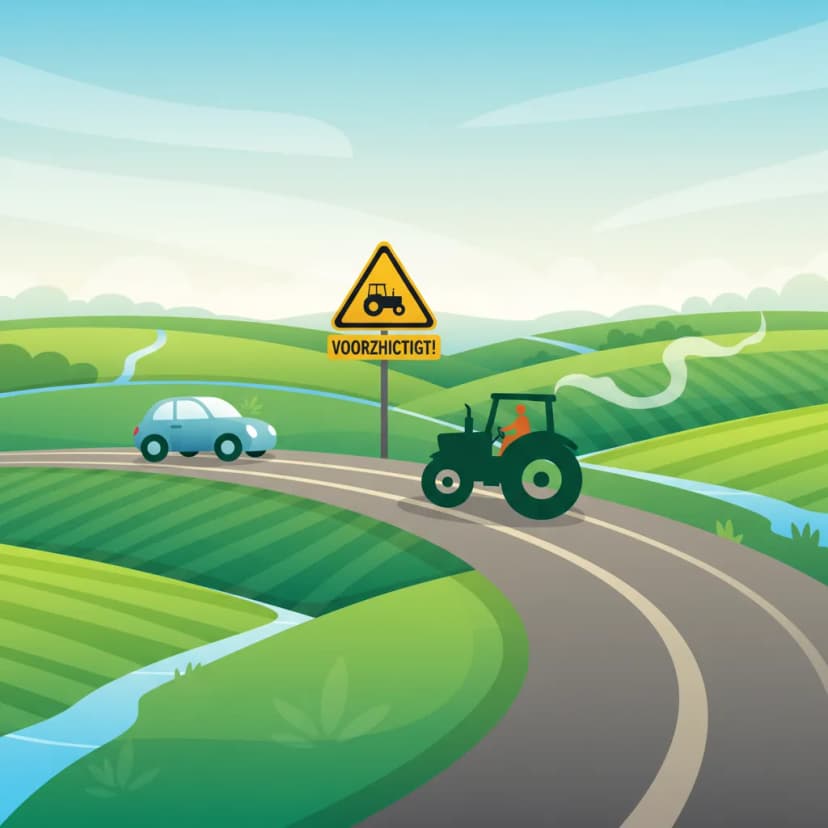
This lesson addresses the specific risks associated with driving on rural roads (landsvägar). You will learn how to manage higher speeds on narrow, winding roads with limited visibility due to curves and hills. The lesson covers procedures for safely overtaking slow-moving agricultural vehicles, managing encounters with oncoming traffic on narrow sections, and being constantly vigilant for wildlife, especially at dawn and dusk.
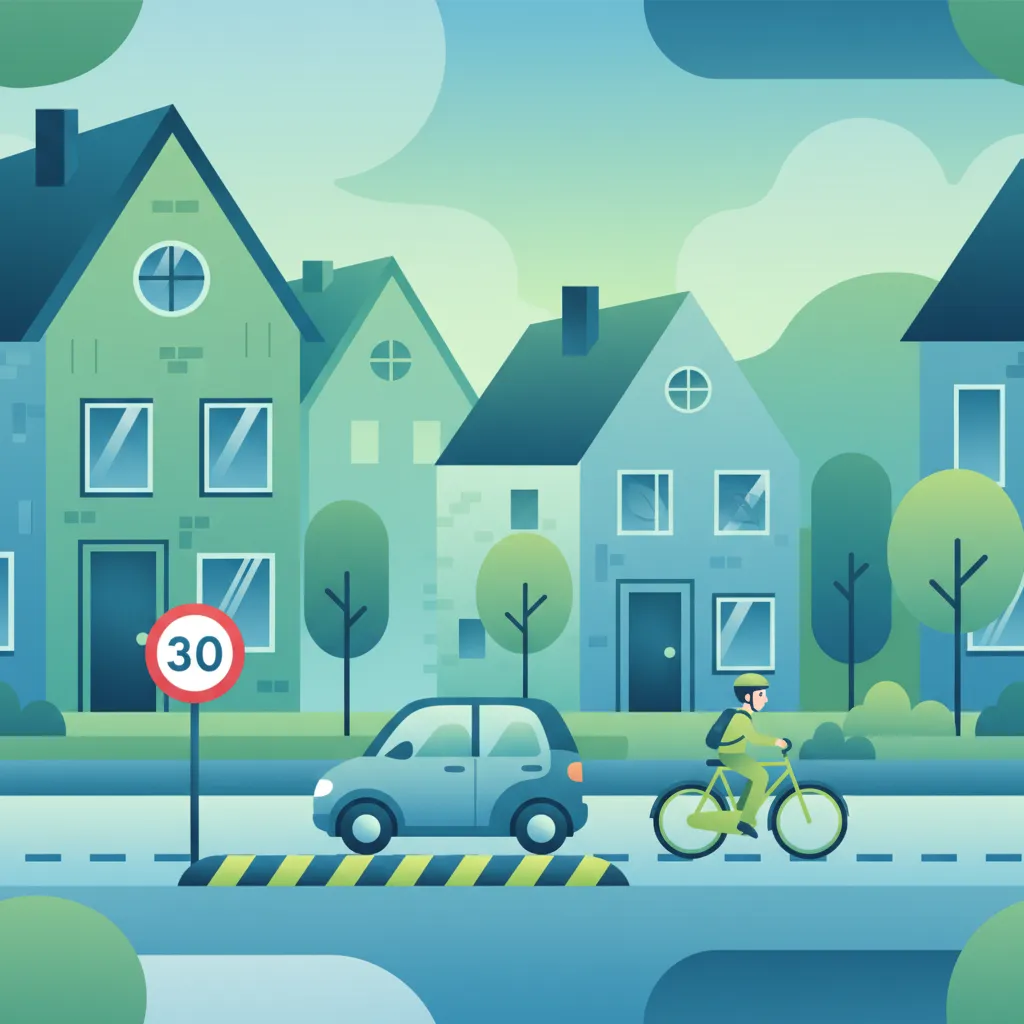
This lesson focuses on the high level of caution required when driving in residential areas. You will learn about the rules for special zones like 'gångfartsområde' (walking speed area) and the need to navigate around speed calming measures like speed bumps. The central theme is anticipating unpredictable behavior from residents, especially children, and managing the risks posed by parked cars that severely limit visibility.
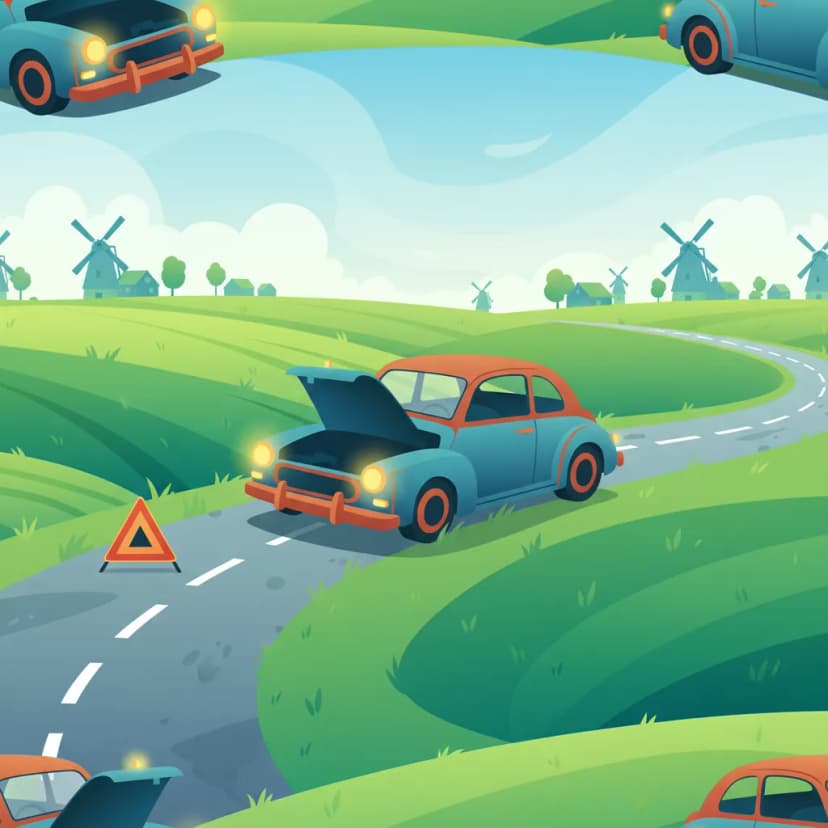
This lesson focuses on the correct use of warning devices to protect an accident or breakdown scene. You will learn to immediately activate your hazard lights (varningsblinkers). The main focus is on the proper placement of the warning triangle, explaining how the distance from the vehicle must be adapted based on the road's speed limit and visibility to give oncoming drivers adequate time to react.
This lesson focuses on Swedish warning signs designed to alert drivers to potential dangers. You will study signs indicating sharp bends, slippery surfaces, animal crossings, and temporary hazards like road construction. Correctly interpreting these signs allows a motorcyclist to proactively adjust speed, lane position, and readiness to react, which is essential for maintaining control and safety, especially in adverse weather or on unfamiliar roads.
This lesson focuses on the unique challenges of driving in urban environments. You will learn techniques for anticipating the actions of vulnerable road users like pedestrians and cyclists, especially near crossings and bus stops. The content covers how to navigate narrow streets, one-way systems, and areas with heavy traffic, emphasizing the need for lower speeds, heightened awareness, and a defensive mindset.
This lesson teaches you how to recognize and adapt to different types of slippery winter surfaces. You will learn about the characteristics of driving in loose snow, packed snow, and on ice, with a special focus on detecting 'black ice' (ishalka), which is transparent and extremely dangerous. The content identifies high-risk areas such as bridges and shaded sections of the road and emphasizes the need for extremely gentle steering, acceleration, and braking inputs.

This lesson covers strategies for driving safely when visibility is compromised. You will learn the correct use of different lighting systems: when to use low beams, high beams (helljus), and how to avoid dazzling other drivers. The lesson also explains the specific regulations for using front and rear fog lights and provides techniques for navigating safely in dense fog or heavy precipitation by reducing speed and using the road edge as a guide.
This lesson teaches you how to make an accident scene as safe as possible for yourself, any other involved parties, and approaching traffic. You will learn the correct use of hazard lights, the placement of warning triangles, and the importance of wearing a high-visibility vest. The content also covers how to identify and manage immediate post-crash hazards, such as spilled fuel or unstable vehicles, to prevent the situation from worsening.

This lesson covers the essential topic of communication in traffic using the vehicle's built-in signaling devices. You will learn the rules for using your turn indicators (körriktningsvisare) in good time before turning or changing lanes. The content also explains the proper use of hazard lights (varningsblinkers) in emergency situations and the very limited, specific circumstances in which using the horn (ljudsignal) is permitted to avert immediate danger.
This lesson emphasizes that the posted speed limit is a maximum, not a target. You will learn the principles of situational speed adaptation, which involves adjusting your speed based on factors like visibility, road geometry (curves and hills), traffic density, and potential hazards. The lesson covers specific strategies for managing speed in urban environments with pedestrians, on rural roads with hidden entrances, and on motorways to match the flow of traffic.
Gain deeper insights into managing diverse traffic situations beyond typical urban or highway settings. This lesson covers interactions with varied road users and specific environmental challenges relevant to Swedish road rules, building on rural road knowledge.
This lesson focuses on the unique challenges of driving in urban environments. You will learn techniques for anticipating the actions of vulnerable road users like pedestrians and cyclists, especially near crossings and bus stops. The content covers how to navigate narrow streets, one-way systems, and areas with heavy traffic, emphasizing the need for lower speeds, heightened awareness, and a defensive mindset.
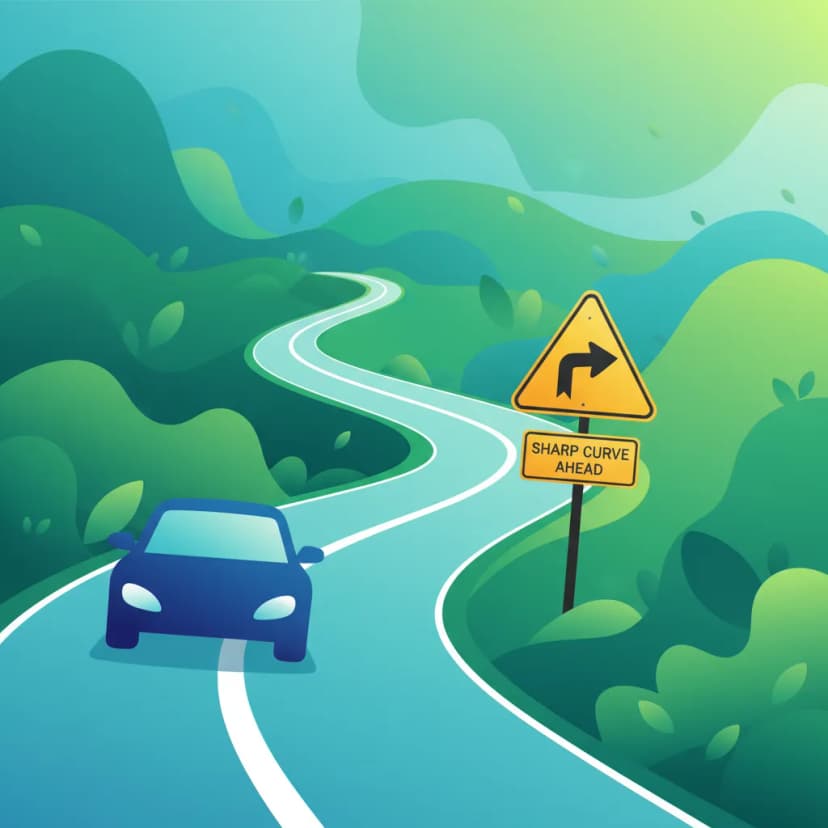
This lesson teaches the correct methodology for negotiating curves and turns of varying sharpness. You will learn the principle of 'slow in, fast out,' involving braking before the curve and gently accelerating through it to maintain stability and grip. The lesson also covers how to choose the correct line (placering) through a bend and how to use your vision effectively to look far ahead for a safe and controlled passage.
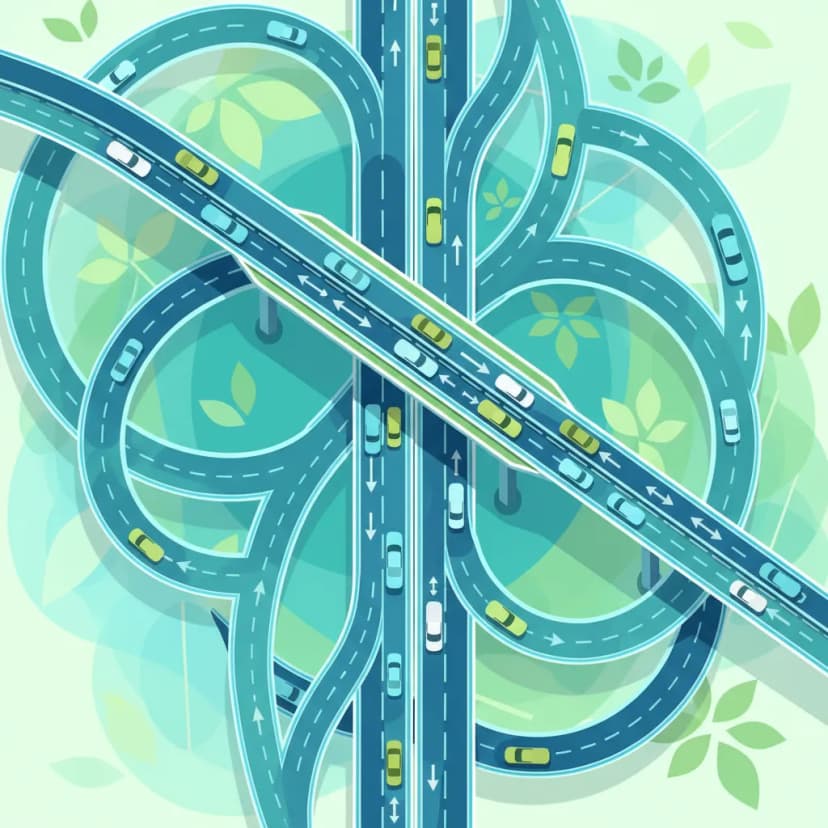
This lesson tackles the challenge of navigating some of the most complex road features, such as large multi-lane roundabouts and grade-separated interchanges. You will learn the importance of advance planning, choosing the correct lane on approach, clear signaling, and comprehensive observation to safely move through these busy areas. Mastering these junctions is a key indicator of an advanced and competent rider who can handle any road layout.
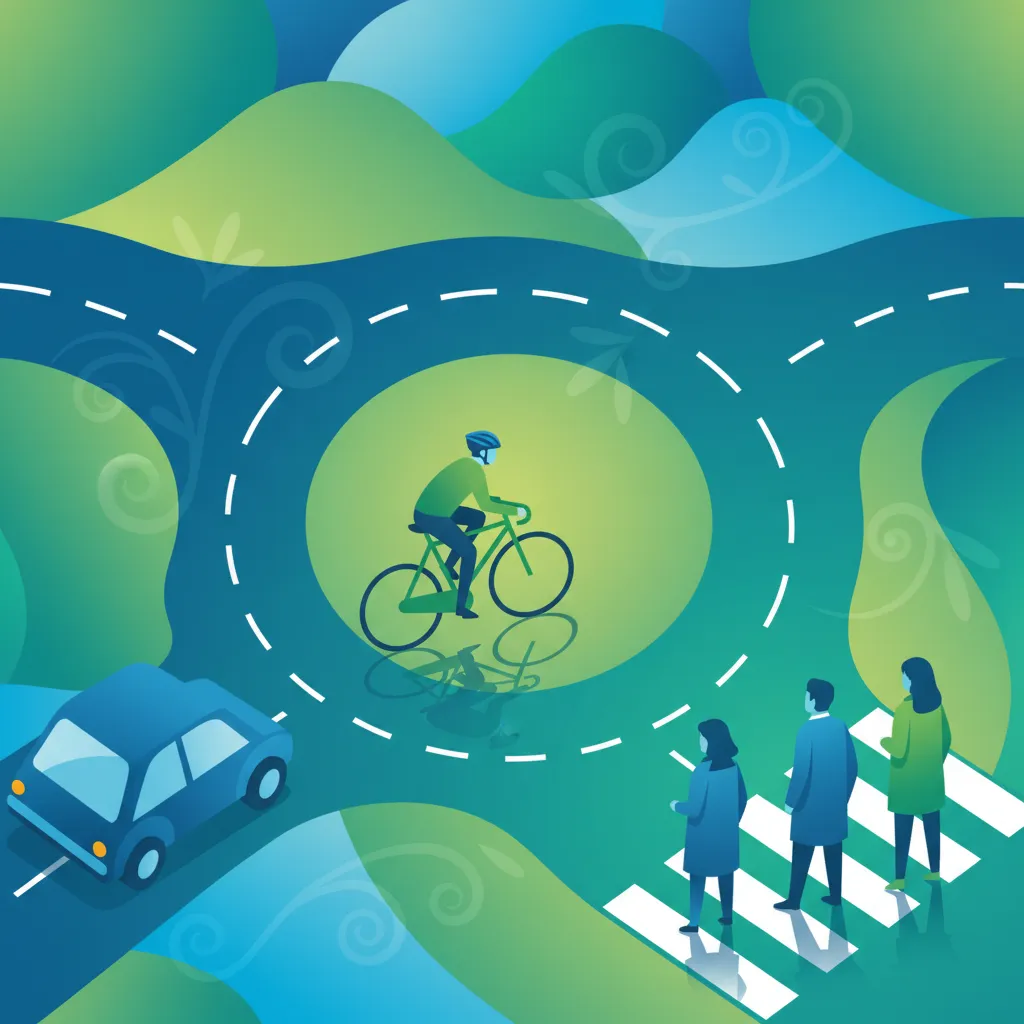
This lesson provides detailed guidance on navigating complex traffic points such as signalized intersections, multi-lane roundabouts, and pedestrian crossings. You will learn the correct procedures for entering and exiting roundabouts, the specific rules for yielding to pedestrians and cyclists at designated crossings, and how to interpret complex traffic light signals. These skills are vital for safe urban and suburban riding, where interaction with vulnerable road users is frequent.
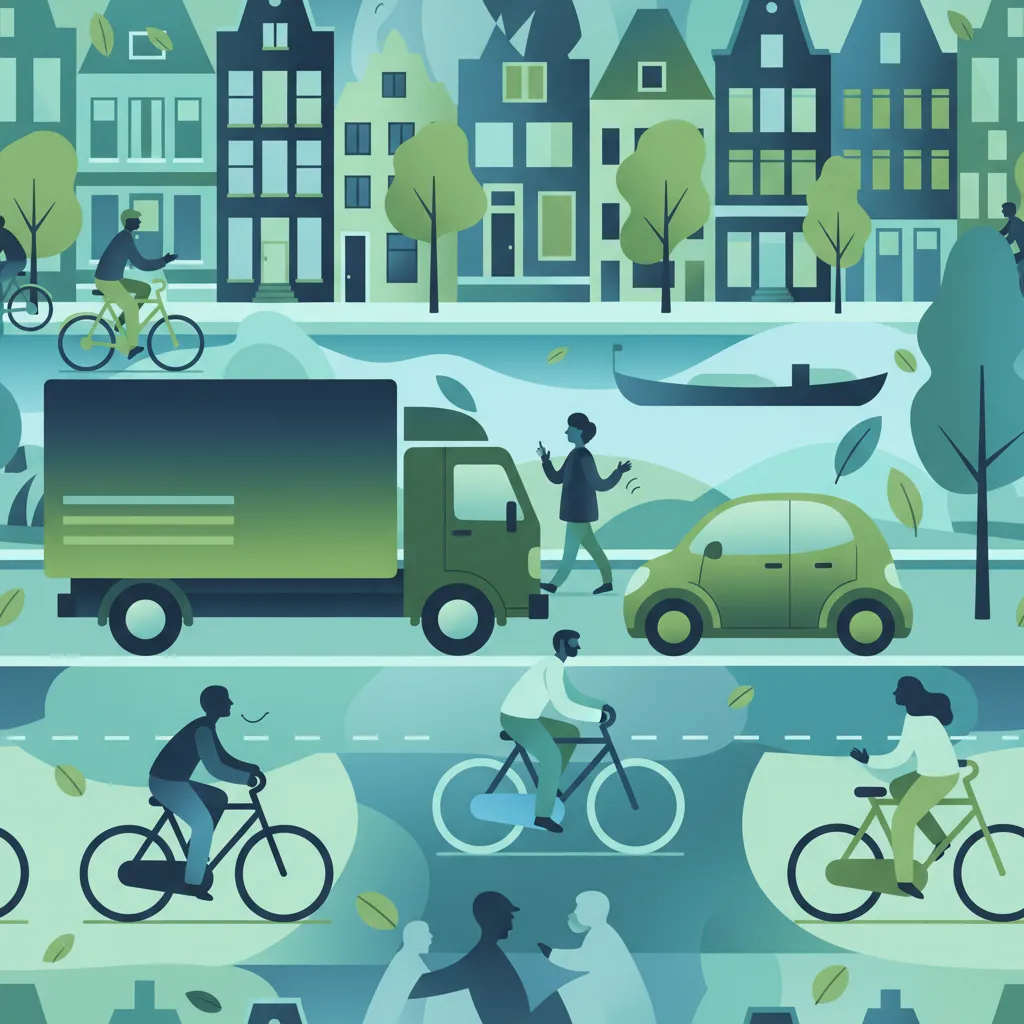
This lesson provides in-depth analysis of how to safely interact with the full spectrum of road users. You will learn about the specific characteristics of each, such as the large blind spots of trucks, the potential for sudden movements from cyclists, and the unpredictability of pedestrians. The content teaches strategies for communication, anticipation, and defensive positioning to ensure safe and respectful coexistence on the road for everyone.
This lesson focuses on the high level of caution required when driving in residential areas. You will learn about the rules for special zones like 'gångfartsområde' (walking speed area) and the need to navigate around speed calming measures like speed bumps. The central theme is anticipating unpredictable behavior from residents, especially children, and managing the risks posed by parked cars that severely limit visibility.
This lesson focuses on creating a complete awareness of the traffic situation around your vehicle. You will learn the correct procedure for using your interior and side mirrors in a continuous scanning pattern. Crucially, the lesson explains what the blind spot (döda vinkeln) is, where it is located, and why a physical head check over the shoulder is a non-negotiable safety step before any lateral movement like changing lanes or turning.
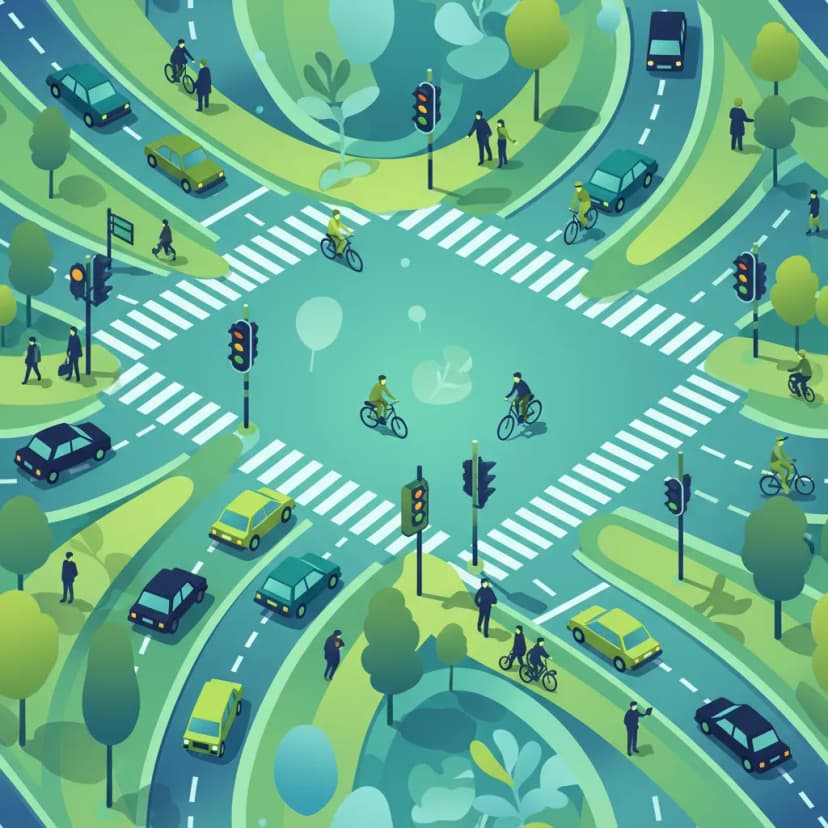
This lesson focuses on the specific techniques required for riding in busy city and town environments. You will learn how to maintain correct lane positioning amidst dense traffic, navigate complex intersections with multiple signals, and manage the motorcycle at low speeds in stop-and-go conditions. Emphasis is placed on heightened awareness of pedestrians, cyclists, and vehicles making sudden maneuvers, which are common hazards in urban settings.
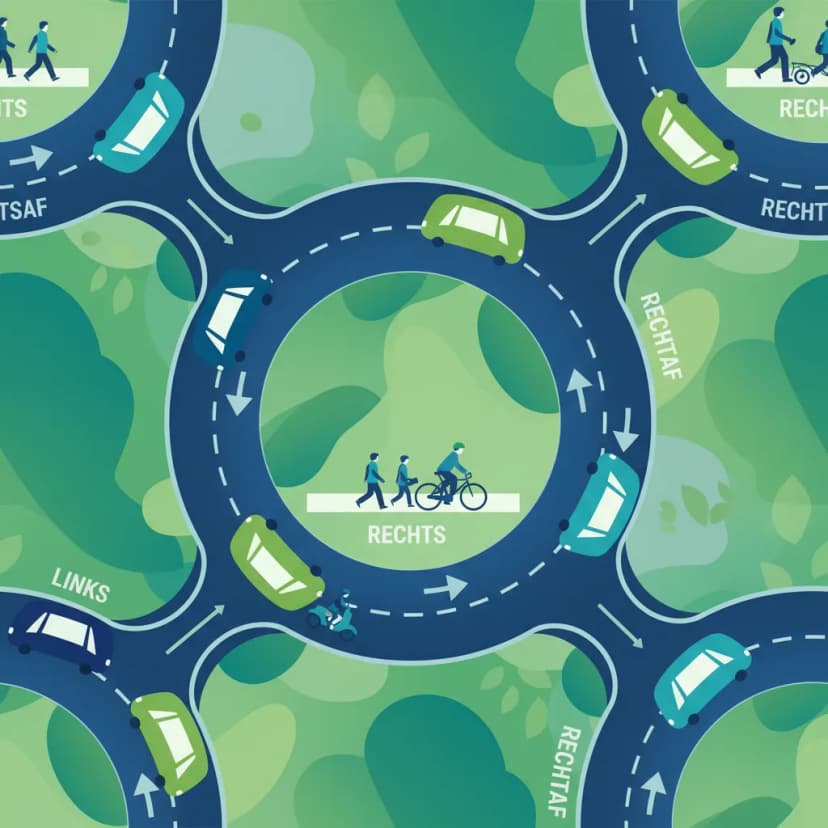
This lesson provides a detailed guide to navigating Swedish roundabouts (cirkulationsplatser). Key principles include always yielding to traffic already in the roundabout and choosing the correct lane based on your intended exit. You will learn the specific rules for signalling your intention to exit, how to safely interact with cyclists, and the techniques for maneuvering through multi-lane roundabouts to maintain traffic flow and prevent accidents.
This lesson addresses the specific risks associated with driving on rural roads (landsvägar). You will learn how to manage higher speeds on narrow, winding roads with limited visibility due to curves and hills. The lesson covers procedures for safely overtaking slow-moving agricultural vehicles, managing encounters with oncoming traffic on narrow sections, and being constantly vigilant for wildlife, especially at dawn and dusk.
Find clear answers to common questions learners have about Rural Roads, Country Paths, and Agricultural Zones. Learn how the lesson is structured, which driving theory objectives it supports, and how it fits into the overall learning path of units and curriculum progression in Sweden. These explanations help you understand key concepts, lesson flow, and exam focused study goals.
Rural roads in Sweden often present unique challenges such as reduced visibility around blind corners, narrower lanes with no shoulder, variable surface quality, and the presence of slow-moving agricultural vehicles or wildlife. Unlike urban areas, there's less predictable traffic flow, requiring heightened vigilance and proactive hazard anticipation.
When approaching a blind corner on a rural road, you should reduce your speed significantly before the corner. Position yourself towards the centre of your lane to maximise visibility around the corner, and be prepared to stop or take evasive action if unexpected obstacles, vehicles, or animals appear. Honk lightly if you suspect oncoming traffic might not see you.
Agricultural vehicles, such as tractors, are often slow-moving and can be wide, obscuring visibility and potentially making sudden turns or movements without clear signaling. They can also leave behind debris like mud or stones on the road surface. It's crucial to maintain a safe distance, be patient, and only overtake when it is completely safe and legal to do so, ensuring you can see far enough ahead.
The primary strategy is to ride at a speed that allows you to stop within your visible distance. Be extra vigilant during dawn and dusk, when many animals are most active. Scan the sides of the road for movement. If you see an animal, reduce speed, stay calm, and try to make yourself visible. Avoid swerving abruptly, as this can cause you to lose control or collide with other hazards.
Yes, the Swedish theory test for motorcycles includes questions on the specific hazards of rural roads. These questions will assess your understanding of how to navigate poor surfaces, interact safely with large slow vehicles, anticipate animal crossings, and manage speed and visibility in these less predictable environments.