
Welcome to the Swedish Motorcycle Theory Course! This lesson focuses on the specific procedures and rules for safely navigating motorways. Mastering motorway entry, cruising, and exit is crucial for high-speed riding and is a key component of your Category A theory preparation. We'll cover everything from merging with traffic to maintaining safe distances on Sweden's fastest roads.
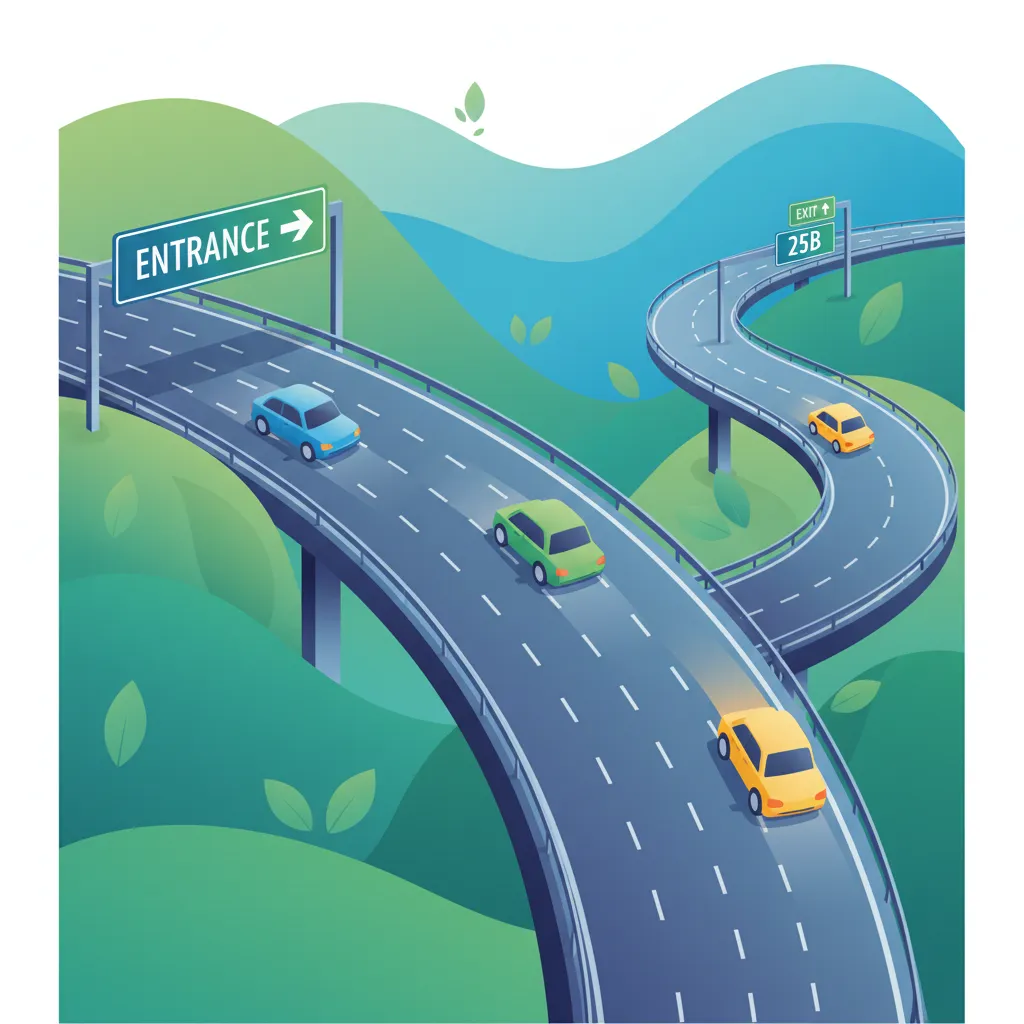
Navigating Sweden's motorways (motorvägar) safely and efficiently is a crucial skill for every motorcyclist. As the fastest road environment in Sweden, with speed limits typically ranging from 110 km/h to 120 km/h on selected sections, motorways demand precise control, keen observation, and adherence to specific procedures. This lesson, part of your Swedish Motorcycle Theory Course: A Licence Exam Preparation, will guide you through the complete procedural chain: from accelerating onto the motorway to cruising with confidence, executing safe overtakes, and finally, planning your exit.
Motorways are designed for high-speed travel, allowing traffic to flow smoothly without interruptions from intersections or traffic lights. These roads feature multiple lanes in each direction, grade-separated junctions, and specific entry and exit points. For motorcyclists, the dynamics of riding at high speeds on such roads introduce unique challenges and requirements.
Mastering motorway procedures is not just about convenience; it is vital for your safety and the stability of the entire traffic flow. At speeds of 100-120 km/h, reaction times are significantly compressed, and even minor errors can lead to serious consequences. Proper technique reduces conflict points during merges, lane changes, and exits. Furthermore, the Swedish Traffic Ordinance (Trafikförordning) obliges all road users to "act with due care and consideration" (§ 3, Chapter 3), ensuring that your actions do not endanger other road users. Understanding the physics of high-speed motorcycle dynamics—such as increased aerodynamic drag and longer braking distances—reinforces the need for early speed buildup and smooth control.
The process of entering a motorway is often one of the most challenging for new riders due to the need to quickly match speed with high-speed traffic. Correct execution ensures a seamless and safe transition onto the main carriageway.
An acceleration lane (påfart) is a dedicated lane designed to allow vehicles to gain sufficient speed before merging onto the main motorway carriageway. The primary goal is to accelerate-to-match, meaning you must raise your speed on the on-ramp to align with the prevailing speed of the main traffic flow. This minimises the speed differential, making your entry predictable for other drivers.
Assess the On-Ramp: As you approach the on-ramp, quickly evaluate its length and curvature. Some ramps are long and gradual, allowing for progressive acceleration, while shorter ramps may require more rapid acceleration.
Check Traffic Flow: Look ahead and use your mirrors to gauge the speed and density of traffic on the main motorway carriageway. Identify potential gaps for merging.
Select the Correct Gear: Before entering the acceleration lane, select a gear that provides ample power for brisk acceleration. For most motorcycles, this might be second or third gear, depending on your bike's powerband.
Smooth and Progressive Acceleration: Enter the acceleration lane and smoothly increase your throttle. Aim to reach a speed close to that of the main traffic flow, typically 90-110 km/h, well before the end of the lane.
Constant Mirror Checks: Continuously check your left mirror and perform a quick shoulder check to observe traffic in the target lane. This helps you identify safe gaps and anticipate other drivers' movements.
It is a common misunderstanding to wait until you see a large gap before accelerating, which often leads to sudden, dangerous bursts of speed at the last moment. Similarly, accelerating too slowly creates a significant speed differential, increasing the risk of a collision.
Merging is the act of integrating your motorcycle into the main traffic flow from the acceleration lane. This requires precise gap selection—identifying a spatial-temporal opening in traffic that allows you to enter without forcing other drivers to brake sharply or alter their speed.
When merging, you must yield to traffic already on the carriageway (§ 40, Trafikförordning). This means you do not have priority, and it is your responsibility to find a safe opportunity to join the flow.
Identify a Safe Gap: Look for a gap that is at least 2 seconds long between vehicles. A "lead gap" (ahead of a faster vehicle) or a "trailing gap" (behind a slower vehicle) can be used, but always ensure sufficient space.
Signal Early: Activate your left turn signal for at least 2 seconds (or 100 metres) before initiating your merge (§ 39, Trafikförordning). This gives other drivers ample warning of your intentions.
Match Speed and Trajectory: Once you've identified a suitable gap, match your speed to that of the target lane's traffic. Position your motorcycle to enter the lane smoothly, maintaining your chosen speed.
Execute the Merge: Steer gently into the main lane, aiming for the centre of your chosen gap. Avoid sudden steering inputs or abrupt braking.
Cancel Signal: Once safely in the lane, cancel your turn signal.
Never cut in front of a vehicle that is already braking or fail to signal your intention. Such actions are dangerous and illegal. Always assume other drivers may not see you, especially on a motorcycle, and merge with caution.
Once you have successfully merged, maintaining safe and legal cruising practices is paramount. This involves strict adherence to lane discipline, maintaining appropriate following distances, and executing overtakes correctly.
Sweden, like many other countries, operates a keep-right driving rule. On motorways, this means you should ride in the rightmost lane unless you are overtaking another vehicle. This is mandated by § 38 of the Trafikförordning, which specifies the use of roads.
Default Position: Always return to the rightmost available lane after completing an overtake.
Overtaking Lane: Use the left lane(s) solely for overtaking slower traffic.
Anticipate Traffic Flow: Plan your lane changes well in advance to minimise sudden movements.
Staying in the left lane without actively overtaking (often called "lane hogging") is illegal and disruptive to traffic flow. It forces faster traffic to overtake on the right, which is prohibited on Swedish motorways unless road markings explicitly permit it (e.g., in heavy congestion where lanes are treated as distinct traffic streams, but this is rare on motorways).
At motorway speeds, the forces involved in braking and the distances required to stop increase dramatically. Therefore, maintaining a safe following distance is critically important for collision avoidance. The recommended minimum following distance in Sweden is a 2-second headway under normal conditions. This means you should stay at least 2 seconds behind the vehicle in front of you.
Alternatively, a distance-based rule suggests maintaining 2 metres per 10 km/h of speed after 60 km/h.
To apply the 2-second rule, choose a fixed point on the road (e.g., a bridge, sign, or tree). As the rear of the vehicle ahead passes that point, start counting "one thousand one, one thousand two." If your front wheel reaches that same point before you finish counting, you are following too closely.
| Speed (km/h) | Approximate Distance (metres) |
|---|---|
| 100 | 55-60 |
| 110 | 60-65 |
| 120 | 65-70 |
These distances represent the minimum under ideal dry conditions. In adverse weather (rain, snow, ice) or low visibility, you must significantly increase your following distance to at least 3 seconds or more.
Overtaking on a motorway requires careful planning and execution to ensure safety and adherence to rules. You must always overtake on the left, unless specific road markings or congestion rules apply (which are rare exceptions on motorways).
Assess the Situation: Before initiating an overtake, check your mirrors (left and right) and perform a shoulder check to confirm the left lane is clear and remains clear for the entire manoeuvre. Assess the speed of the vehicle you intend to pass and any traffic behind you.
Signal Left: Activate your left turn signal for at least 2 seconds (or 100 metres) before moving into the left lane.
Move to Left Lane: Smoothly steer into the left lane, increasing your speed to pass the slower vehicle decisively.
Maintain Safe Distance: Do not cut in front of the vehicle you are passing. Ensure you have ample clearance.
Signal Right and Return: Once you can see the overtaken vehicle completely in your right mirror, signal right. Perform a final mirror and shoulder check, then smoothly return to the rightmost lane.
Cancel Signal: Deactivate your turn signal once safely in the right lane.
Leaving a motorway safely is just as critical as entering it. Many accidents occur during exits due to late planning or abrupt manoeuvres. Advance planning is the key to a smooth and stress-free departure.
You should identify your intended exit well in advance, ideally at least 500 metres before the junction. Swedish road signs often provide advance warnings at 2 km, 1 km, and 500 metres before an exit.
Identify Your Exit: Look for overhead and roadside signs indicating your desired exit.
Prepare for Lane Change: As soon as you see the 500-metre advance sign (or earlier if traffic is heavy), begin planning your move to the rightmost lane.
Signal Right Early: Activate your right turn signal for at least 2 seconds (or 100 metres) before initiating your lane change.
Move to Right Lane: Smoothly and gradually move into the rightmost lane. Avoid sudden swerving or last-second lane changes, which can surprise other drivers and lead to collisions.
Maintain Speed (Initially): Remain at cruising speed until you are fully in the deceleration lane (off-ramp). Do not start braking on the main carriageway unless absolutely necessary.
Once you enter the dedicated off-ramp (deceleration lane), you can begin to reduce your speed. This should be a progressive deceleration, meaning a gradual and controlled reduction in speed using a combination of engine braking and appropriate brake application.
Engine Braking: Downshift through your gears smoothly, using the engine's resistance to help slow the motorcycle. This preserves your brakes and maintains stability.
Controlled Braking: Apply gentle and progressive pressure to both your front and rear brakes, targeting the posted exit ramp speed (often 40-60 km/h). Avoid heavy reliance on the rear brake alone, as this can lead to rear-wheel lock-up and loss of control.
Match Ramp Speed: Adjust your speed to match the curvature and conditions of the off-ramp, being prepared for any sharp turns or intersections at the end of the ramp.
Cancel Signal: Once you have completed the turn off the motorway and are on the connecting road, cancel your turn signal.
Progressive deceleration prevents rear-wheel lock-up and maintains the motorcycle's stability, which is crucial when transitioning from high speeds to slower turns.
Riding a motorcycle on Swedish motorways is governed by specific rules outlined in the Trafikförordning (Swedish Traffic Ordinance) and recommendations from Transportstyrelsen (Swedish Transport Agency).
Here are some fundamental rules and guidelines:
| # | Rule Statement | Applicability | Legal Status |
|---|---|---|---|
| 1 | Category A Licence: Only motorcycles whose riders hold a Category A (or A1/A2 with appropriate endorsement) licence may use motorways. | All Swedish motorways | Mandatory (§ 3, Trafikförordning) |
| 2 | Keep Right (Håll Höger): Ride in the rightmost available lane, except when actively overtaking or if traffic density dictates otherwise. | Continuous while cruising | Mandatory (§ 38, Trafikförordning) |
| 3 | Maximum Speed Limits: Observe posted speed limits, typically 110 km/h or 120 km/h on selected sections. | Entire carriageway | Mandatory |
| 4 | Minimum Following Distance: Maintain at least a 2-second headway, or 2 metres per 10 km/h after 60 km/h. | While following any vehicle | Recommended (Transportstyrelsen) |
| 5 | Signal Early: Activate your turn signal for at least 100 metres or 2 seconds before any lane change, merge, or exit. | Merging, lane change, exit | Mandatory (§ 39, Trafikförordning) |
| 6 | Acceleration Lane Use: Accelerate on the on-ramp to match the main traffic flow before merging. | Entry ramps | Recommended (Transportstyrelsen) |
| 7 | Advance Exit Planning: Identify your exit at least 500 metres before the junction and move to the right lane early. | Motorway exits | Recommended (Swedish Road Administration) |
| 8 | No Overtaking on the Right: Overtake only on the left, unless road markings explicitly permit otherwise (e.g., specific multi-lane congestion scenarios, which are rare on motorways). | Overtaking manoeuvres | Mandatory (§ 38, Trafikförordning) |
| 9 | Headlamp Use: Use dipped beam during normal conditions. High beam only when no oncoming traffic and the road is not illuminated, and never within 150 metres of a vehicle you are following. | All times, especially night | Mandatory (§ 5, Trafikförordning) |
| 10 | Protective Gear: Wear an approved helmet, gloves, jacket, trousers, and boots. | All times on public roads | Mandatory (Transportstyrelsen) |
Motorway riding conditions are not always ideal. It is crucial to adapt your riding style and procedures to various environmental and vehicle-specific factors.
Understanding common mistakes can help you prevent them. Many violations on motorways stem from a lack of foresight or an underestimation of high-speed dynamics.
| Violation | Why It's Wrong | Correct Behaviour | Potential Consequence |
|---|---|---|---|
| Late merge on entry ramp | Creates dangerous speed differential, forces others to brake abruptly. | Accelerate to match traffic, select a gap ≥ 2 seconds ahead, signal early. | Rear-end collision, forced emergency braking, fine for reckless driving. |
| Staying in left lane without overtaking | Blocks faster traffic, increases congestion and driver frustration, violates keep-right rule. | Return to the right lane promptly after overtaking, if left lane is clear. | Administrative penalty, increased crash risk from improper overtaking. |
| Insufficient following distance (tail-gating) | Reduces reaction time and stopping distance, significantly raises rear-end crash likelihood. | Maintain ≥ 2 seconds headway (approx. 30-35m at 120 km/h) in dry conditions, more in wet. | Rear-end collision, severe injury, licence points. |
| Late signalling for exit | Other drivers cannot anticipate your lane change, leading to sudden braking or swerving. | Signal ≥ 100m (or 2 seconds) before exiting, move to the right lane early. | Near-miss or side-collision, fine for improper signalling. |
| Overtaking on the right in congested traffic | Violates § 38, creates surprise for drivers, highly dangerous due to limited visibility. | Overtake only on the left, unless specifically permitted by signs/markings for multi-lane traffic flow. | Legal penalty, possible crash, license suspension. |
| Using high-beam in dense traffic or when following | Glare reduces visibility for other road users, blinding them. | Switch to dipped beam within 150m of the vehicle ahead or oncoming traffic. | Fine, increased risk of accidents for others. |
| Sharp braking on off-ramp (heavy rear-brake use) | Causes rear-wheel lock-up, loss of traction and control, especially for motorcycles. | Use engine braking and gentle, progressive front-brake application. | Skidding, loss of control, crashing off the ramp. |
| Ignoring weather-affected visibility but keeping normal speed | Reduced perception time and stopping distance, significantly higher crash probability. | Increase following distance, reduce speed, use appropriate lights (fog lights if fitted). | Higher likelihood of multi-vehicle accidents, inability to react to hazards. |
| Riding with a faulty indicator (e.g., no left turn signal) | Other road users cannot anticipate your lane change or merge. | Ensure all lights are functional before motorway travel; fix immediately if faulty. Use clear hand signals as a backup. | Legal violation, increased crash risk. |
| Exceeding speed limit on a short stretch (e.g., before an exit) | Violates § 3 (due care), reduces reaction time for exit manoeuvres and increases braking distance. | Decelerate to the limit before the exit, plan lane changes earlier to avoid rush. | Fine, points on licence, possible loss of control on off-ramp due to high speed. |
Mastering motorway procedures for motorcyclists revolves around predictability, visibility, and smooth control. By consistently applying these principles, you ensure not only your own safety but also contribute to the overall stability and efficiency of the traffic flow on Sweden's high-speed roads.
Lesson content overview
Explore all units and lessons included in this driving theory course.
Explore search topics learners often look for when studying Motorway Entry, Cruising, and Exit Procedures. These topics reflect common questions about road rules, driving situations, safety guidance, and lesson level theory preparation for learners in Sweden.
Browse additional driving theory lessons that cover connected traffic rules, road signs, and common driving situations related to this topic. Improve your understanding of how different rules interact across everyday traffic scenarios.
Explore advanced techniques for navigating Swedish motorways. This lesson delves into complex merging situations, safe overtaking strategies at high speeds, and effective exit planning for motorcycle riders preparing for their theory test.
This lesson covers the critical maneuvers of merging and changing lanes. You will learn the correct technique for using an acceleration lane to match the speed of motorway traffic before merging smoothly and safely. The lesson emphasizes the importance of checking mirrors and the blind spot, signaling in good time, and applying the 'zipper principle' (dragkedjeprincipen) where lanes merge to ensure efficient and courteous traffic flow.

This lesson provides a complete guide to motorway driving in Sweden. You will learn the correct procedures for merging from an on-ramp, maintaining proper lane discipline by keeping right unless overtaking, and exiting safely via off-ramps. The content emphasizes the importance of maintaining large safety margins at high speeds, checking blind spots thoroughly before any lane change, and knowing the correct safety procedures in case of a breakdown.
This lesson covers the critical maneuvers of overtaking and merging, which require precise judgment and communication. You will learn how to assess traffic speed and gaps, the importance of checking blind spots, and the correct use of signals to indicate your intentions. The content includes procedures for merging onto motorways from an on-ramp and how to perform safe overtaking maneuvers on various types of roads, minimizing risk to yourself and others.
This lesson provides detailed guidance on navigating complex traffic points such as signalized intersections, multi-lane roundabouts, and pedestrian crossings. You will learn the correct procedures for entering and exiting roundabouts, the specific rules for yielding to pedestrians and cyclists at designated crossings, and how to interpret complex traffic light signals. These skills are vital for safe urban and suburban riding, where interaction with vulnerable road users is frequent.
This lesson tackles the challenge of navigating some of the most complex road features, such as large multi-lane roundabouts and grade-separated interchanges. You will learn the importance of advance planning, choosing the correct lane on approach, clear signaling, and comprehensive observation to safely move through these busy areas. Mastering these junctions is a key indicator of an advanced and competent rider who can handle any road layout.
This lesson focuses on the unique demands of managing speed in high-speed environments like motorways. You will learn techniques for maintaining a steady, appropriate speed that matches the flow of traffic, how to perform smooth overtakes, and the importance of increasing your following distance. It also covers physical factors such as managing wind blast and maintaining stability when riding near large trucks, ensuring a safe and controlled high-speed riding experience.

This lesson provides in-depth analysis of how to safely interact with the full spectrum of road users. You will learn about the specific characteristics of each, such as the large blind spots of trucks, the potential for sudden movements from cyclists, and the unpredictability of pedestrians. The content teaches strategies for communication, anticipation, and defensive positioning to ensure safe and respectful coexistence on the road for everyone.

This lesson prepares you for the specific challenges of riding on rural roads in Sweden. You will learn how to read the road ahead for changes in surface quality, approach blind corners safely, and adjust your speed for narrow lanes with no shoulder. The content also covers how to anticipate and safely interact with slow-moving agricultural vehicles and the potential for wild animals on the road, ensuring you are prepared for the unpredictable nature of country riding.

This lesson provides practical instructions for safely navigating different types of intersections and roundabouts. It covers procedures for approaching, entering, and exiting roundabouts, emphasizing the rule to yield to traffic already circulating. The content also addresses how to handle signal-controlled and uncontrolled intersections, ensuring riders select the correct lane and manage their speed appropriately.
This lesson focuses on the specific techniques required for riding in busy city and town environments. You will learn how to maintain correct lane positioning amidst dense traffic, navigate complex intersections with multiple signals, and manage the motorcycle at low speeds in stop-and-go conditions. Emphasis is placed on heightened awareness of pedestrians, cyclists, and vehicles making sudden maneuvers, which are common hazards in urban settings.
Learn to safely interact with cars, trucks, and other vehicles on Swedish motorways. This lesson focuses on understanding driver behaviour, maintaining safe distances, and visibility strategies specific to high-speed environments for motorcycle riders.
This lesson focuses on the unique demands of managing speed in high-speed environments like motorways. You will learn techniques for maintaining a steady, appropriate speed that matches the flow of traffic, how to perform smooth overtakes, and the importance of increasing your following distance. It also covers physical factors such as managing wind blast and maintaining stability when riding near large trucks, ensuring a safe and controlled high-speed riding experience.
This lesson provides in-depth analysis of how to safely interact with the full spectrum of road users. You will learn about the specific characteristics of each, such as the large blind spots of trucks, the potential for sudden movements from cyclists, and the unpredictability of pedestrians. The content teaches strategies for communication, anticipation, and defensive positioning to ensure safe and respectful coexistence on the road for everyone.

This lesson teaches the crucial skill of adapting your speed to the dynamic and often congested conditions of urban riding. You will learn to modulate your speed smoothly in response to traffic flow, pedestrian activity, and complex intersections to maintain safety and control. Techniques covered include using engine braking effectively, anticipating the actions of other road users, and selecting a speed that maximizes your reaction time in a high-density environment.
This lesson prepares you for the specific challenges of riding on rural roads in Sweden. You will learn how to read the road ahead for changes in surface quality, approach blind corners safely, and adjust your speed for narrow lanes with no shoulder. The content also covers how to anticipate and safely interact with slow-moving agricultural vehicles and the potential for wild animals on the road, ensuring you are prepared for the unpredictable nature of country riding.
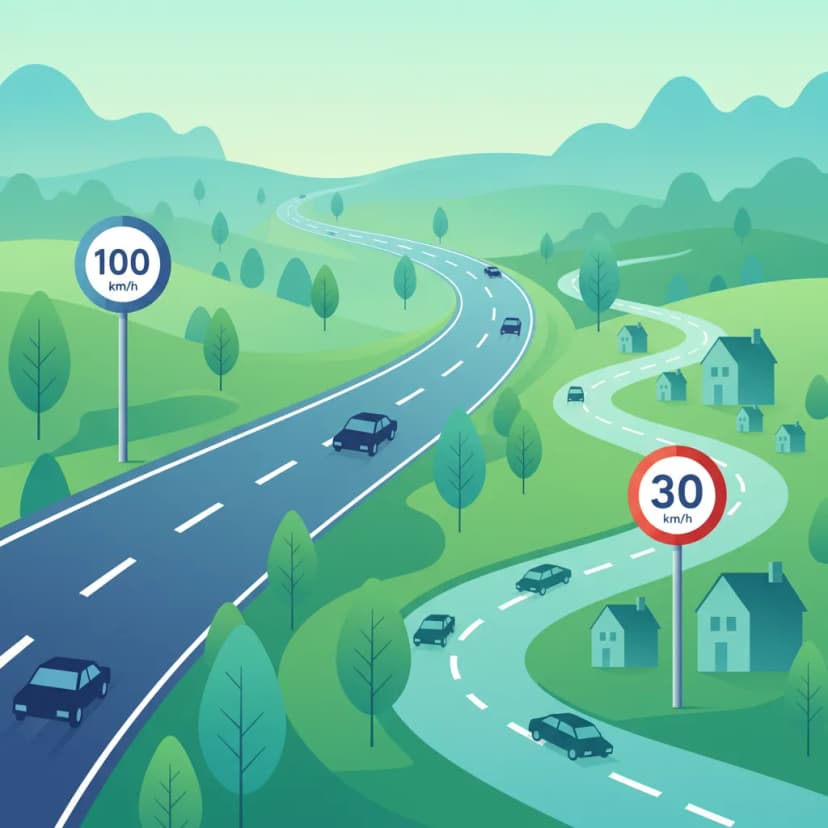
This lesson provides a comprehensive overview of the Swedish national speed limit system. You will learn the default speed limits applicable to different classes of roads, such as 50 km/h in built-up areas and 110 km/h on motorways. It also covers how to identify and comply with special zones, like residential areas (gångfartsområde), school zones, and temporary limits in construction areas, ensuring you always ride at a legal and appropriate speed.

This lesson focuses on the variety of road markings used on Swedish roads and their meaning for motorcyclists. You will learn the difference between solid and broken lines regarding overtaking, how to position yourself correctly at intersections based on markings, and how to interpret symbols painted on the road surface. Adhering to these markings is essential for maintaining correct lane discipline and ensuring predictability for other road users.
This lesson provides detailed guidance on navigating complex traffic points such as signalized intersections, multi-lane roundabouts, and pedestrian crossings. You will learn the correct procedures for entering and exiting roundabouts, the specific rules for yielding to pedestrians and cyclists at designated crossings, and how to interpret complex traffic light signals. These skills are vital for safe urban and suburban riding, where interaction with vulnerable road users is frequent.
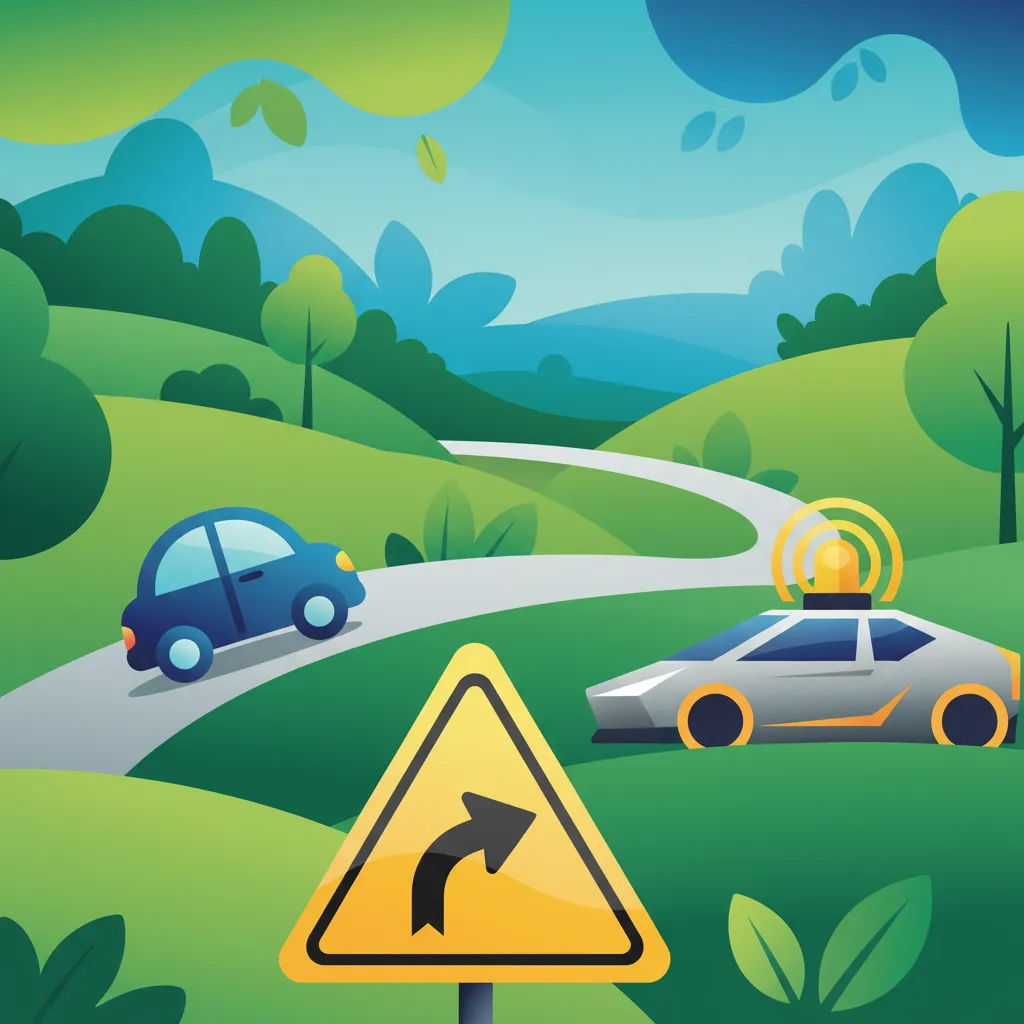
This lesson focuses on Swedish warning signs designed to alert drivers to potential dangers. You will study signs indicating sharp bends, slippery surfaces, animal crossings, and temporary hazards like road construction. Correctly interpreting these signs allows a motorcyclist to proactively adjust speed, lane position, and readiness to react, which is essential for maintaining control and safety, especially in adverse weather or on unfamiliar roads.
This lesson focuses on the specific techniques required for riding in busy city and town environments. You will learn how to maintain correct lane positioning amidst dense traffic, navigate complex intersections with multiple signals, and manage the motorcycle at low speeds in stop-and-go conditions. Emphasis is placed on heightened awareness of pedestrians, cyclists, and vehicles making sudden maneuvers, which are common hazards in urban settings.
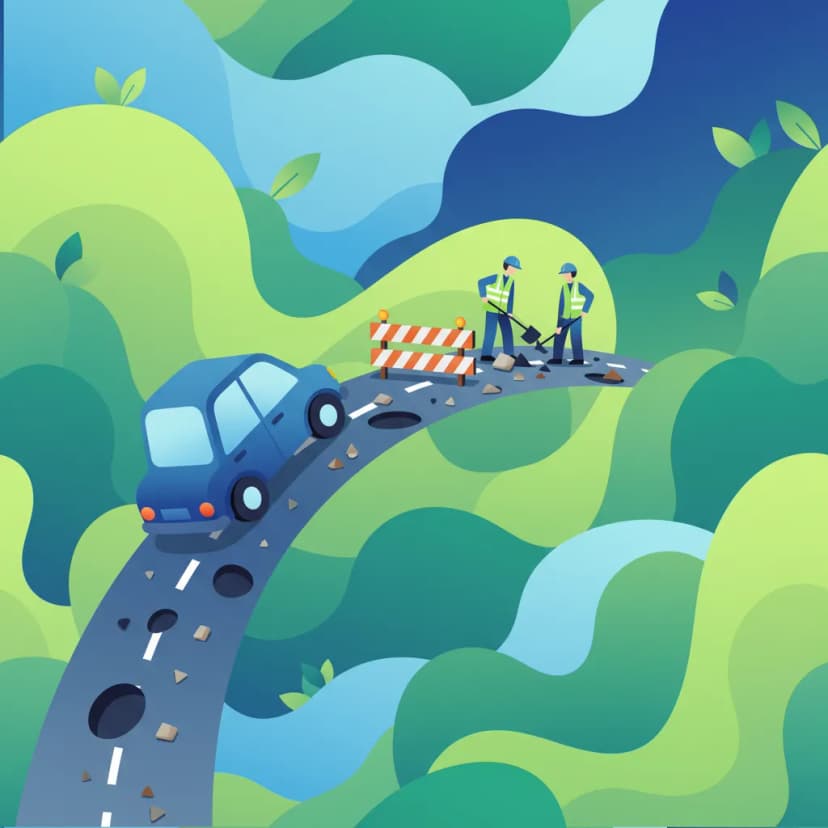
This lesson provides practical techniques for dealing with unavoidable road surface hazards. You will learn how to approach and cross obstacles like potholes, manhole covers, and patches of debris with minimal disruption to the motorcycle's stability. The content covers adjusting your speed, choosing the best line, and using your body to absorb impacts, helping you navigate the imperfections of real-world roads safely.
Find clear answers to common questions learners have about Motorway Entry, Cruising, and Exit Procedures. Learn how the lesson is structured, which driving theory objectives it supports, and how it fits into the overall learning path of units and curriculum progression in Sweden. These explanations help you understand key concepts, lesson flow, and exam focused study goals.
On the acceleration lane, match the speed of the motorway traffic. Scan for a safe gap, signal your intention to merge, and accelerate smoothly into the gap. Ensure you have sufficient space and speed before merging to avoid disrupting traffic flow or creating a hazard.
Always adhere to the posted speed limits, but more importantly, adapt your speed to traffic and visibility conditions. Maintain a safe following distance, ideally the 'two-second rule' or more, considering your stopping distance and the motorcycle's braking capabilities. Be aware of potential speed differences between vehicles.
You should begin planning your exit well in advance, ideally when you see the first signs indicating the upcoming exit or junction. This allows you to position yourself in the correct lane early, check for traffic, and prepare for deceleration, rather than making last-minute manoeuvres.
Motorcycles generally follow the same overtaking rules as other vehicles. However, due to your agility, it's crucial to use this advantage responsibly. Always overtake on the left, ensure you have ample space and visibility, and complete the manoeuvre quickly and safely, returning to your lane.
Common mistakes include merging too slowly or without adequate speed, tailgating (following too closely), sudden lane changes without signalling or checking blind spots, and exiting too late or abruptly. Understanding these risks helps in avoiding them.