Welcome to the unit on Road Signs and Signals! This lesson focuses on Information and Direction Signs (Informationsskyltar), a crucial category for navigating Sweden efficiently. Understanding these signs will help you plan routes, find services, and maintain safe traffic flow on all types of roads, complementing your Category B driving theory preparation.
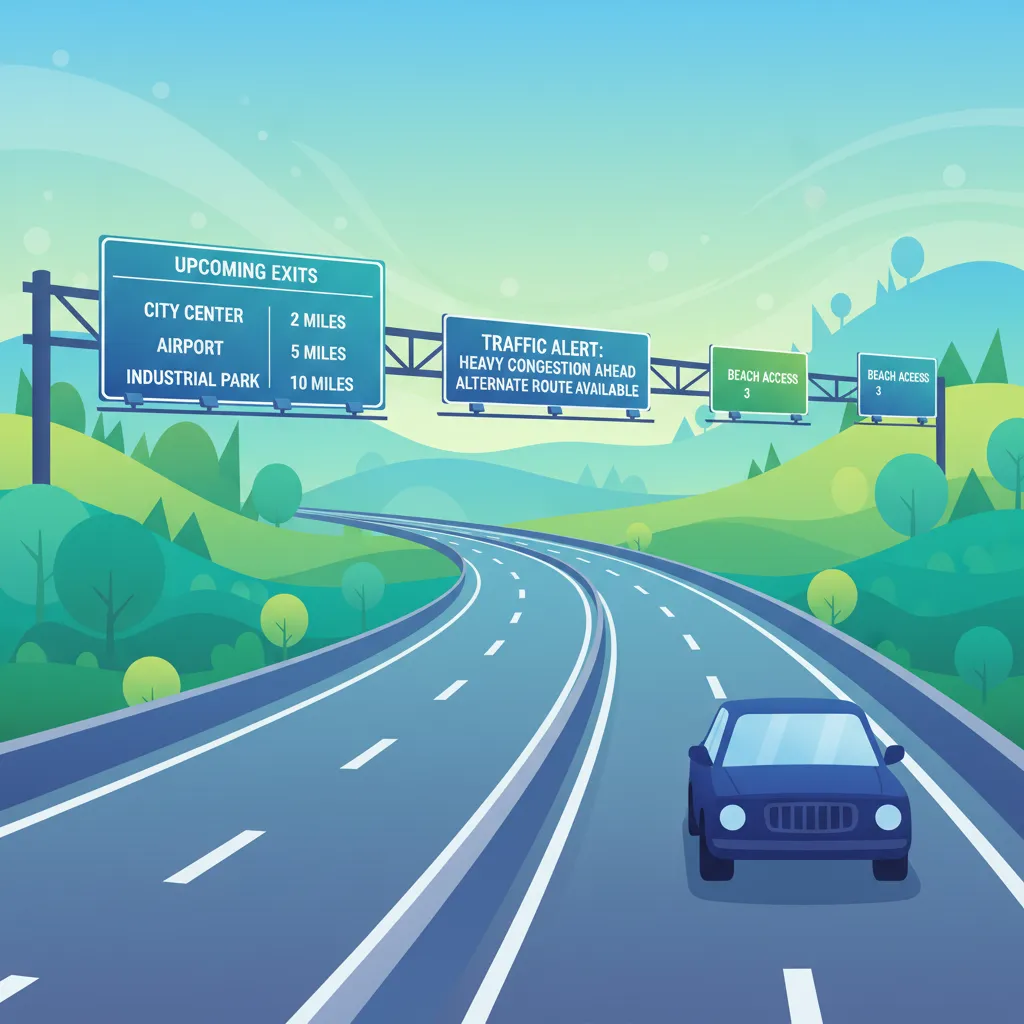
Welcome to this comprehensive lesson on Information and Direction Signs, an essential component of the Swedish driving license theory course for Category B cars. These signs, known as Informationsskyltar in Swedish, are crucial for navigating Sweden's diverse road network, from bustling motorways to quiet municipal streets. Unlike regulatory or warning signs, informational signs do not impose strict commands or highlight immediate dangers. Instead, their primary purpose is to inform, guide, and assist drivers in making informed decisions about their route, available services, and surrounding environment.
Information and direction signs are fundamental for efficient and safe travel on Swedish roads. They provide critical navigational guidance, indicate available services, and convey route-planning information that allows drivers to anticipate upcoming road conditions and make timely maneuvers. Proper interpretation of these signs reduces driver uncertainty, minimizes sudden braking or lane changes, and ultimately contributes to smoother, safer traffic flow across all road environments. By understanding these non-prescriptive visual cues, drivers can maintain situational awareness and plan their journeys effectively, whether for daily commutes or long-distance travel.
Always interpret information and direction signs proactively. By understanding the guidance they offer well in advance, you can plan your actions, select the correct lane, and ensure a smooth and safe driving experience.
The underlying logic behind comprehensive informational signage is multifaceted, aiming to enhance both safety and efficiency on the roads. From a safety perspective, providing advance notice of exits, intersections, services, and potential hazards allows drivers to plan their actions early, reducing the need for abrupt reactions that can lead to collisions. For efficiency, clear and standardized route guidance minimizes congestion, reduces unnecessary detours, and optimizes fuel consumption. This standardization, using uniform symbols and layouts, reduces the cognitive load on drivers, enabling rapid visual processing of critical information.
A key principle of Swedish information and direction signs is the use of distinct color schemes to indicate different road categories. This hierarchical system allows drivers to quickly understand the type of road they are on or are about to enter, influencing expectations regarding speed, access, and available services. Recognizing these color codes is fundamental for effective navigation and adherence to appropriate driving practices for each road class.
Motorways, or motorvägar, are designed for high-speed, long-distance travel with controlled access. Signs leading to or within motorways are easily identifiable by their blue background with white text and symbols. These signs typically include route numbers (often E-roads like E4, E6, E20), major destination names, and clear directional arrows or schematic diagrams indicating upcoming exits. They are strategically placed well in advance of exits, often at 1-2 kilometer intervals, to give drivers ample time to prepare for lane changes.
Drivers must comply with the directions indicated on motorway information signs, particularly regarding lane usage for specific exits. According to the Swedish Traffic Regulations (Trafikförordning, TF), sudden lane changes close to an exit are prohibited as they pose a significant risk to other road users. Correct interpretation ensures predictable lane usage, reduces conflicts, and minimizes accident risk on high-speed roads.
National roads, known as riksvägar, form the backbone of Sweden's primary road network, connecting major towns and regions but often having more intersections and varied speed limits than motorways. Direction signs for these roads feature a green background with white text and symbols. Like motorway signs, they display route numbers (e.g., Riksväg 55), destination names, and directional arrows. These signs are crucial for navigating outside motorways and into smaller regional hubs.
On national roads, drivers must still plan their maneuvers early, even though traffic speeds may be lower than on motorways. These signs often combine direction and distance information on a single panel, requiring careful attention to avoid missing turns. Understanding their context helps drivers anticipate changes in road environment and traffic flow.
Within urban areas and on smaller local roads, directional information signs typically have a white background with black text and symbols. These signs guide drivers to local destinations, specific districts, or minor points of interest within towns and cities. They may also indicate county roads (länsvägar) which connect smaller communities and often have lower speed limits and more varied road conditions.
Due to the higher density of intersections and varied traffic, precise interpretation of these signs is critical for safe urban driving. They often work in conjunction with road markings and traffic signals to direct traffic efficiently. Failing to notice or correctly interpret these signs can lead to missed turns, sudden braking, or entering restricted zones.
Destination and distance signs are purely informational, providing drivers with crucial data for journey planning and time management. These signs display place names along with the remaining distance to that location, typically in kilometers. On motorways, these signs are blue; on national roads, they are green; and on local roads, they are white.
Understanding distance signs enables drivers to:
It is important to remember that distance signs are informational only and do not impose any legal obligations to stop or maintain a specific speed. However, they are vital tools for efficient and eco-friendly driving, as they support proactive decision-making rather than reactive driving. A common misunderstanding is to misinterpret the numerical distance, for example, confusing "45 km" with "450 m," which can lead to inappropriate speed adjustments.
Service signs are critical for driver comfort, safety, and well-being, especially during longer journeys. These signs feature a white background with black pictograms that visually represent various facilities available along or near the road. Their purpose is to help drivers locate essential services without having to exit the main roadway unnecessarily.
These pictograms help drivers find places to refuel conventional vehicles or recharge electric vehicles. A common sign for a fuel station depicts a fuel pump icon. For electric vehicles, a dedicated sign shows an electric plug icon. Given the increasing number of electric vehicles, dedicated EV charging signs are becoming more common. Drivers should plan their charging stops carefully, as the availability and type of charging may vary.
Signs for rest areas (rastplatser) typically display a bench icon, indicating a designated location along motorways and major roads offering space for drivers to stop, rest, use toilets, and sometimes access food services. Parking signs feature a large "P" symbol, indicating general parking facilities. It is crucial to remember that stopping is only permitted at these designated areas, not on the hard shoulder of a motorway, which is reserved for emergencies. Stopping on the shoulder for non-emergencies is illegal and highly dangerous, violating TF § 11-1.
Signs indicating medical facilities, such as hospitals (often a red cross on a white background), are vital in emergencies. While not used for routine navigation, they provide crucial information for drivers needing urgent medical attention or assistance. A sign for a first aid station might also be encountered.
Never assume that a service sign guarantees the service is open or available. Services may be temporarily closed, especially during off-peak hours or holidays. Always plan alternatives or verify availability if possible.
To enrich the travel experience and guide visitors to points of interest, Sweden uses specific signs for tourist and cultural attractions. These signs typically feature a blue background with white pictograms that represent various types of attractions, encouraging drivers to explore the surrounding region.
While these signs are highly informative and encourage exploration, they are entirely optional. Drivers must ensure that any decision to detour or exit the main road is made safely and well in advance, without abrupt lane changes or sudden braking that could endanger other traffic.
Variable Message Signs (VMS), also known as electronic signs or dynamic message signs, are advanced traffic control devices capable of displaying real-time information to drivers. These electronic boards are crucial for adapting to changing road conditions instantly, enhancing safety and efficiency.
VMS can display a variety of critical information, including:
The real-time nature of VMS requires drivers to be vigilant and ready to adjust their driving behavior immediately. Ignoring a temporary speed limit displayed on a VMS, for instance, is treated as a traffic violation and can result in fines and increased accident risk, as it disregards current safety conditions.
During roadworks, maintenance, or temporary road changes, specific signs are used to guide drivers safely through altered road layouts. These temporary signs are easily distinguishable by their orange background with black text and symbols.
Temporary construction signs serve several vital functions:
It is mandatory to obey all temporary guidance provided by orange construction signs. Failure to do so not only risks fines and penalties (TF § 7-1) but also poses significant danger to road workers and other drivers navigating the temporary conditions. Drivers must approach work zones with increased caution, reduce speed, and follow all instructions precisely.
While not signs in the traditional sense, road markings play a crucial role in reinforcing and supplementing the information provided by physical traffic signs. Painted directly on the road surface, these markings are particularly vital in low-visibility conditions or complex intersections where overhead signs might be less clear.
Common road markings that complement direction signs include:
These painted arrows dictate the permitted direction of travel for each lane, and drivers must obey them according to TF § 3-2. Ignoring a painted arrow, even if an overhead sign is not immediately visible, constitutes a lane violation and can lead to dangerous maneuvers, especially at busy intersections. Drivers should always position their vehicle in the correct lane well in advance of a turn or exit, guided by both signs and road markings.
While many information signs are non-prescriptive, certain types of informational guidance come with strict legal obligations, particularly when related to safety or traffic flow. Understanding these nuances is vital for every driver.
When a blue-background sign with an exit number or destination is present on a motorway, drivers are legally bound to follow the direction indicated, especially regarding lane choice. Failing to position your vehicle in the correct lane in advance, leading to sudden lane changes, violates TF § 2-2 and is a significant safety hazard.
The Swedish Traffic Regulations, the primary legal document governing traffic rules and driver conduct in Sweden.
Any speed limit displayed on a Variable Message Sign (VMS) is mandatory. These dynamic limits override static speed limit signs and must be obeyed immediately. Disregarding a VMS speed limit, often displayed due to adverse weather, congestion, or roadworks, is a violation of TF § 2-1 and carries legal penalties, as it compromises safety adapted to current conditions.
Service signs, such as those indicating "Rest area – 2 km," inform drivers of facilities. However, stopping is only permitted at the designated facility itself, not on the shoulder of a motorway or high-speed road before reaching the indicated area. Stopping on the hard shoulder for non-emergencies is a serious violation of TF § 11-1 due to the extreme danger it poses.
All orange-background signs related to roadworks or temporary conditions must be obeyed. This includes following detour arrows, adhering to temporary speed limits, and respecting lane closures. Failure to comply can be deemed reckless driving or a serious traffic offense under TF § 7-1, endangering both drivers and construction workers.
The pictograms used on service and tourist signs are standardized across Sweden. Drivers are expected to understand these symbols according to the official Swedish sign catalog (TF § 4-1). Misinterpreting a pictogram, for example, confusing an EV charging icon with a regular fuel station, can lead to confusion and inconvenience.
Even though many informational signs are non-prescriptive, misinterpreting or ignoring them can lead to dangerous situations, legal penalties, or simply inefficient travel. Awareness of these common pitfalls is key to becoming a responsible driver.
The interpretation and importance of information and direction signs can change significantly based on various contextual factors. Safe and adaptive driving requires considering these variations.
The effective use and understanding of information and direction signs have profound effects on overall road safety and the efficiency of the traffic system. These cause-and-effect relationships underscore why mastery of Informationsskyltar is a critical skill for all drivers.
Swedish traffic statistics have shown that dynamic speed advisories on VMS can lead to a measurable reduction in exit-related collisions, highlighting the direct safety impact of these modern informational tools.
Understanding the specific terminology associated with information and direction signs is crucial for effective communication and comprehension within the Swedish driving context.
To solidify your understanding, let's look at how to apply the knowledge of information and direction signs in typical Swedish driving situations.
Setting: You are driving north on the E4 motorway on a clear day, maintaining the speed limit. You see a blue sign indicating "E4 – Stockholm – 50 km" and further ahead, an exit sign for "Uppsala." Rule/Decision Point: You need to exit for Uppsala. Motorway directional signs require early lane positioning (TF § 2-2). Correct Behaviour: As you see the "Uppsala" exit sign approach, you check your mirrors, signal your intention, and smoothly move into the rightmost lane designated for the exit, well before reaching the actual ramp. This allows other drivers to anticipate your move and ensures a safe, predictable exit. Incorrect Behaviour: You remain in the middle lane until the last moment, then attempt a sudden, abrupt lane change to the right to catch the exit, causing drivers behind you to brake sharply and creating a dangerous situation.
Setting: It's a rainy evening on a national road where the usual speed limit is 90 km/h. An overhead Variable Message Sign (VMS) dynamically displays "70 km/h" and an alert for "Slippery Road." Rule/Decision Point: VMS-displayed speed limits are legally binding (TF § 2-1) and reflect current safety conditions. Correct Behaviour: You immediately reduce your speed to 70 km/h, increase your following distance, and exercise extra caution given the "Slippery Road" warning. You understand that this temporary limit is crucial for safety in adverse conditions. Incorrect Behaviour: You ignore the VMS, reasoning that the static 90 km/h sign is the "real" limit, and maintain your speed. This significantly increases your risk of hydroplaning or losing control, potentially leading to a collision, and results in a fine for exceeding the temporary limit.
Setting: You are on a long journey on a motorway and feel fatigued. You see a white service sign with a bench icon and the text "Rest area – 2 km." Rule/Decision Point: Rest areas are designated stopping points; stopping on the motorway hard shoulder is generally illegal (TF § 11-1). Correct Behaviour: You continue driving for the next 2 kilometers, keeping an eye out for the rest area entrance. You then safely exit the motorway and pull into the designated parking area within the rest stop to take your break. Incorrect Behaviour: Feeling tired, you immediately pull over onto the hard shoulder of the motorway right after seeing the sign, believing it means a rest area is "near." This action is highly dangerous due to high-speed traffic and is illegal, risking a collision or a fine.
Setting: You are driving through an urban area and encounter orange construction signs. One sign clearly shows a "Detour" arrow pointing right, with text indicating "Follow signs to County Road 101" due to a road closure ahead. Rule/Decision Point: All temporary orange construction signs must be obeyed (TF § 7-1). Correct Behaviour: You activate your right turn signal and follow the orange detour arrow, carefully navigating the temporary route. You remain alert for workers, changed road surfaces, and any further temporary instructions. Incorrect Behaviour: You assume the detour is an inconvenience and attempt to drive straight ahead, only to find the road completely blocked by construction equipment. This forces a dangerous U-turn or reversal, disrupts traffic flow, and endangers workers in the zone.
Setting: You are on a national road, passing through a scenic area. You see a blue tourist information sign with a castle icon, indicating a historic site nearby. Rule/Decision Point: Tourist signs are informational and optional; safe driving practices always take precedence. Correct Behaviour: You note the sign and, if you have time and the next junction allows for a safe and planned exit, you might consider taking the detour. If traffic is heavy or your schedule is tight, you continue on your planned route, knowing it was an optional point of interest. Incorrect Behaviour: You become distracted by the thought of the castle and abruptly slow down or swerve towards the next side road without checking your mirrors or signaling, causing an immediate hazard for vehicles behind you.
Lesson content overview
Explore all units and lessons included in this driving theory course.
Explore search topics learners often look for when studying Information and Direction Signs (Informationsskyltar). These topics reflect common questions about road rules, driving situations, safety guidance, and lesson level theory preparation for learners in Sweden.
Browse additional driving theory lessons that cover connected traffic rules, road signs, and common driving situations related to this topic. Improve your understanding of how different rules interact across everyday traffic scenarios.
Learn to interpret all types of Swedish information and direction signs. Understand signs for motorways, national roads, local routes, and identify essential services like parking and rest areas for smoother journeys.

This lesson explains how to read and use Swedish informational and directional signs for effective route planning and navigation. You will learn to follow signs for specific destinations, identify road numbers, and recognize indicators for services such as fuel stations and rest areas. For motorcyclists on long journeys, this knowledge is crucial for making timely decisions about lane changes, exits, and stops without causing disruption to traffic flow.
This lesson explains the function of informational signs (Informationsskyltar), which provide guidance for navigation and access to services. It covers signs indicating distances to destinations, route numbers, and locations of fuel stations or parking areas. For moped riders, this includes identifying signs for designated moped or cycle lanes, helping them to plan and follow routes efficiently and legally.

This lesson explains the function and legal significance of various road markings (vägmarkeringar) in Sweden. You will learn the difference between broken lines that permit overtaking and solid lines that forbid it, as well as the meaning of stop lines, pedestrian crossings, and lane direction arrows. These markings work in conjunction with signs to organize traffic flow, separate lanes, and provide critical information directly on the road surface.
This lesson details the full range of Swedish regulatory signs, which establish legally enforceable rules for all road users. You will learn to interpret prohibitory signs (förbudsmärken) such as speed limits and no-entry signs, as well as mandatory signs (påbudsmärken) that dictate direction or lane usage. Understanding these signs is crucial as they directly regulate traffic flow, ensure safety at critical points, and carry legal consequences if ignored.

This lesson covers the essential topic of communication in traffic using the vehicle's built-in signaling devices. You will learn the rules for using your turn indicators (körriktningsvisare) in good time before turning or changing lanes. The content also explains the proper use of hazard lights (varningsblinkers) in emergency situations and the very limited, specific circumstances in which using the horn (ljudsignal) is permitted to avert immediate danger.

This lesson focuses on Swedish warning signs designed to alert drivers to potential dangers. You will study signs indicating sharp bends, slippery surfaces, animal crossings, and temporary hazards like road construction. Correctly interpreting these signs allows a motorcyclist to proactively adjust speed, lane position, and readiness to react, which is essential for maintaining control and safety, especially in adverse weather or on unfamiliar roads.
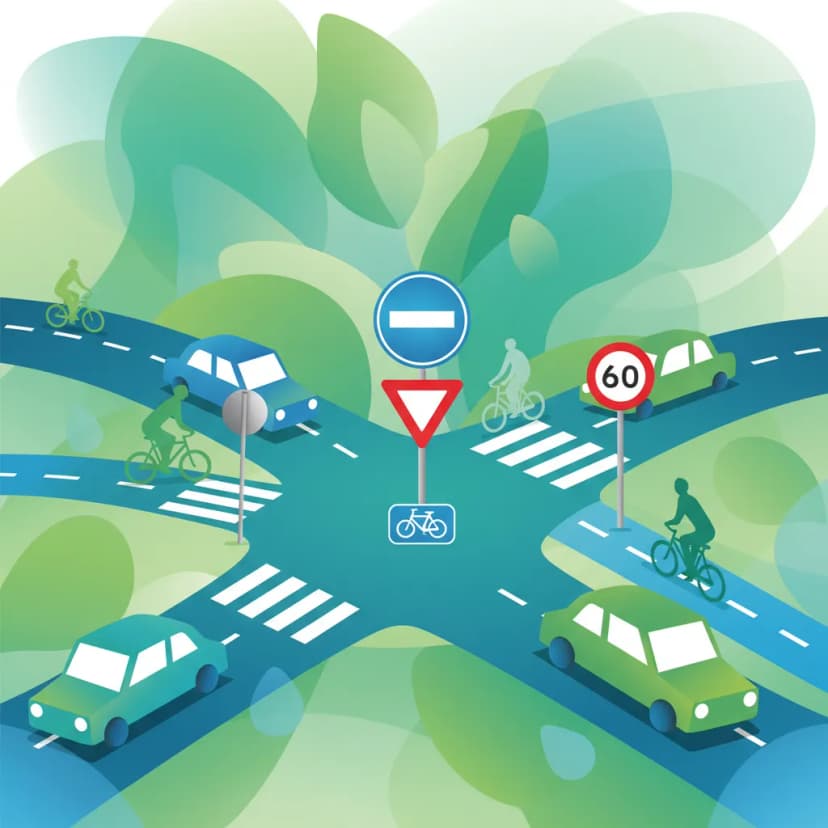
This lesson details the full range of Swedish regulatory signs, which dictate mandatory actions and prohibitions for all road users. You will learn to identify signs that establish speed limits, restrict access, prohibit overtaking, and define parking rules. Understanding these signs is critical for legal compliance and safe interaction with other traffic, as they form the basis of enforceable road law under the Trafikförordning regulations.
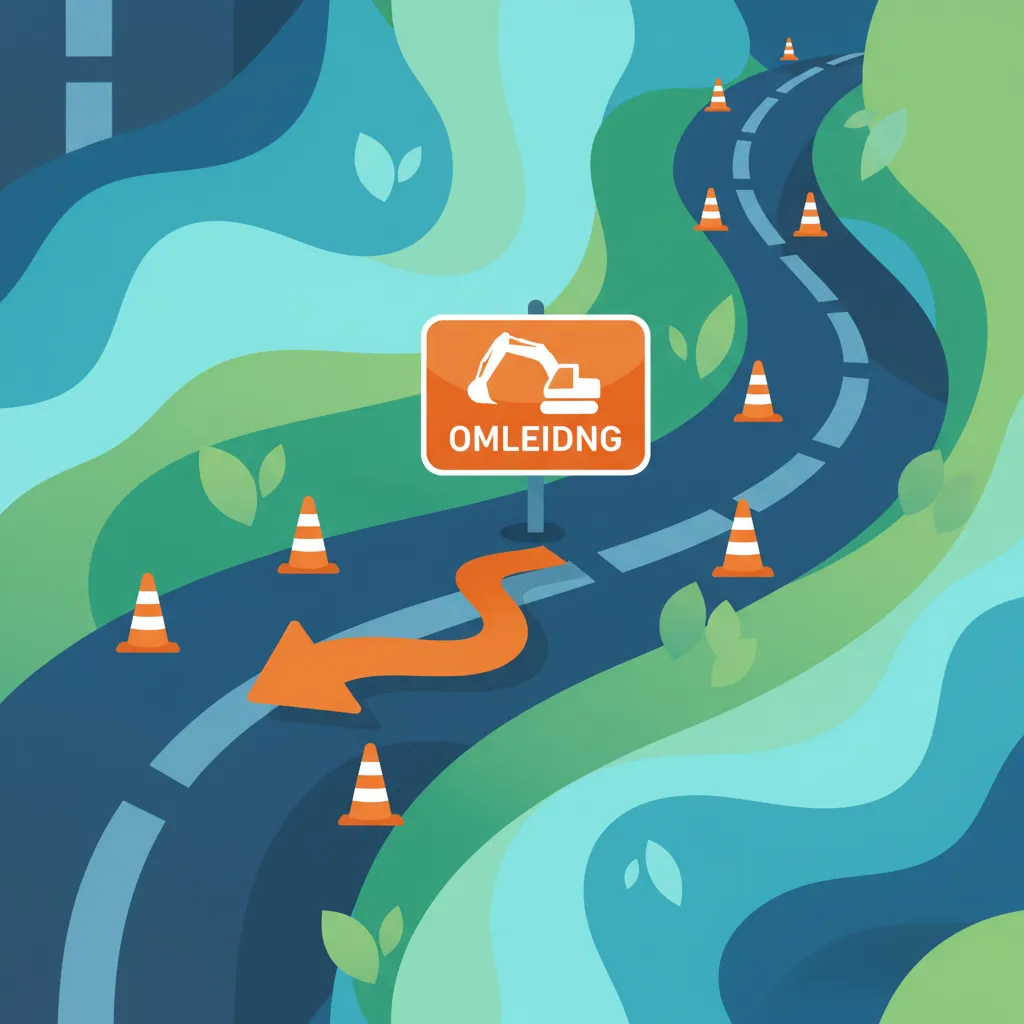
This lesson prepares riders for encountering roadworks, which can introduce temporary and often confusing changes to the road layout. It explains how to interpret the specific orange-colored signs used in these zones, including new speed limits, lane diversions, and warnings about surface hazards. The key takeaway is to reduce speed and increase vigilance when navigating through construction areas.
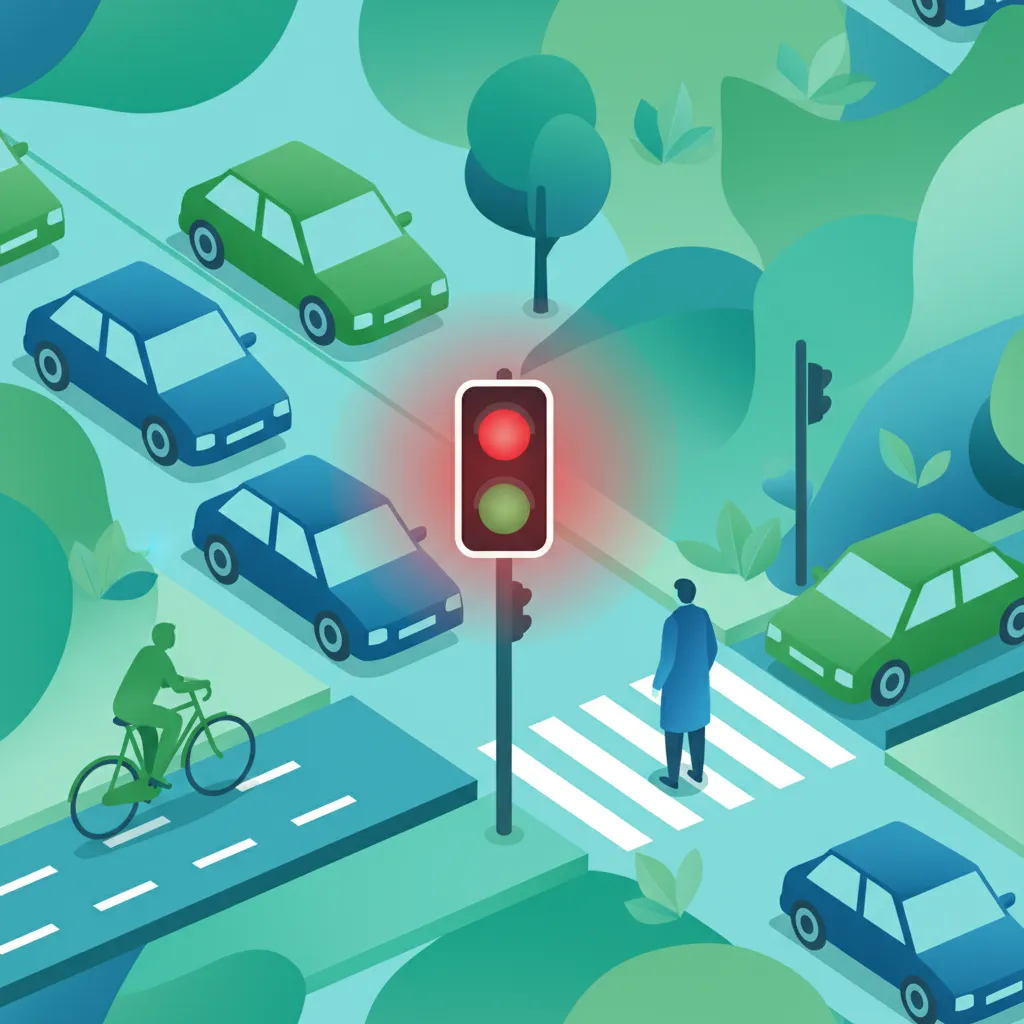
This lesson provides a detailed explanation of the Swedish traffic signal system. You will learn the precise legal meaning of solid red, yellow, and green lights, as well as green arrows which permit turning when oncoming traffic is stopped. It also covers procedures for flashing yellow signals and what to do when traffic lights are out of order, emphasizing that standard priority rules like the right-hand rule then apply.
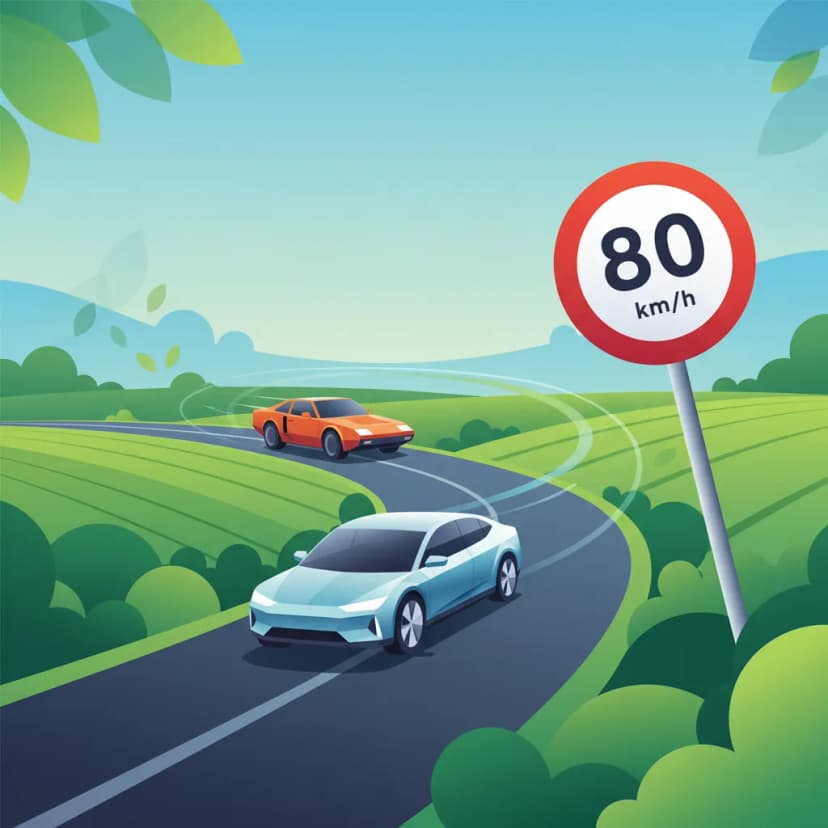
This lesson explains the hierarchical structure of speed limits in Sweden as defined by the Trafikförordning. It covers the default 'base speeds', including 50 km/h in built-up areas and 70 km/h outside them, and how these are modified by specific road signs. You will learn to identify speed limit signs for different road types, such as motorways and residential zones, and understand the legal framework that governs maximum permissible speeds.
Explore the comprehensive meanings and practical applications of various road signs in Sweden. This includes understanding how regulatory, warning, and informational signs guide driver behaviour and ensure road safety.
This lesson explains the function and legal significance of various road markings (vägmarkeringar) in Sweden. You will learn the difference between broken lines that permit overtaking and solid lines that forbid it, as well as the meaning of stop lines, pedestrian crossings, and lane direction arrows. These markings work in conjunction with signs to organize traffic flow, separate lanes, and provide critical information directly on the road surface.
This lesson explains how to read and use Swedish informational and directional signs for effective route planning and navigation. You will learn to follow signs for specific destinations, identify road numbers, and recognize indicators for services such as fuel stations and rest areas. For motorcyclists on long journeys, this knowledge is crucial for making timely decisions about lane changes, exits, and stops without causing disruption to traffic flow.
This lesson details the full range of Swedish regulatory signs, which dictate mandatory actions and prohibitions for all road users. You will learn to identify signs that establish speed limits, restrict access, prohibit overtaking, and define parking rules. Understanding these signs is critical for legal compliance and safe interaction with other traffic, as they form the basis of enforceable road law under the Trafikförordning regulations.
This lesson details the full range of Swedish regulatory signs, which establish legally enforceable rules for all road users. You will learn to interpret prohibitory signs (förbudsmärken) such as speed limits and no-entry signs, as well as mandatory signs (påbudsmärken) that dictate direction or lane usage. Understanding these signs is crucial as they directly regulate traffic flow, ensure safety at critical points, and carry legal consequences if ignored.
This lesson covers the essential topic of communication in traffic using the vehicle's built-in signaling devices. You will learn the rules for using your turn indicators (körriktningsvisare) in good time before turning or changing lanes. The content also explains the proper use of hazard lights (varningsblinkers) in emergency situations and the very limited, specific circumstances in which using the horn (ljudsignal) is permitted to avert immediate danger.
This lesson provides a detailed explanation of the Swedish traffic signal system. You will learn the precise legal meaning of solid red, yellow, and green lights, as well as green arrows which permit turning when oncoming traffic is stopped. It also covers procedures for flashing yellow signals and what to do when traffic lights are out of order, emphasizing that standard priority rules like the right-hand rule then apply.
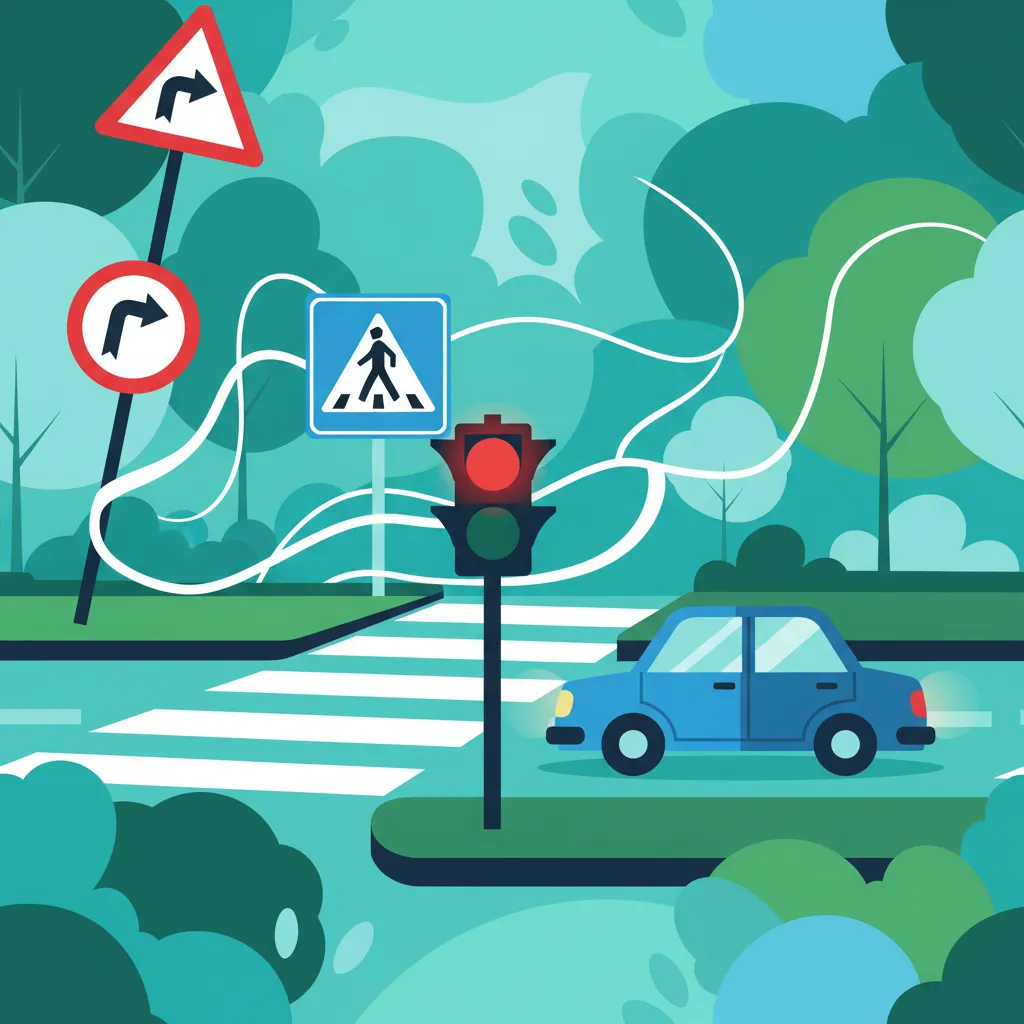
This lesson focuses on Swedish warning signs (varningsmärken), designed to alert drivers to potential dangers ahead. You will study the meaning of triangular signs indicating hazards such as sharp bends, pedestrian crossings, risk of animals on the road, or temporary road work. The objective is to develop proactive driving habits by understanding how to anticipate risks and adapt speed and positioning appropriately when a warning sign is present.
This lesson focuses on Swedish warning signs designed to alert drivers to potential dangers. You will study signs indicating sharp bends, slippery surfaces, animal crossings, and temporary hazards like road construction. Correctly interpreting these signs allows a motorcyclist to proactively adjust speed, lane position, and readiness to react, which is essential for maintaining control and safety, especially in adverse weather or on unfamiliar roads.
This lesson explains the function of informational signs (Informationsskyltar), which provide guidance for navigation and access to services. It covers signs indicating distances to destinations, route numbers, and locations of fuel stations or parking areas. For moped riders, this includes identifying signs for designated moped or cycle lanes, helping them to plan and follow routes efficiently and legally.

This lesson focuses on the variety of road markings used on Swedish roads and their meaning for motorcyclists. You will learn the difference between solid and broken lines regarding overtaking, how to position yourself correctly at intersections based on markings, and how to interpret symbols painted on the road surface. Adhering to these markings is essential for maintaining correct lane discipline and ensuring predictability for other road users.
Find clear answers to common questions learners have about Information and Direction Signs (Informationsskyltar). Learn how the lesson is structured, which driving theory objectives it supports, and how it fits into the overall learning path of units and curriculum progression in Sweden. These explanations help you understand key concepts, lesson flow, and exam focused study goals.
In Sweden, the terms 'information signs' (informationsskyltar) and 'direction signs' (visstilstavlor, often part of information signs) are closely related. Informational signs provide guidance on services, facilities, or specific road conditions. Directional signs, often blue or green, specifically indicate routes, destinations, and distances, helping you navigate towards them.
Yes, generally. Motorway signs often use a blue background for services and directions, while national and local roads might use green or white backgrounds for destinations and other information. The context and specific design of the sign are key to understanding its meaning on different road types.
Mandatory services like 'Stopp' (stop) or 'Väg E18' (motorway route) are usually regulatory or directional. Signs for optional services like fuel stations, restaurants, or rest areas typically use pictograms on a blue background and indicate choices rather than obligations.
A sign with a bed symbol typically indicates accommodation, such as a hotel, motel, or hostel. It's an informational sign to help drivers find places to stay.
Information and direction signs are very important for the Category B theory exam. Questions often test your ability to understand what a sign means in a given traffic situation, how it affects your route, and what services are available, ensuring you can navigate safely and efficiently.