
Riding a motorcycle in darkness or poor visibility presents unique challenges. This lesson, part of the 'Adverse Weather & Low-Grip Conditions' unit in your Swedish Motorcycle Theory Course, will equip you with the essential knowledge to navigate Sweden's roads safely during night hours. Understanding how reduced visibility affects perception and how to maximise your own and your motorcycle's visibility is critical for the theory exam and your safety.
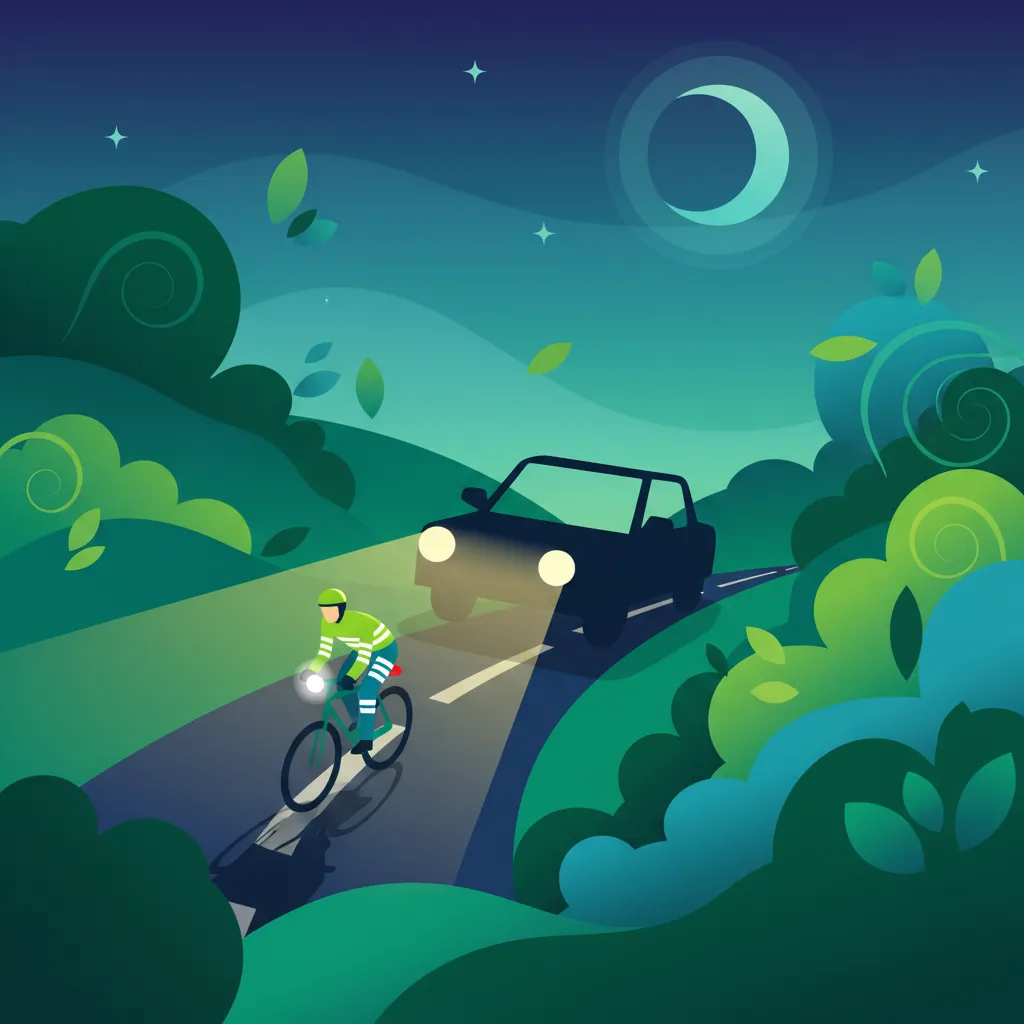
Riding a motorcycle at night, during twilight hours, or in other conditions of reduced visibility presents unique challenges that demand heightened awareness, specific skills, and strict adherence to traffic regulations. This lesson, part of the Swedish Motorcycle Theory Course, will equip you with the knowledge to safely manage these demanding situations, ensuring you are prepared for both your Category A theory exam and real-world riding scenarios. Understanding how darkness affects your vision, how to use your motorcycle’s lighting effectively, and how to maximize your visibility to others are critical components of safe night riding.
Darkness fundamentally alters the riding environment, impacting how you perceive the road and how others perceive you. These changes require a conscious shift in your riding strategy and a deeper understanding of human vision and motorcycle dynamics.
The human eye is remarkably adaptable, but its capabilities are significantly diminished in low light. At night, our scotopic vision—the vision mediated by rod cells—takes over. This type of vision is excellent for detecting movement in dim light but sacrifices detail, color perception, and visual acuity. What appears clear during the day might be blurry or indistinguishable at night.
One of the most critical impacts of darkness is the severe reduction in depth perception. Visual cues like shadows, textures, and clear outlines, which we unconsciously use to judge distances and relative speeds during the day, are either absent or distorted at night. This can lead to misjudging gaps in traffic, underestimating the speed of oncoming vehicles, or failing to accurately gauge the distance to a turn or obstacle. The ability to discern fine contrasts between objects and their backgrounds is also severely impaired, making hazards like potholes, fallen debris, or dark-colored objects on the road much harder to spot.
Glare is another significant hazard when riding in low-light conditions. It occurs when excessive brightness enters the eye, reducing contrast and temporarily impairing vision. The most common source of glare for motorcyclists at night is the headlights of oncoming vehicles, particularly if they are using their main (high) beams. Reflections from wet road surfaces, large road signs, or even bright streetlights can also contribute to glare.
When exposed to sudden bright light, your eyes can suffer from temporary night blindness, where the rod cells become overwhelmed and require time to readjust to the darkness. This "white-out" effect can last for several seconds, during which your ability to see the road, detect hazards, and maintain your lane position is severely compromised. Managing glare effectively is crucial for maintaining consistent visual perception and preventing hazardous situations.
Darkness provides cover for many nocturnal animals, making them a much greater threat to motorcyclists at night. Animals such as deer, moose, foxes, and hares are more active during dusk, dawn, and nighttime hours, and they often venture onto roads. Their dark coats can blend almost perfectly with the surroundings, making them incredibly difficult to spot until it's too late.
Unexpected obstacles are also harder to identify. Potholes, road debris, unlit parked vehicles, and pedestrians or cyclists wearing dark clothing become virtually invisible until they are within the limited range of your headlights. This reduced reaction time means that hazards that would be easily avoidable during the day can become significant collision risks at night.
Your motorcycle's lighting system is your primary tool for both seeing and being seen at night. Knowing when and how to use each light setting is not just good practice, but a legal requirement.
The dipped beam (also known as the low beam) is your standard headlight setting for most night riding conditions. It produces a wide, relatively short-range light pattern that illuminates the road ahead without blinding other road users.
According to Swedish traffic regulations (§ 21-2 of Trafikförordningen), you must use your dipped beam whenever there is other traffic present within approximately 150 metres, whether it's oncoming vehicles or vehicles you are following. It is also required in well-lit urban areas where street lighting provides adequate ambient illumination. Using the dipped beam prevents glare for other drivers and ensures you comply with the law.
The main beam (or high beam) provides a long-range, narrow light pattern designed to illuminate the road much further ahead than the dipped beam. This is invaluable for spotting hazards at a greater distance, crucial for safe riding at higher speeds on unlit roads.
However, the main beam must be used judiciously. Swedish traffic law (§ 21-3 of Trafikförordningen) dictates that the main beam may only be used when there is no oncoming traffic within approximately 150 metres and no vehicle you are following at a close distance. It should also be reserved for truly unlit roads, as using it in well-lit urban areas is unnecessary and creates glare. Always be prepared to switch back to your dipped beam immediately when you encounter other vehicles.
When riding on unlit rural roads, using your main beam can significantly extend your vision, allowing more time to react to hazards. However, practice switching quickly to dipped beam as soon as you spot oncoming headlights or taillights.
Some motorcycles are equipped with auxiliary lights or fog lights. These are typically mounted low on the motorcycle and project a wide, flat beam intended to cut through low-lying mist or fog. They are not designed for general night riding and have specific legal restrictions.
In Sweden, auxiliary lights are generally prohibited on dry, clear roads. They should only be used when visibility is significantly reduced, for example, in dense fog or heavy rain, and only if your motorcycle has a dedicated fog light system. Using them inappropriately can cause glare for other drivers. Always refer to the specific vehicle regulations (e.g., Trafikförordningen § 23-2) for any updates on allowable auxiliary lighting.
Modern motorcycles often feature advanced lighting technologies such as LED (Light Emitting Diode) and Xenon (HID - High-Intensity Discharge) headlights. These systems offer several advantages, including higher luminous efficacy (more light for less power), whiter light that mimics daylight, and often faster switch-on times.
Despite these advancements, the fundamental rules for using dipped and main beams still apply. While LED lights might appear brighter, they do not negate the need to dim your lights for oncoming traffic. The aim is always to provide adequate illumination for yourself without impairing the vision of other road users.
Dealing with glare is a critical skill for night riding. It involves both active decisions and physiological understanding.
When you encounter oncoming vehicles using their high beams, or even just particularly bright dipped beams, your primary goal is to minimize the impact on your vision.
Dim Your Own Lights: The first step is always to switch from your main beam to your dipped beam well in advance, usually at least 150 metres before the oncoming vehicle. This signals to them to dim their lights as well and fulfills your legal obligation.
Look Away from the Lights: Instead of staring directly into the bright headlights, shift your gaze slightly to the right, focusing on the white line or the edge of the road. This provides a reference point for maintaining your lane position while minimizing direct exposure to the glare.
Reduce Speed: If glare is severe and impairs your vision, reduce your speed. This gives you more time to react if an unseen hazard emerges from the glare.
Use an Anti-Glare Visor: A lightly tinted visor (rated for night use) or specialized anti-glare eyewear can help reduce the intensity of incoming light. Ensure any tinting is appropriate for low-light conditions and does not excessively reduce overall visibility.
Glare isn't always from direct headlights. Wet roads, highly reflective road signs, or even puddles can bounce light back at you, creating distracting and vision-impairing reflections. There are no specific legal rules for this, but safe practice dictates being aware of such surfaces. Reduce speed, increase your following distance, and keep your helmet visor clean to minimize scattered light.
Your eyes need time to adjust from bright to dim conditions, a process called visual adaptation or scotopic adaptation. This process is mediated by the rod cells in your retina and can take approximately 20 seconds for partial adaptation and up to 30 seconds for full adaptation to very dark conditions.
To preserve your night vision, avoid looking at bright lights just before or during your night ride. This includes turning off or dimming bright dashboard displays, avoiding looking at your phone screen, or refraining from using bright interior lights in your helmet. Any sudden exposure to bright light can reset your adaptation, causing temporary "night blindness" and requiring your eyes to readapt. Always allow your eyes sufficient time to adjust before making critical judgments about distances or hazards in the dark.
While your motorcycle's lights help you see, conspicuity—the degree to which you and your motorcycle are detectable by other road users—is paramount for preventing collisions, especially at night. It's not enough to see; you must be seen.
In Sweden, specific regulations are in place to enhance rider visibility. According to Transportstyrelsen (§ 4-7), motorcyclists must wear high-visibility clothing with at least 4 square metres (m²) of reflective material when riding at night or in conditions of reduced visibility (e.g., dusk, dawn, fog, heavy rain).
This mandatory requirement highlights the importance of making yourself as visible as possible. A standard reflective vest or jacket often meets this criterion, but riders should ensure their chosen gear complies with the specified reflective surface area. This significantly increases the distance at which other drivers can spot you, providing them with more time to react.
Beyond legal requirements, wearing high-visibility clothing offers a substantial safety advantage. Even in conditions of weak ambient light, reflective materials on your gear (jacket, trousers, helmet, boots, gloves) bounce light from other vehicles' headlights back to the source. This creates a distinct outline of the rider, making you much more recognizable as a human on a motorcycle, rather than just a pair of lights. Opt for fluorescent colors during the day and incorporate reflective strips for nighttime use.
While additional lighting can enhance visibility, rules regarding flashing lights are strict. In Sweden, the use of flashing light devices (e.g., LED strips that flash) while the vehicle is moving is prohibited (Transportstyrelsen § 7-3). Such lights can be confusing to other road users, potentially being mistaken for emergency vehicles or hazard warning signals. Any additional lighting you choose to use must be steady-on and comply with vehicle regulations. Flashing lights are generally only permitted when your vehicle is stationary and poses a danger, functioning as hazard warning lights.
One of the most critical adjustments for night riding is managing your speed in relation to what you can actually see.
Speed-visibility matching is the fundamental principle for safe night riding. It means that your travel speed must always be such that you can safely stop your motorcycle within the distance illuminated by your headlights. If your headlights only illuminate 30 metres ahead, your speed must allow you to perceive a hazard and bring your motorcycle to a complete stop within those 30 metres.
This requires considering your reaction time (the time it takes to perceive a hazard and initiate a response, typically around 1 second for an alert rider) and your braking distance (the distance your motorcycle travels from when you apply the brakes until it stops). The total stopping distance combines both. Riding faster than you can see means you are "overdriving your headlights," creating a situation where you might encounter a hazard you cannot avoid.
The standard speed limits are set for ideal daylight conditions. In darkness or reduced visibility, you must reduce your speed significantly, regardless of the posted limit, to comply with the speed-visibility matching principle. This is also enshrined in Swedish Traffic Ordinance § 12-2.
With reduced depth perception at night, judging distances accurately becomes much harder. To compensate, employ several strategies:
Anticipating and spotting nocturnal animals requires constant vigilance.
Adhering to Swedish traffic laws is crucial for safety and avoiding penalties. These regulations are designed to minimize risks associated with limited visibility.
Understanding common errors is as important as knowing the rules. Avoid these pitfalls to ensure your safety and compliance.
One of the most frequent violations is keeping the main beam on when it's not appropriate. This includes:
Night riding is rarely a uniform experience. Different conditions demand specific adjustments.
Riding a motorcycle in dark or low-visibility conditions requires a comprehensive approach to safety, combining proper equipment use, adapted riding techniques, and adherence to specific legal requirements.
By integrating these principles and practices into your riding habits, you can significantly reduce the risks associated with night riding and ensure a safer journey for yourself and others on the road.
Lesson content overview
Explore all units and lessons included in this driving theory course.
Explore search topics learners often look for when studying Night Riding, Dark Conditions, and Reduced Visibility. These topics reflect common questions about road rules, driving situations, safety guidance, and lesson level theory preparation for learners in Sweden.
Browse additional driving theory lessons that cover connected traffic rules, road signs, and common driving situations related to this topic. Improve your understanding of how different rules interact across everyday traffic scenarios.
Learn the specific challenges of riding a motorcycle in dark conditions. This lesson covers effective headlight use, strategies for dealing with oncoming glare, and understanding how darkness impacts depth perception and distance judgment according to Swedish traffic rules.
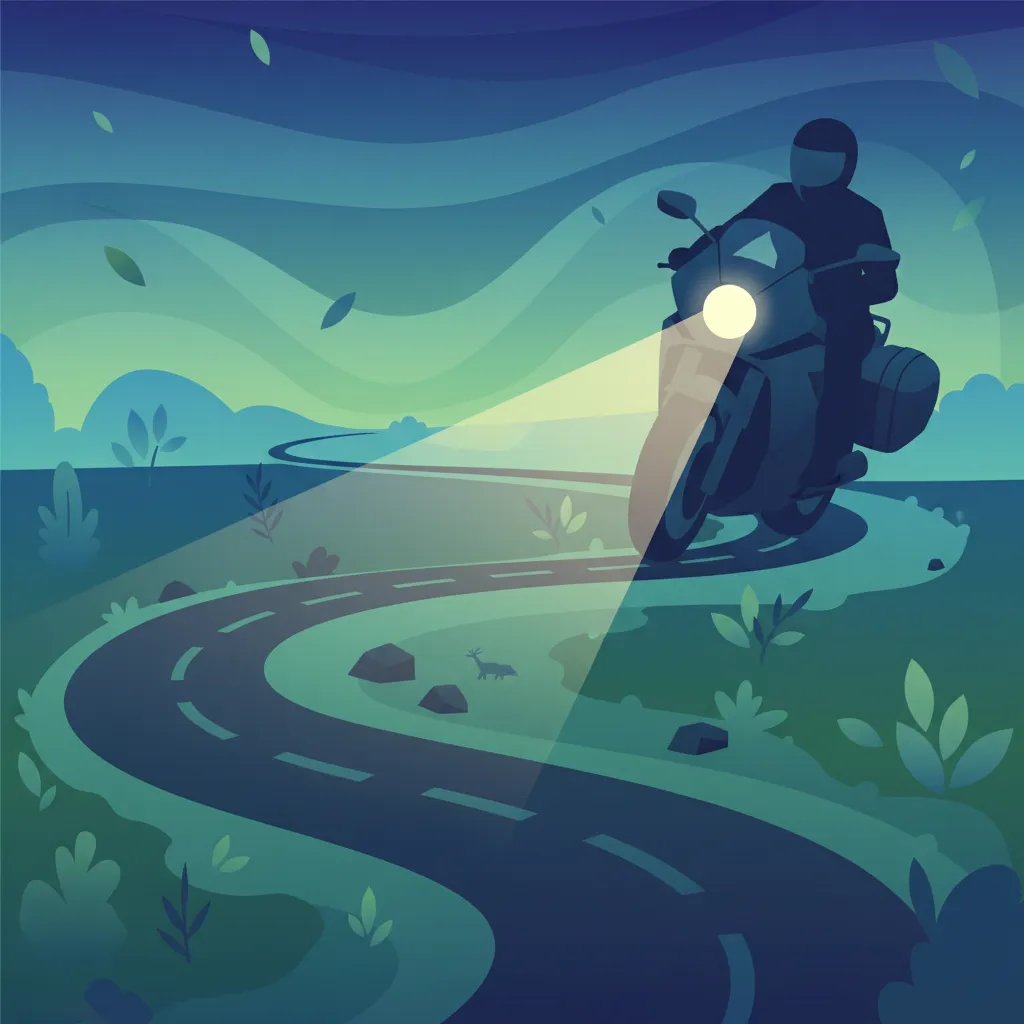
This lesson provides essential strategies for riding safely at night and during twilight hours. It covers the correct use of headlights to maximize visibility without dazzling other drivers and emphasizes the need to reduce speed to compensate for shorter sight distances. The content also highlights the importance of wearing reflective gear to be seen by others.
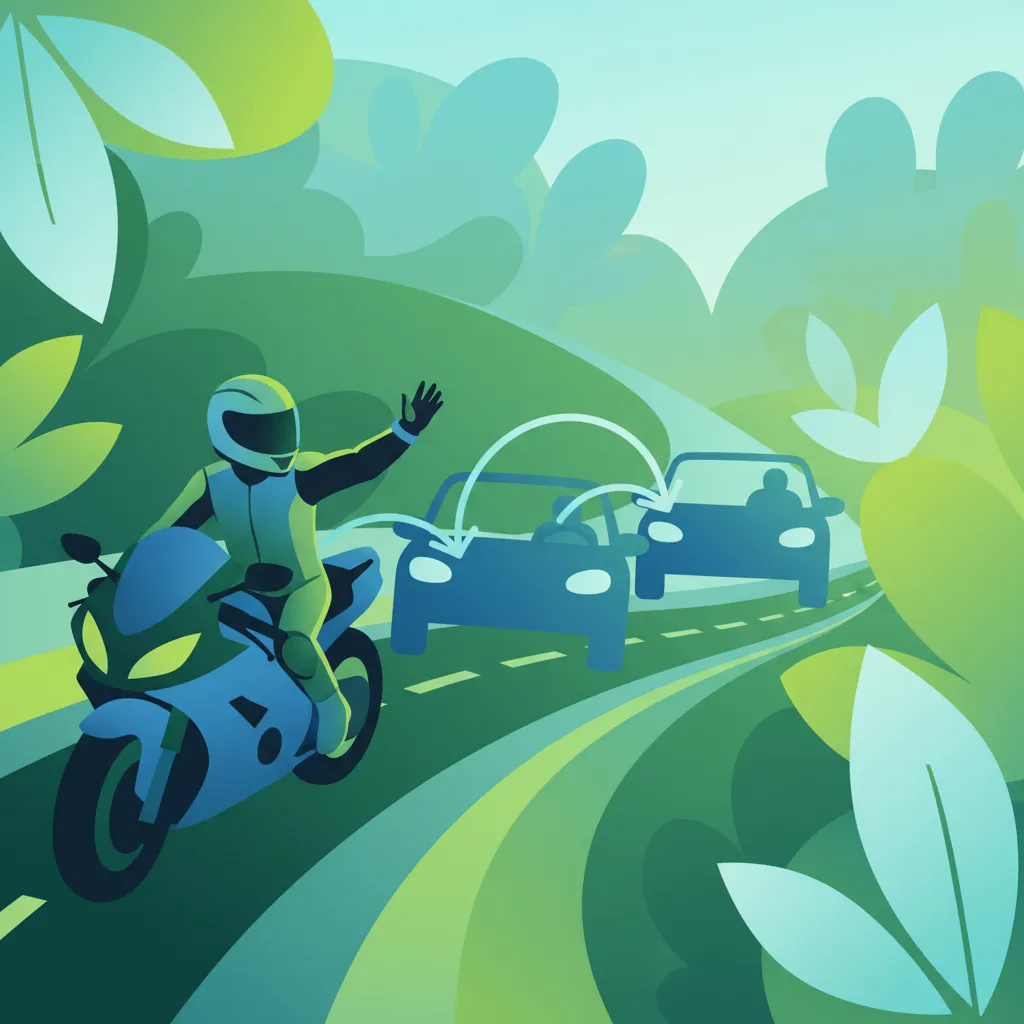
This lesson focuses on strategies to make yourself more visible to other road users, a critical factor in motorcycle safety. You will learn how to use lane positioning strategically to stay out of other drivers' blind spots and to maximize your own line of sight through corners and intersections. The content also covers the effectiveness of high-visibility and reflective clothing, as well as the correct use of lights to ensure you are seen in all conditions.
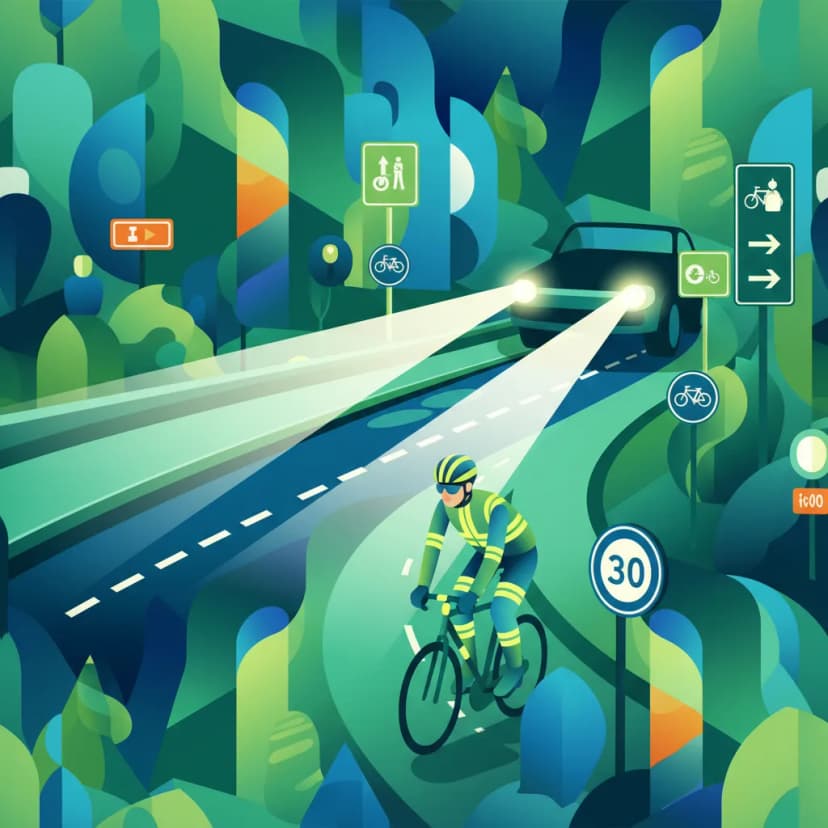
This lesson details the legal requirements for moped lighting in Sweden and provides best practices for riding at night or in low-light conditions. It explains the correct use of high and low beam headlights, the importance of a functioning tail light, and the role of reflectors in being seen. The goal is to ensure the rider is as visible as possible to others and can adequately illuminate the road ahead.
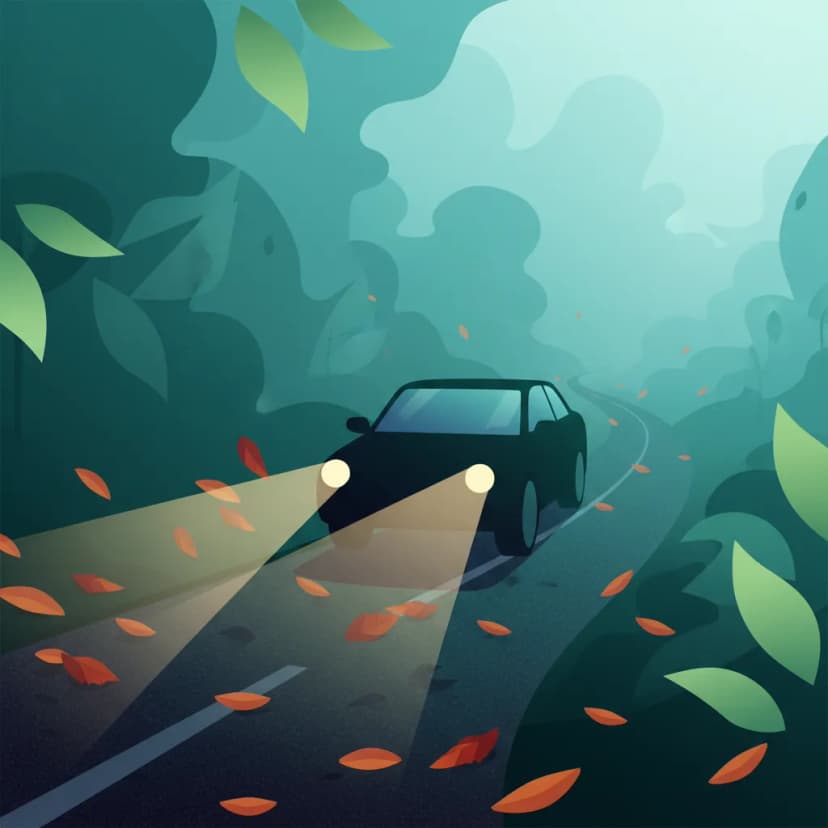
This lesson covers strategies for driving safely when visibility is compromised. You will learn the correct use of different lighting systems: when to use low beams, high beams (helljus), and how to avoid dazzling other drivers. The lesson also explains the specific regulations for using front and rear fog lights and provides techniques for navigating safely in dense fog or heavy precipitation by reducing speed and using the road edge as a guide.
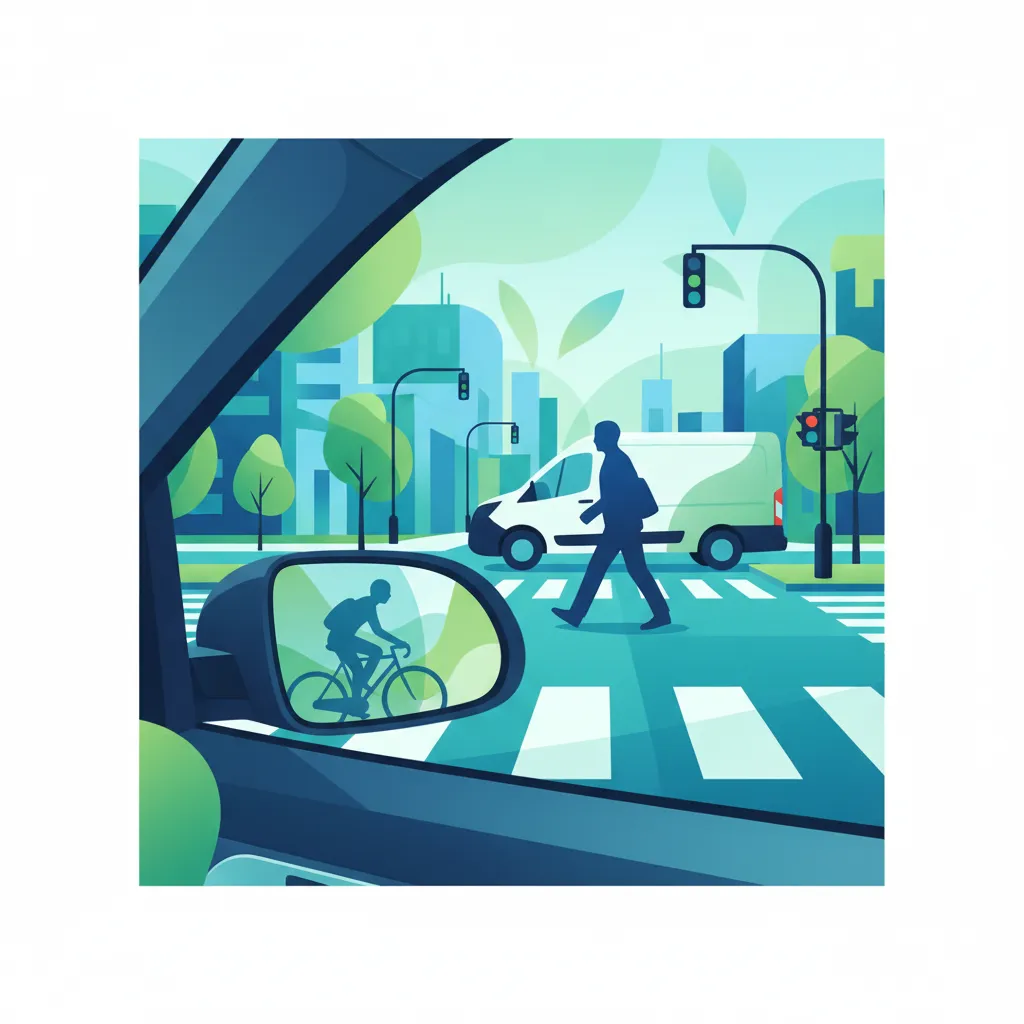
This lesson provides critical strategies for dealing with one of the biggest dangers in traffic: blind spots. You will learn the importance of the shoulder check and how to position yourself on the road to be more visible to other drivers. The lesson also trains you to scan the road surface ahead for hidden hazards like potholes, gravel, or oil spills that can pose a significant threat to a motorcycle's stability, teaching you to see and avoid them in time.

This lesson provides practical advice on selecting the appropriate riding gear for the diverse Swedish seasons. You will learn about the importance of layering for warmth in the cold, ventilated gear for summer heat, and effective waterproofs for rain. The content emphasizes how the right equipment not only keeps you comfortable and focused but also provides crucial protection and enhances your visibility to other road users, making it a critical component of overall motorcycle safety.
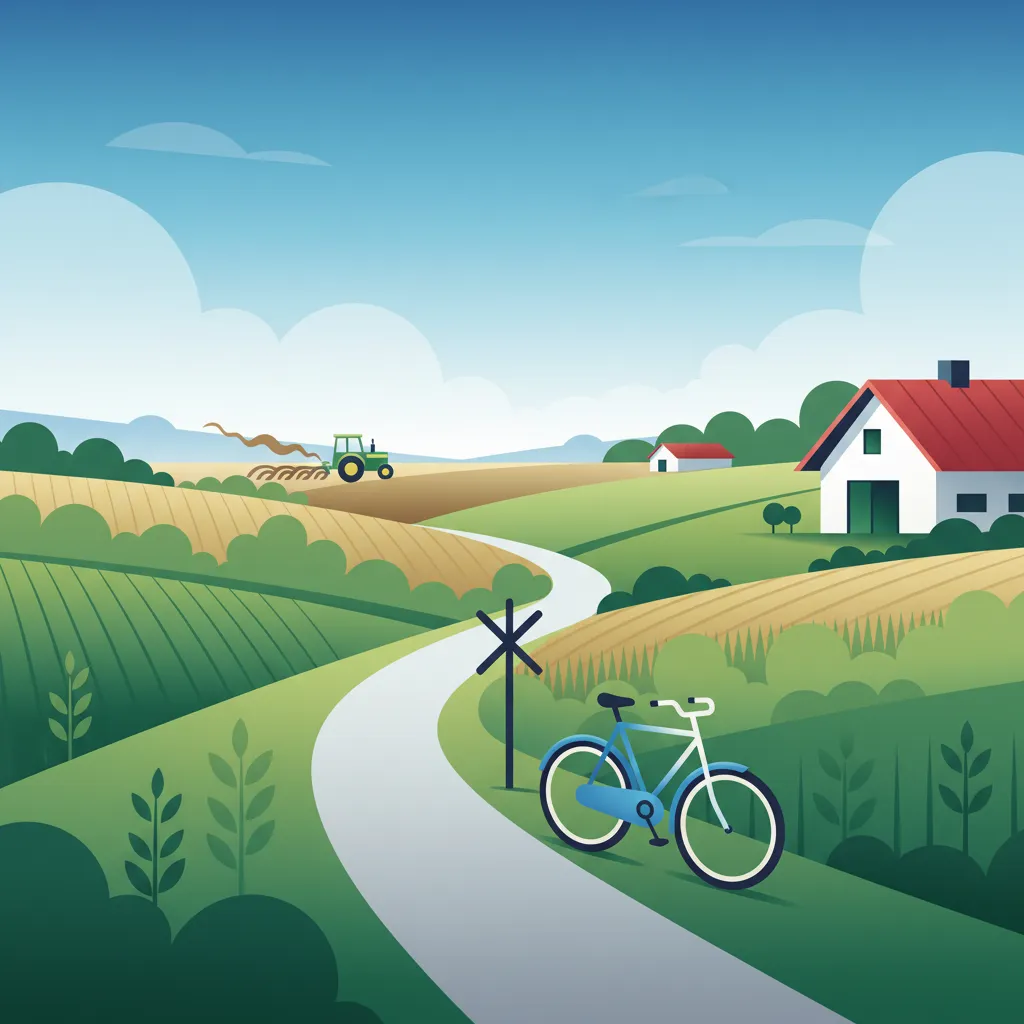
This lesson prepares you for the specific challenges of riding on rural roads in Sweden. You will learn how to read the road ahead for changes in surface quality, approach blind corners safely, and adjust your speed for narrow lanes with no shoulder. The content also covers how to anticipate and safely interact with slow-moving agricultural vehicles and the potential for wild animals on the road, ensuring you are prepared for the unpredictable nature of country riding.
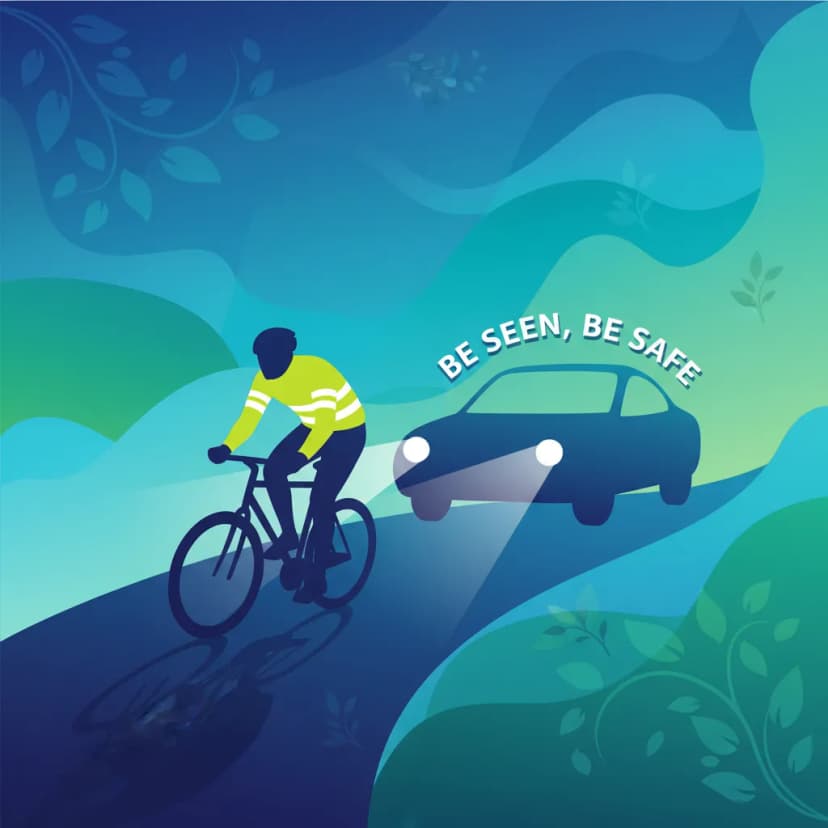
This lesson focuses on proactive strategies to increase a moped rider's visibility to other drivers. It strongly advocates for the use of high-visibility and reflective clothing, helmets, and accessories to stand out in traffic. Additionally, it revisits the concept of lane positioning as a tool to avoid being in other drivers' blind spots and to create a more prominent presence on the road.
This lesson covers the correct interpretation and response to all forms of light and audible signals a motorcyclist will encounter. You will study the sequences of traffic lights, the rules for using turn indicators and hazard lights, and the legally permitted uses of the horn. Proper use of these signals is a fundamental aspect of safe riding, as it communicates your intentions clearly to other road users and helps prevent misunderstandings and collisions.
This lesson provides essential information for any motorcyclist considering riding in cold Swedish weather. You will learn how cold temperatures affect tire performance and the extreme caution required on surfaces with potential ice or snow. The content focuses on recognizing hazardous spots like black ice, the need for exceptionally smooth and gentle control inputs, and why in many cases, the safest decision is not to ride at all in such conditions.
Focus on identifying nocturnal hazards and the critical role of reflective gear when riding at night. This lesson details strategies for spotting unseen dangers like animals and emphasizes the importance of being visible to other road users in low-light Swedish environments.
This lesson focuses on strategies to make yourself more visible to other road users, a critical factor in motorcycle safety. You will learn how to use lane positioning strategically to stay out of other drivers' blind spots and to maximize your own line of sight through corners and intersections. The content also covers the effectiveness of high-visibility and reflective clothing, as well as the correct use of lights to ensure you are seen in all conditions.
This lesson provides critical strategies for dealing with one of the biggest dangers in traffic: blind spots. You will learn the importance of the shoulder check and how to position yourself on the road to be more visible to other drivers. The lesson also trains you to scan the road surface ahead for hidden hazards like potholes, gravel, or oil spills that can pose a significant threat to a motorcycle's stability, teaching you to see and avoid them in time.
This lesson provides essential strategies for riding safely at night and during twilight hours. It covers the correct use of headlights to maximize visibility without dazzling other drivers and emphasizes the need to reduce speed to compensate for shorter sight distances. The content also highlights the importance of wearing reflective gear to be seen by others.
This lesson provides practical advice on selecting the appropriate riding gear for the diverse Swedish seasons. You will learn about the importance of layering for warmth in the cold, ventilated gear for summer heat, and effective waterproofs for rain. The content emphasizes how the right equipment not only keeps you comfortable and focused but also provides crucial protection and enhances your visibility to other road users, making it a critical component of overall motorcycle safety.
This lesson focuses on the single most important piece of safety gear: the helmet. You will learn about the legal standards helmets must meet in Sweden (e.g., ECE ratings) and how to ensure a proper fit. The content also covers the full range of personal protective equipment (PPE), including jackets, pants, gloves, and boots, explaining the importance of abrasion resistance, impact armor, and high-visibility features for rider protection.
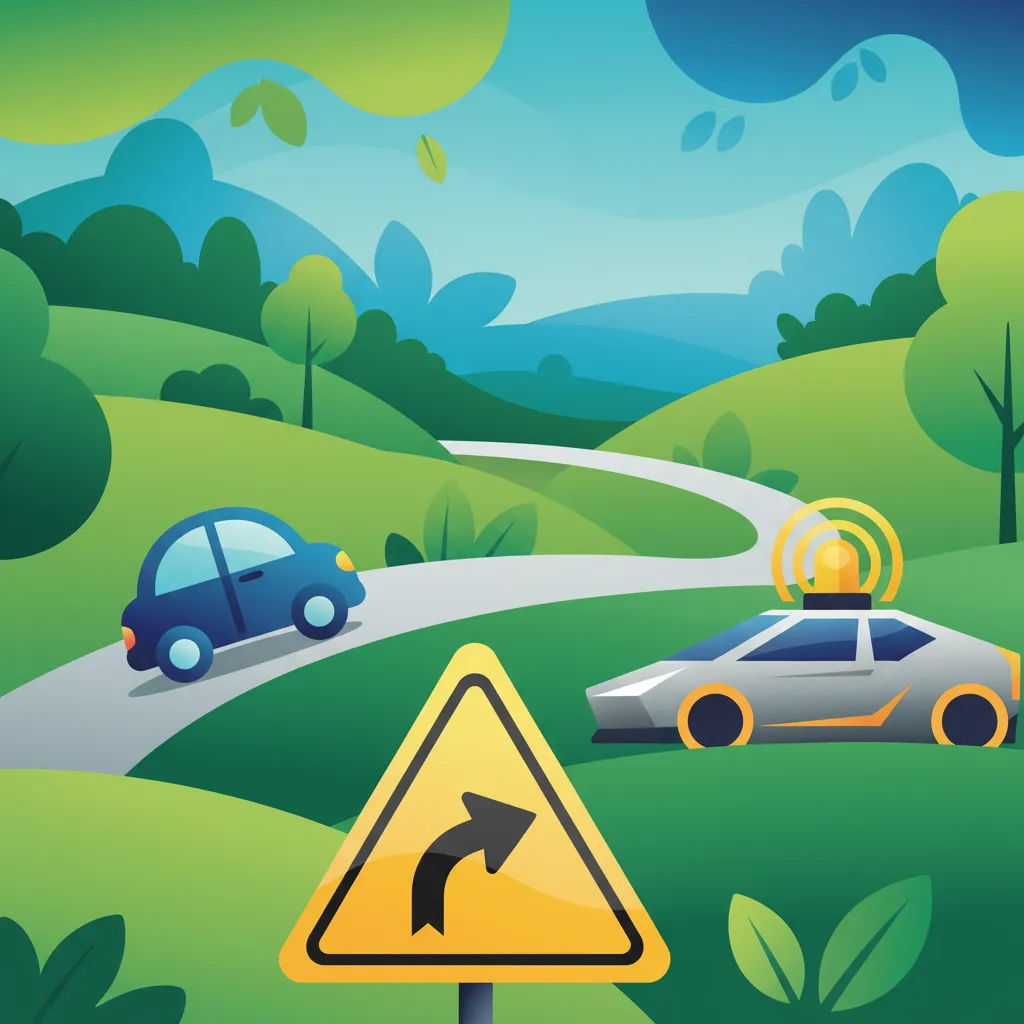
This lesson focuses on Swedish warning signs designed to alert drivers to potential dangers. You will study signs indicating sharp bends, slippery surfaces, animal crossings, and temporary hazards like road construction. Correctly interpreting these signs allows a motorcyclist to proactively adjust speed, lane position, and readiness to react, which is essential for maintaining control and safety, especially in adverse weather or on unfamiliar roads.
This lesson teaches you how to make an accident scene as safe as possible for yourself, any other involved parties, and approaching traffic. You will learn the correct use of hazard lights, the placement of warning triangles, and the importance of wearing a high-visibility vest. The content also covers how to identify and manage immediate post-crash hazards, such as spilled fuel or unstable vehicles, to prevent the situation from worsening.
This lesson focuses on proactive strategies to increase a moped rider's visibility to other drivers. It strongly advocates for the use of high-visibility and reflective clothing, helmets, and accessories to stand out in traffic. Additionally, it revisits the concept of lane positioning as a tool to avoid being in other drivers' blind spots and to create a more prominent presence on the road.
This lesson details the legal requirements for moped lighting in Sweden and provides best practices for riding at night or in low-light conditions. It explains the correct use of high and low beam headlights, the importance of a functioning tail light, and the role of reflectors in being seen. The goal is to ensure the rider is as visible as possible to others and can adequately illuminate the road ahead.
This lesson provides essential information for any motorcyclist considering riding in cold Swedish weather. You will learn how cold temperatures affect tire performance and the extreme caution required on surfaces with potential ice or snow. The content focuses on recognizing hazardous spots like black ice, the need for exceptionally smooth and gentle control inputs, and why in many cases, the safest decision is not to ride at all in such conditions.
Find clear answers to common questions learners have about Night Riding, Dark Conditions, and Reduced Visibility. Learn how the lesson is structured, which driving theory objectives it supports, and how it fits into the overall learning path of units and curriculum progression in Sweden. These explanations help you understand key concepts, lesson flow, and exam focused study goals.
Darkness significantly impairs depth perception and the ability to judge distances accurately. Your brain relies heavily on visual cues, which are diminished at night. This can make it harder to judge the speed of oncoming vehicles or the distance to obstacles. It's crucial to rely more on your instruments and maintain a greater safety margin.
Always ensure your headlight is on, both for seeing the road ahead and for being seen by others. Use your high beam when appropriate (on unlit roads without oncoming traffic) to improve your vision, but dip it promptly when encountering other vehicles to avoid dazzling them. Ensure your headlight is correctly aimed and functioning properly.
In Sweden, with its long dark winters, reflective gear is vital for motorcyclist safety. It makes you significantly more visible to other road users, especially drivers of cars and trucks who may not be expecting a motorcycle. Using retro-reflective materials that bounce back light from headlights dramatically increases your safety margin, particularly on unlit roads.
Animals like moose (älg), deer, and wild boar are most active during dawn, dusk, and at night. They can dart out into the road unexpectedly, posing a serious hazard. Be extra vigilant on rural roads, especially in areas with wildlife warning signs, and reduce your speed to give yourself more time to react if an animal appears.
When facing oncoming traffic at night, try to look slightly away from the direct glare, focusing on the edge of your own lane or the right-hand side of the road. Avoid staring directly at the headlights. If the glare is severe, slow down and ensure you are maintaining your lane position correctly.