
Before every ride, a quick check of your moped is vital for safety and to prevent unexpected breakdowns. This lesson covers the essential pre-ride inspection, focusing on tires (Däck), brakes (Bromsar), and lights, ensuring you're always prepared and road-ready for your AM license.
As a moped rider in Sweden, your safety and the safety of others depend significantly on the mechanical condition of your vehicle. A crucial part of responsible moped riding is performing regular, routine inspections and maintenance. This proactive habit, often completed in just a few minutes before each journey, ensures your moped is in safe working order, preventing mechanical failures that could lead to accidents or legal penalties. This lesson will guide you through the essential aspects of inspecting your Category AM moped, with a particular focus on tires (Däck) and brakes (Bromsar), along with critical lighting and signalling components.
In Sweden, the responsibility for maintaining a roadworthy vehicle lies squarely with the driver. The Road Traffic Ordinance (Trafikförordning) outlines strict requirements to ensure all vehicles on public roads are in a safe and functional condition.
According to Trafikförordning 3 kap. 18 §, every driver is obligated to ensure their vehicle is in a roadworthy condition (trafiksäkert skick) and that all its parts are functional and do not pose any danger. Failure to comply with this regulation can lead to fines, penalty points on your license, and can even affect your insurance coverage in the event of an accident. This legal framework is designed to minimise accidents caused by preventable mechanical defects, contributing to overall road safety.
Preventive Maintenance is Key: Adopting a routine inspection habit before every ride is not just good practice; it's a legal obligation that protects you and others.
While mopeds are generally subject to less frequent inspections than cars, the general principles of roadworthiness apply continuously. New Category AM mopeds currently undergo a mandatory inspection (Besiktning) after a certain period, and then annually. However, the driver's daily responsibility for the vehicle's condition remains paramount, even between official inspections.
A quick pre-ride inspection, often referred to as a "snabbkoll" in Swedish, is a systematic check of your moped's most safety-critical components. This checklist takes approximately three minutes and should be performed before every journey, regardless of its length. It's a fundamental habit for all responsible moped riders.
Tyre Pressure (Däcktryck): Verify with a calibrated gauge; compare against the manufacturer's specified cold-inflation pressure.
Tread Depth (Mönsterdjup): Visually check for adequate tread; use a tread-depth gauge if available for accuracy.
Tyre Sidewalls (Däcksidor): Inspect for any cuts, bulges, cracks, or excessive wear.
Brake Lever Feel (Bromshandtagskänsla): Ensure both front and rear brake levers have firm, consistent travel without sponginess.
Brake Pad/Shoe Thickness (Bromsbelägg/backtjocklek): Visually inspect the remaining material through brake disc openings or by observing the brake shoes.
Brake Fluid Level (Bromsvätskenivå): (For hydraulic systems) Check the fluid reservoir level and look for discoloration.
Lights and Signals (Ljus och Signalering): Turn on the low beam, test the brake light (both front and rear brakes, if applicable), and check all turn signals.
Mirrors (Spegelar): Ensure mirrors are clean, undamaged, and correctly adjusted for your riding position.
General Visual Sweep: Quickly look for any loose parts, frayed cables, or incorrect chain tension (if chain-driven).
The tires are your moped's only contact with the road, making their condition paramount for grip, stability, and braking performance. A defect in your tires can drastically increase stopping distances and the risk of skidding, especially in adverse weather.
Swedish law, under Trafikförordning 3 kap. 21 §, mandates that tires must have a tread depth of at least 1.6 millimetres. This minimum depth is crucial for evacuating water from beneath the tire, preventing hydroplaning on wet surfaces. However, it is highly recommended to maintain a tread depth of 2 millimetres or more, especially when riding in wet or icy conditions, as this provides a greater margin of safety.
Maintaining the correct tire pressure is fundamental to safe moped operation. Under-inflated tires lead to increased rolling resistance, higher fuel consumption, excessive wear, and crucially, reduced stability and handling. Over-inflated tires can reduce the contact patch with the road, leading to a harsher ride and less grip. Cold-inflation pressure refers to the tire pressure measured when the tire has been stationary for at least three hours or has not been ridden for more than a few kilometres at low speed. It is essential to check tire pressure when the tires are cold, as riding causes the tires to heat up and the air inside to expand, leading to a higher pressure reading. Always refer to your moped's manufacturer specifications, typically found on a sticker or in the owner's manual, for the correct cold-inflation pressure (often between 2.0–2.5 bar for mopeds).
Beyond tread depth and pressure, carefully inspect the tire sidewalls for any signs of damage. Look for cuts, bulges, cracks, or excessive wear that could indicate internal structural damage and a heightened risk of a sudden tire failure. Tire age is another critical factor. Rubber degrades over time, even if the moped is not frequently ridden and the tread appears fine. Most manufacturers and safety experts recommend replacing tires that are older than six years, regardless of visible wear. The manufacturing date (DOT code) is typically stamped on the sidewall.
The vertical distance between the deepest part of the tyre groove and the tyre's outer surface. The legal minimum in Sweden is 1.6 mm.
Your moped's brake system is arguably its most important safety feature, allowing you to control your speed and stop effectively. A properly functioning brake system is vital for avoiding collisions.
Before every ride, test both your front and rear brakes by pulling the respective levers. They should feel firm and provide consistent resistance throughout their travel. Any "sponginess," excessive free play, or a lever that pulls all the way to the handlebar without much resistance could indicate a problem, such as air in a hydraulic line, a stretched cable, or critically low brake fluid. For hydraulic brakes, typical lever travel should be minimal (e.g., less than 5 mm before engagement).
Visually inspect your brake pads (for disc brakes) or brake shoes (for drum brakes) for wear. For disc brakes, you can often see the pads through openings in the caliper. The friction material should have a minimum thickness remaining. Swedish Besiktning guidelines often specify a minimum of 0.7 millimetres for front brake pads and 0.8 millimetres for rear brake shoes. Worn-out pads or shoes reduce braking efficiency and can damage the brake disc or drum.
If your moped has hydraulic brakes, check the brake fluid reservoir. The fluid level should be between the minimum and maximum marks. The fluid itself should be relatively clear; dark or cloudy fluid can indicate contamination and should be replaced according to the manufacturer's schedule, typically every two years. Brake fluid degrades over time by absorbing moisture, which lowers its boiling point and can lead to brake fade.
Mopeds can have either mechanical (cable-actuated) or hydraulic brake systems, or a combination of both.
The distance the brake lever moves from its resting position until the brake mechanism fully engages and provides stopping force.
Proper lighting and signalling are crucial for your visibility to other road users and for communicating your intentions, especially during low light or adverse weather conditions.
Your moped's headlights ensure you can see the road ahead and, more importantly, be seen by others.
Reflectors are passive safety devices that make your moped more visible by returning light towards its source. Mopeds are legally required to have:
Beyond tires, brakes, and lights, quickly ensure your mirrors are clean, undamaged, and correctly adjusted to provide a clear view behind you. Perform a general visual sweep around your moped for any loose parts, wires, or cables. If your moped has a chain drive, a quick check of the chain tension can also be beneficial, ensuring it's neither too tight nor too slack.
The demands placed on your moped vary significantly with external conditions, requiring you to adjust your inspection focus and awareness accordingly.
Carrying a passenger or heavy cargo significantly increases the moped's weight and changes its centre of gravity. This added weight puts more strain on your tires and brakes.
For trips exceeding 100 km, a more detailed inspection is recommended.
Even after a minor collision or a near-miss, it is crucial to perform a thorough post-incident inspection of your moped. Even if there's no visible damage, components like rims, brake lines, or suspension parts could have suffered latent damage that might not be immediately apparent but could lead to a failure later.
Ignoring routine maintenance can lead to common violations and significantly increase your risk of an accident.
The importance of these checks is rooted in fundamental physics and human factors.
Ensuring your moped is in top condition is a continuous process. Deepen your understanding and prepare for practical scenarios.
The routine inspection and maintenance of your Category AM moped are non-negotiable aspects of safe and legal riding in Sweden. This lesson has highlighted several critical takeaways:
By diligently performing these checks, you not only comply with Swedish law but also significantly enhance your safety and confidence as a moped rider, contributing to a safer environment for all road users. This systematic approach to vehicle care is a fundamental skill for any responsible driver.
Lesson content overview
Explore all units and lessons included in this driving theory course.
Explore search topics learners often look for when studying Routine Vehicle Inspection and Maintenance (Däck, Bromsar). These topics reflect common questions about road rules, driving situations, safety guidance, and lesson level theory preparation for learners in Sweden.
Browse additional driving theory lessons that cover connected traffic rules, road signs, and common driving situations related to this topic. Improve your understanding of how different rules interact across everyday traffic scenarios.
Learn essential pre-ride checks for mopeds in Sweden, focusing on tires (Däck), brakes (Bromsar), and lights. Understand the critical steps for ensuring vehicle safety and compliance with AM license theory requirements before every journey.
This lesson outlines the essential administrative responsibilities of a moped owner and rider. It covers the legal requirement to have valid third-party liability insurance and to ensure the vehicle is properly registered. The content also reminds riders of the documents they must carry with them at all times, such as their driving license and registration certificate.

This lesson provides a comprehensive guide to the Swedish Category AM theory examination process managed by Transportstyrelsen. It outlines the necessary steps for registration, the specific documentation required such as valid ID and medical certificates, and how to schedule a test at an authorized center. Learners will understand the exam format, scoring system, and the procedures for receiving their license upon successful completion.
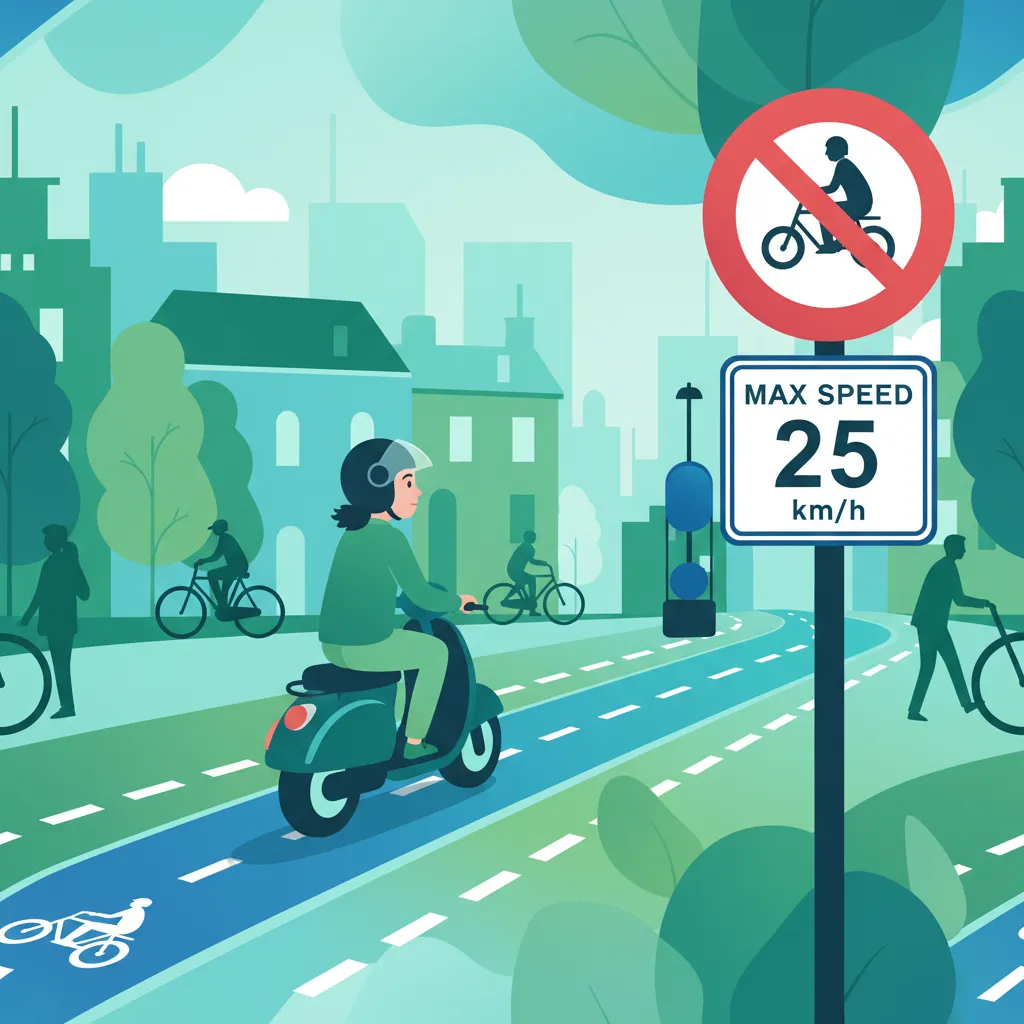
This lesson consolidates the key regulations that apply specifically to moped operation in Sweden. It covers mandatory rules such as speed limits, helmet use, and requirements for vehicle lighting and reflectors. Furthermore, the lesson explains the legal consequences of violations, including the system of fines and potential demerit points, ensuring riders understand their full range of legal responsibilities on the road.

This lesson serves as a summary of the legal requirements for safety equipment in Sweden. It reiterates the mandatory helmet law for both the rider and any passenger. It also touches on the rider's responsibility to ensure the moped itself is legally equipped with functioning lights, brakes, and other essential safety features, linking personal gear with vehicle roadworthiness.
This lesson details the documents you are legally required to carry with you when riding, such as your license and registration certificate. It provides a comprehensive explanation of the mandatory periodic vehicle inspection (besiktning) process in Sweden, outlining what is checked and why it's important for safety. Finally, it reinforces the habit of performing your own pre-ride checks to ensure your motorcycle is always in a safe, roadworthy condition.

This lesson clarifies the precise technical parameters that define a Category AM vehicle under Swedish law, including the maximum 50cc engine displacement and 45 km/h speed limit. It explains how these specifications determine which roads mopeds can legally access, distinguishing between urban streets and prohibited motorways. Learners will also understand the importance of vehicle identification and registration documents for ensuring legal compliance.

This lesson details the personal eligibility criteria required to obtain a Category AM license in Sweden, starting with the minimum age of 15. It explains the mandatory health assessment, including vision and physical fitness standards, which must be certified by a medical professional. The content also addresses the competency and maturity expectations for young riders, including the role of parental consent in the application process.

This lesson clarifies the regulations for operating a moped on cycle paths (Cykelbana) and other shared spaces in Sweden. It explains which types of mopeds are permitted on these paths and the specific rules that apply, such as lower speed limits and the duty to yield to cyclists. The content focuses on safe interaction and communication to ensure peaceful coexistence with other users in these environments.

This lesson provides guidance for riders planning to undertake longer trips on their moped. It covers key aspects of preparation, including route planning to avoid prohibited roads, more thorough vehicle checks, and packing essential items like a tool kit and rain gear. The content also revisits fatigue management, which is especially critical on extended journeys.

This lesson covers the legal requirement to wear a certified helmet while riding a moped in Sweden. It explains how to identify helmets that meet the approved EU standards (e.g., ECE 22.05 marking) and the critical importance of a correct, snug fit. The content also discusses different helmet types and the need to replace a helmet after an impact or after its recommended lifespan.
Explore the critical role of routine vehicle inspections and proactive maintenance for moped riders. This lesson details how regular checks on Däck, Bromsar, and lights prevent accidents and ensure rider safety according to Swedish AM license theory.
This lesson outlines the essential administrative responsibilities of a moped owner and rider. It covers the legal requirement to have valid third-party liability insurance and to ensure the vehicle is properly registered. The content also reminds riders of the documents they must carry with them at all times, such as their driving license and registration certificate.
This lesson consolidates the key regulations that apply specifically to moped operation in Sweden. It covers mandatory rules such as speed limits, helmet use, and requirements for vehicle lighting and reflectors. Furthermore, the lesson explains the legal consequences of violations, including the system of fines and potential demerit points, ensuring riders understand their full range of legal responsibilities on the road.
This lesson serves as a summary of the legal requirements for safety equipment in Sweden. It reiterates the mandatory helmet law for both the rider and any passenger. It also touches on the rider's responsibility to ensure the moped itself is legally equipped with functioning lights, brakes, and other essential safety features, linking personal gear with vehicle roadworthiness.
This lesson provides guidance for riders planning to undertake longer trips on their moped. It covers key aspects of preparation, including route planning to avoid prohibited roads, more thorough vehicle checks, and packing essential items like a tool kit and rain gear. The content also revisits fatigue management, which is especially critical on extended journeys.
This lesson details the personal eligibility criteria required to obtain a Category AM license in Sweden, starting with the minimum age of 15. It explains the mandatory health assessment, including vision and physical fitness standards, which must be certified by a medical professional. The content also addresses the competency and maturity expectations for young riders, including the role of parental consent in the application process.

This lesson moves beyond legal requirements to discuss the importance of ethical and courteous riding. It encourages riders to be patient, considerate of others, and aware of their impact on the community, for example, by minimizing noise. This fosters a positive public image of moped riders and contributes to a safer and more pleasant environment for everyone.
This lesson clarifies the precise technical parameters that define a Category AM vehicle under Swedish law, including the maximum 50cc engine displacement and 45 km/h speed limit. It explains how these specifications determine which roads mopeds can legally access, distinguishing between urban streets and prohibited motorways. Learners will also understand the importance of vehicle identification and registration documents for ensuring legal compliance.

This lesson provides a detailed guide to using a moped's braking system effectively and safely. It explains the different roles of the front and rear brakes and the concept of balanced braking to maximize stopping power without losing traction. Learners will understand techniques for both normal, controlled stops and emergency braking situations, including how to manage weight transfer.

This lesson encourages a mindset of adapting riding style to the specific challenges of each season. It covers seasonal hazards such as wet leaves in the fall, loose gravel after winter, and sun glare in the summer. By being aware of these predictable changes, riders can proactively adjust their technique and maintain safety throughout the year.
This lesson addresses the severe dangers of riding a moped in snow and icy conditions. It explains how to identify potential hazards like black ice and emphasizes that avoiding riding in such conditions is the safest strategy. For situations where it cannot be avoided, it provides advice on extremely gentle control inputs and vehicle preparation.
Find clear answers to common questions learners have about Routine Vehicle Inspection and Maintenance (Däck, Bromsar). Learn how the lesson is structured, which driving theory objectives it supports, and how it fits into the overall learning path of units and curriculum progression in Sweden. These explanations help you understand key concepts, lesson flow, and exam focused study goals.
The most critical parts include tires (Däck) for proper inflation and wear, brakes (Bromsar) for responsiveness, and all lights and signals for functionality. These ensure your moped is safe to operate and visible to others.
While a gauge is the most accurate method, you can perform a visual and tactile check. Look for tires that appear deflated or excessively worn. Press firmly on the sidewall; it should feel firm. For the theory exam, understanding the importance of correct pressure and how to visually assess it is key, but using a gauge is recommended for actual riding.
If your brakes feel weak or unresponsive, do not ride the moped. This indicates a potential issue with the brake fluid, pads, or cables. You must have them inspected and repaired by a qualified mechanic before riding. This is a critical safety issue that often features in theory exam questions.
Yes, it is highly recommended to check all lights and signals before each ride. This includes headlights (both low and high beam), taillight, brake light, and turn signals. Ensuring they work properly is vital for visibility and communicating your intentions to other road users, especially in Sweden's varied light conditions.
Yes, the Swedish AM theory test includes questions related to vehicle safety and maintenance. You can expect questions about pre-ride inspections, understanding the importance of checks like Däck and Bromsar, and recognizing potential hazards arising from poor vehicle condition.