This lesson guides you through the official Swedish Category AM theory examination process, managed by Transportstyrelsen. We'll cover everything from the necessary documentation and registration steps to scheduling your test and understanding the exam format. Passing this exam is a key milestone for obtaining your moped license.

Preparing for your Swedish Category AM (moped) driving license involves a structured examination process designed to ensure all future riders possess the necessary theoretical knowledge for safe road use. This comprehensive lesson details every step, from meeting eligibility criteria and gathering required documentation to successfully navigating the theory exam and receiving your license. Understanding these procedures is crucial for a smooth application and successful outcome, preventing delays and ensuring compliance with Swedish traffic law.
Before you can even consider taking the theory exam for a Swedish Category AM driving license, you must meet specific legal prerequisites. These requirements are set by Transportstyrelsen, the Swedish Transport Agency, to ensure that all applicants are legally and medically fit to operate a moped on public roads. Failing to meet any of these criteria will prevent you from registering for the exam.
To apply for the Category AM theory exam, you must be at least 15 years old. This age requirement is strictly enforced to ensure a basic level of maturity and cognitive development necessary for understanding and applying complex traffic rules. If you are under 18 years of age, additional steps, such as obtaining parental or guardian consent, will be necessary during the application process.
The minimum age of 15 years old refers to the age you must have attained at the time of your application and exam, not just when you begin studying.
To be eligible for a Swedish driving license, you must be officially registered in the Swedish Population Register (folkbokförd i Sverige). This means you need a personnummer, a Swedish personal identity number, which serves as your primary identifier for all official records and is essential for interacting with government agencies like Transportstyrelsen. Non-residents, even if EU citizens, typically cannot apply for a Swedish driving license without establishing residency first.
Maintaining good health is paramount for safe driving. For most Category AM applicants, a standard health declaration within the Körkortstillstånd (driving license permit) application suffices. However, certain conditions trigger mandatory medical certificates:
Once you confirm your eligibility, the next critical step is to gather all the necessary official documents. Accurate and complete documentation is vital for a successful application and avoids administrative rejections and delays.
You must present valid and official identification. Acceptable forms of ID typically include:
The ID must be current and show a clear photo of you, along with your full name and personnummer. Expired IDs will not be accepted.
To verify your residency, you will need to provide documentation such as:
This document confirms your current address and ensures your license is issued under the correct jurisdiction.
As discussed, if you are over 70 years old or have any health conditions affecting your driving ability, a Medical Fitness Certificate is mandatory. This document, filled out and signed by a licensed doctor, confirms that your health status allows you to safely operate a moped. It typically has a validity period, often 12 months, after which a new one may be required.
The Körkort tillstånd is not just a document; it's the official application to Transportstyrelsen for your driving license permit. This permit is required before you can even take the theory exam and signifies that Transportstyrelsen has approved your eligibility to proceed. The application process is primarily electronic and involves submitting your personal data and uploading scans of your supporting documents.
A provisional driving license permit issued by Transportstyrelsen, allowing you to proceed with driver training and examinations. It acts as official authorization to practice riding a moped under supervision after passing the theory exam.
The application for your Körkortstillstånd is predominantly handled digitally through Transportstyrelsen's e-service portal. This streamlined process requires careful attention to detail to ensure your application is processed efficiently.
Access the e-Service Portal: Navigate to Transportstyrelsen’s official website and locate the section for driving license applications. You will typically need to log in using a secure electronic identification method like BankID.
Enter Personal Data: Accurately fill in your personal details, including your full name, personnummer, current address, and contact information. Ensure all data matches your official identification.
Upload Required Documents: Scan clear, legible copies of your valid ID, proof of residency, and any mandatory medical certificates. These will be uploaded as digital files, usually PDFs. Ensure all pages are included and the quality is high enough for verification.
Complete Health Declaration: Answer questions regarding your health status. Be honest and thorough, as misrepresentation can lead to serious consequences.
Provide Consent and Declaration: Confirm that all information provided is accurate and that you understand and meet all statutory requirements for an AM license.
Submit Application: Once all fields are completed and documents uploaded, submit your application. You should receive a confirmation receipt, often with a unique registration reference number, and a status update indicating "Application Accepted." It's crucial to verify this before closing your session.
Do not assume paper submissions are accepted for initial registrations. The electronic portal is the primary method, and failure to complete it correctly can result in your application not being logged.
After submission, Transportstyrelsen will review your application and uploaded documents. This verification process can take some time, during which your details will be checked against official records. You can typically monitor the status of your application through the e-service portal. Once approved, you will receive confirmation that your Körkortstillstånd has been granted. This permit is a prerequisite for booking your theory exam.
With your Körkortstillstånd approved, you are ready to book your theory exam. This critical step involves selecting an approved testing center and a suitable time slot.
Theory exams for Swedish driving licenses are administered by Trafikverket, the Swedish Transport Administration, at designated Testing Centres (Körkortstestcentralen) located across Sweden. These centers are equipped with standardized computer terminals for the exam. You can find a list of approved centers and their locations on Trafikverket's official website.
Booking is typically done via Trafikverket’s online booking system, accessible through the same e-service portal.
Log in to the Booking System: Use your BankID or other secure electronic identification to access the booking service.
Select Exam Type: Choose "Category AM Theory Exam" (kunskapsprov för körkort kategori AM).
Choose Location and Date: Browse available testing centers and view their calendars for open slots. Availability can vary, especially during peak periods.
Confirm Booking: Select your preferred date and time. Review all details before confirming. The system will lock your chosen slot.
Receive Confirmation: You will receive an email and/or SMS confirmation containing details of your booking, including the date, time, location, and a QR code or booking reference. It is advisable to either print this confirmation or have it readily accessible on your mobile device, as some centers may require it for entry.
Planning is essential. Trafikverket has strict rules regarding changes to your booking:
The theory exam is a standardized assessment designed to evaluate your knowledge of Swedish traffic regulations, road signs, hazard perception, and specific rules for moped riders.
Your performance on the theory exam is immediately evaluated by a standardized scoring system.
Upon completion of your exam, the system will immediately calculate your score and inform you whether you have passed or failed.
A successful theory exam result initiates the process of receiving your official Swedish Category AM driving license. This involves a provisional stage, followed by the issuance of your permanent license.
After passing the theory exam, your Körkortstillstånd effectively becomes a provisional license. This allows you to legally practice riding a moped under specific conditions:
Once you have passed the theory exam, and any other practical components (though typically not required for AM in Sweden beyond the theory), Transportstyrelsen will proceed with producing your permanent Category AM driving license.
An electronic version of your Swedish driving license stored and displayed via a mobile application, legally recognized as equivalent to the physical card for identification and verification.
It is vital to ensure that your registered address with Transportstyrelsen is always up to date. If your address changes after your provisional license is issued but before your permanent license arrives, you must update it promptly through the e-service portal. Failure to do so could result in your license being sent to the wrong address, leading to delays and potential security risks.
It's common for candidates to need more than one attempt to pass the theory exam. Sweden's system provides clear procedures for re-examination and avenues for appeal if necessary.
If you fail the theory exam, you can re-register and book another slot.
In cases of suspected technical error or procedural irregularity during your exam, you have the right to appeal the result.
Navigating the licensing process can sometimes present challenges. Being aware of common pitfalls can help you avoid unnecessary delays.
Certain personal circumstances or external factors can introduce variations into the standard examination procedure.
The Swedish Category AM license examination process is built upon fundamental principles designed to safeguard public safety and maintain the integrity of the licensing system.
Understanding the specific terminology used in the Swedish licensing process is key to a smooth experience.
To solidify your understanding and prepare effectively for your Category AM theory exam, consider exploring related topics and practicing with exam-style questions.
Lesson content overview
Explore all units and lessons included in this driving theory course.
Explore search topics learners often look for when studying Examination Process and Documentation Requirements. These topics reflect common questions about road rules, driving situations, safety guidance, and lesson level theory preparation for learners in Sweden.
Browse additional driving theory lessons that cover connected traffic rules, road signs, and common driving situations related to this topic. Improve your understanding of how different rules interact across everyday traffic scenarios.
Understand the full process for the Swedish Category AM moped theory exam, including registration steps, required documentation like ID and medical certificates, and how to book your test. This lesson guides you through the official requirements.
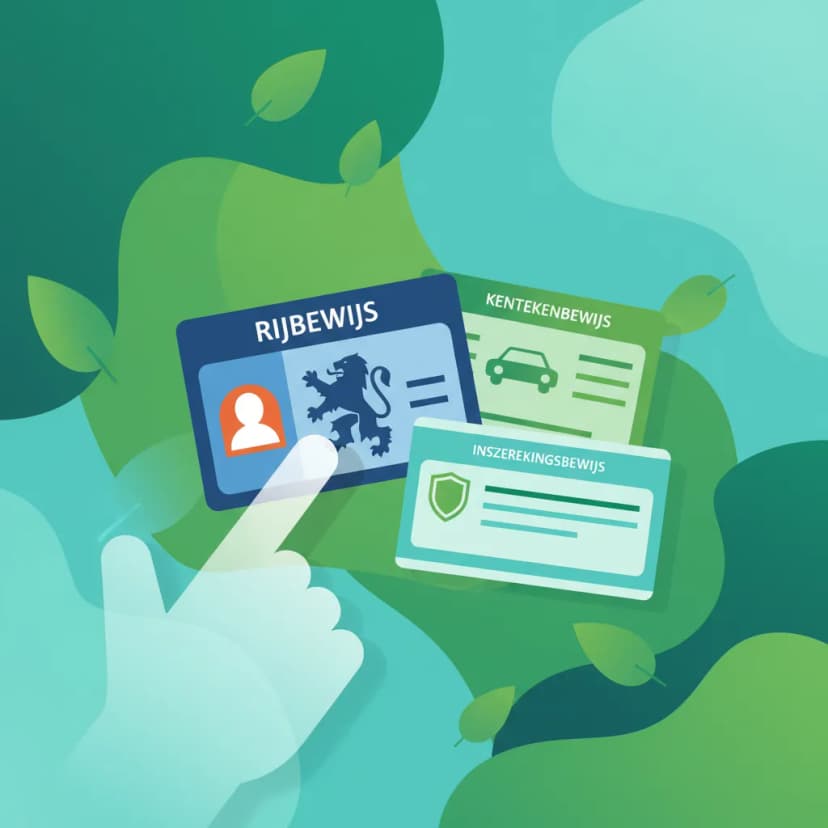
This lesson outlines the essential administrative responsibilities of a moped owner and rider. It covers the legal requirement to have valid third-party liability insurance and to ensure the vehicle is properly registered. The content also reminds riders of the documents they must carry with them at all times, such as their driving license and registration certificate.
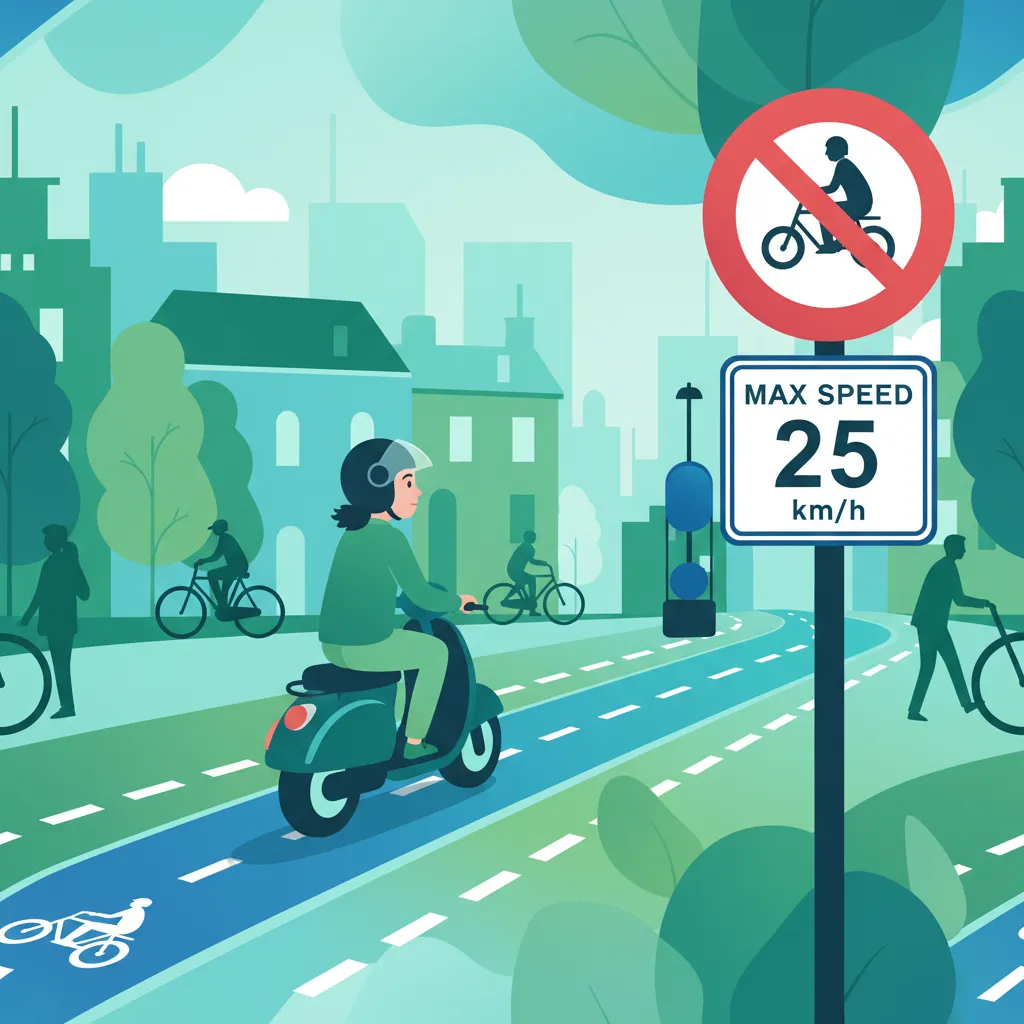
This lesson consolidates the key regulations that apply specifically to moped operation in Sweden. It covers mandatory rules such as speed limits, helmet use, and requirements for vehicle lighting and reflectors. Furthermore, the lesson explains the legal consequences of violations, including the system of fines and potential demerit points, ensuring riders understand their full range of legal responsibilities on the road.

This lesson details the personal eligibility criteria required to obtain a Category AM license in Sweden, starting with the minimum age of 15. It explains the mandatory health assessment, including vision and physical fitness standards, which must be certified by a medical professional. The content also addresses the competency and maturity expectations for young riders, including the role of parental consent in the application process.

This lesson clarifies the precise technical parameters that define a Category AM vehicle under Swedish law, including the maximum 50cc engine displacement and 45 km/h speed limit. It explains how these specifications determine which roads mopeds can legally access, distinguishing between urban streets and prohibited motorways. Learners will also understand the importance of vehicle identification and registration documents for ensuring legal compliance.

This lesson clarifies the regulations for operating a moped on cycle paths (Cykelbana) and other shared spaces in Sweden. It explains which types of mopeds are permitted on these paths and the specific rules that apply, such as lower speed limits and the duty to yield to cyclists. The content focuses on safe interaction and communication to ensure peaceful coexistence with other users in these environments.

This lesson serves as a summary of the legal requirements for safety equipment in Sweden. It reiterates the mandatory helmet law for both the rider and any passenger. It also touches on the rider's responsibility to ensure the moped itself is legally equipped with functioning lights, brakes, and other essential safety features, linking personal gear with vehicle roadworthiness.

This lesson teaches the importance of conducting a quick, routine inspection before every ride to ensure the moped is in safe working order. It outlines a simple checklist that includes checking tire pressure (Däck), brake function (Bromsar), and all lights and signals. This proactive habit can prevent mechanical failures that could lead to an accident.
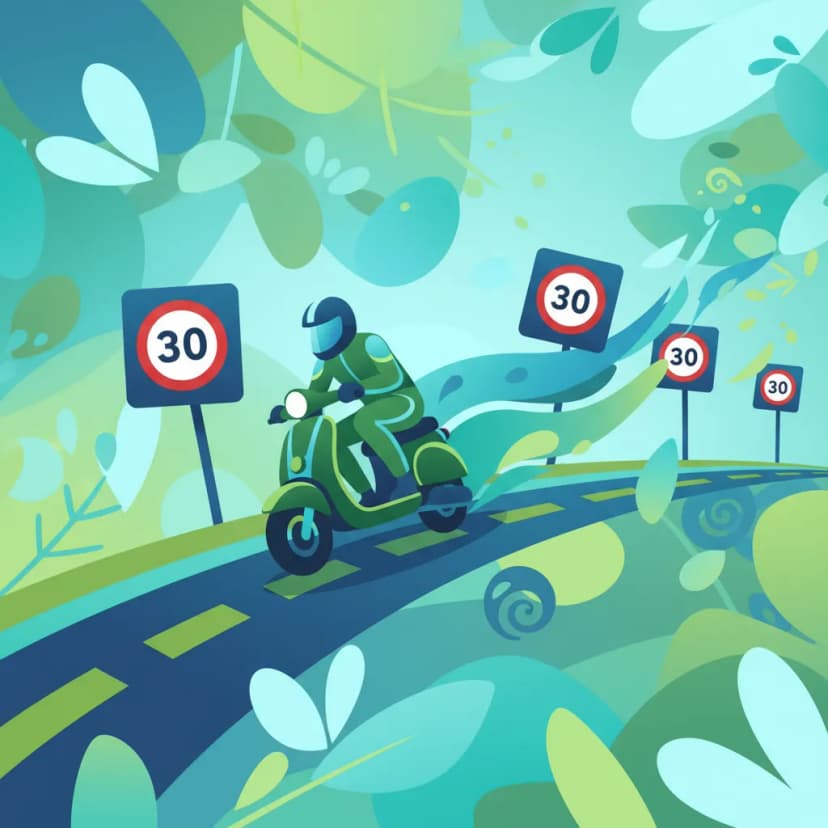
This lesson focuses on the specific speed regulations applicable to Category AM mopeds in Sweden. It emphasizes the absolute maximum legal speed of 45 km/h and explains that riders must always adapt their speed to be lower when conditions require. The content also covers any special, lower speed limits that may apply when riding on designated cycle paths or in shared spaces.
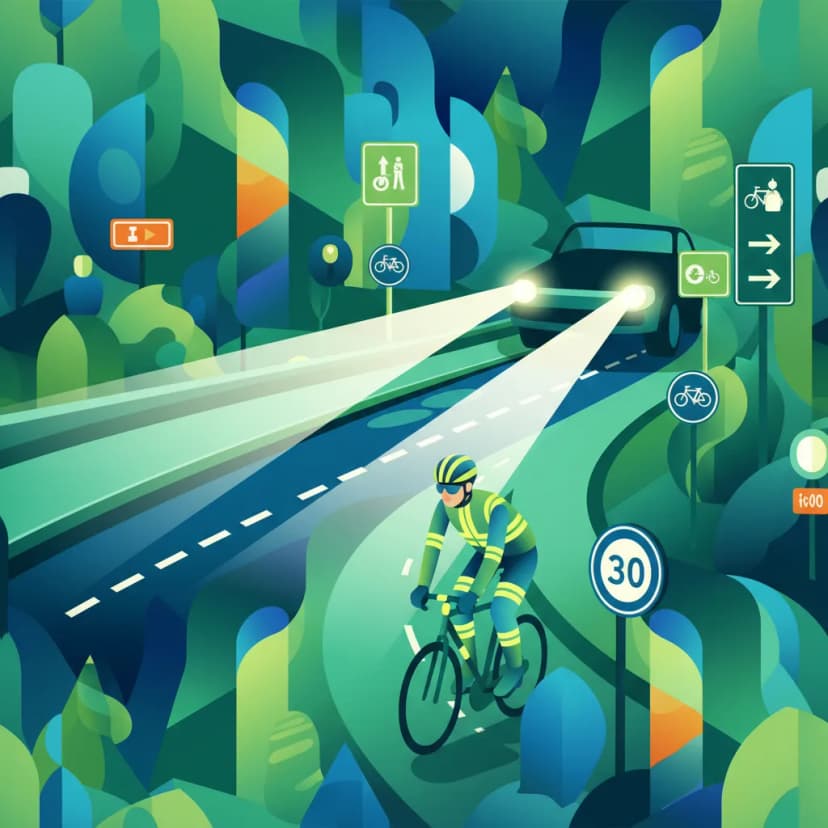
This lesson details the legal requirements for moped lighting in Sweden and provides best practices for riding at night or in low-light conditions. It explains the correct use of high and low beam headlights, the importance of a functioning tail light, and the role of reflectors in being seen. The goal is to ensure the rider is as visible as possible to others and can adequately illuminate the road ahead.
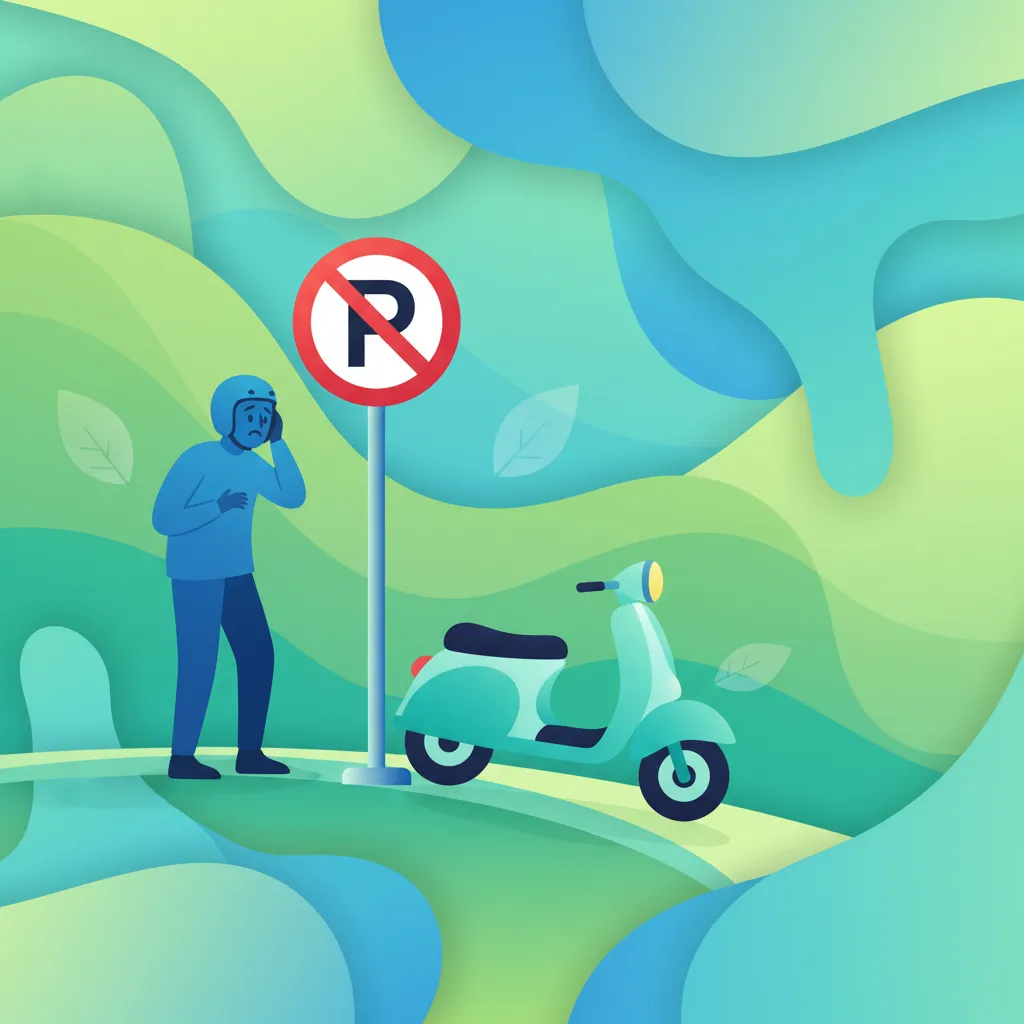
This lesson focuses on the often-confusing topic of moped parking. It covers how to interpret parking signs, including those indicating prohibitions (Parkeringsförbud), and where to find designated parking spots for two-wheelers. The content provides practical advice on where it is legal to park and how to do so without causing an obstruction, thereby avoiding fines.
Explore the essential requirements for obtaining your Category AM moped license in Sweden, covering everything from age and health criteria to the specifics of the official theory examination managed by Transportstyrelsen. Get a clear overview of what's needed.
This lesson consolidates the key regulations that apply specifically to moped operation in Sweden. It covers mandatory rules such as speed limits, helmet use, and requirements for vehicle lighting and reflectors. Furthermore, the lesson explains the legal consequences of violations, including the system of fines and potential demerit points, ensuring riders understand their full range of legal responsibilities on the road.
This lesson clarifies the precise technical parameters that define a Category AM vehicle under Swedish law, including the maximum 50cc engine displacement and 45 km/h speed limit. It explains how these specifications determine which roads mopeds can legally access, distinguishing between urban streets and prohibited motorways. Learners will also understand the importance of vehicle identification and registration documents for ensuring legal compliance.
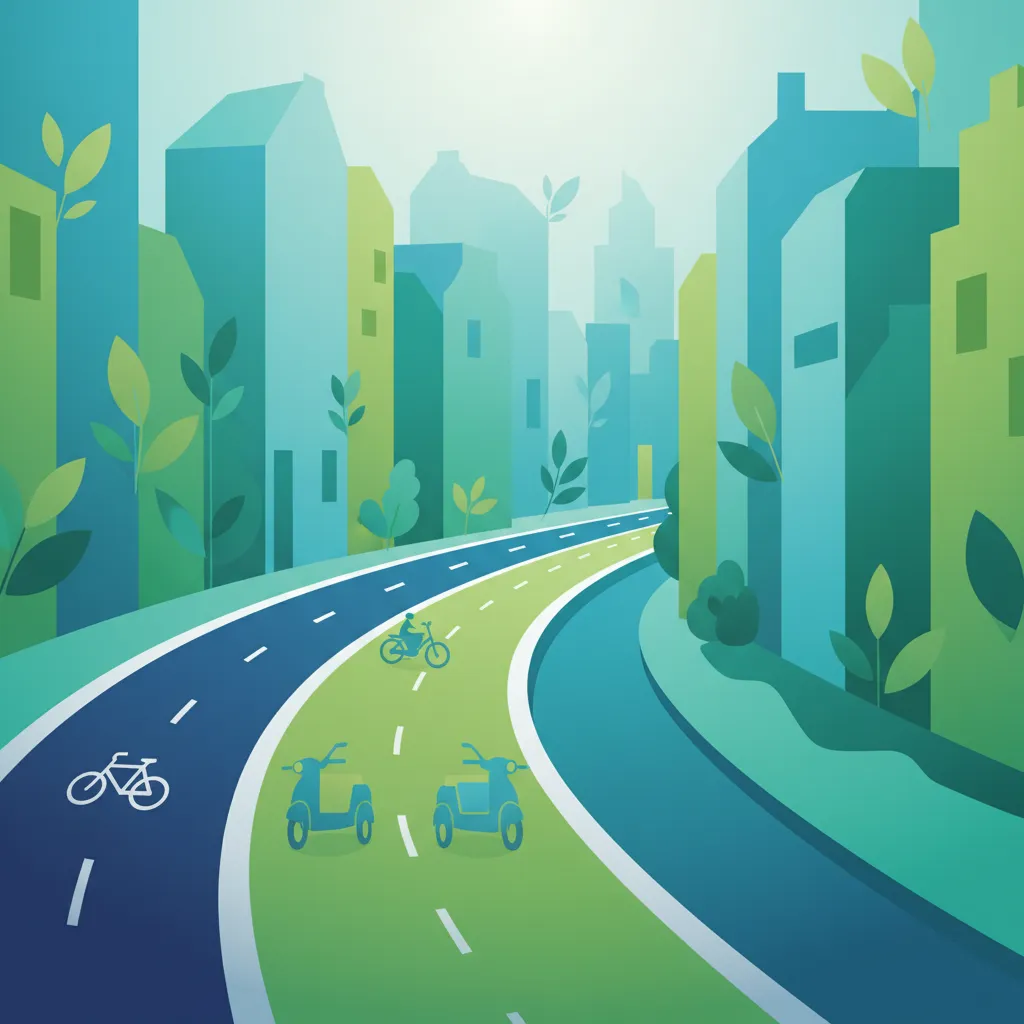
This lesson explains how to identify and interact with various types of mopeds and other low-speed vehicles common on Swedish roads. You will learn the difference between Class I and Class II mopeds and their place on the road, as well as how to recognize A-tractors by their LGF (långsamtgående fordon) sign. The key focus is on managing the large speed differential and making safe judgments when deciding to overtake.
This lesson clarifies the regulations for operating a moped on cycle paths (Cykelbana) and other shared spaces in Sweden. It explains which types of mopeds are permitted on these paths and the specific rules that apply, such as lower speed limits and the duty to yield to cyclists. The content focuses on safe interaction and communication to ensure peaceful coexistence with other users in these environments.
This lesson focuses on the specific speed regulations applicable to Category AM mopeds in Sweden. It emphasizes the absolute maximum legal speed of 45 km/h and explains that riders must always adapt their speed to be lower when conditions require. The content also covers any special, lower speed limits that may apply when riding on designated cycle paths or in shared spaces.
This lesson outlines the essential administrative responsibilities of a moped owner and rider. It covers the legal requirement to have valid third-party liability insurance and to ensure the vehicle is properly registered. The content also reminds riders of the documents they must carry with them at all times, such as their driving license and registration certificate.

This lesson provides practical instructions for safely navigating different types of intersections and roundabouts. It covers procedures for approaching, entering, and exiting roundabouts, emphasizing the rule to yield to traffic already circulating. The content also addresses how to handle signal-controlled and uncontrolled intersections, ensuring riders select the correct lane and manage their speed appropriately.
This lesson introduces the core principles of right-of-way in Sweden, including the general duty to give way (Väjningsplikt) and the stricter stop duty (Stopplikt). It explains the concept of a priority road and how to apply the right-hand rule at uncontrolled intersections. By understanding this legal framework, riders can determine who has priority in any given situation and act predictably and safely.
This lesson details the personal eligibility criteria required to obtain a Category AM license in Sweden, starting with the minimum age of 15. It explains the mandatory health assessment, including vision and physical fitness standards, which must be certified by a medical professional. The content also addresses the competency and maturity expectations for young riders, including the role of parental consent in the application process.
This lesson explains the general speed limit system in Sweden, including the default limits that apply in the absence of specific signs. It covers the standard speeds for built-up areas, roads outside built-up areas, and motorways, clarifying which are relevant to moped riders. Understanding this structure enables riders to determine the correct legal speed even when signs are not immediately visible.
Find clear answers to common questions learners have about Examination Process and Documentation Requirements. Learn how the lesson is structured, which driving theory objectives it supports, and how it fits into the overall learning path of units and curriculum progression in Sweden. These explanations help you understand key concepts, lesson flow, and exam focused study goals.
You must present a valid identification document, typically a Swedish national ID card (nationellt ID-kort), a Swedish passport, or a Swedish driver's license (körkort). Ensure it is not expired. The testing centre will verify your identity before allowing you to take the exam.
The theory tests for Category AM (and other vehicle categories) in Sweden are managed by Trafikverket. You can schedule your appointment online through the Trafikverket website or by contacting their customer service. It's advisable to book in advance, especially during peak times.
The AM theory test consists of multiple-choice questions presented on a computer. The exact number of questions and the passing score can vary slightly, but it is designed to assess your knowledge of traffic rules, road signs, safety, and moped-specific regulations relevant to Swedish law.
While a medical examination is not typically required solely for the AM theory test itself, you may need to provide a medical certificate if you have certain health conditions that could affect your ability to drive safely. This requirement is usually assessed during the application process for the license itself, not just for the theory test booking.
After passing the theory test, you will receive confirmation. The next steps usually involve completing any required practical training if applicable, and then applying for the actual AM driving license. The theory test result is valid for a specific period, so ensure you complete the license application within that timeframe.