
Welcome to the essential lesson on Periodic Vehicle Inspection, or 'Besiktning', as it's known in Sweden. This lesson is part of the Vehicle Safety Systems and Basic Mechanics unit, crucial for Category B drivers preparing for their theory test. We will clarify the legal requirements and practical aspects of ensuring your vehicle is roadworthy and environmentally sound.
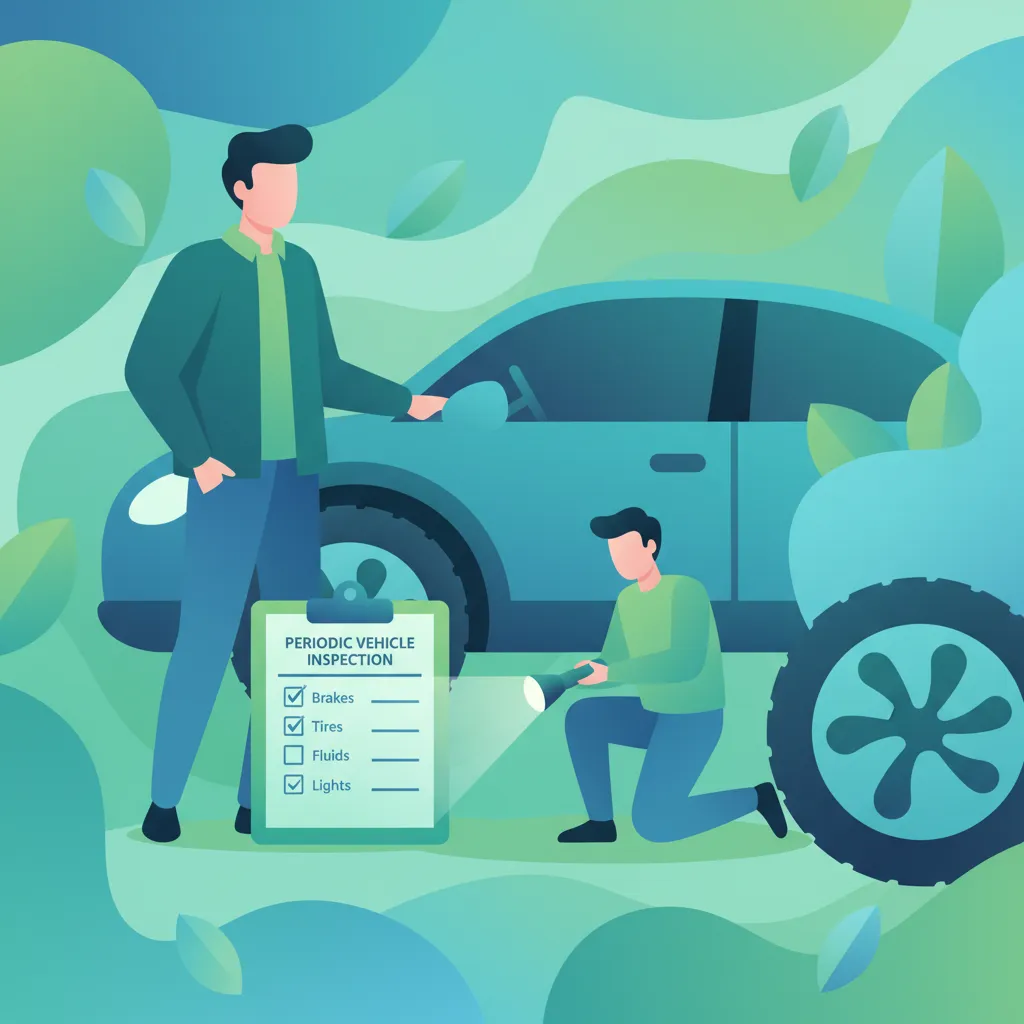
Ensuring your vehicle is safe and environmentally friendly is a fundamental responsibility for every driver in Sweden. The Periodic Vehicle Inspection, known in Swedish as Besiktning, is a cornerstone of this commitment. This mandatory check verifies that your car meets minimum safety and environmental standards, contributing significantly to road safety and public health across the nation.
This lesson, part of your Swedish Driving License Theory Course for Category B Cars, will explain the legal requirements, the inspection process, what is checked, and the consequences of non-compliance. Understanding Besiktning is crucial not just for passing your theory test, but for being a responsible and informed vehicle owner on Swedish roads.
The Besiktning (periodic vehicle inspection) serves a dual purpose: enhancing road safety and protecting the environment. Over time, all vehicles experience wear and tear, and components can degrade, potentially compromising safety or increasing harmful emissions. The inspection acts as a systematic, state-mandated verification to counteract these issues.
From a safety perspective, the inspection identifies critical mechanical failures that could lead to accidents. Components like brakes, steering, suspension, and lighting are thoroughly checked to ensure they function correctly and do not endanger occupants or other road users. This proactive approach helps prevent incidents caused by vehicle defects.
For environmental compliance, the Besiktning measures exhaust gases to ensure vehicles adhere to national and European emission standards. Deterioration of exhaust systems can lead to increased pollution, impacting air quality. By checking emissions, Sweden fulfills its climate commitments and reduces the environmental footprint of its vehicle fleet. This process reinforces the environmental awareness covered in Eco-Driving and Environmental Impact.
In Sweden, the requirement for periodic vehicle inspection is firmly rooted in law, primarily through the Trafikförordning (Traffic Regulations) and specific directives from the Transportstyrelsen (Swedish Transport Agency). These regulations ensure a consistent and enforceable standard for all vehicles operating on public roads.
The Transportstyrelsen is the central authority responsible for authorizing inspection stations, defining inspection protocols, and issuing binding certificates. This legal accountability principle ensures that vehicle owners are legally bound to maintain their vehicles in a roadworthy condition and undergo timely inspections. Failure to comply is not merely an oversight; it constitutes a breach of the Trafikförordning and can lead to significant penalties, including fines, suspension of vehicle registration, or even the immediate prohibition to drive.
Knowing when your vehicle is due for its Besiktning is a primary responsibility of every vehicle owner. The inspection interval, or Besiktningstid, is legally defined and varies slightly depending on the vehicle's age and type. Missing this deadline can lead to serious consequences.
For most private passenger cars, the rules are as follows:
Example: If your car was first registered on 15 June 2022, its first inspection is due by 15 June 2025. The next inspection would then be due by 15 June 2027, and so on.
Certain vehicle categories or specific uses require more frequent inspections due to higher usage or specific safety demands:
It is crucial for drivers to track their vehicle's next due date. This information is available through the Transportstyrelsen's online services and is typically noted on the previous inspection report. Do not confuse the inspection due date with other administrative deadlines such as vehicle registration renewal.
When your vehicle is due for its Besiktning, you must take it to an approved Besiktningsstation (inspection station). These facilities are specifically authorized by the Transportstyrelsen to perform legal inspections and are the only places where you can obtain a valid Besiktningsintyg (inspection certificate). You cannot rely on just any private garage for this mandatory check.
In Sweden, there are both state-run inspection stations, such as Bilprovningen, and privately operated stations that hold a contract with the Transportstyrelsen. You can find a list of all authorized stations on the Transportstyrelsen's official website. It is advisable to book an appointment in advance to avoid waiting times.
Upon arrival, your vehicle will be guided into an inspection bay. A trained and certified inspector will then meticulously examine various parts of your vehicle. The inspection process is standardized to ensure fairness and consistency across all stations. While you generally wait in a designated area, some stations may allow you to observe certain parts of the inspection from a safe distance.
The inspector will use specialized equipment to check components that are critical for safety and environmental performance. The entire process typically takes around 20-30 minutes for a standard passenger car. After the inspection, the inspector will provide you with a Besiktningsprotokoll (inspection report), detailing the findings and the outcome.
Schedule an appointment at an authorized Besiktningsstation before your due date.
Bring your vehicle to the station; usually, no specific documents are needed as the vehicle's data is linked to its registration number.
The inspector performs a thorough check of safety and environmental components.
Receive the Besiktningsprotokoll detailing the outcome (approved, repair required, or driving prohibition).
If approved, keep the Besiktningsintyg in your vehicle. If defects are found, take appropriate action.
The Besiktning is a comprehensive assessment covering all critical aspects of vehicle safety and environmental performance. The primary goal is to identify any defects that could lead to an accident or contribute to excessive pollution.
A significant portion of the inspection focuses on the operational integrity of safety-critical components. These are the elements that directly impact your ability to control the vehicle, stop effectively, or be seen by others.
A mandatory part of the Besiktning for both petrol and diesel passenger cars is the Emission Test (Utsläppstest). This test verifies that your vehicle's exhaust gases meet the stringent limits set by national and EU regulations, specifically EU Stage IV limits for most modern vehicles.
Failure to meet these emission standards indicates a fault in the engine or exhaust system, such as a clogged catalytic converter or a malfunctioning diesel particulate filter. This would typically result in a "repair required" notice. This ties into the Eco-Driving and Environmental Impact lesson, emphasizing the importance of vehicle maintenance for environmental health.
After the inspector has completed the thorough examination, your vehicle will receive one of three possible outcomes, which will be detailed in the Besiktningsprotokoll. Understanding these outcomes is vital for knowing your next steps.
If your vehicle passes the inspection without any defects, it is Godkänd (approved). This means it meets all current safety and environmental standards. You will receive a Besiktningsintyg, a certificate confirming the successful inspection. This certificate must be retained, ideally in your vehicle's documentation, and can be requested by police or traffic authorities during spot checks.
An approved inspection means your vehicle is legally roadworthy until the next scheduled inspection date.
If minor defects are found that do not pose an immediate serious safety risk, you will receive a Repair Required notice, often referred to as Återbesiktning (re-inspection). This means you must rectify the identified defects within a 30-day period and then return the vehicle for a re-inspection.
Important: While a "repair required" notice allows you to continue driving your vehicle for the 30-day period, it is crucial that the repairs are made promptly. Ignoring these defects can lead to them worsening, potentially causing an accident or escalating to a driving prohibition if discovered later.
During the re-inspection, only the previously identified faults will be checked to confirm they have been corrected. If the repairs are satisfactory, your vehicle will then be approved.
This is the most serious outcome. A Körförbud (driving prohibition) is issued when the inspection reveals major safety defects that make the vehicle immediately unsafe to drive on public roads. Examples include severe brake failure, critical steering issues, or highly dangerous structural damage.
A legal order that forbids the use of a vehicle on public roads until specified critical safety defects are remedied and verified by a subsequent approved inspection.
If a Körförbud is issued, your vehicle must not be driven on public roads, even to a repair shop. It must be transported, usually by a tow truck, to a garage for repair. Driving a vehicle under Körförbud is a serious offense with severe penalties. The vehicle must be repaired and then undergo a full re-inspection to lift the prohibition. This outcome is directly linked to the safety principle of vehicle inspections.
As the owner or registered keeper of a vehicle in Sweden, you bear significant legal responsibilities related to the Besiktning. These duties are designed to ensure continuous roadworthiness and compliance with national laws.
Your primary responsibility is to schedule the periodic vehicle inspection before its due date. The Transportstyrelsen typically sends out reminders, but ultimately, the onus is on you to track the deadline. Failure to do so can lead to an expired inspection status, triggering penalties even if you are unaware.
Upon a successful inspection, you will receive a Besiktningsintyg (inspection certificate). It is mandatory to keep this certificate in your vehicle at all times. Police or other traffic authorities may request to see it during a traffic stop. While digital records exist in the national vehicle register, having the physical (or a digital copy you can access) certificate readily available prevents administrative hassle and potential fines.
If your vehicle receives a "repair required" notice or a Körförbud, you are legally obligated to address the deficiencies promptly.
It is important to be aware of the insurance implications. Many insurance policies may include clauses stating that a vehicle must be legally roadworthy and have a valid inspection certificate for claims to be honored. If your vehicle is involved in an accident and its inspection certificate was expired or a Körförbud was in effect, your insurer might deny coverage, leading to significant personal financial liability. This underscores the connections to Emergency Situations and Accident Procedures.
Non-compliance with the Besiktning requirements in Sweden carries a range of legal consequences, which become progressively more severe depending on the nature and duration of the violation. These penalties are enforced by the police and the Transportstyrelsen.
The most common consequence for driving with an expired inspection certificate is an administrative fine (administrativ avgift). This fine is issued for simply failing to have a valid inspection.
If a vehicle's inspection certificate expires and the inspection is not completed within a certain timeframe (usually about two months after the due date), the Transportstyrelsen can impose a registration block. This means the vehicle cannot be re-registered, and you will not be able to perform transactions like changing ownership until a valid inspection is completed. Driving a vehicle with a registration block can lead to further fines and potential impoundment.
If you are caught driving a vehicle that is under a Körförbud (driving prohibition), the consequences are much more severe.
These penalties are designed to deter negligence and ensure that only roadworthy vehicles are used on public roads, reflecting the legal accountability principle embedded in Swedish traffic law.
Proactive maintenance can save you time, money, and stress when it comes to your Besiktning. By performing some basic checks before your appointment, you can significantly increase the chances of passing the inspection on the first attempt. This aligns with the Basic Maintenance Checks lesson, emphasizing routine care.
Consider having your vehicle serviced by a professional garage a few weeks before the inspection date, especially if you notice any unusual noises, warning lights, or performance issues.
By taking these small steps, you can significantly reduce the likelihood of receiving a "repair required" notice and ensure a smoother inspection process.
The Besiktning system can sometimes lead to misunderstandings among drivers. Clarifying these points is essential for full compliance and avoiding unnecessary penalties.
Understanding these common pitfalls will help you navigate the Besiktning process successfully and responsibly.
The Periodic Vehicle Inspection (Besiktning) is far more than just an administrative hurdle; it is a critical component of Sweden's strategy for maintaining high standards of road safety and environmental protection. By ensuring that every vehicle on the public road network meets minimum safety and emissions standards, the system plays a vital role in preventing accidents and reducing pollution.
Regular inspections act as a crucial forced safety checkpoint, counteracting the natural human tendency to underestimate the risk of mechanical failure. Components like brakes and tires degrade over time due to friction and fatigue. The Besiktning detects this wear before it reaches a critical failure threshold, significantly reducing the likelihood of accidents caused by faulty equipment. For instance, even a small reduction in brake efficiency can dramatically increase stopping distances, impacting reaction time and overall safety, concepts elaborated in Speed Limits and Distance Management.
Environmentally, the emissions test ensures that vehicles do not contribute disproportionately to air pollution. Faulty exhaust systems can release excessive levels of harmful gases and particulate matter, impacting public health and contributing to climate change. The inspection system supports Sweden's broader environmental goals, aligning with the principles discussed in Eco-Driving and Environmental Impact.
Finally, the strong legal accountability principle and the deterrent effect of Körförbud encourage vehicle owners to adopt proactive maintenance habits. This systematic approach reduces long-term repair costs, minimizes vehicle downtime, and fosters a culture of responsibility among drivers. Ultimately, the Besiktning system safeguards not just the individual driver, but all road users and the environment.
Lesson content overview
Explore all units and lessons included in this driving theory course.
Explore search topics learners often look for when studying Periodic Vehicle Inspection (Besiktning). These topics reflect common questions about road rules, driving situations, safety guidance, and lesson level theory preparation for learners in Sweden.
Browse additional driving theory lessons that cover connected traffic rules, road signs, and common driving situations related to this topic. Improve your understanding of how different rules interact across everyday traffic scenarios.
Understand the mandatory 'Besiktning' in Sweden. Learn about inspection schedules, key safety and environmental checks, and consequences of an expired inspection, crucial for safe and legal driving.

This lesson provides a comprehensive guide to the Swedish Category AM theory examination process managed by Transportstyrelsen. It outlines the necessary steps for registration, the specific documentation required such as valid ID and medical certificates, and how to schedule a test at an authorized center. Learners will understand the exam format, scoring system, and the procedures for receiving their license upon successful completion.

This lesson covers the simple yet vital pre-drive checks that are the driver's responsibility. You will learn the step-by-step process for a 'safety control' (säkerhetskontroll), which includes checking tire pressure and tread depth, verifying that all lights are working, and checking the levels of critical fluids like engine oil, coolant, brake fluid, and windshield washer fluid. Performing these checks regularly helps ensure your vehicle is in a safe condition to drive.

This lesson covers the essential topic of communication in traffic using the vehicle's built-in signaling devices. You will learn the rules for using your turn indicators (körriktningsvisare) in good time before turning or changing lanes. The content also explains the proper use of hazard lights (varningsblinkers) in emergency situations and the very limited, specific circumstances in which using the horn (ljudsignal) is permitted to avert immediate danger.
This lesson covers the legal medical requirements for drivers, which are designed to ensure public safety. You will learn about the specific standards for visual acuity and field of vision, and the requirement to wear corrective lenses if needed. The lesson also explains that drivers have a legal obligation to report certain medical conditions (like epilepsy or severe diabetes) to the Swedish Transport Agency, as they may impact their ability to drive safely.
This lesson details the documents you are legally required to carry with you when riding, such as your license and registration certificate. It provides a comprehensive explanation of the mandatory periodic vehicle inspection (besiktning) process in Sweden, outlining what is checked and why it's important for safety. Finally, it reinforces the habit of performing your own pre-ride checks to ensure your motorcycle is always in a safe, roadworthy condition.

This lesson covers the general, nationwide rules that govern where you may and may not park or stop, even without specific signs. You will learn about the prohibitions on stopping near intersections, on pedestrian crossings, and at bus stops. The content clarifies the legal definitions and provides clear guidelines on maintaining safe distances and ensuring that your parked vehicle does not obstruct traffic or create a hazard.
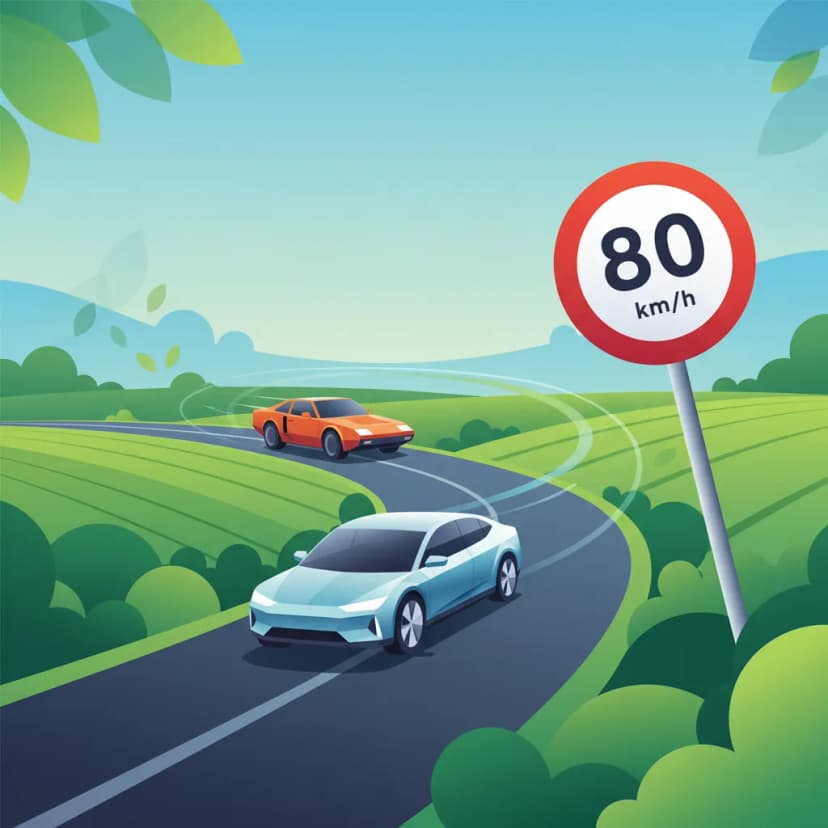
This lesson explains the hierarchical structure of speed limits in Sweden as defined by the Trafikförordning. It covers the default 'base speeds', including 50 km/h in built-up areas and 70 km/h outside them, and how these are modified by specific road signs. You will learn to identify speed limit signs for different road types, such as motorways and residential zones, and understand the legal framework that governs maximum permissible speeds.

This lesson teaches you how to recognize and adapt to different types of slippery winter surfaces. You will learn about the characteristics of driving in loose snow, packed snow, and on ice, with a special focus on detecting 'black ice' (ishalka), which is transparent and extremely dangerous. The content identifies high-risk areas such as bridges and shaded sections of the road and emphasizes the need for extremely gentle steering, acceleration, and braking inputs.
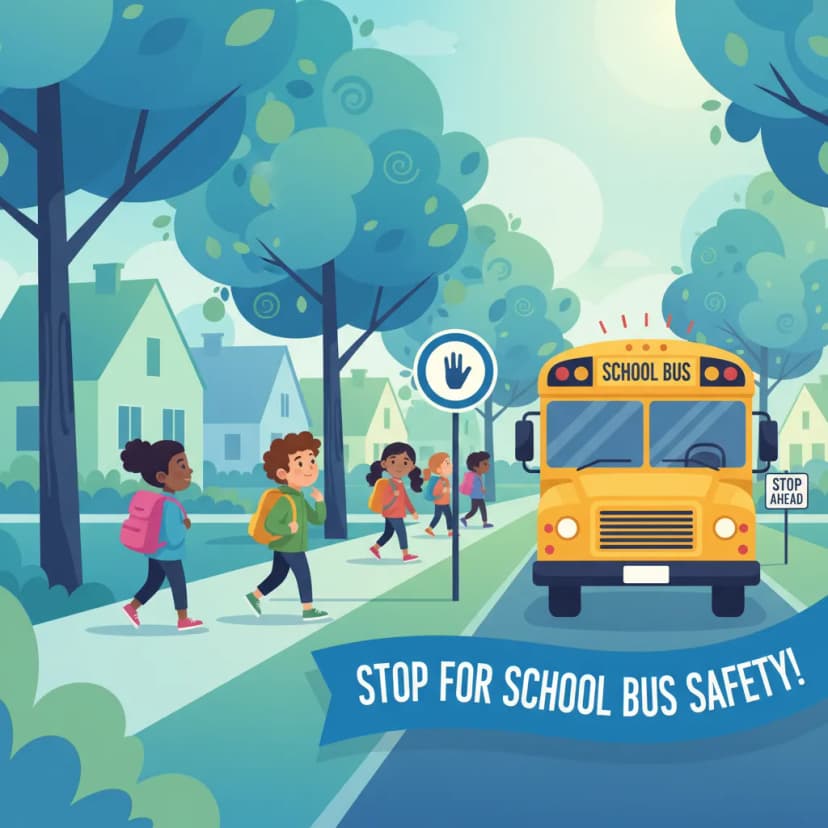
This lesson highlights the extreme caution needed in areas where children are present. You will learn to recognize school zone signs and the specific sign for a school bus, and understand your duty to slow down and be prepared to stop when a school bus has stopped for passengers. The lesson emphasizes that children can be impulsive and have poor risk judgment, requiring drivers to be exceptionally vigilant and maintain very low speeds.

This lesson covers the extensive category of informational and directional signs that aid navigation throughout Sweden. You will learn to interpret signs for motorways, national roads, and local destinations, as well as symbols indicating services like gas stations, parking, and rest areas. Proper understanding of these signs allows for efficient route planning, reduces driver uncertainty, and contributes to smoother, safer traffic flow on all types of roads.
Explore the essential vehicle safety components checked during periodic inspections and routine maintenance. Learn about brakes, steering, lights, and emissions to ensure your vehicle meets Swedish roadworthiness standards.
This lesson covers the simple yet vital pre-drive checks that are the driver's responsibility. You will learn the step-by-step process for a 'safety control' (säkerhetskontroll), which includes checking tire pressure and tread depth, verifying that all lights are working, and checking the levels of critical fluids like engine oil, coolant, brake fluid, and windshield washer fluid. Performing these checks regularly helps ensure your vehicle is in a safe condition to drive.

This lesson focuses on the correct use of warning devices to protect an accident or breakdown scene. You will learn to immediately activate your hazard lights (varningsblinkers). The main focus is on the proper placement of the warning triangle, explaining how the distance from the vehicle must be adapted based on the road's speed limit and visibility to give oncoming drivers adequate time to react.

This lesson focuses on creating a complete awareness of the traffic situation around your vehicle. You will learn the correct procedure for using your interior and side mirrors in a continuous scanning pattern. Crucially, the lesson explains what the blind spot (döda vinkeln) is, where it is located, and why a physical head check over the shoulder is a non-negotiable safety step before any lateral movement like changing lanes or turning.

This lesson explains the function of key electronic driver aids. You will learn how the Anti-lock Braking System (ABS) prevents wheels from locking during hard braking, allowing you to maintain steering control. The lesson also covers the Electronic Stability Program (ESP), which helps prevent skids by automatically braking individual wheels, and Traction Control (TCS), which prevents wheel spin during acceleration on slippery surfaces.

This lesson focuses on the systems that protect occupants in the event of a collision. You will learn how seatbelts and airbags work together to reduce injury. A significant part of the lesson is dedicated to child safety, covering the different types of child restraints (infant carriers, child seats, booster cushions), the laws regarding their use based on age and height, and the critical importance of deactivating the passenger airbag when using a rear-facing child seat in the front.
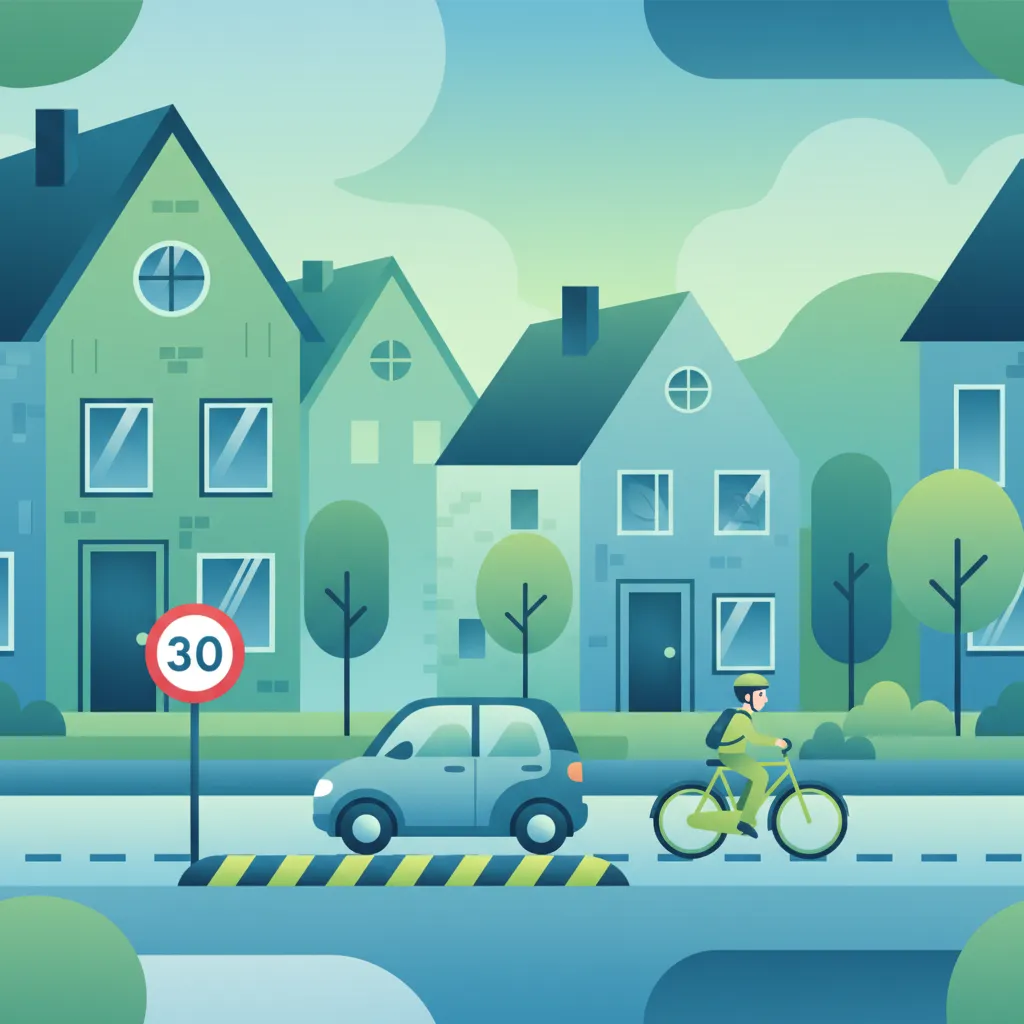
This lesson focuses on the high level of caution required when driving in residential areas. You will learn about the rules for special zones like 'gångfartsområde' (walking speed area) and the need to navigate around speed calming measures like speed bumps. The central theme is anticipating unpredictable behavior from residents, especially children, and managing the risks posed by parked cars that severely limit visibility.

This lesson covers strategies for driving safely when visibility is compromised. You will learn the correct use of different lighting systems: when to use low beams, high beams (helljus), and how to avoid dazzling other drivers. The lesson also explains the specific regulations for using front and rear fog lights and provides techniques for navigating safely in dense fog or heavy precipitation by reducing speed and using the road edge as a guide.

This lesson provides a safety protocol for dealing with a vehicle breakdown. You will learn the importance of trying to move the vehicle as far off the road as possible, preferably onto the shoulder or into an emergency lay-by. The lesson stresses that on high-traffic roads, the occupants' personal safety is the top priority; this involves wearing a reflective vest and waiting for assistance in a safe location away from the vehicle and the flow of traffic.

This lesson provides step-by-step instructions for performing common low-speed maneuvers, including reversing in a straight line, backing around a corner, and various types of parking. You will learn how to use reference points on your vehicle and the surroundings to position the car accurately. The paramount importance of slow speed, continuous 360-degree observation, and being prepared to stop for pedestrians or other vehicles is emphasized throughout.
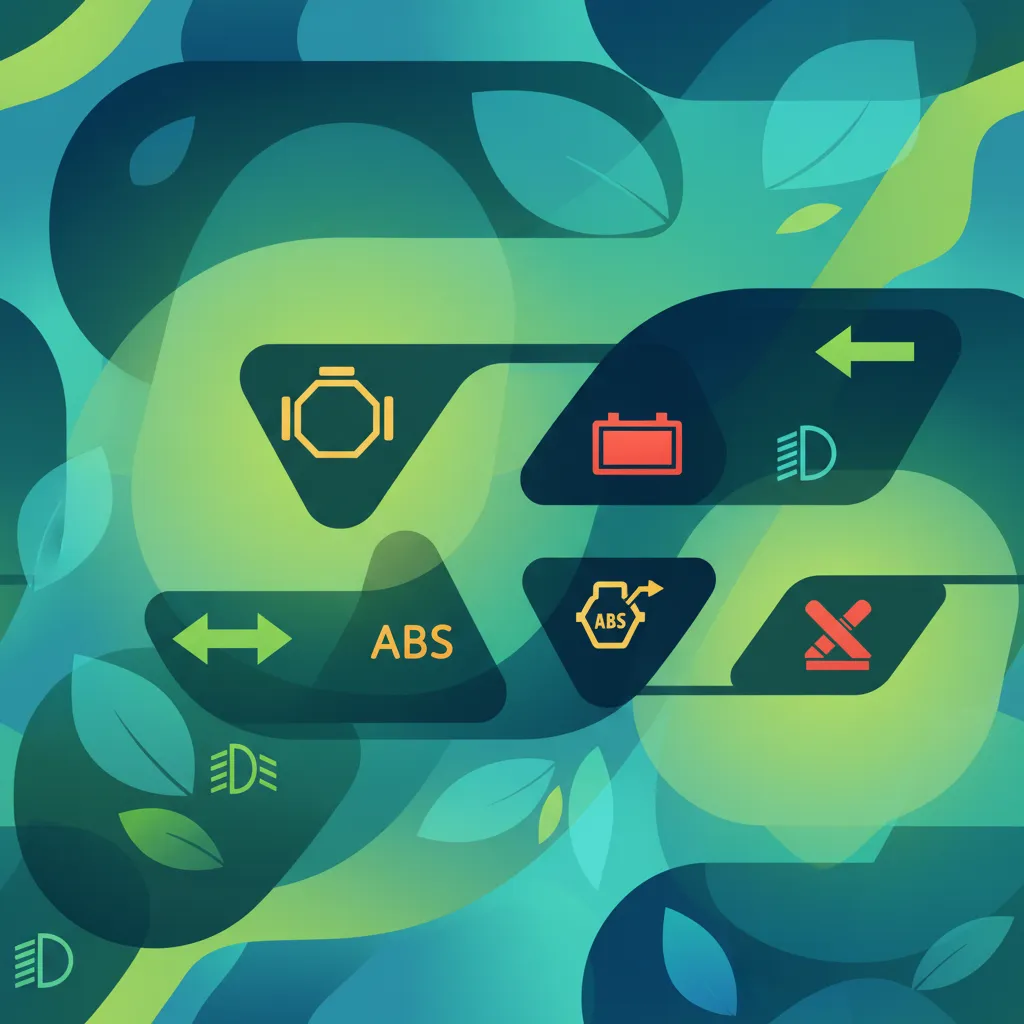
This lesson serves as a guide to the language of your car's instrument panel. You will learn the meaning of the most common warning lights, understanding the urgency indicated by their color: red for a critical issue requiring an immediate stop, yellow for a fault that needs attention soon, and green or blue for informational indicators. Knowing what these symbols mean is crucial for addressing mechanical problems before they become serious or unsafe.
Find clear answers to common questions learners have about Periodic Vehicle Inspection (Besiktning). Learn how the lesson is structured, which driving theory objectives it supports, and how it fits into the overall learning path of units and curriculum progression in Sweden. These explanations help you understand key concepts, lesson flow, and exam focused study goals.
Besiktning is the mandatory periodic technical inspection for vehicles in Sweden. Its purpose is to ensure that vehicles meet the required safety and environmental standards before they are allowed on public roads. This inspection checks critical systems like brakes, steering, lights, and emissions.
For passenger cars (Category B), the first inspection is typically due when the vehicle is three years old. After that, inspections are usually required every two years until the car is eight years old, after which it needs an annual inspection. The exact date your vehicle is due is communicated by the Swedish Transport Agency (Transportstyrelsen).
If your car fails the inspection, you will receive a report outlining the defects. For minor issues, you may get a 'recommendation' to repair them. For safety-critical issues, your vehicle may receive a 'driving prohibition' (körförbud), meaning you cannot legally drive it until the necessary repairs are made and it passes a re-inspection.
No, you cannot legally drive your vehicle if it has been issued a körförbud. This prohibition means the vehicle is considered unsafe or non-compliant and must be repaired and re-inspected before it can be driven on public roads again. Driving with körförbud carries significant penalties.
Vehicle inspections in Sweden are carried out by approved inspection companies, such as Bilprovningen, Carspect, or Opus Bilprovning. You can book an appointment online or by phone. Ensure you choose an accredited inspection station.
The Besiktning focuses on critical safety and environmental components. This includes brakes, steering, suspension, tires, lights, emissions control systems, and structural integrity. While it ensures the car is roadworthy, it's not a full mechanical service and doesn't cover routine maintenance like oil changes.