
Before starting any journey, it's vital to ensure your vehicle is roadworthy. This lesson, part of the 'Vehicle Safety Systems and Basic Mechanics' unit, covers the mandatory pre-drive safety checks (säkerhetskontroll) that every driver must know for the Swedish Category B theory exam.
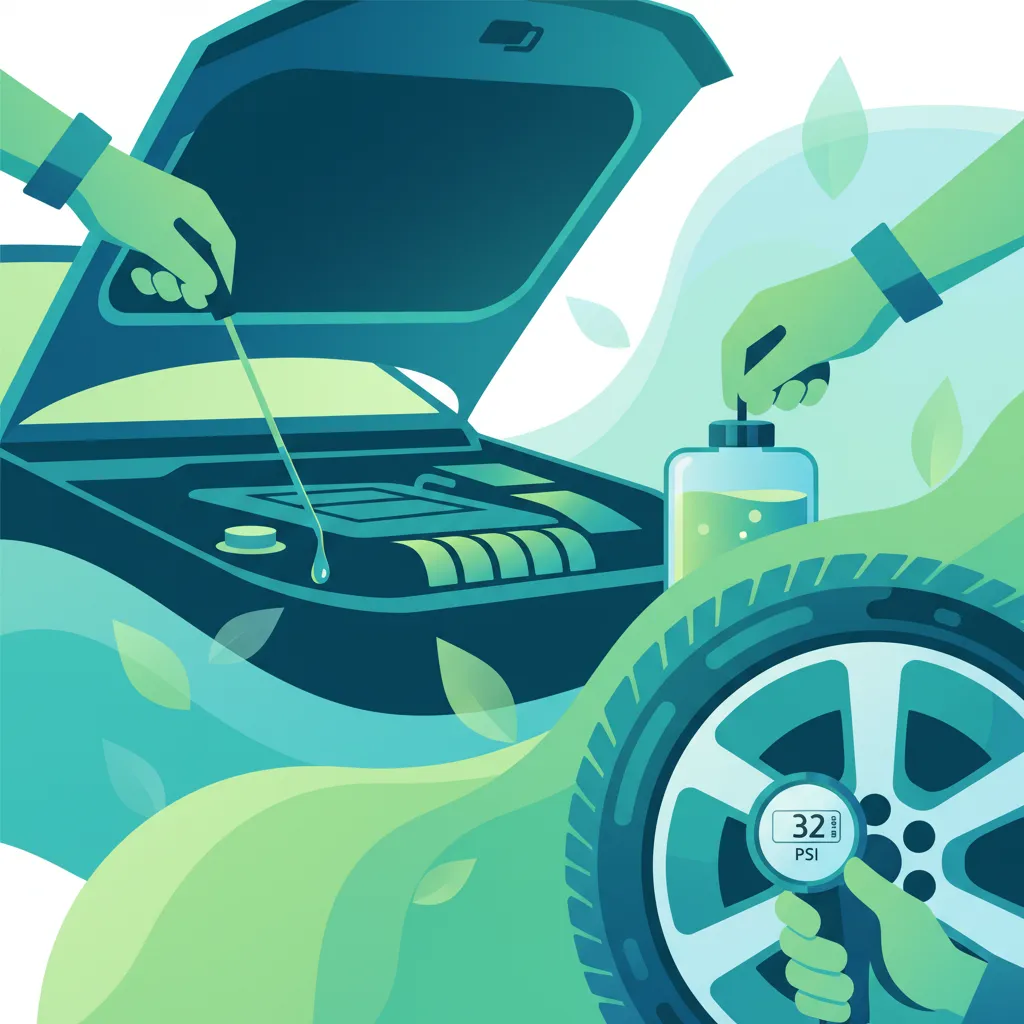
Driving a vehicle is not just about mastering traffic rules and maneuvers; it also involves ensuring your vehicle is in a safe and roadworthy condition. In Sweden, this crucial responsibility is enshrined in law through what is known as the säkerhetskontroll (safety control). This lesson will guide you through the vital pre-drive checks required for Category B passenger cars, helping you understand their importance for your safety and the safety of other road users.
Regularly performing these basic maintenance checks can prevent mechanical failures that might lead to loss of control, reduced stopping ability, or visibility problems, all of which significantly increase the risk of accidents. By understanding and implementing these procedures, you will fulfill your legal obligations and contribute to a safer road environment.
Under Swedish traffic law, specifically Trafikförordning (1998:1276) 2 kap. 9 §, every driver has a clear legal duty: before starting the vehicle, you must ensure that it is in a condition that does not jeopardise traffic safety. This makes the säkerhetskontroll a mandatory part of preparing for any journey.
This legal framework aims to minimise preventable accidents caused by vehicle defects, placing the responsibility squarely on the driver as the "last line of defence." Failure to comply can result in fines and potential liability in the event of an accident. Therefore, a systematic pre-drive inspection is not merely a recommendation; it is a statutory obligation that underpins road safety in Sweden.
A säkerhetskontroll is a systematic, brief inspection, typically taking around five minutes. It should be performed before every journey, especially after a long idle period, before long trips, or when adverse weather conditions are expected. This section details the key components you must check.
Initial Walk-Around Inspection: Before even entering the car, walk around the vehicle. Look for any obvious damage, flat tires, fluid leaks, or objects caught under the car. Ensure all windows and mirrors are clean.
Check Tire Condition: Examine tire pressure and tread depth. Look for any signs of damage like bulges, cracks, or embedded objects.
Verify All Lights: Test all exterior and interior lights for functionality. This includes headlights (dipped and main beam), tail lights, brake lights, turn signals, reverse lights, and hazard warning lights.
Inspect Critical Fluid Levels: Check engine oil, coolant, brake fluid, and windshield washer fluid. Top up any fluids that are below the minimum recommended level.
Evaluate Windshield Wipers and Washer System: Ensure wiper blades are not cracked or stiff and clean the windshield effectively. Confirm the washer fluid reservoir is full and the nozzles spray correctly.
Check Seat Belts and Restraint Systems: Verify that all seat belts retract smoothly, latch securely, and show no signs of damage.
Dashboard Warnings: Once the ignition is on, ensure no critical warning lights remain illuminated after the initial self-check.
Tires are your vehicle's only contact with the road. Their condition directly impacts handling, braking, and fuel efficiency.
Tire pressure refers to the amount of air inside a tire, typically measured in bar or pounds per square inch (psi). The correct pressure, specified by your vehicle's manufacturer, is crucial for optimal performance. You can usually find these recommendations on a placard inside the driver's door jamb, in the glove compartment, or in the owner's manual.
This is the tire pressure measured after the vehicle has been stationary for at least three hours or has been driven for less than a few kilometres at moderate speed. It's the most accurate reading.
Why it matters: Incorrect tire pressure, whether too high or too low, can lead to uneven tire wear, reduced grip, longer braking distances, and increased fuel consumption. Under-inflated tires generate excessive heat, increasing the risk of a tire blow-out.
Always check your tire pressure when the tires are cold. If you must check them when warm (e.g., at a service station after driving), expect the pressure to be slightly higher, and adjust only if significantly over-inflated, rechecking when cold as soon as possible.
Tread depth is the vertical distance between the deepest part of the tire's tread groove and the top of the tread rubber. It is measured in millimetres (mm) and is essential for evacuating water and maintaining traction, especially on wet or icy surfaces.
Under Swedish law, the minimum legal tread depth for passenger cars is 1.6 mm across the entire tread width for all tires. However, for safe driving, particularly during winter conditions, a greater tread depth is highly recommended. For winter tires, a minimum of 3 mm is often advised.
How to check: A simple visual inspection is often insufficient. You should use a tread-depth gauge, which can be purchased cheaply. Many tires also have tread wear indicators (small bars embedded in the grooves) that become flush with the tread surface when the depth reaches the legal minimum.
Beyond pressure and depth, visually inspect the entire tire for cuts, bulges, cracks in the sidewall, or foreign objects (like nails or screws) embedded in the tread. Any significant damage warrants immediate attention from a professional.
Functional lights are critical for both seeing and being seen, especially in low light conditions, tunnels, or adverse weather. Vägmärkningsförordning (1998:254) 4 kap. 8-9 §§ mandates that all required lighting devices must be functional and correctly adjusted.
Headlights: Test both the dipped beam (low beam) for normal night driving and the main beam (high beam) for long-range illumination. Ensure they are clean and free of condensation.
Tail Lights: Verify that both rear tail lights illuminate when the headlights are on.
Brake Lights: Ask someone to observe or use a reflective surface to ensure all three brake lights (two main, one high-mounted) illuminate when you press the brake pedal.
Turn Signals: Check all four turn signals (front, rear, and side repeaters) by activating them individually and then as hazard warning lights (emergency flashers). Listen for the rhythmic clicking sound.
Reverse Lights: Ensure reverse lights illuminate when reverse gear is selected.
Fog Lights: If your vehicle is equipped with front and/or rear fog lights, check their operation. Remember that rear fog lights are very bright and should only be used when visibility is severely reduced (e.g., less than 50 metres).
License Plate Lights: Verify that the light illuminating your rear license plate is working.
Interior Dashboard Illumination: Briefly check that your dashboard lights are functioning.
Common Misunderstanding: Many modern cars have Daytime Running Lights (DRL) that automatically activate. While these are sufficient during daylight, they are not adequate for nighttime driving or in tunnels, as they often don't activate tail lights. Always switch to dipped beam in these situations to ensure full visibility of your vehicle.
Proper fluid levels are vital for your vehicle's mechanical reliability. Low levels can lead to severe damage or sudden system failures.
A lubricating fluid that reduces friction between moving engine parts, prevents wear, cools the engine, and cleans internal components.
Check your engine oil level using the dipstick. This should be done on a level surface when the engine is cold (or at least 10-15 minutes after it's been turned off to allow oil to drain back into the sump). The level should be between the "min" and "max" marks. If it's below "min," add the manufacturer-recommended type and grade of oil.
Coolant, a mixture of antifreeze and water, dissipates heat from the engine. Check the level in the translucent coolant reservoir (not the radiator itself) when the engine is cold. The fluid level should be between the "min" and "max" lines. If low, top up with the appropriate coolant mixture. Ensure the mixture ratio is suitable for the current climate to prevent freezing in winter.
A hydraulic fluid that transmits pressure from the brake pedal to the brake calipers or pistons, engaging the braking mechanism.
Check the brake fluid level in its reservoir, usually a small transparent plastic tank under the bonnet on the driver's side. The level should be between the "min" and "max" marks. A significant drop in brake fluid level often indicates a leak in the brake system or severely worn brake pads, requiring immediate professional inspection. Brake fluid also darkens over time, indicating contamination, and needs periodic replacement.
This fluid (often water with cleaning agents and antifreeze) is sprayed onto the windshield to clear debris, dirt, and insects. Regularly check the level in the washer fluid reservoir and top it up. In winter, use a winter-grade solution to prevent it from freezing.
Clear visibility through the windshield is non-negotiable for safe driving.
Inspect the wiper blades for signs of wear, such as cracks, tears, stiffness, or missing pieces of rubber. Worn blades leave streaks, skip across the windshield, or fail to clear water effectively, drastically reducing visibility. Replace them if they show any of these signs. Test their operation by spraying washer fluid and observing their sweep.
Ensure the washer fluid nozzles are not clogged and spray adequately across the windshield. A simple test by activating the washer system will confirm this. In winter, make sure the nozzles are not frozen.
While not a daily check, a quick visual inspection of the battery terminals during your säkerhetskontroll is good practice. Look for corrosion (a white or greenish powdery substance) or loose connections. Corroded terminals can impede electrical flow, leading to starting problems, dim lights, or intermittent electronic issues.
Seat belts are your primary safety device. Before driving, particularly if you have passengers, quickly check that all seat belts are in good condition.
Inspect Webbing: Look for any cuts, fraying, or twists in the belt webbing.
Test Retraction: Pull the belt out and then let it go to ensure it retracts smoothly and completely into its housing.
Verify Latch: Insert the metal tongue into the buckle to ensure it clicks securely into place.
Test Pretensioner (if safe): While difficult to fully test during a pre-drive check, a functional seat-belt pretensioner instantly tightens the belt during a collision to improve occupant positioning. Visually, ensure the belt components look intact.
Any defect in a seat belt requires immediate attention and repair.
The thoroughness and focus of your säkerhetskontroll should adapt to various driving conditions and vehicle states.
In urban areas with pedestrians and cyclists, well-maintained and clean headlights, taillights, and functional turn signals are essential to communicate your presence and intentions clearly, preventing misunderstandings and collisions.
Ignoring your säkerhetskontroll and other basic vehicle maintenance can lead to a range of severe consequences:
Ignoring a dashboard warning light for engine oil pressure or brake system failure is extremely dangerous. These indicate critical faults that require immediate attention. Stop the vehicle safely and investigate.
The knowledge gained in this lesson is foundational for many other aspects of safe and responsible driving:
By diligently performing your basic maintenance checks, you actively contribute to making roads safer for everyone, ensure your vehicle operates efficiently, and fulfil your legal obligations as a driver in Sweden.
Lesson content overview
Explore all units and lessons included in this driving theory course.
Explore search topics learners often look for when studying Basic Maintenance Checks. These topics reflect common questions about road rules, driving situations, safety guidance, and lesson level theory preparation for learners in Sweden.
Browse additional driving theory lessons that cover connected traffic rules, road signs, and common driving situations related to this topic. Improve your understanding of how different rules interact across everyday traffic scenarios.
Explore essential vehicle safety systems like ABS, ESP, and airbags, plus basic mechanics relevant to the Swedish Category B theory test. Understand how these systems contribute to safe driving and what dashboard warnings indicate potential issues.

This lesson explains the function of key electronic driver aids. You will learn how the Anti-lock Braking System (ABS) prevents wheels from locking during hard braking, allowing you to maintain steering control. The lesson also covers the Electronic Stability Program (ESP), which helps prevent skids by automatically braking individual wheels, and Traction Control (TCS), which prevents wheel spin during acceleration on slippery surfaces.

This lesson focuses on the correct use of warning devices to protect an accident or breakdown scene. You will learn to immediately activate your hazard lights (varningsblinkers). The main focus is on the proper placement of the warning triangle, explaining how the distance from the vehicle must be adapted based on the road's speed limit and visibility to give oncoming drivers adequate time to react.

This lesson focuses on the systems that protect occupants in the event of a collision. You will learn how seatbelts and airbags work together to reduce injury. A significant part of the lesson is dedicated to child safety, covering the different types of child restraints (infant carriers, child seats, booster cushions), the laws regarding their use based on age and height, and the critical importance of deactivating the passenger airbag when using a rear-facing child seat in the front.
This lesson focuses on the high level of caution required when driving in residential areas. You will learn about the rules for special zones like 'gångfartsområde' (walking speed area) and the need to navigate around speed calming measures like speed bumps. The central theme is anticipating unpredictable behavior from residents, especially children, and managing the risks posed by parked cars that severely limit visibility.

This lesson focuses on the three fundamental inputs for controlling a car: steering, acceleration, and braking. You will learn the correct hand positioning on the steering wheel for maximum control and techniques for smooth, progressive application of the gas and brake pedals. The content explains how these inputs affect the vehicle's balance and stability, forming the basis for all advanced driving and maneuvering techniques.
This lesson provides step-by-step instructions for performing common low-speed maneuvers, including reversing in a straight line, backing around a corner, and various types of parking. You will learn how to use reference points on your vehicle and the surroundings to position the car accurately. The paramount importance of slow speed, continuous 360-degree observation, and being prepared to stop for pedestrians or other vehicles is emphasized throughout.

This lesson provides a safety protocol for dealing with a vehicle breakdown. You will learn the importance of trying to move the vehicle as far off the road as possible, preferably onto the shoulder or into an emergency lay-by. The lesson stresses that on high-traffic roads, the occupants' personal safety is the top priority; this involves wearing a reflective vest and waiting for assistance in a safe location away from the vehicle and the flow of traffic.

This lesson provides a complete guide to motorway driving in Sweden. You will learn the correct procedures for merging from an on-ramp, maintaining proper lane discipline by keeping right unless overtaking, and exiting safely via off-ramps. The content emphasizes the importance of maintaining large safety margins at high speeds, checking blind spots thoroughly before any lane change, and knowing the correct safety procedures in case of a breakdown.

This lesson focuses on creating a complete awareness of the traffic situation around your vehicle. You will learn the correct procedure for using your interior and side mirrors in a continuous scanning pattern. Crucially, the lesson explains what the blind spot (döda vinkeln) is, where it is located, and why a physical head check over the shoulder is a non-negotiable safety step before any lateral movement like changing lanes or turning.

This lesson covers strategies for driving safely when visibility is compromised. You will learn the correct use of different lighting systems: when to use low beams, high beams (helljus), and how to avoid dazzling other drivers. The lesson also explains the specific regulations for using front and rear fog lights and provides techniques for navigating safely in dense fog or heavy precipitation by reducing speed and using the road edge as a guide.
Learn about the importance of periodic vehicle inspection (besiktning) in Sweden and your responsibilities as a driver for vehicle maintenance. This covers essential checks beyond pre-drive routines to ensure roadworthiness and compliance with Swedish traffic laws.
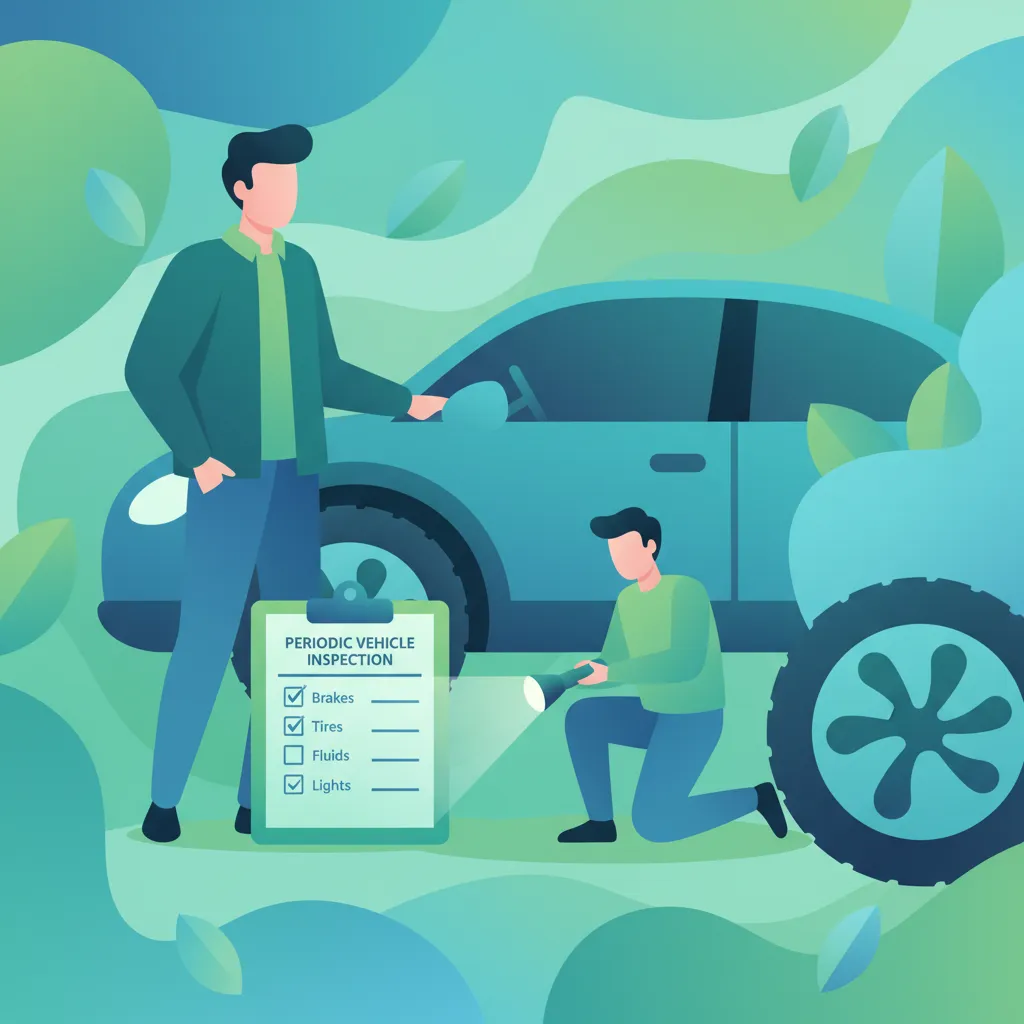
This lesson explains the legal requirement for periodic vehicle inspection in Sweden. You will learn about the role of the 'besiktning' in ensuring that vehicles on the road meet minimum safety and environmental standards. The content covers how to find out when your vehicle is due for inspection, what key components are checked (such as brakes, steering, and emissions), and the possible outcomes, including approval, recommendations for repair, or a driving prohibition (körförbud).
This lesson covers the legal medical requirements for drivers, which are designed to ensure public safety. You will learn about the specific standards for visual acuity and field of vision, and the requirement to wear corrective lenses if needed. The lesson also explains that drivers have a legal obligation to report certain medical conditions (like epilepsy or severe diabetes) to the Swedish Transport Agency, as they may impact their ability to drive safely.
This lesson focuses on creating a complete awareness of the traffic situation around your vehicle. You will learn the correct procedure for using your interior and side mirrors in a continuous scanning pattern. Crucially, the lesson explains what the blind spot (döda vinkeln) is, where it is located, and why a physical head check over the shoulder is a non-negotiable safety step before any lateral movement like changing lanes or turning.
This lesson details the documents you are legally required to carry with you when riding, such as your license and registration certificate. It provides a comprehensive explanation of the mandatory periodic vehicle inspection (besiktning) process in Sweden, outlining what is checked and why it's important for safety. Finally, it reinforces the habit of performing your own pre-ride checks to ensure your motorcycle is always in a safe, roadworthy condition.
This lesson focuses on the high level of caution required when driving in residential areas. You will learn about the rules for special zones like 'gångfartsområde' (walking speed area) and the need to navigate around speed calming measures like speed bumps. The central theme is anticipating unpredictable behavior from residents, especially children, and managing the risks posed by parked cars that severely limit visibility.
This lesson covers strategies for driving safely when visibility is compromised. You will learn the correct use of different lighting systems: when to use low beams, high beams (helljus), and how to avoid dazzling other drivers. The lesson also explains the specific regulations for using front and rear fog lights and provides techniques for navigating safely in dense fog or heavy precipitation by reducing speed and using the road edge as a guide.

This lesson provides a comprehensive guide to the Swedish Category AM theory examination process managed by Transportstyrelsen. It outlines the necessary steps for registration, the specific documentation required such as valid ID and medical certificates, and how to schedule a test at an authorized center. Learners will understand the exam format, scoring system, and the procedures for receiving their license upon successful completion.

This lesson teaches you how to recognize and adapt to different types of slippery winter surfaces. You will learn about the characteristics of driving in loose snow, packed snow, and on ice, with a special focus on detecting 'black ice' (ishalka), which is transparent and extremely dangerous. The content identifies high-risk areas such as bridges and shaded sections of the road and emphasizes the need for extremely gentle steering, acceleration, and braking inputs.

This lesson explains the process for obtaining the correct category of motorcycle license (Körkort A) in Sweden and the legal necessity of keeping it current. You will learn about the procedures for registering your motorcycle with Transportstyrelsen and the mandatory insurance coverage you must have to legally ride on public roads. Understanding these administrative requirements is the first step to being a fully compliant and responsible vehicle operator.

This lesson addresses the specific risks associated with driving on rural roads (landsvägar). You will learn how to manage higher speeds on narrow, winding roads with limited visibility due to curves and hills. The lesson covers procedures for safely overtaking slow-moving agricultural vehicles, managing encounters with oncoming traffic on narrow sections, and being constantly vigilant for wildlife, especially at dawn and dusk.
Find clear answers to common questions learners have about Basic Maintenance Checks. Learn how the lesson is structured, which driving theory objectives it supports, and how it fits into the overall learning path of units and curriculum progression in Sweden. These explanations help you understand key concepts, lesson flow, and exam focused study goals.
A 'säkerhetskontroll' is a mandatory pre-drive safety check that you, as the driver, are responsible for performing. It involves systematically inspecting key components of your vehicle to ensure it's safe to drive. This includes checking tires, lights, fluid levels, and other critical safety elements.
While a quick check of lights and tires before every journey is good practice, a more thorough 'säkerhetskontroll' should ideally be performed regularly, perhaps weekly or before longer trips. The Swedish theory exam expects you to know how and why these checks are done.
The recommended tire pressure is usually found on a sticker inside the driver's side doorjamb, in the glove compartment, or in the vehicle's owner's manual. It's important to check this information for your specific vehicle model.
Yes, you need to ensure all exterior lights are working correctly, including headlights (low and high beam), indicator lights (front, rear, and side), brake lights (front and rear), tail lights, and reverse lights. Having a second person to help check brake lights and reverse lights is often the easiest method.
For the theory test, you primarily need to know how to check the levels of engine oil, coolant, brake fluid, and windshield washer fluid. You should also understand why these fluids are important for vehicle operation and safety.