
Welcome to the vital lesson on winter driving for your Swedish Category B license. This unit covers how to identify and safely manage driving on snow, packed snow, and especially treacherous ice and black ice, crucial for passing your theory test and driving safely in Swedish conditions.
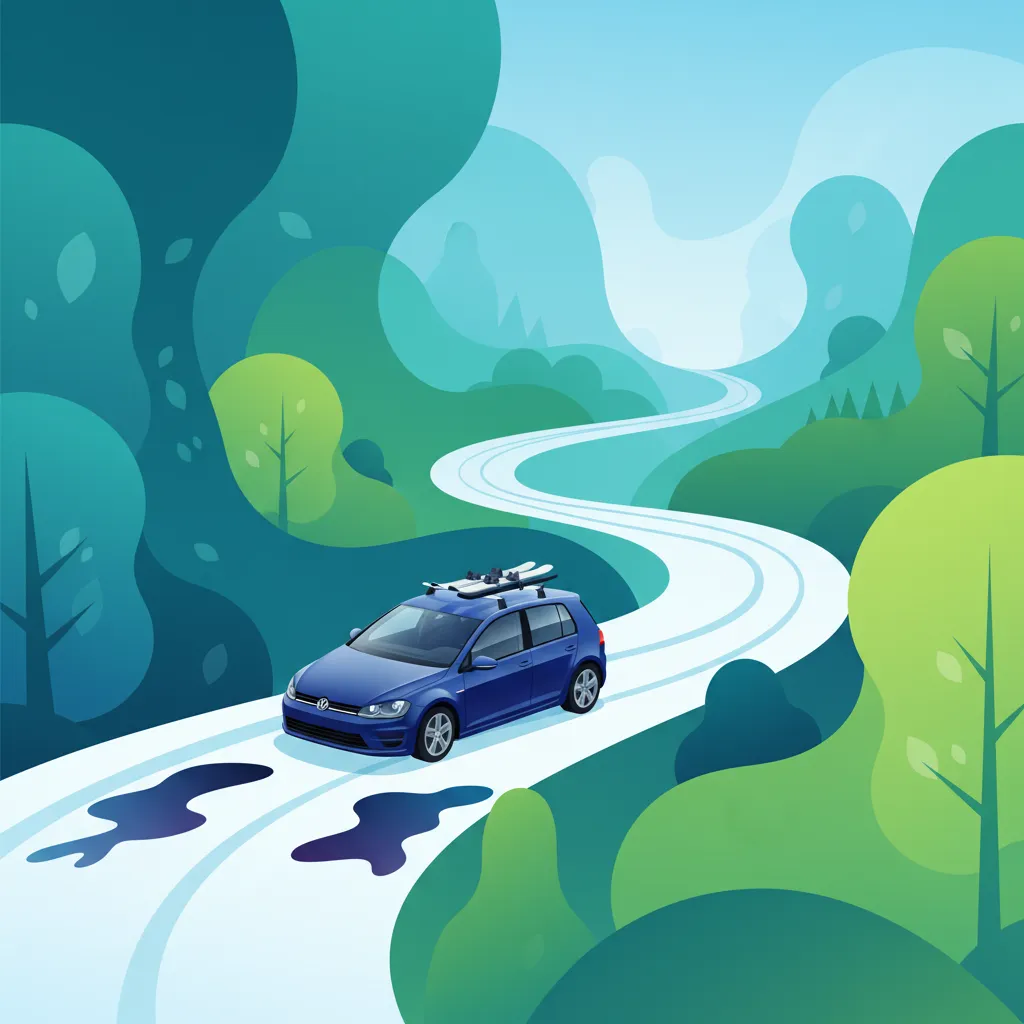
Welcome to this lesson for the Swedish Driving License Theory Course for Category B Cars, where we will explore the critical aspects of driving on challenging winter surfaces. Winter road conditions, particularly snow, ice, and the almost invisible 'black ice' (ishalka), are a significant cause of collisions in Sweden. Understanding how these surfaces affect your vehicle's behaviour and knowing how to adapt your driving is paramount for your safety and the safety of others.
This lesson focuses on teaching you to recognize different slippery conditions, assess the associated risks, and apply safe vehicle operation techniques. Mastering these behaviours directly reduces your crash risk, prevents loss of vehicle control, and ensures you comply with Swedish legal obligations to adapt your speed and manoeuvres to prevailing road conditions.
Driving on snow and ice fundamentally changes how a vehicle behaves. The primary reason for this alteration is a dramatic reduction in tyre-road friction, which is the force that allows your tyres to grip the road.
Friction is the force that opposes motion between two surfaces in contact. In driving, the 'coefficient of friction' (µ) quantifies the grip available for acceleration, braking, and cornering. On a dry asphalt road, this coefficient can be around 0.7. However, on winter surfaces, it drops significantly:
This drastic reduction in µ means your tyres have far less grip to work with. If the force required to accelerate, brake, or turn your vehicle exceeds the available friction, your tyres will slip, leading to a loss of control. Longer stopping distances and a higher likelihood of skids are direct consequences of this reduced friction. The stopping distance, for instance, increases exponentially as µ decreases; halving µ can roughly double your stopping distance.
The Swedish Trafikförordning (Road Traffic Ordinance) places a clear legal responsibility on drivers to adjust their behaviour to road conditions. Specifically:
These regulations ensure that drivers maintain control of their vehicles and contribute to overall road safety, reducing the risk for all road users.
Identifying the type of slippery surface you're on, or are about to encounter, is the first step towards safe winter driving.
Snow on the road surface can exist in different forms, each affecting driving differently.
Ice is a thin, frozen layer of water on the road surface, typically forming when temperatures are around or below 0 °C.
Regardless of the type, ice demands extreme caution. Mandatory use of winter tyres is required during winter-affected conditions in Sweden. For example, a vehicle braking from 50 km/h on a clear-ice covered road may travel an additional 70 meters before stopping, even with ABS activated.
Black ice, known as "ishalka" in Swedish, is arguably the most dangerous winter road condition because it is nearly invisible. It is an extremely thin, transparent layer of clear ice that forms on the road surface, often appearing as a glossy sheen that is indistinguishable from wet or even dry pavement.
The practical danger of black ice is that drivers often do not realize its presence until traction is lost. This increases perception-reaction times because the hazard is not visually detected. You must always assume the potential for black ice when conditions are right: temperatures at or below 0 °C, recent frost, or after a clear night. Pre-emptive speed reduction is crucial in suspected black-ice zones, even if the road appears clear. A common misunderstanding is thinking, "If I can see the road clearly, there is no ice"—this is false, as black ice can be completely invisible.
To compensate for reduced friction, drivers must adjust their fundamental driving habits. These core principles are essential for maintaining control and safety on snow and ice.
The Safe Speed Adaptation Principle dictates that your speed must always be set so that the required friction for your actions (braking, accelerating, turning) does not exceed the available friction. This ensures you can stop or steer safely within your perception-reaction window.
As a practical guideline, you should significantly reduce your speed:
Remember Trafikförordning §7: "The driver shall adjust speed and driving behaviour to the prevailing road and weather conditions."
The Increased Following-Distance Principle states that the time gap behind the vehicle in front of you must be extended proportionally to the reduction in friction. This provides sufficient distance to perceive and react to a sudden loss of traction, allowing for a safer stopping distance.
For vehicles with heavy loads (e.g., over 400 kg), you may need to add an additional second per 100 kg to these guidelines due to increased inertia.
The Gentle Input Control Principle is fundamental: all steering, throttle, and brake actions must be gradual and smooth, without any abrupt changes. Sudden inputs are the primary cause of skids on low-traction surfaces because they instantly demand more grip than the tyres can provide, exceeding the friction limit.
The Hazard Detection & Anticipation Principle is crucial for black ice, which is often invisible. Drivers must proactively identify specific road features where ice is statistically more common. Reduce speed before entering these zones, even if the surface appears clear.
Beyond the core principles, specific techniques for braking, steering, and acceleration can help you maintain control and respond effectively in winter conditions.
On low-traction surfaces, abrupt braking is extremely dangerous.
Remember Trafikförordning §5, which prohibits harsh braking that could cause a loss of control. Pressing the brake harder will not stop the car faster on ice; it increases the skid risk.
Maintaining directional control requires specific steering approaches.
Increasing speed on slippery roads requires a delicate touch.
Modern vehicles are equipped with electronic safety aids designed to assist drivers, especially on low-traction surfaces. However, it's crucial to understand their capabilities and limitations. These systems are assistants, not substitutes for careful, gentle driving.
ABS prevents the wheels from locking up during hard braking by rapidly modulating brake pressure to each wheel. On ice, ABS will work, preventing total wheel lock-up and allowing you to retain some steering control. However, because the coefficient of friction is so low, ABS cannot dramatically shorten stopping distances on ice. You will still travel a long way before stopping.
ESP, also known as ESC (Electronic Stability Control) or DSC (Dynamic Stability Control), is designed to detect and reduce loss of traction. If it senses that the vehicle is veering off its intended path (e.g., oversteer or understeer), it can selectively apply brakes to individual wheels and/or reduce engine power to help the driver regain stability. ESP is highly beneficial on slippery surfaces, but it cannot defy the laws of physics or create traction where none exists.
Traction Control (TC) is a system that prevents the drive wheels from spinning excessively during acceleration. If wheel slip is detected, TC will reduce engine torque or apply individual wheel brakes to help the tyre regain grip. This is very helpful when accelerating from a standstill or at low speeds on icy patches.
Drivers must understand that while these electronic aids are valuable, they do not replace the need for gentle driver inputs and a thorough understanding of the conditions. Over-reliance on these systems can lead to a false sense of security.
Your ability to visually perceive slippery surfaces and anticipate their formation based on weather conditions is a critical skill for winter driving.
While black ice is often invisible, some subtle cues might indicate its presence:
Despite these potential cues, human eyes cannot reliably differentiate transparent ice from a dry road. Therefore, anticipation based on weather and location is far more essential than solely relying on visual detection.
Understanding meteorological factors helps you predict where and when ice might form.
Always adjust your speed not only when ice is visible but also when weather forecasts predict freezing conditions or when you are driving through high-risk areas during cold weather.
Adherence to specific Swedish traffic regulations is mandatory when driving in winter conditions. These laws are designed to mitigate the increased risks associated with snow and ice.
As previously mentioned, these sections of the Trafikförordning are fundamental:
Swedish law mandates the use of winter tyres during specific periods or when winter road conditions prevail.
Generally, vehicles must be equipped with winter tyres (studded or non-studded) during the period of December 1st to March 31st if winter road conditions (snow, ice, slush, or frost on any part of the road) are present or expected. Winter tyres provide significantly higher friction on snow and ice compared to summer tyres (µ ≈ 0.4–0.5 for winter tyres vs. very low for summer tyres on ice). Installing winter tyres with adequate tread depth (minimum 3 mm, but 4 mm recommended) before the first frost is a responsible action.
Trafikförordning §3-1 states that headlights must be used at all times when visibility is reduced, including during snowfall or on black-ice-prone roads. Using low-beam headlights, possibly with edge-lighting, can enhance surface contrast and help you detect subtle changes in the road surface that might indicate ice. Avoid high-beam glare, which can reduce your perception of surface texture.
Understanding common errors on winter roads can help you develop safer driving habits.
| Violation | Why It’s Wrong | Correct Behaviour | Possible Consequence |
|---|---|---|---|
| Maintaining normal speed on a bridge after a night of clear skies and ≤ 0 °C | Underestimates black-ice risk, exceeding safe available friction (µ). | Reduce speed by at least 30–50% before the bridge, increase following gap. | Skid, loss of control, potential collision. |
| Hard braking on icy pavement despite ABS activation | Can cause initial wheel lock-up before ABS modulates, leading to loss of steering. | Apply firm, steady pressure; let ABS pulse; avoid "pumping" brakes. | Vehicle spins, collides with objects or oncoming traffic. |
| Sudden steering to avoid an imagined obstacle on a black-ice road | Exceeds lateral grip, immediately induces a spin. | Keep steering inputs minimal; assess obstacle; if unavoidable, steer gently and be prepared to counter-steer. | Vehicle overturns or enters oncoming lane. |
| Using cruise control on packed snow or ice | Automatic throttle may increase torque abruptly, causing wheel spin. | Disable cruise control; manually control acceleration with progressive throttle. | Wheel spin, loss of traction, possible rear-end collision. |
| Assuming winter tyres eliminate all risk on ice | Winter tyres improve µ but still far below dry road µ; overconfidence is dangerous. | Combine winter tyres with reduced speed, gentle inputs, and increased following distance. | Overconfidence leads to excessive speed, longer stopping distance. |
| Following too closely behind a vehicle braking on ice | Insufficient reaction time due to reduced µ. | Double or triple the normal time gap; anticipate braking events by scanning far ahead. | Rear-end collision. |
| Ignoring fog-induced reduced visibility on a black-ice prone road | Visibility limits hazard detection; driver may not see ice until too late. | Use fog lights, low beams; reduce speed significantly; increase following distance. | Unexpected loss of control and collision. |
| Relying solely on ESP/Traction Control to recover from a spin | Electronic aids assist but cannot fully overcome physics; driver cooperation is needed. | Combine electronic aid use with gentle steering and careful throttle modulation (if applicable). | Prolonged spin, off-road excursion, possible rollover. |
Here are some essential terms related to driving on snow, ice, and black ice:
To deepen your understanding of safe winter driving, consider exploring related topics.
Lesson content overview
Explore all units and lessons included in this driving theory course.
Explore search topics learners often look for when studying Snow, Ice and Black-Ice Behaviour. These topics reflect common questions about road rules, driving situations, safety guidance, and lesson level theory preparation for learners in Sweden.
Browse additional driving theory lessons that cover connected traffic rules, road signs, and common driving situations related to this topic. Improve your understanding of how different rules interact across everyday traffic scenarios.
Understand where and why slippery conditions like snow, ice, and dangerous black ice (ishalka) form on Swedish roads. Learn theory focused on recognizing hazardous zones such as bridges and shaded areas during winter driving.
This lesson provides essential information for any motorcyclist considering riding in cold Swedish weather. You will learn how cold temperatures affect tire performance and the extreme caution required on surfaces with potential ice or snow. The content focuses on recognizing hazardous spots like black ice, the need for exceptionally smooth and gentle control inputs, and why in many cases, the safest decision is not to ride at all in such conditions.
This lesson addresses the severe dangers of riding a moped in snow and icy conditions. It explains how to identify potential hazards like black ice and emphasizes that avoiding riding in such conditions is the safest strategy. For situations where it cannot be avoided, it provides advice on extremely gentle control inputs and vehicle preparation.
This lesson reinforces the core safety principle of adapting your driving to the prevailing weather conditions. You will learn why you must significantly reduce speed in heavy rain to avoid aquaplaning, how strong crosswinds can affect vehicle stability, and why reduced visibility in fog necessitates slower speeds and greater following distances. The goal is to instill a proactive approach to risk management whenever the weather is less than ideal.
This lesson covers strategies for driving safely when visibility is compromised. You will learn the correct use of different lighting systems: when to use low beams, high beams (helljus), and how to avoid dazzling other drivers. The lesson also explains the specific regulations for using front and rear fog lights and provides techniques for navigating safely in dense fog or heavy precipitation by reducing speed and using the road edge as a guide.
This lesson focuses on the high level of caution required when driving in residential areas. You will learn about the rules for special zones like 'gångfartsområde' (walking speed area) and the need to navigate around speed calming measures like speed bumps. The central theme is anticipating unpredictable behavior from residents, especially children, and managing the risks posed by parked cars that severely limit visibility.
This lesson details the Swedish laws regarding the use of winter tires. You will learn the mandatory period (December 1st to March 31st) when winter tires are required if winter road conditions exist, and the specific rules governing studded tires (dubbdäck), including dates of use and local prohibitions. The content also explains the functional differences between studded and friction tires and the importance of adequate tread depth for safety on snow and ice.
This lesson provides critical knowledge on how to prevent and manage a skid. You will learn to differentiate between understeer (front-wheel skid) and oversteer (rear-wheel skid) and the correct steering and pedal inputs required to recover control in each case. The importance of looking and steering in the desired direction of travel is a key focus, along with understanding how modern safety systems like ABS and ESP assist the driver.
This lesson addresses the specific risks associated with driving on rural roads (landsvägar). You will learn how to manage higher speeds on narrow, winding roads with limited visibility due to curves and hills. The lesson covers procedures for safely overtaking slow-moving agricultural vehicles, managing encounters with oncoming traffic on narrow sections, and being constantly vigilant for wildlife, especially at dawn and dusk.
This lesson prepares you for the specific challenges of riding on rural roads in Sweden. You will learn how to read the road ahead for changes in surface quality, approach blind corners safely, and adjust your speed for narrow lanes with no shoulder. The content also covers how to anticipate and safely interact with slow-moving agricultural vehicles and the potential for wild animals on the road, ensuring you are prepared for the unpredictable nature of country riding.
This lesson focuses on the correct use of warning devices to protect an accident or breakdown scene. You will learn to immediately activate your hazard lights (varningsblinkers). The main focus is on the proper placement of the warning triangle, explaining how the distance from the vehicle must be adapted based on the road's speed limit and visibility to give oncoming drivers adequate time to react.
Learn essential driving theory for maintaining control on slippery winter surfaces in Sweden. This covers the critical need for gentle inputs in steering, acceleration, and braking to safely navigate snow, ice, and black ice.
This lesson provides critical knowledge on how to prevent and manage a skid. You will learn to differentiate between understeer (front-wheel skid) and oversteer (rear-wheel skid) and the correct steering and pedal inputs required to recover control in each case. The importance of looking and steering in the desired direction of travel is a key focus, along with understanding how modern safety systems like ABS and ESP assist the driver.
This lesson focuses on the three fundamental inputs for controlling a car: steering, acceleration, and braking. You will learn the correct hand positioning on the steering wheel for maximum control and techniques for smooth, progressive application of the gas and brake pedals. The content explains how these inputs affect the vehicle's balance and stability, forming the basis for all advanced driving and maneuvering techniques.
This lesson provides essential information for any motorcyclist considering riding in cold Swedish weather. You will learn how cold temperatures affect tire performance and the extreme caution required on surfaces with potential ice or snow. The content focuses on recognizing hazardous spots like black ice, the need for exceptionally smooth and gentle control inputs, and why in many cases, the safest decision is not to ride at all in such conditions.
This lesson reinforces the core safety principle of adapting your driving to the prevailing weather conditions. You will learn why you must significantly reduce speed in heavy rain to avoid aquaplaning, how strong crosswinds can affect vehicle stability, and why reduced visibility in fog necessitates slower speeds and greater following distances. The goal is to instill a proactive approach to risk management whenever the weather is less than ideal.
This lesson delves into the dynamics of cornering on a two-wheeled vehicle, introducing the essential technique of counter-steering to initiate turns efficiently. It explains the importance of choosing a proper line, managing speed before the turn, and looking through the corner to the exit. The content also provides guidance on how to recognize and correct for a loss of traction or a skid.
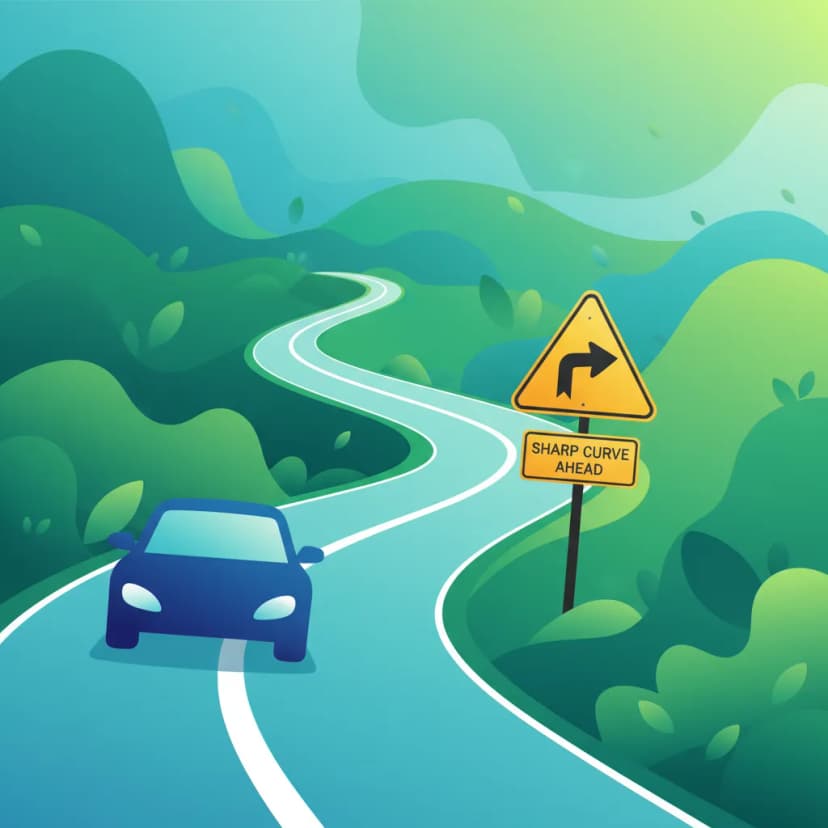
This lesson teaches the correct methodology for negotiating curves and turns of varying sharpness. You will learn the principle of 'slow in, fast out,' involving braking before the curve and gently accelerating through it to maintain stability and grip. The lesson also covers how to choose the correct line (placering) through a bend and how to use your vision effectively to look far ahead for a safe and controlled passage.
This lesson addresses the severe dangers of riding a moped in snow and icy conditions. It explains how to identify potential hazards like black ice and emphasizes that avoiding riding in such conditions is the safest strategy. For situations where it cannot be avoided, it provides advice on extremely gentle control inputs and vehicle preparation.
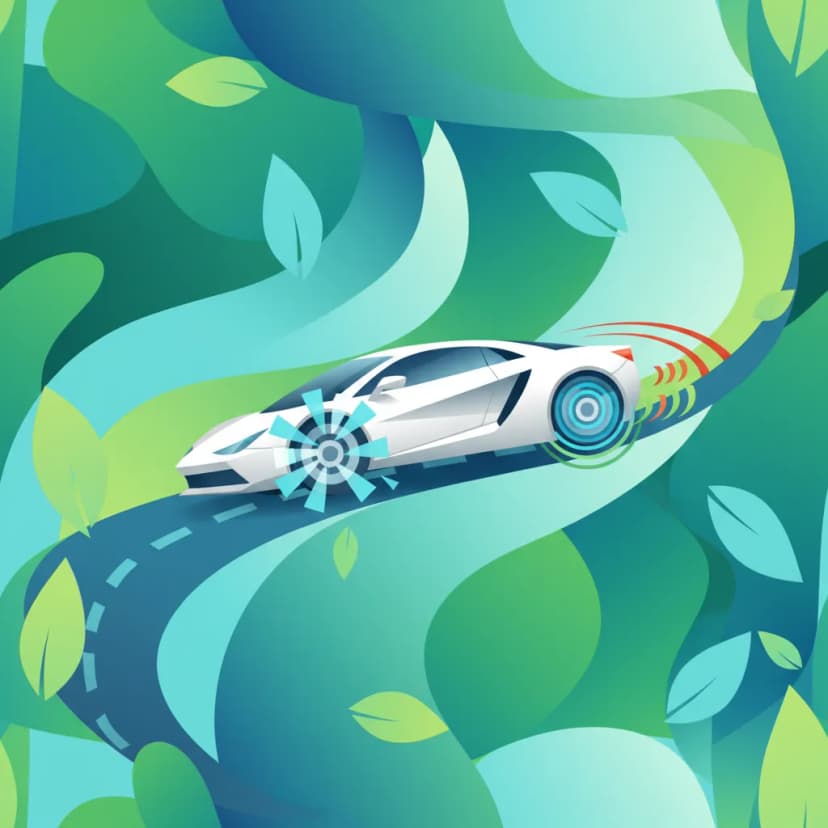
This lesson explains the function of key electronic driver aids. You will learn how the Anti-lock Braking System (ABS) prevents wheels from locking during hard braking, allowing you to maintain steering control. The lesson also covers the Electronic Stability Program (ESP), which helps prevent skids by automatically braking individual wheels, and Traction Control (TCS), which prevents wheel spin during acceleration on slippery surfaces.

This lesson teaches the physical skill of applying maximum braking force while maintaining control of the motorcycle. You will learn the technique of progressive braking to avoid locking the wheels and how to react if a skid does occur. Understanding how to manage both front and rear wheel skids and how an ABS system assists in these situations gives you the best possible chance of stopping safely and quickly in an emergency.
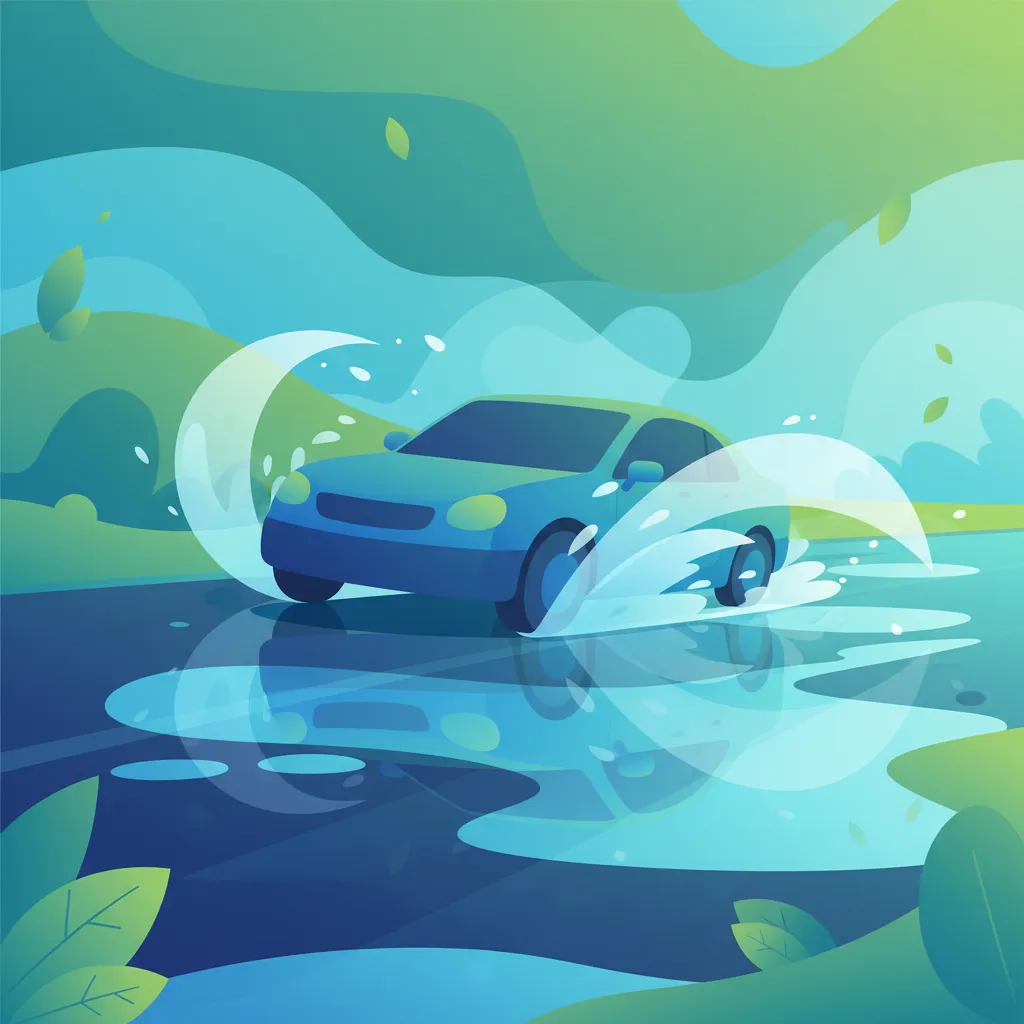
This lesson details the specific hazards associated with riding on wet roads, including significantly increased stopping distances and the risk of aquaplaning. It explains how to recognize conditions where aquaplaning is likely and the importance of reducing speed. Riders will learn to use smoother throttle, braking, and steering inputs to maintain traction and control.
Find clear answers to common questions learners have about Snow, Ice and Black-Ice Behaviour. Learn how the lesson is structured, which driving theory objectives it supports, and how it fits into the overall learning path of units and curriculum progression in Sweden. These explanations help you understand key concepts, lesson flow, and exam focused study goals.
Black ice, known as 'ishalka' in Swedish, is a thin, transparent layer of ice on the road surface. It's extremely dangerous because it's very difficult to see, especially on dark asphalt. It offers almost no grip, significantly reducing your car's traction and making steering, braking, and acceleration very unpredictable. Many collisions in winter occur because drivers don't realise they are driving on black ice.
Look for visual cues: bridges and shaded areas are often the first to freeze. If the temperature is near freezing and the road looks unusually dark and shiny, it might be black ice. You might also notice other vehicles or cyclists struggling for grip. If you suspect ice, test your grip very gently by slightly easing off the accelerator and observing your car's response – a lack of friction indicates ice.
The key is to be extremely gentle with all your inputs. Accelerate, brake, and steer very slowly and smoothly. Increase your following distance significantly – think of the 'three-second rule' as a minimum, and double it or more on ice. Reduce your speed well below the posted limit to give yourself more time to react and stop.
Yes, certain areas freeze faster and harder. Bridges and overpasses are particularly risky because they are exposed to cold air on all sides. Shaded sections of the road, especially in forests or next to buildings, can remain icy even after the sun has warmed other areas. Road surfaces that are damp before a cold snap can also quickly develop ice.
Loose snow can be softer and may provide some cushioning, but it can also cause your wheels to spin easily. Packed snow, often formed by traffic driving over loose snow, can become very slippery, especially if it's damp and then freezes. Both require gentle acceleration and braking, but packed snow offers less grip than fresh, loose snow, demanding even more caution.