
Welcome to the lesson on Acceleration Techniques and Throttle Control, a key part of your Swedish Category AM moped theory preparation. Understanding how to manage your speed smoothly is vital for safe riding and interacting with traffic. This lesson builds on basic vehicle control and prepares you for more complex maneuvers and understanding speed-related theory exam questions.

Learning to master acceleration and throttle control is fundamental for safe and efficient moped riding. This skill enables predictable speed changes, maintains traction in varied conditions, and is crucial for interacting safely with other road users. As a core part of the Swedish Driving License Theory Course – Category AM, this lesson delves into the nuances of applying engine power effectively, ensuring you develop a refined feel for your moped's response.
Smooth and controlled acceleration is not just about comfort; it's a critical safety component. Mopeds, particularly those in Category AM, often possess a relatively high power-to-weight ratio, meaning they can accelerate quickly with minimal throttle input. This characteristic demands precise control to prevent sudden jolts, wheel spin, and loss of stability.
At its core, acceleration involves converting engine torque into forward motion. When you twist the throttle, you control the amount of air-fuel mixture entering the engine, which dictates the engine's power output. This power is then transmitted to the rear wheel, creating a shear force between the tyre and the road surface. This force, known as traction, propels the moped forward.
The delicate balance lies in providing just enough torque to accelerate without exceeding the tyre's adhesion limit. Too much torque, especially on low-grip surfaces, will cause the rear wheel to spin (wheel slip), leading to a loss of control. Understanding this physical interaction is paramount for safe riding.
Predictable speed changes are essential for road safety. When you accelerate smoothly, other road users can anticipate your movements and react accordingly. Abrupt acceleration can surprise drivers behind you, making it difficult for them to maintain a safe following distance or leading to unexpected braking. This predictability is vital when merging into traffic, overtaking, or simply adjusting your speed within a traffic flow.
Consider the average human reaction time (around 1.5 seconds). Smooth acceleration provides crucial extra time for both you and others to perceive and react to changes on the road, significantly reducing accident risk.
Swedish traffic legislation, particularly the Road Traffic Ordinance (Trafikförordningen), mandates that all drivers, including moped riders, operate their vehicles in a manner that does not endanger or impede other road users. This includes how you accelerate. Uncontrolled or excessively abrupt acceleration can be deemed negligent behaviour, potentially leading to fines or liability in an accident. The overarching legal intent is to ensure that all road users can anticipate and react to each other's actions safely.
Mastering throttle control involves several key principles that, when practiced together, lead to safe, smooth, and efficient riding.
Progressive throttle application is the cornerstone of smooth acceleration. It means gradually increasing engine power from idle to the required speed using small, steady movements of the throttle lever. Instead of snapping the throttle open, you "roll it on" in controlled increments. This prevents sudden torque spikes that can easily exceed tyre traction, especially on lightweight mopeds.
Initial Roll-on: From a standstill or very slow speed, gently rotate the throttle grip just enough to get the moped moving. Aim for a smooth, almost imperceptible start.
Steady State Acceleration: Once moving, continue to increase throttle input gradually until you reach your target speed. Avoid large, sudden changes.
Constant Adjustment: Continuously monitor your speed and the road conditions, making minor, smooth adjustments to the throttle to maintain your desired pace.
Traction management is the art of adjusting your throttle input to keep the tyre slip within its optimal adhesion window, thereby preventing loss of grip. Tyres perform best when they have a small amount of slip (typically 0-15% for road tyres), allowing them to generate maximum grip. Exceeding this limit causes the tyre to break away, leading to a slide.
On dry, paved surfaces, the adhesion limit is high, allowing for quicker acceleration. However, on wet roads, loose gravel, sand, or ice, the coefficient of friction drops significantly, demanding much gentler throttle inputs. Always feel for the moped's response; if you sense even a slight twitch from the rear wheel, reduce throttle immediately.
Mopeds, especially modern 50cc models with engines typically producing 4-6 kW, often have a high power-to-weight ratio relative to their overall mass. This means they can accelerate very quickly with relatively little throttle. Riders must be acutely aware of this characteristic. Compared to heavier vehicles, mopeds require finer, more subtle throttle modulation to avoid overshooting target speeds or causing unintended rapid acceleration. For instance, a small twist of the throttle on a moped might produce acceleration equivalent to a much larger throttle input on a heavier motorcycle or car.
Engine braking is the natural deceleration that occurs when you release the throttle. The engine's resistance to rotation, combined with drivetrain friction, slows the moped down without the active use of the brakes. This is a highly effective and smooth way to control your speed, especially when approaching intersections, traffic lights, or gentle curves.
Engine braking reduces wear on your brake pads and can help maintain stability, particularly during deceleration in corners where sudden hard braking might upset the moped's balance. However, engine braking alone is not sufficient for emergency stops or to bring the vehicle to a complete halt; it must be supplemented with active braking.
Anticipatory throttle planning involves adjusting your throttle input based on what you see ahead. By scanning the road far ahead – looking for upcoming road features, traffic flow, traffic lights, or changes in road conditions – you can pre-emptively adjust your throttle. For example, if you see a red light far ahead, you can ease off the throttle early, allowing the moped to coast and engine brake, reducing the need for abrupt braking at the last moment. This practice significantly improves fuel efficiency, rider comfort, and safety margins.
For mopeds equipped with a manual clutch, precise coordination between throttle opening and clutch engagement is crucial for smooth starts and gear changes. The goal is to avoid sudden torque spikes that can lead to rear-wheel hop, stall the engine, or cause loss of traction. When starting from a standstill, especially on slippery surfaces or inclines, gradually release the clutch while simultaneously applying a small, progressive amount of throttle. This "feathering" technique ensures smooth power delivery to the rear wheel.
Moped riders in Sweden must adhere to specific rules and guidelines regarding vehicle operation, including acceleration. These regulations are designed to ensure safety and prevent hazards on public roads.
The Swedish Road Traffic Ordinance (Trafikförordningen) contains several articles directly or indirectly related to acceleration and throttle control:
Transportstyrelsen (the Swedish Transport Agency) sets regulations for vehicle condition. Section 3.2 of the Vehicle Inspection Regulations typically states that vehicles must be maintained in a condition that allows safe control of acceleration and braking. This means that a sticky throttle cable, a worn-out clutch (if applicable), or any other mechanical issue affecting throttle response is a defect that must be addressed. Regular maintenance ensures these critical controls function smoothly and reliably.
Trafikverket (the Swedish Transport Administration) provides general guidance for driving in adverse conditions. For instance, recommendations for wet or slippery surfaces emphasize reducing speed and applying acceleration very gradually. This guideline reinforces the traction management principle, directly advising against sudden throttle inputs when road grip is compromised.
Understanding common errors in throttle control can help you proactively develop safer riding habits.
Optimal throttle control is highly contextual. Your technique must adapt to various environmental factors and road conditions.
Developing a refined sense of throttle control is an ongoing process that integrates with other aspects of moped riding.
Throttle control is not an isolated skill. It must be seamlessly integrated with:
Beyond immediate safety, consistent application of smooth throttle techniques yields several long-term benefits:
According to the Swedish Transport Agency (2022), approximately 22% of moped-related collisions involved a loss of control due to excessive acceleration on low-grip surfaces. This statistic underscores the direct link between proper throttle control and accident prevention.
Here are several scenarios to illustrate correct and incorrect throttle control in real-world situations.
This lesson lays the theoretical foundation for skilled moped operation. The principles of progressive throttle application, traction management, and anticipatory planning are fundamental. Continue to practice these techniques during your practical training, always striving for smoothness and predictability.
These concepts build directly upon knowledge from other lessons and will be further developed in future topics:
Lesson content overview
Explore all units and lessons included in this driving theory course.
Explore search topics learners often look for when studying Acceleration Techniques and Throttle Control. These topics reflect common questions about road rules, driving situations, safety guidance, and lesson level theory preparation for learners in Sweden.
Browse additional driving theory lessons that cover connected traffic rules, road signs, and common driving situations related to this topic. Improve your understanding of how different rules interact across everyday traffic scenarios.
Build upon smooth acceleration by exploring advanced speed management techniques. Understand how throttle control interacts with braking and road conditions for optimal speed adjustment in various Swedish traffic scenarios. Crucial for safe moped operation.

This lesson focuses on developing the fine control needed for low-speed maneuvering, a common challenge in urban environments. It covers techniques for making tight turns, such as U-turns, by using a combination of clutch, throttle, and rear brake control. The goal is to build the rider's skill and confidence in handling the moped in parking lots, heavy traffic, and other confined areas.

This lesson provides a detailed guide to using a moped's braking system effectively and safely. It explains the different roles of the front and rear brakes and the concept of balanced braking to maximize stopping power without losing traction. Learners will understand techniques for both normal, controlled stops and emergency braking situations, including how to manage weight transfer.
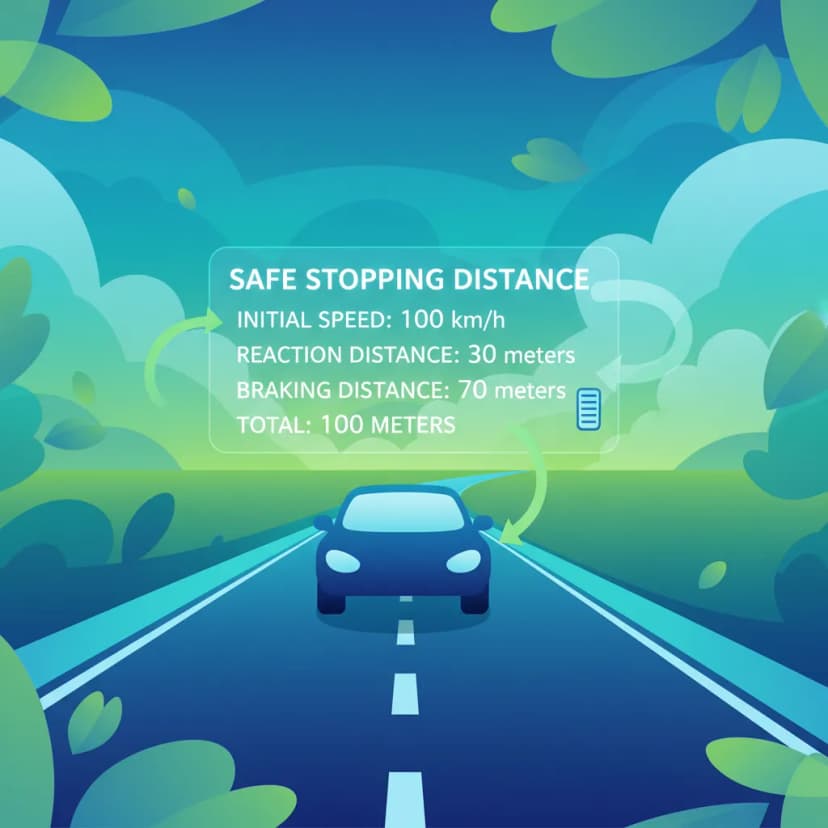
This lesson provides a practical understanding of the physics behind stopping a moped. It breaks down the total stopping distance into two key components: reaction distance (the distance traveled before applying the brakes) and braking distance (the distance covered while braking). Learners will explore how factors like speed, road conditions, and rider alertness dramatically affect these distances.
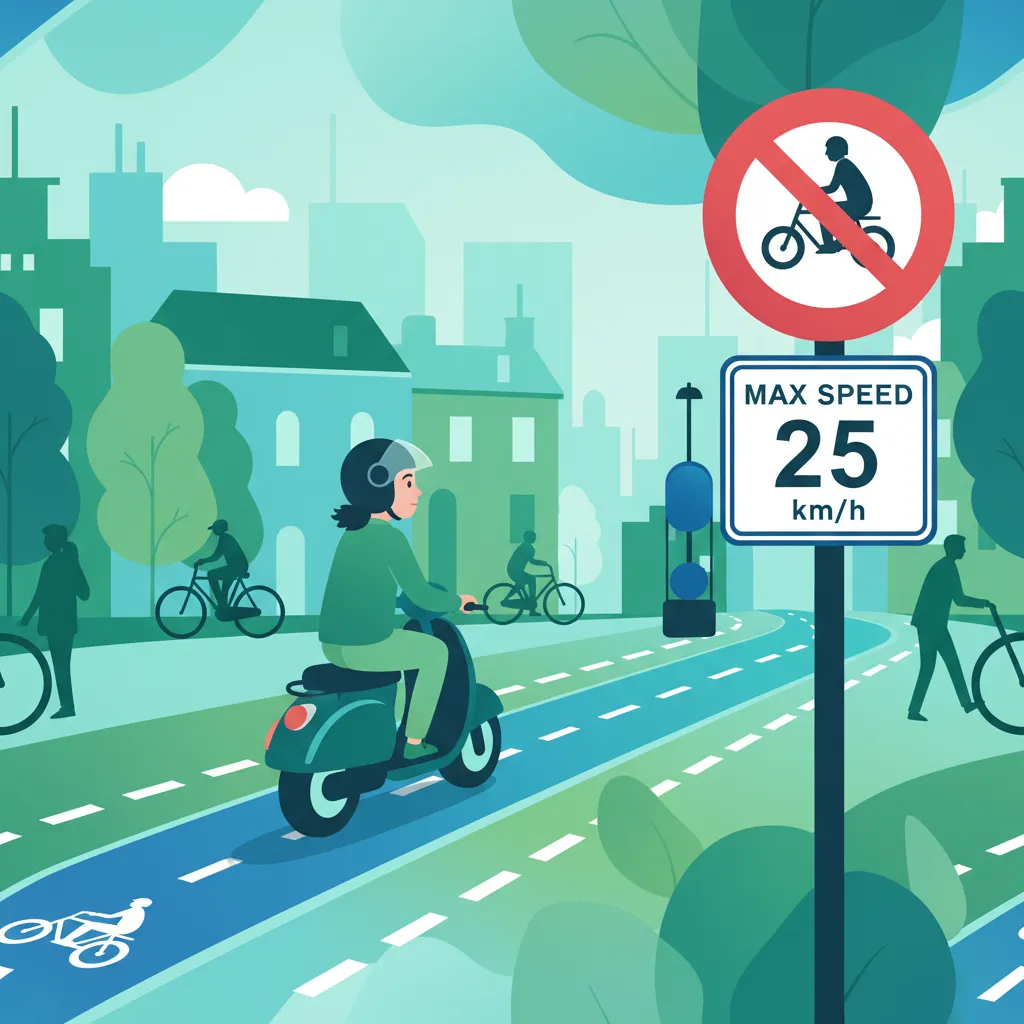
This lesson consolidates the key regulations that apply specifically to moped operation in Sweden. It covers mandatory rules such as speed limits, helmet use, and requirements for vehicle lighting and reflectors. Furthermore, the lesson explains the legal consequences of violations, including the system of fines and potential demerit points, ensuring riders understand their full range of legal responsibilities on the road.
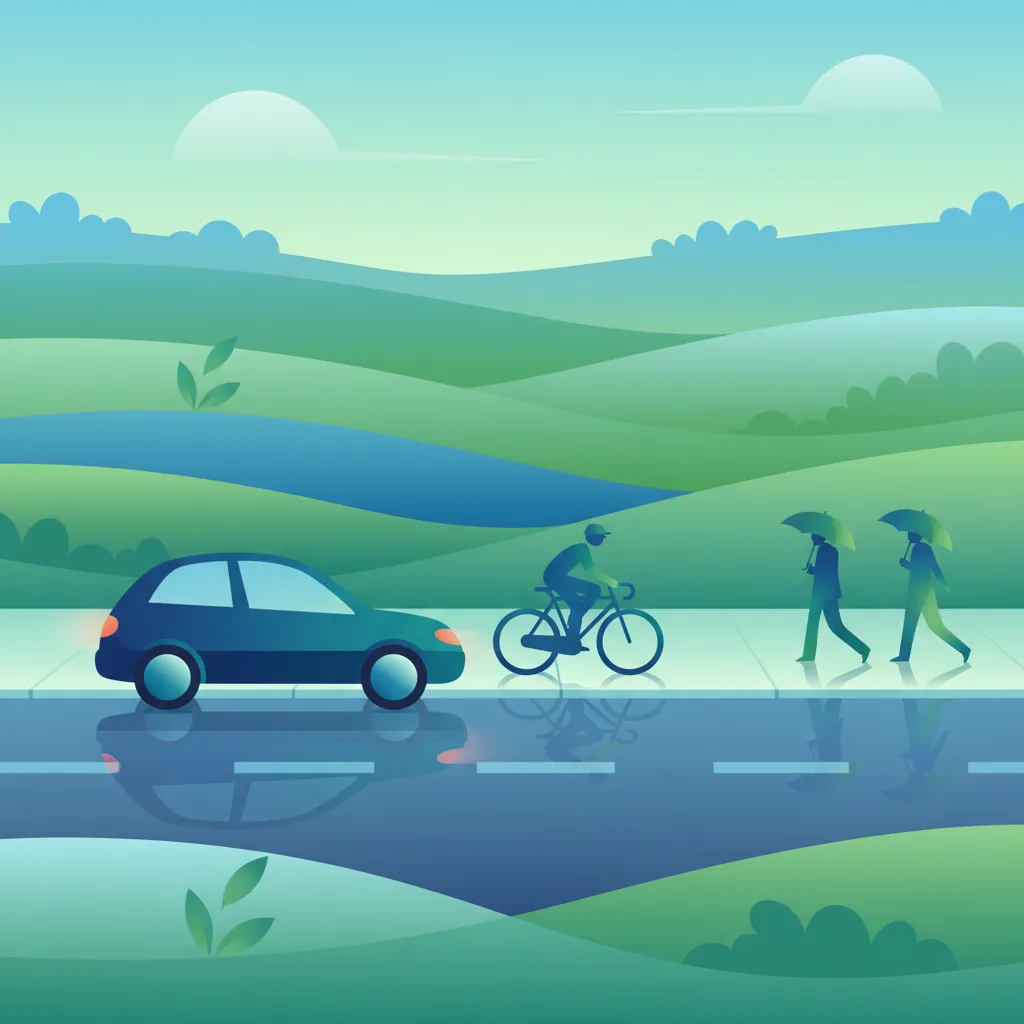
This lesson teaches the crucial skill of adapting speed to prevailing conditions, emphasizing that the posted speed limit is a maximum, not a target. It covers various scenarios such as rain, fog, heavy traffic, and poor road surfaces, explaining why reducing speed is essential for maintaining vehicle control and safety. The goal is to cultivate a proactive mindset where the rider constantly assesses risk and adjusts their speed accordingly.

This lesson details the specific hazards associated with riding on wet roads, including significantly increased stopping distances and the risk of aquaplaning. It explains how to recognize conditions where aquaplaning is likely and the importance of reducing speed. Riders will learn to use smoother throttle, braking, and steering inputs to maintain traction and control.

This lesson provides practical instructions for safely navigating different types of intersections and roundabouts. It covers procedures for approaching, entering, and exiting roundabouts, emphasizing the rule to yield to traffic already circulating. The content also addresses how to handle signal-controlled and uncontrolled intersections, ensuring riders select the correct lane and manage their speed appropriately.

This lesson explains how to identify and interact with various types of mopeds and other low-speed vehicles common on Swedish roads. You will learn the difference between Class I and Class II mopeds and their place on the road, as well as how to recognize A-tractors by their LGF (långsamtgående fordon) sign. The key focus is on managing the large speed differential and making safe judgments when deciding to overtake.
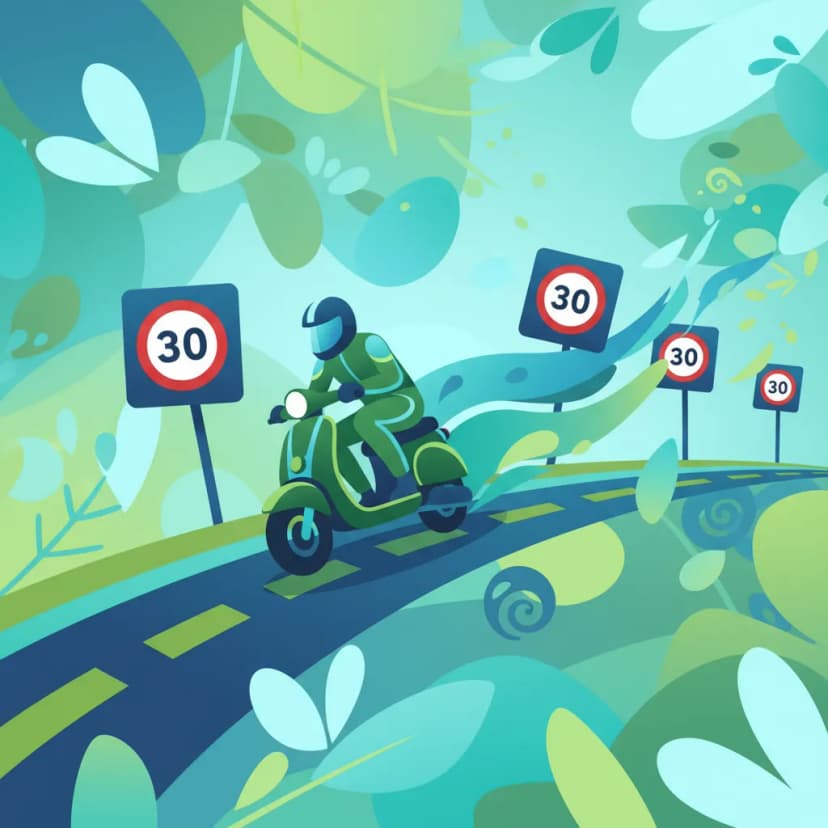
This lesson focuses on the specific speed regulations applicable to Category AM mopeds in Sweden. It emphasizes the absolute maximum legal speed of 45 km/h and explains that riders must always adapt their speed to be lower when conditions require. The content also covers any special, lower speed limits that may apply when riding on designated cycle paths or in shared spaces.

This lesson focuses on the unique demands of managing speed in high-speed environments like motorways. You will learn techniques for maintaining a steady, appropriate speed that matches the flow of traffic, how to perform smooth overtakes, and the importance of increasing your following distance. It also covers physical factors such as managing wind blast and maintaining stability when riding near large trucks, ensuring a safe and controlled high-speed riding experience.
Learn how precise acceleration and speed control are key to safely interacting with cars, cyclists, and pedestrians. This lesson focuses on predictable maneuvers and maintaining appropriate gaps in diverse Swedish road conditions, ensuring smoother traffic flow.

This lesson emphasizes that the posted speed limit is a maximum, not a target. You will learn the principles of situational speed adaptation, which involves adjusting your speed based on factors like visibility, road geometry (curves and hills), traffic density, and potential hazards. The lesson covers specific strategies for managing speed in urban environments with pedestrians, on rural roads with hidden entrances, and on motorways to match the flow of traffic.

This lesson teaches the crucial skill of adapting your speed to the dynamic and often congested conditions of urban riding. You will learn to modulate your speed smoothly in response to traffic flow, pedestrian activity, and complex intersections to maintain safety and control. Techniques covered include using engine braking effectively, anticipating the actions of other road users, and selecting a speed that maximizes your reaction time in a high-density environment.

This lesson reinforces the core safety principle of adapting your driving to the prevailing weather conditions. You will learn why you must significantly reduce speed in heavy rain to avoid aquaplaning, how strong crosswinds can affect vehicle stability, and why reduced visibility in fog necessitates slower speeds and greater following distances. The goal is to instill a proactive approach to risk management whenever the weather is less than ideal.
This lesson teaches the crucial skill of adapting speed to prevailing conditions, emphasizing that the posted speed limit is a maximum, not a target. It covers various scenarios such as rain, fog, heavy traffic, and poor road surfaces, explaining why reducing speed is essential for maintaining vehicle control and safety. The goal is to cultivate a proactive mindset where the rider constantly assesses risk and adjusts their speed accordingly.
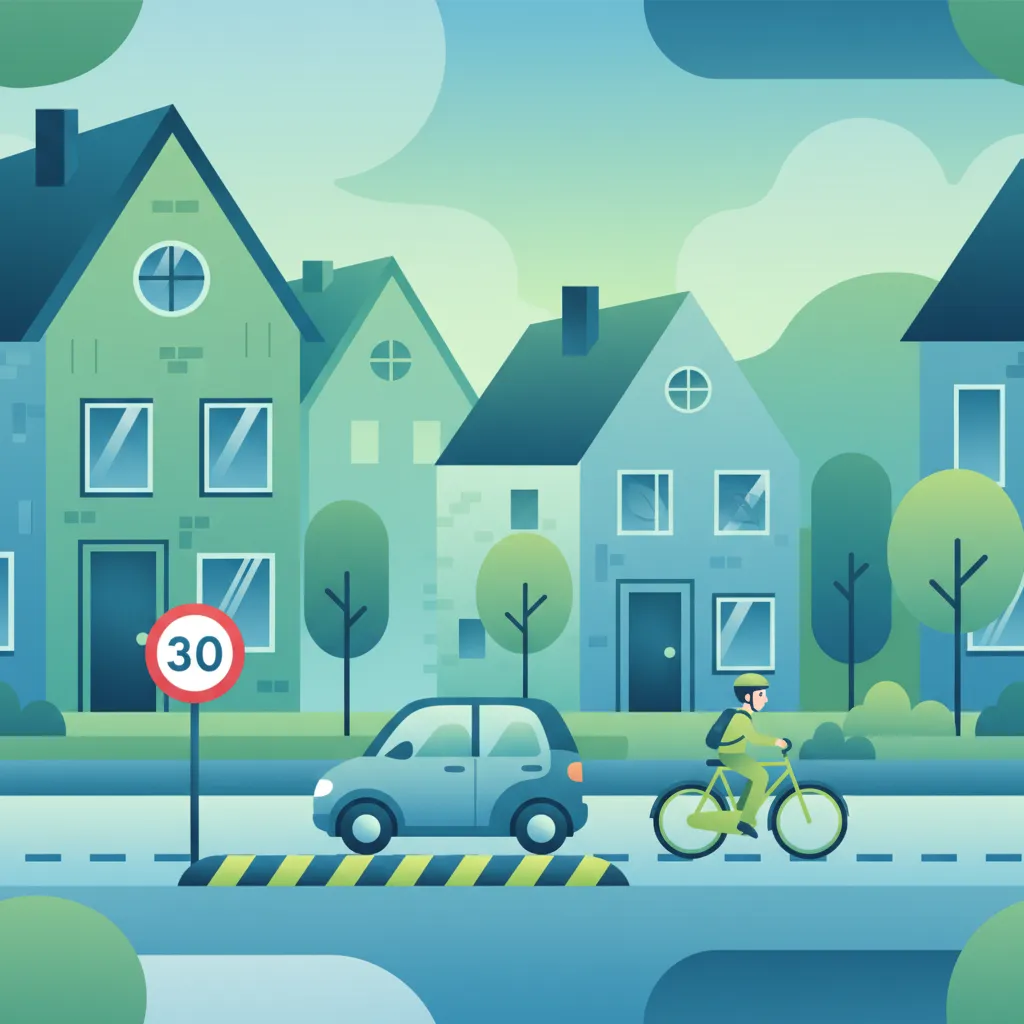
This lesson focuses on the high level of caution required when driving in residential areas. You will learn about the rules for special zones like 'gångfartsområde' (walking speed area) and the need to navigate around speed calming measures like speed bumps. The central theme is anticipating unpredictable behavior from residents, especially children, and managing the risks posed by parked cars that severely limit visibility.
This lesson focuses on the unique demands of managing speed in high-speed environments like motorways. You will learn techniques for maintaining a steady, appropriate speed that matches the flow of traffic, how to perform smooth overtakes, and the importance of increasing your following distance. It also covers physical factors such as managing wind blast and maintaining stability when riding near large trucks, ensuring a safe and controlled high-speed riding experience.

This lesson focuses on the unique challenges of driving in urban environments. You will learn techniques for anticipating the actions of vulnerable road users like pedestrians and cyclists, especially near crossings and bus stops. The content covers how to navigate narrow streets, one-way systems, and areas with heavy traffic, emphasizing the need for lower speeds, heightened awareness, and a defensive mindset.
This lesson covers the critical maneuvers of merging and changing lanes. You will learn the correct technique for using an acceleration lane to match the speed of motorway traffic before merging smoothly and safely. The lesson emphasizes the importance of checking mirrors and the blind spot, signaling in good time, and applying the 'zipper principle' (dragkedjeprincipen) where lanes merge to ensure efficient and courteous traffic flow.

This lesson teaches practical methods for maintaining a safe buffer to the vehicle ahead, with a primary focus on the universally recommended 'three-second rule'. You will learn how to apply this rule by picking a fixed point and counting the seconds until you pass it. The content also explains why this distance must be increased significantly in adverse conditions such as rain, snow, or when following large vehicles that obstruct your view.
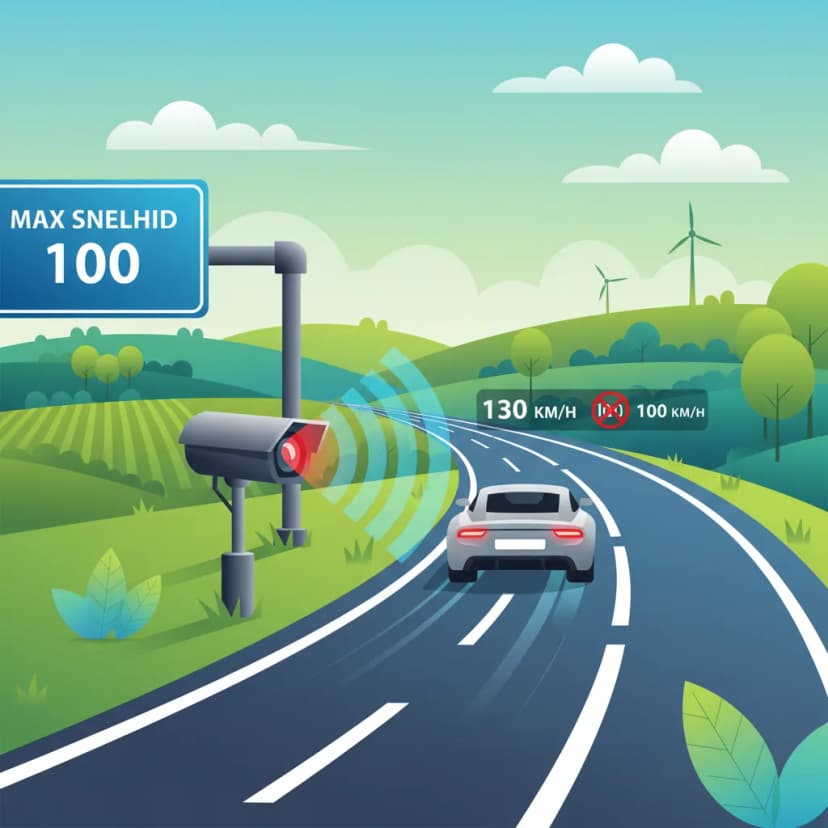
This lesson informs you about the various technologies and methods used for speed enforcement in Sweden, such as fixed and mobile speed cameras and police radar. You will understand the legal framework for speed monitoring and the corresponding penalties for violations, including fines (böter) and the potential for license suspension. This knowledge reinforces the importance of constant speed awareness and adherence to posted limits to ensure both safety and legal compliance.
Find clear answers to common questions learners have about Acceleration Techniques and Throttle Control. Learn how the lesson is structured, which driving theory objectives it supports, and how it fits into the overall learning path of units and curriculum progression in Sweden. These explanations help you understand key concepts, lesson flow, and exam focused study goals.
Smooth acceleration is crucial for predictable riding. It helps you merge seamlessly into traffic, avoid startling other road users, and maintain stability, especially on slippery surfaces. This predictability is a key factor tested in the Swedish AM theory exam.
Sudden or aggressive throttle application can cause the rear wheel to spin, leading to a loss of traction and potentially a skid. Smooth, gradual throttle control ensures the power is delivered progressively, helping to maintain grip on the road surface, which is especially important in adverse weather.
When merging, you need to match the speed of the traffic flow. This requires a confident but smooth acceleration. Anticipate the gap, apply steady throttle, and be ready to adjust speed slightly if necessary. The Swedish theory test often includes scenarios requiring safe merging.
While throttle control is primary, your body position can influence stability during acceleration. Maintaining a balanced posture helps absorb the bike's forward motion and ensures you can control the throttle effectively. Avoid sudden shifts that could upset the moped's balance.
This lesson focuses on general principles applicable to most AM mopeds, especially automatic ones common for this category. For geared mopeds, the principle of smooth throttle application remains, but it's coordinated with clutch and gear engagement. The core concept is controlling the power delivery.