
Welcome to the essential lesson on mastering your moped's handling! This section of the Category AM theory course delves into the critical skills of cornering, understanding skids, and the advanced technique of counter-steering. Developing these skills is vital for safe moped operation and will prepare you for specific questions on vehicle control in your Swedish theory exam.

Navigating turns and curves is a fundamental skill for any rider of a two-wheeled vehicle, especially for those operating a moped within the Swedish driving license Category AM. Proper cornering involves a precise interplay of speed management, steering input, body positioning, and visual focus. This lesson explores the crucial techniques that ensure safety and control, including the essential concept of counter-steering, and provides guidance on how to react effectively if your moped loses traction and begins to skid. Mastering these skills is paramount for avoiding accidents and maintaining stability on various road surfaces and conditions.
Cornering is one of the most dynamic and potentially challenging maneuvers for moped riders. It demands a coordinated effort from the rider to manage the vehicle's stability while navigating changing road geometry. Understanding the underlying physics and applying proven techniques significantly reduces the risk of loss of control, which is a common cause of accidents in curves.
Mopeds, like all two-wheeled vehicles, rely on lean to turn. Unlike cars, which steer by turning their wheels, a moped must tilt into a curve to generate the necessary centripetal force to change direction. This unique characteristic means that a rider's input must be precise and timely. Poor cornering technique can lead to entering a turn too fast, losing traction, or running wide, all of which pose significant dangers to the rider and other road users. Developing strong cornering skills is not just about control; it is a critical safety measure that directly influences your ability to react to hazards and maintain a stable ride.
At its core, turning a moped is an act of balancing forces. When you lean into a turn, gravity pulls you downwards, and the momentum of the moped tries to push you outwards (centrifugal force). To counteract this, the tires generate a grip force towards the center of the turn (centripetal force). The amount of lean required depends on your speed and the tightness of the curve. Higher speeds or tighter turns require a greater lean angle. This delicate balance means that any sudden or inappropriate input – whether it's excessive braking, acceleration, or harsh steering – can upset the equilibrium and lead to a loss of traction. The gyroscopic effect of the spinning wheels also plays a vital role, making the moped inherently stable when moving, but also influencing how it responds to steering inputs, particularly in the unique action of counter-steering.
The secret to a smooth and safe corner lies in effective preparation. Before you even begin to turn, you must strategically manage your speed, choose an optimal path, and fix your gaze on where you want to go. These three elements form the foundation of competent cornering.
The most critical step in safe cornering is setting the correct entry speed. You must reduce your speed before you enter the curve, not while you are leaning into it. Braking while cornering, especially with the front brake, can significantly reduce the available traction for turning and lead to a skid or loss of control.
Always complete your deceleration before you commit to the lean. Using the rear brake for smooth speed reduction is often preferable to heavy front braking before a turn, as it keeps the front wheel free for steering.
According to Trafikförordning 3 kap. 2 § of Swedish traffic law, drivers must adapt their speed to the road, traffic, visibility, and vehicle conditions. This explicitly includes negotiating curves. Failing to reduce speed adequately before a turn is a common cause of accidents, as it forces the rider to either lean excessively, risk running wide, or brake sharply mid-turn, all of which compromise stability. Plan to slow down 2–3 seconds before the curve entry point, giving yourself ample time and distance to adjust.
The "proper riding line" is the optimal trajectory through a curve that maximizes your turning radius while keeping you safely within your lane. This technique helps reduce the required lean angle, making the turn smoother and more stable. The most common and safest line for most turns follows an "outside-inside-outside" path:
Wide Entry: Approach the curve from the outside of your lane. For a right-hand turn, position yourself towards the left side of your lane; for a left-hand turn, position yourself towards the right side. This widens your initial view into the turn and increases the effective radius of your entry.
Clip the Apex: As you enter the curve, aim for the "apex" – the innermost point of the curve. For a right-hand turn, this would be closer to the right-hand curb; for a left-hand turn, closer to the left-hand curb. Briefly touching this point effectively widens the middle section of the turn.
Wide Exit: As you pass the apex, gradually move back towards the outside of your lane as you exit the curve. This sets you up straight for the next section of road.
This technique improves visibility, reduces the sharpness of the turn, and gives you more time to react to unexpected hazards. Avoid "cutting the corner" by entering too tightly, as this reduces your radius and increases the risk of exceeding your moped's capabilities.
Your eyes are your primary steering mechanism on a moped. The practice of "look-through vision" involves fixing your gaze on the intended exit point of the curve, rather than focusing on the immediate foreground or the nearest curb. Your body and the moped will naturally tend to follow where your eyes are looking.
Turn your head and eyes to literally "look through" the curve to its exit. This helps prevent target fixation – staring at an obstacle you want to avoid, which often leads to steering directly towards it.
By looking far ahead, you allow your brain to process the curve's geometry earlier, enabling smoother and more accurate steering inputs. This technique reduces the likelihood of over-steering (turning too sharply) and enhances overall stability. It's a crucial habit to develop for safe and confident riding.
While it might seem counter-intuitive at first, counter-steering is the most effective and universally taught method for initiating a turn on any two-wheeled vehicle at speeds above walking pace. It uses the moped's natural gyroscopic forces and steering geometry to lean the bike into a turn.
Counter-steering is the act of briefly applying a steering torque opposite to the desired direction of the turn to make the moped lean. For example, to turn left, you momentarily push the left handlebar forward (or push the right handlebar towards you). This seemingly opposite input causes the moped's front wheel to momentarily turn slightly to the right, which then makes the entire moped lean to the left. Once the lean is established, the front wheel automatically realigns, and you maintain the lean by applying continuous, subtle pressure in the direction you want to go.
A technique where a rider briefly applies a steering force opposite to the desired turn direction, causing the two-wheeled vehicle to lean into the turn. This lean then guides the vehicle through the curve.
This method is highly efficient because it rapidly initiates the lean required for turning, rather than directly forcing the handlebars in the direction of the turn (which at speed would be ineffective or destabilizing). It is a fundamental skill tested during the practical driving exam (Körprov) for Category AM.
The most common method for counter-steering on mopeds is the "push-steer" technique:
Prepare: Before the turn, ensure your speed is adapted and your vision is fixed on the curve's exit. Relax your grip on the handlebars.
Initiate Lean: To turn left, gently but firmly push the left handlebar forward for a fraction of a second. To turn right, push the right handlebar forward. The key is a brief, precise push, not a prolonged steer.
Lean and Turn: As soon as you push, the moped will immediately begin to lean into the desired turn direction.
Maintain Control: Once the desired lean angle is achieved, release the initial push. The moped will maintain its lean and follow the curve. You can then make subtle adjustments by applying continuous light pressure on the handlebar in the direction of the lean to maintain your line.
Exit: As you approach the curve's exit, gradually ease off the lean and allow the moped to straighten up as you gently apply throttle.
The amount of push required depends on your speed and the tightness of the turn. Faster speeds and sharper turns require a more pronounced, albeit still brief, push. Practicing this technique in a safe, controlled environment is highly recommended to build muscle memory and confidence.
While counter-steering handles the initial lean, your body position significantly contributes to stability and control through the curve. By shifting your body weight, you can influence the moped's lean angle and improve its turning efficiency.
The strategic shifting of a rider's body mass towards the inside of a turn to lower the combined center of gravity, thereby reducing the required lean angle of the moped itself for a given turn radius and speed.
A common technique involves leaning your torso slightly towards the inside of the turn. Some riders also find it helpful to extend their inside leg slightly, though this is less common on mopeds than on larger motorcycles. The primary goal is to shift your weight subtly to the inside, which effectively lowers the combined center of gravity of you and the moped. This means the moped doesn't have to lean as far to achieve the same turning force, giving you more stability and a greater margin for error. Good body positioning works in conjunction with counter-steering to create a smoother, more controlled turn.
Traction is the grip between your tires and the road surface, and it is finite. Understanding how to manage this grip is crucial to prevent skids and maintain control.
Every tire has a limited amount of grip it can provide, which can be visualized as a "friction circle" or "traction circle." This imaginary circle represents the maximum combined forces a tire can generate – both longitudinal (acceleration and braking) and lateral (cornering).
If you are braking hard, you are using most of the available grip for longitudinal force, leaving little for lateral force (cornering). Conversely, if you are leaning heavily into a turn, you are using most of the grip for lateral force, leaving little for braking or acceleration. Exceeding the limits of this friction circle – by braking too hard while cornering, accelerating excessively in a lean, or entering a turn too fast for the available grip – will inevitably lead to a loss of traction and a skid.
Effective traction management involves smooth, progressive inputs.
Smoothness is key. Abrupt changes in throttle or brake input transfer weight rapidly, upsetting the moped's balance and potentially exceeding the friction limits of the tires.
Despite best efforts, a loss of traction can sometimes occur. Knowing how to recognize and react to different types of skids is vital for regaining control and preventing a fall.
A rear-wheel skid, also known as oversteer, occurs when the rear wheel loses traction and slides outwards, causing the rear of the moped to swing wider than the front. This can happen due to excessive throttle, harsh rear braking, or hitting a low-traction patch (like gravel or oil) while leaning.
How to recognize it: You'll feel the rear end of the moped begin to slide out from underneath you, often accompanied by a distinct "slipping" sensation or sound. The moped might feel like it's trying to overtake itself.
How to correct it:
Never apply more throttle or steer opposite to the skid during a rear-wheel slide, as this will only worsen the situation and likely lead to a high-side crash.
A front-wheel skid, or understeer, is generally more dangerous and harder to recover from. It occurs when the front wheel loses traction, causing the moped to continue moving in a straighter line than intended, even with steering input. This usually happens when too much front brake is applied while leaning, or when entering a curve too fast for the available grip.
How to recognize it: You'll feel the front end "washing out" – the handlebars might feel light or unresponsive, and the moped will resist turning, trying to go straight.
How to correct it:
Front-wheel skids are critical. The key is to reduce the forces causing the skid without sudden movements. An abrupt steering input or sudden brake release will likely lead to a fall.
Safe riding is not just about technique; it's also about adhering to the laws that govern road safety. Several Swedish regulations directly or indirectly impact how moped riders must approach and execute turns.
As mentioned, Trafikförordning 3 kap. 2 § is highly relevant: "The driver shall adapt speed to the road, traffic, visibility, and condition of the vehicle and must not drive in a way that endangers traffic." This law effectively mandates that you must enter and navigate curves at a speed that ensures you maintain full control of your moped under all prevailing circumstances. Failing to do so can result in fines, license penalties, and, more importantly, put yourself and others at risk.
Trafikförordning 4 kap. 5 § explicitly states that "Overtaking in a curve is prohibited if it endangers other road users." This regulation is critical in the context of cornering because visibility is often limited in bends, and the reduced traction available while leaning makes evasive maneuvers difficult. Attempting to overtake another vehicle in a curve significantly increases the risk of a head-on collision or a loss of control. Always wait until you have a clear, straight stretch of road with good visibility before attempting an overtake.
This sign, while often seen on straight sections, reinforces the general principle against unsafe overtaking, especially in high-risk areas like curves.
During the practical driving test (Körprov) for a Category AM moped license in Sweden, you will be expected to demonstrate competence in cornering techniques, including the use of counter-steering. Examiners look for smooth, controlled turns, appropriate speed management before and during the curve, proper riding line selection, and effective look-through vision. Any loss of control, an incorrect technique (like braking hard mid-turn), or a failure to adapt to conditions could result in a failing grade. This emphasizes that these techniques are not just theoretical but essential skills for safe riding.
The principles of cornering remain the same, but their application must be adjusted based on external conditions and the state of your moped.
The most significant factor affecting traction is the road surface.
Reduced light conditions drastically impair your perception of depth and the road's geometry.
The state of your moped directly affects its handling.
Your interaction with other road users also changes in a curve.
Let's apply these concepts to common situations you might encounter while riding your moped.
Correct Behaviour: The rider assesses the turn ahead, reduces speed using the rear brake to about 30 km/h approximately 5 metres before the turn entry. They position the moped towards the left side of their lane (wide entry), turn their head to look through the curve to its exit, and apply a brief left push-steer to initiate the lean. As the moped leans into the right turn, they maintain a steady, minimal throttle and use subtle adjustments to follow the proper riding line, clipping the apex and exiting wide.
Why it's Correct: The speed is adapted for the curve's radius and conditions, preventing the need for mid-turn braking. The proper line maximizes the turning radius, and counter-steering provides a smooth, controlled lean. Look-through vision ensures the moped follows the intended path accurately.
Correct Behaviour: Recognizing the wet conditions and potential for reduced traction, the rider significantly reduces speed with the rear brake to about 25 km/h well before the turn. They keep the throttle off as they initiate the lean with a right push-steer. Maintaining a minimal lean, they gently guide the moped through the curve, avoiding any sudden throttle or braking inputs, and exit smoothly at around 30 km/h.
Why it's Correct: The reduced speed compensates for the lower friction coefficient of wet asphalt, preventing the required lateral force from exceeding available grip. Minimal throttle prevents a power-induced rear-wheel skid, and smooth inputs maintain stability.
Correct Behaviour: Due to the poor lighting and the pedestrian crossing, the rider reduces speed to 15 km/h using their rear brake before the turn. They activate their dipped beam headlight, position their body slightly inside the turn, and actively turn their head to look far through the curve, past the pedestrian crossing point, to the exit. They initiate the right turn with a brief left push-steer and maintain a steady, low throttle throughout the turn, ready to react to the pedestrian crossing.
Why it's Correct: Lower speed provides a larger reaction buffer due to reduced visibility. Look-through vision helps to accurately gauge the curve and anticipate the crossing, while smooth steering and throttle maintain control.
Correct Behaviour: The rider, already at a safe speed, notices the sudden change in road surface. They immediately ease off the throttle to remove longitudinal forces from the rear wheel. While maintaining the existing counter-steer direction for the left turn, they apply very light pressure to the rear brake to help stabilize the rear wheel, allowing the moped to drift across the low-traction patch. They remain calm, avoid abrupt inputs, and gently regain traction, exiting the curve at 25 km/h.
Why it's Correct: Early speed reduction creates a safety margin for unexpected hazards. Immediately easing throttle prevents a power-induced skid. Maintaining the steering direction prevents amplifying the skid, allowing the tires to regain grip as smoothly as possible.
Mastering cornering, skid recognition, and counter-steering is fundamental to safe and confident moped riding in Sweden. Remember these core principles:
By diligently practicing these techniques and maintaining situational awareness, you will significantly enhance your safety and enjoyment of riding your moped on Swedish roads.
Lesson content overview
Explore all units and lessons included in this driving theory course.
Explore search topics learners often look for when studying Cornering, Skidding, and Counter-Steering. These topics reflect common questions about road rules, driving situations, safety guidance, and lesson level theory preparation for learners in Sweden.
Browse additional driving theory lessons that cover connected traffic rules, road signs, and common driving situations related to this topic. Improve your understanding of how different rules interact across everyday traffic scenarios.
Understand the theory behind skidding on a moped and learn essential techniques for recovery. This lesson covers recognizing loss of traction and applying corrective actions to regain control safely. Essential for Swedish AM licence theory.

This lesson provides critical knowledge on how to prevent and manage a skid. You will learn to differentiate between understeer (front-wheel skid) and oversteer (rear-wheel skid) and the correct steering and pedal inputs required to recover control in each case. The importance of looking and steering in the desired direction of travel is a key focus, along with understanding how modern safety systems like ABS and ESP assist the driver.

This lesson teaches the physical skill of applying maximum braking force while maintaining control of the motorcycle. You will learn the technique of progressive braking to avoid locking the wheels and how to react if a skid does occur. Understanding how to manage both front and rear wheel skids and how an ABS system assists in these situations gives you the best possible chance of stopping safely and quickly in an emergency.

This lesson details the specific hazards associated with riding on wet roads, including significantly increased stopping distances and the risk of aquaplaning. It explains how to recognize conditions where aquaplaning is likely and the importance of reducing speed. Riders will learn to use smoother throttle, braking, and steering inputs to maintain traction and control.

This lesson provides a detailed guide to using a moped's braking system effectively and safely. It explains the different roles of the front and rear brakes and the concept of balanced braking to maximize stopping power without losing traction. Learners will understand techniques for both normal, controlled stops and emergency braking situations, including how to manage weight transfer.
This lesson provides a deeper understanding of the factors that affect a motorcycle's stability and grip. You will learn how acceleration and braking cause load transfer between the front and rear wheels, affecting the size of the tire contact patch and available traction. This knowledge is crucial for managing grip on various surfaces, especially in wet or loose conditions, and for understanding how carrying a passenger or luggage impacts the bike's handling.

This lesson focuses on developing the fine control needed for low-speed maneuvering, a common challenge in urban environments. It covers techniques for making tight turns, such as U-turns, by using a combination of clutch, throttle, and rear brake control. The goal is to build the rider's skill and confidence in handling the moped in parking lots, heavy traffic, and other confined areas.
This lesson explores the critical relationship between the rider's body and the moped's stability. It explains how to maintain balance using correct posture and weight distribution for different maneuvers. The content covers basic steering inputs and how body positioning, such as leaning into turns, directly influences the vehicle's handling and responsiveness.
This lesson addresses the severe dangers of riding a moped in snow and icy conditions. It explains how to identify potential hazards like black ice and emphasizes that avoiding riding in such conditions is the safest strategy. For situations where it cannot be avoided, it provides advice on extremely gentle control inputs and vehicle preparation.
This lesson teaches the art of smooth throttle control, which is essential for predictable and safe riding. It explains how to apply gradual acceleration to seamlessly merge with traffic and maintain traction, especially on loose or wet surfaces. The goal is to develop a refined feel for the engine's response, allowing for precise speed adjustments in any situation.
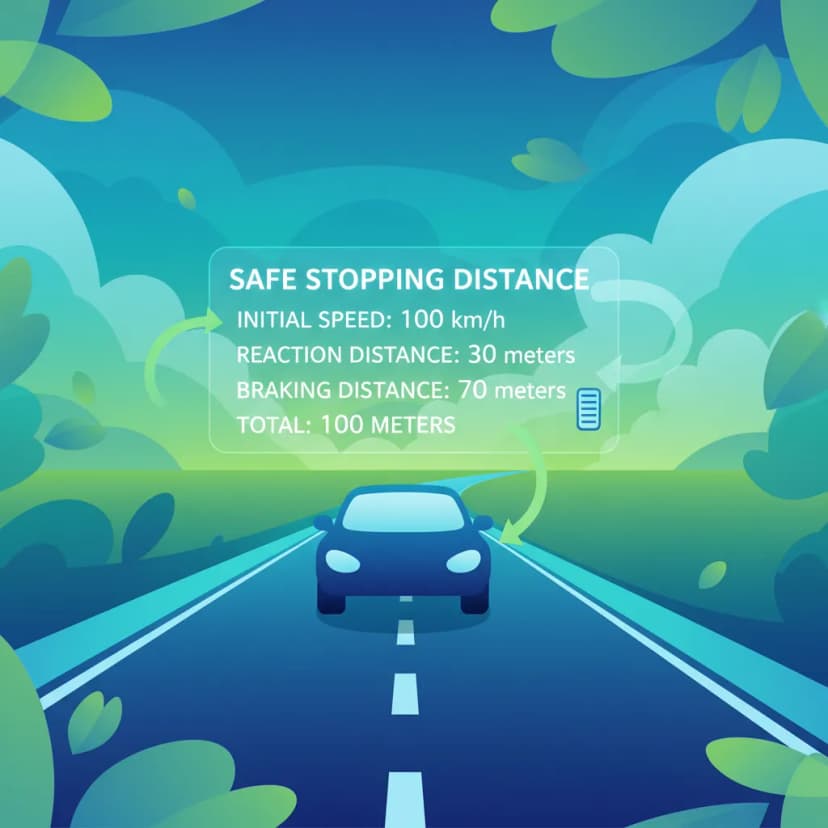
This lesson provides a practical understanding of the physics behind stopping a moped. It breaks down the total stopping distance into two key components: reaction distance (the distance traveled before applying the brakes) and braking distance (the distance covered while braking). Learners will explore how factors like speed, road conditions, and rider alertness dramatically affect these distances.
Explore advanced cornering strategies for mopeds, focusing on selecting the optimal line through turns to improve safety and control. This lesson builds on basic techniques, covering speed adjustment and the dynamics of curves for confident riding. Relevant for AM licence.
This lesson demystifies the art of cornering on a motorcycle. You will learn about the forces at play, such as lean angle and traction, and how to choose the safest and most efficient line through a corner (entry, apex, exit). It also covers how to use your body weight and position to aid the motorcycle's stability and turning ability, enabling you to navigate bends smoothly and with a greater margin of safety, regardless of the road conditions.
This lesson focuses on developing the fine control needed for low-speed maneuvering, a common challenge in urban environments. It covers techniques for making tight turns, such as U-turns, by using a combination of clutch, throttle, and rear brake control. The goal is to build the rider's skill and confidence in handling the moped in parking lots, heavy traffic, and other confined areas.
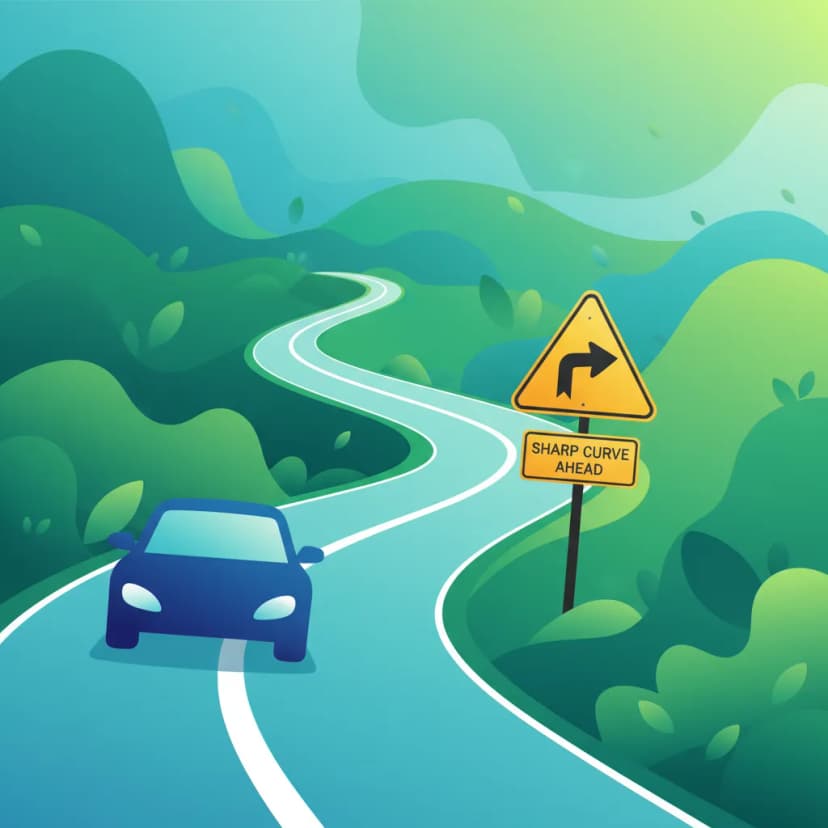
This lesson teaches the correct methodology for negotiating curves and turns of varying sharpness. You will learn the principle of 'slow in, fast out,' involving braking before the curve and gently accelerating through it to maintain stability and grip. The lesson also covers how to choose the correct line (placering) through a bend and how to use your vision effectively to look far ahead for a safe and controlled passage.
This lesson breaks down the three pillars of motorcycle control: balance, throttle, and steering. You will learn how the motorcycle maintains stability at speed and how to control it at low speeds, the art of smooth and precise throttle application, and the essential technique of counter-steering to initiate turns. Understanding how these three inputs work together is the first step toward becoming a smooth, confident, and safe rider who is truly in control of their machine.
This lesson explores the critical relationship between the rider's body and the moped's stability. It explains how to maintain balance using correct posture and weight distribution for different maneuvers. The content covers basic steering inputs and how body positioning, such as leaning into turns, directly influences the vehicle's handling and responsiveness.
This lesson provides clear guidance on selecting the appropriate lane on multi-lane roads to match your intended direction of travel. It covers the rules and best practices for moving into turning lanes, positioning for overtakes, and maintaining a steady course. The focus is on making early, predictable decisions to ensure smooth integration with surrounding traffic.
This lesson teaches the art of smooth throttle control, which is essential for predictable and safe riding. It explains how to apply gradual acceleration to seamlessly merge with traffic and maintain traction, especially on loose or wet surfaces. The goal is to develop a refined feel for the engine's response, allowing for precise speed adjustments in any situation.

This lesson details the technique for performing a quick, decisive swerve to avoid an obstacle in your path. You will learn the correct positive counter-steering inputs required to make the motorcycle change direction rapidly while remaining stable. The lesson also addresses the dangerous phenomenon of 'target fixation' and teaches you to look where you want to go, a critical mental skill for successful evasive maneuvers.
This lesson provides practical instructions for safely navigating different types of intersections and roundabouts. It covers procedures for approaching, entering, and exiting roundabouts, emphasizing the rule to yield to traffic already circulating. The content also addresses how to handle signal-controlled and uncontrolled intersections, ensuring riders select the correct lane and manage their speed appropriately.
This lesson teaches the physical skill of applying maximum braking force while maintaining control of the motorcycle. You will learn the technique of progressive braking to avoid locking the wheels and how to react if a skid does occur. Understanding how to manage both front and rear wheel skids and how an ABS system assists in these situations gives you the best possible chance of stopping safely and quickly in an emergency.
Find clear answers to common questions learners have about Cornering, Skidding, and Counter-Steering. Learn how the lesson is structured, which driving theory objectives it supports, and how it fits into the overall learning path of units and curriculum progression in Sweden. These explanations help you understand key concepts, lesson flow, and exam focused study goals.
Counter-steering is a technique where you briefly push the handlebar in the direction you want to turn. For example, to turn left, you push the left handlebar forward. This causes the moped to lean right, initiating a left turn. It's essential for efficient and stable cornering, especially at higher speeds, and is a key concept for the AM theory test.
A common safe line is to approach the corner from the outside, move to the inside part of your lane through the apex of the turn, and then drift back to the outside as you exit. This maximises your visibility and allows for a smoother, more controlled turn. Always scan ahead for potential hazards.
If you feel a skid, the most important thing is to remain calm and avoid sudden actions. Gently release the brakes and throttle. Try to keep your body position stable and upright. For a rear-wheel skid, you might need to steer slightly in the direction of the skid. For a front-wheel skid, try to straighten the wheels slightly. Correcting a skid often involves minimal, smooth inputs.
Skidding can happen to any two-wheeled vehicle if traction is lost, especially on slippery surfaces like wet roads, gravel, or ice. While mopeds are generally stable, understanding how to anticipate and react to a skid is crucial for safety and is a topic covered in the AM theory exam.
Speed is critical. Entering a corner too fast increases the risk of skidding and losing control. You should reduce your speed *before* the corner, maintain a steady speed through it, and accelerate gently as you exit. Higher speeds require more precise steering and increase the forces that can lead to a loss of traction.