
Embarking on a longer journey with your moped requires extra preparation. This lesson, part of the Swedish Category AM theory course, covers everything from essential vehicle checks and packing to route planning, ensuring you're safe and compliant on extended rides.

Undertaking a road trip or a long-distance ride on your moped can be an exhilarating experience, offering freedom and unique perspectives of Sweden's diverse landscapes. However, extended journeys, typically exceeding 30 kilometres, introduce new challenges and risks compared to shorter, daily commutes. Proper preparation is not just about convenience; it is paramount for your safety, the longevity of your moped, and ensuring full compliance with Swedish traffic laws.
This comprehensive guide, tailored for Category AM moped riders in the Swedish Driving License Theory Course – Category AM (Moped), will walk you through every essential step. We will cover meticulous vehicle checks, strategic route planning to avoid prohibited roads, the crucial items to pack, effective fatigue management techniques, and how to adapt your riding to various environmental conditions. By mastering these preparations, you will be equipped to handle the demands of long-distance moped riding with confidence and safety.
One of the most critical aspects of planning a long moped journey in Sweden is understanding where you are legally permitted to ride. Mopeds, particularly Category AM vehicles, have specific road-type restrictions designed to ensure your safety and that of other road users. These restrictions are stipulated in the Road Traffic Ordinance (RVF) and Trafikverket regulations.
Category AM mopeds are strictly prohibited from using certain high-speed road types. Riding on these roads is not only illegal but also extremely dangerous due to significant speed differentials with other vehicles.
Violating motorway or high-speed road prohibitions for mopeds can result in significant fines and potential penalty points on your driving licence. It also puts you at extreme risk due to the vast speed difference with other vehicles.
Fortunately, a wide network of roads in Sweden is open to moped riders, offering scenic and safe travel options.
When planning your route, it is crucial to verify that every segment of your journey is legally accessible to mopeds. Relying solely on generic navigation apps can lead you onto prohibited roads, as they may not filter for moped-specific restrictions. Always use navigation tools with a "moped-mode" or cross-reference with official Trafikverket maps for road classifications.
For long-distance moped journeys, a routine vehicle inspection (as covered in Lesson 12.4) must be expanded into a comprehensive pre-trip check. This exhaustive inspection ensures your moped is in optimal condition to withstand the increased demands of a longer ride, mitigating the risk of breakdowns far from assistance. Conduct this detailed check about 24 hours before departure, followed by a quick verification on the day of the trip.
Tyre Health: Check both tyre pressure (using a reliable gauge) against the manufacturer's recommendations (often found in the owner's manual or on the moped itself). Inspect tread depth – it must be at least 1.6 mm across the entire tyre. Look for any signs of damage, cracks, bulges, or embedded objects in the tyre walls and tread.
Brake System: Test both front and rear brakes for effective and progressive response. Check brake fluid levels (if hydraulic) and inspect brake pads for wear; replace if they are nearing their minimum thickness. Listen for unusual noises during braking, which could indicate issues.
Lighting & Signalling: Verify that the headlamp (high and low beam), rear light, brake light, and turn signals (front and rear) are all fully functional and clearly visible. Ensure the headlamp is properly aimed. Clean all light lenses for maximum illumination and visibility.
Battery / Fuel: For electric mopeds, ensure the battery is charged to at least 80% and accurately calculate your realistic range, considering terrain and load. For petrol mopeds, start with a full tank and consider your fuel consumption rate to plan refuelling stops.
Suspension & Steering: Test the front and rear suspension by gently pressing down on the moped; it should compress and rebound smoothly without excessive bouncing or strange noises. Check for any free play in the steering by gently rocking the handlebars while holding the front wheel steady.
Chain/Belt Drive (if applicable): Inspect the chain or belt for proper tension and lubrication. Look for any signs of wear or damage.
Fluid Levels (if applicable): Check engine oil and coolant levels according to the manufacturer's guidelines.
For extended moped journeys, self-sufficiency is key. Carrying a well-thought-out set of tools, safety gear, and emergency supplies can be the difference between a minor roadside delay and being stranded far from help. This is where the principle of "redundant safety equipment" comes into play.
Even basic mechanical issues can be resolved with a compact, well-chosen tool kit.
Your personal safety equipment goes beyond what you wear.
The total weight carried on your moped, including you, your gear, and any passenger, must never exceed the manufacturer's Gross Vehicle Weight (GVW) limit. This limit is crucial for maintaining vehicle stability, handling, and braking performance. Most Category AM mopeds have a GVW around 150 kg. Exceeding this limit is illegal and unsafe, as it can overstress the chassis, suspension, and braking system.
When packing, prioritize heavy items to be placed low and as centrally as possible on the moped. Avoid high, rear-biased loads, as these can significantly destabilize the moped, especially during cornering or braking. Use secure panniers or a robust roof-rack with strong tie-down straps to prevent cargo from shifting.
Effective route planning is the backbone of a successful and legal moped road trip. It involves more than just selecting a destination; it's about making informed choices that prioritize safety, compliance, and convenience.
The most critical aspect of route planning is ensuring your chosen path adheres to moped road restrictions.
Longer trips require foresight regarding necessary stops.
Consider the nature of the roads and potential environmental challenges.
Fatigue is a significant factor in road accidents and is especially critical on extended moped trips where sustained concentration is required. Your ability to react quickly and make sound judgments degrades rapidly with increasing fatigue. Proactive fatigue management is essential for a safe journey.
Your journey begins before you even start the engine. Ensure you get a minimum of 7 hours of quality sleep the night before your trip. Avoid alcohol or sedatives, as these can impair your alertness even after sleep. Starting a trip already tired significantly increases your risk.
Structured breaks are not optional; they are a vital safety measure.
While not explicitly legally enforced in Sweden for private moped riders, these break guidelines align with best practices and EU driver fatigue recommendations for all road users. Ignoring them drastically increases accident risk.
Be attuned to your body's signals of fatigue. Common physiological indicators include:
If you experience any of these symptoms, do not push through. Find a safe place to stop immediately. Hydration with water and light, nutritious snacks can help maintain energy levels, but they are not a substitute for proper rest. Exposure to daylight can also help combat drowsiness.
Environmental conditions can dramatically impact riding safety, especially on a lightweight moped. Anticipating and adapting to changes in weather and light is crucial for maintaining control and visibility.
Wet surfaces drastically reduce tire grip.
Snow and ice present the most hazardous riding conditions.
Reduced visibility at night requires extra precautions.
Adhering to specific Swedish regulations is non-negotiable for a safe and lawful moped trip. Ignorance of these rules is not an excuse and can lead to fines, penalty points, or even serious accidents.
Even experienced riders can make mistakes, especially when planning longer trips. Being aware of common pitfalls can help you avoid them.
The rules and recommendations for long-distance moped riding are rooted in fundamental principles of physics and human psychology. Understanding the "why" behind them reinforces their importance.
By diligently following these guidelines, you can transform a potentially risky long-distance moped trip into a safe, enjoyable, and memorable adventure.
By mastering these preparations, you are not just ticking boxes; you are actively ensuring your safety, legal compliance, and the success of your long-distance moped adventures across Sweden.
Lesson content overview
Explore all units and lessons included in this driving theory course.
Explore search topics learners often look for when studying Preparing for Road Trips and Long-Distance Riding. These topics reflect common questions about road rules, driving situations, safety guidance, and lesson level theory preparation for learners in Sweden.
Browse additional driving theory lessons that cover connected traffic rules, road signs, and common driving situations related to this topic. Improve your understanding of how different rules interact across everyday traffic scenarios.
Learn essential strategies for planning longer journeys on your AM category moped in Sweden. This lesson covers route planning to identify permitted roads, thorough vehicle inspections, and what safety items to pack for extended rides.
This lesson teaches the importance of conducting a quick, routine inspection before every ride to ensure the moped is in safe working order. It outlines a simple checklist that includes checking tire pressure (Däck), brake function (Bromsar), and all lights and signals. This proactive habit can prevent mechanical failures that could lead to an accident.
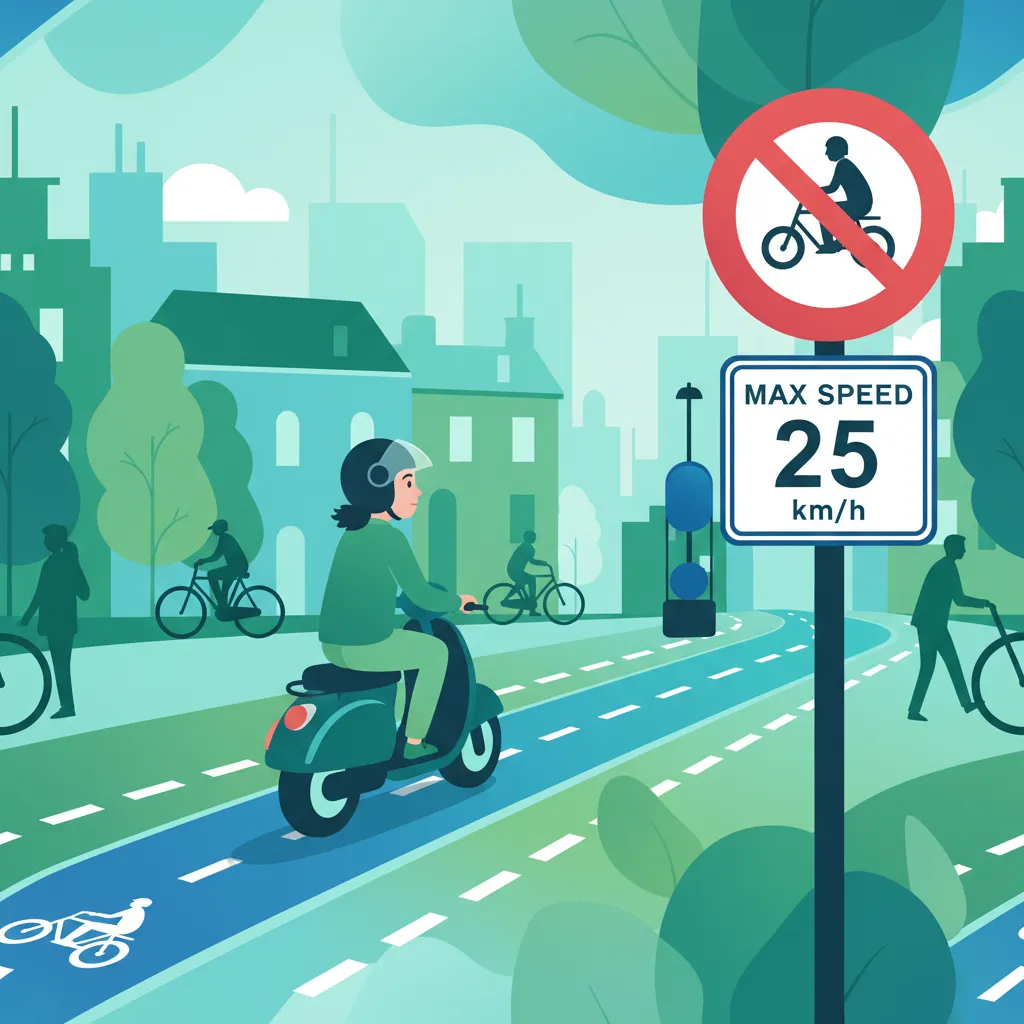
This lesson consolidates the key regulations that apply specifically to moped operation in Sweden. It covers mandatory rules such as speed limits, helmet use, and requirements for vehicle lighting and reflectors. Furthermore, the lesson explains the legal consequences of violations, including the system of fines and potential demerit points, ensuring riders understand their full range of legal responsibilities on the road.

This lesson outlines the essential administrative responsibilities of a moped owner and rider. It covers the legal requirement to have valid third-party liability insurance and to ensure the vehicle is properly registered. The content also reminds riders of the documents they must carry with them at all times, such as their driving license and registration certificate.

This lesson clarifies the precise technical parameters that define a Category AM vehicle under Swedish law, including the maximum 50cc engine displacement and 45 km/h speed limit. It explains how these specifications determine which roads mopeds can legally access, distinguishing between urban streets and prohibited motorways. Learners will also understand the importance of vehicle identification and registration documents for ensuring legal compliance.

This lesson serves as a summary of the legal requirements for safety equipment in Sweden. It reiterates the mandatory helmet law for both the rider and any passenger. It also touches on the rider's responsibility to ensure the moped itself is legally equipped with functioning lights, brakes, and other essential safety features, linking personal gear with vehicle roadworthiness.

This lesson clarifies the regulations for operating a moped on cycle paths (Cykelbana) and other shared spaces in Sweden. It explains which types of mopeds are permitted on these paths and the specific rules that apply, such as lower speed limits and the duty to yield to cyclists. The content focuses on safe interaction and communication to ensure peaceful coexistence with other users in these environments.

This lesson provides practical instructions for safely navigating different types of intersections and roundabouts. It covers procedures for approaching, entering, and exiting roundabouts, emphasizing the rule to yield to traffic already circulating. The content also addresses how to handle signal-controlled and uncontrolled intersections, ensuring riders select the correct lane and manage their speed appropriately.

This lesson moves beyond the mandatory helmet to advocate for comprehensive personal protective gear. It explains the value of abrasion-resistant jackets and pants, often equipped with armor, in preventing road rash and impact injuries. The importance of proper gloves for hand protection and sturdy, over-the-ankle boots for foot and ankle stability is also detailed.

This lesson encourages a mindset of adapting riding style to the specific challenges of each season. It covers seasonal hazards such as wet leaves in the fall, loose gravel after winter, and sun glare in the summer. By being aware of these predictable changes, riders can proactively adjust their technique and maintain safety throughout the year.
This lesson addresses the severe dangers of riding a moped in snow and icy conditions. It explains how to identify potential hazards like black ice and emphasizes that avoiding riding in such conditions is the safest strategy. For situations where it cannot be avoided, it provides advice on extremely gentle control inputs and vehicle preparation.
Understand the critical importance of fatigue management and safety for extended moped rides. This lesson revisits rider endurance, covers essential safety gear, and emphasizes thorough vehicle preparation for safe travel on Swedish roads.

This lesson addresses the often-overlooked danger of rider fatigue, which can impair judgment and reaction time as much as alcohol. It provides strategies for managing fatigue, including maintaining a comfortable and ergonomic riding posture, staying hydrated, and taking frequent breaks on longer journeys. The goal is to ensure the rider remains physically and mentally alert at all times.

This lesson explores the crucial psychological aspects of safe motorcycle riding. You will learn to recognize the signs of fatigue and how it impairs judgment and reaction time, as well as strategies for managing it on long rides. The content also addresses cognitive load and the dangers of distraction, providing techniques to help you maintain the high level of concentration required for safe motorcycling, ensuring your mind is as prepared as your machine.
This lesson teaches the importance of conducting a quick, routine inspection before every ride to ensure the moped is in safe working order. It outlines a simple checklist that includes checking tire pressure (Däck), brake function (Bromsar), and all lights and signals. This proactive habit can prevent mechanical failures that could lead to an accident.
This lesson addresses the severe dangers of riding a moped in snow and icy conditions. It explains how to identify potential hazards like black ice and emphasizes that avoiding riding in such conditions is the safest strategy. For situations where it cannot be avoided, it provides advice on extremely gentle control inputs and vehicle preparation.

This lesson provides practical advice on selecting the appropriate riding gear for the diverse Swedish seasons. You will learn about the importance of layering for warmth in the cold, ventilated gear for summer heat, and effective waterproofs for rain. The content emphasizes how the right equipment not only keeps you comfortable and focused but also provides crucial protection and enhances your visibility to other road users, making it a critical component of overall motorcycle safety.
This lesson details the documents you are legally required to carry with you when riding, such as your license and registration certificate. It provides a comprehensive explanation of the mandatory periodic vehicle inspection (besiktning) process in Sweden, outlining what is checked and why it's important for safety. Finally, it reinforces the habit of performing your own pre-ride checks to ensure your motorcycle is always in a safe, roadworthy condition.
This lesson moves beyond the mandatory helmet to advocate for comprehensive personal protective gear. It explains the value of abrasion-resistant jackets and pants, often equipped with armor, in preventing road rash and impact injuries. The importance of proper gloves for hand protection and sturdy, over-the-ankle boots for foot and ankle stability is also detailed.
This lesson provides a step-by-step guide to motorway riding. You will learn the correct technique for accelerating on an on-ramp and merging smoothly into high-speed traffic. The content also covers maintaining proper lane discipline, executing safe overtakes, keeping a safe following distance at speed, and planning for your exit well in advance to ensure a smooth and stress-free experience on Sweden's fastest roads.

This lesson focuses on the unique demands of managing speed in high-speed environments like motorways. You will learn techniques for maintaining a steady, appropriate speed that matches the flow of traffic, how to perform smooth overtakes, and the importance of increasing your following distance. It also covers physical factors such as managing wind blast and maintaining stability when riding near large trucks, ensuring a safe and controlled high-speed riding experience.
This lesson consolidates the key regulations that apply specifically to moped operation in Sweden. It covers mandatory rules such as speed limits, helmet use, and requirements for vehicle lighting and reflectors. Furthermore, the lesson explains the legal consequences of violations, including the system of fines and potential demerit points, ensuring riders understand their full range of legal responsibilities on the road.
Find clear answers to common questions learners have about Preparing for Road Trips and Long-Distance Riding. Learn how the lesson is structured, which driving theory objectives it supports, and how it fits into the overall learning path of units and curriculum progression in Sweden. These explanations help you understand key concepts, lesson flow, and exam focused study goals.
In Sweden, mopeds (Category AM) are generally prohibited from using motorways (motorväg) and roads with a speed limit of 70 km/h or higher unless specifically indicated otherwise. Always check road signs and your planned route carefully to ensure mopeds are permitted.
Before any long trip, conduct thorough checks. This includes tire pressure and tread depth, brake function (front and rear), lights (headlight, taillight, indicators), horn operation, and fluid levels. Ensure everything is in good working order for safety and reliability.
For a long moped journey, it's wise to carry a basic toolkit. This typically includes a tyre repair kit, a small pump, essential wrenches and screwdrivers for common bolts, and possibly spare fuses. Always check your moped's specific needs.
Managing fatigue is crucial. Plan for regular breaks (every 1-2 hours) to rest, stretch, and rehydrate. Ensure you get adequate sleep the night before, wear comfortable clothing, and be aware of your body's signals. Stop if you feel drowsy.
Yes, it's highly recommended. Weather can change rapidly, especially on longer journeys. Carrying good quality waterproofs, gloves, and boots can prevent you from becoming dangerously cold and wet, which significantly impairs concentration and control.