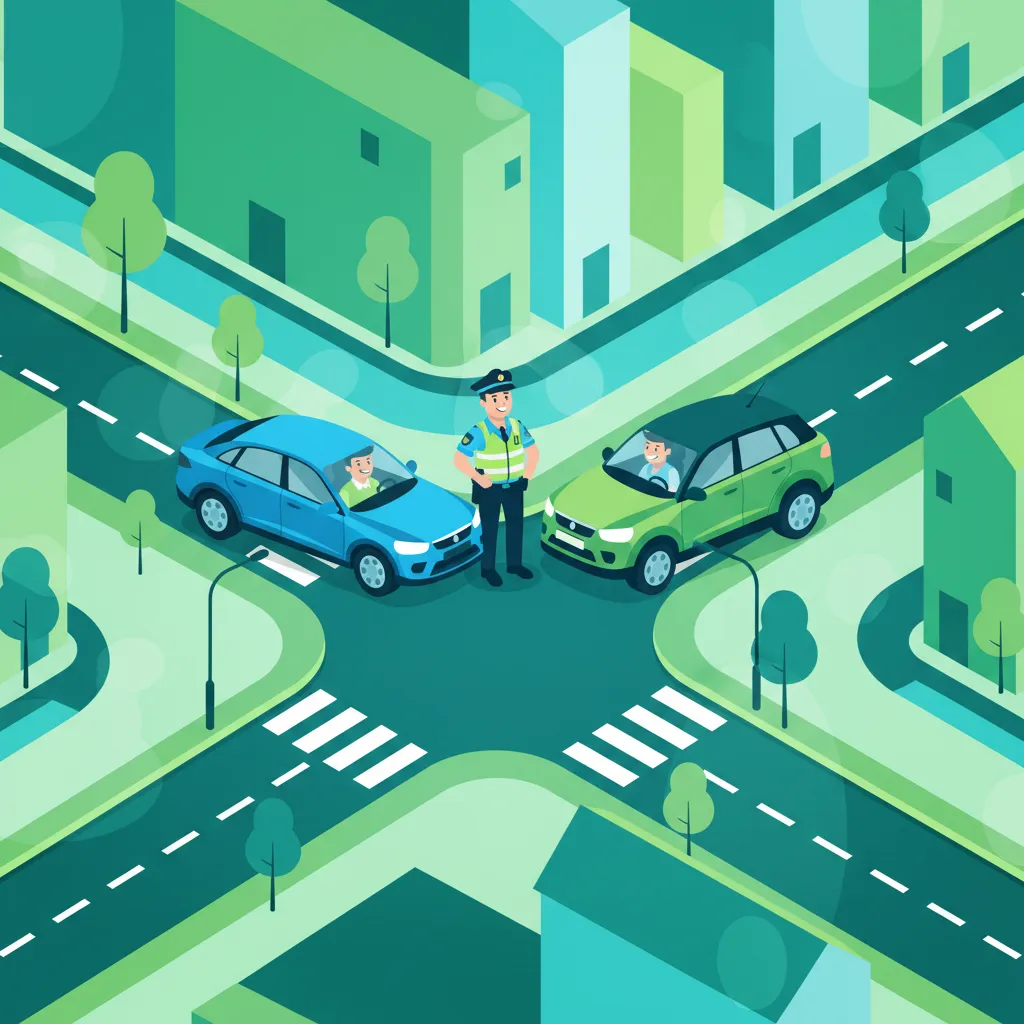
In the event of a traffic accident, knowing how to proceed is crucial for both legal compliance and safety. This lesson details the specific requirements in Sweden for reporting an accident to the police, known as Polisanmälan. Understanding when this is mandatory, and what information is needed, is vital for any moped rider and forms a key part of your AM licence theory preparation.
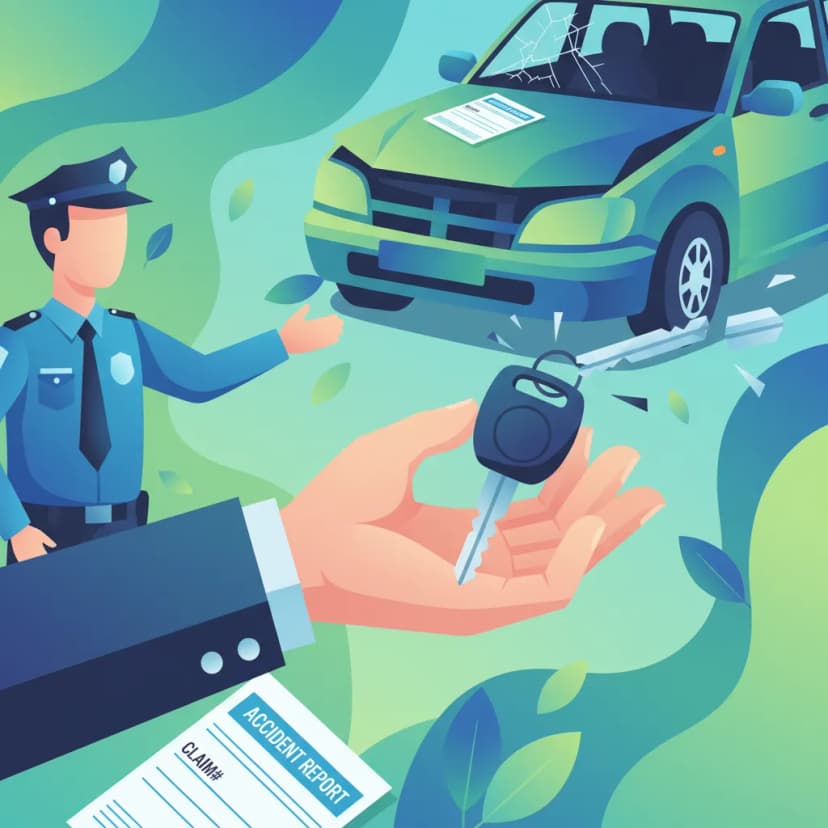
Navigating the aftermath of a traffic accident can be a stressful experience, but understanding your legal obligations in Sweden is crucial for Category AM (moped) riders. This lesson provides a comprehensive guide to reporting accidents to the authorities, a process officially known as a Polisanmälan. It details the situations where a report is mandatory, the information you need to provide, and how these reports integrate with insurance claims. By fulfilling these duties, you protect yourself, other road users, and ensure proper legal and financial resolution.
In Sweden, every road user, including moped riders, has a legal responsibility to report certain traffic accidents to the police. This isn't merely a suggestion but a statutory requirement designed to maintain road safety, ensure accountability, and facilitate fair legal and insurance processes. The rules are primarily laid out in the Swedish Road Traffic Ordinance.
The foundational legislation governing accident reporting in Sweden is the Trafikförordning (1998:26), or the Swedish Road Traffic Ordinance. This ordinance outlines specific conditions under which an accident must be reported to the police. These conditions are not discretionary; if an accident meets any of the defined thresholds, reporting becomes a legal obligation. Familiarity with these regulations is essential for all drivers.
Prompt and accurate accident reporting serves several vital purposes. From a public safety perspective, it allows emergency services to respond quickly, protecting potential victims and preventing secondary accidents. Legally, a police report creates an official, impartial record of the incident, which is fundamental for determining fault, ensuring legal transparency, and upholding traffic laws.
Furthermore, almost all insurance companies require a police report for claims involving significant damage or injury. This documentation helps prevent fraud, validates the circumstances of the accident, and streamlines the compensation process. Failing to report an accident when legally required can lead to serious consequences, including fines, criminal charges, and difficulties with your insurance claim.
The Trafikförordning 1998:26 clearly defines specific criteria that trigger the mandatory reporting of a traffic accident to the police. As a Category AM moped rider, it's your responsibility to quickly assess the situation after a collision to determine if these thresholds are met.
Any traffic accident where a person is injured or killed must be reported to the police immediately. This applies regardless of the severity of the injury; even seemingly minor injuries can have unforeseen complications. This immediate reporting ensures that medical assistance can be dispatched without delay and that an official investigation can commence to understand the causes and consequences.
If you are involved in an accident where anyone is injured or killed, you must call the emergency number 112 immediately. After ensuring initial safety and requesting emergency medical services, you should also contact 114 14 to file a police report.
A police report is mandatory if the total property damage resulting from an accident equals or exceeds SEK 5,000. This threshold applies to damage to any vehicle, infrastructure, or other objects involved in the collision. It is critical for drivers to make a reasonable estimate of the damage at the scene, using visual inspection and photographs.
If you believe the damage might exceed this amount, you are legally obligated to report it. This rule helps manage the financial and legal aspects of more substantial accidents, ensuring that compensation processes are properly initiated.
If any vehicle involved in the accident, including your moped, becomes immobilised and cannot be moved without external assistance, you must notify the police. This is crucial for preventing further traffic obstructions and reducing the risk of secondary collisions. Whether your moped is stuck in a ditch, unable to start, or too damaged to be safely driven, police involvement is required.
Leaving the scene of an accident without providing your identification and contact details to the other involved parties or reporting to the police is a serious criminal offense known as hit-and-run. If you are involved in a collision and the other party flees, or if you accidentally cause damage to unattended property (like a parked car) and cannot locate the owner, you must report the incident to the police immediately. Your duty is to inform the authorities, even if you are the victim or if the damage appears minor.
Any accident involving a vulnerable road user such as a pedestrian, cyclist, or another motorcyclist, must be reported to the police regardless of the perceived damage amount or severity of injury. This provision reflects the legal system's priority to protect road users who are most at risk of severe injury in a collision. Even a minor bump with a cyclist or pedestrian that seems harmless should be reported to ensure their well-being and proper legal documentation.
Knowing when to report is only half the battle; understanding how to make a Polisanmälan correctly is equally important. The procedure involves immediate actions at the scene, gathering precise information, and contacting the appropriate authorities.
After ensuring your own safety and that of others (as covered in Lesson 12.1 – Immediate Actions After a Collision), your immediate priorities involve securing the scene and preserving evidence. This helps prevent further incidents and provides critical information for the police and your insurance company.
Stop Safely: Pull over to the side of the road if possible and safe to do so.
Activate Hazard Warning Lights: Turn on your moped's hazard lights (varningsblinkers) to alert other traffic.
Assess Injuries: Check yourself and anyone else involved for injuries. If serious injuries are present, call 112 immediately.
Place Warning Triangle: Position a warning triangle at least 50 meters behind your moped on open roads, or 30 meters in urban areas, to provide ample warning to approaching traffic.
Do Not Move Vehicles (Unless Necessary): Try to leave vehicles in their post-collision positions to preserve the scene for police investigation, unless they pose an immediate and severe danger to traffic.
While waiting for the police or preparing to make your report, diligently collect as much information as possible. This data forms the backbone of the Polisanmälan and is vital for accurate accident reconstruction and subsequent insurance claims.
Carry a small notebook and pen, or use a reliable note-taking app on your phone to record details at the scene. This can be invaluable during a stressful situation.
You should aim to collect the following:
personal identity number (personnummer), and driver's licence number. Obtain the same details from any other drivers or parties involved.Choosing the correct police number is crucial for timely and appropriate response.
112 if there are:
114 14. This is the national police non-emergency line where you can file your Polisanmälan.Always have these numbers saved in your phone or readily available. In stressful situations, quick access can make a significant difference.
The timeliness of your report is critical. For accidents involving injury or death, police must be notified immediately via 112. For non-injury accidents that meet the mandatory reporting thresholds, you should notify police as soon as safely possible, but no later than 24 hours after the incident. Delays can invalidate the report, complicate investigations, and potentially lead to increased penalties or issues with insurance.
A police report is often a primary document for insurance companies when processing a claim after an accident. It establishes an official record that helps insurers determine liability and validate the circumstances of the incident.
Under the Swedish Insurance Contracts Act (Försäkringsavtalslagen) §12, policyholders have a duty of disclosure. This means you must provide your insurer with all material facts related to the accident, including details of any police report filed. Insurers will typically require the Police Report Number and may ask for a copy of the report itself. This ensures alignment between the legal and financial processes, preventing duplicate efforts and ensuring transparency.
Any discrepancies between your personal statement to the insurer and the official police report can lead to significant problems. Such inconsistencies might trigger a fraud investigation, delay your claim, or even result in outright claim denial. It is therefore paramount to be consistent and truthful in all your reports, both to the police and your insurance company. Keep copies of all documentation, including the police report number, for your records.
Beyond initial safety, evidence preservation and effective scene management are crucial for accurate accident reconstruction and liability assessment. These actions complement your legal duty to report by providing objective facts.
As soon as an accident occurs and you have stopped safely, you must activate your moped's hazard warning lights (often a single button that flashes all turn signals). This immediately alerts other drivers to a potential hazard. Following this, you must place a warning triangle on the road.
The warning triangle should be placed at least 50 metres behind your vehicle on open roads, or 30 metres in built-up areas. This provides approaching traffic with sufficient time to react and maneuver safely around the scene, significantly reducing the risk of secondary collisions, especially in poor visibility.
Thorough documentation of the accident scene is invaluable. Use your phone or a camera to take numerous photographs from multiple angles. Capture:
Combine these photographs with your written notes on specific details like time, exact location, and witness observations. This comprehensive evidence package will greatly assist both the police investigation and your insurance claim.
Failing to report a traffic accident that meets the mandatory thresholds in Sweden can lead to severe consequences, impacting you legally, financially, and even criminally.
The legal duty to report is enforced by law. If you fail to file a Polisanmälan for an accident that should have been reported, you could face:
It is always safer and legally advisable to err on the side of caution and report any accident that might approach the mandatory thresholds.
The general rules for accident reporting remain constant, but specific contextual variations can influence how you manage the scene and communicate with authorities. Being aware of these factors helps you respond effectively in diverse situations.
In conditions like heavy rain, snow, fog, or darkness, the risk of secondary collisions significantly increases. During such times, activating hazard warning lights and placing a warning triangle becomes even more critical for visibility. Police response times might also be longer, so meticulous scene preservation is paramount until they arrive. You may need to take extra steps to document the scene quickly before evidence is washed away or obscured.
warning triangle distance increases to 50 meters to give drivers more time to react. Police may take longer to arrive due to greater distances, so your diligence in evidence preservation and scene management is even more vital.SEK 5,000 threshold, triggering mandatory reporting.Understanding the precise terminology used in Sweden regarding traffic accidents is crucial for clear communication with authorities and insurers.
Mastering the rules around accident reporting is a fundamental part of preparing for your Swedish Category AM (Moped) driving license theory course. It ensures you are not only a safe rider but also a responsible one, capable of handling unforeseen incidents with confidence and legal compliance.
Lesson content overview
Explore all units and lessons included in this driving theory course.
Explore search topics learners often look for when studying Reporting Accidents to Authorities (Polisanmälan). These topics reflect common questions about road rules, driving situations, safety guidance, and lesson level theory preparation for learners in Sweden.
Browse additional driving theory lessons that cover connected traffic rules, road signs, and common driving situations related to this topic. Improve your understanding of how different rules interact across everyday traffic scenarios.
Understand your legal obligations in Sweden regarding reporting traffic accidents to the authorities. This lesson details when a Polisanmälan is mandatory, covering situations with injuries or significant damage, and outlines the information required for official reports and insurance purposes.
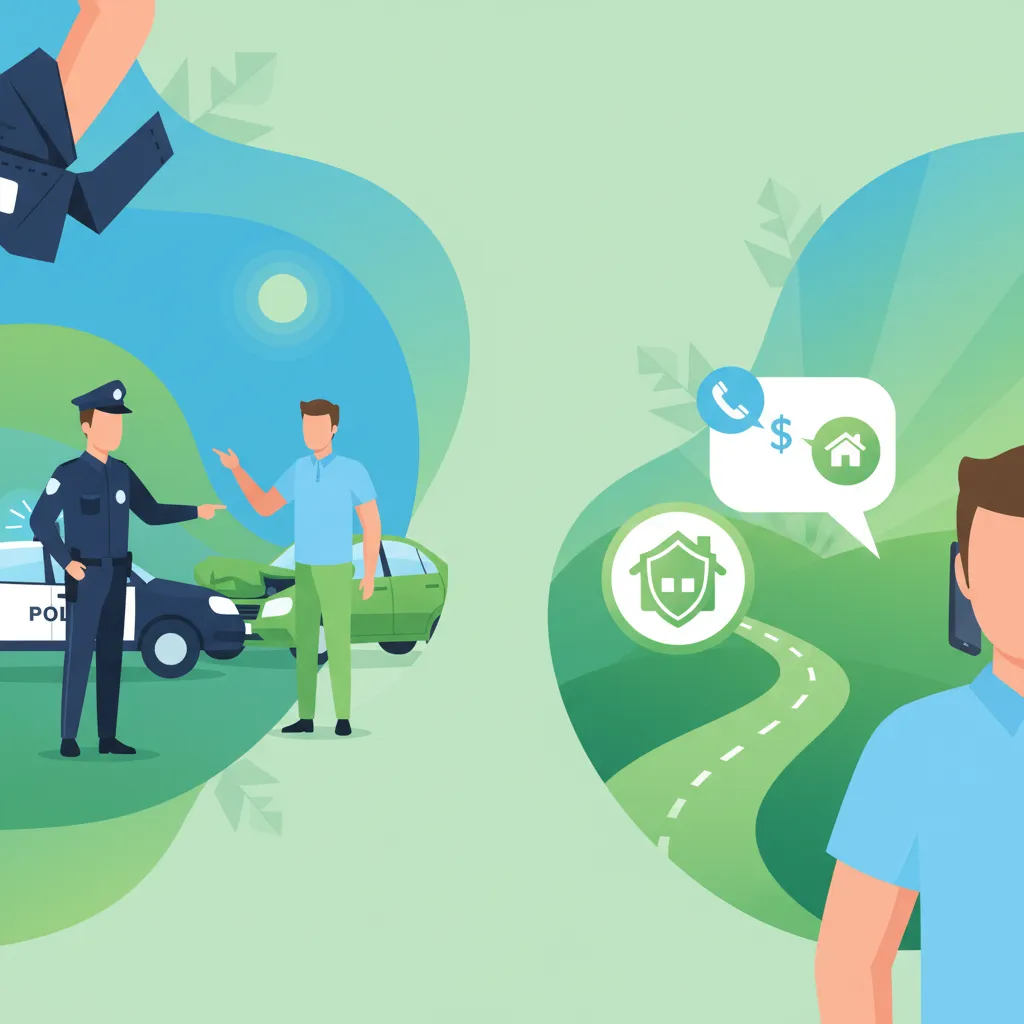
This lesson covers the administrative and legal obligations following a collision. You will learn under which circumstances you are legally required to notify the police, such as when there are injuries or significant property damage. The content details the essential information that must be exchanged between all involved parties—names, contact details, vehicle registration, and insurance information—and the importance of documenting the scene and gathering witness details for insurance claims.
This lesson details the procedural and legal steps for reporting an accident. You will learn when you are legally obligated to report a crash to the police, what information to exchange with other involved parties, and the importance of documenting the scene with photographs and witness details. This information is vital for ensuring any subsequent insurance claims and legal proceedings are handled smoothly and fairly.
This lesson outlines the immediate, high-priority actions required at an accident scene. You will learn the 'stop, survey, secure' sequence: first, stopping and assessing the situation; second, warning other traffic by using hazard lights and placing a warning triangle; and third, taking steps to prevent further danger, such as switching off ignitions. These initial actions are crucial for the safety of everyone involved and for those approaching the scene.
This lesson provides a clear, step-by-step guide for what to do in the immediate aftermath of a collision. It prioritizes safety by explaining how to secure the scene to prevent further incidents. The content covers the importance of checking for injuries, calling for emergency help if needed, and remaining calm while fulfilling initial legal obligations.
This lesson provides an overview of traffic law enforcement in Sweden, explaining the roles of the police and other authorities. You will learn about the system of penalties for common traffic violations, including the scale of fines (böter) and the conditions under which your license may be suspended. Understanding the legal consequences of unsafe or unlawful riding provides a powerful incentive to always adhere to the rules of the road.
This lesson covers the basics of providing first aid in an emergency, which is a legal duty for anyone arriving at an accident scene. You will be introduced to the L-ABCDE mnemonic (Life-threatening situation, Airway, Breathing, Circulation, Disability, Exposure) as a way to systematically assess and prioritize injuries. The content emphasizes that the most important role is often to ensure the person is breathing and to follow the instructions of the emergency operator until professional help arrives.
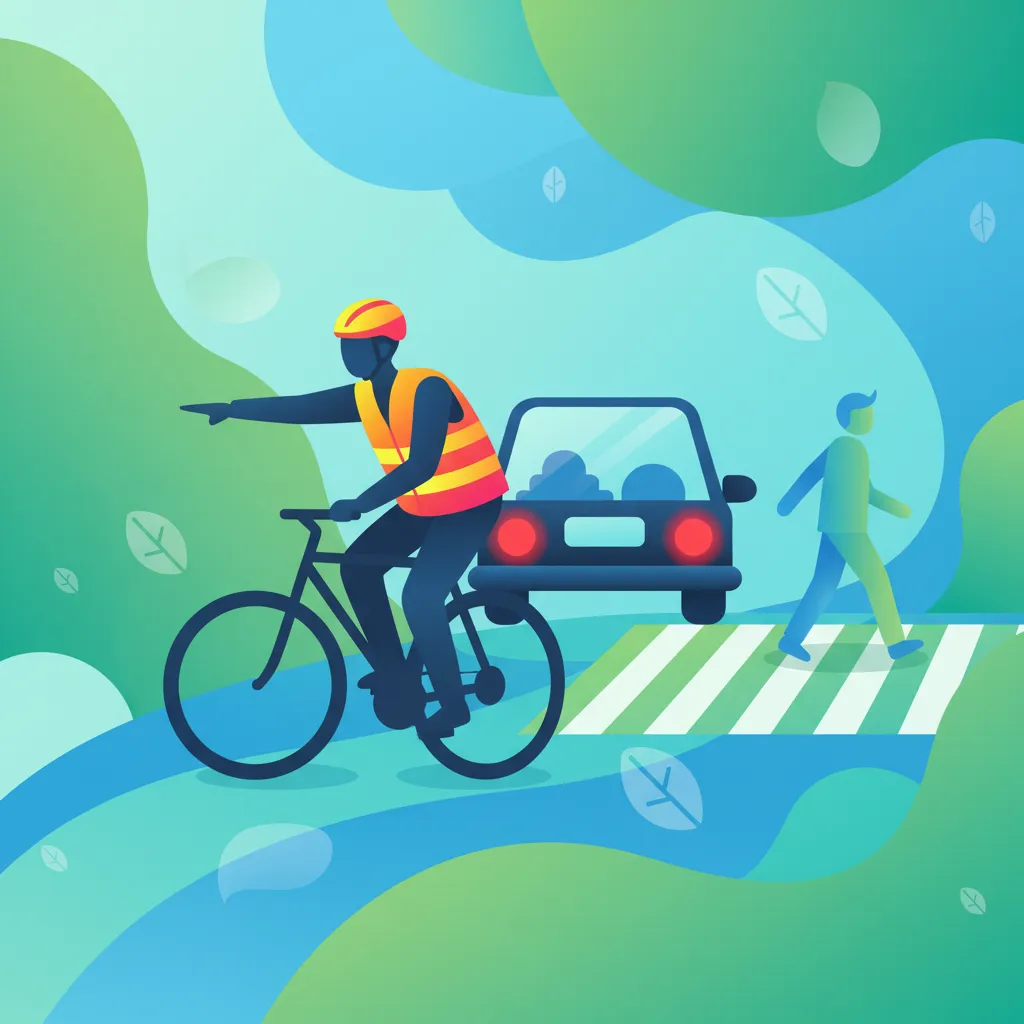
This lesson teaches you how to make an accident scene as safe as possible for yourself, any other involved parties, and approaching traffic. You will learn the correct use of hazard lights, the placement of warning triangles, and the importance of wearing a high-visibility vest. The content also covers how to identify and manage immediate post-crash hazards, such as spilled fuel or unstable vehicles, to prevent the situation from worsening.
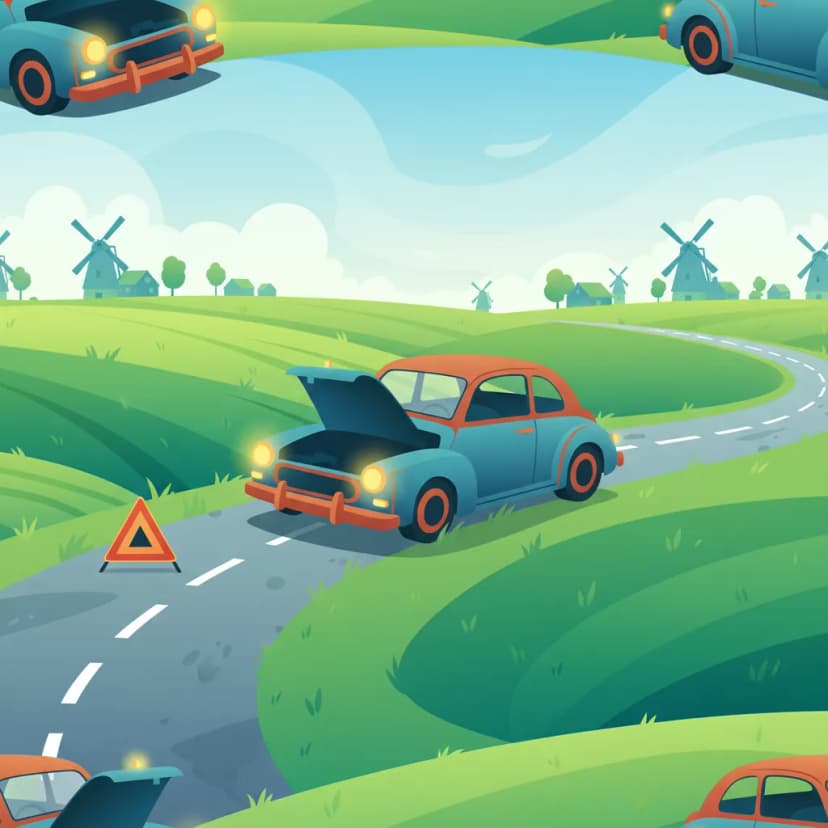
This lesson focuses on the correct use of warning devices to protect an accident or breakdown scene. You will learn to immediately activate your hazard lights (varningsblinkers). The main focus is on the proper placement of the warning triangle, explaining how the distance from the vehicle must be adapted based on the road's speed limit and visibility to give oncoming drivers adequate time to react.
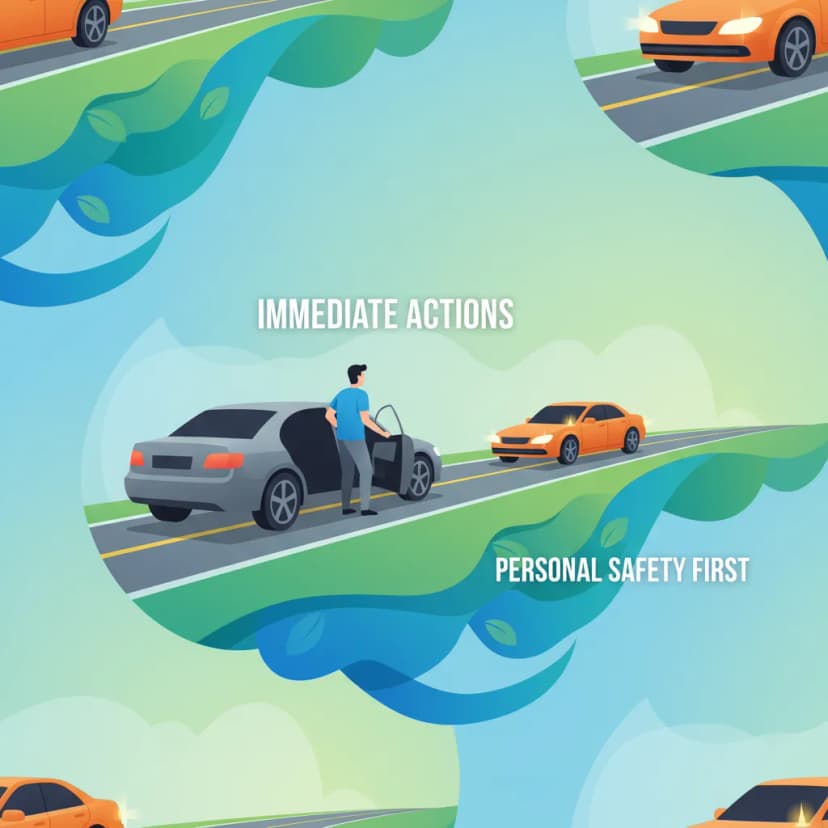
This lesson outlines the absolute first priorities after a crash, with the primary rule being to ensure your own safety and avoid further harm. You will learn how to conduct a quick self-assessment for injuries, the importance of moving out of the line of traffic if possible, and how to begin assessing the scene for immediate dangers like fuel leaks or oncoming vehicles. These initial actions are vital for managing the immediate aftermath of an incident.
Learn the complete procedure for responding to traffic accidents in Sweden. This covers immediate actions, legal requirements for police reports (Polisanmälan), and essential first-aid knowledge, preparing you for handling emergencies and fulfilling your duties as a driver.
This lesson covers the administrative and legal obligations following a collision. You will learn under which circumstances you are legally required to notify the police, such as when there are injuries or significant property damage. The content details the essential information that must be exchanged between all involved parties—names, contact details, vehicle registration, and insurance information—and the importance of documenting the scene and gathering witness details for insurance claims.
This lesson provides a clear, step-by-step guide for what to do in the immediate aftermath of a collision. It prioritizes safety by explaining how to secure the scene to prevent further incidents. The content covers the importance of checking for injuries, calling for emergency help if needed, and remaining calm while fulfilling initial legal obligations.
This lesson outlines the immediate, high-priority actions required at an accident scene. You will learn the 'stop, survey, secure' sequence: first, stopping and assessing the situation; second, warning other traffic by using hazard lights and placing a warning triangle; and third, taking steps to prevent further danger, such as switching off ignitions. These initial actions are crucial for the safety of everyone involved and for those approaching the scene.
This lesson details the procedural and legal steps for reporting an accident. You will learn when you are legally obligated to report a crash to the police, what information to exchange with other involved parties, and the importance of documenting the scene with photographs and witness details. This information is vital for ensuring any subsequent insurance claims and legal proceedings are handled smoothly and fairly.
This lesson outlines the absolute first priorities after a crash, with the primary rule being to ensure your own safety and avoid further harm. You will learn how to conduct a quick self-assessment for injuries, the importance of moving out of the line of traffic if possible, and how to begin assessing the scene for immediate dangers like fuel leaks or oncoming vehicles. These initial actions are vital for managing the immediate aftermath of an incident.
Find clear answers to common questions learners have about Reporting Accidents to Authorities (Polisanmälan). Learn how the lesson is structured, which driving theory objectives it supports, and how it fits into the overall learning path of units and curriculum progression in Sweden. These explanations help you understand key concepts, lesson flow, and exam focused study goals.
Polisanmälan is the official term for reporting a traffic accident to the Swedish police. For moped riders, it's legally required in specific situations, mainly when there are injuries, fatalities, or significant damage to vehicles or property. It ensures proper investigation and documentation.
You are legally required to report a moped accident to the police if there are any injuries or fatalities, or if the damage to vehicles or property is significant enough that it may exceed a certain value, typically a few thousand Swedish kronor. If in doubt, it is always better to err on the side of caution and contact the police.
When reporting an accident, you will typically need to provide your personal details, details of any other parties involved, information about the vehicles, a description of how the accident occurred, and details of any injuries or damage. Having your licence and insurance documents ready is also advisable.
If the damage is minor and only affects your moped without involving other parties or causing obstruction, and there are no injuries, you may not be legally required to file a Polisanmälan. However, if the damage is substantial or impedes traffic, reporting is recommended. Always check the specific regulations.
Filing a Polisanmälan is often a prerequisite for processing insurance claims, especially for significant damage or injuries. The police report provides an official record of the incident, which your insurance company will likely require to assess and settle your claim.