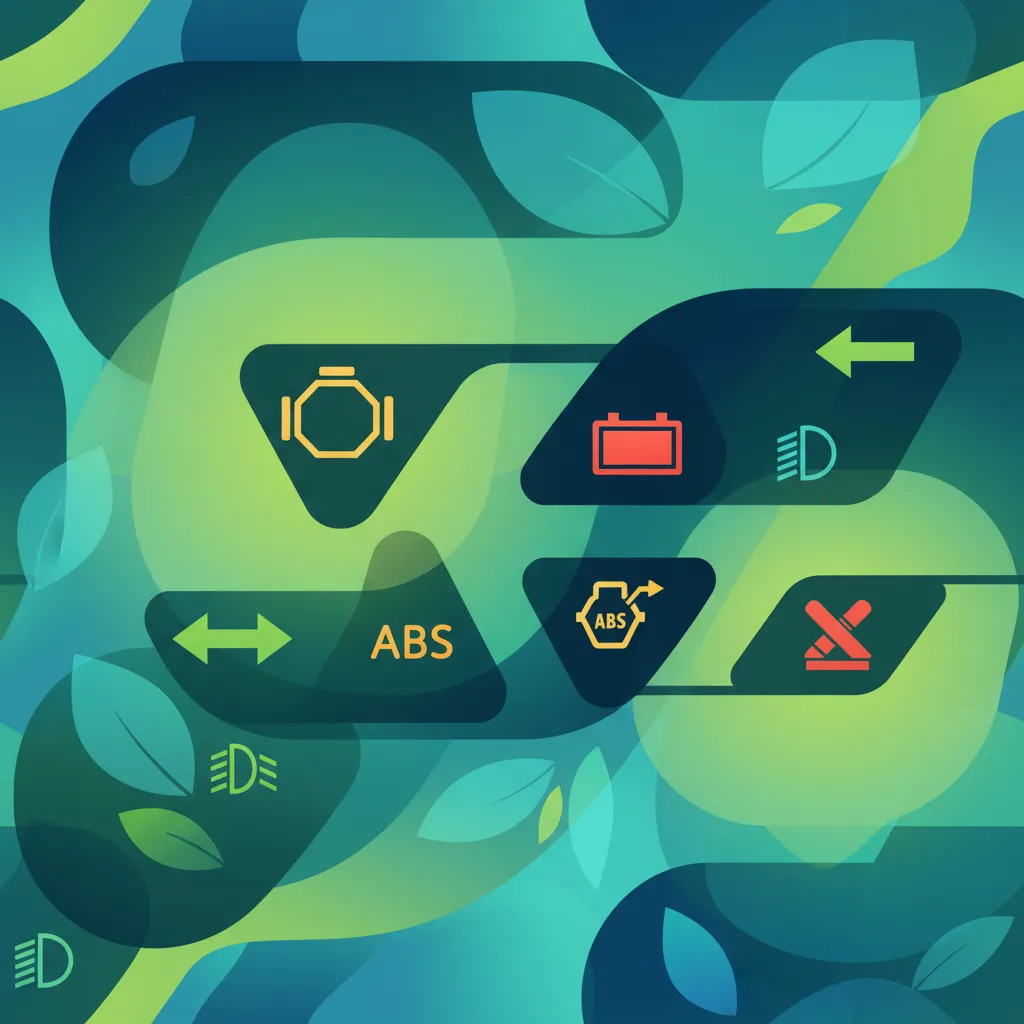
Your car speaks to you through its dashboard. This lesson decodes the language of warning lights and indicator symbols, covering everything you need to know for your Swedish Category B driving theory test. Understanding these signals is vital for addressing potential issues before they become dangerous.
As a driver in Sweden, mastering the language of your vehicle's dashboard is fundamental to safe and responsible driving. The instrument panel is your car's primary interface for communicating its operational status and any potential issues in real-time. This lesson, part of the Swedish Driving License Theory Course for Category B Cars, will guide you through the meanings of the most common warning lights and indicators, emphasizing the urgency conveyed by their colors and the actions required from you.
Knowing how to interpret these symbols is crucial. It enables you to address mechanical problems before they escalate into serious safety hazards or cause significant vehicle damage. Prompt and correct reactions can prevent accidents, ensure your vehicle remains roadworthy, and help you comply with the legal obligations outlined in the Swedish Traffic Ordinance (Trafikförordning).
The color of a dashboard light provides an immediate clue about the severity and nature of the message. This color-coded system is designed for instant recognition, aligning with common traffic signal conventions where red signifies danger, yellow/amber indicates caution, and green or blue provides information.
A system where the color of a dashboard warning light (red, amber, green/blue) indicates the urgency and severity of the vehicle's status message.
Red warning lights signal a critical condition that makes continued driving unsafe. When a red light illuminates, it indicates a serious malfunction that could lead to immediate mechanical failure, loss of vehicle control, or significant safety risks. Your immediate action is required to prevent an accident or severe damage.
If a red warning light appears while driving, you must stop the vehicle safely and immediately. Continuing to drive with a critical fault is illegal under Swedish Traffic Ordinance (§23 Trafikförordning) and extremely dangerous.
The red brake system warning light, often depicted as an exclamation mark inside a circle or the word "BRAKE", indicates a severe problem with your car's braking system. This could mean critically low brake fluid, a malfunctioning anti-lock braking system (ABS) component in some models, or an engaged parking brake (which should turn off once released). Loss of hydraulic pressure is a particularly dangerous scenario.
If this light illuminates while driving, your braking capability might be severely compromised. You must pull over to a safe spot, engage the handbrake, turn off the engine, and contact roadside assistance or a qualified mechanic. Do not attempt to drive further.
A red engine or "Check Engine" light, or a red oil can symbol, signifies a critical engine or lubrication system failure. The oil pressure warning specifically indicates insufficient oil pressure, which can rapidly lead to catastrophic engine damage if ignored.
If the red engine light indicates a severe fault, such as a major misfire or significant power loss, or if the red oil pressure light illuminates, you must stop driving immediately. Continuing could cause irreparable harm to the engine, which is one of the most expensive components of your vehicle.
A red airbag system fault light, often displaying an icon of a seated person with an airbag deployed, indicates a malfunction in the supplementary restraint system. If this light is on, the airbags may not deploy in a collision, or they could deploy unexpectedly. This compromises a key safety feature of your vehicle.
While not requiring an immediate stop in the same way as a brake fault, a red airbag warning means the vehicle should not be driven until repaired, as its primary safety system for occupants is compromised. Additionally, a red seatbelt reminder often illuminates if a seatbelt is not fastened while the vehicle is in motion, serving as a critical safety alert.
A red battery symbol light indicates a critical issue with the vehicle's charging system, usually a failure of the alternator. While the engine may continue to run for a short period on battery power, the battery will eventually deplete, leading to a complete loss of electrical systems, including power steering and braking assistance.
This is a critical situation because power loss can occur suddenly, especially at night or in demanding conditions. You must stop at the earliest safe opportunity to avoid becoming stranded or losing essential driving aids.
Amber or yellow warning lights indicate a fault or condition that requires attention but does not immediately endanger vehicle control. While not as urgent as red warnings, these signals should not be ignored. They often point to issues that can worsen over time, affect vehicle performance, increase fuel consumption, or lead to more serious (and red-light-triggering) problems if left unaddressed.
When an amber warning light illuminates, reduce your speed, avoid heavy loads, and schedule service or inspection promptly, ideally within the next few days.
The amber "Check Engine" light, also known as the Malfunction Indicator Lamp (MIL), is one of the most common warning lights. It indicates that the Engine Control Unit (ECU) has detected a malfunction in the engine or emissions system. This could range from a loose fuel cap to a more serious issue like a failing catalytic converter or a sensor malfunction.
While the car may seem to drive normally, a persistent amber check engine light suggests that the vehicle is not operating optimally, potentially leading to increased emissions or reduced fuel efficiency. It's important to have the vehicle diagnosed by a professional to retrieve the Diagnostic Trouble Code (DTC) and identify the specific problem.
The Tire Pressure Monitoring System (TPMS) warning light, depicted as an exclamation mark inside a tire silhouette, illuminates when one or more tires have significantly low pressure. Maintaining correct tire pressure is vital for safety, fuel economy, and tire longevity.
Low tire pressure can affect handling, increase the risk of a blowout, and lead to uneven tire wear. When this light appears, you should check your tire pressures at the next safe opportunity and inflate them to the manufacturer's recommended levels.
Amber warning lights for Electronic Stability Program (ESP), Electronic Stability Control (ESC), or Anti-lock Braking System (ABS) indicate a fault or deactivation of these sophisticated safety systems. The ESP/ESC light often shows a car with squiggly lines behind it, while the ABS light shows "ABS" inside a circle.
If the ABS light is on, your brakes will still function, but the anti-lock feature will not be active, meaning wheels could lock up during hard braking. If the ESP/ESC light illuminates, the system that helps prevent skidding and loss of control is either malfunctioning or has been manually deactivated. While the vehicle can still be driven, its dynamic safety features are reduced, requiring more cautious driving, especially in challenging conditions.
An amber coolant temperature warning (thermometer symbol) signals that the engine's coolant is either too hot or too low. Overheating can cause severe engine damage. Other amber advisories might include low fuel, a problem with the power steering system (amber steering wheel icon), or an issue with exterior lighting.
These lights require timely investigation. For a coolant warning, it might be safe to drive a short distance at reduced speed to a service station, but monitoring the temperature gauge closely is essential. For other advisories, consult your vehicle's manual and arrange for inspection.
In some modern vehicles, the battery light might illuminate in amber to indicate a less critical, but still important, issue with the charging system, such as a minor voltage irregularity rather than a complete alternator failure. While you might not experience immediate power loss, it's a sign that the system needs to be checked before it deteriorates into a red-light critical failure.
Green and blue lights are purely informational. They do not indicate a fault but rather confirm that a specific system or feature of your vehicle is active. These lights keep you aware of your car's operational status without requiring any immediate corrective action regarding a malfunction.
Adhering to dashboard warnings is not just about vehicle longevity; it's a legal requirement under Swedish traffic law (Trafikförordning). Drivers are responsible for ensuring their vehicle is in a safe and roadworthy condition.
The Swedish Traffic Ordinance, specifically Chapter 5, §23, states that a vehicle must not be driven if it has a fault that endangers safety. This legal provision directly applies to red warning lights. If a red light indicates a critical system failure (e.g., brake system, severe engine fault), you are legally obliged to stop driving the vehicle immediately. Failure to comply can lead to severe penalties, including fines or even the loss of your driving license, in addition to the obvious safety risks.
Hazard warning lights (amber, flashing simultaneously) are used to signal to other road users that your vehicle is a temporary obstacle or presents a danger. According to Trafikförordning §6 (1), hazard lights may be used when your vehicle is stopped on the road and presents a danger to traffic.
It is prohibited to use hazard lights while driving unless the vehicle is stopped on the road for safety reasons. Misusing hazard lights while moving can confuse other drivers, who might misinterpret your intentions or assume your vehicle is stationary, increasing the risk of a collision.
The use of fog lights is specifically regulated to prevent glare and ensure road safety. According to Trafikförordning 1990:73, §5, rear fog lights (which illuminate with a red indicator) are permitted only when visibility is reduced to 50 meters or less. This often occurs in dense fog, heavy snow, or torrential rain.
Using rear fog lights in clear conditions, or when visibility is above 50 meters, creates unnecessary glare for following drivers, causing discomfort and potentially obscuring your brake lights. Always switch off your rear fog lights as soon as visibility improves.
While turn signal indicators (green flashing arrows) are informational, their correct and timely use is a mandatory legal requirement under Trafikförordning §4. You must activate your turn signals at least three seconds before making a turn or changing lanes. This provides sufficient warning to other road users, allowing them to anticipate your maneuver and react safely. Failing to signal, or signaling too late, is a common violation that contributes to accidents.
Ignoring or misunderstanding dashboard warnings can have serious consequences. Here are some common violations and misinterpretations:
The meaning and urgency of dashboard warnings can sometimes be influenced by external conditions or the vehicle's state.
Understanding the theory is one thing; applying it in a real driving situation is another. Here are some examples:
You are driving a Category B car downhill on a rural road in Sweden, with light rain. Suddenly, the red brake system warning light (exclamation mark in a circle) illuminates.
Correct Behavior: You calmly reduce throttle, engage engine braking by downshifting (if applicable), and gently pull over to the nearest safe spot on the shoulder. You activate your hazard lights and then contact roadside assistance or a mechanic, explaining the critical brake warning. You do not attempt to drive further.
Incorrect Behavior: You ignore the warning, thinking you can make it to the next town. As you continue downhill, the brakes weaken further (brake fade), leading to a complete loss of braking ability. The vehicle gains speed, you lose control, and collide with a roadside barrier.
While stopped at a traffic light in the city center on a clear day, the amber TPMS warning light (exclamation mark inside a tire) appears.
Correct Behavior: You acknowledge the warning. After the light turns green and you have safely cleared the intersection, you look for the nearest service station or a safe place to pull over. You then manually check all tire pressures and inflate any low tires to the manufacturer's specification.
Incorrect Behavior: You dismiss the light as minor, assuming it's a false alarm or a temporary issue due to cold weather. You continue your journey for several kilometers, during which the low pressure causes the tire to overheat and eventually blow out while you are navigating a busy roundabout, leading to a dangerous situation for yourself and others.
You are driving on a bright, sunny Swedish motorway with excellent visibility. You notice the red rear fog light indicator on your dashboard is illuminated.
Correct Behavior: You immediately recognize this as incorrect usage, as visibility is clearly greater than 50 meters. You switch off your rear fog lights.
Incorrect Behavior: You either fail to notice the indicator or leave the rear fog lights on, believing they make you more visible. A following driver, experiencing severe glare from your unnecessary rear fog lights, misjudges the distance and speed, leading to an increased risk of a rear-end collision.
The dashboard is more than just a cluster of lights; it's your car's communication system, providing vital feedback about its operational health. Understanding these signals is paramount for several reasons:
The ability to quickly and accurately interpret dashboard warnings and indicator lights is a non-negotiable skill for any driver. It reflects your attentiveness, responsibility, and commitment to safety on the road.
Lesson content overview
Explore all units and lessons included in this driving theory course.
Explore search topics learners often look for when studying Dashboard Warnings and Indicator Lights. These topics reflect common questions about road rules, driving situations, safety guidance, and lesson level theory preparation for learners in Sweden.
Browse additional driving theory lessons that cover connected traffic rules, road signs, and common driving situations related to this topic. Improve your understanding of how different rules interact across everyday traffic scenarios.
Learn the critical meanings behind red, yellow, and other indicator lights on your car's dashboard. Understand what each symbol signifies for immediate safety and necessary vehicle maintenance according to Swedish traffic rules.
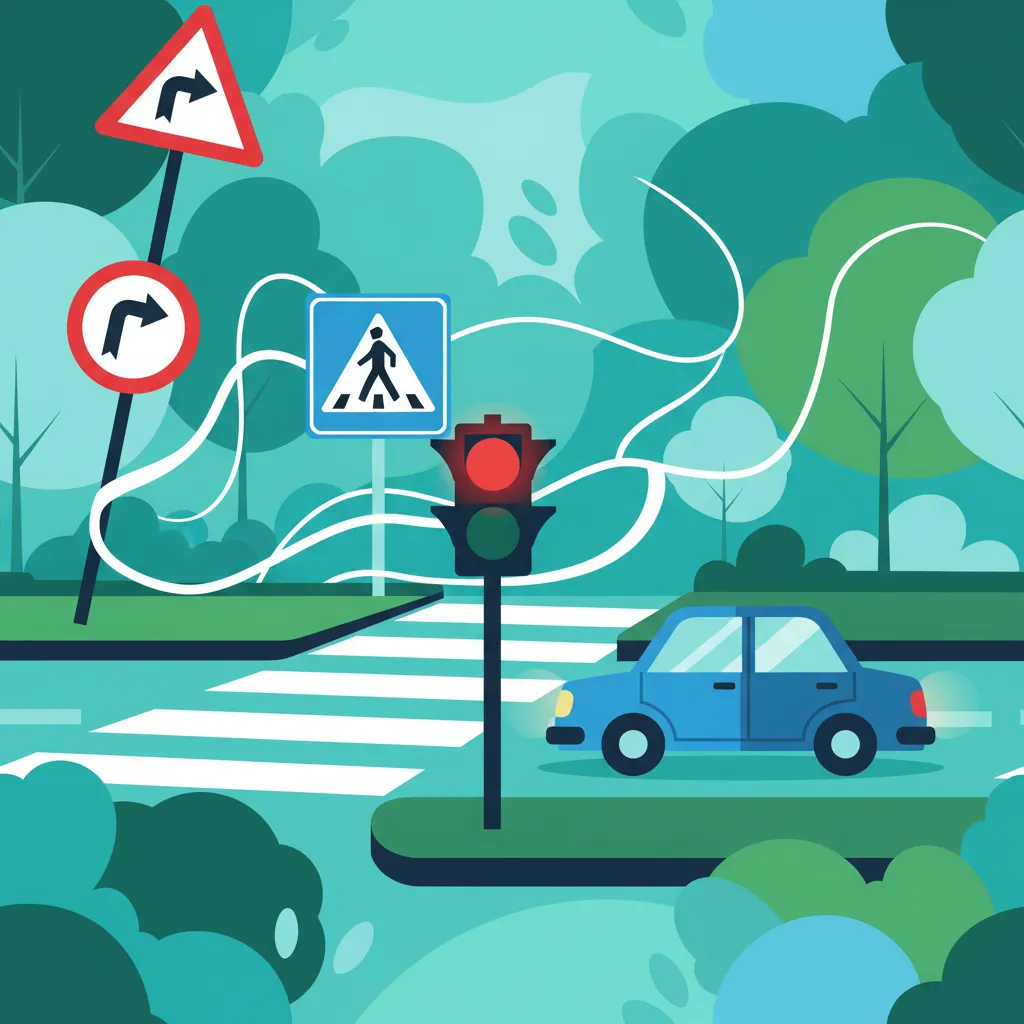
This lesson focuses on Swedish warning signs (varningsmärken), designed to alert drivers to potential dangers ahead. You will study the meaning of triangular signs indicating hazards such as sharp bends, pedestrian crossings, risk of animals on the road, or temporary road work. The objective is to develop proactive driving habits by understanding how to anticipate risks and adapt speed and positioning appropriately when a warning sign is present.

This lesson covers the essential topic of communication in traffic using the vehicle's built-in signaling devices. You will learn the rules for using your turn indicators (körriktningsvisare) in good time before turning or changing lanes. The content also explains the proper use of hazard lights (varningsblinkers) in emergency situations and the very limited, specific circumstances in which using the horn (ljudsignal) is permitted to avert immediate danger.
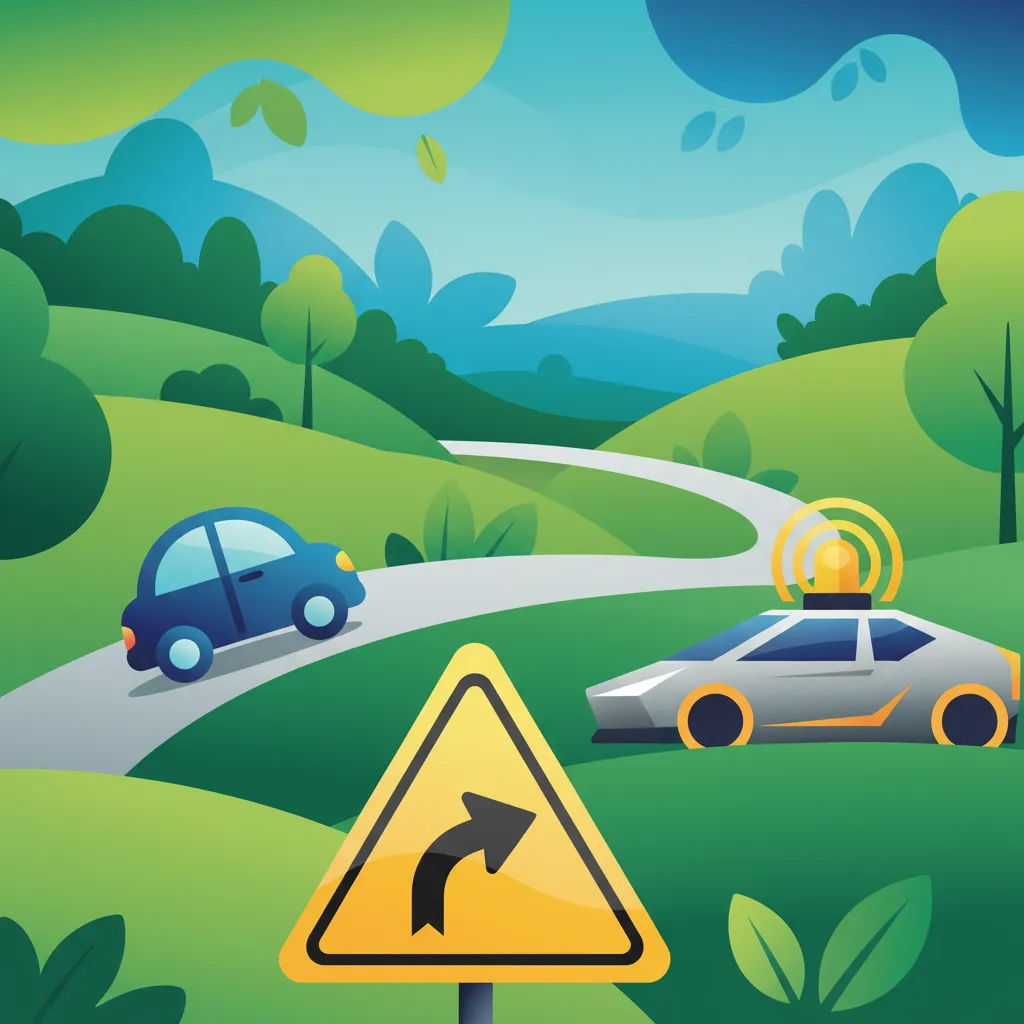
This lesson focuses on Swedish warning signs designed to alert drivers to potential dangers. You will study signs indicating sharp bends, slippery surfaces, animal crossings, and temporary hazards like road construction. Correctly interpreting these signs allows a motorcyclist to proactively adjust speed, lane position, and readiness to react, which is essential for maintaining control and safety, especially in adverse weather or on unfamiliar roads.
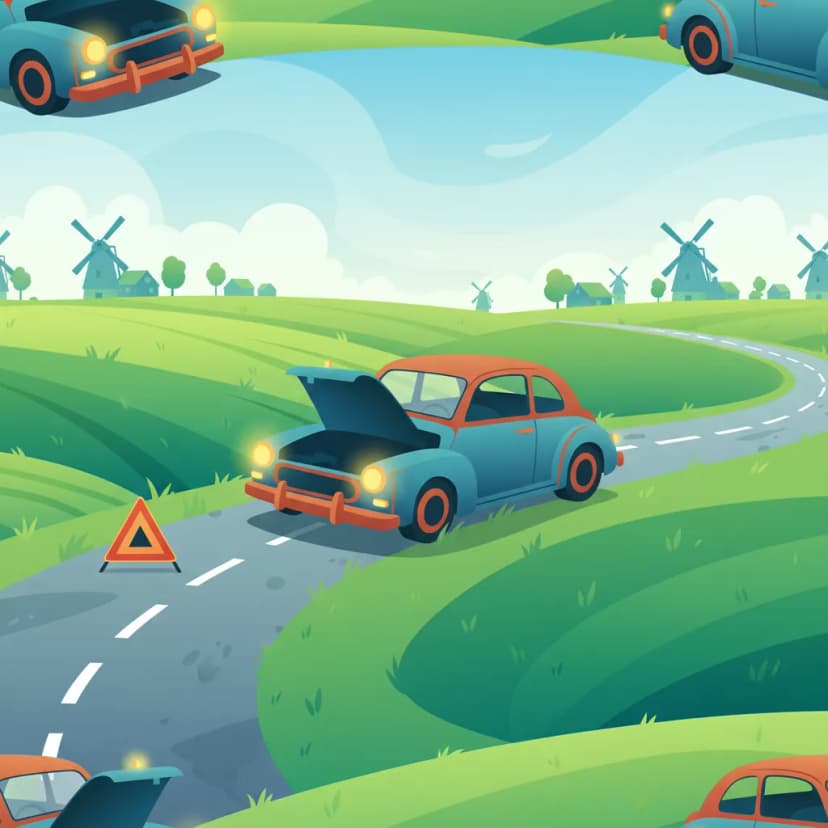
This lesson focuses on the correct use of warning devices to protect an accident or breakdown scene. You will learn to immediately activate your hazard lights (varningsblinkers). The main focus is on the proper placement of the warning triangle, explaining how the distance from the vehicle must be adapted based on the road's speed limit and visibility to give oncoming drivers adequate time to react.
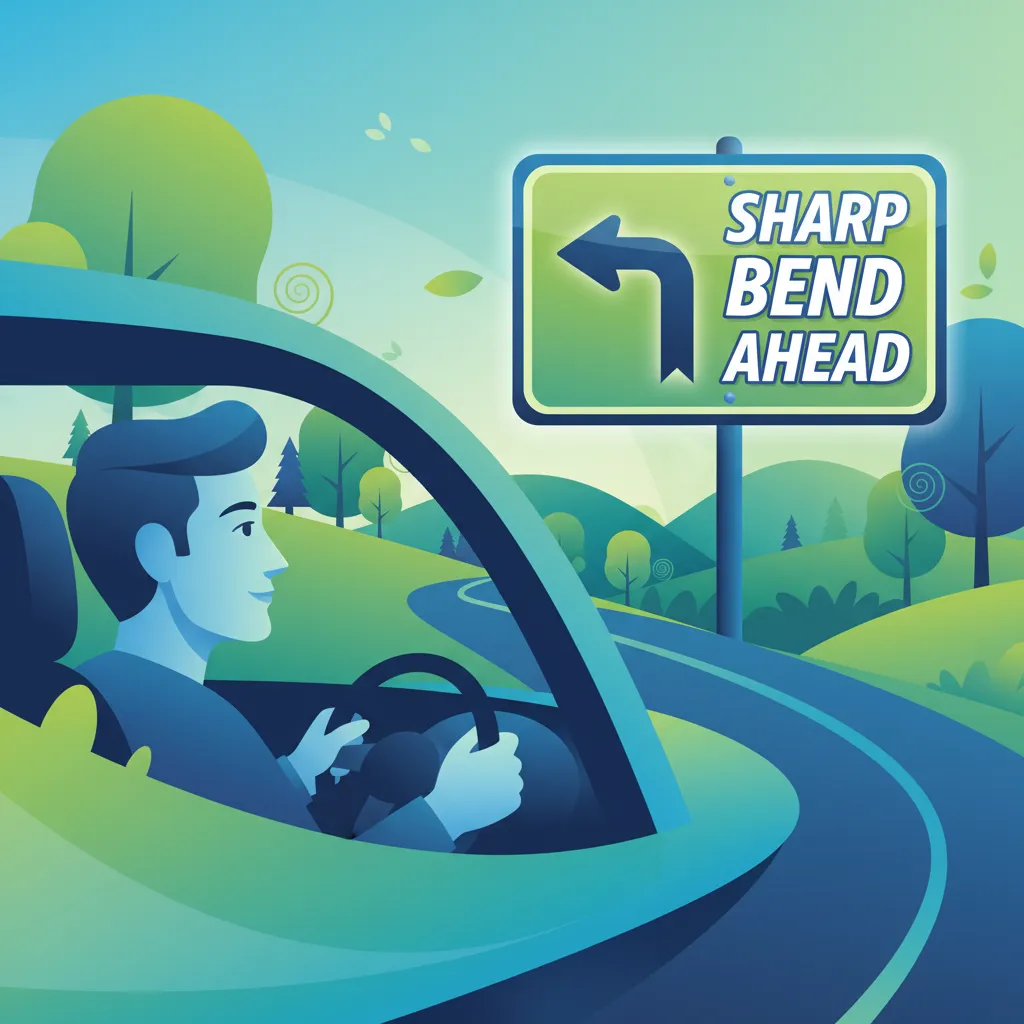
This lesson teaches riders to interpret warning signs (Varningsskyltar), which alert them to potential dangers on the road ahead. It covers a wide range of signs, including those for sharp curves, slippery surfaces, wildlife crossings, and upcoming roadworks. Understanding these triangular signs allows riders to anticipate hazards, adjust their speed and position proactively, and enhance their overall safety.
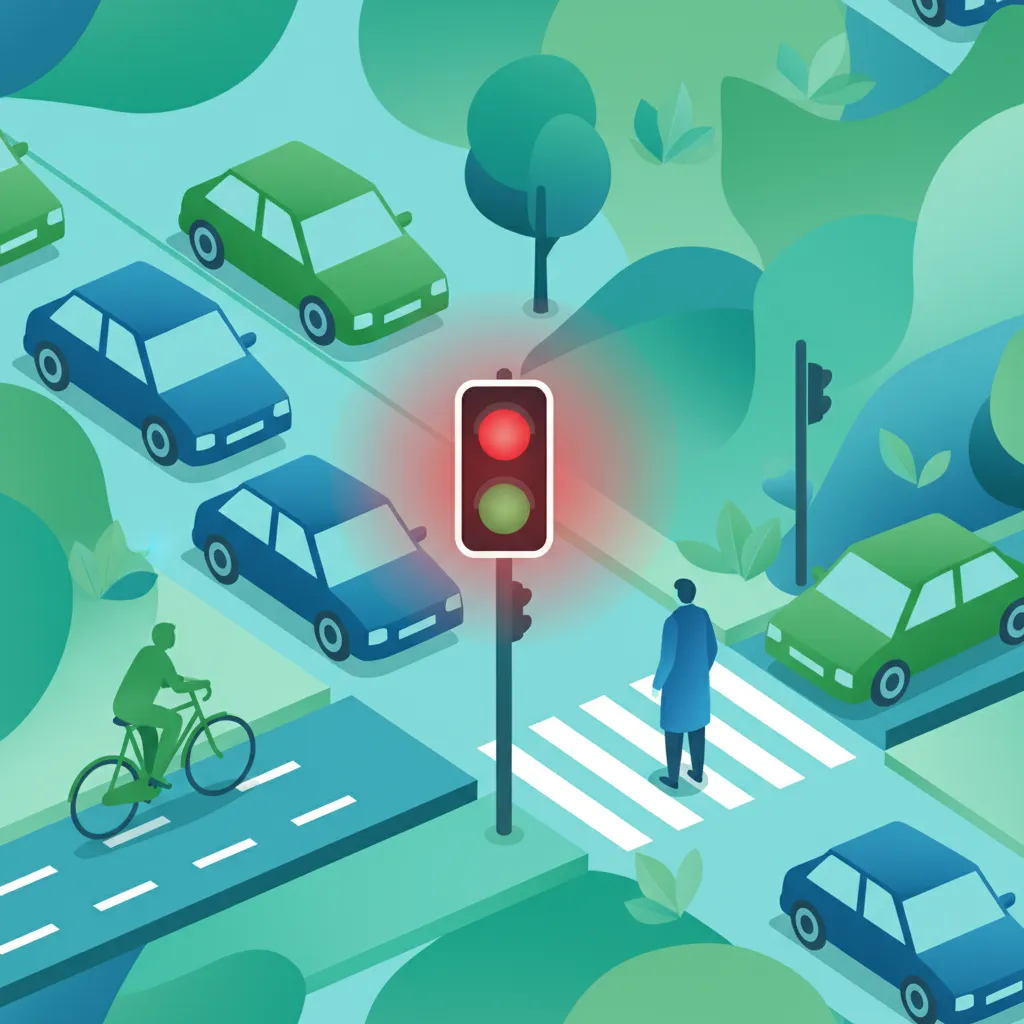
This lesson provides a detailed explanation of the Swedish traffic signal system. You will learn the precise legal meaning of solid red, yellow, and green lights, as well as green arrows which permit turning when oncoming traffic is stopped. It also covers procedures for flashing yellow signals and what to do when traffic lights are out of order, emphasizing that standard priority rules like the right-hand rule then apply.
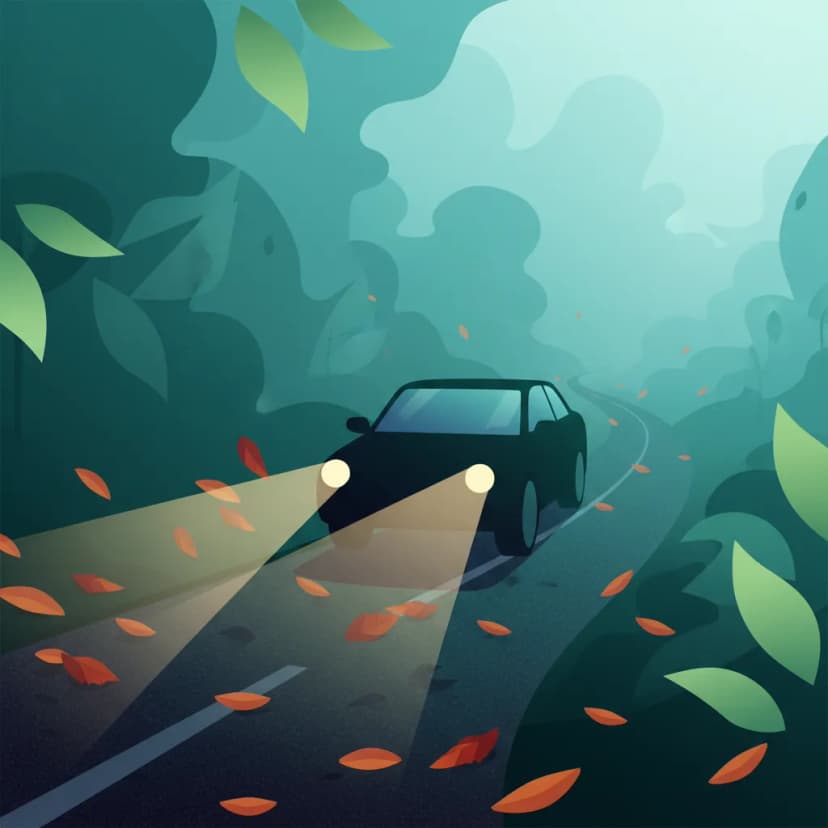
This lesson covers strategies for driving safely when visibility is compromised. You will learn the correct use of different lighting systems: when to use low beams, high beams (helljus), and how to avoid dazzling other drivers. The lesson also explains the specific regulations for using front and rear fog lights and provides techniques for navigating safely in dense fog or heavy precipitation by reducing speed and using the road edge as a guide.
This lesson covers the extensive category of informational and directional signs that aid navigation throughout Sweden. You will learn to interpret signs for motorways, national roads, and local destinations, as well as symbols indicating services like gas stations, parking, and rest areas. Proper understanding of these signs allows for efficient route planning, reduces driver uncertainty, and contributes to smoother, safer traffic flow on all types of roads.
This lesson covers the correct interpretation and response to all forms of light and audible signals a motorcyclist will encounter. You will study the sequences of traffic lights, the rules for using turn indicators and hazard lights, and the legally permitted uses of the horn. Proper use of these signals is a fundamental aspect of safe riding, as it communicates your intentions clearly to other road users and helps prevent misunderstandings and collisions.
This lesson explains the function and legal significance of various road markings (vägmarkeringar) in Sweden. You will learn the difference between broken lines that permit overtaking and solid lines that forbid it, as well as the meaning of stop lines, pedestrian crossings, and lane direction arrows. These markings work in conjunction with signs to organize traffic flow, separate lanes, and provide critical information directly on the road surface.
Explore how dashboard warning lights relate to essential vehicle safety systems. Understand the basic functions of systems like ABS, ESP, and airbags and what alerts you might see on your instrument panel.
This lesson explains the function of key electronic driver aids. You will learn how the Anti-lock Braking System (ABS) prevents wheels from locking during hard braking, allowing you to maintain steering control. The lesson also covers the Electronic Stability Program (ESP), which helps prevent skids by automatically braking individual wheels, and Traction Control (TCS), which prevents wheel spin during acceleration on slippery surfaces.

This lesson focuses on the systems that protect occupants in the event of a collision. You will learn how seatbelts and airbags work together to reduce injury. A significant part of the lesson is dedicated to child safety, covering the different types of child restraints (infant carriers, child seats, booster cushions), the laws regarding their use based on age and height, and the critical importance of deactivating the passenger airbag when using a rear-facing child seat in the front.
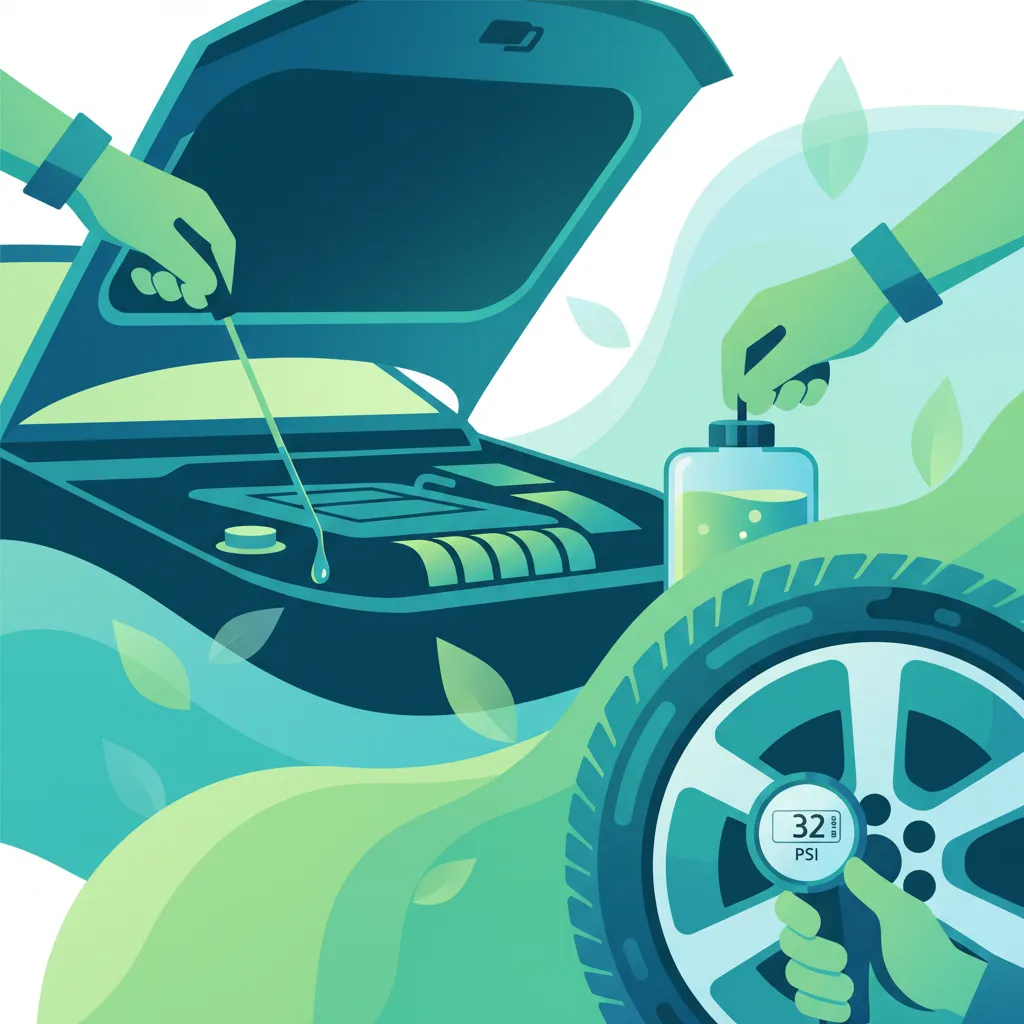
This lesson covers the simple yet vital pre-drive checks that are the driver's responsibility. You will learn the step-by-step process for a 'safety control' (säkerhetskontroll), which includes checking tire pressure and tread depth, verifying that all lights are working, and checking the levels of critical fluids like engine oil, coolant, brake fluid, and windshield washer fluid. Performing these checks regularly helps ensure your vehicle is in a safe condition to drive.

This lesson focuses on the three fundamental inputs for controlling a car: steering, acceleration, and braking. You will learn the correct hand positioning on the steering wheel for maximum control and techniques for smooth, progressive application of the gas and brake pedals. The content explains how these inputs affect the vehicle's balance and stability, forming the basis for all advanced driving and maneuvering techniques.

This lesson provides in-depth analysis of how to safely interact with the full spectrum of road users. You will learn about the specific characteristics of each, such as the large blind spots of trucks, the potential for sudden movements from cyclists, and the unpredictability of pedestrians. The content teaches strategies for communication, anticipation, and defensive positioning to ensure safe and respectful coexistence on the road for everyone.
This lesson focuses on the correct use of warning devices to protect an accident or breakdown scene. You will learn to immediately activate your hazard lights (varningsblinkers). The main focus is on the proper placement of the warning triangle, explaining how the distance from the vehicle must be adapted based on the road's speed limit and visibility to give oncoming drivers adequate time to react.
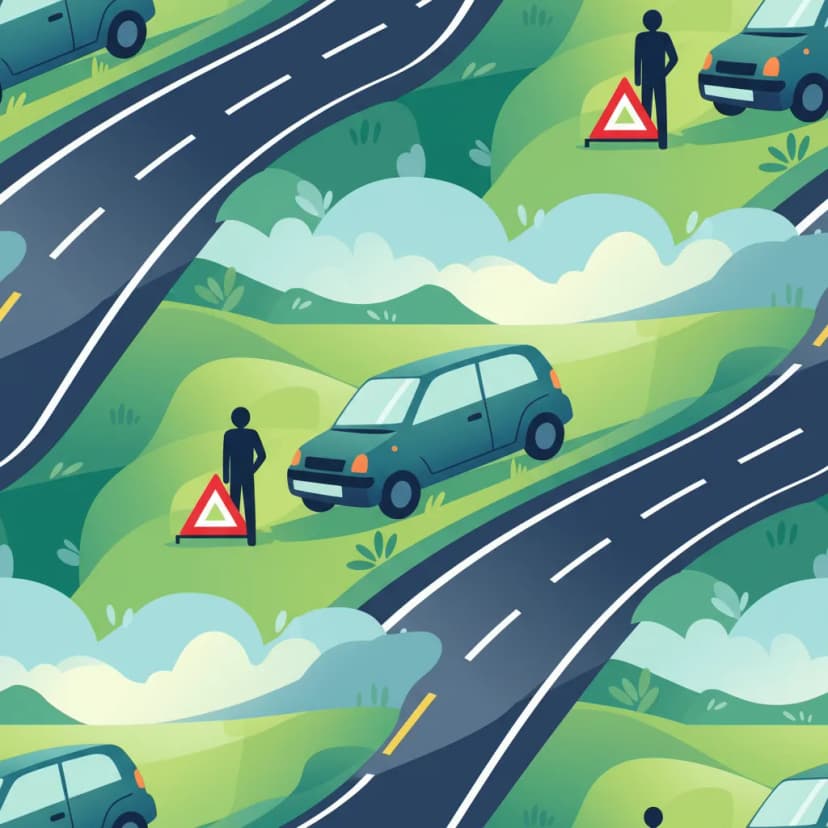
This lesson provides a safety protocol for dealing with a vehicle breakdown. You will learn the importance of trying to move the vehicle as far off the road as possible, preferably onto the shoulder or into an emergency lay-by. The lesson stresses that on high-traffic roads, the occupants' personal safety is the top priority; this involves wearing a reflective vest and waiting for assistance in a safe location away from the vehicle and the flow of traffic.
Find clear answers to common questions learners have about Dashboard Warnings and Indicator Lights. Learn how the lesson is structured, which driving theory objectives it supports, and how it fits into the overall learning path of units and curriculum progression in Sweden. These explanations help you understand key concepts, lesson flow, and exam focused study goals.
Red warning lights indicate a critical issue that requires immediate attention; you should stop driving as soon as it is safe to do so and address the problem. Yellow or amber lights signal a fault or a need for attention soon; the car is generally safe to drive but you should get it checked by a mechanic as soon as possible. Green or blue lights are typically informational, confirming a system is active.
If a red warning light illuminates on your dashboard, it signifies a serious problem that could affect your safety or the vehicle's mechanical integrity. You must stop the vehicle in a safe location away from traffic as soon as possible. Turn on your hazard warning lights, assess the situation from a safe distance, and contact roadside assistance or a mechanic. Do not continue driving until the issue is resolved.
While the symbols themselves are largely standardized internationally, your understanding of them is crucial for Swedish driving regulations. The theory test, governed by Trafikverket, includes questions on interpreting these lights. Knowing the meaning and urgency of each symbol ensures compliance with safe driving practices mandated in Sweden.
Yes, the Swedish driving theory test for Category B cars includes questions that assess your knowledge of dashboard warning lights and indicator symbols. You will be expected to know what different symbols mean and what action to take, especially for critical red warnings.
Many older vehicles use different symbols or combinations of symbols to indicate urgency. Focus on understanding the specific symbol shown on the dashboard of the car you are learning to drive or expect to drive. If you are unsure, consult the car's owner's manual. The principle of investigating any symbol that appears remains the same.