In the unfortunate event of a collision, knowing what to do next is vital for safety and legal compliance. This lesson, part of the 'Accident Response, Emergency Situations, and Vehicle Checks' unit for your Swedish Category AM moped license, provides a clear, step-by-step guide to managing the immediate aftermath. Understanding these actions will not only help you on the theory test but also ensure you can act responsibly in a real-life emergency.
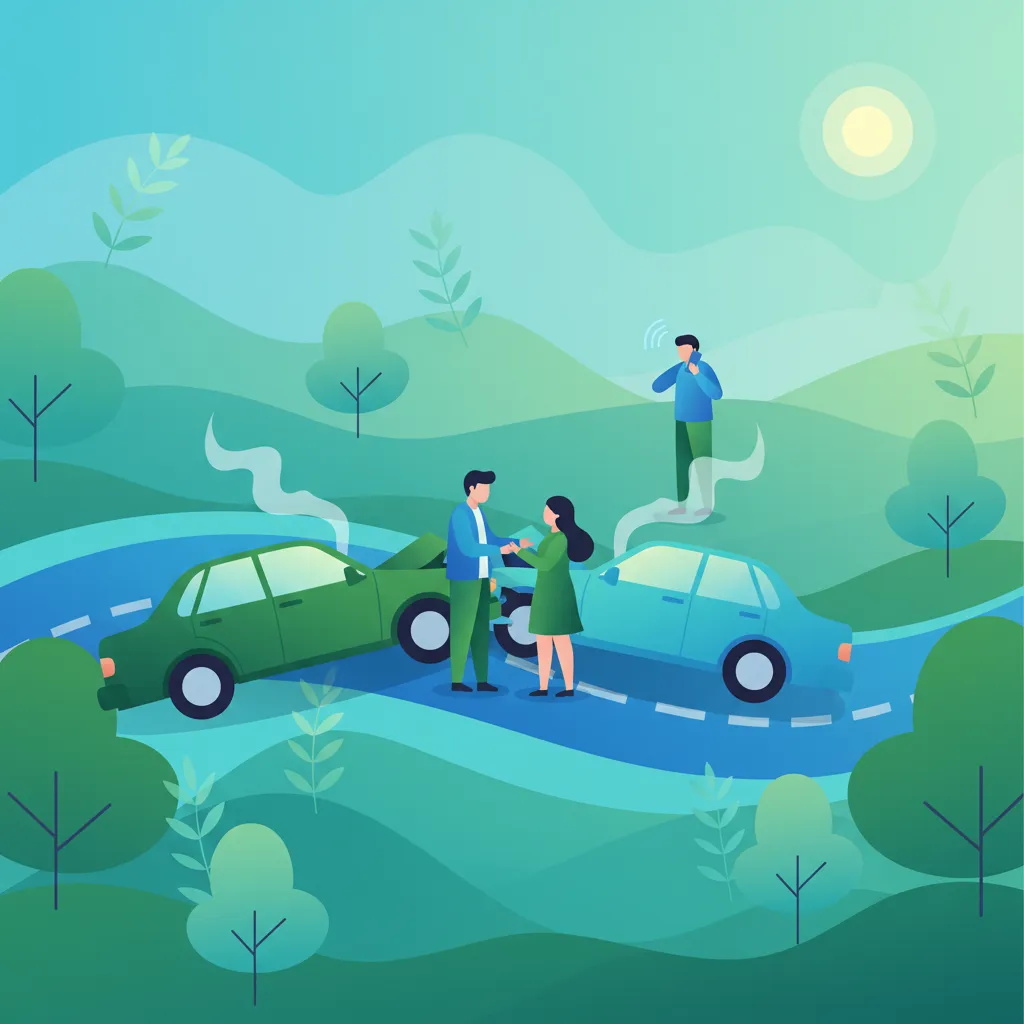
A traffic collision can be a frightening and disorienting experience, especially for moped riders. Knowing exactly what to do in the immediate aftermath is crucial for your personal safety, the safety of others, and to fulfill your legal obligations under Swedish law. This lesson provides a clear, step-by-step guide on how to respond correctly and responsibly if you are involved in a collision while riding your Category AM moped in Sweden.
Understanding these procedures not only helps prevent secondary accidents and reduces the severity of potential injuries but also safeguards you from severe administrative or criminal penalties. This knowledge is an essential part of the Swedish Driving License Theory Course – Category AM.
When a collision occurs, your immediate actions blend principles of safety, quick decision-making under stress, and strict adherence to Swedish legal requirements. The primary goal is always to protect human life and prevent further incidents.
Responding promptly and correctly after a collision is paramount. A stationary or disabled moped can quickly become an unexpected obstacle, leading to further crashes if the scene is not secured properly. By following a structured approach, you reduce panic, manage stress, and ensure that vital information is gathered for any subsequent investigations or insurance claims. This is not just a recommendation; it is a legal requirement designed to protect all road users and ensure justice.
Every action you take after a collision should be guided by a set of core principles that prioritize safety and legal compliance:
The very first actions you take after a collision are crucial for preventing further harm and establishing a safe environment.
As soon as a collision occurs, your legal obligation under Trafikförordning (§ 3) is to stop immediately at the scene. This does not mean continuing to ride to a safer spot far away; it means halting your moped as quickly and safely as possible without causing another hazard.
You may need to gently brake to maintain control and keep the moped upright, or step off if it becomes unstable. Assess the immediate surroundings for traffic flow before exiting your vehicle, ensuring you don't step directly into the path of oncoming traffic. Remember, driving away, even if damage appears minor, is a serious violation.
Once your moped is safely stopped, the very next step is to activate your hazard warning lights (often referred to as hazard flashers or "blinkers"). These are the flashing amber lights on your moped, activated by a dedicated switch, designed to signal to other road users that your vehicle is stationary, obstructed, or experiencing an emergency.
Activating these lights promptly is mandatory under Trafikförordning (§ 30) if your vehicle is stopped in a position that could endanger other traffic. This action is critical, especially in low light or adverse weather, as it alerts approaching traffic, reducing the risk of a secondary collision. If your moped's hazard function is broken or unavailable, you may manually use your turn signals to achieve a similar warning effect. Using only your headlights is insufficient for signaling an accident scene.
To further enhance the visibility of your stopped moped and yourself, you must deploy a warning triangle and, if necessary, wear a reflective vest.
A warning triangle is a portable, reflective device that provides a visual cue for other road users. According to Trafikförordning (§ 31), if your moped is stopped on the road in a position that could pose a danger, you must place the warning triangle:
For mopeds, it's often difficult or unsafe to place a warning triangle, especially in narrow urban streets or on busy roads where standing to place it would put you in danger. In such cases, or if you do not carry a warning triangle, it is mandatory to wear a high-visibility reflective vest (or jacket) instead. The reflective vest makes you, the rider, conspicuous to other traffic, providing a visual warning.
Always prioritize your safety when placing a triangle or wearing a vest. If placing a triangle puts you at risk, opt for the reflective vest and move to a safe vantage point.
Once the scene is secured and visible to others, your immediate focus must shift to human well-being. This is a fundamental legal and ethical responsibility.
Before assisting others, quickly assess your own condition. Check for any immediate injuries, even if you feel fine. Adrenaline can mask pain, so a quick self-assessment (checking for bleeding, pain, or difficulty moving) is vital. Ensure your helmet is still secure and that you can move safely. Hidden injuries are common, so do not rush this step.
Your duty to render assistance is enshrined in Vägtrafiklag (§ 11). This means you are legally obligated to provide help to anyone injured in the collision.
Assess the Situation: Quickly determine if anyone is injured or unconscious. Ask conscious victims about their pain or if they are bleeding.
Summon Help: If injuries are suspected or confirmed, call Sweden's emergency number, 112, immediately.
Provide Basic First Aid: If you have first-aid training and a first-aid kit, apply pressure to any bleeding wounds, try to immobilize a suspected neck or spinal injury (without moving the person unless absolutely necessary for safety), and ensure the person is breathing. Do only what you are trained and comfortable doing. Your goal is to stabilize the situation until professional help arrives.
Protect the Injured: If safe to do so, protect the injured person from further harm (e.g., by placing your moped or the warning triangle as a shield, or by using a blanket if they are cold).
Even minor-appearing injuries can sometimes be severe. Always err on the side of caution and call for professional medical assistance if there is any doubt.
Knowing when and how to contact emergency services is critical for ensuring professional help arrives promptly and for creating an official record of the incident.
Calling 112 is mandatory under Trafikförordning (§ 38) in several situations:
When you call 112, be prepared to provide:
Beyond calling 112 for immediate emergencies, there is also a general obligation to report certain accidents to the police. This is outlined in Trafikförordning (§§ 38-40) and Vägtrafiklag (§§ 11-12).
In Sweden, a formal police report for a traffic accident is often referred to as an Olycksrapport.
You must report the accident to the police:
Even if you exchange details with other parties, a police report is still mandatory in many scenarios, particularly when injuries or significant damage are involved. Failure to report can lead to denial of insurance claims and legal penalties.
After ensuring safety and alerting authorities, the next critical steps involve gathering and sharing information. This forms the backbone for any subsequent insurance claims or legal proceedings.
Under Trafikförordning (§ 39), all parties involved in a collision are legally obligated to exchange specific information with each other. This enables liability determination and insurance processing. You should collect and provide:
Many insurance companies provide a pre-printed "Accident Information Sheet" specifically designed to facilitate the correct and complete exchange of data. Carrying one of these in your moped's storage can be very helpful.
Conduct this exchange calmly. Refusing to provide your full details is a violation and can lead to fines.
While not explicitly mandated by law, thorough documentation of the accident scene is strongly advised and considered best practice by police and insurance companies. This objective evidence can significantly strengthen your claim and reduce disputes.
It is a crucial rule of legal prudence that you never admit fault at the scene of an accident, regardless of how you perceive your role. This is not about avoiding responsibility, but about protecting your legal rights. Admitting fault on the spot can prejudice any subsequent police investigation or insurance claim.
Simply state that you are willing to cooperate and provide all necessary information. Let the authorities and insurance companies determine liability after a thorough review of all the facts and evidence. Your immediate priority is safety and legal compliance, not assigning blame.
Accidents don't always happen on a clear, straight road. Your actions must adapt to the specific conditions and environment.
Weather conditions significantly impact visibility and response requirements:
The type of road and location also dictate specific adjustments:
Your actions after a collision are directly governed by Swedish law, primarily the Trafikförordning (TF) and the Vägtrafiklag (VTL). Non-compliance can lead to serious consequences.
| Rule Statement | Legal Status | Rationale |
|---|---|---|
| Stop immediately after a collision | Mandatory (TF § 3) | Prevents secondary accidents and preserves evidence. |
| Activate hazard warning lights | Mandatory (TF § 30) | Warns other road users of the obstruction. |
| Display warning triangle or wear reflective vest | Mandatory (TF § 31) | Enhances visibility of the stopped vehicle. |
| Provide first aid if needed | Mandatory (VTL § 11) | Reduces severity of injuries; legal duty of care. |
| Call 112 when injuries or dangerous situation exist | Mandatory (TF § 38) | Guarantees professional help and creates an official record. |
| Exchange personal, vehicle, and insurance information | Mandatory (TF § 39) | Enables liability determination and insurance processing. |
| Report the accident to police if required | Mandatory (TF §§ 38-40) | Accurate legal record; required for claim settlements. |
| Do not move the vehicles unless required for safety | Mandatory (TF §§ 31-32) | Preserves evidence; prevents secondary collisions. |
Violating these regulations can result in significant penalties:
Understanding the rationale behind these rules can reinforce why they are so vital.
Accidents are inherently stressful. Under stress, humans often experience "tunnel vision," where they focus only on immediate threats and overlook other critical details. A structured checklist—Stop → Secure → Assess → Call → Exchange → Document—helps counteract this cognitive bias. By having a predefined sequence of actions, you can maintain composure, reduce cognitive overload, and make more consistent, effective decisions during a high-stress event.
Statistics show that a significant percentage of secondary collisions involve a vehicle that was not properly secured or marked after the initial impact. Immediate activation of hazard lights can reduce the time other road users need to detect a stopped vehicle by 30-40%. Similarly, reflective materials, like those on a high-visibility vest, can increase detection distance by approximately 50 meters in low-light conditions. These immediate actions are your best defense against causing another accident and potentially incurring increased liability.
Lesson content overview
Explore all units and lessons included in this driving theory course.
Explore search topics learners often look for when studying Immediate Actions After a Collision. These topics reflect common questions about road rules, driving situations, safety guidance, and lesson level theory preparation for learners in Sweden.
Browse additional driving theory lessons that cover connected traffic rules, road signs, and common driving situations related to this topic. Improve your understanding of how different rules interact across everyday traffic scenarios.
Understand your legal obligations following a collision as per Swedish traffic law. This lesson details reporting requirements, information exchange, and consequences of non-compliance, crucial for Category AM licence holders.
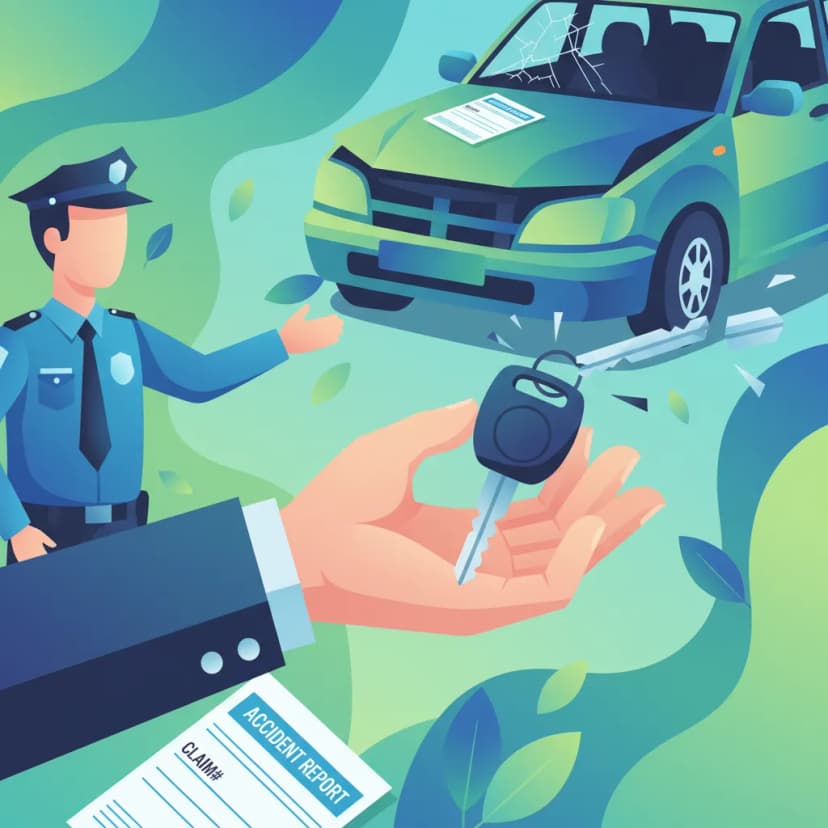
This lesson covers the administrative and legal obligations following a collision. You will learn under which circumstances you are legally required to notify the police, such as when there are injuries or significant property damage. The content details the essential information that must be exchanged between all involved parties—names, contact details, vehicle registration, and insurance information—and the importance of documenting the scene and gathering witness details for insurance claims.
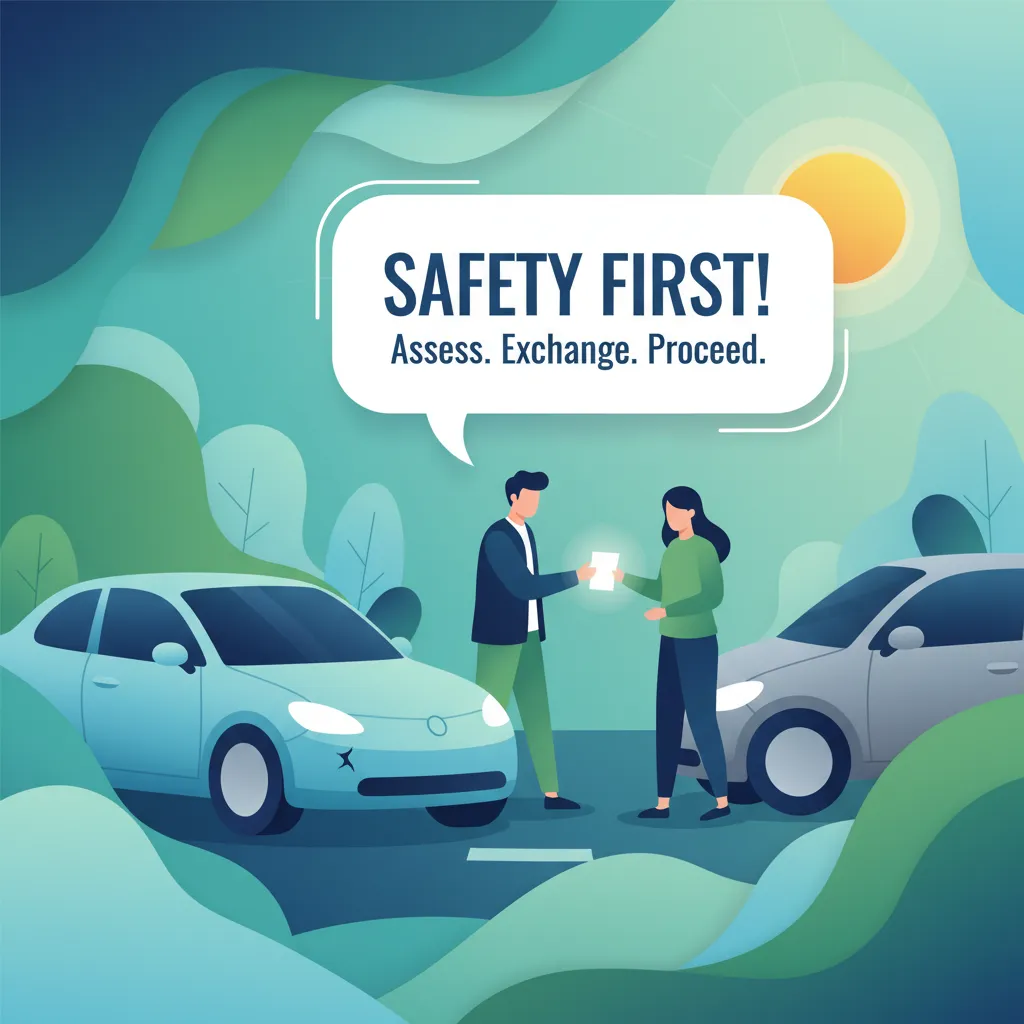
This lesson outlines the immediate, high-priority actions required at an accident scene. You will learn the 'stop, survey, secure' sequence: first, stopping and assessing the situation; second, warning other traffic by using hazard lights and placing a warning triangle; and third, taking steps to prevent further danger, such as switching off ignitions. These initial actions are crucial for the safety of everyone involved and for those approaching the scene.
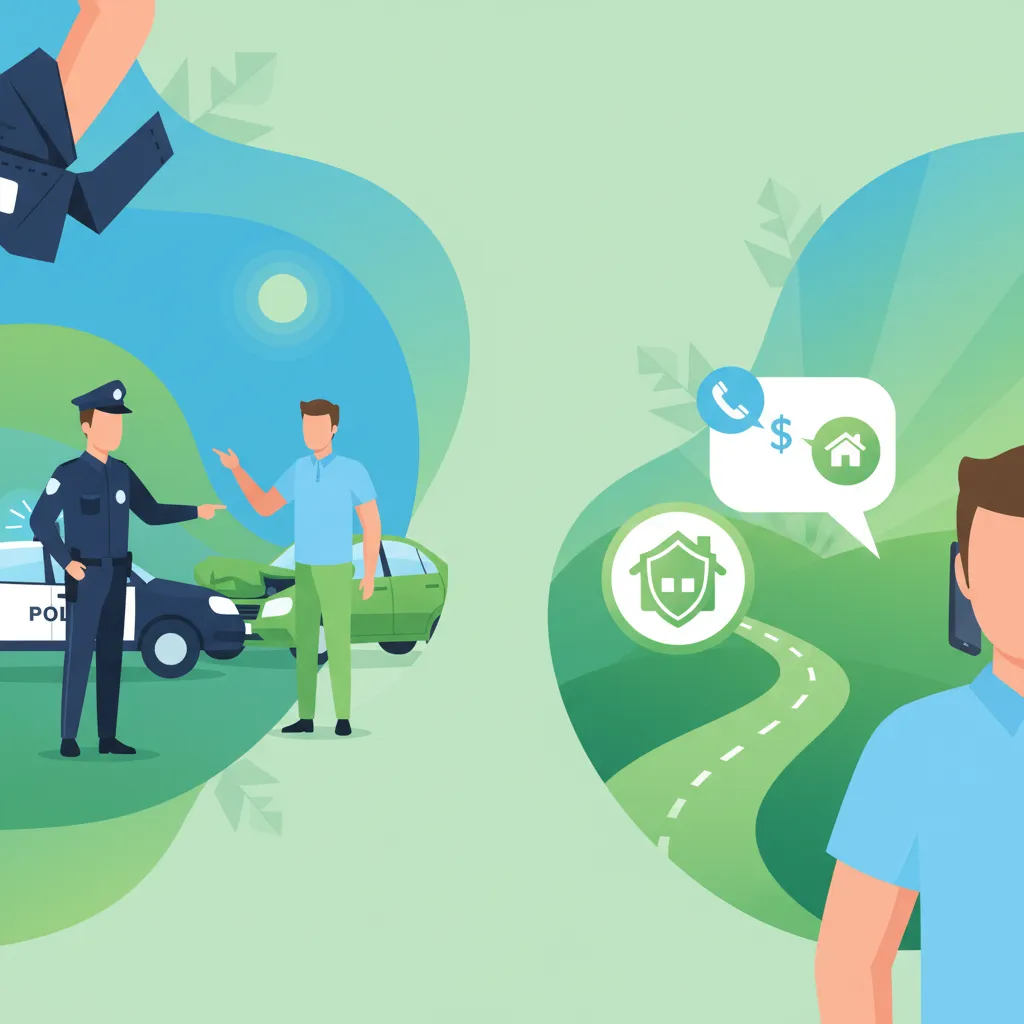
This lesson details the procedural and legal steps for reporting an accident. You will learn when you are legally obligated to report a crash to the police, what information to exchange with other involved parties, and the importance of documenting the scene with photographs and witness details. This information is vital for ensuring any subsequent insurance claims and legal proceedings are handled smoothly and fairly.
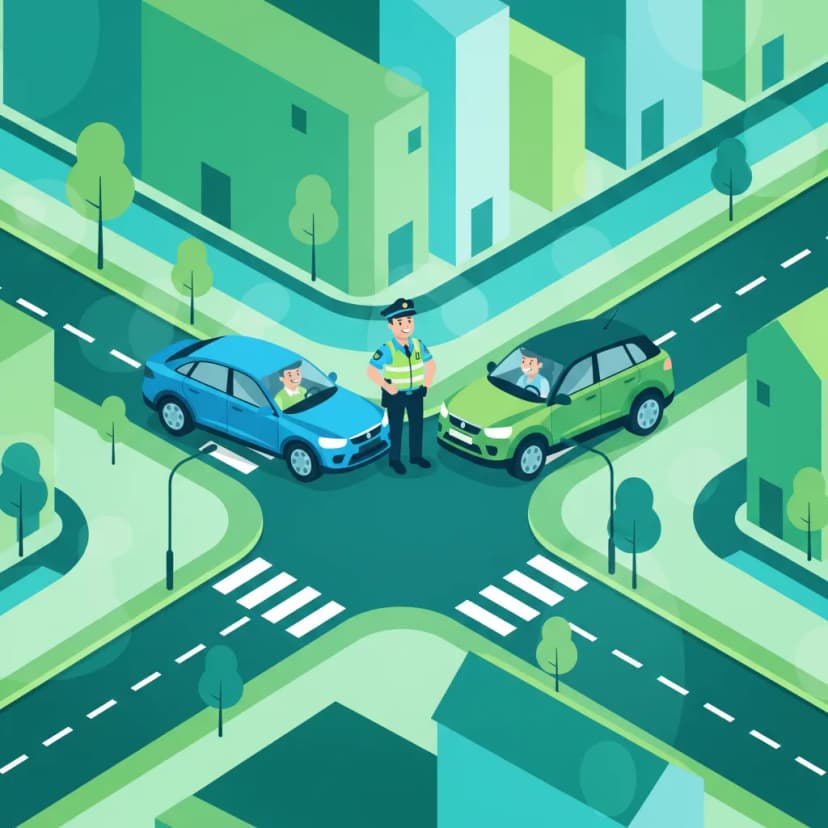
This lesson explains the legal requirements in Sweden for reporting a traffic accident to the police (Polisanmälan). It clarifies in which situations a report is mandatory, such as when there are injuries or significant property damage. The content guides learners on the information they will need to provide for the report and for subsequent insurance claims.
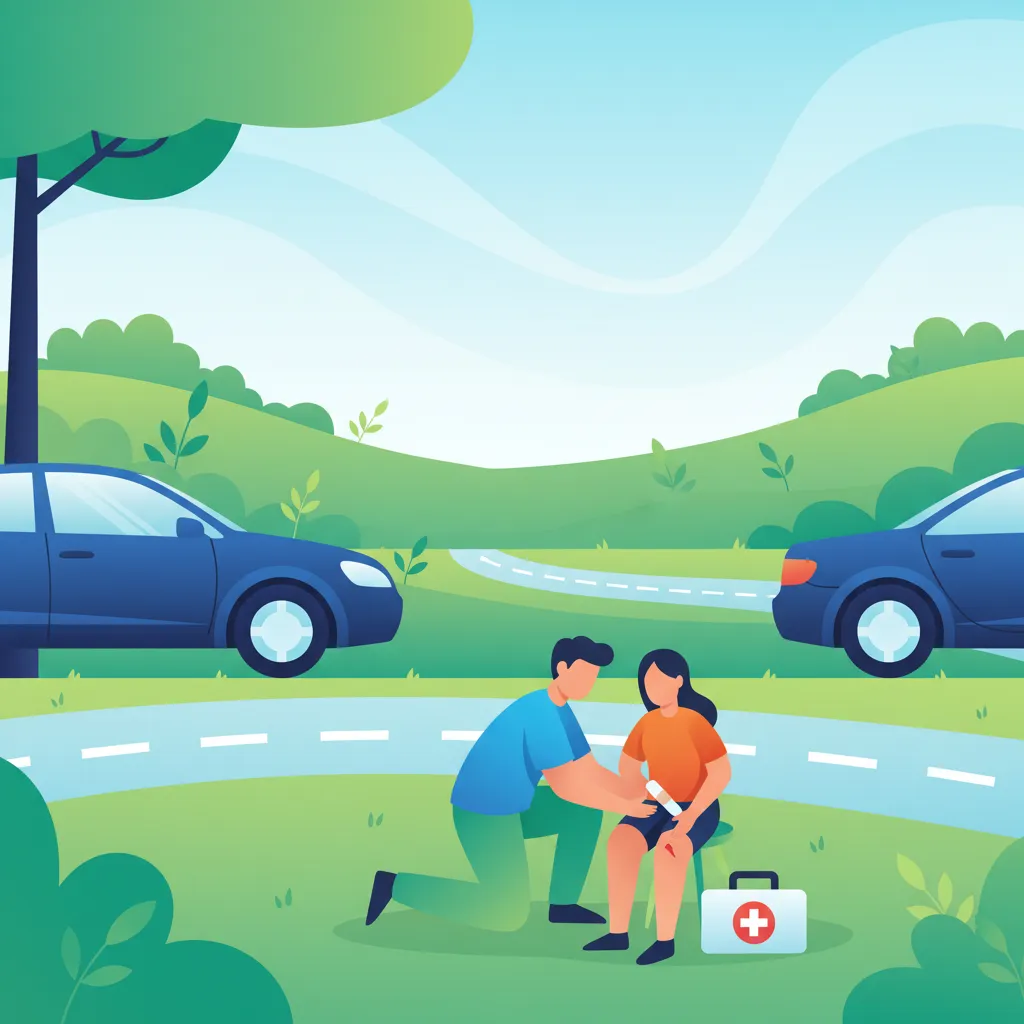
This lesson covers the basics of providing first aid in an emergency, which is a legal duty for anyone arriving at an accident scene. You will be introduced to the L-ABCDE mnemonic (Life-threatening situation, Airway, Breathing, Circulation, Disability, Exposure) as a way to systematically assess and prioritize injuries. The content emphasizes that the most important role is often to ensure the person is breathing and to follow the instructions of the emergency operator until professional help arrives.
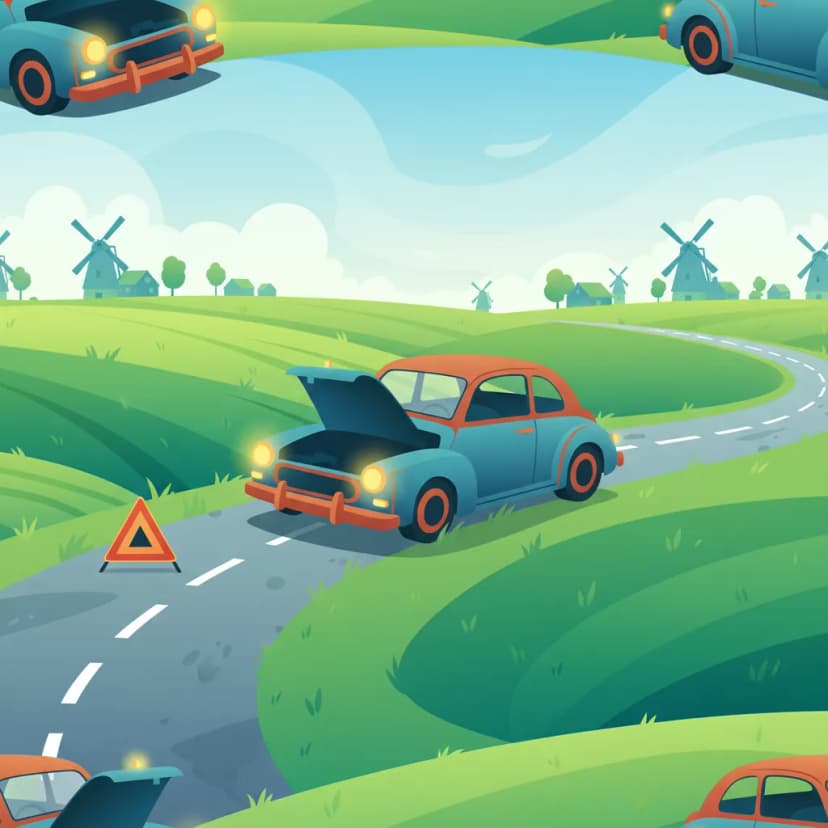
This lesson focuses on the correct use of warning devices to protect an accident or breakdown scene. You will learn to immediately activate your hazard lights (varningsblinkers). The main focus is on the proper placement of the warning triangle, explaining how the distance from the vehicle must be adapted based on the road's speed limit and visibility to give oncoming drivers adequate time to react.
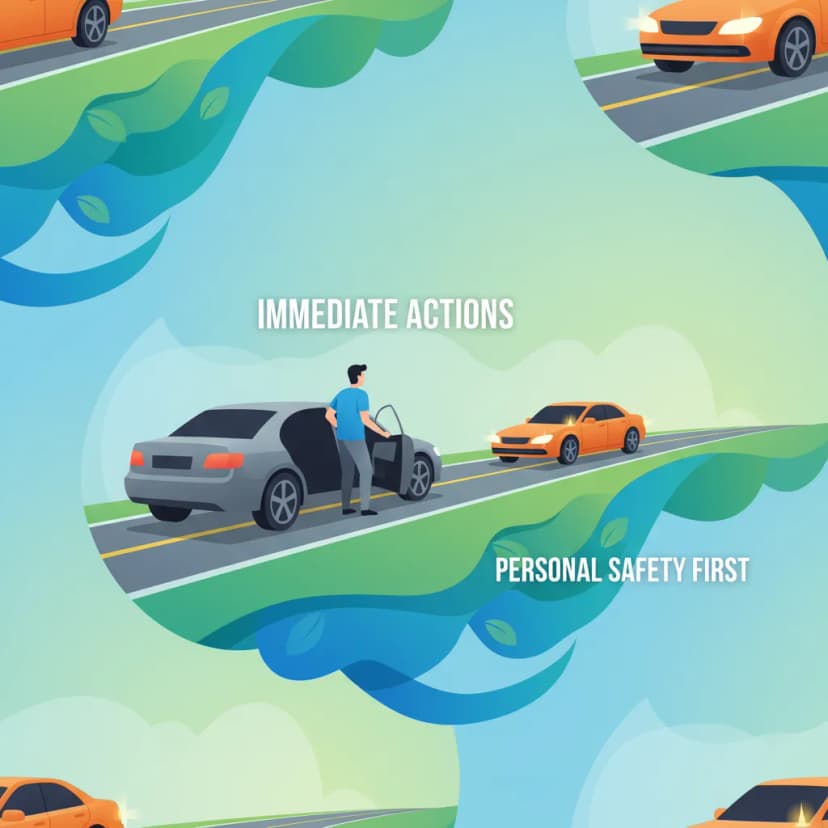
This lesson outlines the absolute first priorities after a crash, with the primary rule being to ensure your own safety and avoid further harm. You will learn how to conduct a quick self-assessment for injuries, the importance of moving out of the line of traffic if possible, and how to begin assessing the scene for immediate dangers like fuel leaks or oncoming vehicles. These initial actions are vital for managing the immediate aftermath of an incident.
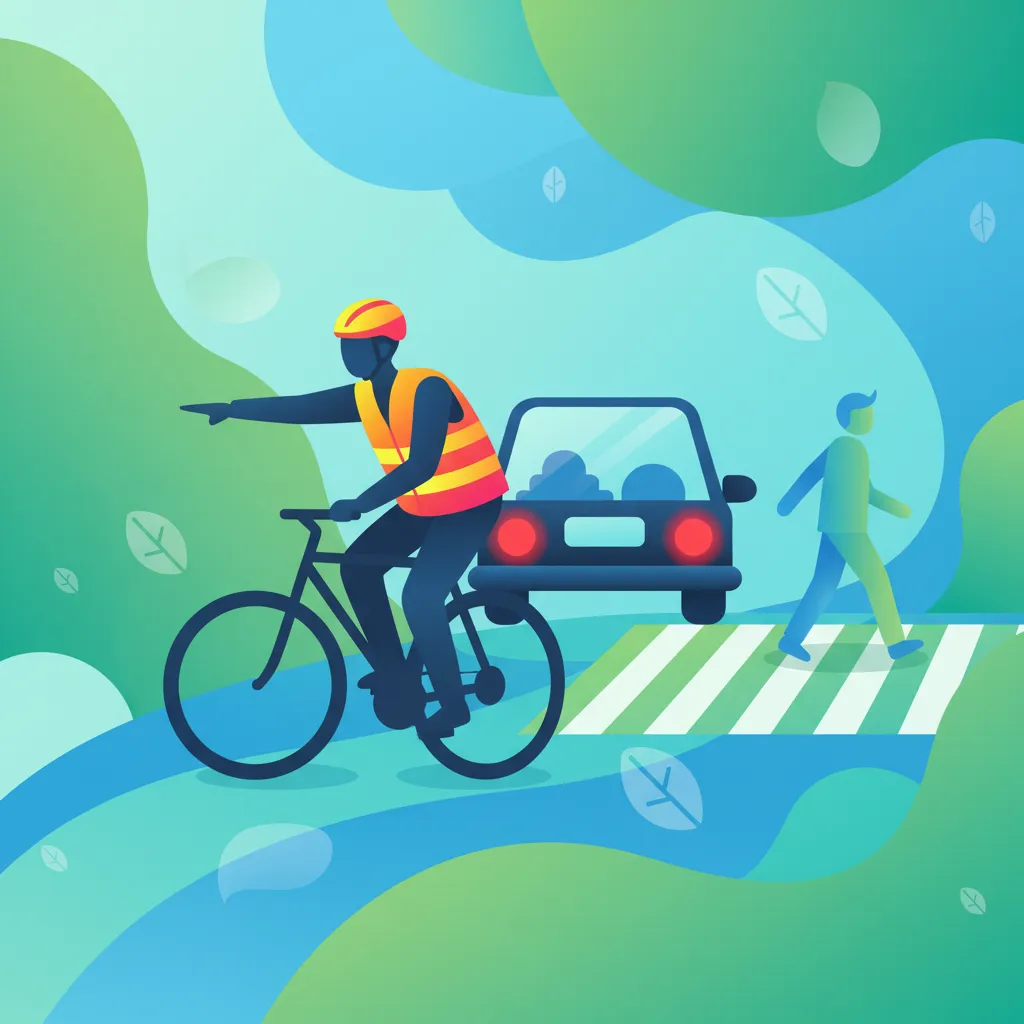
This lesson teaches you how to make an accident scene as safe as possible for yourself, any other involved parties, and approaching traffic. You will learn the correct use of hazard lights, the placement of warning triangles, and the importance of wearing a high-visibility vest. The content also covers how to identify and manage immediate post-crash hazards, such as spilled fuel or unstable vehicles, to prevent the situation from worsening.
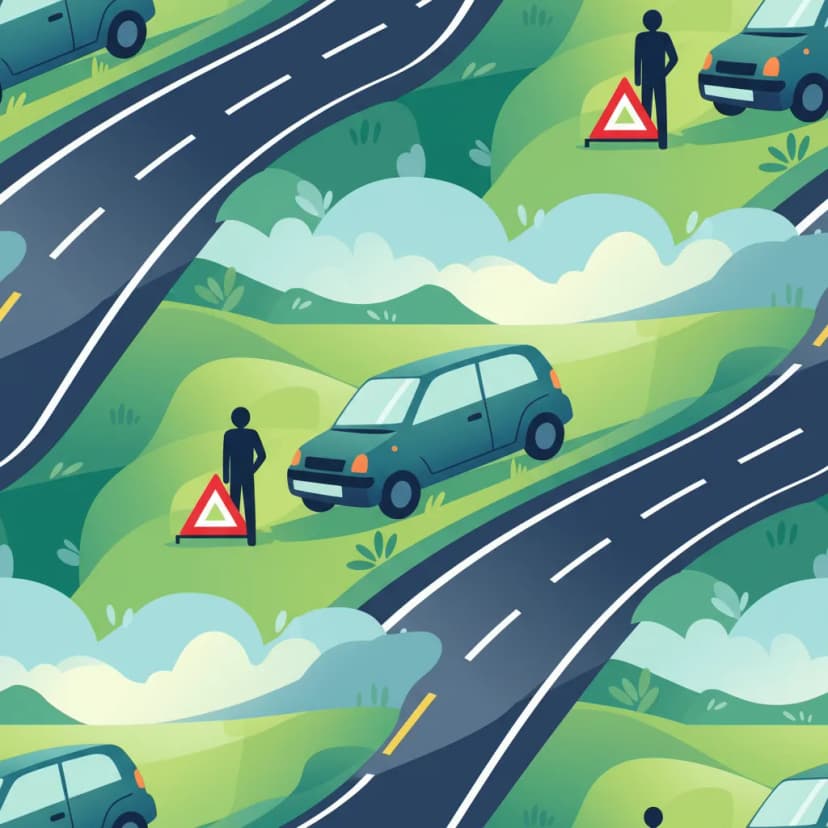
This lesson provides a safety protocol for dealing with a vehicle breakdown. You will learn the importance of trying to move the vehicle as far off the road as possible, preferably onto the shoulder or into an emergency lay-by. The lesson stresses that on high-traffic roads, the occupants' personal safety is the top priority; this involves wearing a reflective vest and waiting for assistance in a safe location away from the vehicle and the flow of traffic.
This lesson details a driver's responsibility towards pedestrians. You will learn the strict rule of yielding to pedestrians who are on or about to enter a marked, uncontrolled crosswalk. The content also covers the specific, highly restrictive rules for driving in designated pedestrian zones (gågata) and 'walking speed' areas (gångfartsområde), where pedestrians have complete priority and vehicle traffic is severely limited.
Learn how to make a collision scene safe for yourself and others. This lesson covers essential first-aid steps and when to contact emergency services, vital knowledge for any rider.
This lesson outlines the immediate, high-priority actions required at an accident scene. You will learn the 'stop, survey, secure' sequence: first, stopping and assessing the situation; second, warning other traffic by using hazard lights and placing a warning triangle; and third, taking steps to prevent further danger, such as switching off ignitions. These initial actions are crucial for the safety of everyone involved and for those approaching the scene.
This lesson outlines the absolute first priorities after a crash, with the primary rule being to ensure your own safety and avoid further harm. You will learn how to conduct a quick self-assessment for injuries, the importance of moving out of the line of traffic if possible, and how to begin assessing the scene for immediate dangers like fuel leaks or oncoming vehicles. These initial actions are vital for managing the immediate aftermath of an incident.
This lesson covers the administrative and legal obligations following a collision. You will learn under which circumstances you are legally required to notify the police, such as when there are injuries or significant property damage. The content details the essential information that must be exchanged between all involved parties—names, contact details, vehicle registration, and insurance information—and the importance of documenting the scene and gathering witness details for insurance claims.
This lesson teaches you how to make an accident scene as safe as possible for yourself, any other involved parties, and approaching traffic. You will learn the correct use of hazard lights, the placement of warning triangles, and the importance of wearing a high-visibility vest. The content also covers how to identify and manage immediate post-crash hazards, such as spilled fuel or unstable vehicles, to prevent the situation from worsening.
This lesson covers the basics of providing first aid in an emergency, which is a legal duty for anyone arriving at an accident scene. You will be introduced to the L-ABCDE mnemonic (Life-threatening situation, Airway, Breathing, Circulation, Disability, Exposure) as a way to systematically assess and prioritize injuries. The content emphasizes that the most important role is often to ensure the person is breathing and to follow the instructions of the emergency operator until professional help arrives.
This lesson focuses on the cognitive side of handling emergencies: seeing the threat early and making the right decision instantly. You will learn to analyze a developing hazard and quickly determine the best course of action, whether it's maximum braking, an evasive swerve, or a combination of both. This mental training is just as important as the physical skill, as the correct initial decision is the key to a successful outcome.
This lesson focuses on the correct use of warning devices to protect an accident or breakdown scene. You will learn to immediately activate your hazard lights (varningsblinkers). The main focus is on the proper placement of the warning triangle, explaining how the distance from the vehicle must be adapted based on the road's speed limit and visibility to give oncoming drivers adequate time to react.
Find clear answers to common questions learners have about Immediate Actions After a Collision. Learn how the lesson is structured, which driving theory objectives it supports, and how it fits into the overall learning path of units and curriculum progression in Sweden. These explanations help you understand key concepts, lesson flow, and exam focused study goals.
The absolute first step is to ensure your own safety and the safety of others. If possible, move yourself and your moped to a safe location away from traffic. If there are injuries or the scene is dangerous, activate your hazard lights to warn other road users and consider placing a warning triangle if it's safe to do so.
You should call 112 immediately if anyone is injured, if there is significant damage to property, or if the accident has caused a serious obstruction to traffic. Even if the situation seems minor, if you are unsure or if there's potential for escalation, it's always better to call for professional assistance.
Yes, you have a legal obligation to remain at the scene and report the collision to the police if there are injuries, significant damage to property (including other vehicles), or if the accident is blocking traffic. For minor incidents with no injuries and minimal damage, reporting may not be mandatory, but it's wise to check specific regulations or if any party requests it.
It's natural to be shaken after an accident. If you are able, try to follow the basic steps. If you are too injured or distressed, focus on your immediate safety and wait for assistance. If others are present, they can help. If you are alone, try to call 112 as soon as you are able.
While the focus is initially on safety and assistance, it's good practice to exchange names, contact details, and insurance information with other parties involved if it's safe and appropriate to do so. Documenting the scene with photos can also be helpful for insurance purposes.