
This lesson is vital for your Category A motorcycle license preparation, focusing on the critical first moments after a collision. You'll learn the essential steps to take immediately after an incident, prioritising your personal safety and assessing the situation to prevent further danger on Swedish roads. This knowledge is crucial for both your theory exam and real-world riding emergencies.
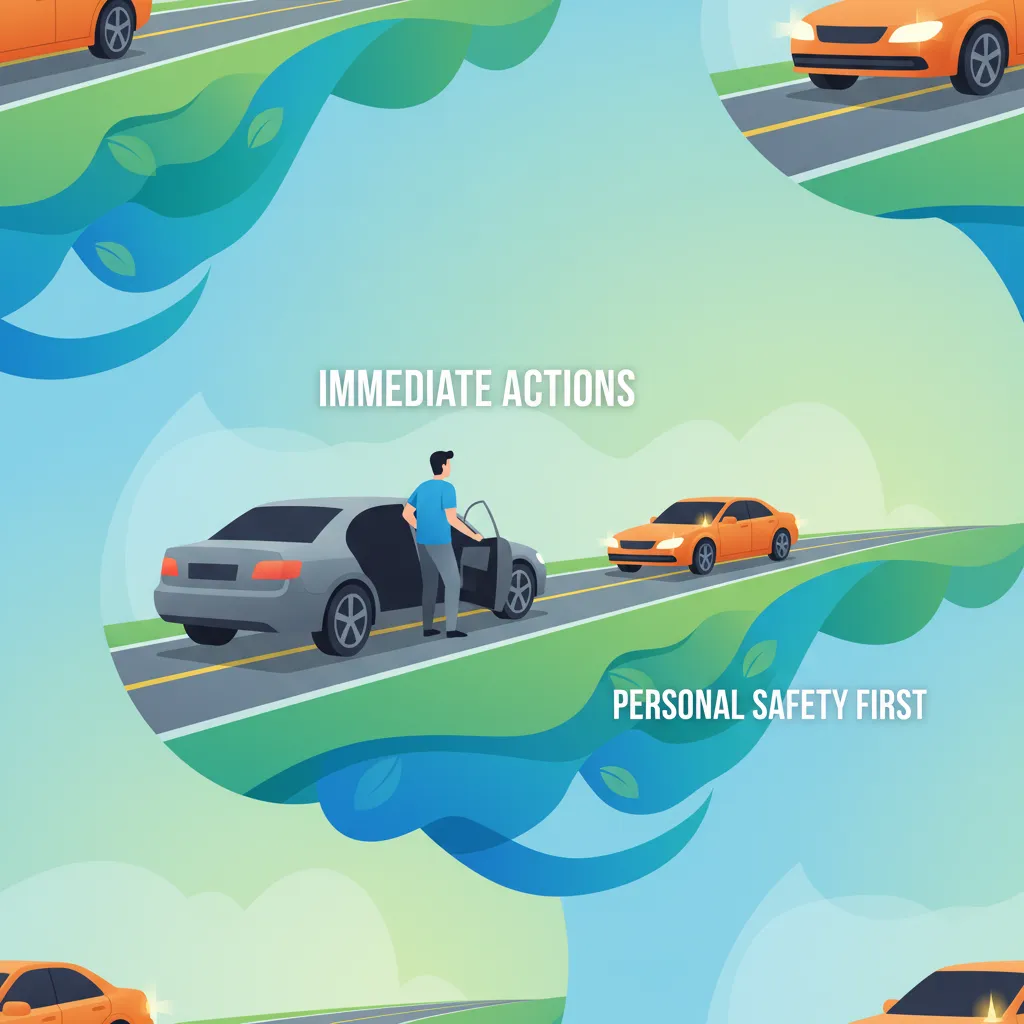
After a motorcycle collision, the moments immediately following the impact are critical. Your swift, calm, and correct actions can significantly reduce the risk of further injury, prevent secondary accidents, and ensure you meet your legal obligations under Swedish traffic law. This lesson outlines the essential steps every motorcyclist in Sweden should take, with an overriding focus on personal safety and scene management.
The immediate aftermath of a collision is often chaotic and disorienting. However, it is precisely at this moment that a structured approach is most vital. The primary goal is always to protect yourself and others from further harm. This involves a rapid transition from active riding to a pre-planned safety protocol that addresses both personal well-being and the integrity of the accident scene.
Your actions are not only crucial for safety but also form the foundation for any subsequent legal and insurance processes. By understanding and applying these protocols, you contribute to your own safety, the safety of other road users, and the efficient resolution of the incident.
Before you can assist anyone else or secure the scene, you must first ensure your own safety. This principle, known as self-preservation, is paramount. A seriously injured rider cannot effectively manage an accident scene or provide aid, potentially exacerbating the situation for everyone involved.
Immediately after impact, before attempting any movement, conduct a quick mental and physical check for injuries. This personal injury self-assessment should be swift but thorough. Focus on any pain, numbness, or loss of function, particularly in your head, neck, spine, and limbs.
Do not assume "no pain" means "no injury." Adrenaline can mask symptoms. Be especially cautious about potential head or spinal injuries. If you suspect such injuries, remain as still as possible and call for emergency medical assistance immediately.
This assessment dictates your next move: whether you can safely relocate yourself and your motorcycle, or if you must remain stationary and await emergency medical personnel. Under Trafikförordningen (Swedish Traffic Ordinance) § 5 c, you are legally obliged to render assistance, but this starts with ensuring you are capable of doing so safely.
If your self-assessment reveals no immediate severe injuries that would prevent movement, your next priority is to remove yourself and, if possible, your motorcycle from the active flow of traffic. This act of exiting the traffic lane is crucial for preventing secondary collisions.
On high-speed roads, remaining in a traffic lane after a collision is extremely dangerous. Even at low speeds, a stationary vehicle on the carriageway poses a significant hazard. Move to the hard shoulder, a sidewalk, a grass verge, or any other safe location away from oncoming vehicles. If your motorcycle is still rideable, move it carefully. If not, evacuate yourself only and leave the motorcycle where it is, provided it does not create a greater hazard by attempting to move it unsafely. Trafikförordningen § 5 c specifies that this should be done "when it can be done without further danger."
Once personal safety is addressed and you are out of immediate danger, the next critical step is to secure the accident scene. This involves making the presence of your stopped vehicle clear to other road users, thereby preventing further collisions.
Immediately activate your motorcycle's hazard warning lights (varningsblinkers). These continuous flashing indicators are designed to alert other drivers that your vehicle is stationary and potentially poses a danger.
Flashing indicator lights on a vehicle used to warn other road users of danger while the vehicle is stationary or moving slowly.
Under Trafikförordningen § 6 a, hazard warning lights must be activated when a vehicle is stationary and obstructs traffic or is in a hazardous location. This action increases your visibility significantly, giving approaching drivers more time to react.
After activating your hazard lights, retrieve your warning triangle (varningstriangel) and place it on the road. The placement distance is critical and varies depending on the type of road:
Always carry a warning triangle on your motorcycle. In poor visibility conditions like rain, fog, or darkness, consider increasing these distances to provide even more warning time.
Trafikförordningen § 4 b mandates the use of a warning triangle when a vehicle is stopped on a carriageway. If it's dark or visibility is poor, wearing a reflective safety vest (reflektionsväst) in conjunction with the triangle is highly recommended or even legally required in some contexts, to make yourself visible to approaching traffic.
Once you've signaled your presence, conduct a quick visual inspection of the immediate area around the crash. Look for any immediate dangers that could escalate the incident or harm others. This includes:
Your legal duty under Trafikförordningen § 5 c to "prevent further danger" extends to identifying and mitigating these scene hazards.
Once the immediate safety of yourself and the scene is addressed, you must fulfill your legal obligations. This involves effective communication with emergency services and exchanging information with other parties involved.
If anyone is injured, or if the situation poses a significant danger (e.g., a large fuel leak, fire, or major traffic obstruction), you are legally obligated to contact emergency services immediately. In Sweden, and across the EU, the emergency number is 112.
When you call 112, provide clear and concise information:
Delaying the emergency call to move all parties or gather information can lead to slower response times. Call 112 as soon as you are safely able to.
If other vehicles or individuals are involved in the collision, you have a legal duty under Trafikförordningen § 5 b to exchange specific information. This is crucial for insurance claims and legal investigations. You must provide (and obtain) the following details:
Do not leave the scene without exchanging this information, even if damages appear minor or the other party seems fine. Failing to do so can result in serious legal consequences, including charges for "hit-and-run" and denial of insurance claims.
Several Swedish laws govern your actions after a traffic incident, reinforcing the principles discussed:
Compliance with these regulations is not only a matter of legal duty but also a fundamental aspect of responsible road use.
The specifics of your post-collision actions may need to be adjusted based on the prevailing conditions. General rules provide a framework, but real-world situations often demand careful consideration of the context.
Ignoring or improperly executing post-collision actions can lead to severe consequences. Awareness of these common errors can help you avoid them.
These scenarios illustrate how the principles and rules apply in different real-world situations.
Setting: Two-lane country road, dry, daylight, speed limit 80 km/h. You are rear-ended while stopped at a red light. The impact is minor, and you feel only a slight jolt.
Correct Behavior: You immediately check for personal injuries, feeling for pain or discomfort, especially in your neck and back. As you feel capable of movement, you activate your motorcycle's hazard warning lights. You then carefully dismount, retrieve your warning triangle, and place it approximately 30 meters behind your bike, ensuring it's clearly visible. You then move yourself and your motorcycle (if safe to do so) to the hard shoulder. You call 112 to report the collision and then exchange contact and insurance information with the other driver, making sure to note down their details. You remain at the scene until police arrive.
Setting: City center intersection, heavy rain, night-time, low visibility, speed limit 50 km/h. You are involved in a side-impact with a car turning left, and you are thrown from your bike.
Correct Behavior: You conduct a rapid self-assessment while lying on the ground. You feel a significant impact to your head but no immediate debilitating pain, though you suspect a concussion. You decide to remain as still as possible due to the potential head injury. While still on the ground, you activate your motorcycle's hazard lights. You then don your reflective safety vest (if not already wearing it) and use your free hand to signal to any approaching pedestrians or vehicles, warning them of the danger. You then immediately call 112, providing your precise location, stating "motorcycle collision, possible head injury, heavy rain, low visibility." You describe the car involved and any immediate hazards like debris. You instruct anyone nearby not to move you.
Setting: Motorway (E4) at km 45, heavy traffic, daylight. Your motorcycle suffers a sudden front wheel lock-up, causing you to come to an abrupt stop.
Correct Behavior: You instinctively steer your motorcycle towards the hard shoulder, doing your best to get completely out of the active traffic lane. Once safely on the hard shoulder, you disable the ignition and immediately activate your hazard lights. You quickly dismount and move to a safe position behind a guardrail, if available, or well behind your motorcycle. You then retrieve your warning triangle and place it approximately 100 meters behind your motorcycle on the hard shoulder, facing oncoming traffic. You call 112 to report your breakdown and the obstruction on the motorway, providing the kilometer marker and direction of travel. You await assistance from behind the safety barrier.
Setting: Rural road, light rain, speed limit 70 km/h. A collision causes a small fuel leak from your motorcycle.
Correct Behavior: After checking for personal injuries and activating hazard lights, you notice a small puddle forming beneath your motorcycle. You identify it as a fuel leak. You immediately move yourself and any other uninjured parties away from the spill area to a safe distance, warning anyone approaching about the flammable liquid. You call 112 and specifically report the fuel leak, providing your exact location and the size of the spill. You avoid stepping into the fuel and do not attempt to start the motorcycle. If you have any absorbent material in your roadside assistance kit and are trained to use it, you might carefully place it to contain the leak, but your priority remains safety and communication with emergency services.
Understanding and immediately implementing the correct actions after a motorcycle collision is a fundamental skill for every rider. Your ability to swiftly assess your own condition, secure the scene, signal your presence, identify hazards, and communicate effectively with emergency services and other parties can be life-saving. Remember the priority hierarchy:
By adhering to these principles and adapting them to contextual variations, you not only fulfill your legal obligations under Swedish law but also significantly enhance the safety outcomes for yourself and all road users in the aftermath of an incident. This knowledge builds upon your understanding of hazard perception, emergency maneuvers, and legal responsibilities, preparing you for comprehensive accident response.
Lesson content overview
Explore all units and lessons included in this driving theory course.
Explore search topics learners often look for when studying Immediate Post-Collision Actions and Personal Safety. These topics reflect common questions about road rules, driving situations, safety guidance, and lesson level theory preparation for learners in Sweden.
Browse additional driving theory lessons that cover connected traffic rules, road signs, and common driving situations related to this topic. Improve your understanding of how different rules interact across everyday traffic scenarios.
Learn how to secure your motorcycle accident scene to prevent further incidents. This lesson covers essential steps for hazard management, signalling the area, and ensuring safety for yourself and others involved.
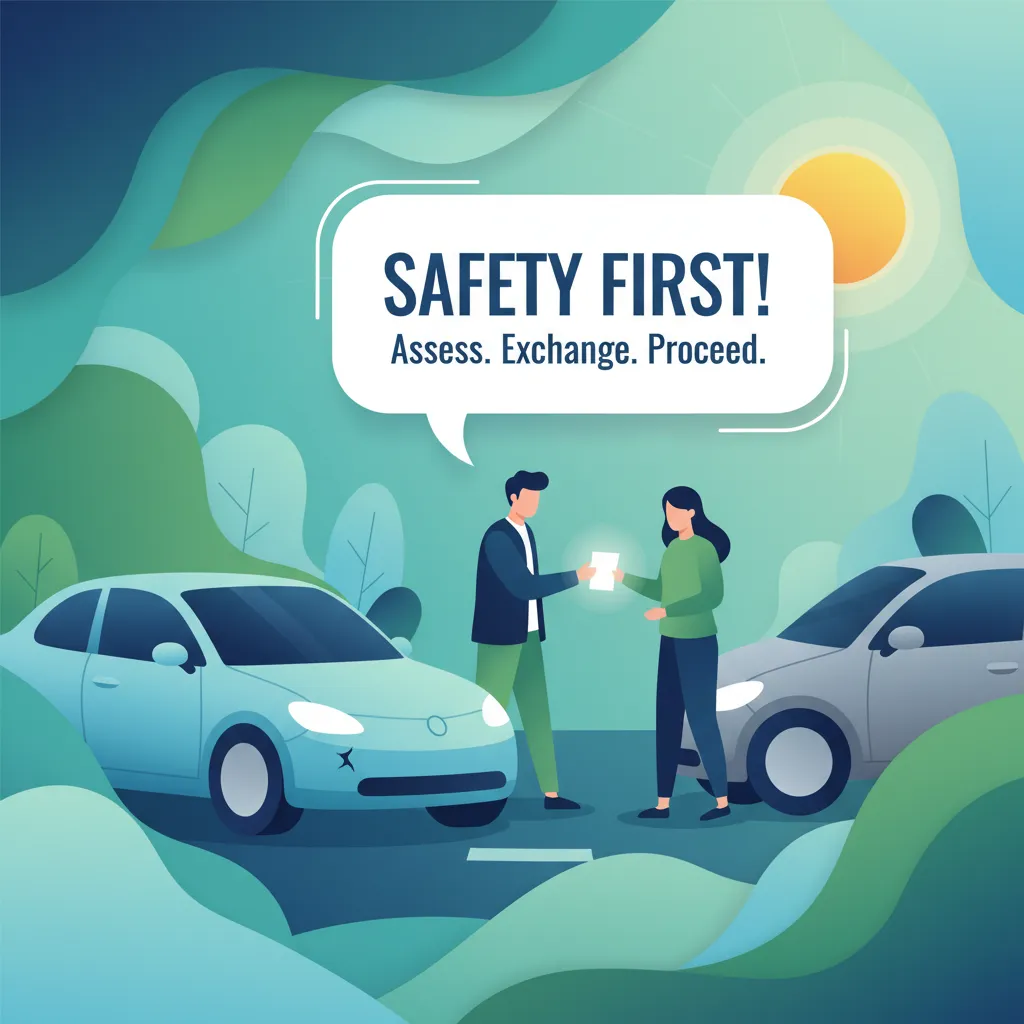
This lesson outlines the immediate, high-priority actions required at an accident scene. You will learn the 'stop, survey, secure' sequence: first, stopping and assessing the situation; second, warning other traffic by using hazard lights and placing a warning triangle; and third, taking steps to prevent further danger, such as switching off ignitions. These initial actions are crucial for the safety of everyone involved and for those approaching the scene.
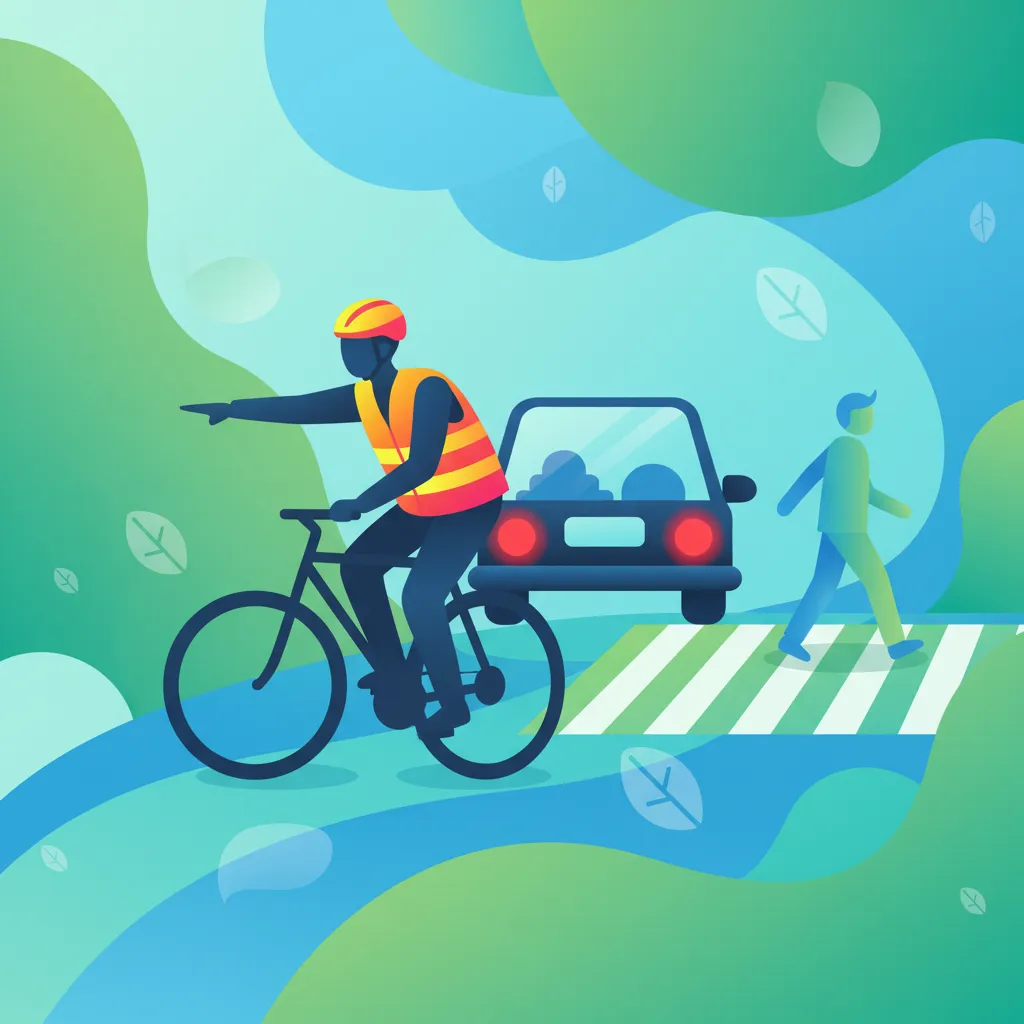
This lesson teaches you how to make an accident scene as safe as possible for yourself, any other involved parties, and approaching traffic. You will learn the correct use of hazard lights, the placement of warning triangles, and the importance of wearing a high-visibility vest. The content also covers how to identify and manage immediate post-crash hazards, such as spilled fuel or unstable vehicles, to prevent the situation from worsening.
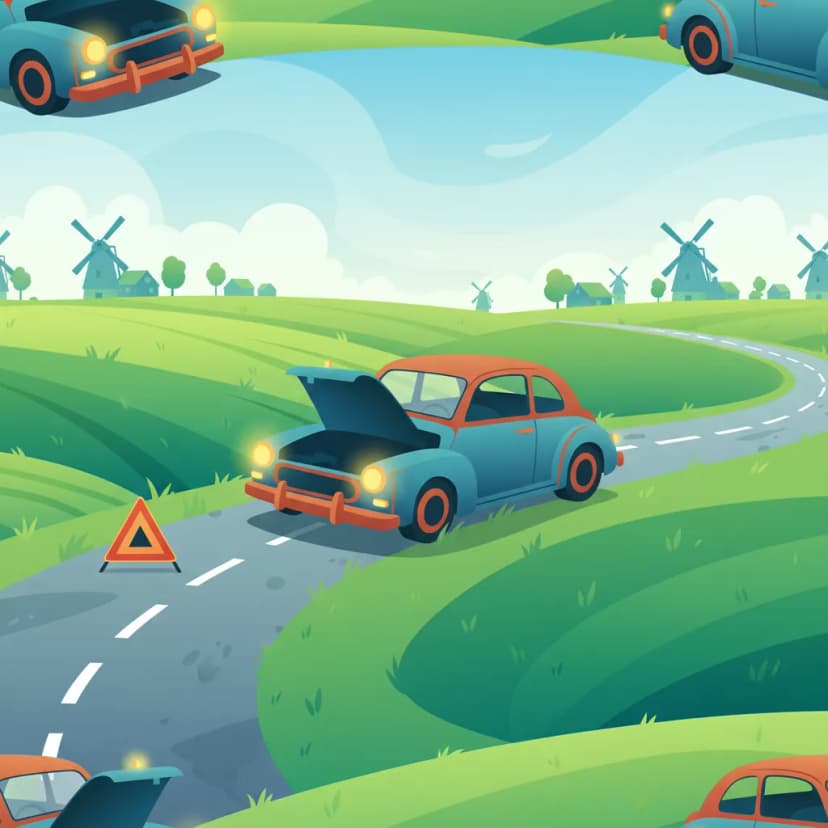
This lesson focuses on the correct use of warning devices to protect an accident or breakdown scene. You will learn to immediately activate your hazard lights (varningsblinkers). The main focus is on the proper placement of the warning triangle, explaining how the distance from the vehicle must be adapted based on the road's speed limit and visibility to give oncoming drivers adequate time to react.
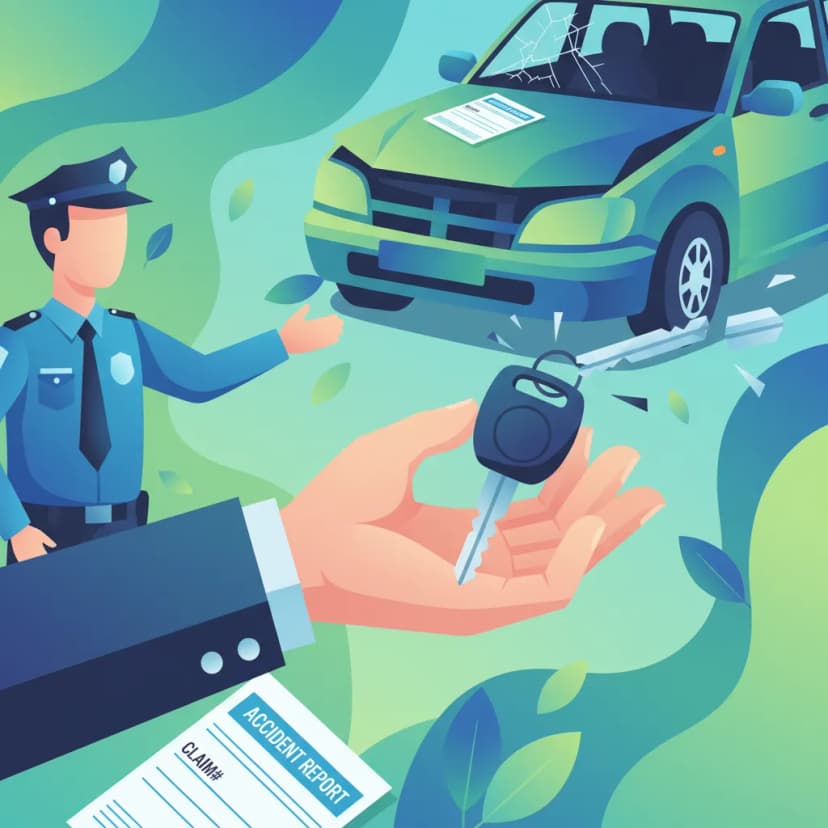
This lesson covers the administrative and legal obligations following a collision. You will learn under which circumstances you are legally required to notify the police, such as when there are injuries or significant property damage. The content details the essential information that must be exchanged between all involved parties—names, contact details, vehicle registration, and insurance information—and the importance of documenting the scene and gathering witness details for insurance claims.

This lesson provides a clear, step-by-step guide for what to do in the immediate aftermath of a collision. It prioritizes safety by explaining how to secure the scene to prevent further incidents. The content covers the importance of checking for injuries, calling for emergency help if needed, and remaining calm while fulfilling initial legal obligations.
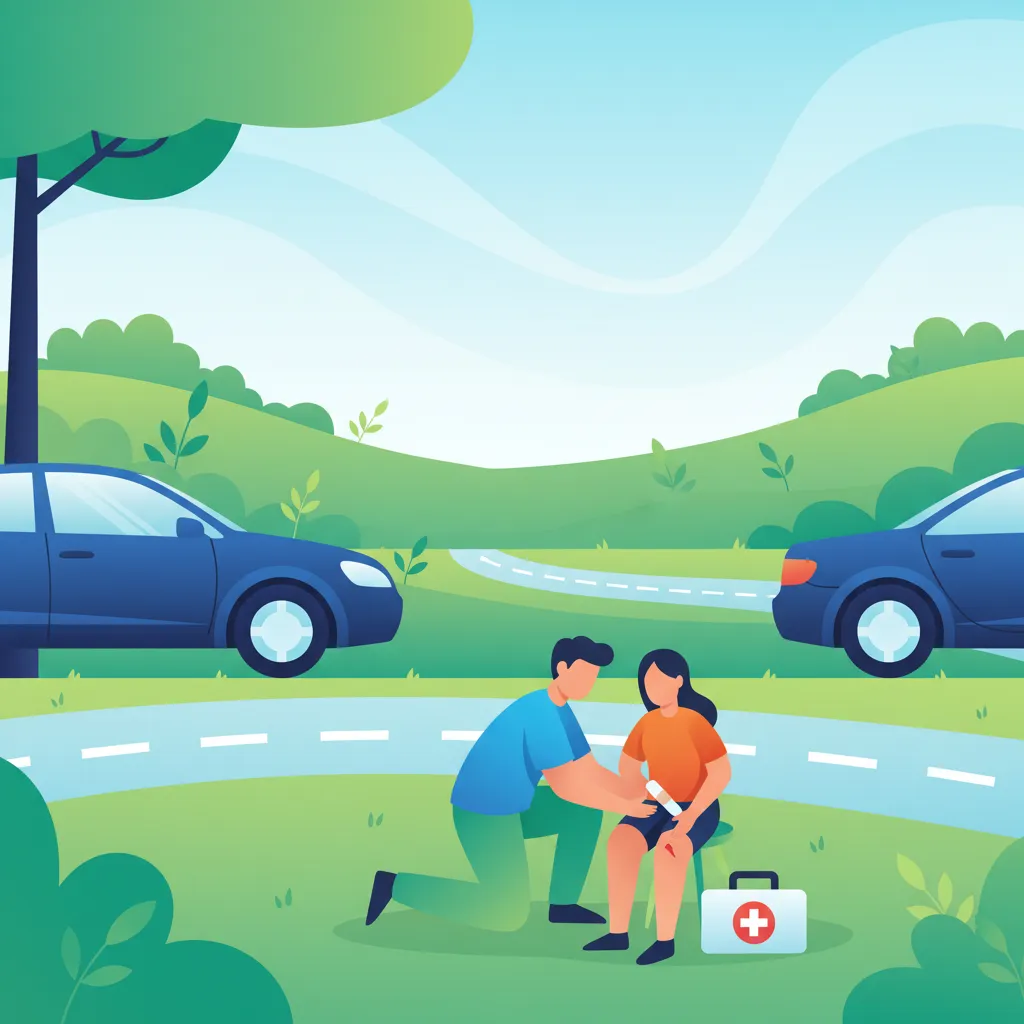
This lesson covers the basics of providing first aid in an emergency, which is a legal duty for anyone arriving at an accident scene. You will be introduced to the L-ABCDE mnemonic (Life-threatening situation, Airway, Breathing, Circulation, Disability, Exposure) as a way to systematically assess and prioritize injuries. The content emphasizes that the most important role is often to ensure the person is breathing and to follow the instructions of the emergency operator until professional help arrives.
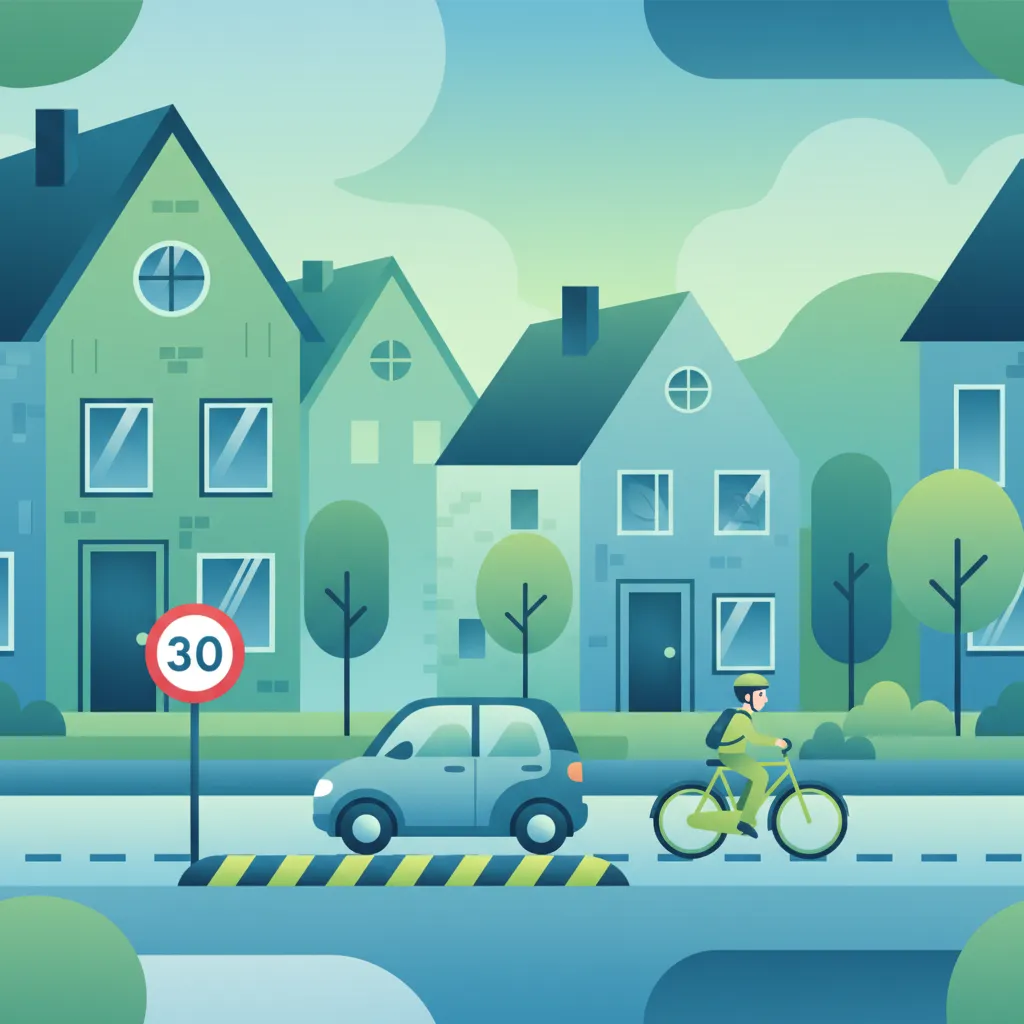
This lesson focuses on the high level of caution required when driving in residential areas. You will learn about the rules for special zones like 'gångfartsområde' (walking speed area) and the need to navigate around speed calming measures like speed bumps. The central theme is anticipating unpredictable behavior from residents, especially children, and managing the risks posed by parked cars that severely limit visibility.
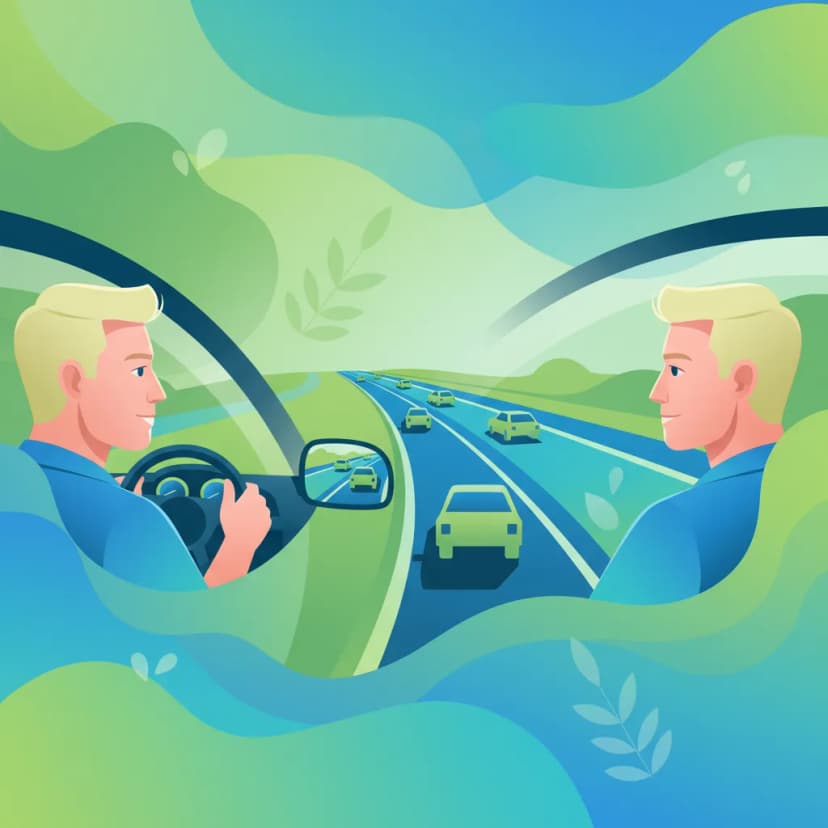
This lesson focuses on creating a complete awareness of the traffic situation around your vehicle. You will learn the correct procedure for using your interior and side mirrors in a continuous scanning pattern. Crucially, the lesson explains what the blind spot (döda vinkeln) is, where it is located, and why a physical head check over the shoulder is a non-negotiable safety step before any lateral movement like changing lanes or turning.
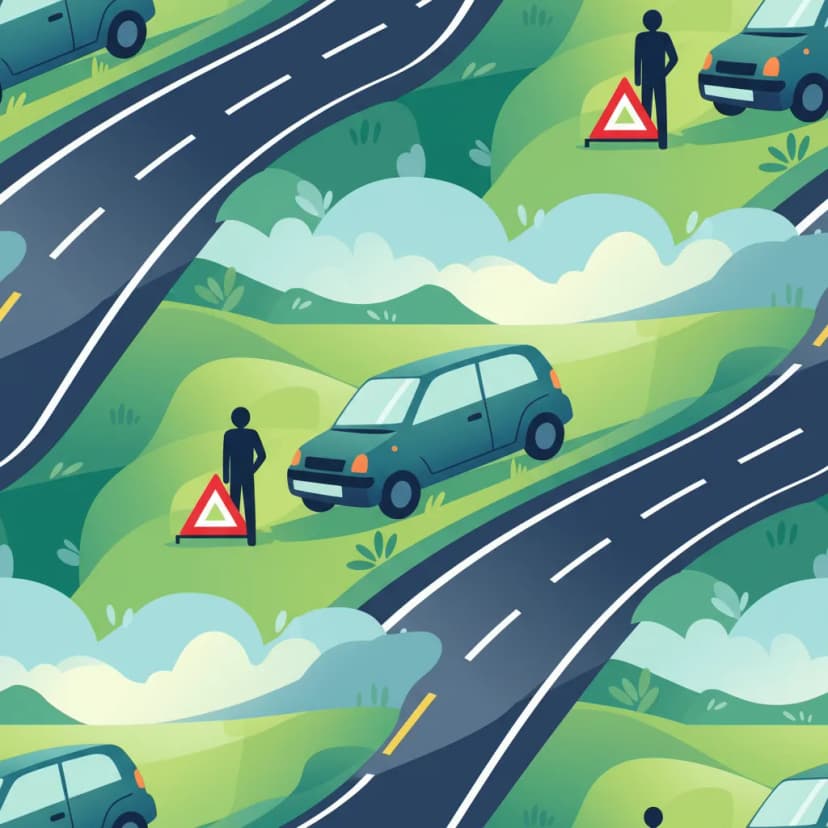
This lesson provides a safety protocol for dealing with a vehicle breakdown. You will learn the importance of trying to move the vehicle as far off the road as possible, preferably onto the shoulder or into an emergency lay-by. The lesson stresses that on high-traffic roads, the occupants' personal safety is the top priority; this involves wearing a reflective vest and waiting for assistance in a safe location away from the vehicle and the flow of traffic.

This lesson details the procedural and legal steps for reporting an accident. You will learn when you are legally obligated to report a crash to the police, what information to exchange with other involved parties, and the importance of documenting the scene with photographs and witness details. This information is vital for ensuring any subsequent insurance claims and legal proceedings are handled smoothly and fairly.
Understand essential first aid procedures for motorcyclists after an accident. This lesson focuses on immediate care for injuries, assisting others at the scene, and knowing when to seek professional medical help.
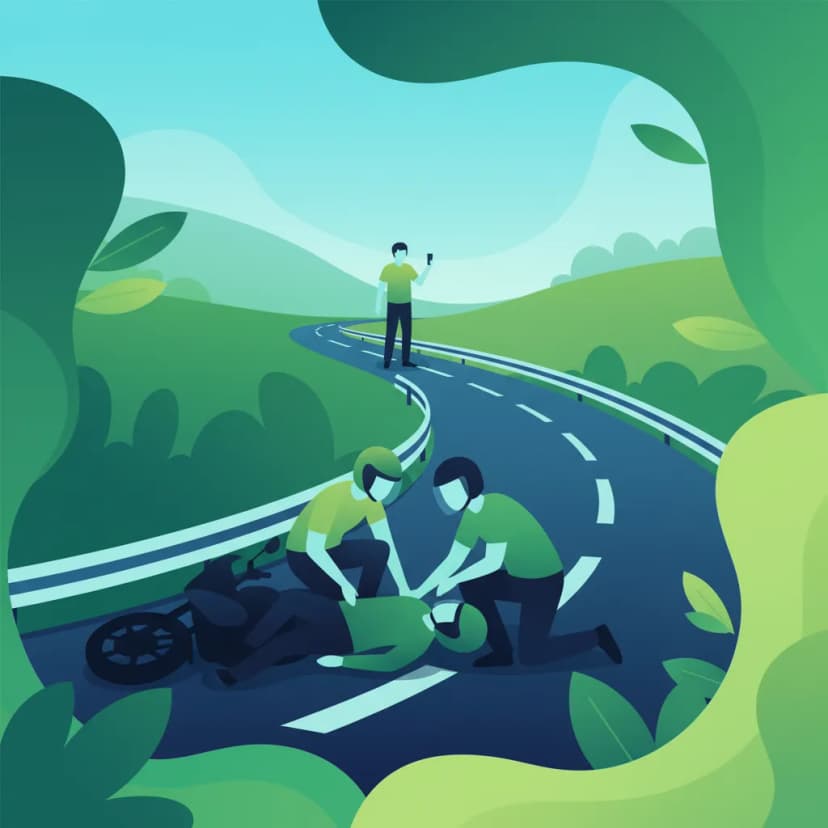
This lesson provides crucial, basic first aid knowledge tailored to the types of injuries common in motorcycle accidents. You will learn the L-ABC (Läge, Andning, Blödning, Chock) protocol for assessing a casualty. The content covers how to control severe bleeding, how to treat for shock, and the critical rule of when and why you should not remove a rider's helmet unless absolutely necessary to maintain an airway, enabling you to provide effective help until professionals arrive.

This lesson provides an introduction to basic first-aid principles that can be applied at the scene of an accident. It covers critical actions such as assessing a casualty's consciousness, checking for breathing, and controlling severe bleeding. The content also addresses the important question of when and how to safely remove a helmet from an injured rider.
This lesson teaches you how to make an accident scene as safe as possible for yourself, any other involved parties, and approaching traffic. You will learn the correct use of hazard lights, the placement of warning triangles, and the importance of wearing a high-visibility vest. The content also covers how to identify and manage immediate post-crash hazards, such as spilled fuel or unstable vehicles, to prevent the situation from worsening.
This lesson covers the basics of providing first aid in an emergency, which is a legal duty for anyone arriving at an accident scene. You will be introduced to the L-ABCDE mnemonic (Life-threatening situation, Airway, Breathing, Circulation, Disability, Exposure) as a way to systematically assess and prioritize injuries. The content emphasizes that the most important role is often to ensure the person is breathing and to follow the instructions of the emergency operator until professional help arrives.
This lesson provides a clear, step-by-step guide for what to do in the immediate aftermath of a collision. It prioritizes safety by explaining how to secure the scene to prevent further incidents. The content covers the importance of checking for injuries, calling for emergency help if needed, and remaining calm while fulfilling initial legal obligations.
This lesson outlines the immediate, high-priority actions required at an accident scene. You will learn the 'stop, survey, secure' sequence: first, stopping and assessing the situation; second, warning other traffic by using hazard lights and placing a warning triangle; and third, taking steps to prevent further danger, such as switching off ignitions. These initial actions are crucial for the safety of everyone involved and for those approaching the scene.
This lesson details the procedural and legal steps for reporting an accident. You will learn when you are legally obligated to report a crash to the police, what information to exchange with other involved parties, and the importance of documenting the scene with photographs and witness details. This information is vital for ensuring any subsequent insurance claims and legal proceedings are handled smoothly and fairly.
This lesson covers the final phase of an emergency maneuver: coming to a safe, controlled stop and moving off the road. You will learn the procedure for finding a safe spot, signaling your intentions, and securing the motorcycle. It also addresses the important steps to take after the immediate danger has passed, including checking yourself and your vehicle for damage and taking a moment to regain your composure before continuing your journey.

This lesson prepares you for the specific challenges of riding on rural roads in Sweden. You will learn how to read the road ahead for changes in surface quality, approach blind corners safely, and adjust your speed for narrow lanes with no shoulder. The content also covers how to anticipate and safely interact with slow-moving agricultural vehicles and the potential for wild animals on the road, ensuring you are prepared for the unpredictable nature of country riding.
This final lesson addresses the longer-term aftermath of an accident. You will learn about the importance of having your motorcycle professionally inspected for hidden damage before riding it again. The content also touches on the psychological aspects of recovery, offering advice on how to regain confidence, and covers the final steps in the legal and insurance processes, ensuring you have a clear understanding of the entire post-accident journey.
Find clear answers to common questions learners have about Immediate Post-Collision Actions and Personal Safety. Learn how the lesson is structured, which driving theory objectives it supports, and how it fits into the overall learning path of units and curriculum progression in Sweden. These explanations help you understand key concepts, lesson flow, and exam focused study goals.
The absolute first priority is your own safety. Before anything else, assess yourself for injuries and if possible, move yourself and your motorcycle out of the immediate flow of traffic to a safe location. This prevents further collisions and allows you to better assess the situation.
Move your motorcycle only if it is safe to do so and does not risk further injury or cause a traffic obstruction. If there is significant damage or you suspect internal injuries, it may be safer to leave it in place until emergency services arrive. The key is to assess the risk versus the benefit.
Quickly look for immediate hazards such as leaking fuel, fire, sharp debris, or oncoming traffic. Be aware of your surroundings and consider any unusual smells or sounds. If you are able, try to warn other approaching vehicles if the scene is not yet secured.
If you are injured and unable to move, stay as still as possible to avoid worsening the injury. Your priority then shifts to signalling for help and alerting others to your presence and the danger. If possible, try to call emergency services yourself or ask a bystander to do so.
Yes, the principles of immediate self-preservation and scene assessment are universal to all motorcycle accidents, whether you are involved with other vehicles, pedestrians, or simply lost control. The severity of the situation may dictate the feasibility of certain actions, but the priorities remain the same.