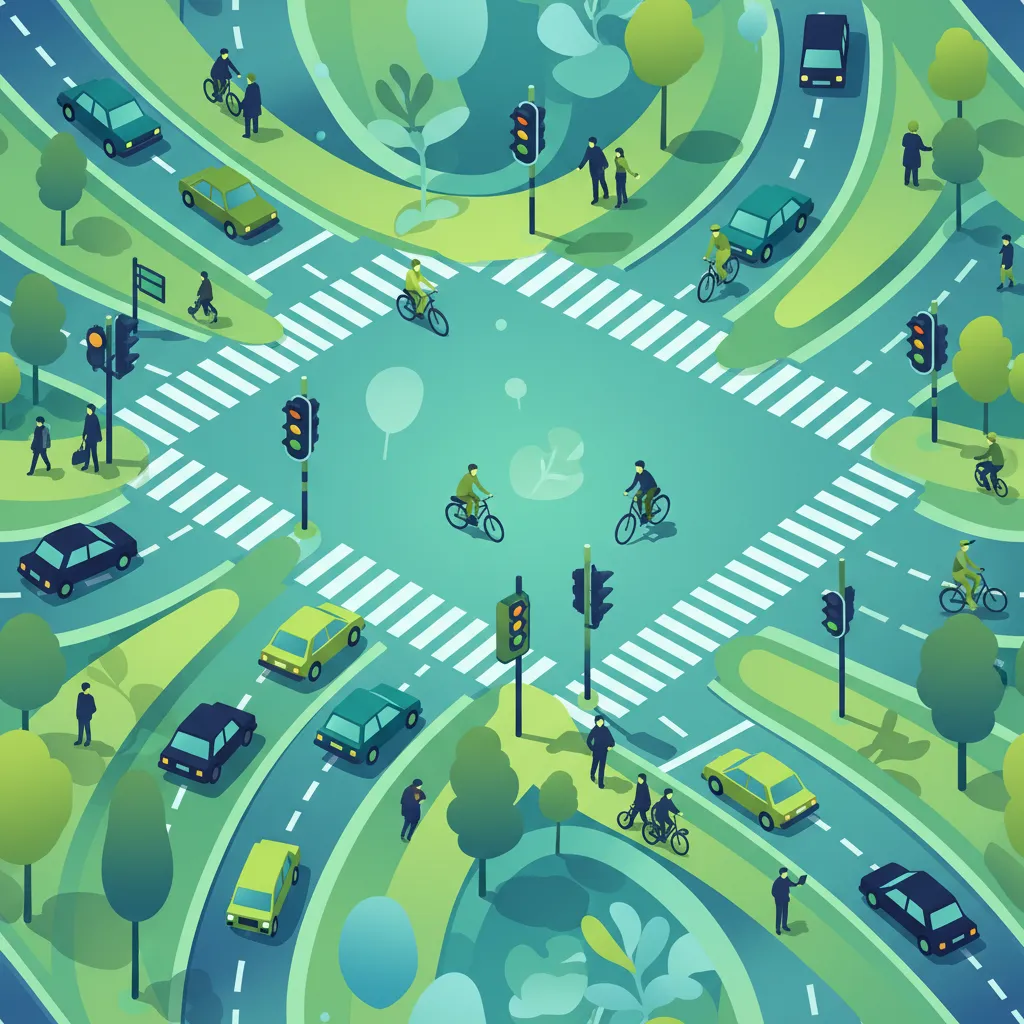
This lesson focuses on the specific techniques required for riding in busy city and town environments as part of your Swedish Motorcycle Theory Course. You will learn how to maintain correct lane positioning amidst dense traffic, navigate complex intersections with multiple signals, and manage the motorcycle at low speeds in stop-and-go conditions. Emphasis is placed on heightened awareness of pedestrians, cyclists, and vehicles making sudden maneuvers, which are common hazards in urban settings, preparing you for Unit 6 and beyond.
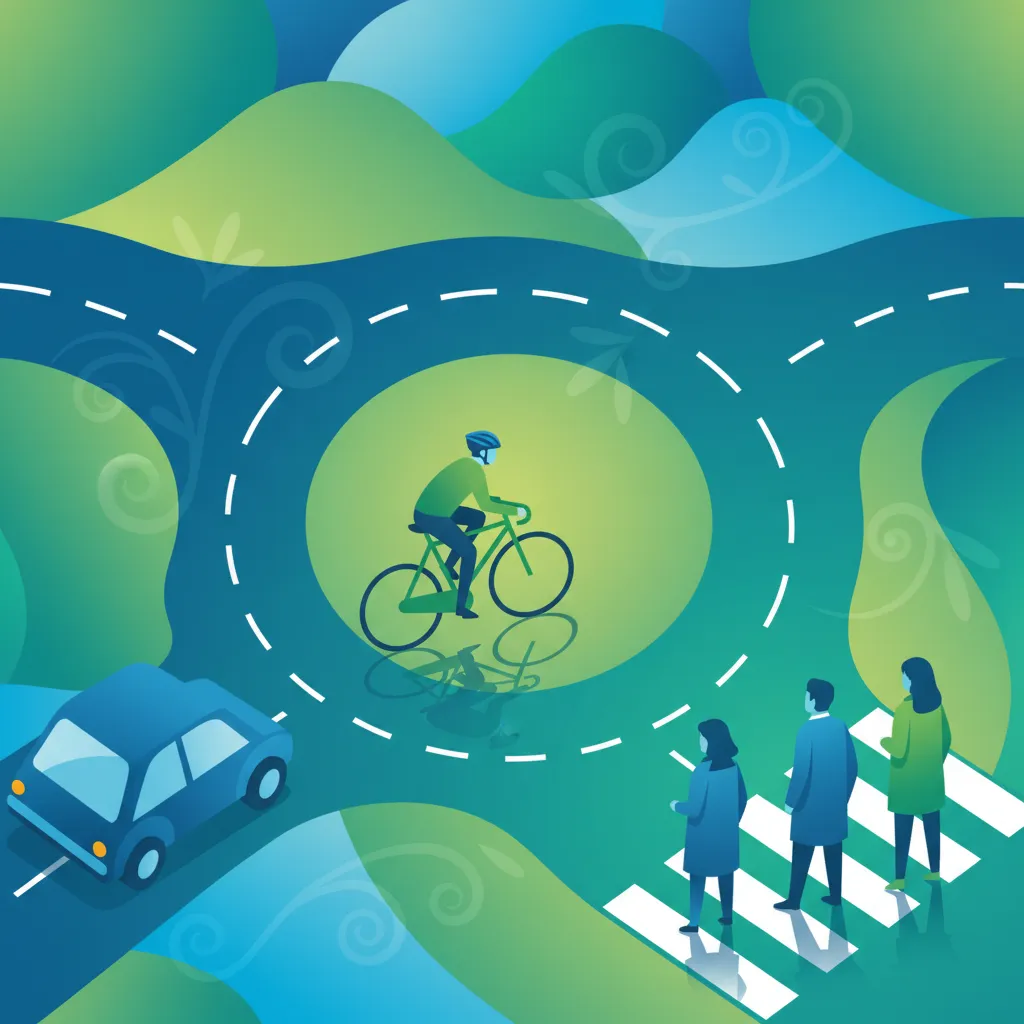
Riding a motorcycle in a busy city or town presents unique challenges compared to open roads. This lesson, part of the Swedish Motorcycle Theory Course, focuses on the specific techniques and heightened awareness required for safely navigating dense urban environments. You will learn to maintain correct lane positioning, skillfully manage your motorcycle at low speeds in stop-and-go conditions, and competently handle complex intersections with multiple signals. Emphasis is placed on the critical awareness needed for pedestrians, cyclists, and vehicles making sudden maneuvers—common hazards in urban settings.
Urban areas are hotspots for traffic conflicts due to the high concentration of diverse road users, including pedestrians, cyclists, cars, buses, and trams. Mastering lane discipline and intersection handling is not only vital for passing the Swedish Category A theory exam but also for your day-to-day safety on the road. Effective urban riding minimizes your exposure to hazards, improves your predictability for others, and ensures you comply with Swedish traffic laws (Trafikförordningen).
This lesson builds upon foundational knowledge from earlier modules, including an understanding of Swedish traffic signs and signals (Lesson 1), right-of-way and priority rules (Lesson 2), speed management and following distances (Lesson 3), basic motorcycle dynamics and control (Lesson 4), and general hazard perception principles (Lesson 5). These skills are integrated to form a cohesive approach to urban riding, preparing you for more specific challenges like rural roads and complex junctions discussed in later lessons.
Safe urban traffic flow is a dynamic interplay of speed, density, and user behavior. To manage this complexity, three core principles guide effective motorcycle riding:
Maintaining a consistent, appropriate lateral position within your lane, relative to road markings, traffic flow, and surrounding road users.
Lane discipline is crucial for minimizing the risk of lateral conflicts and enhancing your motorcycle's stability. By holding a predictable line, you signal your intentions clearly to other drivers and pedestrians, allowing them more time to react and reducing the likelihood of unexpected maneuvers. Continuous assessment of lane width, vehicle width, and the position of other road users is essential. You must be prepared to adjust your position for obstacles, turning radii, and various road conditions.
Adjusting your speed to seamlessly integrate with the surrounding traffic flow while always retaining an adequate buffer for safe stopping.
Minimizing speed differentials between your motorcycle and other vehicles is key to preventing overtaking hazards and ensuring smoother traffic integration. This principle requires early anticipation of traffic signals, pedestrian crossings, and potential queue build-up. By smoothly adjusting your speed, you reduce abrupt braking and acceleration, contributing to a more relaxed and safer ride.
Executing low-speed maneuvers, such as creeping, braking, and starting, with smooth and precise throttle and clutch control to prevent stalls and sudden movements.
In dense urban traffic, frequent stops and starts are inevitable. Mastery of controlled stop-and-go techniques prevents loss of stability and significantly reduces the risk of rear-end collisions. This involves adept clutch modulation, the ability to counter-steer effectively at very low speeds, and appropriate use of the rear brake to maintain balance and smooth progression.
Applying specific right-of-way rules based on signal phases, road signage, and the geometry of the junction.
Intersections are critical points where different traffic streams converge, demanding precise knowledge of signal timing, priority markings, and the protection of vulnerable users. Understanding and correctly applying priority rules ensures an orderly flow of traffic and prevents conflicting movements, which are common causes of accidents at junctions.
Prioritizing the safety of pedestrians, cyclists, and other motorcyclists through heightened awareness, generous following distances, and cautious maneuvers.
Swedish road traffic law explicitly mandates the protection of vulnerable road users, making it a legal requirement and a critical factor in reducing severe injuries. Riders must constantly scan ahead, anticipate potential crossings, and be prepared to yield, even when they may have nominal priority, to ensure the safety of those with less protection.
Selecting the optimal lateral position within your lane is fundamental for safety in urban environments. This involves choosing a spot that provides sufficient clearance from curbs, parked vehicles, and adjacent traffic, while also allowing ample space for maneuvering and evasive action.
On wide urban streets, riding in the center of your lane often provides the best visibility and gives you equal space to react to hazards on either side. This position also makes you more visible to other drivers and helps to deter vehicles from attempting to squeeze past you in the same lane. For example, a rider might stay centered on a one-way street to maintain clear space, anticipating a bus needing to merge.
Sometimes, riding centrally isn't the safest option. Edge-lane riding might be used when anticipating a right turn, positioning you closer to the curb (but not excessively) to prepare for the turn. Offset riding involves a slight shift to the left or right within the lane to avoid road defects like potholes, drain covers, or oil slicks, or to create a buffer from parked cars or other motorcycles. For instance, near a bus stop, you might offset to the left edge of your lane to avoid the sudden opening of bus doors or passengers disembarking. Remember, Swedish Traffic Ordinance (Trafikförordningen) mandates that vehicles occupy the lane appropriate for their width and must not obstruct traffic.
Safe riding at speeds below 30 km/h is a distinct skill set, especially vital in urban stop-and-go traffic.
Understanding the nuances of traffic light phases and signal indications is paramount for safe urban riding.
The standard traffic light cycle progresses from red, to red-plus-amber, to green, and then to amber before returning to red.
Intersections vary widely in urban settings. Knowing how to classify them and apply the correct priority rules is essential.
These junctions are governed by traffic lights, which dictate when vehicles can move. Obedience to these signals is mandatory (Trafikförordningen § 57). Even with a green light, always perform a quick check for unexpected hazards such as a vehicle running a red light or a pedestrian still in the crossing.
At intersections without traffic lights or specific priority signs, the "right-hand priority" (högerregeln) rule generally applies in Sweden. This means you must give way to any vehicle approaching from your right. For example, at an uncontrolled four-way junction, a rider approaching from the left must yield to vehicles coming from the right. If traffic lights are malfunctioning, treat the intersection as uncontrolled and apply the right-hand priority rule with extreme caution.
Roundabouts are designed to improve traffic flow, but require specific discipline:
Motorcyclists, while more vulnerable than car drivers, must still prioritize the safety of pedestrians and cyclists who have even less protection.
Recognize "yield zones," which are marked or implied areas where you must give way, such as zebra crossings or where cyclists might merge. Always anticipate pedestrian and cyclist movements, especially when approaching intersections or turning. A quick scan of sidewalks and bike paths can prevent surprises.
Cyclists can easily disappear into your motorcycle's blind spots, particularly when you are preparing to turn or change lanes. Always perform a shoulder check (look over your shoulder) before any lateral movement. When overtaking a cyclist, Swedish law (Trafikförordningen § 14) mandates a minimum lateral clearance of 1.5 metres if there is no solid line separating you. Never squeeze past a cyclist without adequate space, even if you signal or sound your horn.
Navigating congested city streets often requires carefully executed lane changes and overtaking maneuvers.
Lane splitting on motorways in Sweden is explicitly prohibited and can lead to fines and licence penalties. Exercise extreme caution and verify local regulations for urban lane splitting.
Adherence to specific Swedish traffic laws is non-negotiable for safe urban riding.
While some actions are best practices rather than statutory rules, they are essential for safety:
Awareness of frequent violations and dangerous habits can significantly enhance your safety.
Urban conditions are rarely static. Your riding strategy must adapt to various environmental factors.
Understanding the direct consequences of your actions reinforces safe riding practices:
This lesson assumes you have a strong grasp of:
The skills and knowledge gained here are foundational for:
Scenario: It's a rainy evening, visibility is reduced to about 30 metres, and you're approaching a four-way signalised intersection on a main urban arterial road. Your light is green, but you see a pedestrian beginning to cross on the opposite side, slightly delayed. Correct Behavior: You maintain your lane position, gently reduce speed, and scan for any further pedestrian movement or other unexpected hazards. You proceed through the intersection only after confirming the pedestrian has cleared the crossing and the path is safe, while also being mindful of potentially longer red phases at other arms of the junction. Why Correct: This demonstrates compliance with both traffic signals and pedestrian priority, reducing collision risk in adverse conditions where reaction times are slower.
Scenario: You are riding at 20 km/h on a narrow city street (2.5 m wide) with no traffic lights. There is a marked pedestrian crossing mid-block, and a group of pedestrians is stepping onto it. Correct Behavior: You immediately signal your intention to slow, apply gentle braking, and stop completely before the crossing line, allowing the pedestrians to cross fully and safely. Why Correct: Pedestrians have legal priority at marked crossings in Sweden, even when there are no traffic signals.
Scenario: You intend to enter a multi-lane roundabout with a designated cyclist lane during moderate daytime traffic. Cyclists are already circulating within the roundabout. Correct Behavior: Before entering, you check your mirrors, scan for all circulating traffic, particularly cyclists, and yield to them. You then select the appropriate entry lane for your intended exit and, once inside, signal right after passing the exit preceding your own. Why Correct: Yielding to existing traffic prevents collisions, especially with vulnerable cyclists, and proper signaling maintains smooth, predictable flow for all users.
Scenario: You are at the rear of a long queue of mixed traffic at a red light, with a slow-moving delivery van ahead of you. The light is about to turn green. Correct Behavior: You use your rear brake to hold the motorcycle steady, then gradually apply throttle as the queue begins to move, maintaining a safe gap to the vehicle in front. You avoid any sudden, abrupt acceleration. Why Correct: Smooth acceleration reduces the risk of rear-end collisions and helps maintain the motorcycle's stability, which is crucial in dense, stop-and-go conditions.
Scenario: You are on a side road that has a flashing amber traffic signal. The main road, perpendicular to your position, has a steady green light and currently low traffic. You want to turn left onto the main road. Correct Behavior: You bring your motorcycle to a stop, or slow significantly, and scan thoroughly for any traffic already on the main road and for pedestrians. You yield to any existing traffic on the main road and only proceed to turn left when the path is entirely clear and safe. Why Correct: A flashing amber signal dictates that you must proceed with caution and yield to all other traffic. It does not grant automatic right-of-way.
Mastering urban motorcycle riding in Sweden requires a comprehensive approach, combining legal adherence with advanced riding techniques. The core takeaways from this lesson include:
By diligently applying these principles and techniques, you will significantly enhance your safety and confidence when riding your motorcycle in Sweden's dynamic urban environments.
Lesson content overview
Explore all units and lessons included in this driving theory course.
Explore search topics learners often look for when studying Urban Traffic Flow, Intersections, and Lane Discipline. These topics reflect common questions about road rules, driving situations, safety guidance, and lesson level theory preparation for learners in Sweden.
Browse additional driving theory lessons that cover connected traffic rules, road signs, and common driving situations related to this topic. Improve your understanding of how different rules interact across everyday traffic scenarios.
Explore the specific priority rules and safe maneuvering techniques required for navigating complex urban intersections and roundabouts on a motorcycle in Sweden. Understand how to manage traffic flow and avoid hazards in busy city environments.
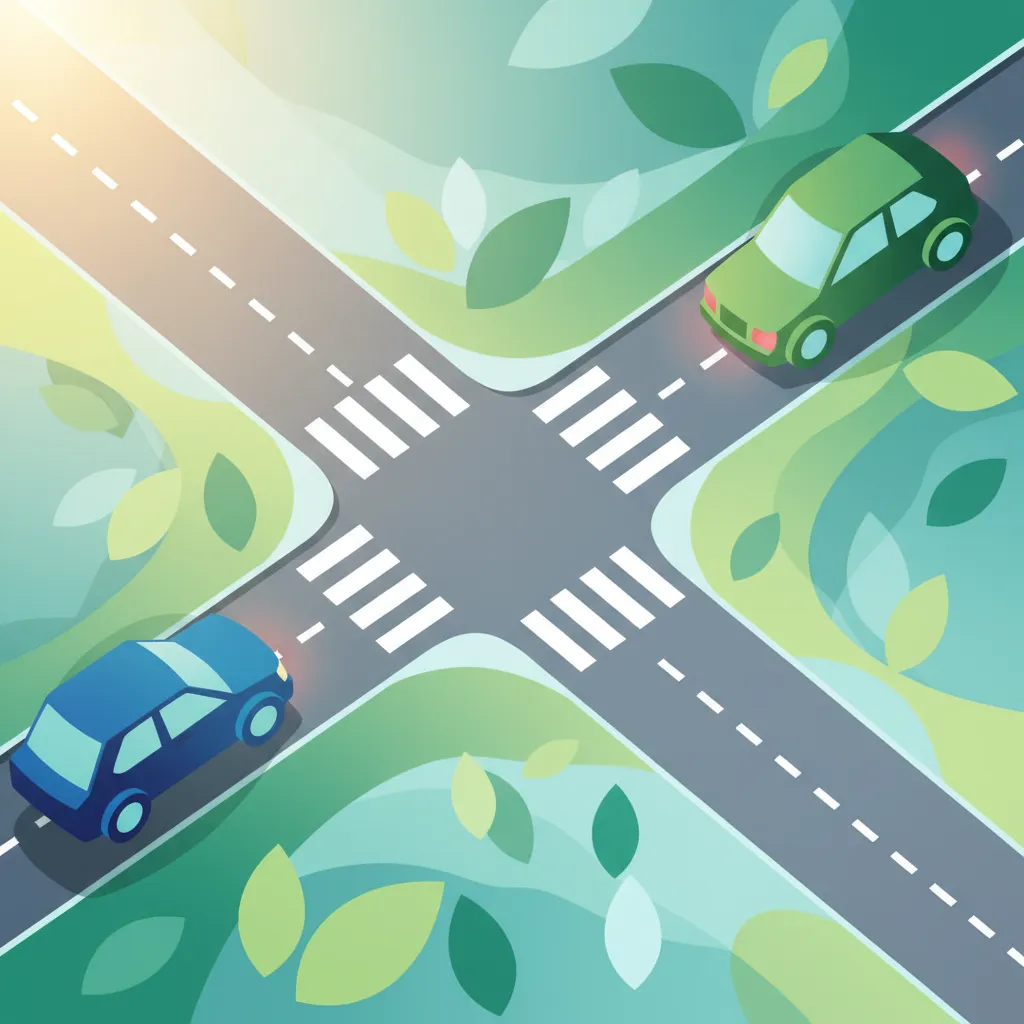
This lesson provides detailed guidance on navigating complex traffic points such as signalized intersections, multi-lane roundabouts, and pedestrian crossings. You will learn the correct procedures for entering and exiting roundabouts, the specific rules for yielding to pedestrians and cyclists at designated crossings, and how to interpret complex traffic light signals. These skills are vital for safe urban and suburban riding, where interaction with vulnerable road users is frequent.
This lesson explains the two core principles of priority in Swedish traffic law: the right-hand rule (Högerregeln) and the duty to yield (Väjningsplikt). You will learn how to apply the right-hand rule at uncontrolled intersections and when to yield to other traffic as indicated by signs or road markings. Understanding this fundamental hierarchy is crucial for making correct and safe decisions in a wide variety of common traffic situations you will face as a motorcyclist.
This lesson introduces the core principles of right-of-way in Sweden, including the general duty to give way (Väjningsplikt) and the stricter stop duty (Stopplikt). It explains the concept of a priority road and how to apply the right-hand rule at uncontrolled intersections. By understanding this legal framework, riders can determine who has priority in any given situation and act predictably and safely.

This lesson focuses on regulated intersections where priority is determined by signs indicating a main road (huvudled), a duty to yield (väjningsplikt), or a duty to stop (stopplikt). You will learn how to identify which road has priority and your legal obligation to give way to all traffic on that road before proceeding. The lesson covers proper procedures for approaching these junctions, assessing traffic, and entering the main road safely.
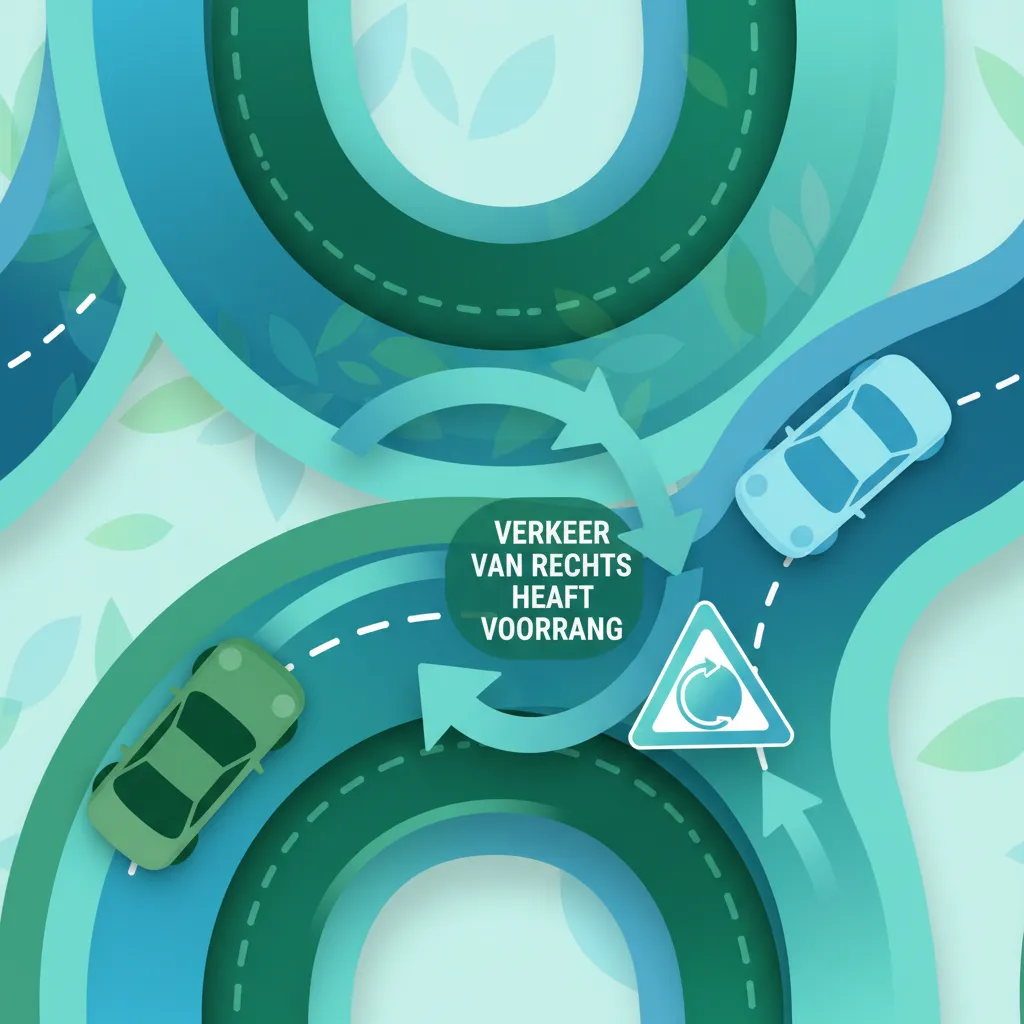
This lesson covers the critical maneuvers of overtaking and merging, which require precise judgment and communication. You will learn how to assess traffic speed and gaps, the importance of checking blind spots, and the correct use of signals to indicate your intentions. The content includes procedures for merging onto motorways from an on-ramp and how to perform safe overtaking maneuvers on various types of roads, minimizing risk to yourself and others.
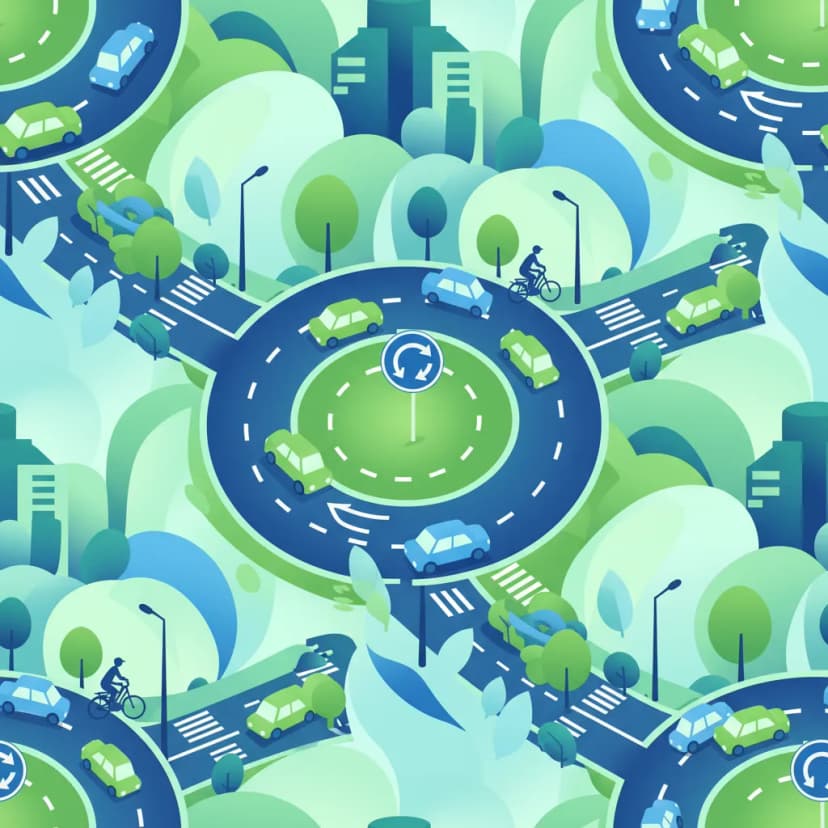
This lesson provides practical instructions for safely navigating different types of intersections and roundabouts. It covers procedures for approaching, entering, and exiting roundabouts, emphasizing the rule to yield to traffic already circulating. The content also addresses how to handle signal-controlled and uncontrolled intersections, ensuring riders select the correct lane and manage their speed appropriately.
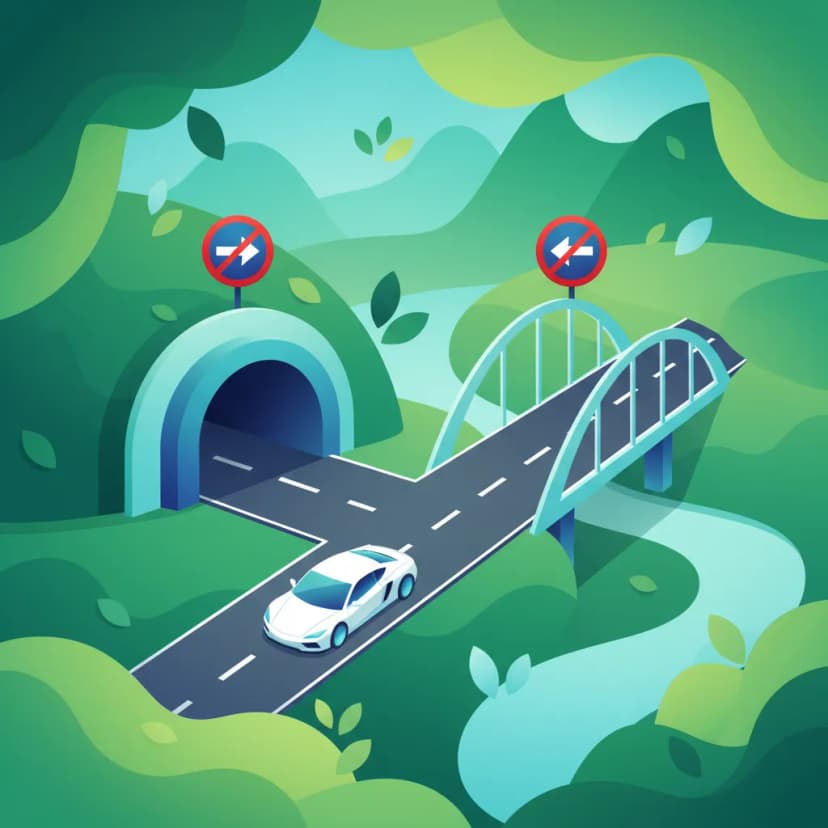
This lesson addresses the specific challenges and priority rules associated with riding in tunnels and on bridges. You will learn about lane restrictions, speed adaptation in low-light conditions, and the increased importance of maintaining a safe following distance in enclosed spaces. Furthermore, it covers how to manage the effects of strong crosswinds on bridges, a significant hazard for motorcyclists, ensuring you can maintain stability and control.
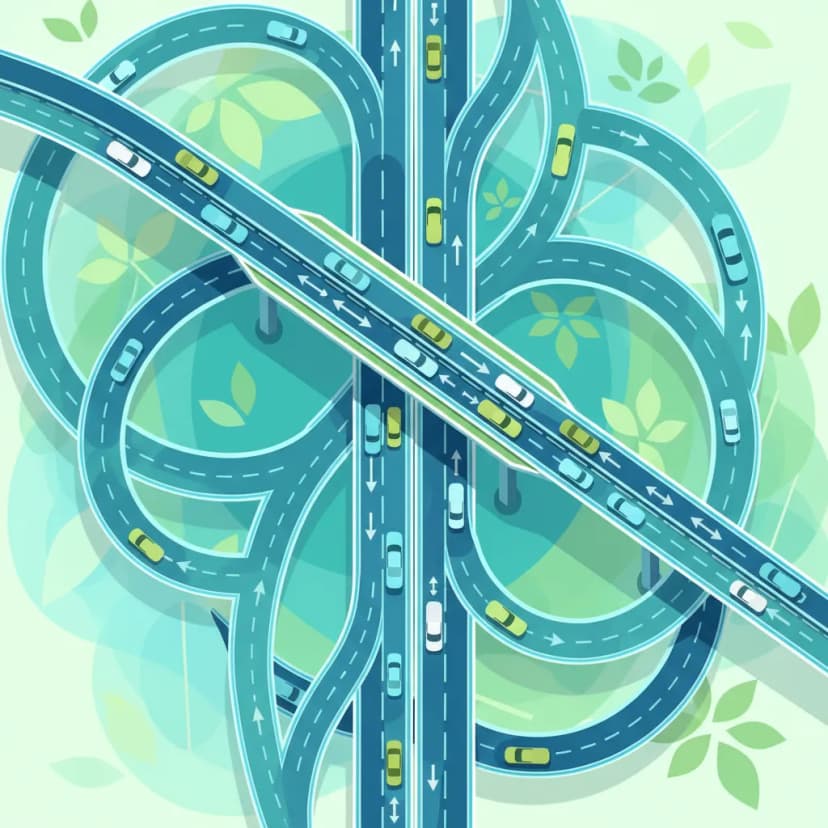
This lesson tackles the challenge of navigating some of the most complex road features, such as large multi-lane roundabouts and grade-separated interchanges. You will learn the importance of advance planning, choosing the correct lane on approach, clear signaling, and comprehensive observation to safely move through these busy areas. Mastering these junctions is a key indicator of an advanced and competent rider who can handle any road layout.
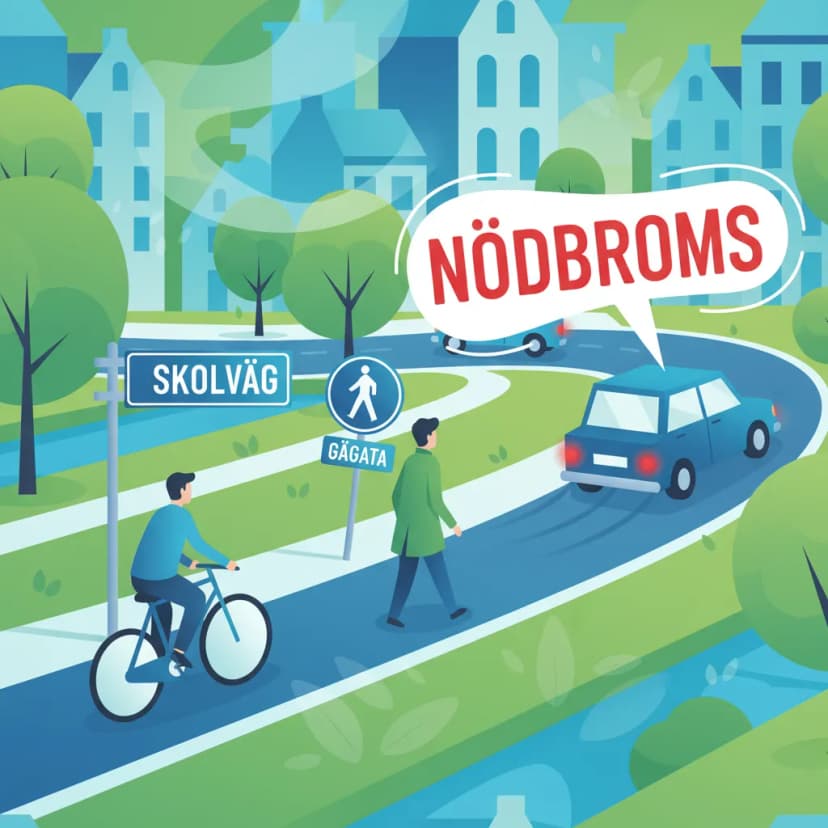
This lesson examines a variety of special situations where standard priority rules are modified. You will learn about the 'exit rule' (utfartsregeln) when entering a road from property, your duty to yield to buses indicating a departure from a stop, and the specific rules for pedestrian-only streets (gågata). The content also covers interactions with trams, emergency vehicles, and procedures at railway crossings, highlighting situations that demand maximum vigilance.
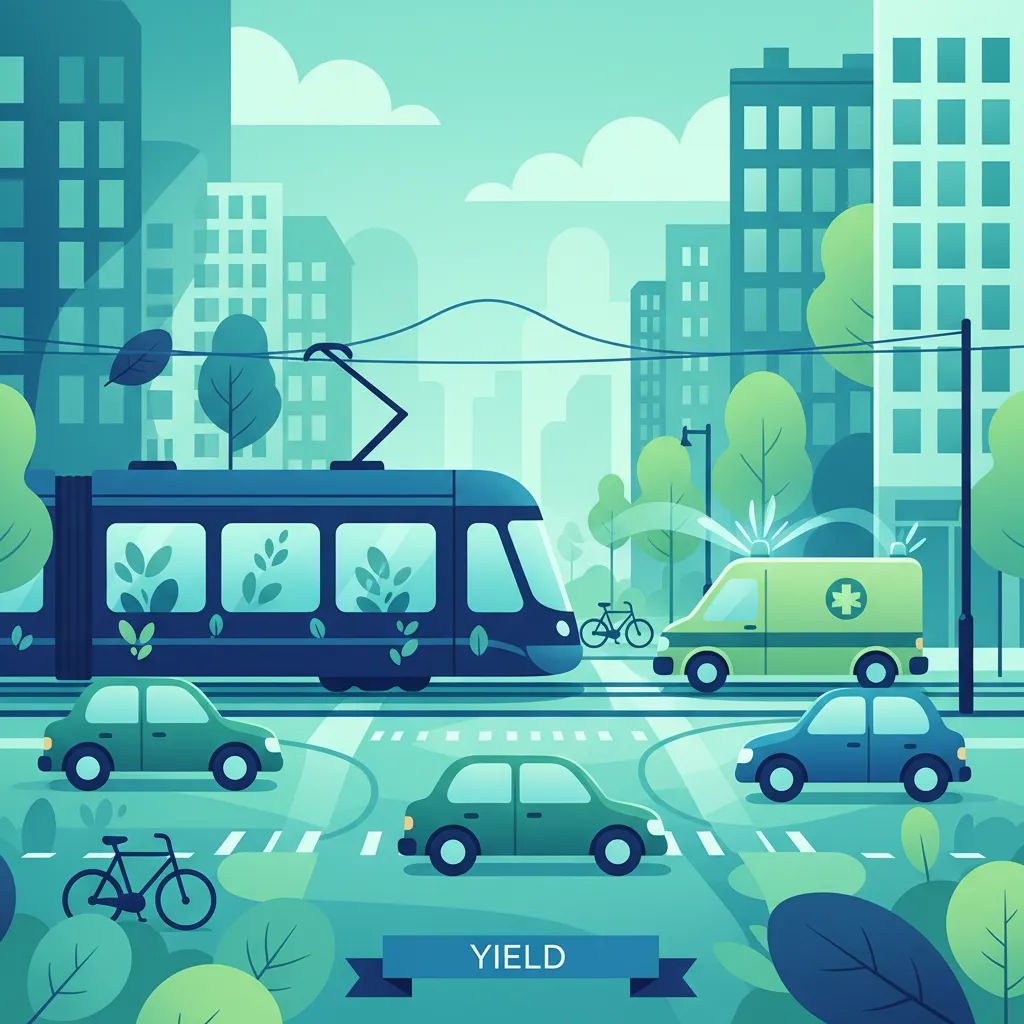
This lesson explains a motorcyclist's legal duty when encountering emergency vehicles with active sirens and lights. You will learn the correct procedure for yielding the right-of-way by safely pulling over and stopping. Additionally, the lesson covers the rules and best practices for sharing the road with public transport like buses and trams, including navigating around bus stops and respecting dedicated lanes, to ensure safety for all road users.
Learn essential strategies for maintaining rider visibility and perceiving hidden hazards in dense urban traffic environments specific to Sweden. This lesson covers awareness of pedestrians, cyclists, and unexpected vehicle movements common in city riding.

This lesson focuses on strategies to make yourself more visible to other road users, a critical factor in motorcycle safety. You will learn how to use lane positioning strategically to stay out of other drivers' blind spots and to maximize your own line of sight through corners and intersections. The content also covers the effectiveness of high-visibility and reflective clothing, as well as the correct use of lights to ensure you are seen in all conditions.
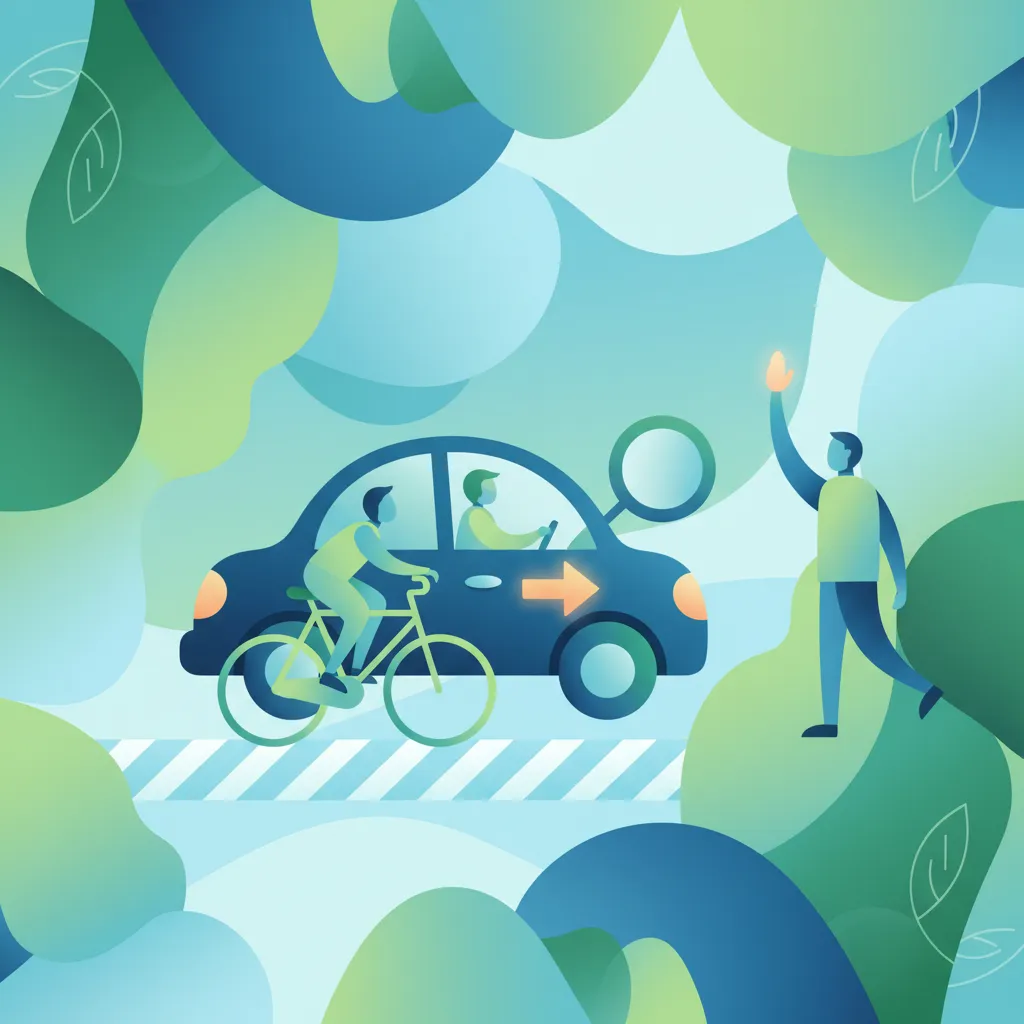
This lesson teaches you how to analyze and assess risk when sharing the road with a variety of users, from large trucks to cyclists and pedestrians. You will learn to recognize common patterns of behavior and potential conflict points, allowing you to anticipate the actions of others before they create a dangerous situation. Developing this predictive mindset is a cornerstone of defensive riding and is key to staying safe in busy, complex traffic environments.
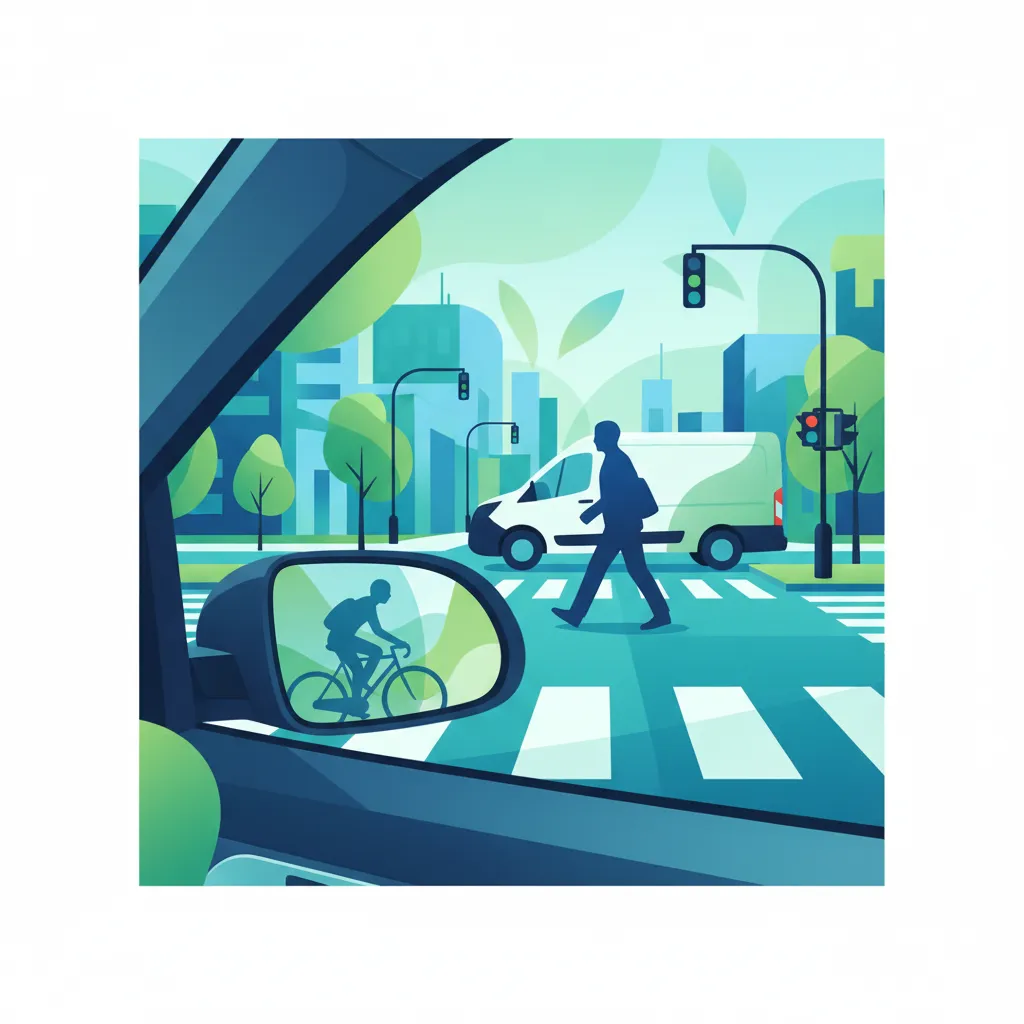
This lesson provides critical strategies for dealing with one of the biggest dangers in traffic: blind spots. You will learn the importance of the shoulder check and how to position yourself on the road to be more visible to other drivers. The lesson also trains you to scan the road surface ahead for hidden hazards like potholes, gravel, or oil spills that can pose a significant threat to a motorcycle's stability, teaching you to see and avoid them in time.
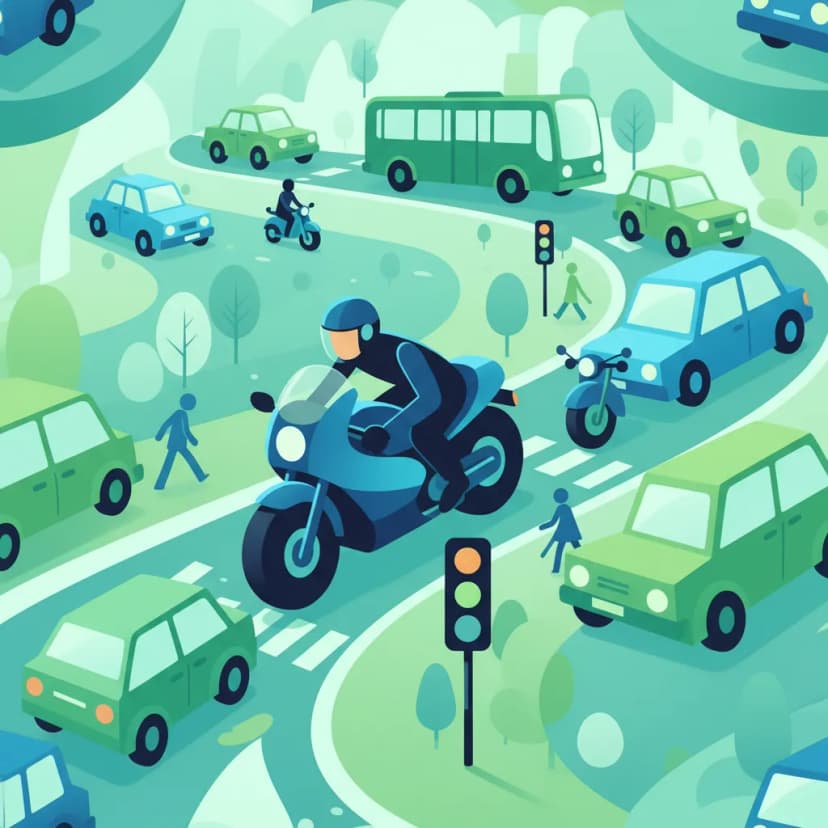
This lesson teaches the crucial skill of adapting your speed to the dynamic and often congested conditions of urban riding. You will learn to modulate your speed smoothly in response to traffic flow, pedestrian activity, and complex intersections to maintain safety and control. Techniques covered include using engine braking effectively, anticipating the actions of other road users, and selecting a speed that maximizes your reaction time in a high-density environment.
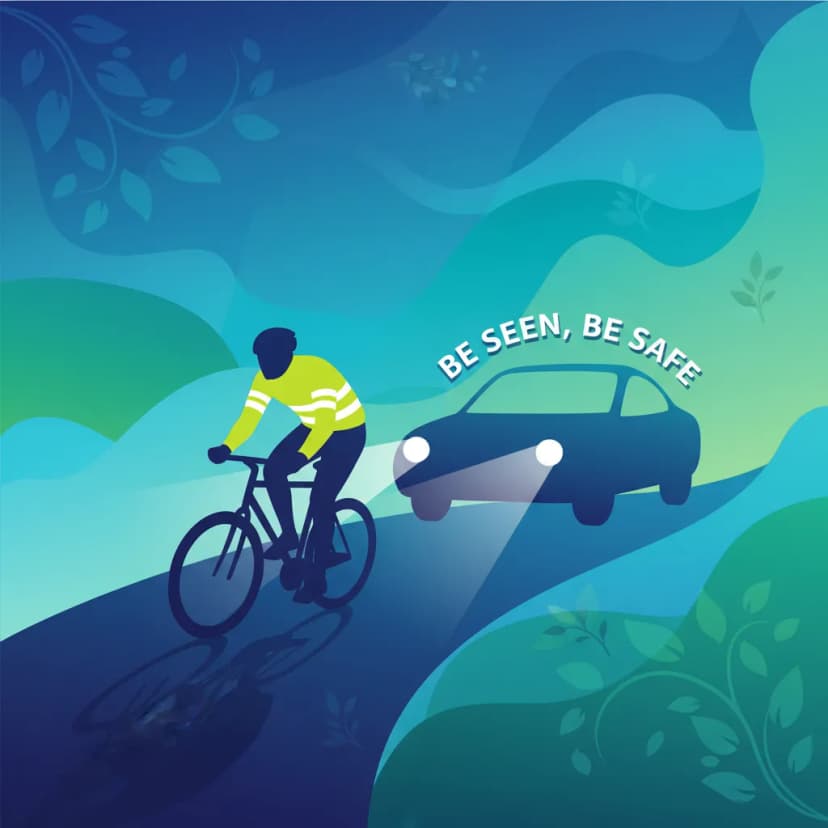
This lesson focuses on proactive strategies to increase a moped rider's visibility to other drivers. It strongly advocates for the use of high-visibility and reflective clothing, helmets, and accessories to stand out in traffic. Additionally, it revisits the concept of lane positioning as a tool to avoid being in other drivers' blind spots and to create a more prominent presence on the road.
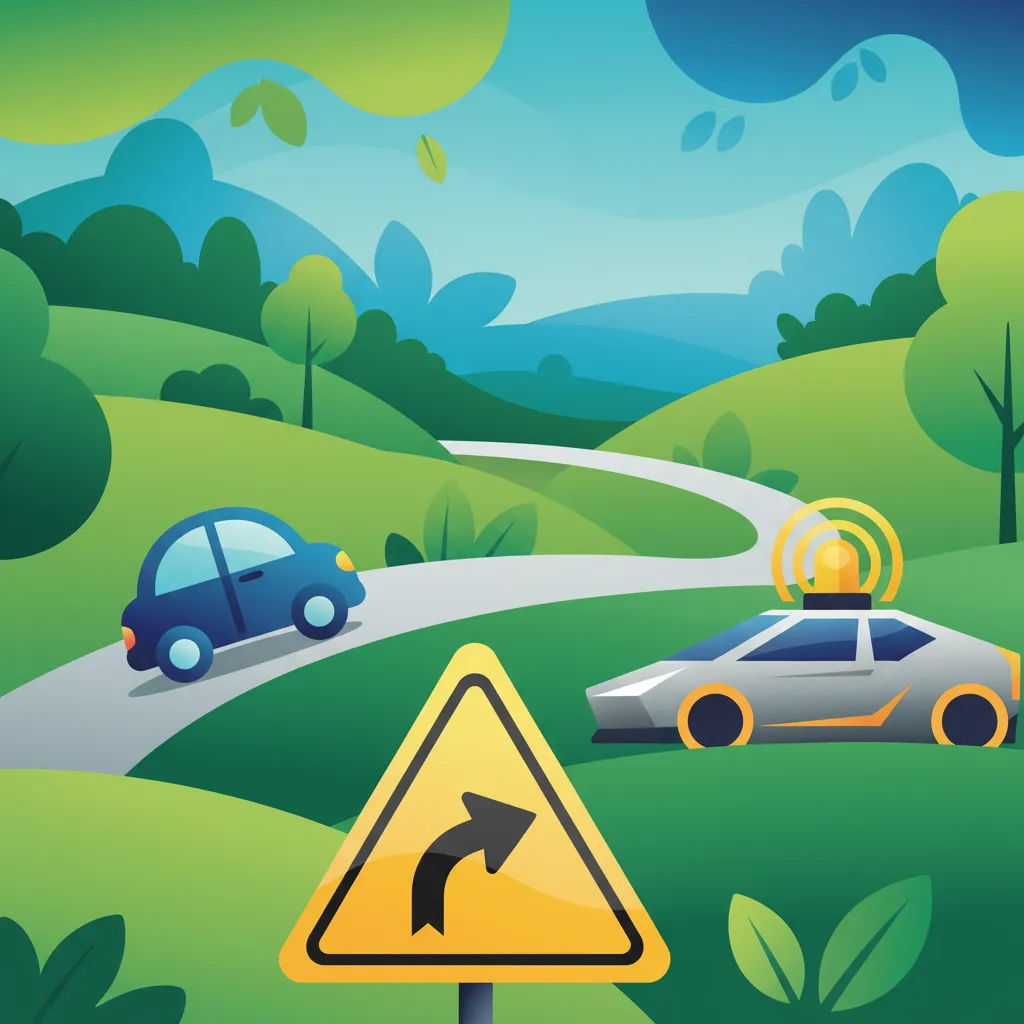
This lesson focuses on Swedish warning signs designed to alert drivers to potential dangers. You will study signs indicating sharp bends, slippery surfaces, animal crossings, and temporary hazards like road construction. Correctly interpreting these signs allows a motorcyclist to proactively adjust speed, lane position, and readiness to react, which is essential for maintaining control and safety, especially in adverse weather or on unfamiliar roads.

This lesson addresses the specific challenges of riding at night or in low-light conditions. You will learn how to use your headlights most effectively, how to cope with the glare from oncoming traffic, and how darkness affects your depth perception and ability to judge distances. Strategies for spotting nocturnal animals and the increased importance of wearing reflective gear to be seen by others are also key components of this essential safety lesson.
This lesson provides detailed guidance on navigating complex traffic points such as signalized intersections, multi-lane roundabouts, and pedestrian crossings. You will learn the correct procedures for entering and exiting roundabouts, the specific rules for yielding to pedestrians and cyclists at designated crossings, and how to interpret complex traffic light signals. These skills are vital for safe urban and suburban riding, where interaction with vulnerable road users is frequent.
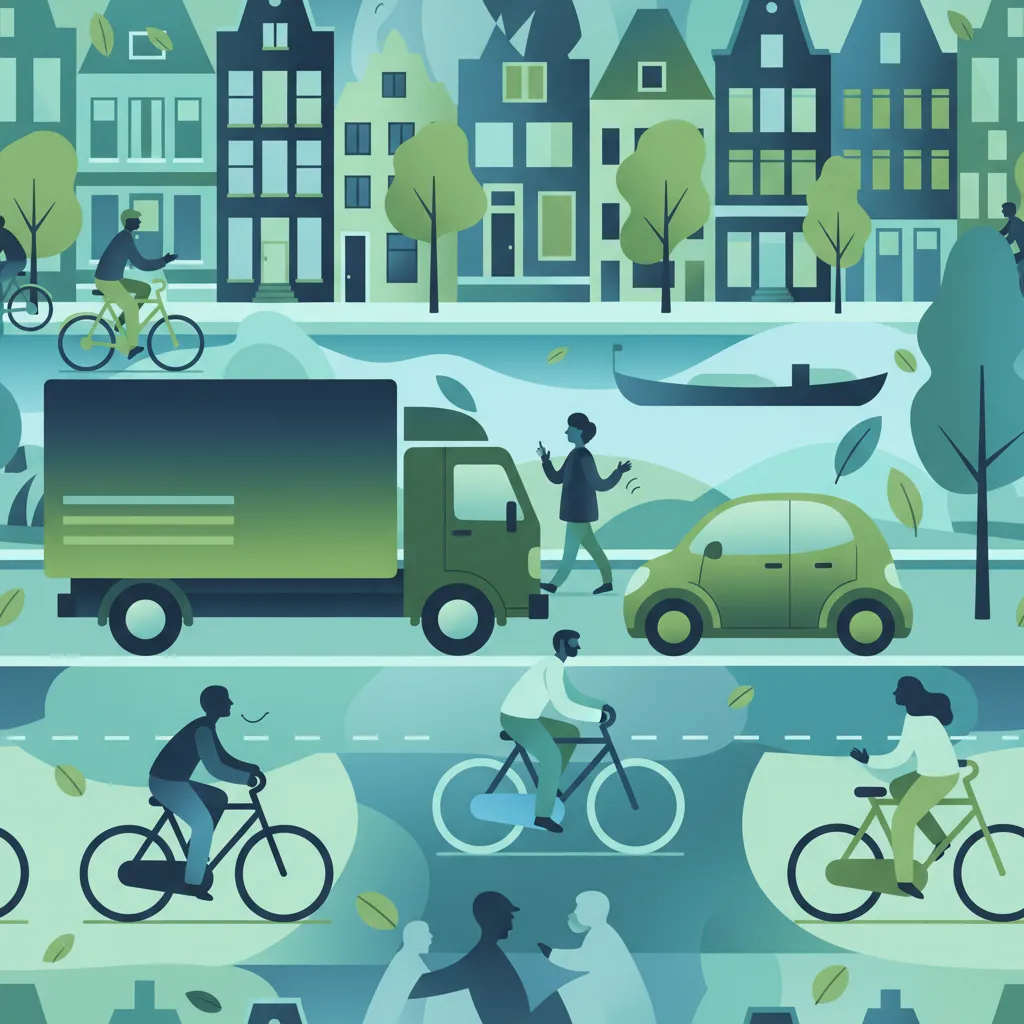
This lesson provides in-depth analysis of how to safely interact with the full spectrum of road users. You will learn about the specific characteristics of each, such as the large blind spots of trucks, the potential for sudden movements from cyclists, and the unpredictability of pedestrians. The content teaches strategies for communication, anticipation, and defensive positioning to ensure safe and respectful coexistence on the road for everyone.
This lesson introduces the core concepts of defensive riding, which involves anticipating potential dangers and actively managing the space around your motorcycle. You will learn the technique of continuously identifying and maintaining an 'escape path'—an open space to move into if a threat suddenly appears. This proactive, forward-thinking approach dramatically reduces the chances of being trapped in a dangerous situation and is a key skill of advanced, safe riders.
Find clear answers to common questions learners have about Urban Traffic Flow, Intersections, and Lane Discipline. Learn how the lesson is structured, which driving theory objectives it supports, and how it fits into the overall learning path of units and curriculum progression in Sweden. These explanations help you understand key concepts, lesson flow, and exam focused study goals.
In urban Swedish traffic, lane discipline for motorcycles involves being more assertive about occupying a full lane to be visible and avoid being squeezed by cars. You must also be acutely aware of lane changes by other vehicles and be prepared to adjust your position accordingly. Unlike highways, urban lanes might be narrower, and you'll encounter more frequent merging, lane splits (where permitted and safe), and interactions with trams or buses.
When approaching a complex intersection in Sweden on a motorcycle, scan ahead early to understand the lane markings and traffic light signals applicable to your intended path. Choose your lane well in advance and position yourself where you are most visible, typically in the centre of the lane if filtering is not safe or permitted. Be patient, observe all signals, and be prepared for unexpected actions from other road users before proceeding.
Common hazards include car doors opening unexpectedly, pedestrians stepping out from between parked cars, cyclists weaving through traffic, and drivers making sudden turns or lane changes. To prepare, always maintain a safe buffer zone, scan continuously, check your mirrors frequently, anticipate potential threats, and be ready to react by braking or swerving if necessary. Being visible is key, so avoid blind spots.
Lane splitting or filtering is generally not explicitly regulated by law in Sweden but is permitted if done safely and without endangering oneself or others. It is typically allowed only at low speeds and when traffic is stationary or moving very slowly. Always assess the situation carefully, ensure sufficient space, and be aware of road conditions and other vehicle movements before attempting to filter.
The Swedish theory exam will include questions on specific urban scenarios, testing your understanding of priority rules at intersections, lane usage, speed adaptation in built-up areas, and awareness of vulnerable road users. Questions often present a situation and ask you to identify the correct action or hazard. This lesson directly prepares you for these types of questions by covering the principles and practicalities of urban motorcycle navigation.