
Mastering your moped's brakes is crucial for safety and passing your Swedish AM theory exam. This lesson builds on your understanding of vehicle control by focusing on effective braking techniques, detailing how to use both front and rear brakes optimally in various situations, from gentle stops to emergency maneuvers. Learn how to apply these skills to ensure you can stop safely and confidently on any road.
Effective braking is perhaps the most crucial skill a moped rider must master for safe navigation on Swedish roads. Unlike cars, mopeds have a low mass and often a relatively high centre of gravity, which amplifies the risk of wheel lock-up and loss of traction during braking. Understanding and applying correct braking strategies is essential to reduce stopping distances, prevent skids, maintain vehicle stability, and protect yourself and other road users. This comprehensive guide will delve into the mechanics, physics, and techniques required to brake a Category AM moped safely and efficiently.
Braking is not just about slowing down; it's about control, stability, and collision avoidance. For Category AM moped riders, knowing how to use both the front and rear brakes effectively is a fundamental safety skill. Incorrect braking can lead to serious consequences, including losing control of the moped, skidding, falling, or colliding with other vehicles or obstacles. Mastery of braking techniques reduces these risks significantly, ensuring you can react appropriately to unexpected situations and ride confidently within Swedish traffic regulations.
This lesson builds upon foundational knowledge of vehicle control, balance, and body positioning (covered in Lesson 5.1) and acceleration techniques (Lesson 5.2). It also lays the groundwork for understanding more complex maneuvers like cornering, skidding, and riding in adverse weather, which are explored in subsequent lessons.
To brake effectively, it's vital to understand the physics at play. Braking creates a force that decelerates the moped, and this deceleration causes a dynamic shift in the vehicle's weight. This phenomenon, known as weight transfer, profoundly impacts how much braking force each wheel can handle.
Every tyre has a traction limit, which is the maximum longitudinal force it can transmit to the road surface before it starts to slip or "lock up." This limit is determined by two main factors: the coefficient of friction between the tyre and the road, and the normal load (weight) pressing down on that tyre. On a dry, grippy surface like asphalt, the coefficient of friction is high, allowing for significant braking force. On wet, icy, or gravel surfaces, the coefficient of friction is much lower, meaning the tyres will reach their traction limit with less braking force.
Exceeding the traction limit causes the wheel to lock up. A locked front wheel results in a loss of steering control, often leading to a fall. A locked rear wheel typically causes a skid, where the rear of the moped slides sideways, also risking a loss of control. Therefore, the primary goal of skilled braking is to apply maximum braking force to each wheel just below its traction limit.
When you apply the brakes on a moped, the inertia of the vehicle and rider causes a forward shift of weight. This is known as dynamic weight transfer. The normal load on the front wheel increases significantly, while the normal load on the rear wheel decreases. The faster and harder you brake, the more pronounced this weight transfer becomes.
This physical principle is crucial because it explains why the front brake is so much more effective than the rear brake for stopping a moped. With more weight pressing down on the front tyre, it gains a much higher traction limit during deceleration. Conversely, the rear tyre, with less weight, has a reduced traction limit and is therefore much easier to lock up. Understanding weight transfer allows you to distribute your braking force optimally between the front and rear brakes.
Mopeds are legally required to have two independent braking systems. These systems are designed to work together, but they play distinct roles in bringing the vehicle to a safe stop.
The front brake is typically operated by a hand lever on the right side of the handlebar. On most modern mopeds, this is a disc brake, offering strong and consistent stopping power. Older or simpler models might use a drum brake. Due to the dynamic weight transfer explained above, the front brake provides the majority of a moped's total stopping power—often as much as 70-80% on dry roads.
A common misconception among new riders is that the front brake is inherently dangerous and should be avoided. This is incorrect and potentially hazardous. While improper use can cause a fall, proper, progressive use of the front brake is absolutely essential for achieving the shortest and safest stopping distances.
The front brake allows for precise modulation of pressure. As you squeeze the lever, the braking force increases. Learning to apply the front brake progressively—gradually increasing pressure rather than grabbing it abruptly—is key to maximizing its effectiveness without exceeding the front wheel's traction limit and causing it to lock.
The rear brake is usually operated by a foot pedal on the left side of the moped's platform. Like the front brake, it can be either a disc or drum system. The rear brake's primary role is to assist the front brake and, crucially, to help stabilise the moped, especially at lower speeds or on slippery surfaces.
Because the rear wheel loses a significant amount of its normal load during braking, its traction limit is much lower than the front wheel's. This means the rear brake can easily cause the rear wheel to lock up and skid if applied too forcefully, especially on surfaces with low friction. While it contributes less to overall stopping power (typically 20-30% on dry roads), it is still vital for a controlled stop.
Relying solely on the rear brake for stopping is inefficient and dangerous. It significantly increases stopping distance and greatly elevates the risk of rear-wheel lock-up and skidding, particularly in emergency situations or on wet surfaces.
Mastering a few core techniques will allow you to brake safely and effectively in almost any situation.
Balanced braking is the coordinated application of both the front and rear brakes in a proportion that matches the available traction on each wheel. This technique maximises overall stopping power while maintaining stability and preventing wheel lock-up.
On a dry, clean asphalt road, the ideal ratio for balanced braking on a moped is approximately 70% front brake and 30% rear brake. This ratio aligns with the weight transfer dynamics, where the front wheel can handle significantly more braking force.
Achieving this balance requires practice and developing a "feel" for your moped's brakes. It's not about visually estimating percentages but about learning to modulate pressure on both the hand lever and foot pedal simultaneously and smoothly.
Progressive braking involves gradually increasing the brake pressure from the initial contact point to the maximum required force, rather than applying full pressure abruptly. This technique is crucial for several reasons:
Roll off the throttle completely.
Gently apply both the front and rear brakes simultaneously.
As the moped decelerates and weight transfers forward, gradually increase pressure on the front brake lever.
Maintain lighter, more consistent pressure on the rear brake pedal, modulating it to prevent lock-up.
As you approach a stop, ease off the brakes slightly to prevent a sudden lurch and ensure a smooth halt.
Emergency braking is a rapid, maximum-effort maneuver used when a collision is imminent and you need to stop in the shortest possible distance. While it requires applying maximum braking force, the principles of balanced and progressive braking still apply, albeit much faster.
React Instantly: As soon as you perceive a hazard, release the throttle completely and immediately begin applying both brakes.
Maximal, Balanced Pressure: Apply firm, strong pressure to the front brake lever (aiming for near 70-80% of its maximum potential), while simultaneously applying firm pressure to the rear brake pedal (around 20-30%). The goal is to get to maximum braking force as quickly as possible without locking either wheel.
Stay Straight: Keep the moped upright and steer in a straight line. Avoid swerving if braking is your primary objective.
Modulate to Prevent Lock-up: If you feel either wheel begin to lock (a skid in the rear, or a sudden loss of steering in the front), momentarily ease off that brake slightly to regain traction, then reapply. This is sometimes referred to as a "pumping" action, especially on low-traction surfaces, but on dry roads, consistent, firm pressure is usually best.
Look Where You Want to Go: Focus your gaze on the escape path or safe stopping point, not on the obstacle.
Practice is vital for emergency braking. It trains your muscle memory to react correctly under pressure, countering the natural instinct to panic-brake incorrectly.
Brake fade is the reduction in braking efficiency caused by the overheating of brake components (pads, discs, or drums) during prolonged or repeated heavy braking. When brakes overheat, the friction material can degrade, and the braking performance diminishes, leading to longer stopping distances and a "spongy" feel in the brake lever or pedal.
To prevent brake fade on long downhill sections, use engine braking where possible by downshifting. This uses the engine's resistance to help slow the moped, reducing the strain on your friction brakes. Apply your brakes intermittently in short bursts rather than continuously dragging them. This allows the brakes to cool between applications.
Be aware of the signs of brake fade: increased lever/pedal travel, a burning smell, or reduced deceleration despite applying the same force. If you experience fade, ease off the brakes, allow them to cool, and reduce your speed significantly.
The optimal braking technique changes significantly depending on the prevailing conditions. Always adjust your speed and braking strategy to match the environment.
On dry, clean asphalt, you have the most available traction. This is where the 70% front / 30% rear balanced braking ratio is most effective. You can apply strong, progressive pressure to achieve short stopping distances. However, even on dry roads, sudden, abrupt braking can still cause a wheel to lock up if the force exceeds the traction limit.
Wet roads drastically reduce the coefficient of friction. Your tyres have less grip, and the risk of wheel lock-up is much higher.
These surfaces offer very little traction. Braking on them requires extreme caution and a modified technique.
Reduced visibility, whether due to night, fog, or heavy rain, increases your reaction time.
Carrying a passenger or a heavy load significantly increases the moped's total mass and alters its weight distribution.
Swedish traffic regulations are strict regarding vehicle safety, and brakes are a primary focus. As a Category AM moped rider, you have legal obligations concerning your moped's braking system.
According to Transportstyrelsen – Vehicle Technical Requirements (Regulation 2-1-3), all Category AM vehicles "shall be equipped with two independent braking systems capable of bringing the vehicle to a safe stop." This means your front and rear brakes must function separately and both be in good working order.
Furthermore, Trafikförordningen §14 (2) states that "The driver shall use both brakes appropriately when stopping or slowing the vehicle." This explicitly mandates the use of balanced braking and prohibits relying on a single brake. You are also prohibited from endangering other road users by abrupt or uncontrolled braking (Trafikförordningen §16).
Maintaining your brakes is not just good practice; it's a legal obligation. Transportstyrelsen – Maintenance Obligations (Regulation 4-1-5) requires drivers to ensure brake components, such as pads, are not worn beyond specified minimum thicknesses.
Brake Pad Wear: Regularly check the thickness of your brake pads. Most manufacturers specify a minimum thickness (often around 1 mm). Replace pads before they reach this limit. Visually inspect the disc for excessive wear or grooving.
Brake Lever and Pedal Play: Ensure the hand lever for the front brake and the foot pedal for the rear brake have the correct amount of free play before the brakes engage. Too much play indicates worn components or a need for adjustment; too little can cause brakes to drag.
Brake Fluid (for hydraulic systems): Check the brake fluid level in the reservoir. If it's low, it could indicate a leak or worn pads. Brake fluid should be clear and not discoloured; old fluid can reduce braking efficiency and should be replaced periodically by a qualified mechanic.
Cables (for mechanical systems): Inspect brake cables for fraying, corrosion, or damage. Ensure they move freely and are correctly adjusted.
Functionality Test: Periodically test both brakes independently at a very low speed in a safe area to confirm they can stop the moped effectively on their own.
Neglecting brake maintenance can lead to fines, reduced stopping performance, and greatly increased crash risk. Your moped must always be in a "roadworthy" condition.
Understanding common errors is as important as learning correct techniques. Here are some pitfalls to avoid:
Let's illustrate these concepts with real-world examples:
Setting: You are riding your Category AM moped on a dry city street at 30 km/h. Ahead, a traffic light turns red as you approach. Correct Behaviour: You smoothly roll off the throttle. With good anticipation, you begin applying the front hand lever progressively, aiming for about 70% of your total braking effort, while simultaneously pressing the rear foot pedal lightly for the remaining 30%. You maintain a straight line and come to a smooth, controlled stop well behind the stop line. Incorrect Behaviour: You keep the throttle open too long, then slam only the rear brake pedal. The rear wheel locks up, you skid sideways for several meters, and barely stop in time, potentially causing a hazard for following traffic.
Setting: You're on a suburban road, it's raining, and you're approaching a moderate right-hand bend at 40 km/h. Correct Behaviour: Anticipating the wet conditions and the upcoming turn, you begin to reduce your speed early, before entering the curve. You apply both brakes with a slightly adjusted ratio, perhaps 60% front and 40% rear, gently and progressively. You release the brakes before you lean into the turn, maintaining smooth throttle control through the bend. Incorrect Behaviour: You brake hard with only the front brake while already leaning into the wet corner. The front wheel loses traction, resulting in an immediate loss of control and a fall.
Setting: You are riding on a rural gravel road at 45 km/h. A child suddenly runs out from behind a parked car, approximately 20 meters ahead. Correct Behaviour: You instantly release the throttle and immediately apply both brakes firmly but with sensitivity. Knowing it's gravel, you use a slightly more rear-biased approach, perhaps 60% front and 40% rear, while maintaining the moped upright. If you feel a wheel start to slide, you quickly ease off and reapply pressure in a "pumping" motion to regain traction, stopping as quickly as possible without losing full control. Incorrect Behaviour: You panic and grab only the front brake with full force. The front wheel locks instantly on the loose gravel, the moped becomes uncontrollable, and you tumble forward, colliding with the child.
Setting: You are descending a long, steep hill in the countryside. Your brakes have been used frequently on previous hills. Correct Behaviour: To prevent brake fade, you select a lower gear to engage engine braking. You apply your moped's brakes intermittently in short bursts, allowing them to cool between applications, rather than continuously dragging them. You monitor your speed and the feel of the brakes to ensure performance remains optimal. Incorrect Behaviour: You continuously apply the brakes all the way down the hill. The brake pads and discs overheat, leading to severe brake fade. You notice the brake lever feels "spongy" and the moped isn't slowing down as effectively, creating a dangerous situation at the bottom of the hill.
Setting: It's night, visibility is low, and you're riding at 30 km/h in urban traffic. A bus ahead of you suddenly stops to pick up passengers on a slightly wet road. Correct Behaviour: Due to the reduced visibility and wet conditions, you have increased your following distance. You anticipate the bus's stop and begin braking earlier and more gently, using a balanced 55% front / 45% rear approach with smooth, progressive pressure. You maintain a safe distance and stop well clear of the bus. Incorrect Behaviour: You misjudge the stopping distance due to the dark and wet conditions. You brake abruptly with full front brake force, causing the front wheel to lock briefly and your moped to wobble, narrowly avoiding a collision with the bus's rear.
This lesson has provided a deep dive into the theory and techniques of moped braking. To solidify your understanding, it is crucial to apply these principles through practice. Future lessons will build upon these fundamentals. Specifically, Lesson 5.5 – Performing Controlled Stops and Slow-Speed Maneuvers will further refine your stopping techniques in various practical situations. You will also find this knowledge invaluable in Lesson 5.4 – Cornering, Skidding, and Counter-Steering and Lesson 7 – Riding in Adverse Weather and Light Conditions, where braking plays a critical role in maintaining control.
Lesson content overview
Explore all units and lessons included in this driving theory course.
Explore search topics learners often look for when studying Braking Strategies (Front and Rear Brakes). These topics reflect common questions about road rules, driving situations, safety guidance, and lesson level theory preparation for learners in Sweden.
Browse additional driving theory lessons that cover connected traffic rules, road signs, and common driving situations related to this topic. Improve your understanding of how different rules interact across everyday traffic scenarios.
Understand the core principles of using front and rear brakes for safe and controlled stops on a moped. This lesson covers balanced braking and essential techniques for emergency situations.
This lesson focuses on developing the fine control needed for low-speed maneuvering, a common challenge in urban environments. It covers techniques for making tight turns, such as U-turns, by using a combination of clutch, throttle, and rear brake control. The goal is to build the rider's skill and confidence in handling the moped in parking lots, heavy traffic, and other confined areas.
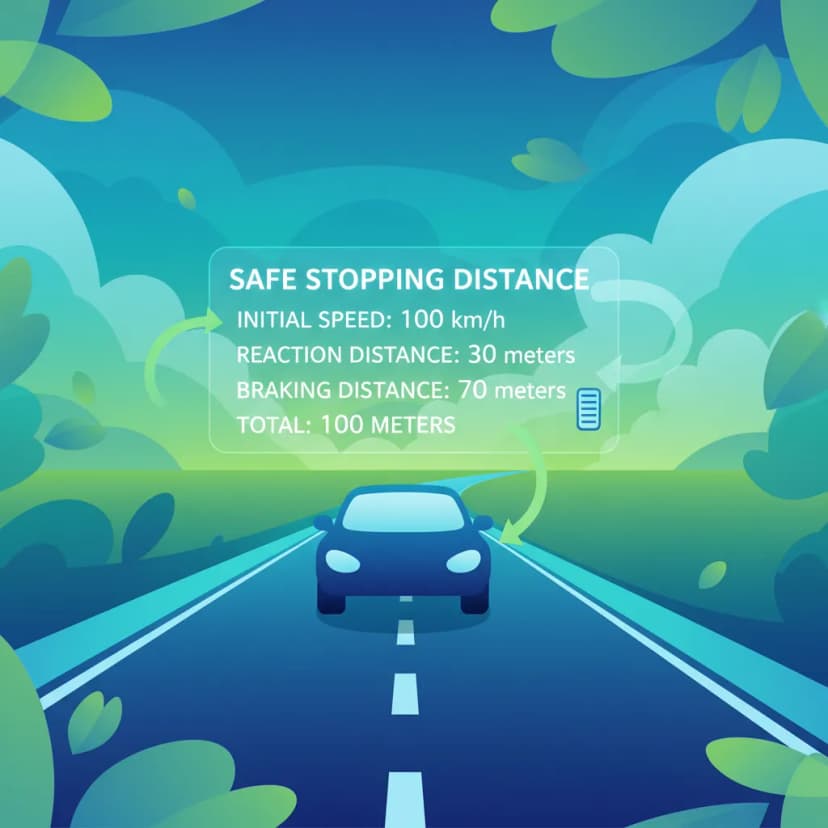
This lesson provides a practical understanding of the physics behind stopping a moped. It breaks down the total stopping distance into two key components: reaction distance (the distance traveled before applying the brakes) and braking distance (the distance covered while braking). Learners will explore how factors like speed, road conditions, and rider alertness dramatically affect these distances.

This lesson teaches the physical skill of applying maximum braking force while maintaining control of the motorcycle. You will learn the technique of progressive braking to avoid locking the wheels and how to react if a skid does occur. Understanding how to manage both front and rear wheel skids and how an ABS system assists in these situations gives you the best possible chance of stopping safely and quickly in an emergency.
This lesson details the specific hazards associated with riding on wet roads, including significantly increased stopping distances and the risk of aquaplaning. It explains how to recognize conditions where aquaplaning is likely and the importance of reducing speed. Riders will learn to use smoother throttle, braking, and steering inputs to maintain traction and control.
This lesson covers the final phase of an emergency maneuver: coming to a safe, controlled stop and moving off the road. You will learn the procedure for finding a safe spot, signaling your intentions, and securing the motorcycle. It also addresses the important steps to take after the immediate danger has passed, including checking yourself and your vehicle for damage and taking a moment to regain your composure before continuing your journey.
This lesson clarifies the legal distinction between stopping temporarily and parking. It identifies areas where stopping is prohibited, such as near intersections or on pedestrian crossings, to maintain traffic flow and safety. The content also discusses designated waiting areas at traffic lights, often marked for cyclists and mopeds, which can offer a safer position.
This lesson provides a detailed guide to motorcycle braking, explaining the roles of the front and rear brakes and how to use them effectively in combination. You will learn about the physics of weight transfer during deceleration, how to apply brakes progressively to avoid locking a wheel, and techniques for emergency stops. The content also covers the function of ABS and how to adapt your braking strategy for different road surfaces and conditions, a vital skill for every rider.
This lesson addresses the severe dangers of riding a moped in snow and icy conditions. It explains how to identify potential hazards like black ice and emphasizes that avoiding riding in such conditions is the safest strategy. For situations where it cannot be avoided, it provides advice on extremely gentle control inputs and vehicle preparation.
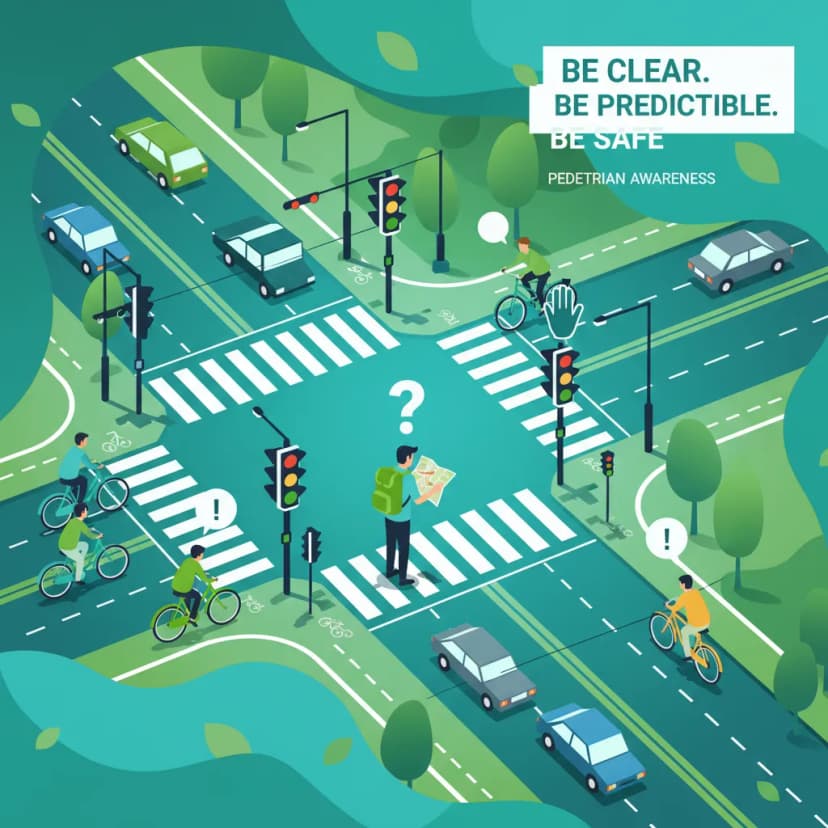
This lesson is dedicated to pedestrian safety, teaching riders to be constantly aware of people on foot, especially in busy urban environments. It reinforces the absolute duty to yield at marked crossings and encourages a cautious approach in areas like schools and shopping districts. The content stresses anticipating unpredictable actions, particularly from children or distracted pedestrians.
This lesson teaches the correct and legal response when encountering an emergency vehicle with active sirens or lights. It outlines the immediate obligation to give way by safely moving to the side of the road and stopping. The content provides practical advice on how to perform this maneuver calmly and predictably, ensuring a clear path for the emergency responders while maintaining the rider's own safety.
Explore the key elements that influence how quickly a moped can stop. Learn about speed, road conditions, and effective braking techniques that impact overall stopping distance in Swedish traffic.
This lesson provides a practical understanding of the physics behind stopping a moped. It breaks down the total stopping distance into two key components: reaction distance (the distance traveled before applying the brakes) and braking distance (the distance covered while braking). Learners will explore how factors like speed, road conditions, and rider alertness dramatically affect these distances.
This lesson delves into the physics of stopping a motorcycle, explaining the components of total stopping distance: perception time, reaction time, and braking distance. You will learn practical methods like the 'two-second rule' to maintain a safe following distance and how to adjust this buffer for adverse weather and high speeds. Understanding these concepts is fundamental to avoiding rear-end collisions and having enough space to react to any hazard.
This lesson focuses on developing the fine control needed for low-speed maneuvering, a common challenge in urban environments. It covers techniques for making tight turns, such as U-turns, by using a combination of clutch, throttle, and rear brake control. The goal is to build the rider's skill and confidence in handling the moped in parking lots, heavy traffic, and other confined areas.
This lesson teaches the crucial skill of adapting speed to prevailing conditions, emphasizing that the posted speed limit is a maximum, not a target. It covers various scenarios such as rain, fog, heavy traffic, and poor road surfaces, explaining why reducing speed is essential for maintaining vehicle control and safety. The goal is to cultivate a proactive mindset where the rider constantly assesses risk and adjusts their speed accordingly.
This lesson breaks down the components of the total stopping distance: reaction distance and braking distance. You will learn how your physical and mental state affects reaction time, and how speed, tire condition, and road surface (e.g., ice, rain) influence the distance required to brake to a complete stop. Understanding these physical principles is essential for making safe decisions about speed and following distance in all conditions.
This lesson details the specific hazards associated with riding on wet roads, including significantly increased stopping distances and the risk of aquaplaning. It explains how to recognize conditions where aquaplaning is likely and the importance of reducing speed. Riders will learn to use smoother throttle, braking, and steering inputs to maintain traction and control.
This lesson clarifies the legal distinction between stopping temporarily and parking. It identifies areas where stopping is prohibited, such as near intersections or on pedestrian crossings, to maintain traffic flow and safety. The content also discusses designated waiting areas at traffic lights, often marked for cyclists and mopeds, which can offer a safer position.
This lesson teaches the art of smooth throttle control, which is essential for predictable and safe riding. It explains how to apply gradual acceleration to seamlessly merge with traffic and maintain traction, especially on loose or wet surfaces. The goal is to develop a refined feel for the engine's response, allowing for precise speed adjustments in any situation.
This lesson focuses on the specific speed regulations applicable to Category AM mopeds in Sweden. It emphasizes the absolute maximum legal speed of 45 km/h and explains that riders must always adapt their speed to be lower when conditions require. The content also covers any special, lower speed limits that may apply when riding on designated cycle paths or in shared spaces.
This lesson delves into the dynamics of cornering on a two-wheeled vehicle, introducing the essential technique of counter-steering to initiate turns efficiently. It explains the importance of choosing a proper line, managing speed before the turn, and looking through the corner to the exit. The content also provides guidance on how to recognize and correct for a loss of traction or a skid.
Find clear answers to common questions learners have about Braking Strategies (Front and Rear Brakes). Learn how the lesson is structured, which driving theory objectives it supports, and how it fits into the overall learning path of units and curriculum progression in Sweden. These explanations help you understand key concepts, lesson flow, and exam focused study goals.
You should use both brakes simultaneously for maximum stopping power, a technique known as balanced braking. The front brake typically provides about 70-80% of the stopping force, while the rear brake helps maintain stability. Using only the rear brake is less effective and can lead to skidding, while relying solely on the front brake in an emergency can cause the front wheel to lock up if not managed carefully.
When you brake, the moped's weight shifts forward onto the front wheel. This increases the grip available at the front tire, allowing it to provide more braking force. Conversely, it reduces grip at the rear wheel. Understanding this is key to applying balanced braking, as you can brake harder with the front wheel when weight transfer is significant, but you must be gentler with the rear brake to avoid locking it.
In an emergency, apply both brakes firmly and progressively. Squeeze the front brake lever with strength while pushing down on the rear brake pedal. Keep your body relaxed and look ahead, not down at the controls. If you feel the front wheel starting to lock, ease off the front brake slightly; if the rear wheel starts to skid, ease off the rear brake. The goal is maximum braking without either wheel locking.
It is generally advisable to avoid heavy braking while fully leaned into a turn, as this can significantly reduce tire grip and increase the risk of a skid. If you must brake during a turn, do so very gently, primarily using the rear brake, and try to brake before or after the turn if possible. The theory exam often tests scenarios where braking in a turn leads to accidents.
If you lock up the front wheel, you will lose steering control and likely fall. If you lock up the rear wheel, the moped will start to skid sideways, making it difficult to control your direction. In both cases, immediately release the brake that is locked until the wheel starts rotating again, then reapply it smoothly. This is a critical concept tested in the Swedish theory exam.