
Welcome to your lesson on parking manoeuvres, a key part of the Swedish Category B driving theory exam. This lesson revisits the essential techniques for parallel (fickparkering), angled, and perpendicular parking, building on your understanding of parking regulations. Mastering these manoeuvres is crucial for demonstrating control and situational awareness on Swedish roads.
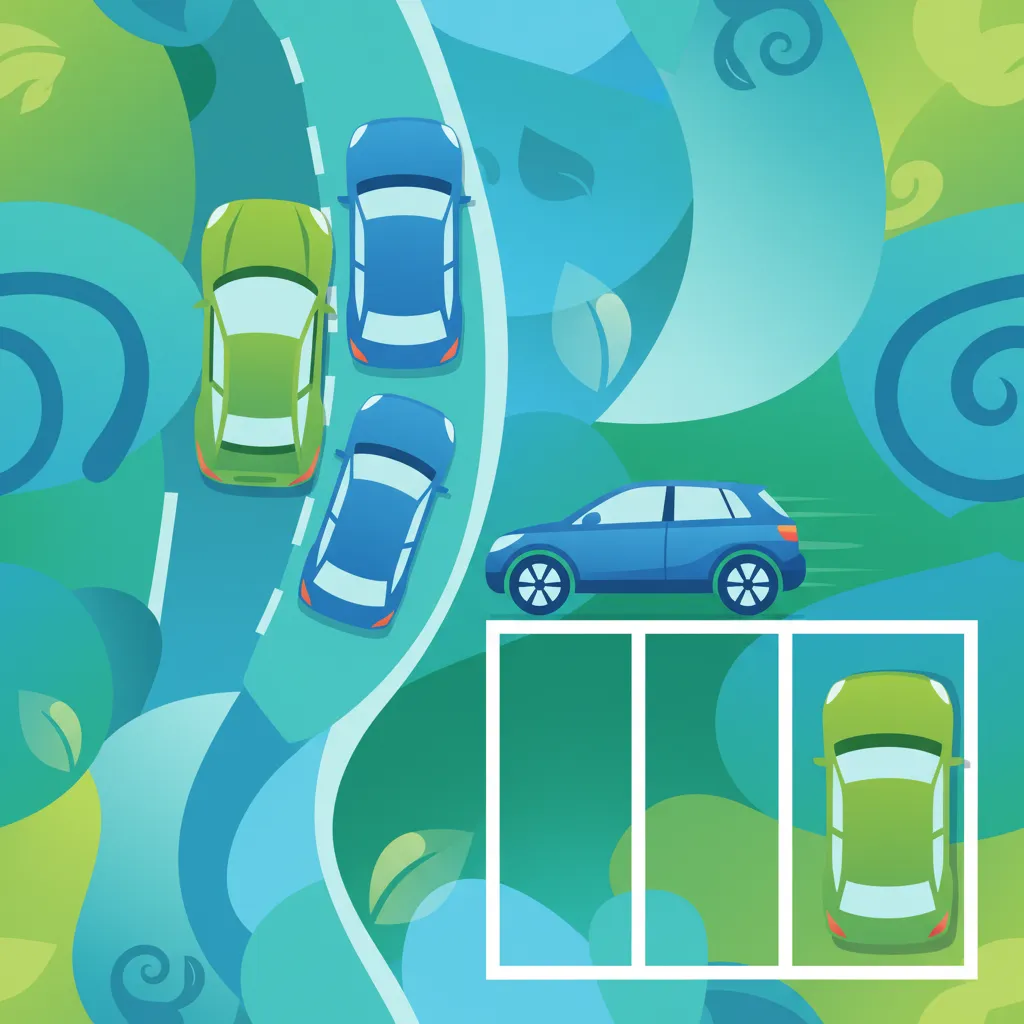
Proper parking is a fundamental skill for every driver, essential for safety, traffic flow, and compliance with Swedish traffic regulations. This comprehensive lesson delves into the three primary parking styles encountered on Swedish roads: parallel parking (known as fickparkering), angle parking, and perpendicular parking. Understanding the conceptual steps, legal requirements, and safe execution for each maneuver is crucial for navigating urban environments and various parking scenarios confidently.
This topic builds upon foundational knowledge from earlier lessons, particularly Vehicle Control and Maneuvering (Lesson 4) regarding steering and braking, and Legal Parking Rules (Lesson 9.1) which covers general prohibitions and permitted zones. Mastering these parking techniques ensures you can position your vehicle safely and legally, minimizing disruption to other road users and pedestrians.
Effective parking goes beyond merely fitting your vehicle into a space. It requires adherence to several core principles that underpin road safety and regulatory compliance. These guidelines are universal, applying to all parking maneuvers.
Before and throughout any parking maneuver, maintain continuous observation of your environment. This involves actively checking your mirrors, glancing over your shoulders to cover blind spots, and visually scanning for other traffic, pedestrians, cyclists, and any stationary obstacles. Detecting potential hazards early allows ample time for adjustment or to abort the maneuver if necessary, significantly reducing the risk of collisions or near-misses.
Executing parking maneuvers requires a low, steady speed, typically no more than 5 km/h. This controlled pace provides crucial time for precise steering adjustments, accurate judgment of distances, and immediate reaction to unexpected movements from other road users. Excessive speed reduces your control over the vehicle, making accurate positioning difficult and increasing the stopping distance, which can lead to errors or minor accidents.
Each vehicle has a specific minimum turning circle, which dictates how tightly it can turn. Knowledge of your vehicle's turning radius is vital for planning entry points and appropriate steering angles for each parking type. Misjudging this radius can result in incorrect alignment within the bay, encroaching on adjacent spaces, or hitting curbs.
Reference points are specific visual cues that help you judge distance and angle accurately. These might include the alignment of your rear wheel with a curb edge, the rear bumper of an adjacent parked vehicle, or painted lines on the ground. Consistent use of these objective guidelines helps drivers achieve repeatable and precise vehicle placement, reducing guesswork and improving the quality of parking.
When parking, your vehicle must be positioned entirely within the designated boundaries of the space, respecting any painted lines or markings. It is also crucial to maintain legally mandated clearances from other vehicles and obstacles. Proper space utilisation maximises the capacity of parking areas and ensures compliance with the Trafikförordning (Swedish Traffic Regulations). Incorrect alignment, such as protruding into a travel lane, can be illegal, unsafe, and lead to fines.
Parallel parking, known in Sweden as fickparkering (pocket parking), involves positioning your vehicle lengthwise alongside a curb within a designated space. This maneuver is highly common in urban areas and on residential streets where curbside parking is permitted.
A maneuver where a vehicle is positioned lengthwise alongside a curb, within a marked parallel space, with the vehicle’s side parallel to the curb and its rear wheels close (typically ≤ 0.3 m) to the curb edge.
The standard approach to parallel parking involves reversing into the space, typically between two already parked vehicles or between a parked vehicle and a clear space ahead. Entering forward and then reversing is rare and generally not recommended due to reduced visibility and control.
According to the Trafikförordning, your vehicle must not block traffic flow. A critical rule for parallel parking in Sweden is maintaining a close distance to the curb. Your vehicle's rear wheels must be no more than 0.3 metres from the curb edge. Additionally, a minimum clearance of 0.5 metres must be maintained to the front and rear of adjacent parked vehicles. This ensures sufficient space for vehicle doors to open safely and allows other vehicles to maneuver.
When practicing parallel parking, focus on slow, continuous movements and frequent checks of your side mirrors. A common mistake is turning the steering wheel too quickly or too slowly, leading to incorrect alignment with the curb.
One frequent misunderstanding is believing that the vehicle must be perfectly centred within the bay or that any distance from the curb is acceptable. The legal limit of 0.3 metres is strict. Failing to leave the required 0.5-metre clearance from other vehicles can obstruct movement and is a violation.
Identify the Space: Look for a space that is at least 1.5 times the length of your vehicle. Signal your intention to park.
Position Alongside: Pull up alongside the car in front of the desired space, ensuring your rear bumper is roughly aligned with its rear bumper. Maintain a distance of about 0.5 to 1 metre from the parked car.
Initial Reverse and Turn: Engage reverse gear. Look over your shoulder and in your mirrors. Begin reversing slowly and turn your steering wheel fully towards the curb (e.g., to the right if parking on the right side of the road).
Angle Adjustment: Continue reversing until your vehicle is at a 45-degree angle to the curb, and you can see the inner headlight of the car behind you (in your left mirror for right-side parking).
Straighten Wheels: Straighten your steering wheel to the centre position and continue reversing straight back until your vehicle's right-side mirror aligns with the rear bumper of the car in front of you.
Final Reverse and Turn: Turn your steering wheel fully away from the curb (e.g., to the left). Continue reversing slowly until your vehicle is parallel to the curb.
Adjust Positioning: Drive forward slightly to centre your vehicle within the space, ensuring you maintain at least 0.5 metres of clearance from the vehicles in front and behind. Ensure your rear wheels are no more than 0.3 metres from the curb.
Secure the Vehicle: Engage the handbrake and select the appropriate gear (Park for automatics, first gear or reverse for manuals, especially on a slope).
Angle parking involves positioning your vehicle at an acute angle (commonly 45°, 60°, or 90°) to the curb or lane marking. This style of parking is often found in commercial parking lots, residential complexes, and specific urban streets where diagonal lines indicate the bays.
Parking where the vehicle’s longitudinal axis forms an acute angle (usually 45°, 60°, or 90°) with the curb or lane marking, entering and exiting via a diagonal maneuver.
Angle parking typically offers quicker entry and exit compared to parallel parking. The angled orientation allows for easier maneuverability, especially when spaces are arranged in a herringbone pattern. The specific angle of the bay is usually indicated by painted lines on the pavement.
When angle parking, your vehicle must be entirely within the painted boundaries of the space. It is strictly prohibited for any part of your vehicle to cross the line that separates the parking lane from the travel lane. This rule, outlined in Trafikförordning, prevents obstruction of moving traffic, including cyclists. You must also ensure that your parked vehicle does not hinder other traffic or block pedestrian or cyclist paths.
Do not assume that a small part of your vehicle protruding into the travel lane is acceptable. Any encroachment beyond the marked lines is a violation and creates a hazard for other road users.
A frequent error is misjudging the required turning radius, especially for tighter 45° angles. This can lead to hitting the curb or overshooting the bay. Another common mistake is failing to keep the vehicle fully within the lines, with a wheel or bumper extending into the adjacent travel lane, thereby obstructing traffic.
Perpendicular parking, often referred to as stående parkering (standing parking) in Sweden, involves positioning your vehicle so its longitudinal axis is orthogonal (90°) to the curb or lane marking. This parking style is prevalent in large parking lots, shopping centres, and designated street parking zones.
Parking where the vehicle’s longitudinal axis is orthogonal (90°) to the curb or lane marking, occupying a bay bounded by lines on both sides.
Perpendicular parking maximises the number of vehicles that can be accommodated in a given area. Bays are typically bounded by painted lines on both sides, and sometimes by a curb or barrier at the rear. You can enter perpendicular spaces either "head-in" (driving forward) or "reverse-in" (backing in).
For perpendicular parking, your vehicle must be entirely within the painted lines of the bay. Exceeding these lines can obstruct adjacent bays or traffic flow, leading to violations. A minimum distance of 0.5 metres from the nearest obstruction (such as a pole or wall) should generally be maintained unless signage dictates otherwise.
In Sweden, it is strongly recommended to reverse into perpendicular parking spaces. This practice significantly improves outbound visibility when exiting the bay, as you are driving forward into the traffic lane rather than backing out into it, reducing blind-spot dangers and increasing safety.
While both methods are possible, Swedish traffic law encourages reverse-in parking for perpendicular bays.
Position for Entry: Drive past the parking bay you intend to use. Position your vehicle so that its rear bumper is aligned with the line of the second bay past your target bay (or approximately 2-3 metres beyond the bay). Maintain a distance of about 1.5 to 2 metres from the parked cars. Signal your intention.
Initial Reverse and Turn: Engage reverse gear. Check your surroundings, including mirrors and blind spots. Begin reversing slowly and turn your steering wheel fully towards the parking bay (e.g., to the right for a bay on your right).
Monitor Clearance: Continuously check your side mirrors to ensure your vehicle's sides clear any adjacent vehicles or obstacles. Use your rear-view camera if available.
Straighten and Align: As your vehicle approaches alignment with the bay, straighten your steering wheel. Continue reversing, making small adjustments to centre the vehicle between the lines.
Final Positioning: Reverse until your rear wheels are close to any rear curb or barrier, or until your vehicle is fully within the bay without overhanging.
Secure the Vehicle: Engage the handbrake and select the appropriate gear (Park or first/reverse).
Adherence to the Trafikförordning (Swedish Traffic Regulations) is paramount when parking. These rules ensure safety, prevent obstruction, and maintain efficient traffic flow for all road users.
| Rule # | Statement (Swedish / English) | Applicability | Rationale | Correct Example | Incorrect Example |
|---|---|---|---|---|---|
| 3‑1‑3 | Parking får endast ske på sådana platser där det är tillåtet enligt skylt eller markering. (Parking is only permitted where signs or markings allow it.) | All parking maneuvers, any road type. | Prevents obstruction of traffic, ensures lawful use of space. | Parking in a marked parallel bay on a residential street. | Parking on a yellow double line (no‑parking zone). |
| 3‑1‑4 | Mellan två parkerade fordon måste avståndet fram och bak vara minst 0,5 m. (A minimum distance of 0.5 m must be kept between parked vehicles.) | Parallel, angle, perpendicular parking. | Guarantees sufficient space for vehicle doors to open, reduces collision risk. | Leaving ~0.55 m gap between your car and the one ahead in a parallel bay. | Leaving only 0.2 m between cars, making door opening hazardous. |
| 3‑1‑5 | När du kör in i ett vinkel- eller stående parkeringsutrymme får du inte korsa linjen som avgränsar körfältet. (When entering an angle or perpendicular space you must not cross the line separating the traffic lane.) | Angle & perpendicular parking. | Prevents obstruction of moving traffic and cyclists. | Steering into a 45° bay staying entirely within the painted angle. | Wheel crosses into the travel lane while turning into the bay. |
| 3‑1‑6 | Fordon som parkeras får inte hindra annan trafik eller gående, inklusive cyklister. (Parked vehicles must not hinder other traffic or pedestrians, including cyclists.) | All parking. | Maintains flow and safety for all road users. | Parking within the bay leaving clear aisle for cyclists. | Parking too close to a cycle lane, forcing cyclists onto the roadway. |
| 3‑1‑7 | Vid stående parkering rekommenderas att fordonet körs inresa baklänges (reverse‑in). (For perpendicular parking it is recommended to reverse into the space.) | Perpendicular parking. | Improves outbound visibility, reduces blind‑spot dangers. | Reversing into a perpendicular bay. | Driving straight in forward and leaving forward visibility limited when exiting. |
| 3‑1‑8 | När du manövrerar in i ett parkeringsutrymme får du inte blockera sikten för andra trafikanter. (When maneuvering into a parking space you must not block visibility for road users.) | All parking maneuvers. | Ensures that drivers and cyclists can see each other. | Using mirrors and checking blind spots while backing into a bay. | Standing with the hood covering the curb, preventing other drivers from seeing the gap. |
| 3‑2‑1 | Fordon får inte stå parkerade när trafiksignalen visar rött eller rött med pil. (Vehicles may not be parked when a traffic signal shows red.) | Any parking location adjacent to traffic lights. | Prevents obstruction of intersections. | Leaving the car in a parking bay next to a red light only after the light turns green. | Parking permanently in a space directly before a red traffic light. |
Parking signs visually communicate regulations and permitted parking conditions.
Familiarity with common parking mistakes can help you avoid penalties and ensure safer driving.
Parking requirements and safety considerations can change dramatically based on various environmental and situational factors. Adapting your technique is crucial for safe and legal parking in all conditions.
Always be acutely aware of vulnerable road users, especially during parking maneuvers.
Mastering parking is a cornerstone of safe and responsible driving in Sweden. It requires a combination of technical skill, keen observation, and thorough knowledge of the Trafikförordning.
By diligently applying these principles and techniques, you will not only be able to park confidently in a variety of situations but also contribute to a safer and more efficient road environment for everyone. This understanding forms a crucial foundation for handling more complex parking regulations, such as time-limited zones and enforcement, which will be covered in future lessons.
Lesson content overview
Explore all units and lessons included in this driving theory course.
Explore search topics learners often look for when studying Parallel, Angle and Perpendicular Parking. These topics reflect common questions about road rules, driving situations, safety guidance, and lesson level theory preparation for learners in Sweden.
Browse additional driving theory lessons that cover connected traffic rules, road signs, and common driving situations related to this topic. Improve your understanding of how different rules interact across everyday traffic scenarios.
Understand the specific steps and key considerations for executing parallel, angled, and perpendicular parking. This lesson delves into the precise vehicle positioning and control needed for each maneuver, crucial for Swedish Category B driving theory.
This lesson provides step-by-step instructions for performing common low-speed maneuvers, including reversing in a straight line, backing around a corner, and various types of parking. You will learn how to use reference points on your vehicle and the surroundings to position the car accurately. The paramount importance of slow speed, continuous 360-degree observation, and being prepared to stop for pedestrians or other vehicles is emphasized throughout.

This lesson explains the various systems used to regulate parking duration and payment. You will learn how to correctly set and display a parking disc (P-skiva) in time-limited zones and how to operate parking meters and mobile payment apps. The lesson also demystifies 'date parking' (datumparkering), a rule used in some areas for street cleaning, and clarifies the difference between a public parking fine (parkeringsanmärkning) and a private control fee (kontrollavgift).
This lesson covers the general, nationwide rules that govern where you may and may not park or stop, even without specific signs. You will learn about the prohibitions on stopping near intersections, on pedestrian crossings, and at bus stops. The content clarifies the legal definitions and provides clear guidelines on maintaining safe distances and ensuring that your parked vehicle does not obstruct traffic or create a hazard.
This lesson covers parking areas that are reserved for specific purposes or permit holders. The primary focus is on spaces designated for people with disabilities, explaining the requirement of a valid permit. It also addresses other restricted areas such as residential parking zones (boendeparkering), loading zones, and areas that must be kept clear for emergency vehicles, highlighting the legal and ethical reasons for respecting these designations.
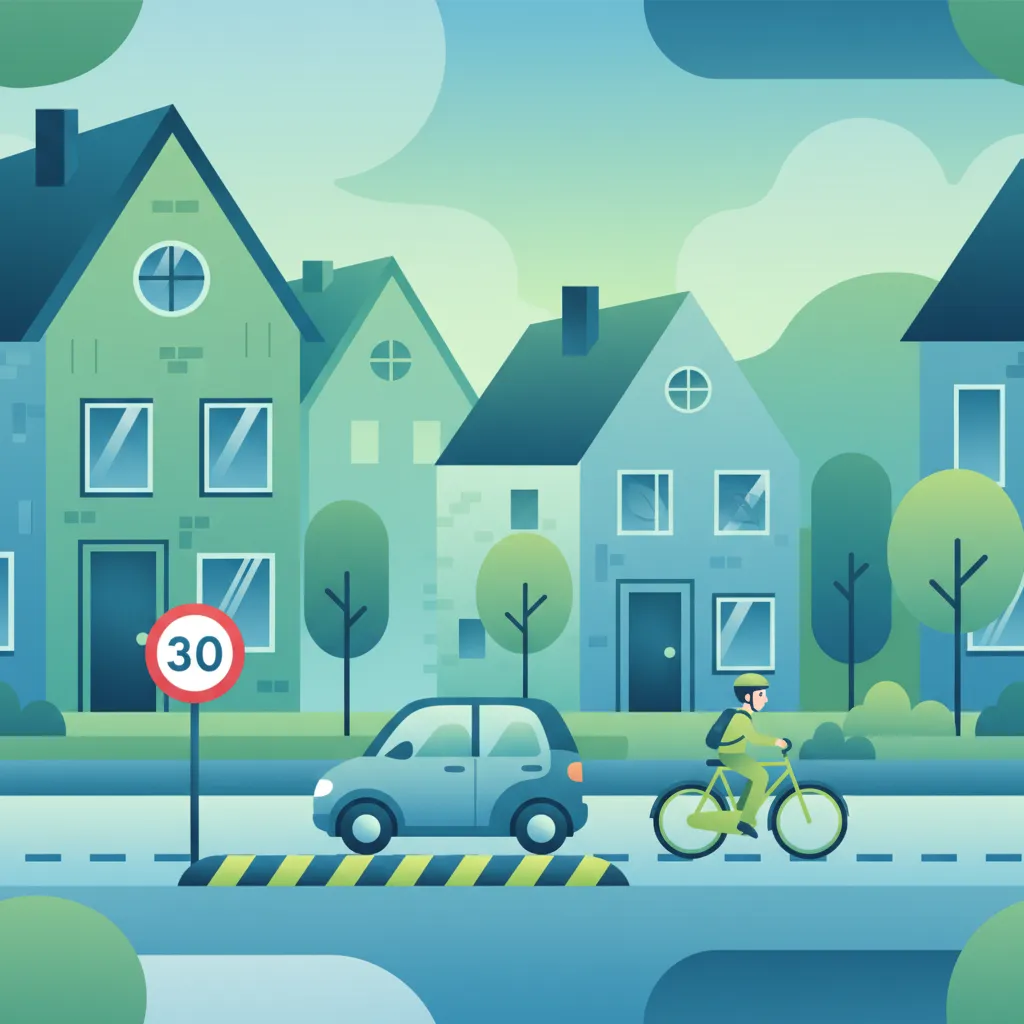
This lesson focuses on the high level of caution required when driving in residential areas. You will learn about the rules for special zones like 'gångfartsområde' (walking speed area) and the need to navigate around speed calming measures like speed bumps. The central theme is anticipating unpredictable behavior from residents, especially children, and managing the risks posed by parked cars that severely limit visibility.

This lesson covers the critical maneuvers of merging and changing lanes. You will learn the correct technique for using an acceleration lane to match the speed of motorway traffic before merging smoothly and safely. The lesson emphasizes the importance of checking mirrors and the blind spot, signaling in good time, and applying the 'zipper principle' (dragkedjeprincipen) where lanes merge to ensure efficient and courteous traffic flow.
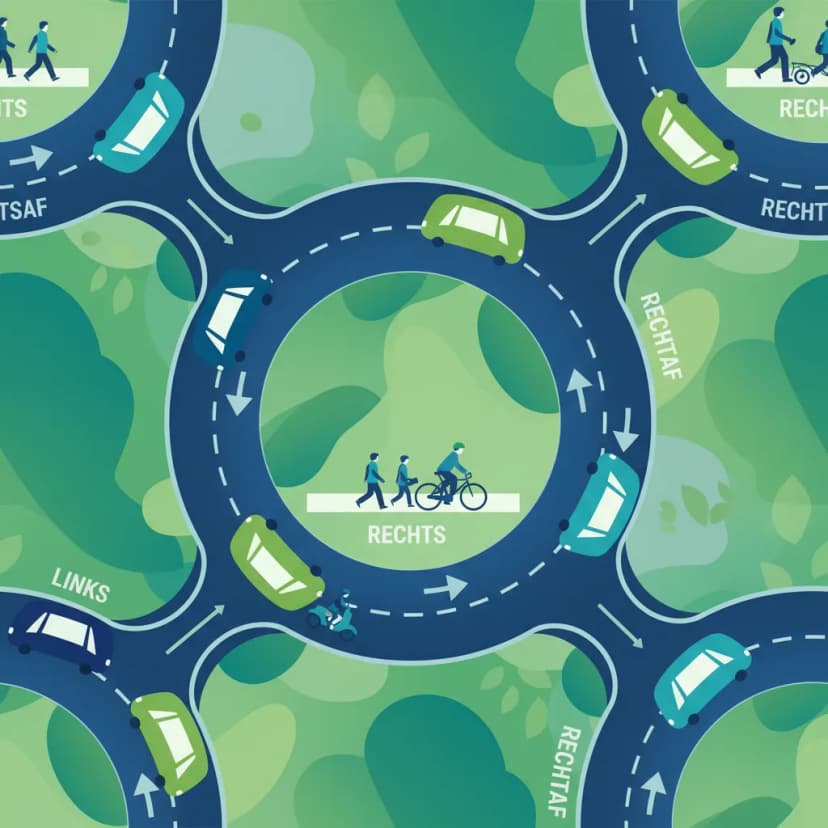
This lesson provides a detailed guide to navigating Swedish roundabouts (cirkulationsplatser). Key principles include always yielding to traffic already in the roundabout and choosing the correct lane based on your intended exit. You will learn the specific rules for signalling your intention to exit, how to safely interact with cyclists, and the techniques for maneuvering through multi-lane roundabouts to maintain traffic flow and prevent accidents.

This lesson focuses on the specific activity of stopping for the purpose of passenger embarkation/disembarkation or loading/unloading goods. You will learn that this is often permissible in areas marked with a 'no parking' sign, as long as the stop is brief and continuous. The lesson distinguishes this from a 'no stopping' zone, where any voluntary stop is prohibited, ensuring you understand the nuanced difference.

This lesson focuses on the unique challenges of driving in urban environments. You will learn techniques for anticipating the actions of vulnerable road users like pedestrians and cyclists, especially near crossings and bus stops. The content covers how to navigate narrow streets, one-way systems, and areas with heavy traffic, emphasizing the need for lower speeds, heightened awareness, and a defensive mindset.

This lesson focuses on the often-confusing topic of moped parking. It covers how to interpret parking signs, including those indicating prohibitions (Parkeringsförbud), and where to find designated parking spots for two-wheelers. The content provides practical advice on where it is legal to park and how to do so without causing an obstruction, thereby avoiding fines.
Explore the legal framework and common situations surrounding parking in Sweden, covering parallel, angled, and perpendicular types. Learn about the rules for various parking zones and common challenges encountered by drivers in urban and rural settings.
This lesson covers the general, nationwide rules that govern where you may and may not park or stop, even without specific signs. You will learn about the prohibitions on stopping near intersections, on pedestrian crossings, and at bus stops. The content clarifies the legal definitions and provides clear guidelines on maintaining safe distances and ensuring that your parked vehicle does not obstruct traffic or create a hazard.
This lesson covers parking areas that are reserved for specific purposes or permit holders. The primary focus is on spaces designated for people with disabilities, explaining the requirement of a valid permit. It also addresses other restricted areas such as residential parking zones (boendeparkering), loading zones, and areas that must be kept clear for emergency vehicles, highlighting the legal and ethical reasons for respecting these designations.
This lesson explains the various systems used to regulate parking duration and payment. You will learn how to correctly set and display a parking disc (P-skiva) in time-limited zones and how to operate parking meters and mobile payment apps. The lesson also demystifies 'date parking' (datumparkering), a rule used in some areas for street cleaning, and clarifies the difference between a public parking fine (parkeringsanmärkning) and a private control fee (kontrollavgift).
This lesson focuses on the specific activity of stopping for the purpose of passenger embarkation/disembarkation or loading/unloading goods. You will learn that this is often permissible in areas marked with a 'no parking' sign, as long as the stop is brief and continuous. The lesson distinguishes this from a 'no stopping' zone, where any voluntary stop is prohibited, ensuring you understand the nuanced difference.
This lesson focuses on the often-confusing topic of moped parking. It covers how to interpret parking signs, including those indicating prohibitions (Parkeringsförbud), and where to find designated parking spots for two-wheelers. The content provides practical advice on where it is legal to park and how to do so without causing an obstruction, thereby avoiding fines.
This lesson focuses on the high level of caution required when driving in residential areas. You will learn about the rules for special zones like 'gångfartsområde' (walking speed area) and the need to navigate around speed calming measures like speed bumps. The central theme is anticipating unpredictable behavior from residents, especially children, and managing the risks posed by parked cars that severely limit visibility.
This lesson provides step-by-step instructions for performing common low-speed maneuvers, including reversing in a straight line, backing around a corner, and various types of parking. You will learn how to use reference points on your vehicle and the surroundings to position the car accurately. The paramount importance of slow speed, continuous 360-degree observation, and being prepared to stop for pedestrians or other vehicles is emphasized throughout.

This lesson clarifies the legal distinction between stopping temporarily and parking. It identifies areas where stopping is prohibited, such as near intersections or on pedestrian crossings, to maintain traffic flow and safety. The content also discusses designated waiting areas at traffic lights, often marked for cyclists and mopeds, which can offer a safer position.

This lesson details a driver's responsibility towards pedestrians. You will learn the strict rule of yielding to pedestrians who are on or about to enter a marked, uncontrolled crosswalk. The content also covers the specific, highly restrictive rules for driving in designated pedestrian zones (gågata) and 'walking speed' areas (gångfartsområde), where pedestrians have complete priority and vehicle traffic is severely limited.
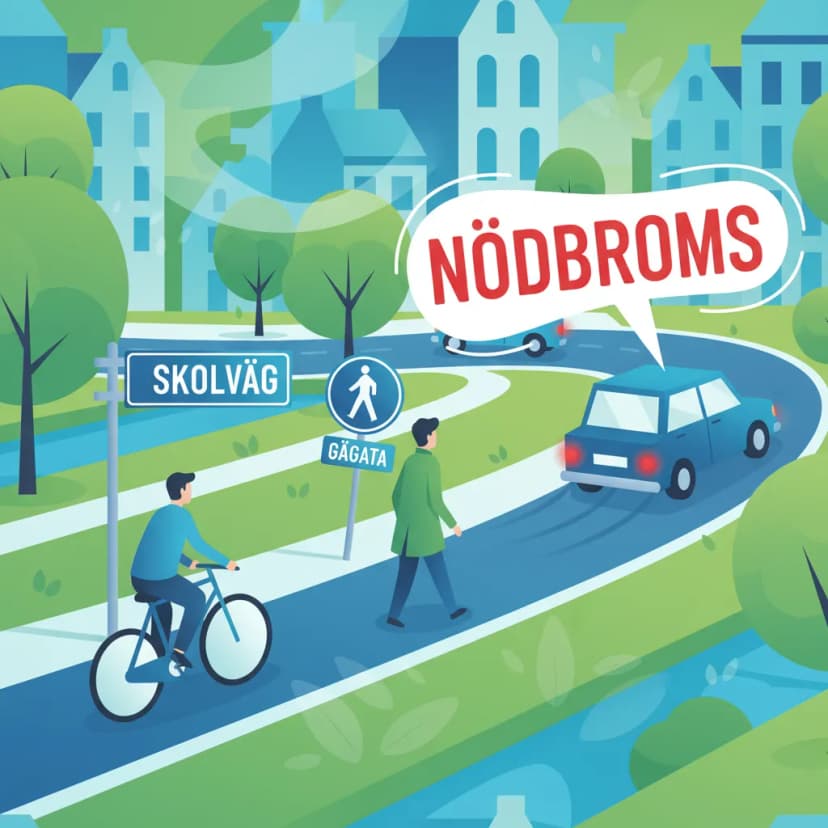
This lesson examines a variety of special situations where standard priority rules are modified. You will learn about the 'exit rule' (utfartsregeln) when entering a road from property, your duty to yield to buses indicating a departure from a stop, and the specific rules for pedestrian-only streets (gågata). The content also covers interactions with trams, emergency vehicles, and procedures at railway crossings, highlighting situations that demand maximum vigilance.
Find clear answers to common questions learners have about Parallel, Angle and Perpendicular Parking. Learn how the lesson is structured, which driving theory objectives it supports, and how it fits into the overall learning path of units and curriculum progression in Sweden. These explanations help you understand key concepts, lesson flow, and exam focused study goals.
In Sweden, 'stanna' means to stop temporarily, usually to pick up or drop off passengers, while 'parkera' means to leave the vehicle unattended or for a longer duration. While this lesson focuses on parking manoeuvres, understanding this distinction is crucial for knowing where and for how long you are legally allowed to stop or park.
Yes, 'fickparkering' is the Swedish term for parallel parking. It involves positioning your car in a space between two other vehicles, aligned with the kerb.
Angled parking involves positioning your vehicle at an angle to the parking bay or kerb, often seen in car parks or on streets with marked bays. Perpendicular parking, also known as 90-degree parking, requires aligning your vehicle squarely into a parking space, typically found in multi-storey car parks or specific street layouts.
Extremely important. Constant observation of your surroundings, including other vehicles, pedestrians, cyclists, and obstacles, is vital for safety. Slow, controlled movements allow you to react and make adjustments precisely, preventing collisions and ensuring you park within the designated space correctly.
This lesson focuses on the *technique* of performing different parking manoeuvres. However, it implicitly assumes you understand the relevant parking signs covered in earlier lessons (e.g., time limits, restricted areas). Always ensure you have reviewed the parking restriction signs before attempting any manoeuvre.