
Welcome to the Eco-Driving unit! This lesson focuses on fuel-efficient acceleration and braking, two key actions that significantly impact your car's fuel consumption. By mastering these techniques, you'll not only save money on fuel but also contribute to a cleaner environment. This knowledge is crucial for passing the Swedish Category B driving theory exam and driving more responsibly.
Driving efficiently is not only good for your wallet but also crucial for the environment and road safety. In the Swedish Driving License Theory Course for Category B Cars, understanding how your acceleration and braking habits impact fuel consumption and emissions is fundamental. This lesson delves into the techniques of gentle, steady acceleration and anticipatory deceleration, empowering you to become a more economical and environmentally conscious driver on Swedish roads.
The way you accelerate and brake are the two most significant actions affecting your vehicle's fuel consumption and, consequently, its environmental footprint. Aggressive driving, characterized by rapid acceleration and hard braking, leads to substantial fuel waste. By adopting smoother driving habits, you can achieve significant savings and contribute to a healthier environment.
At its core, your vehicle converts the chemical energy stored in fuel into mechanical energy, which then propels the car. This process, however, is not perfectly efficient. Most gasoline engines operate at a thermal efficiency of approximately 25-30%, meaning a large portion of the fuel's energy is lost as heat. Rapid acceleration demands high engine torque and often pushes the engine into higher RPMs (Revolutions Per Minute), where its thermal efficiency decreases further. This results in more fuel being consumed for the same amount of acceleration compared to a gradual approach.
Conversely, hard braking dissipates the vehicle's kinetic energy—the energy of motion—as heat through the brake system. This is essentially wasted energy that was previously generated by burning fuel. By anticipating slowdowns and utilizing techniques like engine braking, you can convert this kinetic energy into a controlled deceleration, minimizing the need for the friction brakes and saving the energy previously supplied by fuel.
Adopting fuel-efficient acceleration and braking techniques offers a multitude of benefits:
Efficient acceleration is about getting your vehicle up to speed smoothly and gradually, rather than quickly and forcefully. This approach keeps the engine working within its most efficient range.
Gentle acceleration involves applying the throttle gradually, without abrupt inputs that cause sudden spikes in engine power. Instead of "flooring it," you should aim for a smooth, progressive increase in speed. For most passenger cars, a gentle acceleration from 0 to 100 km/h should take more than 8 seconds. This measured approach prevents the engine from working harder than necessary, thereby conserving fuel.
The engine's RPM gauge is a key indicator of its workload and efficiency. For most modern petrol (gasoline) engines, the optimal efficiency band typically falls between approximately 1500–2500 RPM. Diesel engines often have a slightly lower sweet spot. When you accelerate gently, you aim to keep the engine revolutions within this range for as long as possible before shifting to a higher gear (in manual transmissions) or allowing the automatic transmission to shift. This ensures the engine is producing power efficiently without over-revving.
Monitor your RPM: Pay attention to your vehicle’s RPM gauge (if available). Aim to keep the needle within the lower-to-mid range during acceleration.
A common misconception is that accelerating slowly consumes more fuel because the engine runs for a longer duration to reach the desired speed. This is incorrect. While the engine might be active for a longer time, the fuel consumption per kilometre is actually lower during gentle acceleration. This is because the engine operates within its optimal thermal efficiency band, meaning it converts fuel into useful work more effectively. Aggressive acceleration, even for a shorter period, forces the engine to burn disproportionately more fuel due to its reduced efficiency at high loads and RPMs.
Example:
Just as gentle acceleration saves fuel, smart deceleration prevents waste. Anticipatory deceleration, often involving engine braking, is a cornerstone of eco-driving.
The primary technique for efficient deceleration is simply lifting your foot off the accelerator pedal. This allows the vehicle to coast, gradually losing speed due to rolling resistance, air resistance, and the internal friction of the engine. Modern fuel-injected vehicles are designed to cut off fuel supply to the engine completely when the accelerator is released and the vehicle is in gear, effectively consuming zero fuel during this phase.
When you release the accelerator while the vehicle is in gear, the engine's compression resistance acts as a braking force, slowing the vehicle down. This is known as engine braking. This effect is more pronounced in lower gears, where the engine's resistance is multiplied. Engine braking helps reduce speed without relying on the friction brakes, thus saving wear on brake components and converting kinetic energy into a controlled slowdown rather than wasted heat.
The process of reducing a vehicle's speed by utilizing the resistance created by the engine when the accelerator pedal is released and a gear is engaged.
While engine braking is highly efficient, it is not always sufficient on its own.
A skilled driver combines both techniques, using engine braking for most deceleration and supplementing with light, brief applications of the service brakes only when necessary to come to a complete stop or reduce speed more quickly.
Forward-planning, also known as look-ahead driving, is the overarching principle that enables both gentle acceleration and anticipatory deceleration. It's about continuously observing your surroundings and predicting traffic situations well in advance.
Instead of focusing only on the vehicle immediately in front of you, practice scanning 10-15 seconds ahead. This means observing:
By processing this information early, you gain valuable time to react smoothly. If you see a traffic light turning red far ahead, you can release the accelerator early and allow your vehicle to coast and decelerate naturally, perhaps even before you need to apply the brakes.
Situational Awareness: Forward-planning enhances your overall situational awareness, which is critical for safety on the road.
Forward-planning is the cornerstone of safe, smooth, and fuel-efficient driving. It allows you to:
Example:
Beyond acceleration and braking, other techniques can further enhance your fuel efficiency.
The weight of your vehicle (passengers, cargo) and the gradient of the road (uphill or downhill) significantly affect how much power is needed. This is where load matching comes in.
Adjusting throttle input and gear selection (or allowing automatic transmission to do so) to match the vehicle's current mass (passengers, cargo) and the road's gradient, keeping the engine in its efficient operating range.
Coasting refers to allowing the vehicle to roll forward without any throttle input.
In Sweden, coasting with the clutch depressed in a gear is permitted, as long as you maintain full control of the vehicle and can re-engage power instantly if needed (Trafikförordning § 24 interpretation). However, coasting in neutral on steep descents is generally discouraged due to safety concerns. On long, gentle downhill slopes or flat stretches, light-load coasting in gear can be very efficient.
While Swedish traffic legislation doesn't prescribe exact acceleration patterns, several regulations and guidelines encourage or mandate responsible driving, which includes eco-driving principles.
The Swedish Traffic Ordinance (Trafikförordning) § 4 states that "a driver shall drive in a manner that does not endanger other road users and shall adapt speed to conditions." Aggressive acceleration and sudden braking can be interpreted as endangering other road users or failing to adapt speed, particularly in congested traffic or adverse weather conditions. Therefore, smooth and predictable driving aligns with this general duty of care.
The Swedish Environmental Code (Miljöbalken) § 17 places a general obligation on owners and operators to avoid unnecessary fuel consumption and emissions. This applies to all vehicle operation and serves as a legal basis for promoting eco-driving. Professional drivers, in particular, are expected to adhere to these environmental obligations. By minimizing fuel waste through efficient driving techniques, you contribute to fulfilling this environmental responsibility.
As mentioned, Trafikförordning § 24 (through common interpretation and Transportstyrelsen guidelines) permits coasting with the clutch depressed in a manual gearbox, provided the driver maintains control and the ability to accelerate. This means you must always be able to re-engage power quickly if a hazard arises.
For automatic transmissions, while there's no specific "engine braking" regulation, Transportstyrelsen guidelines recommend utilizing the vehicle's natural deceleration (by releasing the accelerator) and to not rely solely on engine braking on very steep grades, where supplemental use of service brakes might be necessary to prevent uncontrolled acceleration or brake overheating.
Understanding common inefficient driving habits can help you consciously correct them.
Eco-driving isn't a rigid set of rules; it's a flexible approach that adapts to varying conditions.
When carrying a heavy load or towing a trailer, your vehicle's mass increases significantly.
Pedestrians, cyclists, and motorcyclists require extra caution.
This lesson is a foundational component of the Eco-Driving and Environmental Impact unit of your Swedish Driving License Theory Course for Category B Cars.
Applying these principles in real-world scenarios is key to internalizing them.
Mastering fuel-efficient driving, particularly through smart acceleration and braking, is a vital skill for every driver taking the Swedish Category B Driving License Theory Course. It combines practical driving techniques with a strong understanding of physics, safety, and environmental responsibility.
Key Principles to Remember:
By embracing these techniques, you not only reduce your fuel consumption and carbon footprint, but also minimize vehicle wear, enhance road safety, and contribute to a calmer, more enjoyable driving experience.
Lesson content overview
Explore all units and lessons included in this driving theory course.
Explore search topics learners often look for when studying Fuel-Efficient Acceleration and Braking. These topics reflect common questions about road rules, driving situations, safety guidance, and lesson level theory preparation for learners in Sweden.
Browse additional driving theory lessons that cover connected traffic rules, road signs, and common driving situations related to this topic. Improve your understanding of how different rules interact across everyday traffic scenarios.
Explore the theory behind engine braking for fuel efficiency. Learn how anticipating slowdowns and releasing the accelerator conserves fuel and reduces wear, following Swedish Category B curriculum guidelines.
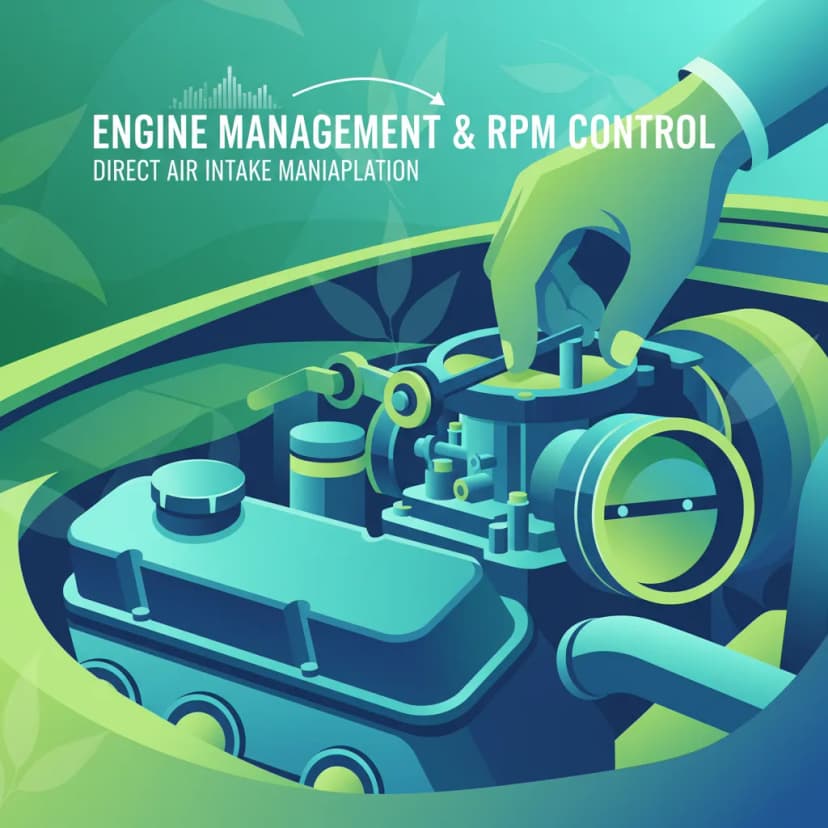
This lesson explains the relationship between engine speed (RPM) and fuel consumption. You will learn the eco-driving principle of shifting to a higher gear as early as possible without straining the engine, keeping the RPMs in the most efficient range. The content covers how modern engines are designed to operate effectively at low revs and how this technique significantly reduces fuel use, noise, and engine wear.
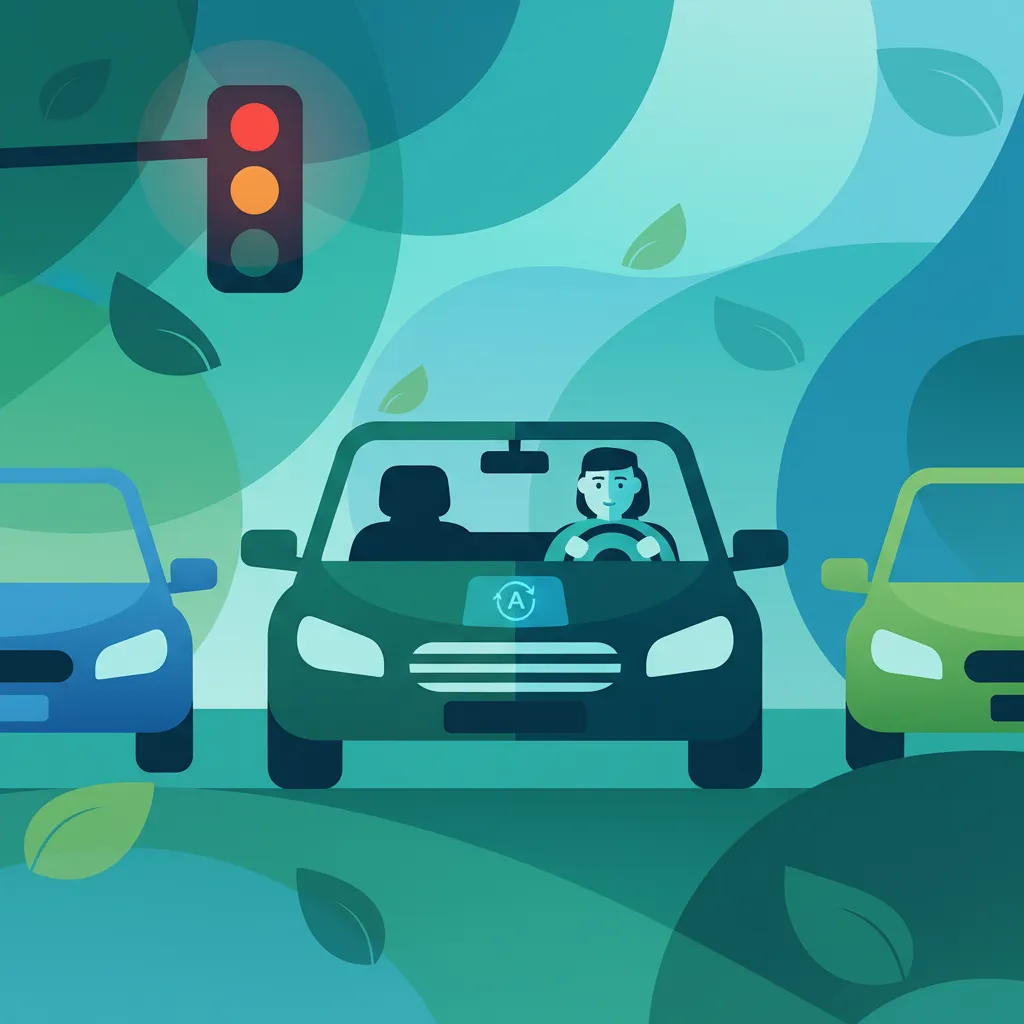
This lesson addresses the wasteful practice of engine idling (tomgångskörning). You will learn about the common local regulations in Sweden that typically prohibit idling for more than one minute. The content explains that a modern engine consumes more fuel idling than it does to restart, and discusses the benefits of automatic start-stop systems found in many newer cars, which help reduce emissions and fuel use in city traffic.
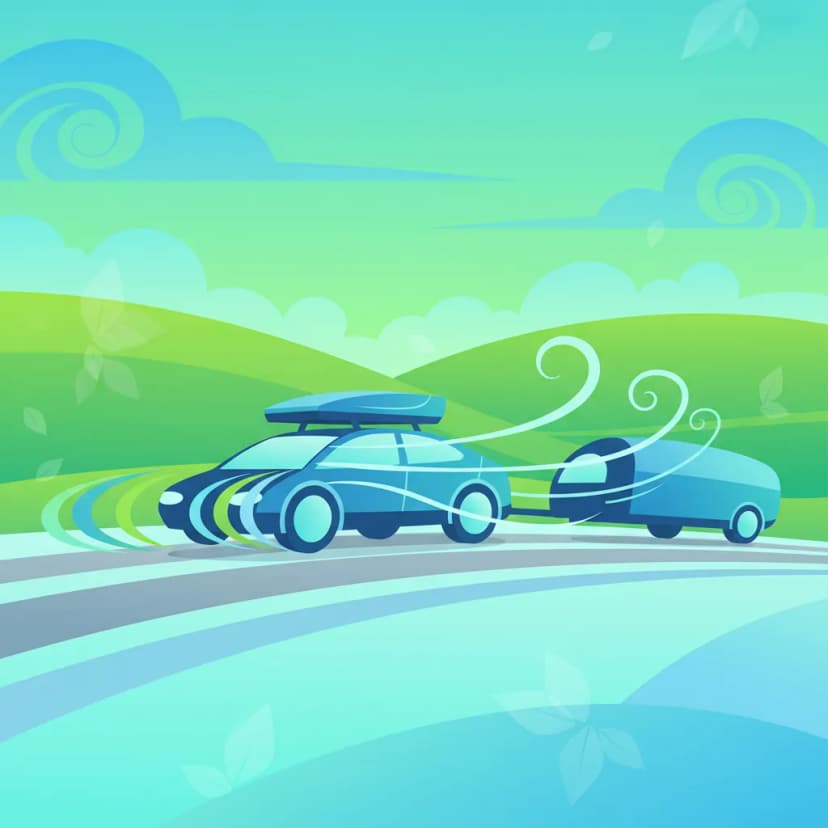
This lesson explains the physical principles of how weight and air resistance impact fuel efficiency. You will learn that every extra kilogram of weight requires more energy to move, and that external attachments like roof boxes significantly increase aerodynamic drag. The content provides practical advice, such as removing unnecessary items from the car and taking off roof racks when not in use, and highlights the importance of maintaining correct tire pressure to minimize rolling resistance.
This lesson focuses on the three fundamental inputs for controlling a car: steering, acceleration, and braking. You will learn the correct hand positioning on the steering wheel for maximum control and techniques for smooth, progressive application of the gas and brake pedals. The content explains how these inputs affect the vehicle's balance and stability, forming the basis for all advanced driving and maneuvering techniques.

This lesson teaches the physical skill of applying maximum braking force while maintaining control of the motorcycle. You will learn the technique of progressive braking to avoid locking the wheels and how to react if a skid does occur. Understanding how to manage both front and rear wheel skids and how an ABS system assists in these situations gives you the best possible chance of stopping safely and quickly in an emergency.

This lesson provides a detailed guide to using a moped's braking system effectively and safely. It explains the different roles of the front and rear brakes and the concept of balanced braking to maximize stopping power without losing traction. Learners will understand techniques for both normal, controlled stops and emergency braking situations, including how to manage weight transfer.
This lesson focuses on developing the fine control needed for low-speed maneuvering, a common challenge in urban environments. It covers techniques for making tight turns, such as U-turns, by using a combination of clutch, throttle, and rear brake control. The goal is to build the rider's skill and confidence in handling the moped in parking lots, heavy traffic, and other confined areas.
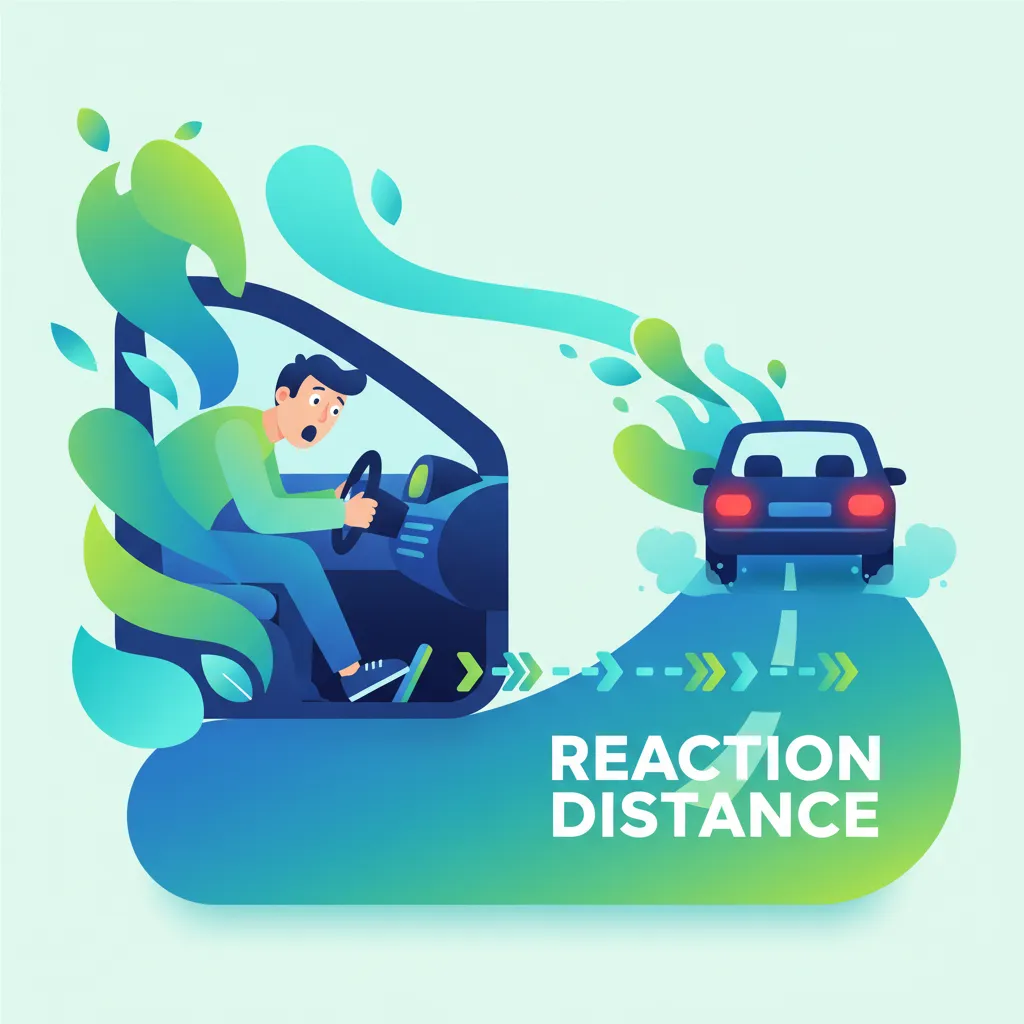
This lesson breaks down the components of the total stopping distance: reaction distance and braking distance. You will learn how your physical and mental state affects reaction time, and how speed, tire condition, and road surface (e.g., ice, rain) influence the distance required to brake to a complete stop. Understanding these physical principles is essential for making safe decisions about speed and following distance in all conditions.
This lesson provides critical knowledge on how to prevent and manage a skid. You will learn to differentiate between understeer (front-wheel skid) and oversteer (rear-wheel skid) and the correct steering and pedal inputs required to recover control in each case. The importance of looking and steering in the desired direction of travel is a key focus, along with understanding how modern safety systems like ABS and ESP assist the driver.
This lesson provides step-by-step instructions for performing common low-speed maneuvers, including reversing in a straight line, backing around a corner, and various types of parking. You will learn how to use reference points on your vehicle and the surroundings to position the car accurately. The paramount importance of slow speed, continuous 360-degree observation, and being prepared to stop for pedestrians or other vehicles is emphasized throughout.
Understand how gentle acceleration and anticipating stops significantly reduce fuel consumption. This lesson covers the theory of smooth driving habits and their relation to speed limits and environmental impact in Sweden.
This lesson explains the physical principles of how weight and air resistance impact fuel efficiency. You will learn that every extra kilogram of weight requires more energy to move, and that external attachments like roof boxes significantly increase aerodynamic drag. The content provides practical advice, such as removing unnecessary items from the car and taking off roof racks when not in use, and highlights the importance of maintaining correct tire pressure to minimize rolling resistance.
This lesson explains the relationship between engine speed (RPM) and fuel consumption. You will learn the eco-driving principle of shifting to a higher gear as early as possible without straining the engine, keeping the RPMs in the most efficient range. The content covers how modern engines are designed to operate effectively at low revs and how this technique significantly reduces fuel use, noise, and engine wear.
This lesson focuses on the three fundamental inputs for controlling a car: steering, acceleration, and braking. You will learn the correct hand positioning on the steering wheel for maximum control and techniques for smooth, progressive application of the gas and brake pedals. The content explains how these inputs affect the vehicle's balance and stability, forming the basis for all advanced driving and maneuvering techniques.
This lesson teaches the art of smooth throttle control, which is essential for predictable and safe riding. It explains how to apply gradual acceleration to seamlessly merge with traffic and maintain traction, especially on loose or wet surfaces. The goal is to develop a refined feel for the engine's response, allowing for precise speed adjustments in any situation.
This lesson breaks down the components of the total stopping distance: reaction distance and braking distance. You will learn how your physical and mental state affects reaction time, and how speed, tire condition, and road surface (e.g., ice, rain) influence the distance required to brake to a complete stop. Understanding these physical principles is essential for making safe decisions about speed and following distance in all conditions.
Find clear answers to common questions learners have about Fuel-Efficient Acceleration and Braking. Learn how the lesson is structured, which driving theory objectives it supports, and how it fits into the overall learning path of units and curriculum progression in Sweden. These explanations help you understand key concepts, lesson flow, and exam focused study goals.
Studies show that adopting smoother acceleration and anticipatory braking habits can reduce fuel consumption by as much as 15-20%. For your Swedish Category B driving theory exam, understanding this principle is key to answering eco-driving questions correctly and demonstrates responsible driving knowledge.
Engine braking occurs when you take your foot off the accelerator pedal. In modern fuel-injected cars, the engine management system often cuts fuel supply during this phase, meaning you use virtually no fuel while slowing down. This is much more efficient than braking with your foot brake, which wastes momentum and uses friction.
Anticipatory driving involves looking far down the road to see what's happening ahead. If you see a red traffic light or slow-moving traffic, ease off the accelerator early rather than waiting until the last moment to brake hard. This allows you to decelerate smoothly and potentially avoid stopping altogether, saving both fuel and brake wear.
Yes, the Swedish driving theory exam for Category B includes questions related to eco-driving, fuel efficiency, and environmental impact. Understanding how to accelerate gently and brake effectively by anticipating traffic is a core part of demonstrating this knowledge.
In Sweden, 'stanna' (to stop) typically refers to a brief halt, often to let passengers in or out, or due to traffic conditions. 'Parkera' (to park) means leaving the vehicle unattended for a longer period. The rules for stopping are generally less restrictive than for parking, but it's important to avoid obstructing traffic in either case.