
This lesson delves into the crucial Swedish regulations concerning winter tires and chains, specifically for Category B car drivers. Understanding these rules is vital for both passing your theory test and ensuring safety during Sweden's challenging winter months, building upon basic knowledge of vehicle requirements.
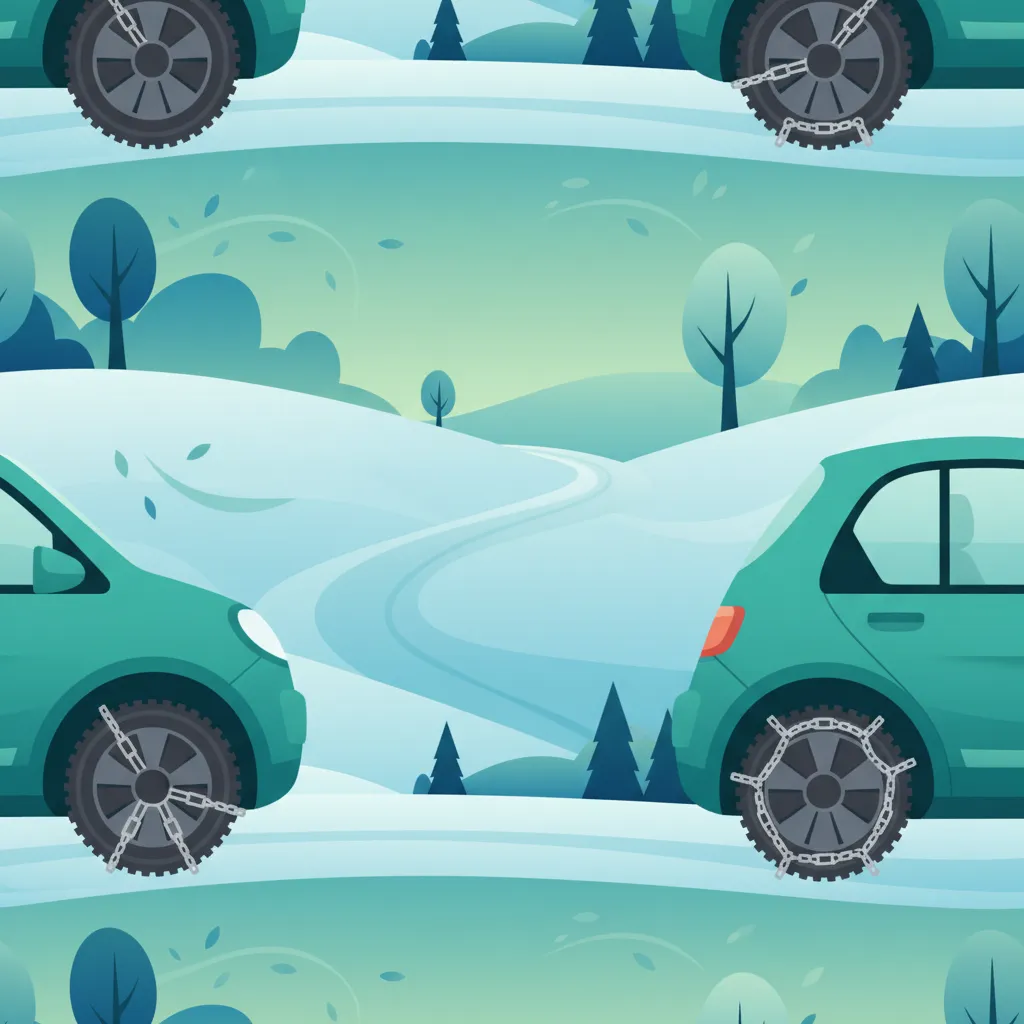
Driving on Swedish roads during the winter months requires specific knowledge and preparation. This lesson within your Swedish Driving License Theory Course for Category B Cars delves into the crucial regulations and best practices concerning the use of winter tires and tire chains. Adhering to these rules is not just a legal obligation; it is fundamental for ensuring your safety and the safety of all road users when navigating snow, ice, slush, and frost.
The reduced friction on icy and snow-covered surfaces dramatically increases braking distances and complicates vehicle control. Proper tire equipment is designed to restore this vital grip, allowing for safer maneuvering and stopping. Swedish law, outlined primarily in the Trafikförordning (Traffic Ordinance), aims to prevent accidents and maintain traffic flow by mandating appropriate vehicle equipment for prevailing road conditions. Understanding these regulations is key to avoiding fines, vehicle damage, and, most importantly, serious accidents.
Winter in Sweden presents unique driving challenges, from heavy snowfall to treacherous black ice. The ability of your vehicle to maintain traction—its grip on the road—is paramount for safe driving. Standard summer tires are designed for warmer temperatures and dry or wet asphalt; their rubber compound hardens in the cold, and their tread patterns are not optimized for snow or ice. This leads to significantly reduced grip, longer braking distances, and an increased risk of skidding.
Winter tires, on the other hand, are engineered specifically for cold weather conditions. They feature a softer rubber compound that remains flexible at low temperatures, allowing the tire to conform better to the road surface. Their distinctive tread patterns are designed to efficiently channel away snow, slush, and water, while biting into icy or snowy surfaces to provide enhanced traction. This specialized design directly impacts vehicle stability, steering responsiveness, and braking performance, which are all critical for winter road safety.
Swedish law is explicit about when and how winter tires must be used. These regulations are designed to adapt to the varying and often unpredictable winter conditions across the country. Drivers must be prepared to equip their vehicles with appropriate tires as soon as winter road conditions arise.
The fundamental principle is that winter tires (or studded tires) must be fitted when winter road conditions exist. This rule applies regardless of the calendar date. Winter road conditions are defined as the presence of snow, ice, slush, or frost on any part of the road surface. This legal obligation ensures that vehicles are adequately equipped to handle low-friction environments whenever they occur.
Drivers must continuously assess the road conditions. Even if only a small patch of ice or snow is present, or if temperatures suggest a risk of frost, winter tires are required if you are driving during the mandatory period or if winter conditions are present outside this period.
Beyond the general rule for actual winter conditions, there is a specific calendar period during which winter tires are compulsory if winter conditions could exist. This mandatory period runs from December 1st to March 31st (inclusive). During these dates, your vehicle must be equipped with winter-approved tires if there is snow, ice, slush, or frost on the road. This timeframe simplifies enforcement and provides a clear guideline for drivers and authorities alike, recognizing that winter conditions are highly probable during these months.
Even if the roads appear dry within this mandatory period, if there's any risk of winter conditions appearing (e.g., temperatures below freezing), winter tires must be fitted. The main exception to this rule is if you are driving to or from the vehicle inspection authority for specific maintenance or repair reasons, or if you're taking your vehicle out of service.
Studded tires, known as dubbdäck in Swedish, are a type of winter tire specifically designed for superior grip on icy surfaces. They feature small metal studs embedded in the tread blocks, which bite into ice and hard-packed snow.
While highly effective on ice, studded tires also cause increased wear to road surfaces and generate more noise. Due to these environmental impacts, their use is regulated more strictly than studless winter tires. Studded tires may only be used from December 1st to March 31st (inclusive). This period aligns with the general mandatory winter tire period, reflecting when their ice-gripping benefits are most needed. Outside this timeframe, their use is strictly prohibited, regardless of weather conditions, unless specifically permitted by local authorities in exceptional circumstances.
Further restrictions apply to studded tires: municipalities have the authority to prohibit their use within specific areas. These local bans are typically implemented in densely populated urban zones, such as city centers in Stockholm, Gothenburg, and Malmö, to reduce air pollution from road wear particles and mitigate noise.
Drivers must be aware of and obey these local ordinances. If you are traveling through a city with a studded tire ban, you must either use studless winter tires or ensure your route avoids the prohibited zones. Road signs will indicate these prohibitions.
Always check current local regulations for studded tire bans, especially when planning journeys through major Swedish cities. Non-compliance can result in fines.
Studless winter tires, often referred to as friction tires, do not have metal studs. Instead, they rely on advanced rubber compounds, typically softer than studded tire compounds, and intricate tread patterns with numerous sipes (small slits) to create grip on snow and ice. They offer a good balance of grip on various winter surfaces, are generally quieter, and cause less road wear than studded tires.
Studless winter tires are legal to use during the mandatory period (December 1st to March 31st) and whenever winter conditions exist. Crucially, they are not subject to the time restrictions or local bans that apply to studded tires. This makes them a versatile choice for drivers who frequently drive in urban areas with studded tire prohibitions. After March 31st, you are legally permitted to continue using studless winter tires, though it is generally recommended to switch to summer tires for optimal performance, fuel efficiency, and reduced wear on dry, warmer roads.
The tread depth of your tires is a critical factor in their ability to perform safely, especially in winter conditions. Tread grooves are designed to channel away water, slush, and snow, allowing the tire to maintain direct contact with the road surface.
In Sweden, all tires on a passenger car (Category B) must have a minimum tread depth of 1.6 millimeters (mm). This is a legal requirement year-round, regardless of the season or type of tire. Driving with tires below this minimum is illegal and significantly compromises safety, increasing the risk of hydroplaning on wet roads and severely reducing grip on snow and ice.
While 1.6 mm is the legal minimum, it is generally considered insufficient for optimal performance in genuine winter conditions. For winter tires (both studded and studless), a tread depth of at least 3 mm is strongly recommended by the Swedish Transport Agency (Transportstyrelsen). This deeper tread provides much better grip on snow and slush and enhances the tire's ability to evacuate water, thereby reducing the risk of skidding and improving braking performance.
Visually inspect your tires for any signs of uneven wear or damage.
Locate the Tread Wear Indicators (TWIs) – small bars moulded into the main grooves of the tire tread at various points around the circumference. When the tread is worn down to the level of these bars, the tire has reached its legal minimum depth of 1.6 mm.
For a more precise measurement, use a tread depth gauge. Insert the gauge into the deepest part of the main tread grooves, avoiding the wear indicators.
Check multiple points around each tire, as wear can be uneven.
Regularly checking your tire tread depth is a vital part of vehicle maintenance and your responsibility as a driver. Replace tires well before they reach the legal minimum, especially if they are winter tires nearing the 3 mm recommendation.
Tire chains are specialized equipment used to provide extreme traction in severe winter conditions, typically on very steep or exceptionally icy roads where even winter tires may not suffice. They are not a substitute for winter tires but rather a supplementary measure.
The use of tire chains is mandatory only when specifically indicated by a "snow chain" road sign. This sign is a blue circular sign with a white graphic depicting a tire with a chain wrapped around it. These signs are usually found in mountainous regions or on specific challenging inclines in areas prone to heavy snow and ice, such as certain passes in Norrland.
When you see this sign, you are legally obliged to stop and fit appropriate tire chains before proceeding. Ignoring this sign can lead to fines and, more importantly, put you and others at severe risk due to loss of traction.
Chains must be fitted correctly to the drive wheels of your vehicle according to the manufacturer's instructions. Incorrect installation can cause damage to your tires, wheels, vehicle components (like wheel wells or brake lines), and the road surface, and can lead to a sudden loss of control.
Find a safe, level spot off the road to stop. Engage the parking brake and put the vehicle in park.
Unroll the chains and lay them out on the ground in front of your drive wheels, ensuring they are not tangled.
Drape the chains over the top of the tire, starting from the back and pulling them forward.
Connect the inner loop of the chain behind the tire, then connect the outer parts, making sure the chain is centered and snug.
Drive forward slowly a short distance (a few meters) and then re-tension the chains, as they often loosen slightly after initial movement.
Always refer to your specific chain and vehicle manufacturer's instructions for detailed fitting.
Once the road conditions improve and the need for chains has passed (e.g., the road is cleared of snow and ice, or you pass a sign indicating the end of the chain requirement), they must be removed immediately. Driving with chains on dry asphalt is generally prohibited as it can cause significant damage to both the chains and the road surface, as well as negatively affecting vehicle handling and fuel efficiency.
Understanding the specific legal framework is crucial for all drivers in Sweden. The primary source for these regulations is the Trafikförordning (Traffic Ordinance).
The Trafikförordning sets out the core rules:
Beyond the Trafikförordning, other regulations, such as the Fordonssäkerhetsföreskriften (Vehicle Safety Regulations), cover general tire condition:
Compliance with these regulations is subject to roadside checks by the police and regular vehicle inspections (bilprovning). Failure to comply can result in fines, points on your driving license, and, more critically, it significantly increases your risk of being involved in a severe accident.
Many drivers, particularly those new to Sweden or winter driving, can make errors regarding winter tire and chain usage. Being aware of these common pitfalls can help ensure you stay safe and compliant.
The decision to use winter tires or chains is not static; it is influenced by a range of contextual factors that drivers must constantly assess.
Understanding the underlying physics explains why proper winter tires are so crucial:
Studies on Swedish drivers have shown that formal education on winter driving physics can reduce overestimation of tire grip by approximately 30%, leading to safer driving behaviors.
Beyond the immediate safety benefits, the use of studded tires carries environmental considerations. The studs abrade the road surface, generating fine particulate matter which contributes to air pollution, particularly in urban areas. This is a primary reason for municipal studded tire bans.
To recap the essential requirements for winter driving in Sweden:
By understanding and diligently applying these regulations, you contribute to your own safety and the overall safety of the Swedish road network during challenging winter conditions. Always prioritize caution and adapt your driving to the prevailing weather and road surface.
To deepen your understanding of safe winter driving and vehicle dynamics, explore these related lessons:
Lesson content overview
Explore all units and lessons included in this driving theory course.
Explore search topics learners often look for when studying Use of Winter Tires and Chains. These topics reflect common questions about road rules, driving situations, safety guidance, and lesson level theory preparation for learners in Sweden.
Browse additional driving theory lessons that cover connected traffic rules, road signs, and common driving situations related to this topic. Improve your understanding of how different rules interact across everyday traffic scenarios.
Understand the mandatory periods for winter tires in Sweden, including rules for studded and non-studded tires. Learn about tread depth requirements and the use of tire chains for safe winter road conditions.
This lesson teaches you how to recognize and adapt to different types of slippery winter surfaces. You will learn about the characteristics of driving in loose snow, packed snow, and on ice, with a special focus on detecting 'black ice' (ishalka), which is transparent and extremely dangerous. The content identifies high-risk areas such as bridges and shaded sections of the road and emphasizes the need for extremely gentle steering, acceleration, and braking inputs.

This lesson covers strategies for driving safely when visibility is compromised. You will learn the correct use of different lighting systems: when to use low beams, high beams (helljus), and how to avoid dazzling other drivers. The lesson also explains the specific regulations for using front and rear fog lights and provides techniques for navigating safely in dense fog or heavy precipitation by reducing speed and using the road edge as a guide.

This lesson provides practical advice on selecting the appropriate riding gear for the diverse Swedish seasons. You will learn about the importance of layering for warmth in the cold, ventilated gear for summer heat, and effective waterproofs for rain. The content emphasizes how the right equipment not only keeps you comfortable and focused but also provides crucial protection and enhances your visibility to other road users, making it a critical component of overall motorcycle safety.
This lesson focuses on the high level of caution required when driving in residential areas. You will learn about the rules for special zones like 'gångfartsområde' (walking speed area) and the need to navigate around speed calming measures like speed bumps. The central theme is anticipating unpredictable behavior from residents, especially children, and managing the risks posed by parked cars that severely limit visibility.

This lesson reinforces the core safety principle of adapting your driving to the prevailing weather conditions. You will learn why you must significantly reduce speed in heavy rain to avoid aquaplaning, how strong crosswinds can affect vehicle stability, and why reduced visibility in fog necessitates slower speeds and greater following distances. The goal is to instill a proactive approach to risk management whenever the weather is less than ideal.

This lesson provides essential information for any motorcyclist considering riding in cold Swedish weather. You will learn how cold temperatures affect tire performance and the extreme caution required on surfaces with potential ice or snow. The content focuses on recognizing hazardous spots like black ice, the need for exceptionally smooth and gentle control inputs, and why in many cases, the safest decision is not to ride at all in such conditions.
This lesson addresses the severe dangers of riding a moped in snow and icy conditions. It explains how to identify potential hazards like black ice and emphasizes that avoiding riding in such conditions is the safest strategy. For situations where it cannot be avoided, it provides advice on extremely gentle control inputs and vehicle preparation.

This lesson provides a complete guide to motorway driving in Sweden. You will learn the correct procedures for merging from an on-ramp, maintaining proper lane discipline by keeping right unless overtaking, and exiting safely via off-ramps. The content emphasizes the importance of maintaining large safety margins at high speeds, checking blind spots thoroughly before any lane change, and knowing the correct safety procedures in case of a breakdown.
This lesson provides a detailed guide to navigating Swedish roundabouts (cirkulationsplatser). Key principles include always yielding to traffic already in the roundabout and choosing the correct lane based on your intended exit. You will learn the specific rules for signalling your intention to exit, how to safely interact with cyclists, and the techniques for maneuvering through multi-lane roundabouts to maintain traffic flow and prevent accidents.

This lesson details a driver's responsibility towards pedestrians. You will learn the strict rule of yielding to pedestrians who are on or about to enter a marked, uncontrolled crosswalk. The content also covers the specific, highly restrictive rules for driving in designated pedestrian zones (gågata) and 'walking speed' areas (gångfartsområde), where pedestrians have complete priority and vehicle traffic is severely limited.
Explore essential techniques for driving safely on snow and ice. This includes understanding the impact of winter tires, safe following distances, and adapting speed to adverse weather conditions as per Swedish traffic law.
This lesson teaches you how to recognize and adapt to different types of slippery winter surfaces. You will learn about the characteristics of driving in loose snow, packed snow, and on ice, with a special focus on detecting 'black ice' (ishalka), which is transparent and extremely dangerous. The content identifies high-risk areas such as bridges and shaded sections of the road and emphasizes the need for extremely gentle steering, acceleration, and braking inputs.
This lesson provides essential information for any motorcyclist considering riding in cold Swedish weather. You will learn how cold temperatures affect tire performance and the extreme caution required on surfaces with potential ice or snow. The content focuses on recognizing hazardous spots like black ice, the need for exceptionally smooth and gentle control inputs, and why in many cases, the safest decision is not to ride at all in such conditions.
This lesson addresses the severe dangers of riding a moped in snow and icy conditions. It explains how to identify potential hazards like black ice and emphasizes that avoiding riding in such conditions is the safest strategy. For situations where it cannot be avoided, it provides advice on extremely gentle control inputs and vehicle preparation.

This lesson provides critical knowledge on how to prevent and manage a skid. You will learn to differentiate between understeer (front-wheel skid) and oversteer (rear-wheel skid) and the correct steering and pedal inputs required to recover control in each case. The importance of looking and steering in the desired direction of travel is a key focus, along with understanding how modern safety systems like ABS and ESP assist the driver.
This lesson covers strategies for driving safely when visibility is compromised. You will learn the correct use of different lighting systems: when to use low beams, high beams (helljus), and how to avoid dazzling other drivers. The lesson also explains the specific regulations for using front and rear fog lights and provides techniques for navigating safely in dense fog or heavy precipitation by reducing speed and using the road edge as a guide.
This lesson reinforces the core safety principle of adapting your driving to the prevailing weather conditions. You will learn why you must significantly reduce speed in heavy rain to avoid aquaplaning, how strong crosswinds can affect vehicle stability, and why reduced visibility in fog necessitates slower speeds and greater following distances. The goal is to instill a proactive approach to risk management whenever the weather is less than ideal.

This lesson focuses on the correct use of warning devices to protect an accident or breakdown scene. You will learn to immediately activate your hazard lights (varningsblinkers). The main focus is on the proper placement of the warning triangle, explaining how the distance from the vehicle must be adapted based on the road's speed limit and visibility to give oncoming drivers adequate time to react.

This lesson encourages a mindset of adapting riding style to the specific challenges of each season. It covers seasonal hazards such as wet leaves in the fall, loose gravel after winter, and sun glare in the summer. By being aware of these predictable changes, riders can proactively adjust their technique and maintain safety throughout the year.
This lesson provides practical advice on selecting the appropriate riding gear for the diverse Swedish seasons. You will learn about the importance of layering for warmth in the cold, ventilated gear for summer heat, and effective waterproofs for rain. The content emphasizes how the right equipment not only keeps you comfortable and focused but also provides crucial protection and enhances your visibility to other road users, making it a critical component of overall motorcycle safety.

This lesson teaches practical methods for maintaining a safe buffer to the vehicle ahead, with a primary focus on the universally recommended 'three-second rule'. You will learn how to apply this rule by picking a fixed point and counting the seconds until you pass it. The content also explains why this distance must be increased significantly in adverse conditions such as rain, snow, or when following large vehicles that obstruct your view.
Find clear answers to common questions learners have about Use of Winter Tires and Chains. Learn how the lesson is structured, which driving theory objectives it supports, and how it fits into the overall learning path of units and curriculum progression in Sweden. These explanations help you understand key concepts, lesson flow, and exam focused study goals.
Winter tires (either studded or friction) are mandatory on all vehicles when winter road conditions (snow, ice, slush, or frost) exist. While there is no strict legal period, it is generally understood and advised to use them from December 1st to March 31st. If winter conditions prevail outside these dates, winter tires are still legally required.
Studded tires have metal studs for better grip on ice, especially effective on clear ice. Friction tires (also known as 'non-studded' or 'ice tires') use special rubber compounds and sipes (small cuts) to provide grip on snow and ice. Studded tires are generally noisier, can damage road surfaces, and have restrictions on use, while friction tires are quieter and allowed year-round, often performing better on packed snow.
Yes, studded tires are generally permitted from October 1st to April 15th. However, some municipalities may have local ordinances (lokala trafikföreskrifter) that prohibit or restrict their use even during this period, especially in urban areas. Always check for local signage.
The legal minimum tread depth for all tires in Sweden is 1.6 mm. However, for winter tires, it is strongly recommended to have at least 5 mm of tread depth for optimal performance and safety on snow and ice. Tires with less than 3 mm of tread are considered significantly less effective in winter conditions.
Tire chains are typically used in very severe winter conditions, such as deep snow or steep icy inclines, where even winter tires may not provide sufficient traction. Their use is often mandated by signs. They should only be used when necessary and removed once conditions improve, as they can damage roads and tires if used on bare pavement.