
Welcome to the core of motorcycle control! This lesson delves into the crucial interplay between balance, throttle application, and counter-steering, fundamental techniques for Category A riders. Understanding these principles is your first step towards confident and safe motorcycle operation, preparing you for challenging situations on Swedish roads and the theory test.
Becoming a skilled and safe motorcycle rider hinges on a deep understanding and mastery of three fundamental control inputs: balance, throttle application, and counter-steering. These elements are not isolated techniques but rather an interconnected system that allows a rider to keep the motorcycle upright, initiate turns, and control speed and acceleration with precision. For any rider preparing for the Swedish Category A motorcycle theory test, grasping these concepts is paramount, as they form the bedrock of safe vehicle operation and compliance with Transportstyrelsen regulations.
This lesson delves into the physics and practical application of these core controls, from maintaining stability at a standstill to executing precise turns at high speeds. Understanding their dynamic interplay is the first step towards developing the smooth, confident, and safe riding style expected on Swedish roads.
Motorcycles, by their very design, are inherently unstable when stationary but remarkably stable when moving. This paradox is explained by the interplay of various physical forces, which riders must learn to manage. Balance can be broadly categorized into dynamic balance, which applies at speed, and static balance, crucial for low-speed maneuvers.
Dynamic balance refers to the continuous equilibrium of forces—gravitational, gyroscopic, and centrifugal—that keep a moving motorcycle upright. At higher speeds, the motorcycle exhibits a strong tendency to self-correct and remain upright, requiring minimal rider input to maintain a straight line.
A fundamental principle contributing to dynamic balance is the gyroscopic effect. This is the tendency of a rotating wheel to resist changes to its axis of rotation. The faster the wheels spin, the stronger this effect becomes, creating a powerful stabilising moment. This is why a motorcycle feels much more stable at 80 km/h than at 20 km/h. Any force attempting to tilt the bike is met with a perpendicular reaction from the spinning wheels, known as gyroscopic precession, which the rider then uses to initiate leans.
While gyroscopic forces enhance stability, they do not solely keep the bike upright. Rider input and the motorcycle's steering geometry are equally vital. Misusing or over-relying on gyroscopic stability without adequate steering control can be negligent under Swedish traffic law, which requires riders to keep their vehicle under control at all times.
Beyond gyroscopic forces, a motorcycle's inherent high-speed stability is significantly influenced by its steering geometry, which includes parameters like rake angle, trail, and steering axis inclination (SAI).
These design elements combine to resist unintended lean and wobble at speeds typically above 50 km/h, allowing the rider to maintain a straight line with minimal steering input. However, it's important to remember that excessive speed can undermine these stabilising factors, potentially leading to speed wobble if the front tyre is unbalanced or if abrupt inputs are made. Swedish traffic law (Transportstyrelsen §3) mandates adherence to speed limits, which are set to ensure riders have sufficient reaction time and control.
Static balance is the ability to keep the motorcycle upright while stationary or moving very slowly, typically below 10 km/h, where gyroscopic forces are insufficient for self-stability. This skill is critical for navigating congested urban environments, performing tight turns in parking lots, and managing stop-and-go traffic.
At very low speeds, riders must actively participate in maintaining balance. The key techniques include:
Swedish road traffic law (Körkortslagen §12) requires riders to keep both hands on the handlebars except when signalling. While using the foot-brake for low-speed balance, both hands must remain on the grips to ensure continuous steering control.
The Centre of Gravity (CoG) is the theoretical point where the entire mass of the motorcycle-rider system is concentrated. Its position significantly affects stability. A lower CoG generally increases stability, particularly at low speeds. When navigating slowly, riders often use their body to actively adjust the CoG, keeping it aligned with the motorcycle's base of support. A higher or rearward CoG, often due to heavy luggage or a passenger, can reduce stability, making low-speed maneuvers more challenging and increasing the risk of imbalance. Swedish Transportstyrelsen §15 states that vehicles must not be overloaded, as this drastically alters the CoG and increases crash risk.
Throttle control is the precise modulation of engine power through the throttle grip, directly influencing the rear wheel's torque, acceleration, and ultimately, tyre traction. Smooth and appropriate throttle application is crucial for maintaining stability, preventing wheel spin, and integrating effectively with steering inputs, especially during cornering.
Effective throttle modulation involves a continuous, proportional adjustment of engine power. It is not an on/off switch but a finely tuned instrument.
Progressive throttle application means gradually increasing or decreasing the throttle rather than making abrupt changes.
Sudden, aggressive throttle opening can have several negative consequences:
Swedish traffic law (Transportstyrelsen §15) considers sudden acceleration that endangers other road users as reckless driving. Smooth throttle is a legal requirement as much as a safety practice.
Load transfer is the shift of vertical load, or weight, from one tyre to the other due to forces acting on the motorcycle. During acceleration, load is transferred from the front wheel to the rear wheel. This dynamic redistribution of weight significantly influences the traction available at each tyre.
Traction management is the art of balancing available tyre-road friction against the forces applied by braking, throttle, and steering. Riders must constantly be aware of the limits of their tyres and the prevailing road conditions.
On slippery surfaces like ice or loose gravel, reduce your speed dramatically and use minimal, ultra-smooth throttle inputs. Any abrupt change can easily exceed the tyre's reduced traction limits.
Counter-steering is arguably one of the most counter-intuitive yet essential techniques for motorcycle control. It is the primary method riders use to initiate a lean and therefore a turn, at speeds generally above 10 km/h.
Contrary to what instinct might suggest, to turn a motorcycle to the right, you must briefly and subtly steer the handlebars to the left (push the right handlebar forward, or pull the left handlebar back). This brief, opposite steering input causes the motorcycle to lean into the desired turn.
The mechanics behind counter-steering involve a combination of gyroscopic precession and the motorcycle's steering geometry:
Counter-steering becomes effective at speeds above approximately 10 km/h, as this is when gyroscopic forces begin to assert significant influence.
Attempting to turn solely by 'leaning' at speeds above 10 km/h is slow and inefficient. It often leads to riders 'running wide' in turns or being unable to react quickly to hazards. Counter-steering is the technique to master for safe turning.
Smooth and safe cornering involves a harmonious blend of throttle control, counter-steering, and lean angle. These inputs must be coordinated for optimal stability and traction.
The precise application of these controls will vary based on the corner's radius, camber, and road surface:
Pre-Corner: Reduce speed to appropriate entry speed using braking and/or closed throttle. Look through the corner.
Initiate Turn: Apply a brief, decisive counter-steer to lean the bike into the turn.
Mid-Corner: Maintain a steady, neutral throttle or gently open it. Adjust lean angle as needed. Eyes focused on the exit.
Corner Exit: Gradually open the throttle and allow the bike to stand up as you exit the turn, steering subtly to follow the road.
Mastering balance, throttle, and counter-steering is not only a matter of personal safety but also a legal obligation under Swedish traffic law. Transportstyrelsen mandates that all drivers, including motorcyclists, maintain full control of their vehicle at all times.
Swedish legislation outlines clear expectations for rider conduct, directly impacting how balance, throttle, and steering must be managed.
Swedish law (Körkortslagen §12) requires a rider to keep both hands on the handlebars while the motorcycle is in motion, except for brief moments when signalling, operating controls, or avoiding an obstacle.
This rule exists to ensure maximum steering precision and rapid response. While a momentary release to operate a control (e.g., helmet visor) or signal (hand signal) is permissible, cruising with one hand off the bars or holding an object is a direct violation. Maintaining both hands on the grips provides the necessary leverage for effective counter-steering and recovery from unforeseen imbalances.
Riders must control the motorcycle at all times, avoiding abrupt throttle or steering inputs that could cause loss of traction, destabilise the vehicle, or endanger other road users. Failure to do so may constitute reckless driving.
This broad regulation encompasses the principles of smooth throttle modulation and controlled counter-steering. Sudden, aggressive throttle application leading to wheel spin, or erratic steering that causes the motorcycle to wobble or swerve, falls under this category. Such actions not only increase crash risk but can also lead to legal penalties.
Beyond direct control inputs, external factors regulated by law also influence a motorcycle's stability and a rider's ability to maintain control.
Riders must not exceed posted speed limits or, in their absence, the default limits for the specific road category (e.g., urban, rural, motorway).
Speed directly impacts the forces at play on a motorcycle. While higher speeds increase gyroscopic stability, they also reduce reaction time and magnify the consequences of any error in throttle or steering input. Attempting rapid counter-steering or aggressive throttle application at excessive speeds can quickly overwhelm available tyre traction, leading to loss of control. Adhering to speed limits allows sufficient time for observation, decision-making, and smooth execution of control inputs.
Motorcycles have manufacturer-specified maximum weight limits (Gross Vehicle Weight - GVW). Overloading, especially by adding heavy luggage to the rear or carrying multiple passengers beyond design limits, significantly alters the Centre of Gravity (CoG). A rearward-shifted CoG can:
Riders must ensure their motorcycle is not overloaded, as this is a legal violation and a significant safety hazard.
The rider must give an appropriate hand signal or use turn indicators well in advance before changing lanes or direction, ensuring sufficient time for the maneuver and predictability for other road users.
While directly related to communication, this rule has implications for counter-steering. An abrupt lane change without signaling means other road users cannot anticipate your movement. This might force you to execute a sudden, large counter-steer under pressure, increasing the risk of loss of control or collision. Signalling early allows for a smoother, more controlled lane change using appropriate counter-steering.
The principles of balance, throttle control, and counter-steering remain constant, but their application must be adapted to varying external conditions. A skilled rider adjusts their inputs based on weather, road surface, vehicle load, and interaction with other road users.
Adverse weather conditions drastically reduce tyre-road friction, demanding significant adjustments to riding style.
Riding on surfaces other than paved asphalt requires specific adaptations to control inputs.
The state of your motorcycle and its load directly impact how it responds to control inputs.
When riding near pedestrians, cyclists, or other vulnerable road users, predictability and smooth control inputs are paramount.
Understanding common pitfalls can help riders proactively develop safer habits.
| Violation / Edge Case | Why it’s Wrong | Correct Behaviour | Potential Consequence |
|---|---|---|---|
| Abrupt full-throttle while turning on wet pavement | Causes rear-wheel slip and loss of front-wheel traction due to excessive load transfer to rear. | Apply throttle progressively; maintain moderate lean angle; increase following distance. | Skid, loss of control, possible collision or legal charge for reckless driving. |
| Using only one hand on the handlebars during lane change | Reduces steering precision; hampers quick counter-steer response and balance. | Keep both hands on grips until the lane change is complete; use a brief hand signal only if required. | Increased risk of over-steer, vehicle wobble, legal violation (§12). |
| Attempting a turn at < 10 km/h with high clutch grab point | Insufficient gyroscopic stability; rider may stall or fall due to lack of balance or jerky power delivery. | Use rear-brake modulated balance, consistent low throttle, and body lean; feather clutch. | Fall, injury, traffic disruption. |
| Carrying excessive rear luggage causing CoG shift | Reduces front-wheel load, making the bike prone to front-wheel lift during hard throttle and reducing front grip. | Observe manufacturer’s load limits; distribute weight evenly; adjust riding style (lighter throttle). | Uncontrolled front-wheel lift, crash, possible fine for over-loading (§15). |
| Late or missing turn signal before an emergency lane change | Other road users cannot anticipate the maneuver; rider may need sudden, large counter-steer. | Signal early (minimum 4 s before lane change); execute smooth counter-steer. | Collision with vehicles in target lane, legal penalty for failure to signal (§7). |
| Riding with tyres that are under-inflated for the load | Reduces tyre contact patch, decreasing traction during throttle-steer; can cause tyre failure. | Inflate tyres to manufacturer-specified pressure for current load; check regularly. | Wheel slip, tyre blow-out, loss of control. |
| Performing counter-steer at very low speed (< 10 km/h) | Counter-steer is ineffective; bike may simply tip over due to lack of gyroscopic effect. | Use low-speed steering technique (lean the bike by shifting body weight, use rear-brake). | Fall, loss of stability. |
| Accelerating aggressively while exiting a corner on a downhill slope | Combined longitudinal and lateral load transfer can unload the front tyre, causing under-steer or high-speed wobble. | Control throttle; maintain smooth line; consider using slight rear-brake to reduce torque. | Skidding out of the corner, possible collision with roadside objects. |
| Riding with a passenger who shifts weight abruptly during a turn | Sudden CoG movement disrupts balance; rider may over-compensate with steering. | Instruct passenger to keep torso aligned with rider; rider anticipates load changes. | Unexpected lean, loss of traction, possible crash. |
| Neglecting to adjust riding style in icy conditions | Ice drastically reduces friction; normal throttle-steer inputs become unsafe. | Reduce speed, use minimal throttle, avoid sudden counter-steer; increase following distance. | Wheel spin, slide, severe crash. |
The journey to becoming a proficient motorcyclist in Sweden involves continuous refinement of these core skills.
By diligently practicing and understanding these foundational principles, you will build the competence required not only to pass your Swedish motorcycle theory and practical tests but, more importantly, to ride safely and confidently for years to come.
Lesson content overview
Explore all units and lessons included in this driving theory course.
Explore search topics learners often look for when studying Balance, Throttle Control, and Counter-Steering. These topics reflect common questions about road rules, driving situations, safety guidance, and lesson level theory preparation for learners in Sweden.
Browse additional driving theory lessons that cover connected traffic rules, road signs, and common driving situations related to this topic. Improve your understanding of how different rules interact across everyday traffic scenarios.
Explore the physics behind motorcycle cornering, including line selection and body positioning. This lesson delves into advanced steering and control techniques crucial for safe riding in Sweden. Learn how to master turns through expert theoretical understanding.
This lesson demystifies the art of cornering on a motorcycle. You will learn about the forces at play, such as lean angle and traction, and how to choose the safest and most efficient line through a corner (entry, apex, exit). It also covers how to use your body weight and position to aid the motorcycle's stability and turning ability, enabling you to navigate bends smoothly and with a greater margin of safety, regardless of the road conditions.

This lesson delves into the dynamics of cornering on a two-wheeled vehicle, introducing the essential technique of counter-steering to initiate turns efficiently. It explains the importance of choosing a proper line, managing speed before the turn, and looking through the corner to the exit. The content also provides guidance on how to recognize and correct for a loss of traction or a skid.
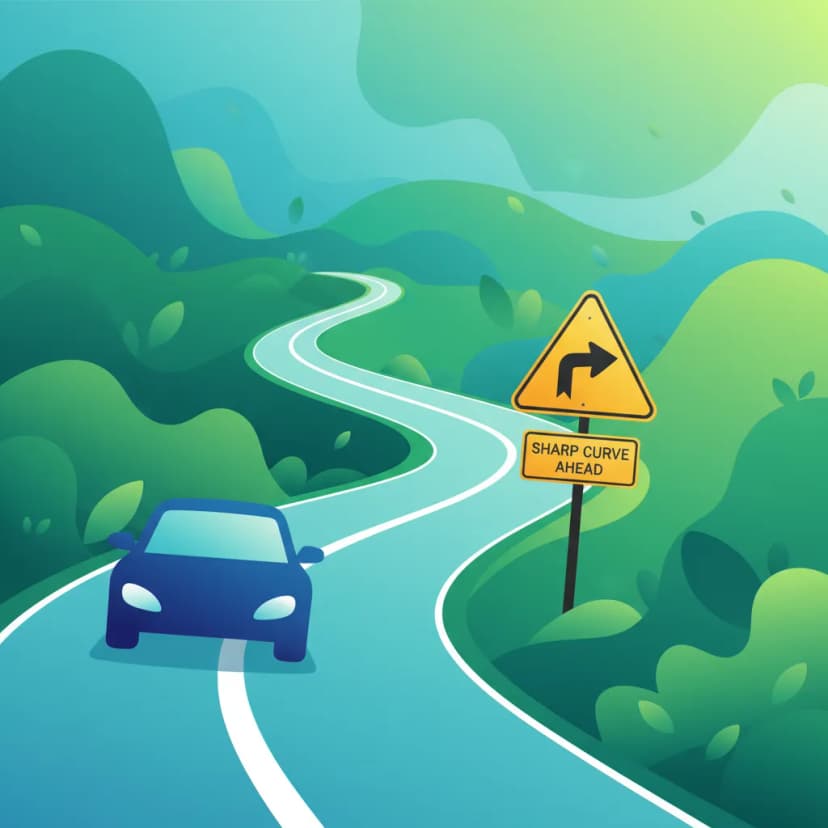
This lesson teaches the correct methodology for negotiating curves and turns of varying sharpness. You will learn the principle of 'slow in, fast out,' involving braking before the curve and gently accelerating through it to maintain stability and grip. The lesson also covers how to choose the correct line (placering) through a bend and how to use your vision effectively to look far ahead for a safe and controlled passage.

This lesson teaches the physical skill of applying maximum braking force while maintaining control of the motorcycle. You will learn the technique of progressive braking to avoid locking the wheels and how to react if a skid does occur. Understanding how to manage both front and rear wheel skids and how an ABS system assists in these situations gives you the best possible chance of stopping safely and quickly in an emergency.

This lesson details the technique for performing a quick, decisive swerve to avoid an obstacle in your path. You will learn the correct positive counter-steering inputs required to make the motorcycle change direction rapidly while remaining stable. The lesson also addresses the dangerous phenomenon of 'target fixation' and teaches you to look where you want to go, a critical mental skill for successful evasive maneuvers.
This lesson provides a deeper understanding of the factors that affect a motorcycle's stability and grip. You will learn how acceleration and braking cause load transfer between the front and rear wheels, affecting the size of the tire contact patch and available traction. This knowledge is crucial for managing grip on various surfaces, especially in wet or loose conditions, and for understanding how carrying a passenger or luggage impacts the bike's handling.

This lesson focuses on developing the fine control needed for low-speed maneuvering, a common challenge in urban environments. It covers techniques for making tight turns, such as U-turns, by using a combination of clutch, throttle, and rear brake control. The goal is to build the rider's skill and confidence in handling the moped in parking lots, heavy traffic, and other confined areas.
This lesson provides a detailed guide to motorcycle braking, explaining the roles of the front and rear brakes and how to use them effectively in combination. You will learn about the physics of weight transfer during deceleration, how to apply brakes progressively to avoid locking a wheel, and techniques for emergency stops. The content also covers the function of ABS and how to adapt your braking strategy for different road surfaces and conditions, a vital skill for every rider.
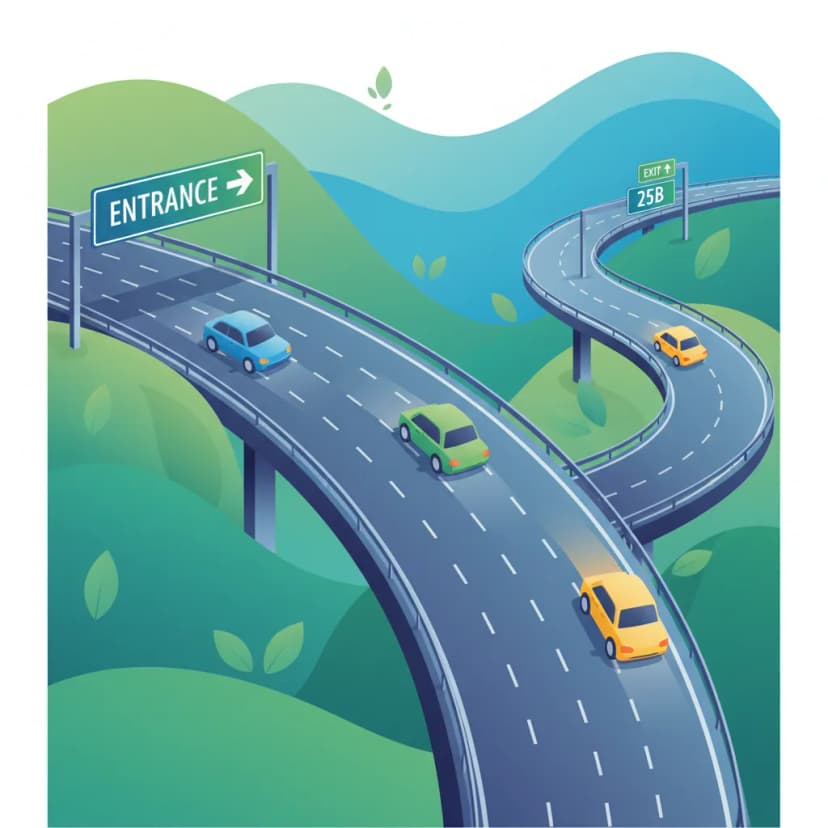
This lesson provides a step-by-step guide to motorway riding. You will learn the correct technique for accelerating on an on-ramp and merging smoothly into high-speed traffic. The content also covers maintaining proper lane discipline, executing safe overtakes, keeping a safe following distance at speed, and planning for your exit well in advance to ensure a smooth and stress-free experience on Sweden's fastest roads.

This lesson explores the critical relationship between the rider's body and the moped's stability. It explains how to maintain balance using correct posture and weight distribution for different maneuvers. The content covers basic steering inputs and how body positioning, such as leaning into turns, directly influences the vehicle's handling and responsiveness.
Understand the critical theory behind maintaining balance and precise throttle control at low speeds. This lesson focuses on the fundamental skills required for navigating tight spaces and slow traffic, essential for Swedish motorcycle riders. Learn to control your machine confidently in challenging conditions.
This lesson teaches the art of smooth throttle control, which is essential for predictable and safe riding. It explains how to apply gradual acceleration to seamlessly merge with traffic and maintain traction, especially on loose or wet surfaces. The goal is to develop a refined feel for the engine's response, allowing for precise speed adjustments in any situation.
This lesson focuses on developing the fine control needed for low-speed maneuvering, a common challenge in urban environments. It covers techniques for making tight turns, such as U-turns, by using a combination of clutch, throttle, and rear brake control. The goal is to build the rider's skill and confidence in handling the moped in parking lots, heavy traffic, and other confined areas.
This lesson teaches the physical skill of applying maximum braking force while maintaining control of the motorcycle. You will learn the technique of progressive braking to avoid locking the wheels and how to react if a skid does occur. Understanding how to manage both front and rear wheel skids and how an ABS system assists in these situations gives you the best possible chance of stopping safely and quickly in an emergency.
This lesson explores the critical relationship between the rider's body and the moped's stability. It explains how to maintain balance using correct posture and weight distribution for different maneuvers. The content covers basic steering inputs and how body positioning, such as leaning into turns, directly influences the vehicle's handling and responsiveness.
This lesson provides a deeper understanding of the factors that affect a motorcycle's stability and grip. You will learn how acceleration and braking cause load transfer between the front and rear wheels, affecting the size of the tire contact patch and available traction. This knowledge is crucial for managing grip on various surfaces, especially in wet or loose conditions, and for understanding how carrying a passenger or luggage impacts the bike's handling.

This lesson focuses on the techniques for managing the motorcycle's power through acceleration and gear shifting. You will learn how to use the clutch and throttle in coordination for smooth starts and seamless gear changes, both up and down. The content also explains how to choose the appropriate gear for different situations, such as cornering, climbing hills, or overtaking, to ensure the engine is in its optimal powerband for maximum control and efficiency.

This lesson focuses on the three fundamental inputs for controlling a car: steering, acceleration, and braking. You will learn the correct hand positioning on the steering wheel for maximum control and techniques for smooth, progressive application of the gas and brake pedals. The content explains how these inputs affect the vehicle's balance and stability, forming the basis for all advanced driving and maneuvering techniques.

This lesson focuses on the unique demands of managing speed in high-speed environments like motorways. You will learn techniques for maintaining a steady, appropriate speed that matches the flow of traffic, how to perform smooth overtakes, and the importance of increasing your following distance. It also covers physical factors such as managing wind blast and maintaining stability when riding near large trucks, ensuring a safe and controlled high-speed riding experience.

This lesson teaches the crucial skill of adapting your speed to the dynamic and often congested conditions of urban riding. You will learn to modulate your speed smoothly in response to traffic flow, pedestrian activity, and complex intersections to maintain safety and control. Techniques covered include using engine braking effectively, anticipating the actions of other road users, and selecting a speed that maximizes your reaction time in a high-density environment.
This lesson provides a step-by-step guide to motorway riding. You will learn the correct technique for accelerating on an on-ramp and merging smoothly into high-speed traffic. The content also covers maintaining proper lane discipline, executing safe overtakes, keeping a safe following distance at speed, and planning for your exit well in advance to ensure a smooth and stress-free experience on Sweden's fastest roads.
Find clear answers to common questions learners have about Balance, Throttle Control, and Counter-Steering. Learn how the lesson is structured, which driving theory objectives it supports, and how it fits into the overall learning path of units and curriculum progression in Sweden. These explanations help you understand key concepts, lesson flow, and exam focused study goals.
To turn right using counter-steering, you initially push forward on the left handlebar grip. This causes the front wheel to steer briefly to the left, which then initiates a lean to the right. Once the bike is leaning, subtle adjustments to handlebar pressure maintain the turn. It's a counter-intuitive but fundamental technique for motorcycle control.
Smooth throttle control is vital because abrupt changes in engine power can upset the motorcycle's balance, especially at low speeds or when leaned over. Smooth application ensures predictable acceleration, controlled deceleration, and helps maintain stability, which is critical for both safety and comfort, and often tested in the Swedish theory exam.
At low speeds, you primarily steer directly with the handlebars, much like a bicycle. At higher speeds, counter-steering becomes dominant. Pushing forward on the handlebar initiates a lean, which is what actually causes the motorcycle to turn. Understanding this shift is key to effective control in all situations.
Yes, questions about motorcycle dynamics, including balance, throttle control, and steering, are part of the Swedish Category A theory test. A thorough understanding of these principles is necessary to answer these questions correctly and pass the exam.
Common mistakes include jerky throttle inputs, especially when braking or accelerating while leaned, which can lead to instability or even a skid. Another is panicking at low speeds and over-correcting with the handlebars, leading to wobbles instead of smooth control. Practicing these concepts will help avoid these errors.