
In the unfortunate event of a motorcycle accident, knowing how to respond can make a life-saving difference. This lesson, part of the Swedish Motorcycle Theory Course, focuses on the essential first aid skills for motorcyclists and bystanders. You'll learn the critical L-ABC assessment and immediate care techniques to provide effective assistance until professional help arrives, preparing you for real-world emergencies and relevant theory exam questions.

Understanding fundamental first aid principles is a critical skill for every road user, particularly motorcyclists and those who might witness a motorcycle accident. Prompt and correct actions in the immediate aftermath of a collision can significantly impact the outcome for an injured person, potentially saving lives and reducing the severity of injuries. This lesson provides essential knowledge aligned with Swedish regulations and best practices, empowering you to respond effectively and safely until professional medical help arrives.
In Sweden, all road users have a legal obligation to assist at the scene of an accident. This duty extends beyond simply calling for help; it requires you to render assistance if you can do so safely. Your primary concern must always be your own safety and the safety of other road users. Only once the scene is secure should you approach a casualty.
Swedish law (Trafikförordningen § 9) mandates that all road users must stop and render assistance if they are able to do so without endangering themselves or others. Failure to comply can lead to criminal liability.
Before you can offer any aid to an injured motorcyclist, you must ensure the accident scene is safe. This involves preventing further collisions and protecting yourself and the casualty from ongoing hazards.
Safely stop your vehicle away from the immediate crash site, if possible. Use your hazard warning lights.
Place a warning triangle approximately 30-50 metres behind the accident on the side of the road where the accident occurred, to alert oncoming traffic. On motorways or roads with higher speeds, this distance should be increased.
If available, put on a high-visibility vest before leaving your vehicle to approach the scene. This greatly increases your visibility to other drivers, especially in poor light or adverse weather.
Assess for other immediate dangers such as fuel leaks, fire, or live electrical wires. Do not approach if there is an imminent risk of explosion or fire unless you have appropriate extinguishing equipment and training.
If possible, direct traffic or ask other bystanders to help warn oncoming vehicles.
Your personal safety is paramount. Wearing a high-visibility vest and gloves (if available in a first-aid kit) can protect you from both traffic and potential infection when tending to wounds. Always assume there are unseen hazards.
The L-ABC protocol is a widely recognised, systematic method for assessing and prioritising care for an injured person. It stands for Läge (Position/Safety), Andning (Breathing), Blödning (Bleeding), and Chock (Shock). This sequence ensures that life-threatening conditions are addressed in a logical order, aligning with the physiological priorities of trauma care.
The "Läge" step involves quickly evaluating the casualty's current position and the immediate surroundings for safety. This is a continuation of securing the scene but focuses specifically on the casualty's immediate vicinity.
Before any physical contact, ensure the ground around the casualty is stable, there are no sharp objects, and no immediate threat from traffic or environmental factors (e.g., unstable debris, nearby fire).
Determine if the casualty needs to be moved. Generally, a casualty should not be moved unless their current position poses an immediate and unavoidable threat (e.g., danger from fire, imminent traffic collision, or an unstable structure). Moving someone with potential spinal injuries can cause further, irreversible harm. If movement is absolutely necessary, attempt to maintain the head, neck, and torso in a straight line, as one unit.
Once the scene and casualty's position are deemed safe, the next critical step is to assess their breathing and ensure an open airway. Airway obstruction is a leading cause of preventable death in trauma.
Motorcyclists often wear full-face helmets, which can complicate airway assessment. Do not assume a helmet always obstructs breathing. Your priority is to maintain an open airway without unnecessarily removing the helmet.
A technique used to open the airway by lifting the angle of the jaw, without tilting the head. This is crucial for maintaining cervical spine neutral alignment when a neck injury is suspected, especially in motorcyclists wearing helmets.
Gently open the visor of the helmet if it is closed, or remove glasses if they are obstructing.
Visually check for chest rise and fall.
Listen for breathing sounds near the casualty's mouth and nose.
Feel for air movement on your cheek.
If the casualty is unconscious and breathing is difficult or absent, and a spinal injury is suspected (which should always be assumed in a motorcycle accident), perform a jaw-thrust maneuver. Place your fingers under the angles of the casualty’s lower jaw and lift gently, causing the jaw to move forward and the mouth to open slightly. This often clears the airway without moving the neck.
The "Helmet-Only-Remove-If-Necessary" Rule: Never remove a motorcyclist's helmet unless it is absolutely essential to secure the airway and other methods, such as the jaw-thrust, have failed or are impossible. Unnecessary helmet removal can cause significant damage to a potentially injured cervical (neck) spine, leading to paralysis or worsening existing brain injuries.
Uncontrolled external bleeding can lead to death within minutes. Rapid identification and control of significant blood loss is therefore paramount. Motorcyclists are prone to lacerations and abrasions (road rash) that can bleed profusely.
Direct Pressure: This is the quickest and most effective initial method. Apply firm, continuous pressure directly to the wound using a clean dressing, a piece of cloth, or even your gloved hand. Maintain pressure for at least 5-10 minutes without peeking to check if the bleeding has stopped.
Wound Packing: For deep, actively bleeding wounds that direct pressure alone isn't controlling (especially in areas like the groin or armpit), tightly pack the wound cavity with gauze or clean cloth, then apply direct pressure over the packed material.
Tourniquet (Last Resort): If severe, life-threatening bleeding from a limb cannot be controlled by direct pressure or wound packing, a tourniquet should be applied. This device restricts blood flow to the limb.
A medical device, or improvised band, applied tightly around a limb above a bleeding wound to stop arterial blood flow. It is a last resort for severe, uncontrollable limb hemorrhage.
How to Apply a Tourniquet:
Traumatic shock is a life-threatening condition where the body's tissues do not receive enough oxygen-rich blood, often due to significant blood loss or severe injury. Early recognition and intervention are vital.
A physiological state resulting from severe blood loss, pain, or trauma, leading to inadequate blood flow (perfusion) to the body's tissues and organs.
Signs of Shock:
Treating for Shock:
If a spinal injury is suspected, do not elevate the legs. Keep the casualty flat to minimise any spinal movement. Always prioritise spinal protection.
Once you have initiated first aid, contacting emergency services is your next critical step. In Sweden, the emergency number is 112.
Call Immediately: Dial 112 from a safe location. If you are alone, use a hands-free device or put the phone on speaker while continuing to provide aid.
State Your Location Clearly: Provide the exact address, road name, nearest intersection, kilometre markers, or any recognisable landmarks. GPS coordinates from your phone can be invaluable.
Describe the Incident: Explain that it is a motorcycle accident.
Report the Number of Casualties: State how many people are injured.
Describe the Severity of Injuries: Briefly explain the casualty's condition (e.g., "unconscious," "not breathing," "severe bleeding on leg," "helmet on").
Mention Actions Taken: Inform the dispatcher about any first aid you have provided (e.g., "applying direct pressure to a wound," "tourniquet applied to thigh at 10:35," "casualty is covered with a blanket").
Stay on the Line: Do not hang up until the dispatcher tells you to. They may provide further instructions or ask additional questions.
Handover to Professionals: When emergency services arrive, provide a clear and concise summary of the situation, the casualty’s condition, and all interventions you have performed.
Accurate and timely information allows the emergency services to dispatch the correct resources (ambulance, police, fire brigade) quickly and efficiently, potentially saving precious minutes.
Responding to a motorcycle accident can be complex, and certain conditions or situations require adapted actions.
Every action you take (or fail to take) has consequences for the injured person.
Your role as a first responder is to provide the immediate, systematic bridge between an accident and professional medical care. Adhering to the L-ABC protocol and understanding the specific considerations for motorcyclists will enable you to offer effective and life-saving assistance.
Understanding key terms helps in clear communication and effective action during an emergency.
Lesson content overview
Explore all units and lessons included in this driving theory course.
Explore search topics learners often look for when studying First Aid Basics for Motorcyclists and Bystanders. These topics reflect common questions about road rules, driving situations, safety guidance, and lesson level theory preparation for learners in Sweden.
Browse additional driving theory lessons that cover connected traffic rules, road signs, and common driving situations related to this topic. Improve your understanding of how different rules interact across everyday traffic scenarios.
Explore essential steps for securing an accident scene, signaling for safety, and understanding immediate post-collision actions. This lesson details how to manage hazards and ensure personal safety until professional help arrives, a critical aspect of Swedish driving theory.
This lesson outlines the immediate, high-priority actions required at an accident scene. You will learn the 'stop, survey, secure' sequence: first, stopping and assessing the situation; second, warning other traffic by using hazard lights and placing a warning triangle; and third, taking steps to prevent further danger, such as switching off ignitions. These initial actions are crucial for the safety of everyone involved and for those approaching the scene.

This lesson provides a clear, step-by-step guide for what to do in the immediate aftermath of a collision. It prioritizes safety by explaining how to secure the scene to prevent further incidents. The content covers the importance of checking for injuries, calling for emergency help if needed, and remaining calm while fulfilling initial legal obligations.
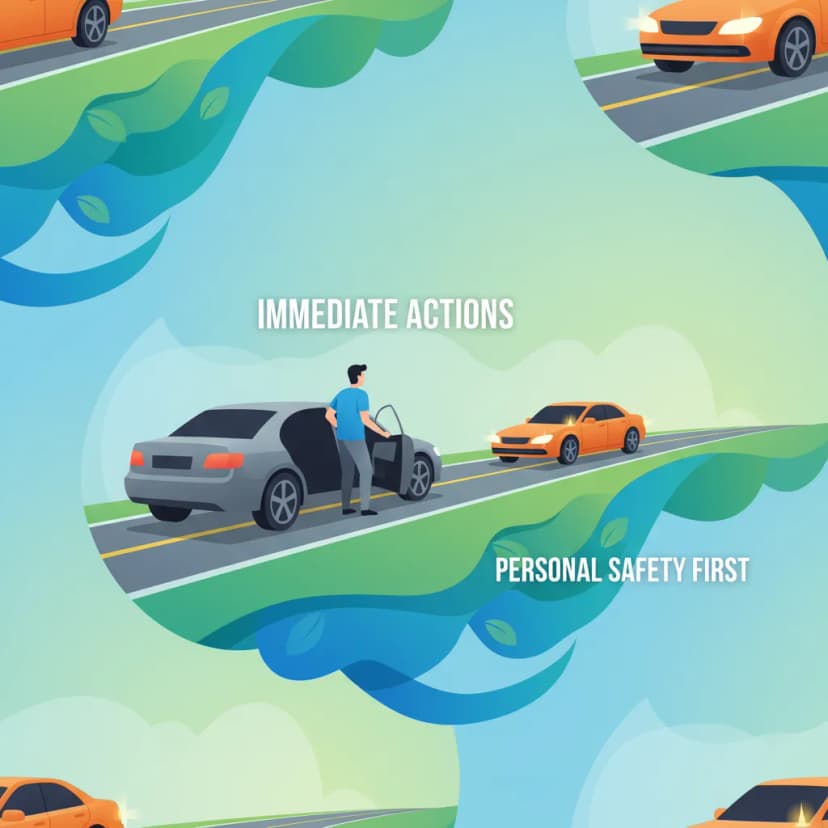
This lesson outlines the absolute first priorities after a crash, with the primary rule being to ensure your own safety and avoid further harm. You will learn how to conduct a quick self-assessment for injuries, the importance of moving out of the line of traffic if possible, and how to begin assessing the scene for immediate dangers like fuel leaks or oncoming vehicles. These initial actions are vital for managing the immediate aftermath of an incident.

This lesson focuses on the correct use of warning devices to protect an accident or breakdown scene. You will learn to immediately activate your hazard lights (varningsblinkers). The main focus is on the proper placement of the warning triangle, explaining how the distance from the vehicle must be adapted based on the road's speed limit and visibility to give oncoming drivers adequate time to react.

This lesson provides a safety protocol for dealing with a vehicle breakdown. You will learn the importance of trying to move the vehicle as far off the road as possible, preferably onto the shoulder or into an emergency lay-by. The lesson stresses that on high-traffic roads, the occupants' personal safety is the top priority; this involves wearing a reflective vest and waiting for assistance in a safe location away from the vehicle and the flow of traffic.

This lesson teaches you how to make an accident scene as safe as possible for yourself, any other involved parties, and approaching traffic. You will learn the correct use of hazard lights, the placement of warning triangles, and the importance of wearing a high-visibility vest. The content also covers how to identify and manage immediate post-crash hazards, such as spilled fuel or unstable vehicles, to prevent the situation from worsening.
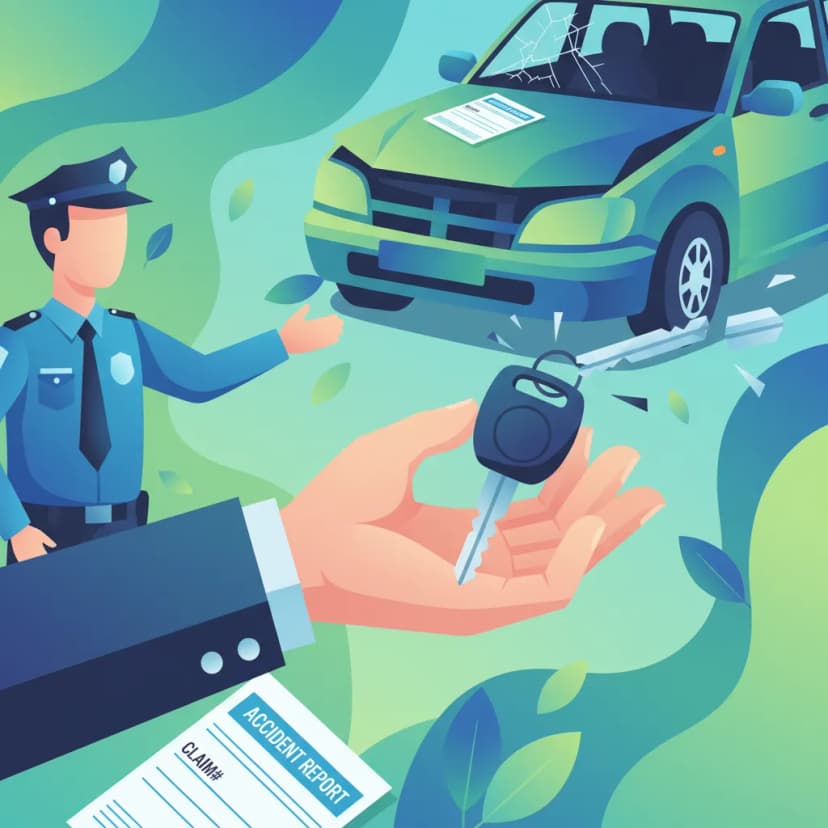
This lesson covers the administrative and legal obligations following a collision. You will learn under which circumstances you are legally required to notify the police, such as when there are injuries or significant property damage. The content details the essential information that must be exchanged between all involved parties—names, contact details, vehicle registration, and insurance information—and the importance of documenting the scene and gathering witness details for insurance claims.
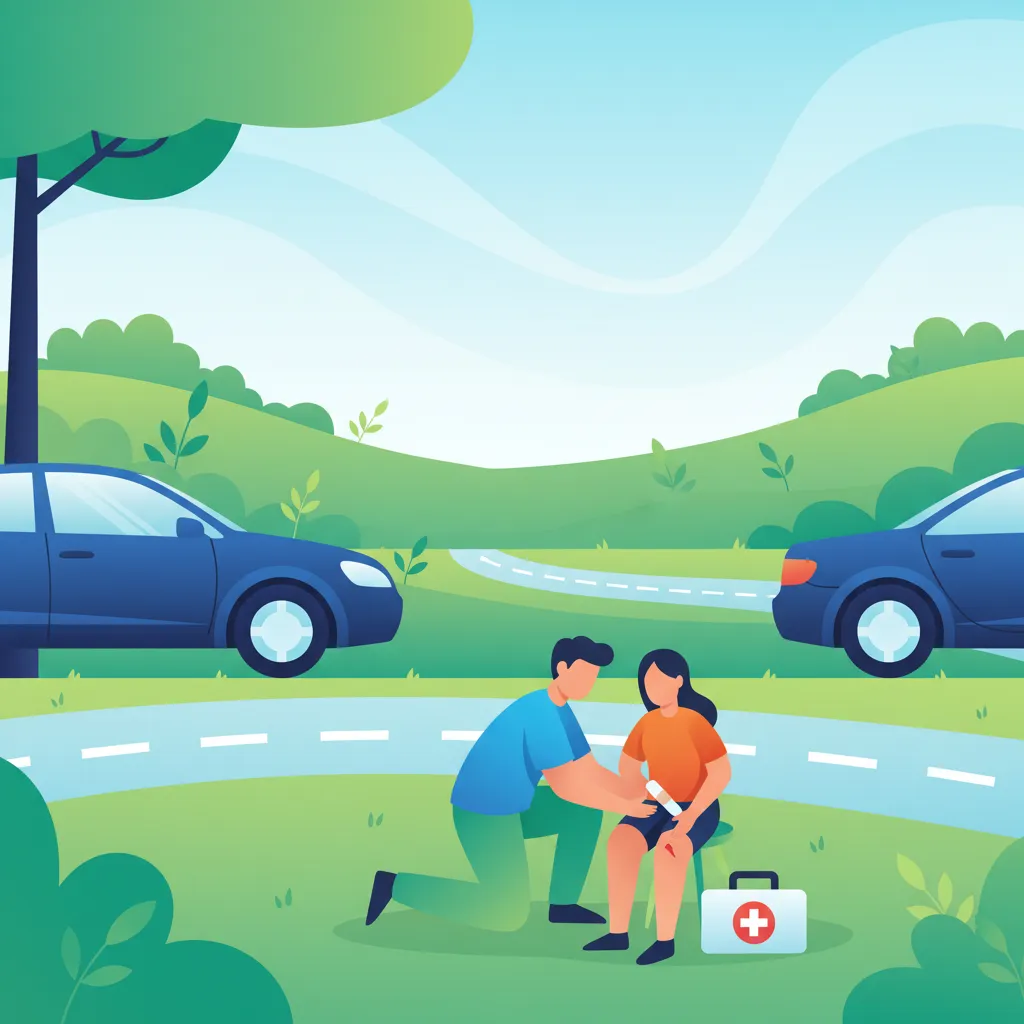
This lesson covers the basics of providing first aid in an emergency, which is a legal duty for anyone arriving at an accident scene. You will be introduced to the L-ABCDE mnemonic (Life-threatening situation, Airway, Breathing, Circulation, Disability, Exposure) as a way to systematically assess and prioritize injuries. The content emphasizes that the most important role is often to ensure the person is breathing and to follow the instructions of the emergency operator until professional help arrives.

This lesson teaches practical methods for maintaining a safe buffer to the vehicle ahead, with a primary focus on the universally recommended 'three-second rule'. You will learn how to apply this rule by picking a fixed point and counting the seconds until you pass it. The content also explains why this distance must be increased significantly in adverse conditions such as rain, snow, or when following large vehicles that obstruct your view.
This lesson focuses on the high level of caution required when driving in residential areas. You will learn about the rules for special zones like 'gångfartsområde' (walking speed area) and the need to navigate around speed calming measures like speed bumps. The central theme is anticipating unpredictable behavior from residents, especially children, and managing the risks posed by parked cars that severely limit visibility.
Deepen your understanding of managing common motorcycle accident injuries, including specific techniques for controlling bleeding and treating for shock. This lesson covers critical protocols for rider recovery and when to provide advanced care until paramedics are on scene.
This final lesson addresses the longer-term aftermath of an accident. You will learn about the importance of having your motorcycle professionally inspected for hidden damage before riding it again. The content also touches on the psychological aspects of recovery, offering advice on how to regain confidence, and covers the final steps in the legal and insurance processes, ensuring you have a clear understanding of the entire post-accident journey.

This lesson provides an introduction to basic first-aid principles that can be applied at the scene of an accident. It covers critical actions such as assessing a casualty's consciousness, checking for breathing, and controlling severe bleeding. The content also addresses the important question of when and how to safely remove a helmet from an injured rider.
This lesson teaches you how to make an accident scene as safe as possible for yourself, any other involved parties, and approaching traffic. You will learn the correct use of hazard lights, the placement of warning triangles, and the importance of wearing a high-visibility vest. The content also covers how to identify and manage immediate post-crash hazards, such as spilled fuel or unstable vehicles, to prevent the situation from worsening.
This lesson outlines the absolute first priorities after a crash, with the primary rule being to ensure your own safety and avoid further harm. You will learn how to conduct a quick self-assessment for injuries, the importance of moving out of the line of traffic if possible, and how to begin assessing the scene for immediate dangers like fuel leaks or oncoming vehicles. These initial actions are vital for managing the immediate aftermath of an incident.
This lesson provides a clear, step-by-step guide for what to do in the immediate aftermath of a collision. It prioritizes safety by explaining how to secure the scene to prevent further incidents. The content covers the importance of checking for injuries, calling for emergency help if needed, and remaining calm while fulfilling initial legal obligations.

This lesson covers the final phase of an emergency maneuver: coming to a safe, controlled stop and moving off the road. You will learn the procedure for finding a safe spot, signaling your intentions, and securing the motorcycle. It also addresses the important steps to take after the immediate danger has passed, including checking yourself and your vehicle for damage and taking a moment to regain your composure before continuing your journey.

This lesson details the procedural and legal steps for reporting an accident. You will learn when you are legally obligated to report a crash to the police, what information to exchange with other involved parties, and the importance of documenting the scene with photographs and witness details. This information is vital for ensuring any subsequent insurance claims and legal proceedings are handled smoothly and fairly.
This lesson outlines the immediate, high-priority actions required at an accident scene. You will learn the 'stop, survey, secure' sequence: first, stopping and assessing the situation; second, warning other traffic by using hazard lights and placing a warning triangle; and third, taking steps to prevent further danger, such as switching off ignitions. These initial actions are crucial for the safety of everyone involved and for those approaching the scene.

This lesson explains the legal requirements in Sweden for reporting a traffic accident to the police (Polisanmälan). It clarifies in which situations a report is mandatory, such as when there are injuries or significant property damage. The content guides learners on the information they will need to provide for the report and for subsequent insurance claims.

This lesson teaches you how to analyze and assess risk when sharing the road with a variety of users, from large trucks to cyclists and pedestrians. You will learn to recognize common patterns of behavior and potential conflict points, allowing you to anticipate the actions of others before they create a dangerous situation. Developing this predictive mindset is a cornerstone of defensive riding and is key to staying safe in busy, complex traffic environments.
Find clear answers to common questions learners have about First Aid Basics for Motorcyclists and Bystanders. Learn how the lesson is structured, which driving theory objectives it supports, and how it fits into the overall learning path of units and curriculum progression in Sweden. These explanations help you understand key concepts, lesson flow, and exam focused study goals.
L-ABC stands for Läge (Situation/Position), Andning (Breathing), Blödning (Bleeding), and Chock (Shock). It's a systematic approach to assessing a casualty. First, ensure the scene is safe (Läge). Then, check if the person is breathing (Andning). Address any severe bleeding (Blödning) immediately, and finally, manage for signs of shock (Chock). For motorcyclists, 'Läge' also includes assessing immediate dangers to yourself and the casualty.
You should only remove a motorcycle helmet if it is absolutely essential to maintain an open airway, for example, if the casualty is not breathing and you cannot ventilate them with the helmet on, or if vomiting requires clearing the airway. Incorrect removal can cause further spinal injury. Always try to preserve spinal alignment and only remove the helmet as a last resort.
The primary method is direct pressure. Use a clean cloth or your hands to apply firm, steady pressure directly onto the wound. If possible, elevate the injured limb above the heart. If bleeding continues through the first dressing, do not remove it; apply another dressing on top and maintain pressure. Tourniquets are a last resort for life-threatening limb bleeding and should only be used if you are trained.
Signs of shock include pale, cold, clammy skin, rapid weak pulse, rapid shallow breathing, nausea, and altered mental state (anxiety, confusion). To manage shock, lay the casualty down, elevate their legs slightly if no spinal injury is suspected, keep them warm with a blanket, and reassure them. Do not give them anything to eat or drink.
Yes, the Swedish theory exam for all categories, including Category A, includes questions on accident response and basic first aid. Understanding principles like L-ABC, bleeding control, and shock management is crucial for passing the exam and for being a responsible road user.