
This lesson is crucial for your Category AM (moped) license preparation in Sweden. We'll examine the critical role of protective gear in reducing injuries during a crash, using factual data to highlight its importance. Understanding this will not only help you pass your theory exam but also ensure safer riding habits on Swedish roads.

Riding a Category AM moped in Sweden offers freedom and efficiency, but it also carries inherent risks. Understanding and utilizing appropriate protective gear is not merely a recommendation; it is a fundamental aspect of risk management and a legal obligation, critical for minimizing injury severity in the event of a crash. This lesson, part of your Swedish Driving License Theory Course – Category AM, will delve into the science and regulations behind protective equipment, explaining how it works to safeguard riders and why "dressing for the fall" is paramount.
When a moped rider is involved in a collision or falls, the body’s kinetic energy – the energy of motion – must be dissipated. This energy increases exponentially with speed; a slight increase in velocity results in a significantly higher amount of energy to manage during an impact. Without protective gear, the rider's body directly absorbs these forces, often resulting in severe injuries.
Protective gear acts as a sophisticated, controlled energy-absorbing system. Its primary function is to increase the distance and time over which the kinetic energy is dissipated, thereby reducing the peak forces exerted on the rider's body. Imagine landing on a hard surface versus a soft, deformable one; the soft surface extends the time of impact, spreading the force over a longer duration and making the impact less severe. Moped gear works on this principle, essentially creating a "crumple zone" for the rider. Furthermore, specialized materials offer abrasion resistance, preventing painful and debilitating skin injuries from contact with the road surface.
Effective protective gear is designed around several core principles, each contributing to a rider's safety and well-being. Adhering to these principles ensures that the equipment performs its intended function when it matters most.
Energy-Absorption Principle: The fundamental purpose of components like helmet liners and body armor is to deform upon impact. This deformation increases the time over which the kinetic energy of a crash is dissipated, directly reducing the peak forces transmitted to the rider's body. By spreading the force over a longer duration, the likelihood of severe internal injuries, such as brain trauma, spinal damage, or organ damage, is significantly reduced. This means riders can survive impacts at higher speeds with less severe consequences.
Abrasion-Resistance Principle: In a fall, a rider often slides across the road surface. This friction can cause severe skin damage known as "road-rash." Protective clothing, gloves, and footwear are made from materials like leather or specialized textiles designed to resist tearing and scraping. This protection prevents deep skin wounds, reduces the risk of infection, helps maintain body temperature, and significantly improves overall survivability even when impact forces are moderate.
Fit-and-Retention Principle: For any piece of protective gear to be effective, it must remain securely in place during a crash. A helmet that comes off or armor that shifts away from the protected area offers little to no benefit. Gear must be correctly sized and fastened with adjustable straps to prevent displacement. Proper fit prevents secondary injuries that could occur if the gear itself moves violently or becomes an obstacle. Regular checks of fit and fastening are crucial before every ride.
Standard-Compliance Principle: To ensure a minimum level of verified performance, protective gear sold in Sweden and the EU must comply with specific harmonized standards. For instance, helmets must meet EN 1078, and body armor typically conforms to EN 1621-1 or EN 1621-2. These CE-marked standards guarantee that the equipment has undergone rigorous testing for impact attenuation, penetration resistance, and retention. Using non-compliant gear is not only illegal for mandatory items but also poses a significant safety risk, as its protective capabilities are unverified.
Risk-Management Principle: Wearing comprehensive protective gear is a proactive risk-management strategy. Beyond the direct physical protection, it also fosters a safety-conscious mindset, potentially leading to safer riding behavior. Riders who are confident in their gear might also be better prepared to handle unexpected situations, indirectly affecting the probability of a crash.
A full ensemble of protective gear works synergistically to safeguard a moped rider. Each component plays a vital role in protecting specific parts of the body.
The helmet is arguably the most critical piece of safety equipment, legally mandated by Transportstyrelsen for all Category AM moped riders in Sweden. It is designed specifically to protect the head and brain from impact.
A protective head covering designed to absorb impact energy and resist penetration, required by law to meet specific European standards like EN 1078.
While not always legally mandatory for Category AM mopeds in Sweden, comprehensive protective clothing is strongly recommended by Transportstyrelsen and is vital for preventing severe injuries.
Garments, including jackets and pants, made from abrasion-resistant materials and often incorporating CE-certified armor panels designed to protect the torso, limbs, and joints from impact and road-rash.
Gloves are an essential, though often overlooked, piece of protective gear. They provide crucial protection for the hands, which are often the first point of contact in a fall.
Hand-protective devices meeting standards like EN 1621-2 (impact) and/or EN 388 (abrasion), covering the palm, fingers, and often the wrist, essential for grip and injury prevention.
Sturdy footwear is crucial for protecting the feet and ankles, which can be vulnerable to crushing, twisting, and abrasion injuries.
Sturdy shoes or boots, often meeting standards like EN 14404, designed to cover and protect the ankle, and provide reinforced toe and heel areas for impact and abrasion resistance.
The effectiveness of protective gear is rooted in the principles of physics. When a rider's body hits an object or the ground, it experiences a rapid change in velocity, causing a force. This force, known as an impulse, is directly related to the change in momentum (mass times velocity) and inversely related to the time over which the change occurs.
The energy an object possesses due to its motion, calculated as ½mv², where m is mass and v is velocity. It is central to the severity of an impact.
The product of force and the time interval over which the force acts (Force × Δtime). Protective gear works by extending Δtime, thereby reducing peak force.
Protective gear, particularly helmets and armor, works by extending the deceleration time (Δtime) during an impact. Instead of an instantaneous stop, which generates extremely high peak forces, the gear deforms and compresses over a short distance, allowing the body to slow down more gradually. This reduction in peak forces is crucial for preventing severe injuries.
European harmonized standards play a vital role in ensuring quality and performance. The CE mark on protective gear signifies that it conforms with EU health, safety, and environmental protection standards.
Even the best protective gear is ineffective if not used correctly. Proper fit, consistent use, and regular maintenance are paramount.
When trying on a helmet, it should feel snug around your head without being uncomfortably tight or causing pressure points. It should not move freely when you try to rotate it. The chin strap should be tightened so that you can fit no more than two fingers between the strap and your chin.
Swedish law, guided by Transportstyrelsen, has clear requirements for protective gear, particularly helmets. While some items are mandatory, others are strongly recommended to enhance safety.
| Regulation | Rule Statement | Applicability | Legal Status | Rationale |
|---|---|---|---|---|
| Transportstyrelsen – Helmet Requirement | A rider (and any passenger) must wear a CE-marked helmet that complies with EN 1078 while operating a Category AM moped. | All Category AM riders and passengers, at all times the vehicle is under control, including when stationary with engine running. | Mandatory | Prevents catastrophic head injuries; aligns with EU safety directives. |
| Transportstyrelsen – Helmet Fastening | The chin strap must be secured and tightened so that the helmet does not shift more than 2 cm when the rider moves their head. | Same as above. | Mandatory | Ensures retention during impact, preventing helmet displacement. |
| Transportstyrelsen – Protective Clothing | Riders are strongly advised to wear clothing providing abrasion resistance and CE-certified armor for torso, elbows, and knees. | All riders, especially at speeds > 30 km/h or on rough surfaces. | Recommended (non-mandatory) | Reduces severe injuries from sliding on road surface and impacts. |
| Swedish Municipal Ordinance | In low-visibility conditions (night, fog, heavy rain), riders may be required to wear high-visibility clothing or reflective elements covering a specific body surface percentage. | Nighttime and adverse weather; may vary by municipality. | Mandatory (municipal) | Improves detectability by other road users, reducing collision risk. |
| EU Regulation 2005/64/EC – Helmets | All helmets sold in the EU must carry the CE mark and meet EN 1078. | Manufacturers, importers, retailers. | Mandatory for sale | Guarantees minimum safety performance through testing. |
The effectiveness of protective gear is not just theoretical; it is consistently demonstrated by accident statistics and injury data. The numbers clearly show a significant reduction in injury severity and fatalities for riders who wear appropriate gear.
These statistics underscore a clear message: wearing the right protective gear dramatically improves a rider's chances of surviving a crash and significantly reduces the severity of potential injuries.
The concept of "dressing for the fall" is a cornerstone of moped safety. It means selecting and wearing gear primarily for its protective qualities in the event of a crash, rather than solely for aesthetics, comfort, or convenience.
A safety mindset that prioritizes choosing and wearing protective gear specifically designed to mitigate injuries in the event of a crash, rather than just for style or comfort during the ride.
This philosophy encourages riders to consider the worst-case scenario and prepare for it. It acknowledges that accidents, while hopefully avoidable, can happen. Therefore, equipping oneself to minimize harm in such an event is a responsible and intelligent approach to riding. This mindset influences decisions on what to wear, even for short trips or in warm weather, reminding riders that safety should always be the priority.
Understanding common pitfalls regarding protective gear is as important as knowing what to do correctly. Many accidents result in more severe injuries due to these preventable mistakes.
| Violation / Misconception | Why it’s Wrong | Correct Behaviour | Consequence (Safety / Legal) |
|---|---|---|---|
| Riding without a helmet while seated on the moped, even if the engine is off. | The helmet rule applies whenever the rider is in control of the vehicle, regardless of engine status. | Always wear a helmet whenever seated on the moped, even if stationary or pushing. | Fine (approx. 1,000 SEK) + high risk of severe head injury. |
| Using a cracked or heavily scratched helmet. | The structural integrity and impact attenuation capabilities are compromised; it cannot guarantee protection. | Replace or repair the helmet according to manufacturer guidelines immediately after any impact or visible damage. | Severe head injury risk; potential insurance claim refusal. |
| Wearing a "motorcycle-style" jacket that lacks actual CE-certified armor inserts. | Without verified armor, the jacket offers minimal impact protection despite its appearance. | Always verify the presence and CE certification (EN 1621-1) of armor panels within protective clothing. | Increased risk of severe abrasion and impact injuries. |
| Removing a helmet temporarily (e.g., to take a photo) while riding slowly in traffic. | Violates the continuous wearing rule; leaves the head unprotected during a critical moment. | Pull over safely and stop completely before removing your helmet, or keep it on. | Fine; complete loss of head protection if an accident occurs. |
| Using thin fashion gloves that are waterproof but offer no impact or abrasion protection. | Such gloves protect only from cold/wet, not from crushing or abrasion injuries common in falls. | Choose gloves meeting EN 1621-2 (impact) or EN 388 (abrasion) for proper hand protection. | Severe hand injuries (e.g., fractures, road-rash), reduced grip and control. |
| Wearing open-toed shoes, sandals, or high heels while riding. | Provides no protection for ankles, toes, or heels against impact, crushing, or abrasion; can interfere with controls. | Always use sturdy, closed shoes or boots that cover and protect the ankles. | Severe lower limb injuries; legal sanction possible if involved in an accident. |
| Riding in heavy rain or fog with dark, non-reflective clothing. | Visibility to other road users is drastically reduced, increasing the risk of collision. | Wear high-visibility clothing (fluorescent during day, reflective at night) to improve detectability. | Significantly increased collision risk; potential municipal fine. |
| Using a helmet certified for a different activity (e.g., a ski helmet or bicycle helmet) for a moped. | Different standards mean different protection levels; a ski helmet does not offer the required impact performance for mopeds. | Use only helmets certified specifically for motor vehicle use (e.g., meeting EN 1078). | Severely reduced head protection; illegal. |
| Continuing to use a helmet after a minor crash without professional inspection. | Internal damage, such as compressed EPS foam, may not be visible but compromises future protection. | Inspect the helmet after any impact, no matter how minor. If deformation, cracks, or compression are observed or suspected, replace it. | Potential catastrophic failure of the helmet in a subsequent crash. |
The effectiveness of protective gear can also be influenced by riding conditions. Smart riders adapt their equipment choices to mitigate risks associated with weather, light, and road types.
Let's examine how the principles of protective gear apply in various practical situations.
Understanding the underlying reasons for protective gear recommendations can further strengthen a rider's commitment to safety.
The use of appropriate protective gear is indispensable for Category AM moped riders in Sweden. It directly influences the outcome of a crash, significantly reducing injury severity and saving lives.
By embracing the "dressing for the fall" philosophy and consistently wearing high-quality, standards-compliant protective gear, moped riders can significantly enhance their safety and confidence on Swedish roads.
Lesson content overview
Explore all units and lessons included in this driving theory course.
Explore search topics learners often look for when studying Impact of Protective Gear on Injury Reduction. These topics reflect common questions about road rules, driving situations, safety guidance, and lesson level theory preparation for learners in Sweden.
Browse additional driving theory lessons that cover connected traffic rules, road signs, and common driving situations related to this topic. Improve your understanding of how different rules interact across everyday traffic scenarios.
Understand the critical role of protective gear in minimizing moped rider injuries according to Swedish traffic law. This lesson covers helmet standards, protective clothing, and their effectiveness in preventing harm during accidents, aligning with AM licence theory requirements.

This lesson moves beyond the mandatory helmet to advocate for comprehensive personal protective gear. It explains the value of abrasion-resistant jackets and pants, often equipped with armor, in preventing road rash and impact injuries. The importance of proper gloves for hand protection and sturdy, over-the-ankle boots for foot and ankle stability is also detailed.
This lesson focuses on the single most important piece of safety gear: the helmet. You will learn about the legal standards helmets must meet in Sweden (e.g., ECE ratings) and how to ensure a proper fit. The content also covers the full range of personal protective equipment (PPE), including jackets, pants, gloves, and boots, explaining the importance of abrasion resistance, impact armor, and high-visibility features for rider protection.
This lesson serves as a summary of the legal requirements for safety equipment in Sweden. It reiterates the mandatory helmet law for both the rider and any passenger. It also touches on the rider's responsibility to ensure the moped itself is legally equipped with functioning lights, brakes, and other essential safety features, linking personal gear with vehicle roadworthiness.

This lesson covers the legal requirement to wear a certified helmet while riding a moped in Sweden. It explains how to identify helmets that meet the approved EU standards (e.g., ECE 22.05 marking) and the critical importance of a correct, snug fit. The content also discusses different helmet types and the need to replace a helmet after an impact or after its recommended lifespan.

This lesson provides practical advice on selecting the appropriate riding gear for the diverse Swedish seasons. You will learn about the importance of layering for warmth in the cold, ventilated gear for summer heat, and effective waterproofs for rain. The content emphasizes how the right equipment not only keeps you comfortable and focused but also provides crucial protection and enhances your visibility to other road users, making it a critical component of overall motorcycle safety.
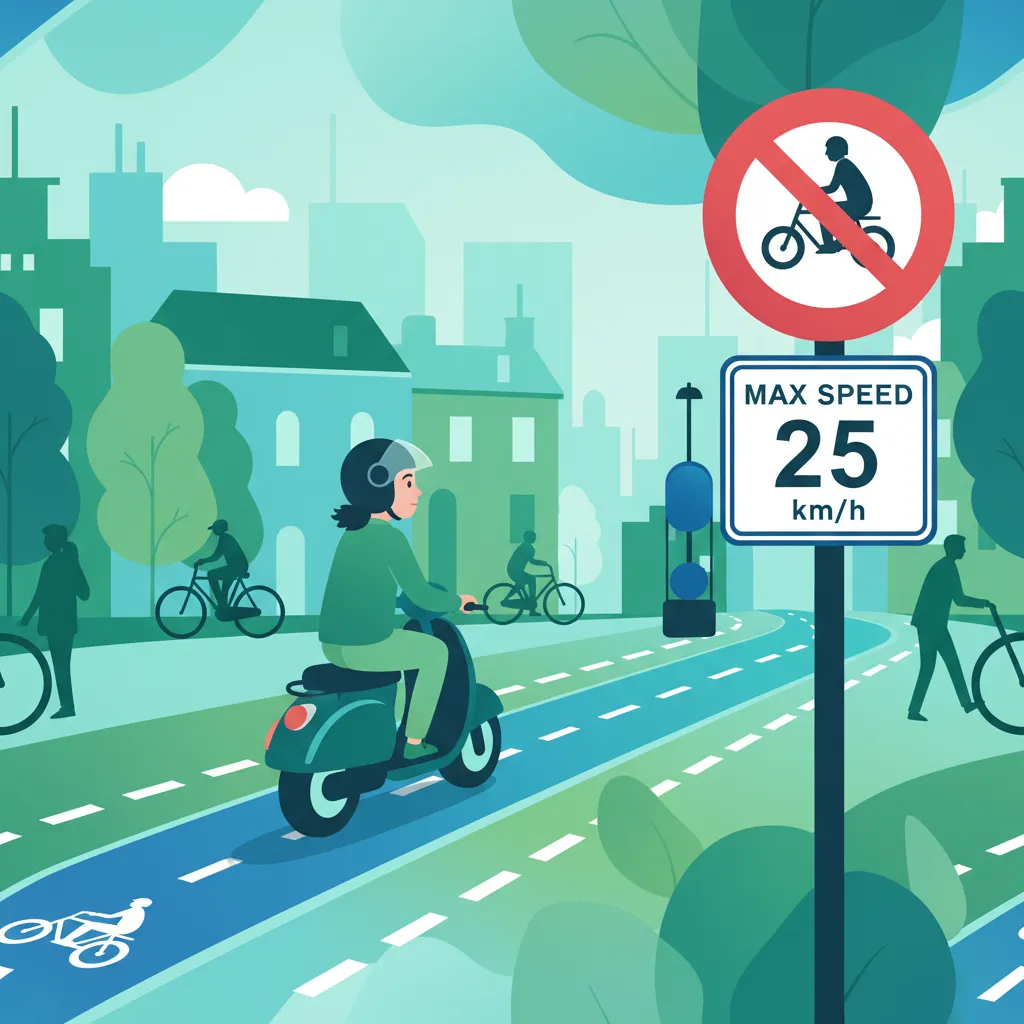
This lesson consolidates the key regulations that apply specifically to moped operation in Sweden. It covers mandatory rules such as speed limits, helmet use, and requirements for vehicle lighting and reflectors. Furthermore, the lesson explains the legal consequences of violations, including the system of fines and potential demerit points, ensuring riders understand their full range of legal responsibilities on the road.

This lesson provides an introduction to basic first-aid principles that can be applied at the scene of an accident. It covers critical actions such as assessing a casualty's consciousness, checking for breathing, and controlling severe bleeding. The content also addresses the important question of when and how to safely remove a helmet from an injured rider.

This lesson outlines the essential administrative responsibilities of a moped owner and rider. It covers the legal requirement to have valid third-party liability insurance and to ensure the vehicle is properly registered. The content also reminds riders of the documents they must carry with them at all times, such as their driving license and registration certificate.
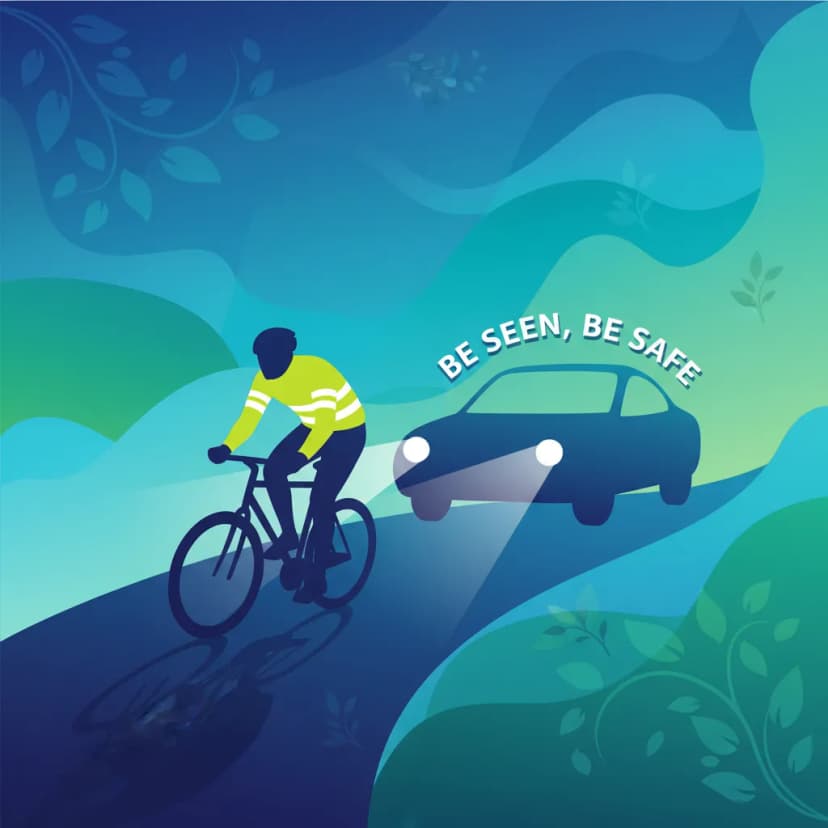
This lesson focuses on proactive strategies to increase a moped rider's visibility to other drivers. It strongly advocates for the use of high-visibility and reflective clothing, helmets, and accessories to stand out in traffic. Additionally, it revisits the concept of lane positioning as a tool to avoid being in other drivers' blind spots and to create a more prominent presence on the road.
This lesson addresses the severe dangers of riding a moped in snow and icy conditions. It explains how to identify potential hazards like black ice and emphasizes that avoiding riding in such conditions is the safest strategy. For situations where it cannot be avoided, it provides advice on extremely gentle control inputs and vehicle preparation.
Explore how proper protective gear, such as helmets and specialized clothing, functions as a key strategy in risk management for moped riders in Sweden. Learn about the physics of impact and abrasion resistance and how they contribute to reducing injury severity in traffic situations.
This lesson moves beyond the mandatory helmet to advocate for comprehensive personal protective gear. It explains the value of abrasion-resistant jackets and pants, often equipped with armor, in preventing road rash and impact injuries. The importance of proper gloves for hand protection and sturdy, over-the-ankle boots for foot and ankle stability is also detailed.
This lesson addresses the severe dangers of riding a moped in snow and icy conditions. It explains how to identify potential hazards like black ice and emphasizes that avoiding riding in such conditions is the safest strategy. For situations where it cannot be avoided, it provides advice on extremely gentle control inputs and vehicle preparation.
This lesson serves as a summary of the legal requirements for safety equipment in Sweden. It reiterates the mandatory helmet law for both the rider and any passenger. It also touches on the rider's responsibility to ensure the moped itself is legally equipped with functioning lights, brakes, and other essential safety features, linking personal gear with vehicle roadworthiness.

This lesson details the specific hazards associated with riding on wet roads, including significantly increased stopping distances and the risk of aquaplaning. It explains how to recognize conditions where aquaplaning is likely and the importance of reducing speed. Riders will learn to use smoother throttle, braking, and steering inputs to maintain traction and control.

This lesson teaches you how to analyze and assess risk when sharing the road with a variety of users, from large trucks to cyclists and pedestrians. You will learn to recognize common patterns of behavior and potential conflict points, allowing you to anticipate the actions of others before they create a dangerous situation. Developing this predictive mindset is a cornerstone of defensive riding and is key to staying safe in busy, complex traffic environments.
This lesson focuses on the single most important piece of safety gear: the helmet. You will learn about the legal standards helmets must meet in Sweden (e.g., ECE ratings) and how to ensure a proper fit. The content also covers the full range of personal protective equipment (PPE), including jackets, pants, gloves, and boots, explaining the importance of abrasion resistance, impact armor, and high-visibility features for rider protection.

This lesson addresses the often-overlooked danger of rider fatigue, which can impair judgment and reaction time as much as alcohol. It provides strategies for managing fatigue, including maintaining a comfortable and ergonomic riding posture, staying hydrated, and taking frequent breaks on longer journeys. The goal is to ensure the rider remains physically and mentally alert at all times.
This lesson covers the legal requirement to wear a certified helmet while riding a moped in Sweden. It explains how to identify helmets that meet the approved EU standards (e.g., ECE 22.05 marking) and the critical importance of a correct, snug fit. The content also discusses different helmet types and the need to replace a helmet after an impact or after its recommended lifespan.
This lesson focuses on proactive strategies to increase a moped rider's visibility to other drivers. It strongly advocates for the use of high-visibility and reflective clothing, helmets, and accessories to stand out in traffic. Additionally, it revisits the concept of lane positioning as a tool to avoid being in other drivers' blind spots and to create a more prominent presence on the road.
This lesson provides a practical understanding of the physics behind stopping a moped. It breaks down the total stopping distance into two key components: reaction distance (the distance traveled before applying the brakes) and braking distance (the distance covered while braking). Learners will explore how factors like speed, road conditions, and rider alertness dramatically affect these distances.
Find clear answers to common questions learners have about Impact of Protective Gear on Injury Reduction. Learn how the lesson is structured, which driving theory objectives it supports, and how it fits into the overall learning path of units and curriculum progression in Sweden. These explanations help you understand key concepts, lesson flow, and exam focused study goals.
The primary difference is the severity of injuries. Protective gear, like helmets, jackets, and gloves, is designed to absorb impact and resist abrasion. Without it, riders are exposed to direct impact forces and friction with the road surface, leading to much more serious injuries, including severe head trauma, fractures, and extensive skin damage.
No. For Category AM mopeds in Sweden, helmets must meet specific European standards (like ECE 22.05 or newer). Always check for the approval label. While all approved helmets offer significant protection, features like full-face coverage generally provide better protection for the chin and face compared to open-face designs.
Yes, absolutely. Even in low-speed incidents or slides, protective gear can prevent significant injuries. Abrasive road surfaces can cause severe road rash quickly, and even a minor fall can lead to a head injury if a helmet isn't worn. Protective gear is designed for these everyday risks, not just major collisions.
Protective jackets and trousers made from materials like leather or strong textiles help prevent abrasions (road rash) and mitigate impact trauma. Gloves protect hands and wrists, which are often injured when riders instinctively try to break a fall. Proper footwear protects the feet and ankles.
The Swedish theory exam for Category AM often includes questions about mandatory safety equipment, the importance of wearing it, and the consequences of not using it. Questions might present scenarios where you need to identify the correct safety measures or understand the risks associated with specific types of gear.