
Welcome to the lesson on mandatory protective equipment for motorcyclists in Sweden. This vital part of your Category A preparation focuses on the single most critical safety gear: your helmet, alongside other essential protective clothing and visibility aids. Understanding these requirements is crucial for both passing your theory exam and ensuring your safety on the road.

Motorcycle riding offers an unparalleled sense of freedom and exhilaration, but it also carries inherent risks. To mitigate these risks, motorcyclists must equip themselves with appropriate personal protective equipment (PPE). This lesson, part of your Swedish Motorcycle Theory Course, provides a comprehensive overview of the legal requirements, safety standards, and best practices for selecting, fitting, and maintaining helmets, protective clothing, and visibility aids. Understanding and adhering to these guidelines is not merely a legal obligation; it is a critical investment in your safety and well-being on the road.
The right gear significantly reduces the severity of injuries in the event of a crash, provides protection against environmental elements, and enhances your visibility to other road users. We will explore the specific European and Swedish standards that govern this equipment, ensuring you are fully prepared for safe riding and compliant with all regulations.
The helmet is arguably the single most crucial piece of safety equipment for any motorcyclist. In Sweden, as in much of Europe, helmets must meet stringent international safety standards to be deemed legal for use on public roads. These standards ensure that helmets can effectively protect the rider's head from impact and abrasion.
The primary regulation governing motorcycle helmets is the UN/ECE Regulation No. 22, specifically its latest iteration, ECE 22.06. This regulation sets out rigorous performance requirements that helmets must pass. These include tests for shock absorption at various points and speeds, penetration resistance, the strength of the retention system (chin strap), the helmet's field of vision, and the durability of the visor.
A helmet certified to ECE 22.06 has undergone extensive testing to prove its ability to absorb kinetic energy during an impact, thereby reducing the peak forces transmitted to the skull. This significantly lowers the risk of head trauma in a crash. The CE-mark, or Conformité Européenne mark, indicates that the product complies with European Union health, safety, and environmental protection directives. For helmets, this mark typically accompanies the ECE certification.
Different riding styles and environments call for different helmet types, though all must meet the ECE 22.06 standard for road use.
When choosing a helmet, always prioritise safety features and certification. While style is a factor, it should never come at the expense of protection.
According to Trafikförordningen (§ 33), the Swedish Traffic Ordinance, it is mandatory for every person riding a motorcycle or moped to wear a helmet that complies with applicable technical standards and is properly fastened. This rule applies to both the driver and any passenger. Failure to wear a compliant and fastened helmet is a traffic violation and can lead to penalties.
Furthermore, the helmet must bear the CE-mark and clearly indicate compliance with the ECE 22.xx regulation (preferably 22.06 for new helmets). Using a non-certified, vintage, or custom helmet that does not meet these standards is illegal and extremely dangerous.
Even the most highly rated helmet provides inadequate protection if it doesn't fit correctly or isn't securely fastened. A properly fitted helmet should feel snug but comfortable, without causing excessive pressure points.
A helmet that is too large can shift or rotate during an impact, exposing vulnerable parts of the head or even coming off entirely. Conversely, a helmet that is too small can be uncomfortable and distracting, impairing your focus on the road. The internal padding and EPS (Expanded Polystyrene) liner are designed to absorb and distribute impact forces evenly across the head. If the helmet does not sit correctly, these forces can be concentrated in specific areas, leading to more severe injuries.
The chin strap is an integral part of the helmet's retention system. If it is loose or unbuckled, the helmet can easily dislodge in a fall, rendering it useless. Swedish law explicitly requires the helmet to be fastened while riding, emphasising its importance.
Measure Your Head: Use a cloth tape measure to find the circumference of your head, just above your eyebrows and ears. Compare this measurement to the manufacturer's sizing chart.
Try It On: When you first put on a new helmet, it should feel quite snug. It might even feel a little tight, especially around the cheeks, but it shouldn't be painful.
Check for Movement: With the chin strap unfastened, try to rotate the helmet from side to side and front to back. Your skin should move with the helmet, and it should not rotate more than about 30 degrees in any direction.
Check for Pressure Points: Wear the helmet for a few minutes to ensure there are no uncomfortable pressure points that could become painful on longer rides.
Fasten the Strap: Once you have the correct size, securely fasten the chin strap. For a Double-D ring system, thread the strap through both rings, then back through the first ring, pulling it tight. For a quick-release buckle, ensure it clicks into place.
Test Strap Tension: The strap should be snug against your throat but not uncomfortable. You should be able to fit one or two fingers snugly between the strap and your chin, but no more. Try pulling the helmet off your head from the back — if it comes off, the strap is too loose.
Beyond the helmet, the rest of your body requires robust protection from impact, abrasion, and the elements. Motorcycle-specific clothing is engineered with materials and designs that drastically reduce the risk and severity of injuries compared to everyday garments.
Abrasion resistance is a critical characteristic of motorcycle protective clothing. In a slide across asphalt, friction can generate immense heat and rapidly strip away skin. Specialised materials like leather and high-tech textiles are designed to withstand this abrasive force. The EN 13595 standard specifies performance requirements for professional motorcycle protective garments, with a key focus on abrasion resistance, measured by the Martindale test or similar methods.
This standard sets minimum requirements for how many cycles a material can withstand before breaking down when rubbed against a standard abrasive surface. For instance, motorcycle jackets and pants commonly aim for an abrasion rating of at least 10,000 cycles in critical zones, while gloves protect palms and fingers with ratings often exceeding 8,000 cycles. Motorcycle boots typically require even higher abrasion resistance, often above 12,000 cycles, along with ankle protection and oil-resistant soles. Wearing everyday clothing like denim jeans or thin jackets offers negligible protection against road rash.
Impact armor is designed to absorb and distribute kinetic energy during a direct blow, protecting vulnerable joints and bones. In Europe, this armor is certified under the EN 1621 series of standards.
These standards define maximum transmitted force levels during impact testing. Armor is typically categorised into two levels:
Riders should look for armor explicitly marked as CE-certified to EN 1621-1 Level 2 for limbs and EN 1621-2 Level 2 for back and chest, especially for higher-speed riding. Armor can be either hard-shell (e.g., polycarbonate, EPS) for higher protection and bulk, or soft-shell (e.g., foam, visco-elastic materials) which is lighter and more flexible. Many modern garments come with integrated pockets for armor inserts, allowing for upgrades or customisation.
While impact armor is not always legally mandatory in Sweden, Transportstyrelsen (the Swedish Transport Agency) strongly recommends its use. In severe accidents, the absence of CE-certified armor might even affect insurance coverage.
Each component of your protective clothing serves a specific purpose:
Being seen by other road users is paramount to motorcycle safety. Motorcyclists, as vulnerable road users, must take proactive steps to increase their conspicuity, especially in challenging conditions.
Motorcycles are smaller than cars and can be harder to spot in traffic, particularly against cluttered backgrounds or in adverse lighting. Inadequate visibility is a significant factor in many motorcycle accidents. High-visibility (Hi-Vis) clothing is specifically designed to make riders stand out, increasing the probability and distance at which they are detected by other drivers. This gives other road users more time to react and avoid potential collisions.
The EN ISO 20471 standard specifies the requirements for high-visibility garments intended to signal the user's presence visually. It defines minimum levels of fluorescent background material and reflective material to ensure conspicuity in both daylight and low-light conditions. The standard categorises garments into three classes based on the minimum area of these materials:
Fluorescent colours (such as yellow, orange, or lime green) are highly effective during the day and in dim light, while reflective strips become active at night when illuminated by vehicle headlights. For optimal protection, a garment should ideally meet Class 2 or 3 of the EN ISO 20471 standard.
Under Trafikförordningen (§ 35), Swedish law states that "When visibility is reduced, the rider shall use clothing or devices that make them readily visible to other road users." This means that in conditions such as night, fog, heavy rain, snow, or during sunrise/sunset, high-visibility clothing is not just recommended but legally required if your regular clothing does not provide adequate conspicuity.
Even in clear daylight, wearing high-visibility gear can be beneficial, particularly when riding in urban areas with complex traffic or when merging onto busy roads. For nighttime riding, reflective elements are critical, as fluorescent colours lose their effectiveness without ambient light.
The protective capabilities of your gear can degrade over time due to wear, exposure, and impacts. Regular maintenance and timely replacement are crucial to ensure your equipment remains effective.
Helmets have a limited service life, typically around five years from the date of manufacture (or purchase, if date unknown), even if they appear undamaged. Over time, the internal materials (EPS liner, glues, resins) can degrade due to exposure to UV light, sweat, and general use, compromising their ability to absorb impact effectively.
Always replace your helmet after any impact, even a seemingly minor one. Hidden damage to the internal EPS liner can occur even if there are no visible external cracks. A helmet is a single-impact device; its ability to absorb energy is significantly diminished after one incident.
After a fall or collision, meticulously inspect all your protective gear.
Keeping a record of purchase dates for your gear, especially your helmet, can help you track its service life. Transportstyrelsen's vehicle inspection guidelines may consider degraded or damaged protective gear a defect, potentially leading to a citation.
Understanding the specific legal requirements in Sweden is vital for every motorcyclist. Compliance ensures your safety, avoids penalties, and can be critical for insurance claims.
Trafikförordningen (§ 33) clearly states the helmet obligation: "Every person riding a motorcycle or moped shall wear a helmet that complies with the applicable technical standards and is properly fastened."
This applies universally to all public roads and encompasses both the driver and any passengers. The "applicable technical standards" refer primarily to the UN/ECE Regulation 22 series (e.g., ECE 22.06) and the CE-marking. This regulation is a cornerstone of Swedish road safety for motorcyclists.
Trafikförordningen (§ 35) addresses the need for enhanced visibility: "When visibility is reduced, the rider shall use clothing or devices that make them readily visible to other road users."
This provision makes the use of high-visibility clothing or other conspicuity aids mandatory during conditions such as night, fog, heavy rain, or even sunrise/sunset. The interpretation of "reduced visibility" is subjective but generally means any situation where natural light is insufficient for clear detection by other road users. Meeting EN ISO 20471 standards with Class 2 or 3 garments is the best way to ensure compliance in these conditions.
While specific abrasion and impact protection standards (like EN 13595 for abrasion and EN 1621-1/2 for impact armor) are not explicitly codified as mandatory in Swedish law for all riding, Transportstyrelsen guidance strongly recommends their use. In practical terms, this guidance acts as a de facto mandatory requirement, especially concerning safety inspections and accident investigations.
Insurance companies may also consider the use of substandard or non-compliant protective gear when assessing claims following a severe accident. Riding with appropriate, certified protective clothing demonstrates due diligence and a commitment to safety, which can be beneficial in such circumstances.
Many riders inadvertently make mistakes that compromise their safety or lead to legal violations:
The ideal choice of protective gear can vary depending on the specific riding environment and conditions.
The effectiveness of motorcycle protective equipment is rooted in fundamental principles of physics and human physiology.
In a collision, the goal of safety gear is to manage the transfer of kinetic energy. Helmets and armor work by extending the time over which an impact occurs (Δt) and distributing the force over a larger area, thereby reducing the peak force (F) transmitted to the body. This is based on the impulse-momentum theorem (). Helmets use a hard outer shell to spread the impact load and an inner EPS liner that crushes to absorb energy, reducing the acceleration of the head. Similarly, impact armor deforms to absorb energy and distribute the load away from vulnerable points.
When a rider slides across pavement, friction generates immense heat, often exceeding 150 °C within seconds. This rapid heat, combined with abrasive forces, can cause severe "road rash" (degloving injuries) and friction burns. Abrasion-resistant fabrics like leather and advanced textiles are designed to withstand these forces for several seconds, protecting the skin beneath. Their robust construction prevents immediate breakdown, limiting the depth and extent of skin loss and burns.
Human perception and reaction time are critical factors in collision avoidance. Average driver reaction time is around 1.5 seconds. High-visibility clothing significantly increases the detection distance of a motorcyclist. For example, studies show that effective high-visibility gear can increase detection range by approximately 30 metres at 60 km/h, effectively giving other drivers an extra half-second to perceive and react to the motorcyclist's presence. This seemingly small gain can be the difference between an avoided accident and a severe collision.
To summarise this essential lesson on motorcycle safety gear for the Swedish Motorcycle Theory Course:
By adhering to these principles, you contribute significantly to your own safety and that of others on the road, embodying responsible and informed motorcycling.
Lesson content overview
Explore all units and lessons included in this driving theory course.
Explore search topics learners often look for when studying Helmet Standards, Protective Clothing, and Visibility Aids. These topics reflect common questions about road rules, driving situations, safety guidance, and lesson level theory preparation for learners in Sweden.
Browse additional driving theory lessons that cover connected traffic rules, road signs, and common driving situations related to this topic. Improve your understanding of how different rules interact across everyday traffic scenarios.
Understand the legal requirements for motorcycle helmets and protective clothing in Sweden. This lesson details CE ratings, abrasion resistance, impact protection, and essential visibility aids for Category A riders.

This lesson covers the legal requirement to wear a certified helmet while riding a moped in Sweden. It explains how to identify helmets that meet the approved EU standards (e.g., ECE 22.05 marking) and the critical importance of a correct, snug fit. The content also discusses different helmet types and the need to replace a helmet after an impact or after its recommended lifespan.

This lesson moves beyond the mandatory helmet to advocate for comprehensive personal protective gear. It explains the value of abrasion-resistant jackets and pants, often equipped with armor, in preventing road rash and impact injuries. The importance of proper gloves for hand protection and sturdy, over-the-ankle boots for foot and ankle stability is also detailed.

This lesson provides practical advice on selecting the appropriate riding gear for the diverse Swedish seasons. You will learn about the importance of layering for warmth in the cold, ventilated gear for summer heat, and effective waterproofs for rain. The content emphasizes how the right equipment not only keeps you comfortable and focused but also provides crucial protection and enhances your visibility to other road users, making it a critical component of overall motorcycle safety.

This lesson provides a factual look at how protective gear works to reduce or prevent injuries in a crash. It explains the physics of impact absorption and abrasion resistance, using data to illustrate the significant difference in outcomes between riders with and without proper gear. The primary message is that dressing for the fall, not just for the ride, is a critical component of risk management.

This lesson serves as a summary of the legal requirements for safety equipment in Sweden. It reiterates the mandatory helmet law for both the rider and any passenger. It also touches on the rider's responsibility to ensure the moped itself is legally equipped with functioning lights, brakes, and other essential safety features, linking personal gear with vehicle roadworthiness.
Explore the critical role of personal protective equipment (PPE) for motorcyclists in Sweden. Learn about material requirements, impact protection, and how visibility aids enhance safety in various traffic and weather conditions.
This lesson provides practical advice on selecting the appropriate riding gear for the diverse Swedish seasons. You will learn about the importance of layering for warmth in the cold, ventilated gear for summer heat, and effective waterproofs for rain. The content emphasizes how the right equipment not only keeps you comfortable and focused but also provides crucial protection and enhances your visibility to other road users, making it a critical component of overall motorcycle safety.

This lesson focuses on strategies to make yourself more visible to other road users, a critical factor in motorcycle safety. You will learn how to use lane positioning strategically to stay out of other drivers' blind spots and to maximize your own line of sight through corners and intersections. The content also covers the effectiveness of high-visibility and reflective clothing, as well as the correct use of lights to ensure you are seen in all conditions.
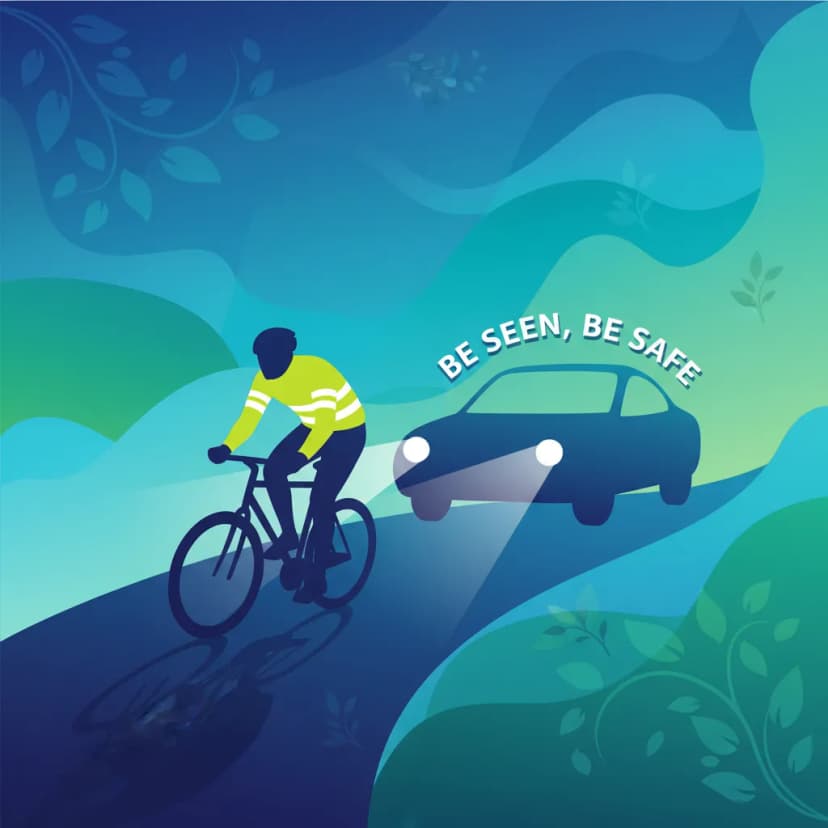
This lesson focuses on proactive strategies to increase a moped rider's visibility to other drivers. It strongly advocates for the use of high-visibility and reflective clothing, helmets, and accessories to stand out in traffic. Additionally, it revisits the concept of lane positioning as a tool to avoid being in other drivers' blind spots and to create a more prominent presence on the road.
This lesson moves beyond the mandatory helmet to advocate for comprehensive personal protective gear. It explains the value of abrasion-resistant jackets and pants, often equipped with armor, in preventing road rash and impact injuries. The importance of proper gloves for hand protection and sturdy, over-the-ankle boots for foot and ankle stability is also detailed.
This lesson provides a factual look at how protective gear works to reduce or prevent injuries in a crash. It explains the physics of impact absorption and abrasion resistance, using data to illustrate the significant difference in outcomes between riders with and without proper gear. The primary message is that dressing for the fall, not just for the ride, is a critical component of risk management.

This lesson focuses on Swedish warning signs designed to alert drivers to potential dangers. You will study signs indicating sharp bends, slippery surfaces, animal crossings, and temporary hazards like road construction. Correctly interpreting these signs allows a motorcyclist to proactively adjust speed, lane position, and readiness to react, which is essential for maintaining control and safety, especially in adverse weather or on unfamiliar roads.

This lesson addresses the specific challenges of riding at night or in low-light conditions. You will learn how to use your headlights most effectively, how to cope with the glare from oncoming traffic, and how darkness affects your depth perception and ability to judge distances. Strategies for spotting nocturnal animals and the increased importance of wearing reflective gear to be seen by others are also key components of this essential safety lesson.

This lesson teaches you how to analyze and assess risk when sharing the road with a variety of users, from large trucks to cyclists and pedestrians. You will learn to recognize common patterns of behavior and potential conflict points, allowing you to anticipate the actions of others before they create a dangerous situation. Developing this predictive mindset is a cornerstone of defensive riding and is key to staying safe in busy, complex traffic environments.
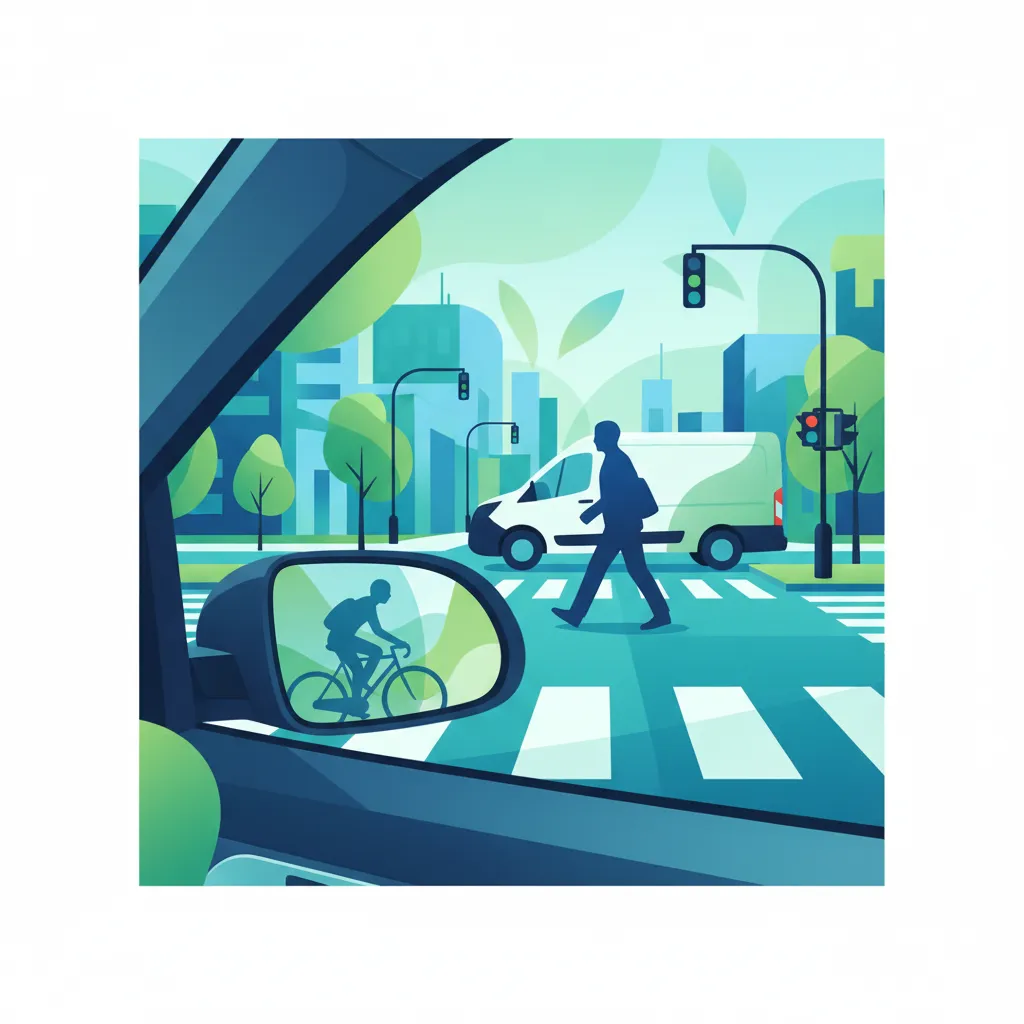
This lesson provides critical strategies for dealing with one of the biggest dangers in traffic: blind spots. You will learn the importance of the shoulder check and how to position yourself on the road to be more visible to other drivers. The lesson also trains you to scan the road surface ahead for hidden hazards like potholes, gravel, or oil spills that can pose a significant threat to a motorcycle's stability, teaching you to see and avoid them in time.

This lesson teaches you how to make an accident scene as safe as possible for yourself, any other involved parties, and approaching traffic. You will learn the correct use of hazard lights, the placement of warning triangles, and the importance of wearing a high-visibility vest. The content also covers how to identify and manage immediate post-crash hazards, such as spilled fuel or unstable vehicles, to prevent the situation from worsening.
Find clear answers to common questions learners have about Helmet Standards, Protective Clothing, and Visibility Aids. Learn how the lesson is structured, which driving theory objectives it supports, and how it fits into the overall learning path of units and curriculum progression in Sweden. These explanations help you understand key concepts, lesson flow, and exam focused study goals.
In Sweden, as in most of Europe, motorcycle helmets must comply with the ECE 22.05 or the newer ECE 22.06 safety standard. Helmets bearing the 'E' mark followed by a number (e.g., E1, E4) indicate compliance with this European safety regulation. This standard ensures the helmet has passed rigorous testing for impact absorption, penetration resistance, and retention systems, making it legal and safe for use on Swedish roads.
A correctly fitting helmet is crucial for safety. It should sit level on your head, covering your forehead and not tilting back. The straps should be snug, allowing only one or two fingers between the strap and your chin. The helmet should not move excessively from side to side or front to back when you try to rotate it on your head. It should feel snug but not uncomfortably tight.
While specific types of jackets, pants, gloves, and boots are not always legally mandated by name, Swedish law requires riders to wear appropriate protective gear. This generally means full-coverage abrasion-resistant clothing with impact protection, especially for jackets, pants, and gloves. Helmets are always mandatory. The emphasis is on gear that offers significant protection against injury in a fall.
There isn't a strict legal mandate for specific high-visibility items like vests, but it is strongly recommended and considered best practice, especially for visibility in Sweden's variable weather and light conditions. Wearing brightly coloured clothing or incorporating reflective elements into your gear significantly enhances your conspicuity to other road users, which is a key aspect of defensive riding.
Look for jackets and pants made from durable, abrasion-resistant materials like leather or specific textiles (e.g., Cordura). They should include integrated or insertable impact protection (armour) at the shoulders, elbows, back, hips, and knees. Features like connection zippers to keep the jacket and pants together, and reflective detailing, further enhance safety and practicality.