
Welcome to the lesson on ABS, ESP, and Traction Control, a crucial part of Unit 8 on Vehicle Safety Systems. Understanding these electronic driver aids is vital for safe driving on Swedish roads and for passing your Category B theory test. This lesson will demystify how these systems function and how they assist you in critical situations.

Modern vehicles are equipped with sophisticated electronic systems designed to enhance safety and assist drivers in maintaining control, especially in challenging conditions. The Anti-lock Braking System (ABS), Electronic Stability Program (ESP), and Traction Control System (TCS) are three fundamental technologies that work autonomously to prevent loss of traction, maintain steering control, and stabilise the vehicle. Understanding how these systems function and their limitations is crucial for every driver seeking a Swedish Category B driving license, as it allows for safer driving practices and better preparation for unexpected situations on the road.
This lesson will delve into the mechanisms behind these vital driver aids, their operational nuances, legal requirements in Sweden, and how they interact to provide a safer driving experience. We will explore how these systems intervene to correct potential hazards and what drivers need to know to complement their vehicle's safety features.
The Anti-lock Braking System (ABS) is a cornerstone of modern vehicle safety, designed to prevent wheels from locking up during hard or emergency braking. When a wheel locks, it stops rotating and begins to slide across the road surface. This causes the tyre to lose static friction, which is the highest grip available, and enter a state of kinetic (sliding) friction, which provides significantly less grip. Critically, a locked wheel also loses its ability to respond to steering inputs, meaning the driver cannot steer around an obstacle. ABS prevents this critical loss of control.
ABS operates by constantly monitoring the rotational speed of each wheel using dedicated sensors. If a sensor detects that a wheel is decelerating too rapidly – indicating it is about to lock – the ABS control unit (ECU) instantaneously reduces the hydraulic brake pressure to that specific wheel. This momentary release allows the wheel to regain some rotational speed, bringing it back to the point of optimal slip where maximum braking force can be applied without skidding. The system then almost immediately reapplies brake pressure, repeating this cycle many times per second.
This rapid pulsing of brake pressure is what drivers often feel as a vibration in the brake pedal and hear as a grinding noise during hard braking. It is a normal indication that ABS is active and performing its intended function. The primary goal of ABS is not always to shorten stopping distances on all surfaces, but crucially, to allow the driver to maintain steering control while braking heavily.
Modern passenger cars in Sweden and across the EU are typically equipped with four-channel ABS, meaning each of the vehicle's four wheels is monitored and controlled independently. This offers the most precise braking control. Older or simpler systems might use three-channel ABS, where the front wheels are controlled independently, but the two rear wheels are controlled together.
Many ABS systems are integrated with Electronic Brake-force Distribution (EBD). EBD works to vary the amount of braking force applied to the front and rear axles based on factors like vehicle speed, road conditions, and how much load the vehicle is carrying. For example, during heavy braking, weight shifts to the front wheels, which can handle more braking force. EBD ensures that the rear wheels are not over-braked and thus prevents premature rear-wheel lock-up, further enhancing stability.
When ABS activates, the most important action for the driver is to maintain firm, steady pressure on the brake pedal. Do not pump the brakes. Pumping the pedal interferes with the ABS's ability to modulate pressure rapidly and accurately, which can reduce its effectiveness and potentially lead to wheel lock-up. Drivers should also remember to steer to avoid any obstacles once ABS has preserved steering ability.
A common misunderstanding is that "ABS always makes stopping distances shorter." While this is true on most surfaces like dry or wet asphalt, on very low-grip surfaces such as hard ice, loose gravel, or deep snow, ABS may actually slightly increase stopping distances compared to a locked wheel creating a wedge of material. However, even in these scenarios, ABS provides the invaluable benefit of steering control.
In an emergency braking situation with ABS, press the brake pedal firmly and continuously, and steer to avoid hazards. The vibrations you feel in the pedal are normal.
According to the Swedish Traffic Ordinance (Trafikförordning Chapter 3 §1), vehicles must be equipped with a functioning anti-lock braking system if their gross weight exceeds 1,500 kg or if mandated by type-approval regulations. This ensures a high standard of braking safety for a large portion of the vehicle fleet on Swedish roads. Drivers are legally obliged to ensure that all mandatory safety systems, including ABS, are operational before driving.
The Electronic Stability Program (ESP), also known as Electronic Stability Control (ESC) in some regions, is an advanced active safety system designed to prevent skidding and loss of vehicle control, particularly during cornering or sudden evasive manoeuvres. While ABS focuses on preventing wheel lock during braking, ESP extends this by monitoring the vehicle's overall stability and intervening to keep it on the driver's intended path.
ESP uses a network of sensors to continuously monitor several key parameters:
By comparing the driver's steering input with the actual direction and stability of the vehicle, ESP can detect if the car is beginning to understeer (front wheels sliding outwards, car turning less than intended) or oversteer (rear wheels sliding outwards, car turning more than intended). If a discrepancy is detected, ESP autonomously intervenes. It applies brake pressure to individual wheels and/or reduces engine torque to generate a corrective "yaw moment" – a rotational force that brings the vehicle back in line with the driver's intended path.
In both cases, ESP's intervention is rapid and precise, often before the driver is fully aware of the impending loss of control. The system's activation is usually signalled by a flashing warning light on the dashboard.
While standard ESP aims for maximum stability, some vehicles offer different modes:
It's important to note that while some vehicles allow drivers to temporarily deactivate ESP (often through a button on the dashboard), this should only be done in specific, appropriate circumstances (e.g., when intentionally trying to free the vehicle from deep snow, or in specific off-road conditions if the manufacturer's manual advises it). For normal public road use, ESP should always be active. Deactivating it removes a crucial safety net.
The importance of ESP for road safety is underscored by its mandatory status. European Regulation (EU) 661/2009 stipulates that all new passenger cars (up to 3,500 kg) type-approved after January 1, 2007, and subsequently registered in the EU (including Sweden), must be equipped with an electronic stability control system that meets prescribed performance criteria. This regulation has significantly contributed to reducing accident rates across Europe.
The Traction Control System (TCS) is designed to prevent excessive wheel spin, primarily during acceleration, especially on slippery or low-traction surfaces. When a driven wheel spins rapidly, it loses its optimal grip, similar to a locking wheel during braking. TCS ensures that the power delivered by the engine is effectively transferred to the road surface, allowing for smoother and more controlled acceleration.
TCS uses the same wheel speed sensors as ABS and ESP to detect if a driven wheel is rotating significantly faster than the non-driven wheels or the vehicle's overall speed. If wheel spin is detected, TCS intervenes in one or both of the following ways:
Modern TCS often combines both methods for a more effective and rapid response to wheel slip.
TCS can be categorised by its primary method of intervention:
The effectiveness of TCS can vary based on the surface. On extremely loose surfaces like deep, fresh snow, some controlled wheel spin might actually be necessary to 'dig' through to firmer ground. In such specific scenarios, manufacturers might allow temporary deactivation of TCS, often integrated into an "off-road" or "winter" mode.
While TCS significantly aids in accelerating on slippery surfaces like snow, ice, or wet roads, it does not eliminate the need for careful driving. Drivers should still modulate the throttle gently and smoothly to avoid triggering the system unnecessarily. Over-reliance on TCS can lead to a false sense of security, encouraging drivers to accelerate too aggressively for the conditions. Remember that even with TCS, the overall grip available on slippery surfaces is still limited, impacting steering, braking, and cornering ability.
Your vehicle's dashboard provides critical feedback about the status of its electronic safety systems through specific warning lights. Understanding these indicators is essential for safe driving and timely maintenance.
ABS Warning Light: Typically a circle with the letters "ABS" inside.
ESP / ESC Warning Light: Usually represented by a car silhouette with squiggly lines underneath, often with "OFF" if the system is manually deactivated.
TCS Warning Light: Often the same symbol as the ESP light (car with squiggly lines) or sometimes a triangle with an exclamation mark and a circular arrow around it.
If any of these warning lights remain steadily illuminated after the initial system check when you start the engine, or if they come on during driving and stay on, it indicates a malfunction. In such cases:
Driving with a persistent ABS, ESP, or TCS warning light means your vehicle’s critical safety systems are compromised. This significantly increases the risk of an accident and may lead to a failed vehicle inspection (Besiktning).
ABS, ESP, and TCS are not isolated systems; they are deeply integrated and share many sensors and actuators, working in a carefully designed hierarchy to provide comprehensive vehicle stability.
The synergy between these systems means that they can address a wide range of driving situations. For instance, in an emergency evasive manoeuvre on a wet road:
This coordinated action helps the driver maintain control in complex and critical situations that would be far more challenging in a vehicle without these aids.
The functionality of ABS, ESP, and TCS is not just a matter of good engineering; it is also subject to specific legal requirements in Sweden, derived from both national laws and broader European Union regulations.
The Körkortslagen (Driving License Act) §5 places a responsibility on the driver to ensure that all mandatory safety systems, including ABS, ESP, and TCS, are operational before driving. Ignorance of a system fault is not an excuse.
Furthermore, during the mandatory Besiktningsregler (Periodic Vehicle Inspection) in Sweden, the functionality of these electronic safety systems is thoroughly checked. Any persistent warning light indicating a defect in ABS, ESP, or TCS will result in a failed inspection, and the vehicle will not be certified as roadworthy until the fault is repaired and a re-inspection passed. This ensures that vehicles on public roads maintain a high standard of active safety.
Drivers who choose to disable ESP or TCS using manufacturer-provided modes (e.g., "sport" or "off-road" modes) must be aware that it is their responsibility to reactivate these systems for normal road use. Driving on public roads with essential stability or traction aids intentionally deactivated, especially in hazardous conditions, is considered highly irresponsible and could have severe consequences.
Understanding the theoretical operation of ABS, ESP, and TCS is best complemented by visualising their impact in real-world driving situations.
Setting: You are driving at 60 km/h on a multi-lane urban road when it suddenly starts to rain heavily. Visibility is reduced, and the road surface is slick. Situation: A child unexpectedly runs onto the road from between parked cars ahead. Driver Action & System Response: You react instantly by slamming the brake pedal firmly to the floor. Your vehicle's ABS immediately activates. You feel a pulsing through the brake pedal and hear a grinding noise, and the ABS warning light may flash briefly. Despite the wet road, the wheels do not lock up, allowing you to maintain steering control. You are able to steer around the child while continuously braking hard, avoiding a collision. Outcome: ABS prevents a loss of steering control, enabling an evasive manoeuvre under emergency braking. Without ABS, the wheels would likely lock, the car would skid uncontrollably, and steering would be lost, making it impossible to avoid the child.
Setting: You are driving on a rural road on a cold winter morning. The road seems clear, but as you approach a bridge, you encounter an unexpected patch of black ice in a gentle left curve. Your speed is 80 km/h. Situation: As you enter the curve, the rear of your car starts to slide outwards – the beginning of oversteer – due to the extremely low friction on the ice. Driver Action & System Response: Before you can fully react, your vehicle's ESP system detects the sudden, excessive yaw (rotation) of the vehicle. It instantaneously applies brake pressure to the outer front wheel (the right front wheel in a left curve) and slightly reduces engine torque. This creates a corrective turning force that pulls the car back into its intended path. The ESP warning light flashes rapidly on your dashboard. Outcome: ESP corrects the incipient skid, keeping the vehicle stable and preventing a spin, allowing you to safely navigate the icy patch. Without ESP, the oversteer would likely escalate into an uncontrolled spin, potentially leading to a collision with guardrails or another vehicle.
Setting: You are attempting to pull away from a stop sign on an uphill street that is covered in fresh, compacted snow. Your vehicle is front-wheel drive. Situation: You press the accelerator pedal with moderate force to get moving. Driver Action & System Response: As you accelerate, the front wheels immediately begin to spin rapidly due to the low traction of the snow. Your vehicle's TCS detects this wheel slip. It instantly reduces engine torque and may apply light brake pressure to the spinning front wheels. This action allows the wheels to regain grip, and the vehicle begins to move forward smoothly, albeit slowly, without excessive wheel spin or fishtailing. Outcome: TCS prevents uncontrolled wheel spin, enabling a smooth and controlled start on a slippery surface. Without TCS, the front wheels would likely spin uselessly, digging deeper into the snow, generating little forward motion, and potentially causing the vehicle to become stuck or veer sideways.
Setting: You are driving a vehicle with a moderately heavy load in the boot, or towing a small trailer, on a motorway at 100 km/h. The road is dry. Situation: You need to make a sudden lane change to avoid debris in your lane. Driver Action & System Response: The added weight shifts the vehicle's centre of gravity, which can alter its handling characteristics. As you perform the sudden lane change, the vehicle naturally experiences increased lateral forces. Your ESP system constantly monitors the vehicle's yaw and lateral acceleration, and it also takes into account any changes in weight distribution (some systems even detect trailer sway). ESP adjusts its intervention thresholds and applies corrective braking more assertively if necessary, ensuring the vehicle maintains stability despite the increased mass and the sudden manoeuvre. Outcome: ESP helps to manage the altered vehicle dynamics caused by the load, preventing the heavier vehicle from becoming unstable during rapid manoeuvres.
Setting: You are driving on a private gravel track, which is uneven and has loose surfaces, exploring your vehicle's capabilities. Your vehicle has a selectable "off-road" mode. Situation: You decide to engage the "off-road" mode for better traction on the loose gravel. Driver Action & System Response: When you activate "off-road" mode, your vehicle's ABS, ESP, and TCS settings are adjusted. ABS might allow a slight amount of wheel lock to create a small "wedge" of gravel in front of the wheels, aiding in braking on loose surfaces. ESP's thresholds are raised, allowing for more wheel slip and yaw before intervention, which can be useful for maintaining momentum or deliberately sliding to steer. TCS might allow more wheel spin to help clear mud or get over obstacles. The system adapts its behaviour to be permissive rather than strictly stabilising. Outcome: By selecting the appropriate mode, the electronic aids assist in specific off-road conditions, optimising traction and control for that environment. However, if you mistakenly leave the system in "normal" mode on very loose terrain, the standard interventions might hinder progress or cause unintended braking.
These electronic driver aids are remarkable technologies that have dramatically improved vehicle safety. However, it's crucial for drivers to understand their underlying principles, strengths, and limitations.
Understanding ABS, ESP, and TCS is fundamental for safe driving and passing your Swedish Category B driving theory test. These systems directly relate to vehicle control, especially in challenging environments.
Lesson content overview
Explore all units and lessons included in this driving theory course.
Explore search topics learners often look for when studying ABS, ESP and Traction Control. These topics reflect common questions about road rules, driving situations, safety guidance, and lesson level theory preparation for learners in Sweden.
Browse additional driving theory lessons that cover connected traffic rules, road signs, and common driving situations related to this topic. Improve your understanding of how different rules interact across everyday traffic scenarios.
Understand the core functions of Anti-lock Braking Systems (ABS), Electronic Stability Program (ESP), and Traction Control Systems (TCS). Learn how these driver aids enhance vehicle control during critical driving situations like emergency braking and cornering.

This lesson focuses on the systems that protect occupants in the event of a collision. You will learn how seatbelts and airbags work together to reduce injury. A significant part of the lesson is dedicated to child safety, covering the different types of child restraints (infant carriers, child seats, booster cushions), the laws regarding their use based on age and height, and the critical importance of deactivating the passenger airbag when using a rear-facing child seat in the front.
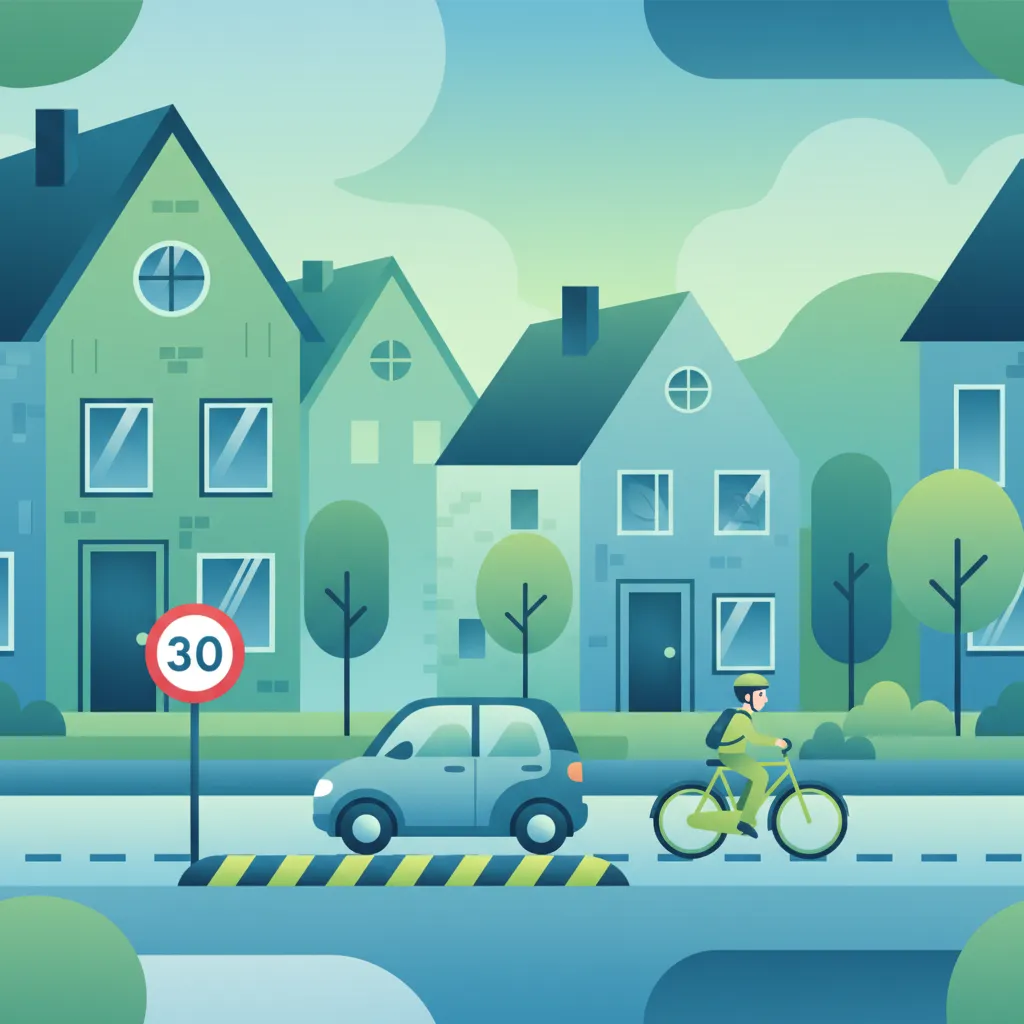
This lesson focuses on the high level of caution required when driving in residential areas. You will learn about the rules for special zones like 'gångfartsområde' (walking speed area) and the need to navigate around speed calming measures like speed bumps. The central theme is anticipating unpredictable behavior from residents, especially children, and managing the risks posed by parked cars that severely limit visibility.

This lesson focuses on the unique challenges of driving in urban environments. You will learn techniques for anticipating the actions of vulnerable road users like pedestrians and cyclists, especially near crossings and bus stops. The content covers how to navigate narrow streets, one-way systems, and areas with heavy traffic, emphasizing the need for lower speeds, heightened awareness, and a defensive mindset.

This lesson provides in-depth analysis of how to safely interact with the full spectrum of road users. You will learn about the specific characteristics of each, such as the large blind spots of trucks, the potential for sudden movements from cyclists, and the unpredictability of pedestrians. The content teaches strategies for communication, anticipation, and defensive positioning to ensure safe and respectful coexistence on the road for everyone.
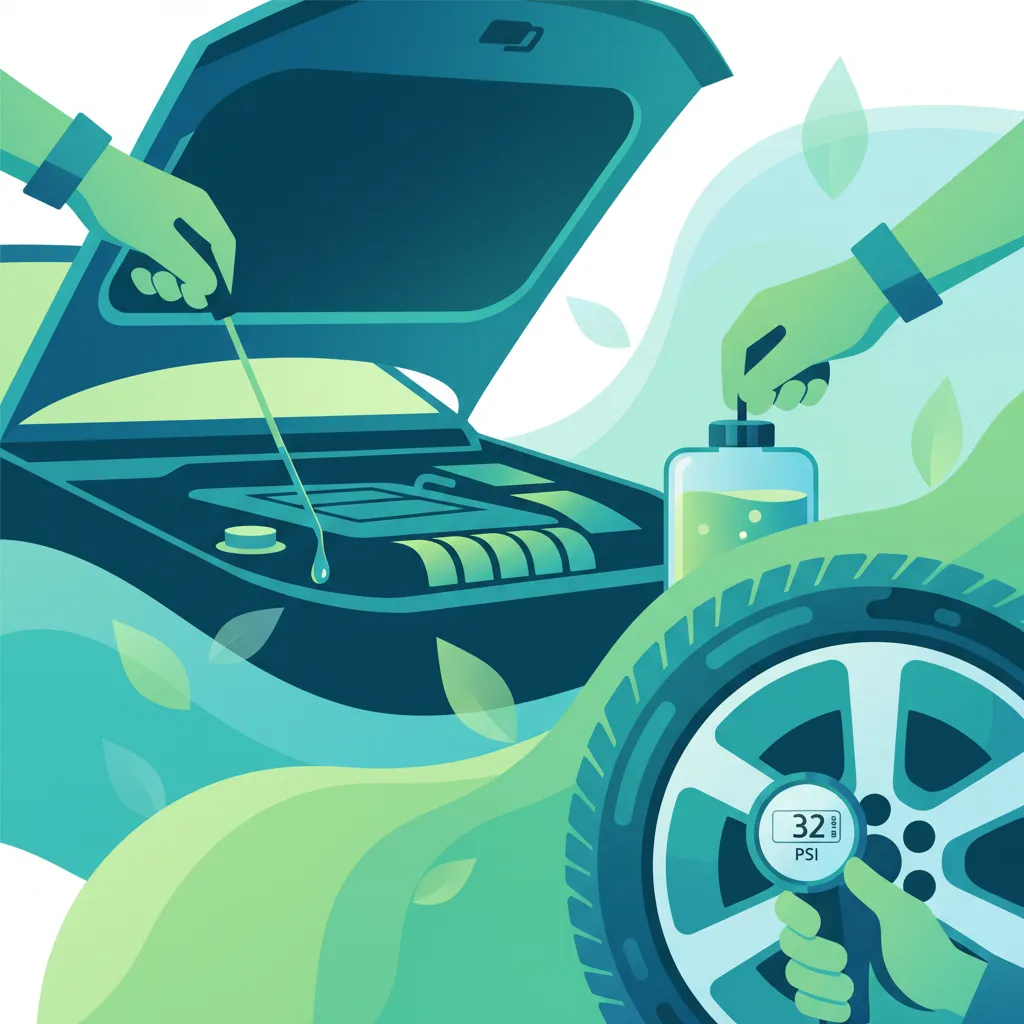
This lesson covers the simple yet vital pre-drive checks that are the driver's responsibility. You will learn the step-by-step process for a 'safety control' (säkerhetskontroll), which includes checking tire pressure and tread depth, verifying that all lights are working, and checking the levels of critical fluids like engine oil, coolant, brake fluid, and windshield washer fluid. Performing these checks regularly helps ensure your vehicle is in a safe condition to drive.
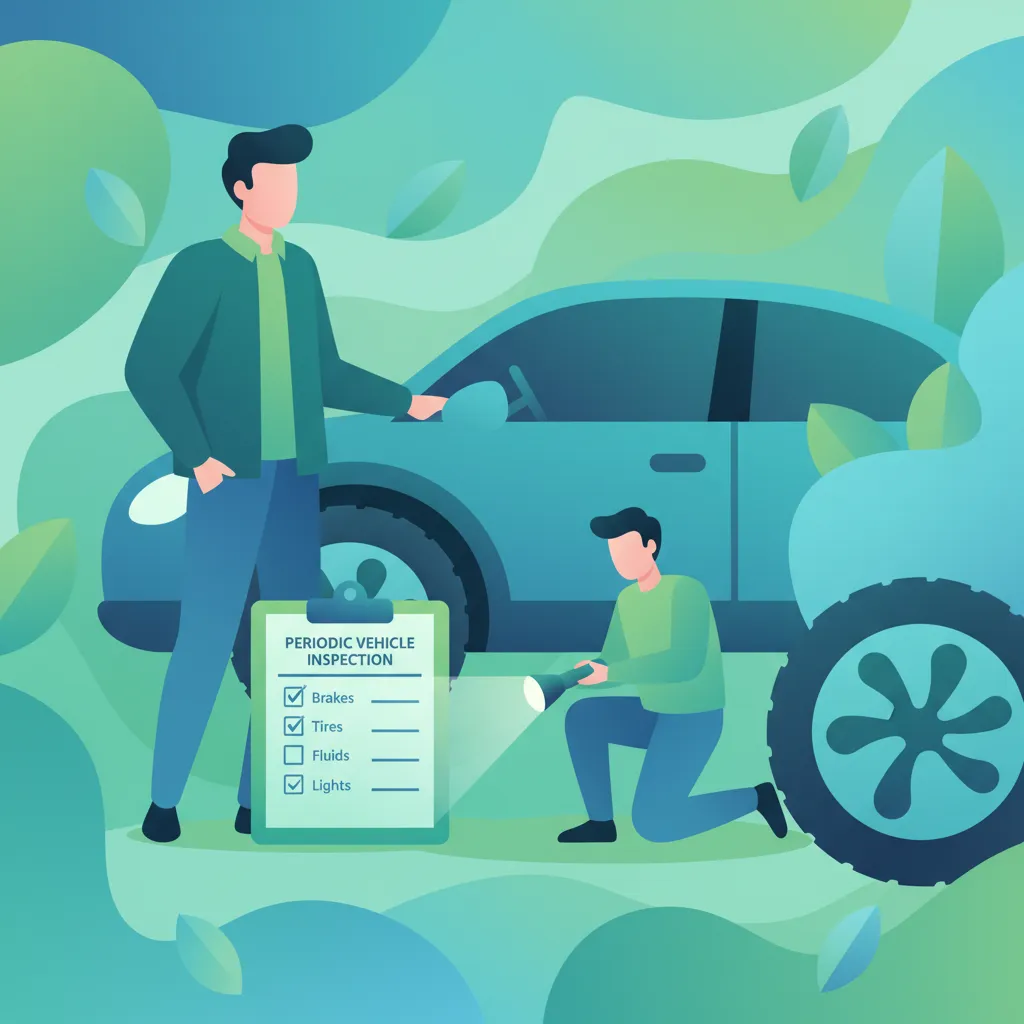
This lesson explains the legal requirement for periodic vehicle inspection in Sweden. You will learn about the role of the 'besiktning' in ensuring that vehicles on the road meet minimum safety and environmental standards. The content covers how to find out when your vehicle is due for inspection, what key components are checked (such as brakes, steering, and emissions), and the possible outcomes, including approval, recommendations for repair, or a driving prohibition (körförbud).
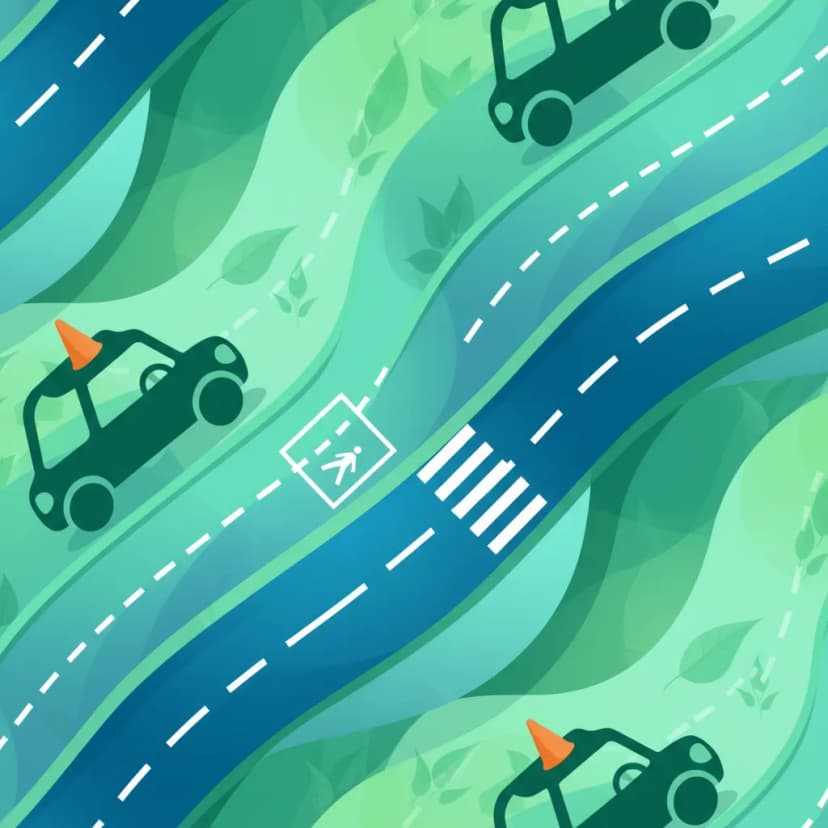
This lesson explains the function and legal significance of various road markings (vägmarkeringar) in Sweden. You will learn the difference between broken lines that permit overtaking and solid lines that forbid it, as well as the meaning of stop lines, pedestrian crossings, and lane direction arrows. These markings work in conjunction with signs to organize traffic flow, separate lanes, and provide critical information directly on the road surface.

This lesson provides clear instructions on the correct response to an approaching emergency vehicle with its sirens and lights active. You will learn your absolute duty to give way and the best methods for doing so, which typically involve pulling over to the right and stopping. The lesson stresses the importance of acting calmly and predictably, avoiding sudden braking or swerving that could endanger the emergency vehicle or other traffic.

This lesson focuses on creating a complete awareness of the traffic situation around your vehicle. You will learn the correct procedure for using your interior and side mirrors in a continuous scanning pattern. Crucially, the lesson explains what the blind spot (döda vinkeln) is, where it is located, and why a physical head check over the shoulder is a non-negotiable safety step before any lateral movement like changing lanes or turning.

This lesson explains how to identify and interact with various types of mopeds and other low-speed vehicles common on Swedish roads. You will learn the difference between Class I and Class II mopeds and their place on the road, as well as how to recognize A-tractors by their LGF (långsamtgående fordon) sign. The key focus is on managing the large speed differential and making safe judgments when deciding to overtake.
Find clear answers to common questions learners have about ABS, ESP and Traction Control. Learn how the lesson is structured, which driving theory objectives it supports, and how it fits into the overall learning path of units and curriculum progression in Sweden. These explanations help you understand key concepts, lesson flow, and exam focused study goals.
ABS primarily helps you steer during hard braking by preventing wheel lock-up. ESP, on the other hand, focuses on stability and helps prevent skids by automatically applying brakes to individual wheels to correct oversteer or understeer.
No, Traction Control (TCS) is designed to prevent wheel spin during acceleration, especially on slippery surfaces. ABS is the system that manages wheel behaviour during braking.
These systems are excellent safety aids, but they are not a substitute for safe driving practices. You must always adapt your speed to conditions, maintain safe distances, and drive defensively. The systems assist, but you remain in control.
Yes, the Swedish Category B theory test frequently includes questions about ABS, ESP, and Traction Control, as they are crucial safety features in modern vehicles. Understanding their function is important for passing the exam.
Generally, ABS, ESP, and TCS are always active by default when you start the car. Some vehicles allow you to temporarily disable Traction Control or ESP, but this is usually only recommended in specific off-road situations or if the system malfunctions.