
Logo
Swedish Driving Theory Courses

Lesson 4 of the Eco-Driving and Environmental Impact unit

Swedish Driving Theory B: Idle Reduction and Engine Stop-Start

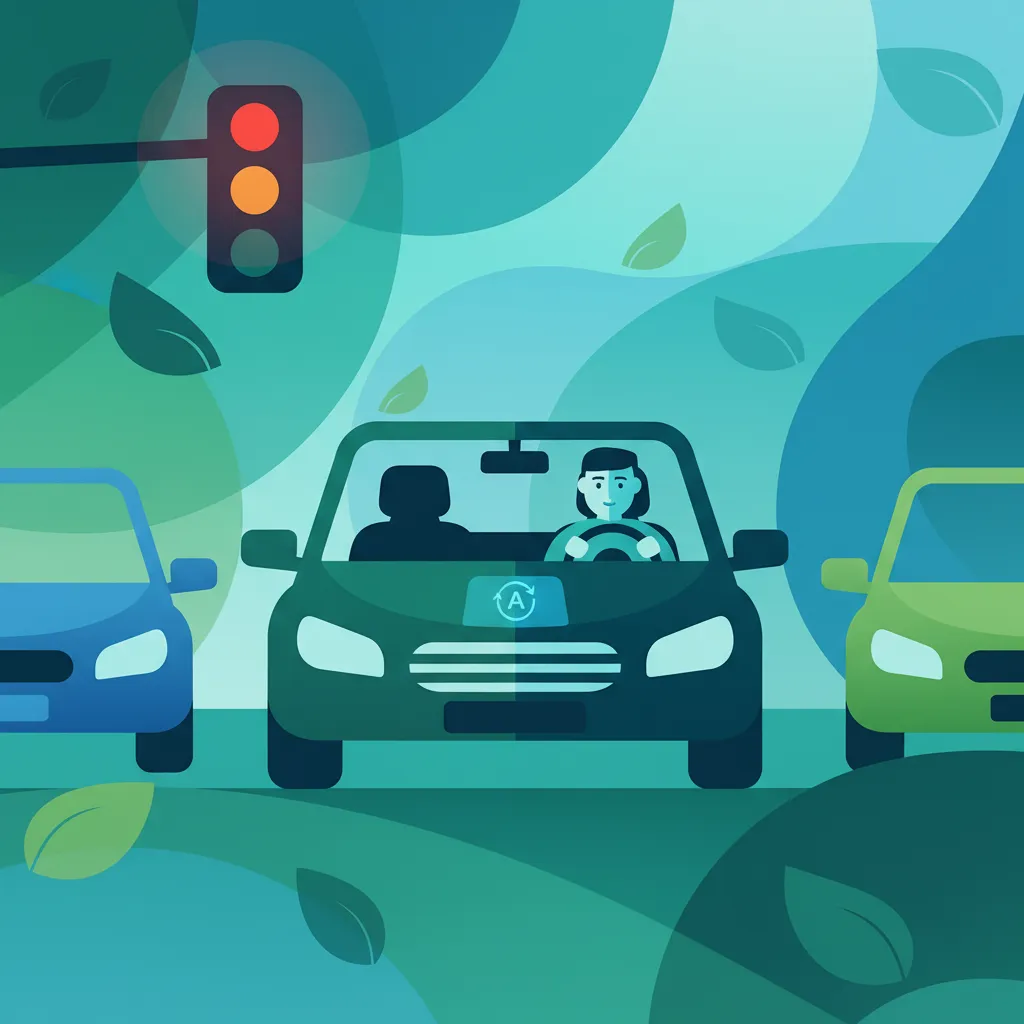
This lesson tackles engine idling, known as 'tomgångskörning' in Sweden. You'll learn about the typical one-minute limit for idling and why restarting your engine is more fuel-efficient than letting it run unnecessarily. We also explore the advantages of modern automatic start-stop systems for reducing fuel consumption and emissions, especially in urban traffic, preparing you for this section of the Swedish Category B driving theory test.
idling rulesstart-stop systemseco-drivingfuel efficiencyemissions
Swedish Driving Theory B: Idle Reduction and Engine Stop-Start
Swedish Driving Theory B

Reducing Engine Idling and Using Start-Stop Systems in Sweden

Operating a vehicle in a manner that is both economical and environmentally conscious is a crucial aspect of responsible driving. One common practice that often goes unnoticed for its negative impact is engine idling, known as tomgångskörning in Swedish. This lesson will delve into why idling is discouraged, the specific legal limits in Sweden, the surprising truth about fuel consumption during idling versus restarting, and how modern automatic start-stop systems contribute to a greener driving style. By mastering idle-reduction practices, drivers not only comply with Swedish traffic law but also reduce operating costs and contribute significantly to environmental stewardship.

Understanding Engine Idling (Tomgångskörning)

Engine idling refers to the operation of a vehicle's internal combustion engine while the vehicle is stationary and not engaged in propulsion. This means the engine is running, consuming fuel, and emitting exhaust gases, but the car is not moving.

What is Engine Idling?

Idling occurs in various situations, such as waiting at a red traffic light, being stuck in a traffic jam, stopping at a railway crossing, or waiting for a passenger. There are two main categories:

  • Passive Idling: The engine runs without any additional auxiliary load, such as the heating or air conditioning system.
  • Active Idling: The engine runs while auxiliary systems are engaged, for example, to heat or cool the cabin, which further increases fuel consumption beyond passive idling.

Many drivers might consider short periods of idling harmless, but the cumulative effect across many vehicles and stops is substantial.

Why is Idling Discouraged?

Idling might seem convenient, but it comes with a range of drawbacks that affect the environment, public health, and your wallet:

  • Unnecessary Fuel Consumption: Even at idle, an engine still burns fuel. Modern vehicles consume between 0.5 to 1.0 litres of fuel per hour (L/h) when idling, depending on the engine type and whether auxiliary systems are active. This fuel is wasted without any practical benefit of movement.
  • Increased Emissions: Idling engines produce harmful pollutants like carbon dioxide (CO₂), nitrogen oxides (NOₓ), particulate matter (PM), and hydrocarbons (HC). These emissions contribute to global warming, smog, and local air pollution, particularly in urban areas and near schools, impacting respiratory health.
  • Noise Pollution: A running engine, even at idle, generates noise. In quiet residential areas or near pedestrian zones, this noise can be disruptive and contribute to a lower quality of life for residents.
  • Engine Wear: While modern engines are robust, prolonged idling can still lead to increased wear on certain engine components. The engine operates at a lower, less efficient temperature, which can promote carbon buildup and reduce engine oil effectiveness over time.

Swedish Laws on Engine Idling: The 1-Minute Rule

Swedish legislation, primarily the Traffic Ordinance (Trafikförordning 1998:77), and local municipal orders aim to minimize unnecessary idling. These rules are in place to reduce emissions, noise, and fuel waste.

National Regulations: Trafikförordning

According to the Swedish Traffic Ordinance (Trafikförordning 1998:77, § 11), a driver is generally prohibited from keeping the engine running while the vehicle is stationary for longer than necessary, and must not exceed one minute of idling in traffic. This rule applies to all road traffic, whether in urban or non-urban areas, for both private and commercial vehicles. The intent is clear: to ensure engines are switched off during prolonged stops to prevent unnecessary environmental impact.

Tip

Remember the one-minute rule: If you anticipate being stationary for more than 60 seconds, it's generally best to turn off your engine.

Local Municipal Ordinances

While the national Trafikförordning sets a general limit, many municipalities in Sweden have enacted their own, often stricter, rules regarding idling. These local ordinances can further restrict idling, particularly in sensitive areas.

For example, in some residential streets, near schools, or within designated environmental zones, municipalities might impose a 30-second idling limit. These stricter rules are designed to protect vulnerable residents, improve local air quality, and reduce noise in densely populated areas. Drivers must be aware of and comply with any local regulations in the areas they are driving through.

Exceptions to the Idling Rule

There are specific circumstances where the general idling limits may not apply, or where temporary idling is permitted:

  • Loading or Unloading Passengers/Goods: If the vehicle is stationary for the purpose of loading or unloading passengers or goods, and it does not cause a disturbance, idling might be permissible for a longer duration. However, drivers should still aim to minimize the idle time.
  • Emergency Situations: In situations where the engine needs to run to power essential vehicle functions (e.g., hazard lights during a breakdown, or specific equipment operation for emergency services), idling is allowed.
  • Extreme Cold for Vehicle Warming: In exceptionally cold weather conditions, some municipal ordinances may allow for a slightly longer idling period (e.g., up to 3 minutes) for engine warming. However, modern engines warm up very quickly, and prolonged idling for this purpose is rarely necessary and generally discouraged. It's always better to start driving gently after a short period.

Warning

Be aware that "waiting for a pedestrian at a crosswalk" or "waiting for traffic to clear" are generally not exceptions to the one-minute rule. If the stop extends beyond the legal limit, the engine should be turned off.

Fuel Efficiency: Idling vs. Restarting Your Engine

A common misconception among drivers is that restarting the engine consumes more fuel or causes more wear than simply letting it idle for a short period. For modern vehicles, this is largely untrue.

The Fuel-Restart Penalty Explained

For contemporary cars, the amount of fuel consumed during a single engine restart is remarkably small. Typically, restarting a gasoline engine consumes less than 0.02 litres of fuel, and a diesel engine slightly more, around 0.03 litres. In contrast, idling a gasoline engine for just 30 seconds can consume approximately 0.25 litres of fuel (based on 0.5 L/h).

This comparison clearly demonstrates that shutting off your engine for any idle period longer than approximately 10 to 20 seconds will result in net fuel savings. The fuel needed to restart the engine is significantly less than what is wasted by prolonged idling.

Debunking Common Idling Myths

  • Myth: Frequent restarts damage the engine or battery.
    • Reality: Modern vehicles, especially those equipped with automatic start-stop systems, are specifically designed for frequent starts. Components like the starter motor, battery, and engine bearings are reinforced to handle repeated cycling with minimal wear. The marginal wear from a restart is negligible compared to the benefits of fuel and emission reduction.
  • Myth: Idling is necessary to warm up the engine.
    • Reality: Modern engines are designed to operate efficiently shortly after starting, even in cold weather. The fastest way to warm up an engine and its catalytic converter (which reduces emissions) is to drive gently after starting, rather than idling. Prolonged idling only wastes fuel and delays the engine reaching its optimal operating temperature.
  • Myth: Idling provides better lubrication.
    • Reality: Engine oil circulates effectively immediately upon startup. Modern synthetic oils maintain their properties well across a wide range of temperatures, making prolonged idling for lubrication purposes unnecessary.

Automatic Start-Stop Systems: How They Work

Many newer vehicles are equipped with an automatic start-stop system, a technology designed to reduce fuel consumption and emissions by automatically shutting off the engine when the car stops and restarting it when the driver is ready to move.

Benefits of Auto Start-Stop Technology

The primary benefits of automatic start-stop systems include:

  • Fuel Savings: By eliminating unnecessary idling at traffic lights, stop signs, and in congested traffic, these systems significantly reduce fuel consumption, especially in urban driving conditions.
  • Emission Reduction: Less idling means fewer harmful pollutants are released into the atmosphere, contributing to cleaner urban air and a reduced carbon footprint.
  • Convenience: The system operates automatically, requiring no direct action from the driver, making idle reduction effortless.

When Start-Stop Systems Don't Activate

Automatic start-stop systems are sophisticated and will only activate when certain conditions are met, ensuring optimal vehicle performance and safety. Conditions under which the system may not engage or may restart the engine include:

  • Battery State-of-Charge (SoC): If the vehicle's battery charge is too low, the system will keep the engine running to ensure the battery can power essential systems and facilitate a reliable restart.
  • Engine Temperature: The engine needs to be at its optimal operating temperature. If it's too cold (e.g., after a cold start) or too hot (to prevent overheating), the system may keep the engine running.
  • Cabin Temperature/Climate Control: If the climate control system (heating or air conditioning) requires significant engine power to maintain the desired cabin temperature, the system may keep the engine running.
  • Brake Vacuum Pressure: For vehicles with vacuum-assisted brakes, the system ensures sufficient vacuum pressure is maintained for safe braking.
  • Steering Angle: If the steering wheel is turned significantly, indicating a maneuver where immediate power might be needed, the system may remain active.
  • Vehicle Speed and Driver Input: The system typically activates only when the vehicle is completely stationary or below a very low speed threshold, and the driver applies the brake or places the gear selector in neutral (for manual transmissions).
  • Heavy Loads/Trailer Towing: Some manufacturers may disable or advise disabling the start-stop system when carrying heavy loads or towing a trailer, as the engine might require more power for a smooth restart.

Driver Interaction and Overrides

Most vehicles with an automatic start-stop system include a button or switch to manually disable it. While this option exists, it is generally recommended to keep the system active to maximize its environmental and economic benefits. Only disable it if specific driving conditions or vehicle manual recommendations warrant it (e.g., when the vehicle is stationary for pedestrians and the driver feels the need for instant reaction, though the system is designed for quick restarts). It is crucial for drivers to understand their vehicle's specific system limitations and features as outlined in the owner's manual.

Environmental Benefits of Reducing Idling

The collective impact of reducing idling time, even in small increments, yields significant environmental advantages for local communities and the planet.

Reducing Harmful Emissions

Every minute an engine idles, it releases unnecessary pollutants.

  • Carbon Dioxide (CO₂): The primary greenhouse gas contributing to climate change. A typical gasoline engine can emit 150-250 grams of CO₂ per minute of idling.
  • Nitrogen Oxides (NOₓ): Contribute to smog and acid rain, and are harmful to human respiratory health. Elevated during cold idle.
  • Particulate Matter (PM) and Hydrocarbons (HC): Microscopic particles and unburnt fuel contribute to air pollution and various health problems. These are also often higher during inefficient idling.

By reducing idle time, drivers directly decrease their vehicle's contribution to these harmful emissions, improving local air quality and reducing their carbon footprint. Swedish cities, especially those with low-emission zones (LEZ), benefit immensely from these practices.

Combating Noise Pollution

Engine noise, even at idle, can be a significant source of disturbance, particularly in residential areas, near hospitals, or schools. The Miljöbalken (Environmental Code) in Sweden regulates noise pollution, stipulating that engine noise exceeding normal operating levels should not be produced when a vehicle is stationary for more than a short period. Turning off the engine during stops completely eliminates this source of noise, contributing to quieter, more peaceful communities.

Contributing to Cleaner Air Quality

The cumulative effect of many drivers reducing their idling significantly improves overall urban air quality. Reduced levels of CO₂, NOₓ, and PM mean less smog, fewer respiratory issues, and a healthier environment for everyone. This aligns with the broader environmental goals of the Swedish Driving License Theory Course for Category B Cars, promoting sustainable and responsible driving practices.

Practical Strategies for Idle Reduction

Adopting idle-reduction practices requires conscious effort and awareness, but the benefits are well worth it.

Mindful Driving Practices

  • Anticipate Stops: When approaching traffic lights, stop signs, or congested areas, look ahead and anticipate when you might need to stop. If you expect a stop to last longer than 10-20 seconds, prepare to turn off your engine.
  • Manual Engine Shut-Off: For vehicles without automatic start-stop, make it a habit to manually turn off your engine when stationary for prolonged periods (e.g., waiting for someone, at a long railway crossing, or in heavy traffic).
  • Plan Your Route: Wherever possible, plan routes that minimize prolonged stops or heavy traffic congestion. This not only reduces idling but also makes your journey more efficient.

Utilizing Vehicle Features

  • Keep Start-Stop Active: If your vehicle has an automatic start-stop system, ensure it is activated (unless specific, safety-critical conditions require it to be off, as per your vehicle manual). Let the system do its job in reducing idling.
  • Use Auxiliary Heaters: In cold weather, if your car has an electric pre-heater (often available in hybrid or electric vehicles, or as an aftermarket option), use it to warm the cabin while plugged in, instead of idling the engine.
  • Monitor Battery Health: Ensure your vehicle's battery is in good condition. A weak battery can inhibit the start-stop system, forcing the engine to run unnecessarily. Regular vehicle maintenance helps.

Common Idling Violations and Best Practices

Understanding common situations where idling laws are violated helps drivers avoid penalties and contributes to better environmental practices.

Avoiding Fines and Negative Impacts

  • Idling at Traffic Lights: Exceeding the one-minute limit at a red light or in a traffic jam is a common violation. The correct behavior is to turn off the engine if the stop will be prolonged, or allow the start-stop system to activate.
  • Idling in Residential Zones: Local municipal ordinances can have stricter limits (e.g., 30 seconds) in residential areas or near schools. Always be mindful of these local rules.
  • Warming the Cabin: Idling for extended periods to warm up the cabin, especially in a gasoline car, is generally unnecessary and wasteful. Modern heating systems work efficiently while driving, or pre-heating can be used if available.
  • Waiting for Pedestrians: While you must stop for pedestrians at a crosswalk, leaving your engine running for an extended period if the pedestrian is slow or multiple people are crossing can lead to a violation if it exceeds the legal limit.

Warning

Do not turn off your engine if you are stationary on a motorway due to a traffic jam or similar event. Although you are not moving, stopping is generally prohibited on motorways, and you must be ready to move immediately when traffic resumes. Turning off the engine could delay your restart and create a safety hazard.

Safe Use of Start-Stop in Various Conditions

  • Heavy Loads: If driving a heavy-loaded vehicle or towing a trailer, consult your vehicle's manual regarding the use of the start-stop system. In some cases, it may be recommended to disable it to ensure a smooth and powerful restart.
  • Weak Battery: If your battery's State-of-Charge (SoC) is low, the start-stop system might not activate. In such cases, if you need to charge the battery, it's better to keep the engine running for a short period while driving, rather than idling.
  • Rapid Stop-and-Go Traffic: In extremely rapid stop-and-go traffic where stops are consistently less than 5-10 seconds, repeatedly cycling the start-stop system might not offer significant benefits and could cause slightly more wear than continuous running. However, the system is designed to manage this; let it operate unless it becomes genuinely problematic.

Contextual Considerations for Idling

Environmental conditions, vehicle characteristics, and interactions with other road users all influence how and when idle reduction practices should be applied.

Weather and Temperature Effects

  • Cold Weather (< 5 °C): While modern engines require less warm-up, extremely cold temperatures can affect battery performance. Start-stop systems are designed to function within a wide range, but they might be temporarily disabled if the engine is too cold or the battery is not optimally charged. Always prioritize safety and reliable restarts.
  • Hot Weather (> 30 °C): In hot weather, the air conditioning system places a significant load on the engine. Even with this increased demand, shutting off the engine for longer stops still yields net fuel savings compared to continuous idling. The start-stop system will consider the A/C demand when deciding to shut down.

Vehicle Load and Battery Health

  • Heavy Load or Trailer: As mentioned, a heavily loaded vehicle or one towing a trailer may require more engine power for a restart. Some vehicle manufacturers recommend disabling the start-stop system in these conditions to prevent potential stalling or delayed restarts. Always refer to your specific vehicle's manual.
  • Battery State-of-Charge (SoC): A healthy battery with a sufficient charge level is critical for the start-stop system to operate effectively. If the SoC drops below a certain threshold (e.g., 30%), the system may temporarily disable itself to ensure enough power for a guaranteed engine restart. Drivers should regularly check their battery and charging system health.

Interacting with Vulnerable Road Users

  • Pedestrians and Cyclists: Idling near crosswalks, bicycle paths, or school zones can expose vulnerable road users to higher concentrations of exhaust fumes and noise. Turning off the engine in these areas, even for brief stops, demonstrates consideration for public health and safety, especially for children and the elderly.
  • School Buses: Specific local regulations might impose additional restrictions on idling near school buses or in school drop-off/pickup zones to protect children from exhaust exposure.

Key Takeaways: Mastering Idle Reduction

Reducing engine idling is a simple yet effective way for every driver to contribute to a cleaner environment, save money on fuel, and comply with Swedish traffic laws. The key principles are:

  • Understand Tomgångskörning: Recognize that idling is the engine running while stationary, and it wastes fuel and generates harmful emissions and noise.
  • Know the Law: Adhere to the national 1-minute idling limit in Sweden and be aware of potentially stricter local municipal ordinances (e.g., 30 seconds).
  • Fuel Efficiency: Remember that for modern engines, restarting consumes significantly less fuel than idling for more than 10-20 seconds.
  • Utilize Start-Stop: Leverage automatic start-stop systems in your vehicle. Understand their operational conditions and limitations, but generally keep them active.
  • Be Mindful: Make a conscious effort to turn off your engine during prolonged stops, anticipate traffic, and consider your impact on local air quality and noise levels, especially near vulnerable road users.
  • Perform Regular Maintenance: Ensure your battery is healthy and your vehicle is well-maintained to support efficient engine operation and the start-stop system.

By integrating these practices into your daily driving, you contribute to a more sustainable and responsible approach to road use, aligning with the core values of the Swedish Driving License Theory Course for Category B Cars.

Idling (Tomgångskörning)
Running the engine while the vehicle is stationary and not moving, consuming fuel without propulsion.
Automatic Start-Stop System
An electronic control system that automatically shuts off the engine during brief stops and restarts it when forward motion is requested.
Fuel-Restart Penalty
The minimal amount of fuel required to restart a modern engine, which is typically less than the fuel wasted by idling for more than 10-20 seconds.
Emission Zone (LEZ)
A geographic area where vehicle emissions are restricted to improve air quality, often in urban centers.
Battery State-of-Charge (SoC)
The current charge level of the vehicle's battery, usually expressed as a percentage, which can affect the operation of a start-stop system.
Trafikförordning 1998:77
The Swedish Traffic Ordinance, which includes the national regulation limiting engine idling to a maximum of one minute.
Noise Pollution
Unwanted or harmful outdoor sound, often caused by engine idling, which can disturb residents and is regulated by environmental laws.
Passive Idling
Engine running while stationary without any auxiliary systems (like heating or AC) actively engaged.
Active Idling
Engine running while stationary with auxiliary systems (like heating or AC) actively engaged, increasing fuel consumption.
Carbon Dioxide (CO₂)
A primary greenhouse gas emitted during fuel combustion, contributing to climate change.
Nitrogen Oxides (NOₓ)
Pollutants emitted from engine exhaust that contribute to smog, acid rain, and respiratory problems.
Particulate Matter (PM)
Tiny particles suspended in exhaust gases that contribute to air pollution and health issues.

Learn more with these articles

Check out these practice sets


Search topics related to Idle Reduction and Engine Stop-Start

Explore search topics learners often look for when studying Idle Reduction and Engine Stop-Start. These topics reflect common questions about road rules, driving situations, safety guidance, and lesson level theory preparation for learners in Sweden.

swedish driving theory idling rulestomgångskörning rules Swedenengine start stop system benefits Swedenfuel efficient driving idle reductionhow long can you idle car SwedenSwedish theory test fuel economy questionsenvironmental driving rules Category B Sweden

Related driving theory lessons for Idle Reduction and Engine Stop-Start

Browse additional driving theory lessons that cover connected traffic rules, road signs, and common driving situations related to this topic. Improve your understanding of how different rules interact across everyday traffic scenarios.

Eco-Driving Fuel Efficiency and Idle Reduction Rules in Sweden

Understand Swedish traffic regulations and driving techniques for reducing fuel consumption. Learn about the rules against unnecessary engine idling and the benefits of modern start-stop systems for environmental driving.
eco-drivingfuel efficiencyidling rulesstart-stop systemsSwedish traffic lawenvironmental driving
Fuel-Efficient Acceleration and Braking lesson image

Fuel-Efficient Acceleration and Braking

This lesson focuses on the two most significant actions affecting fuel consumption: acceleration and braking. You will learn that aggressive driving with rapid acceleration and hard braking wastes significant amounts of fuel. The content teaches the technique of gentle, steady acceleration and a forward-planning approach to driving, where you look far ahead to anticipate traffic light changes and slowdowns, allowing you to decelerate by simply releasing the accelerator (motor braking).
Swedish Driving Theory BEco-Driving and Environmental Impact
View lesson
Vehicle Load Management and Aerodynamics lesson image

Vehicle Load Management and Aerodynamics

This lesson explains the physical principles of how weight and air resistance impact fuel efficiency. You will learn that every extra kilogram of weight requires more energy to move, and that external attachments like roof boxes significantly increase aerodynamic drag. The content provides practical advice, such as removing unnecessary items from the car and taking off roof racks when not in use, and highlights the importance of maintaining correct tire pressure to minimize rolling resistance.
Swedish Driving Theory BEco-Driving and Environmental Impact
View lesson
Engine Management and RPM Control lesson image

Engine Management and RPM Control

This lesson explains the relationship between engine speed (RPM) and fuel consumption. You will learn the eco-driving principle of shifting to a higher gear as early as possible without straining the engine, keeping the RPMs in the most efficient range. The content covers how modern engines are designed to operate effectively at low revs and how this technique significantly reduces fuel use, noise, and engine wear.
Swedish Driving Theory BEco-Driving and Environmental Impact
View lesson
Emission Zones and Environmental Signs lesson image

Emission Zones and Environmental Signs

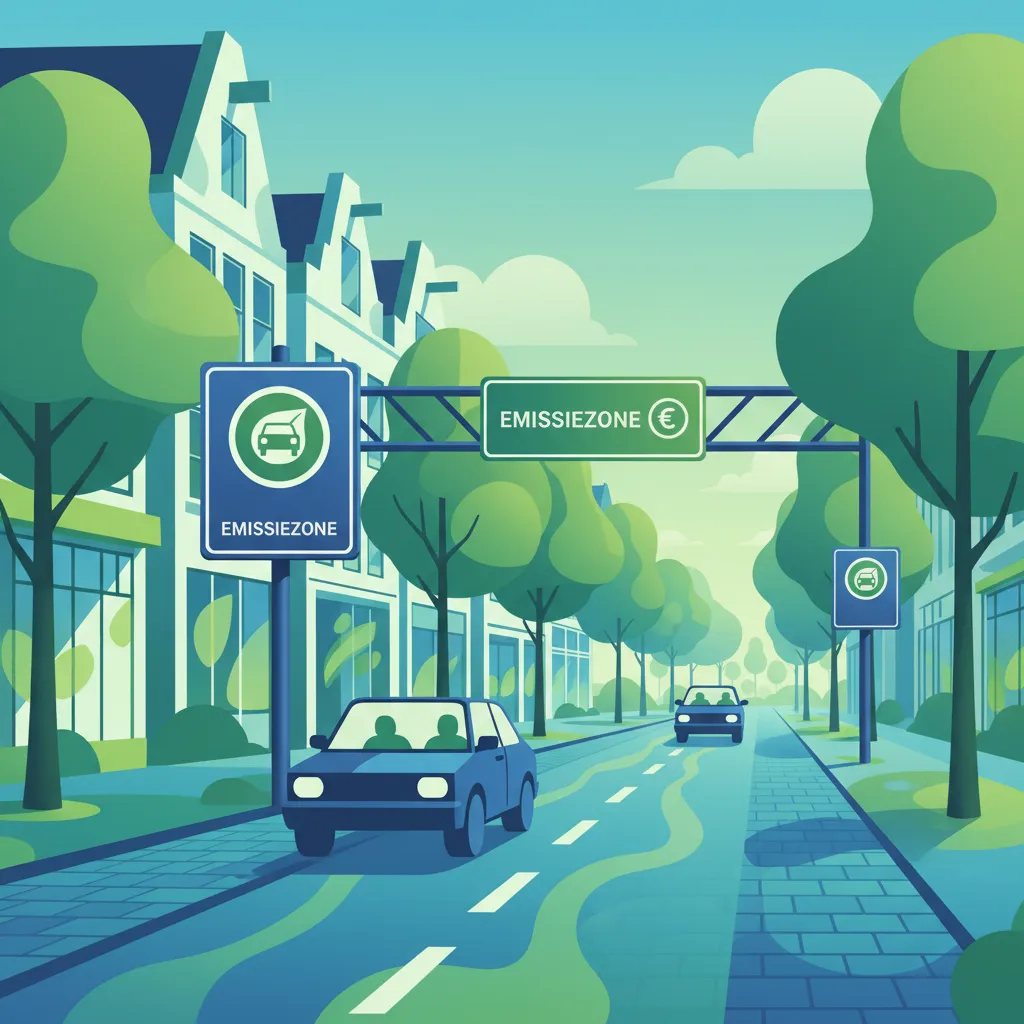
This lesson covers the specific regulations for environmental zones (miljözoner), which are established in some Swedish cities to improve air quality. You will learn how to identify the signs for these zones and understand the rules that restrict access for older, more polluting vehicles based on their emission classification (Euro class). The lesson provides clarity on which vehicles are affected and the purpose behind these environmental regulations.
Swedish Driving Theory BEco-Driving and Environmental Impact
View lesson
Reduced Visibility and Headlight Use lesson image

Reduced Visibility and Headlight Use

This lesson covers strategies for driving safely when visibility is compromised. You will learn the correct use of different lighting systems: when to use low beams, high beams (helljus), and how to avoid dazzling other drivers. The lesson also explains the specific regulations for using front and rear fog lights and provides techniques for navigating safely in dense fog or heavy precipitation by reducing speed and using the road edge as a guide.
Swedish Driving Theory BWinter and Adverse Weather Driving
View lesson
Merging and Lane Changes (Omkörning) lesson image

Merging and Lane Changes (Omkörning)

This lesson covers the critical maneuvers of merging and changing lanes. You will learn the correct technique for using an acceleration lane to match the speed of motorway traffic before merging smoothly and safely. The lesson emphasizes the importance of checking mirrors and the blind spot, signaling in good time, and applying the 'zipper principle' (dragkedjeprincipen) where lanes merge to ensure efficient and courteous traffic flow.
Swedish Driving Theory BPriority Rules and Intersections
View lesson
Residential Areas and Speed Calming lesson image

Residential Areas and Speed Calming

This lesson focuses on the high level of caution required when driving in residential areas. You will learn about the rules for special zones like 'gångfartsområde' (walking speed area) and the need to navigate around speed calming measures like speed bumps. The central theme is anticipating unpredictable behavior from residents, especially children, and managing the risks posed by parked cars that severely limit visibility.
Swedish Driving Theory BDriving in Different Environments
View lesson
Safe Following Distance (Avstånd) lesson image

Safe Following Distance (Avstånd)

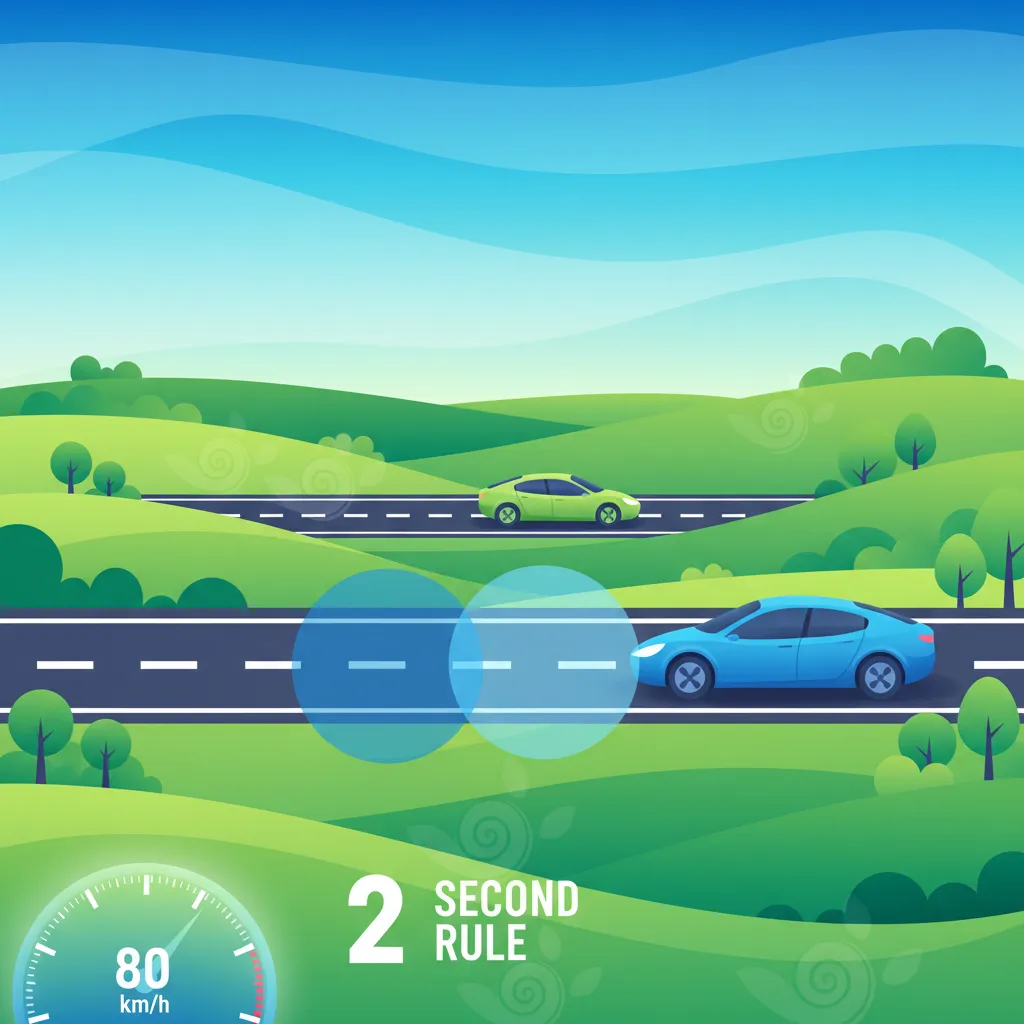
This lesson teaches practical methods for maintaining a safe buffer to the vehicle ahead, with a primary focus on the universally recommended 'three-second rule'. You will learn how to apply this rule by picking a fixed point and counting the seconds until you pass it. The content also explains why this distance must be increased significantly in adverse conditions such as rain, snow, or when following large vehicles that obstruct your view.
Swedish Driving Theory BSpeed Limits and Distance Management
View lesson
Weather-Related Speed Adjustment lesson image

Weather-Related Speed Adjustment

This lesson reinforces the core safety principle of adapting your driving to the prevailing weather conditions. You will learn why you must significantly reduce speed in heavy rain to avoid aquaplaning, how strong crosswinds can affect vehicle stability, and why reduced visibility in fog necessitates slower speeds and greater following distances. The goal is to instill a proactive approach to risk management whenever the weather is less than ideal.
Swedish Driving Theory BWinter and Adverse Weather Driving
View lesson
Speed Adaptation in Different Zones (Stads-, landsväg, motorväg) lesson image

Speed Adaptation in Different Zones (Stads-, landsväg, motorväg)

This lesson emphasizes that the posted speed limit is a maximum, not a target. You will learn the principles of situational speed adaptation, which involves adjusting your speed based on factors like visibility, road geometry (curves and hills), traffic density, and potential hazards. The lesson covers specific strategies for managing speed in urban environments with pedestrians, on rural roads with hidden entrances, and on motorways to match the flow of traffic.

Swedish Driving Theory BSpeed Limits and Distance Management
View lesson

Understanding Engine Start-Stop Systems and Fuel Saving

Explore the technical explanations and benefits of automatic engine start-stop systems in vehicles. Learn how these systems contribute to fuel efficiency and reduced emissions, especially in urban driving conditions according to Swedish theory.

start-stop systemsfuel efficiencyemissionseco-drivingvehicle technologyurban driving
Fuel-Efficient Acceleration and Braking lesson image

Fuel-Efficient Acceleration and Braking

This lesson focuses on the two most significant actions affecting fuel consumption: acceleration and braking. You will learn that aggressive driving with rapid acceleration and hard braking wastes significant amounts of fuel. The content teaches the technique of gentle, steady acceleration and a forward-planning approach to driving, where you look far ahead to anticipate traffic light changes and slowdowns, allowing you to decelerate by simply releasing the accelerator (motor braking).

Swedish Driving Theory BEco-Driving and Environmental Impact
View lesson

Frequently asked questions about Idle Reduction and Engine Stop-Start

Find clear answers to common questions learners have about Idle Reduction and Engine Stop-Start. Learn how the lesson is structured, which driving theory objectives it supports, and how it fits into the overall learning path of units and curriculum progression in Sweden. These explanations help you understand key concepts, lesson flow, and exam focused study goals.

What is the typical time limit for engine idling in Sweden?

In Sweden, local regulations often prohibit unnecessary engine idling for more than one minute. This rule is in place to reduce noise and air pollution. Always be mindful of signs or local bylaws that might specify shorter durations, especially in residential areas or near hospitals.

Is it better to idle or restart my engine?

For modern vehicles, it is generally more fuel-efficient to restart the engine than to let it idle for extended periods, typically over one minute. Restarting consumes less fuel than prolonged idling and significantly reduces emissions.

How do automatic start-stop systems work?

Automatic start-stop systems automatically shut down the engine when the vehicle comes to a complete stop (e.g., at traffic lights or in traffic jams) and restart it instantly when the driver is ready to move. This significantly reduces fuel consumption and emissions in city driving.

Are start-stop systems mandatory for the Swedish theory test?

While specific questions about the technical operation of start-stop systems might be rare, understanding their purpose and benefits related to fuel efficiency and emissions is important. The Swedish Category B theory test covers environmental driving principles, and these systems are a key part of modern eco-driving.

Can I be fined for idling my car in Sweden?

Yes, you can be fined for prolonged, unnecessary engine idling in Sweden, as it violates environmental regulations aimed at reducing pollution. Adhering to the typical one-minute rule or shutting off the engine is crucial to avoid penalties.

Continue your Swedish driving theory learning journey

Swedish road signsSwedish article topicsSearch Swedish road signsSwedish driving theory homeSwedish road sign categoriesSwedish Moped Theory AM courseSearch Swedish theory articlesSwedish driving theory coursesSwedish Driving Theory B courseSwedish driving theory articlesSwedish driving theory practiceSwedish practice set categoriesSwedish Motorcycle Theory A courseSearch Swedish driving theory practiceRoad Signs and Signals unit in Swedish Driving Theory BVehicle Control and Maneuvering unit in Swedish Driving Theory BPriority Rules and Intersections unit in Swedish Driving Theory BSpeed Limits and Distance Management unit in Swedish Driving Theory BAccident Response & Roadside Safety unit in Swedish Motorcycle Theory AAdverse Weather & Low-Grip Conditions unit in Swedish Motorcycle Theory ASpeed Limits and Safe Following Distances unit in Swedish Moped Theory AMEmergency Maneuvers & Obstacle Avoidance unit in Swedish Motorcycle Theory AEmergency Situations and Accident Procedures unit in Swedish Driving Theory BEngine Management and RPM Control lesson in Eco-Driving and Environmental ImpactIdle Reduction and Engine Stop-Start lesson in Eco-Driving and Environmental ImpactEmission Zones and Environmental Signs lesson in Eco-Driving and Environmental ImpactFuel-Efficient Acceleration and Braking lesson in Eco-Driving and Environmental ImpactVehicle Load Management and Aerodynamics lesson in Eco-Driving and Environmental ImpactLegal Responsibilities, Documentation & Protective Equipment unit in Swedish Motorcycle Theory A