
Welcome to the 'Eco-Driving and Environmental Impact' unit. This lesson focuses on Engine Management and RPM Control, a key technique for saving fuel and reducing emissions. Understanding how to keep your engine in its most efficient RPM range is vital for both economical driving and passing your Swedish Category B theory test.
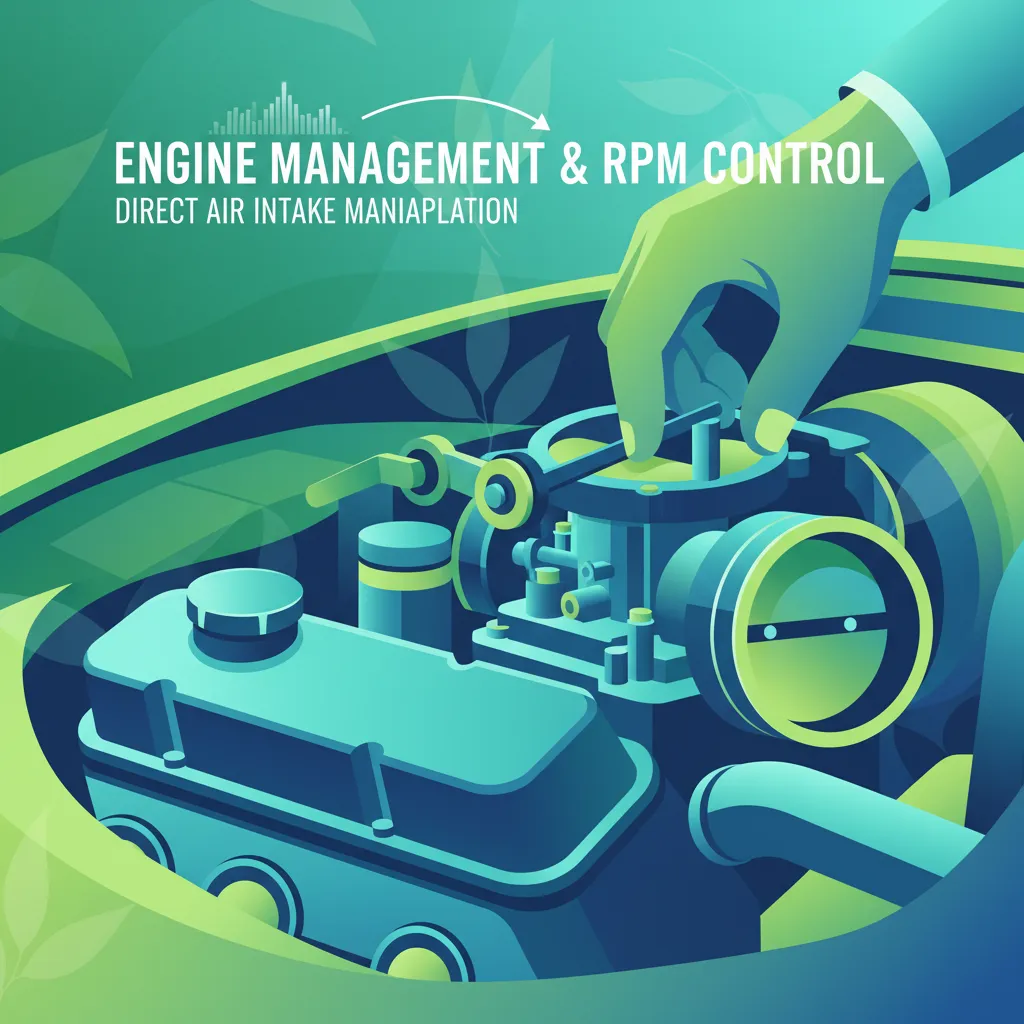
Welcome to this lesson from the Swedish Driving License Theory Course for Category B Cars. Driving a car efficiently involves more than just gentle acceleration and braking; it deeply connects to how you manage your engine's speed. This lesson delves into the crucial relationship between your vehicle's engine speed, measured in Revolutions Per Minute (RPM), and its fuel consumption. You will learn the principles of eco-driving, focusing on how to select the optimal gear and shift early to keep the engine operating in its most efficient range without straining it. Mastering RPM control not only reduces your fuel costs and environmental impact but also contributes to quieter driving, enhanced vehicle safety, and prolonged engine life.
At the heart of efficient driving lies a fundamental understanding of how your engine works and how your actions as a driver influence its performance and consumption. Modern internal combustion engines are engineered to deliver their highest fuel efficiency, lowest emissions, and longest service life when operated within a specific RPM band, typically low to mid-range.
The number of complete rotations the engine's crankshaft makes per minute, indicating how fast the engine is working. It is displayed on the tachometer in your dashboard.
The engine's RPM directly reflects how hard it is working. A higher RPM generally means more fuel is being consumed and more heat is being generated. Drivers encounter several RPM categories: idle RPM (typically 600-800 rpm for gasoline and 650-900 rpm for diesel engines), cruising RPM (the speed maintained during steady travel), and red-line RPM (the absolute maximum safe engine speed, beyond which engine damage can occur). Monitoring your tachometer, which measures RPM, is crucial for effective engine management.
The rotational force produced by the engine, expressed in Newton-meters (Nm). It is the 'pulling' or 'twisting' force that moves the vehicle.
The rate at which work is done, or the rate at which energy is converted. In engines, it's the product of torque and angular speed (RPM), commonly expressed in horsepower (HP) or kilowatts (kW).
While often confused, torque and power are distinct. Torque is the force that gets your vehicle moving and helps it climb hills or accelerate. Every engine has a specific RPM range where it produces its maximum torque. This "peak torque" RPM is where the engine feels strongest and most responsive. Power, on the other hand, determines how fast a vehicle can ultimately go. Although related, peak torque and peak power usually occur at different RPMs. Understanding your vehicle's torque curve – a graph showing torque output versus RPM – helps you select the right gear to utilize the engine's pulling power effectively, especially under load or during acceleration.
The gear ratios in your vehicle's transmission determine how engine RPM translates into wheel speed and, consequently, vehicle speed. Lower gears (like first or second) have high gear ratios, meaning the engine spins many times for a single rotation of the wheels. This amplifies the engine's torque, making it easier to start from a standstill or climb steep inclines. Conversely, higher gears (like fifth or sixth, often called "overdrive" gears) have lower gear ratios, allowing the wheels to rotate many times for fewer engine revolutions.
This relationship is vital for fuel efficiency. By selecting a higher gear, you can maintain a given vehicle speed at a much lower engine RPM. For example, driving at 80 km/h in 5th gear will result in a significantly lower RPM than driving at the same speed in 4th gear. Modern transmissions, including manual, automatic, and Continuously Variable Transmissions (CVTs), are designed with a range of gear ratios to optimize both performance and fuel economy across different driving conditions. However, the driver's gear selection still plays a critical role in manual and some semi-automatic vehicles.
To drive economically and environmentally responsibly, a driver must understand and actively manage the engine's RPM to keep it within its most efficient operating zone. This strategy directly reduces fuel consumption and minimizes the vehicle's environmental footprint.
The specific band of engine speeds where the engine operates with the lowest Brake Specific Fuel Consumption (BSFC), meaning it uses the least amount of fuel to produce a given amount of power.
For most modern gasoline engines, the optimal RPM range typically falls between 1,500 and 3,000 RPM. For diesel engines, this range is often slightly lower, around 1,800 to 2,500 RPM. Operating your engine within this "sweet spot" ensures that the fuel is burned most efficiently, yielding the maximum amount of power from the least amount of fuel. Staying within this range during steady cruising not only saves fuel but also reduces stress on engine components and lowers emissions. Driving outside this range, whether too low (lugging) or too high (over-revving), significantly decreases efficiency.
One of the most effective eco-driving techniques is early up-shifting, also known as "eco-shift." This involves changing to the next higher gear as soon as the vehicle can maintain the desired speed without straining the engine. The goal is to keep the engine RPM consistently within its optimal efficiency range. For most cars, this means shifting up when the RPM reaches approximately 2,000 to 2,500 RPM under light to moderate acceleration on a flat road.
By shifting early, you prevent the engine from revving unnecessarily high, which would consume more fuel and generate more noise without a proportionate increase in power for typical driving. However, it's crucial to distinguish early up-shifting from shifting too early, which can lead to engine lugging – a condition where the engine is at a very low RPM but under high load, causing it to struggle. The key is balance: shift early enough to save fuel, but not so early that the engine is stressed.
A measure of an engine's efficiency, indicating how much fuel (in grams) is required to produce one kilowatt of power over a specific period. A lower BSFC value signifies better fuel efficiency.
The relationship between fuel consumption and RPM is complex and is best described by the Brake Specific Fuel Consumption (BSFC) curve. This curve graphically illustrates the engine's efficiency across its entire operating range of RPM and torque. The "sweet spot" on the BSFC map shows the specific RPM and load combination where the engine is most fuel-efficient. Drivers aim to operate their vehicle in this region as much as possible to minimize fuel usage.
Understanding BSFC helps explain why simply driving at the lowest possible RPM isn't always the most efficient. If the RPM is too low for the demanded load, the engine might struggle (lugging), forcing it to work harder and less efficiently, thus increasing BSFC. Conversely, unnecessarily high RPMs, even with low load, also lead to higher BSFC due to increased internal friction and pumping losses. The art of eco-driving is to keep the engine in its optimal BSFC region through judicious gear selection and throttle input.
Effective engine management extends beyond just RPM; it also involves understanding and managing the load placed on the engine. This directly impacts both fuel efficiency and the longevity of your vehicle.
Engine load refers to how much work the engine is doing. It's crucial to balance the torque demand of the vehicle with the engine’s capacity at a given RPM. Two common mistakes that can harm your engine and waste fuel are lugging and over-revving.
Drivers must monitor the RPM gauge and adapt their gear choice to the road gradient, vehicle load (e.g., passengers, cargo, towing a trailer), and traffic conditions to prevent both lugging and over-revving.
The process of using the engine's natural resistance to slow the vehicle down by releasing the accelerator while a gear is engaged, rather than solely relying on the service brakes.
Engine braking is a valuable technique, particularly when decelerating or driving downhill. When you lift your foot off the accelerator while the car is in gear, most modern engines completely cut off fuel supply to the cylinders. The engine's internal friction and the vacuum it creates act as a natural brake, slowing the vehicle without consuming any fuel.
This technique offers several benefits:
To effectively use engine braking, you should choose a gear that allows the engine RPM to remain within a safe and effective range, typically not so high that it feels like over-revving, but high enough to provide noticeable resistance.
While this lesson often refers to gear selection, the principles of RPM control apply equally to vehicles with automatic and semi-automatic transmissions, including Continuously Variable Transmissions (CVTs). Modern automatic transmissions are programmed to optimize gear changes for fuel economy, often keeping the engine in or near its optimal RPM range. Many vehicles also feature "Eco" modes that further fine-tune the transmission's shifting logic to prioritize efficiency.
However, even with an automatic, a driver's input can influence efficiency. Gentle and smooth accelerator inputs allow the transmission to shift up earlier, keeping RPMs lower. Conversely, aggressive acceleration will prompt the transmission to hold lower gears for longer, increasing RPM and fuel consumption. Some automatics offer a "manual" mode or paddle shifters, giving the driver more control to implement early up-shifting or manage engine braking, much like a manual transmission. CVTs are particularly adept at keeping the engine at its most efficient RPM by continuously varying the gear ratio.
Driving responsibly in Sweden involves adhering to specific regulations designed to promote safety, minimize environmental impact, and ensure consideration for other road users. Engine management plays a direct role in complying with these rules.
The Swedish Traffic Ordinance (Trafikförordning) contains provisions directly relevant to engine management.
Trafikförordning § 29-1 states that "The driver shall not rev the engine unnecessarily or in a manner that produces unreasonable noise." This rule directly discourages excessive revving in traffic, which is not only fuel-wasteful but also a source of noise pollution. Responsible RPM control, keeping revs within the optimal range, aligns perfectly with this regulation.
Furthermore, Trafikförordning § 30-5 mandates that "Idling of motor vehicles shall be avoided where possible and shall not exceed five minutes in traffic zones." This regulation is critical for reducing emissions and improving air quality in urban areas. Technologies like automatic stop-start systems, which automatically shut off the engine when the vehicle is stationary, directly support compliance with this law. Even without such a system, drivers should manually turn off their engines if they anticipate being stationary for more than a minute, especially in congested areas.
Many Swedish cities, including Stockholm, Gothenburg, and Malmö, have established Environmental Zones (Miljözon) with stricter emission limits for vehicles. While these zones primarily regulate which vehicles are permitted based on their emission class (e.g., Euro 5, Euro 6), how a vehicle is driven within these zones also matters. Excessive engine revving can lead to higher instantaneous emissions of pollutants like nitrogen oxides (NOx) and carbon dioxide (CO₂). By maintaining the engine within its optimal RPM range and employing early up-shifting, drivers can minimize their vehicle's immediate emission output, further contributing to air quality in these sensitive urban areas.
Operating your engine at lower RPMs naturally reduces both mechanical noise and exhaust emissions. Unnecessary high revving contributes significantly to noise pollution, disturbing residents, pedestrians, and other road users. From an environmental perspective, lower RPMs generally facilitate more complete combustion, leading to fewer harmful pollutants like hydrocarbons (HC) and carbon monoxide (CO), and lower overall CO₂ output. Prioritizing lower, optimal RPMs is a key aspect of environmentally conscious driving and contributes to a more pleasant urban environment.
The way you manage your engine's RPM directly impacts its lifespan and reliability. Operating consistently within the optimal RPM range, avoiding both prolonged lugging and frequent over-revving, significantly reduces mechanical stress on engine components such as pistons, connecting rods, crankshaft bearings, and valves. High RPMs generate more heat and friction, accelerating wear, while lugging creates harmful vibrations and internal strain. By practicing good RPM control, you contribute to a longer engine life, fewer costly repairs, and more consistent vehicle performance. This also helps in maintaining your vehicle's condition, which is assessed during mandatory vehicle inspections (Utkörningsbesiktning).
Effective RPM management is not a one-size-fits-all approach; it requires adapting your strategy to various external and internal factors.
Applying the principles of engine management and RPM control in real-world driving situations helps consolidate your understanding and develop good habits.
Setting: You are on a flat urban road with a 50 km/h speed limit, waiting at a red light. The light turns green. Correct Behavior: Gently release the brake and apply the accelerator smoothly. Engage first gear, then shift to second when the RPM reaches around 2,000 RPM. Continue accelerating gently, shifting to third gear at approximately 2,200 RPM, and then to fourth gear around 2,000-2,200 RPM, aiming to keep the engine in its optimal fuel-efficient zone as you reach 50 km/h. Incorrect Behavior: Remaining in second gear for too long, letting the RPM climb to 3,500-4,000 RPM to reach 50 km/h. This wastes fuel, increases engine noise, and adds unnecessary wear. Explanation: Early up-shifting ensures the engine remains in its most efficient range, reducing fuel consumption and emissions while still providing adequate acceleration.
Setting: You are driving a fully loaded van, approaching an 8% uphill gradient on a road with a 75 km/h speed limit. Correct Behavior: As you begin the incline, if you notice the engine RPM dropping below the optimal range (e.g., 1,500 RPM) in 5th gear and the vehicle struggling, down-shift to 4th gear. This will allow the RPM to rise to around 2,500 RPM, placing the engine closer to its peak torque output. This provides the necessary power to maintain speed without lugging the engine. Incorrect Behavior: Attempting to climb the hill in 5th gear, letting the RPM drop to 1,300 RPM. The engine will struggle, vibrate excessively, lose speed, consume more fuel inefficiently, and experience increased wear. Explanation: Under heavy load and on inclines, prioritize maintaining RPM near the engine's peak torque to provide sufficient pulling power and prevent harmful lugging.
Setting: You are cruising on a Swedish motorway at 120 km/h in 6th gear, with your engine RPM around 2,000. Ahead, traffic begins to slow down. Correct Behavior: Release the accelerator well in advance, allowing the car to decelerate using engine braking in 6th gear. If speed drops significantly (e.g., to 80 km/h), down-shift to 5th gear to maintain control and keep RPM around 1,800 RPM. If traffic comes to a complete stop for more than a few seconds, let the automatic stop-start system activate and shut off the engine (or manually shift to neutral and turn off the engine). Incorrect Behavior: Down-shifting unnecessarily to 4th gear while cruising at 120 km/h, causing RPM to rise to 2,800 RPM. Alternatively, keeping the engine running for several minutes at a complete standstill when a stop-start system is present or a manual shutdown is appropriate. Explanation: Using the highest possible gear for steady cruising maximizes fuel economy. Engine braking efficiently reduces speed. Idle reduction (via stop-start or manual shutdown) eliminates fuel consumption and emissions during stationary periods, complying with Swedish idling regulations.
Setting: You are driving at 70 km/h on a rural road in dense fog, with significantly reduced visibility. Correct Behavior: Maintain a steady speed and keep the vehicle in 5th gear, with RPM around 2,200. Use very gentle and smooth throttle inputs. Avoid sudden down-shifts or aggressive acceleration, which could cause abrupt changes in vehicle speed or torque delivery, potentially leading to loss of traction in unseen slippery patches. The lower engine noise also helps maintain concentration. Incorrect Behavior: Down-shifting aggressively to 3rd gear, causing the engine to rev to 3,200 RPM for perceived "extra power." This creates abrupt torque spikes and makes the vehicle's behavior less predictable in low-traction conditions, potentially increasing risk. Explanation: Consistent and smooth torque delivery, achieved by operating within the optimal RPM range, helps maintain vehicle stability and predictable control in challenging visibility and potentially slippery conditions.
Setting: You are approaching the entrance to a Stockholm Environmental Zone (Miljözon) with a 50 km/h speed limit and moderate urban traffic.
Correct Behavior: As you enter and drive through the zone, prioritize early up-shifting. Shift to 4th or 5th gear as soon as possible, keeping the RPM between 1,500 and 2,000 RPM. Accelerate smoothly and avoid any unnecessary high-revving, ensuring your vehicle's emissions are minimized.
Incorrect Behavior: Maintaining 3rd gear through the zone, allowing RPM to spike to 2,800-3,000 RPM during acceleration or even steady cruising. This increases instantaneous emissions of pollutants and may attract attention during compliance checks.
Explanation: Operating at lower, optimal RPMs within environmental zones reduces the instantaneous output of harmful emissions, aligning with the zone's purpose of improving air quality.
Mastering engine management and RPM control is a cornerstone of safe, economical, and environmentally responsible driving. It integrates directly with other crucial driving skills and legal responsibilities.
By consistently applying the principles learned in this lesson—understanding RPM, torque, and power, practicing early up-shifting, managing engine load, and respecting legal and environmental guidelines—you will become a more skilled and conscious driver. These skills build directly upon your knowledge from previous lessons such as "Fuel-Efficient Acceleration and Braking" (Lesson 7.1) and "Vehicle Control and Maneuvering" (Lesson 4), and they will be further expanded in future modules like "Vehicle Load Management and Aerodynamics" (Lesson 7.5) and "Emission Zones and Environmental Signs" (Lesson 7.3).
Lesson content overview
Explore all units and lessons included in this driving theory course.
Explore search topics learners often look for when studying Engine Management and RPM Control. These topics reflect common questions about road rules, driving situations, safety guidance, and lesson level theory preparation for learners in Sweden.
Browse additional driving theory lessons that cover connected traffic rules, road signs, and common driving situations related to this topic. Improve your understanding of how different rules interact across everyday traffic scenarios.
Explore advanced strategies for engine management and RPM control to maximise fuel efficiency in Swedish driving conditions. Learn how maintaining optimal engine speeds reduces fuel consumption, noise, and wear, building upon fundamental eco-driving principles for Category B.
This lesson focuses on the two most significant actions affecting fuel consumption: acceleration and braking. You will learn that aggressive driving with rapid acceleration and hard braking wastes significant amounts of fuel. The content teaches the technique of gentle, steady acceleration and a forward-planning approach to driving, where you look far ahead to anticipate traffic light changes and slowdowns, allowing you to decelerate by simply releasing the accelerator (motor braking).

This lesson explains the physical principles of how weight and air resistance impact fuel efficiency. You will learn that every extra kilogram of weight requires more energy to move, and that external attachments like roof boxes significantly increase aerodynamic drag. The content provides practical advice, such as removing unnecessary items from the car and taking off roof racks when not in use, and highlights the importance of maintaining correct tire pressure to minimize rolling resistance.
Find clear answers to common questions learners have about Engine Management and RPM Control. Learn how the lesson is structured, which driving theory objectives it supports, and how it fits into the overall learning path of units and curriculum progression in Sweden. These explanations help you understand key concepts, lesson flow, and exam focused study goals.
Generally, most modern Category B car engines are most fuel-efficient at lower RPMs, typically between 1,500 and 2,500 RPM when cruising. However, this can vary slightly between engine types. The key is to avoid unnecessarily high RPMs by shifting up early when possible, as taught in this lesson. Always listen to your engine; it should not sound like it's struggling or labouring.
A good indicator is when your vehicle reaches a moderate speed in the current gear, and you can accelerate gently without the engine sounding strained or revving too high. Aim to shift up to the next gear as soon as you reach this point, typically around 2,000-2,500 RPM for most petrol engines. Avoid pushing the engine to its limit before shifting.
No, as long as you avoid lugging the engine, which means driving in too high a gear for the speed and load, causing it to struggle. This lesson teaches you to shift up early to a higher gear, but still allows the engine to operate smoothly. If the engine starts to vibrate or feels like it's about to stall, you are likely in too high a gear, and should downshift.
The Swedish theory test includes questions about eco-driving and fuel efficiency. You might be asked about the most economical way to drive, when to shift gears, or the impact of RPMs on fuel consumption and engine wear. Understanding these principles, as covered here, will help you answer such questions correctly.
Yes, the principles of engine management and RPM control apply to both petrol and diesel engines, though the exact RPM ranges for optimal efficiency might differ. Diesel engines generally operate more efficiently at slightly lower RPMs than petrol engines. The core concept of shifting up early to avoid high revs remains the same for economical driving.